 Kanata's Japan Shrine Guide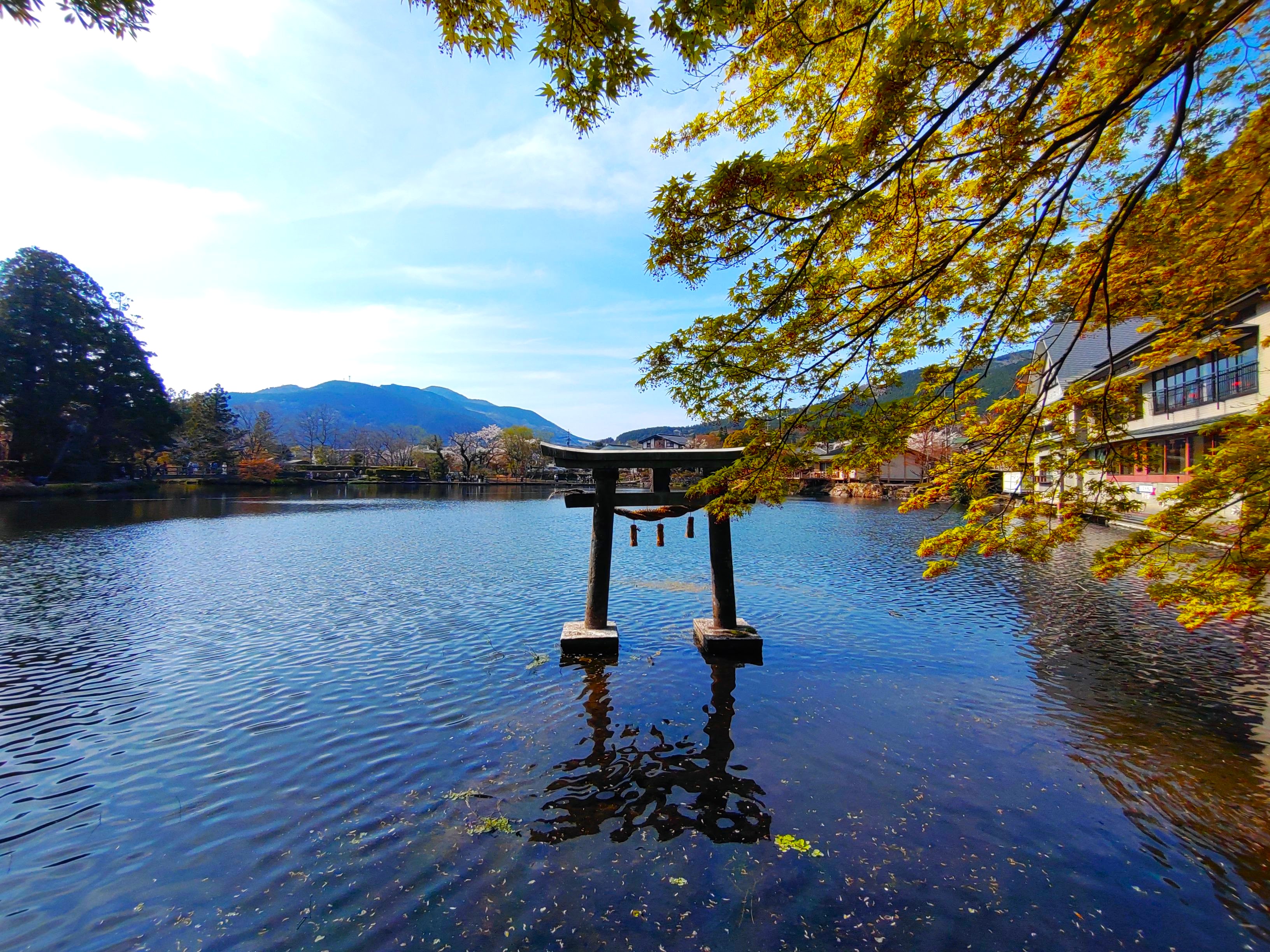

【Overview of Tenso Shrine】
Nesting along the shores of Lake Kinrin in Yufu City, Oita Prefecture, Tenso Shrine is an iconic, mysterious “power spot” symbolizing Yufuin. It features a torii gate standing directly within the lake, a massive sacred cedar tree—one of the largest in the prefecture—and ancient legends of dragon deities.
【History and Origins of Tenso Shrine】
Tenso Shrine is said to have been founded in the year 82 AD (the 12th year of Emperor Keiko’s reign). According to tradition, when the 12th Emperor Keiko visited this land, he ordered Hayatsuhime—a female chieftain who ruled the surrounding area—to enshrine the imperial ancestral deities (Koso-reishin), marking the origin of the shrine. In 1876 (Meiji 9), it was designated as a village shrine (Sonsha). The present “In-Lake Torii Gate” within the grounds was originally part of the Konpira Shrine situated inside the neighboring Bussan-ji Temple (of the Rinzai sect of Zen Buddhism), but was relocated to this site due to the Separation of Shinto and Buddhism orders during the Meiji period.
The primary enshrined deities consist of Amenominakanushi no Mikoto, Susanoo no Mikoto, Kagutsuchi no Mikoto, and Kotoshironushi no Mikoto.
【Lake Kinrin】
Lake Kinrin is a small yet remarkably mysterious body of water with a circumference of approximately 400 meters and a depth of about 2 meters. Serving as the primary symbol of Yufuin Onsen, it is a renowned scenic spot that captivates countless visitors throughout the year.
![DSC 3281 2 1024x768 - Tenso Shrine [Oita]](https://japan-shrine.info/wp-content/uploads/DSC_3281-2-1024x768.jpg "Tenso Shrine [Oita]")
A well-maintained walking trail circles the lake, taking about 15 to 20 minutes to complete. Visitors can observe waterfowl and large carp swimming gracefully, as well as seasonal flora up close. Tenso Shrine sits along the southeastern shore of the lake.
【Tenso Shrine Buildings】
The shrine hall was built to harmonize with the beautiful surrounding nature and spring waters of Lake Kinrin. Its defining architectural features are an open-air worship hall (Haiden) without outer walls and a protective outer enclosure (Sayado) structure surrounding the inner main sanctuary (Honden).
![DSC 3282 1024x768 - Tenso Shrine [Oita]](https://japan-shrine.info/wp-content/uploads/DSC_3282-1024x768.jpg "Tenso Shrine [Oita]")
Built with its back facing the lake’s surface, this sanctuary houses three separate shrines (Sansha) consolidated together under one roof. Enshrined in the center are the Tenso deities (imperial ancestral gods including Amenominakanushi no Mikoto). To the right sits Yasaka Shrine (Susanoo no Mikoto: deity for warding off evil), and to the left sits Konpira Shrine (Kotoshironushi no Mikoto and others: deities for maritime safety and business prosperity). When Shinto and Buddhism were officially separated during the Meiji period, the Konpira Shrine located inside nearby Bussan-ji Temple was moved to this precise site, leading to the unique consolidated layout seen today.
【Tenso Shrine Stone Torii Gate on the Lake (Underwater Torii)】
![DSC 3287 2 1024x768 - Tenso Shrine [Oita]](https://japan-shrine.info/wp-content/uploads/DSC_3287-2-1024x768.jpg "Tenso Shrine [Oita]")
Moving around to the back of the shrine hall brings a stone torii gate standing in the waters of Lake Kinrin right into view before your eyes. Especially during the early mornings in winter, when morning mist containing hot spring vapors rises from the lake’s surface, the torii appears to float inside the fog, creating an overwhelmingly fantastical landscape.
【Tenso Shrine Sacred Tree】
![DSC 3283 1024x768 - Tenso Shrine [Oita]](https://japan-shrine.info/wp-content/uploads/DSC_3283-1024x768.jpg "Tenso Shrine [Oita]")
Towering within the shrine grounds, the sacred grand cedar is said to be around 1,000 years old. Designated as a Natural Monument of Yufu City, it is one of the largest giant trees in the entire prefecture. Looking up at its towering height and massive trunk gives a profound sense of overwhelming vitality.
【Nearby Tourist Spots】
Bussan-ji Temple, Yufuin Floral Village
![DSC 3295 - Tenso Shrine [Oita]](https://japan-shrine.info/wp-content/uploads/DSC_3295.jpg "Tenso Shrine [Oita]")
【Tenso Shrine Access】
Admin’s Impressions
The 1,000-year-old sacred tree towering within the grounds and the open-air worship hall without walls were deeply impressive to behold, set in a truly wonderful location wrapped in the blessed spring waters of Mount Yufu. However, the sheer hustle and bustle of present-day Yufuin (especially around Takemoto-dori Street) went far beyond my imagination. Almost all the languages heard around me were Korean, and Korean signboards on shopfronts stood out noticeably, making it feel completely like a trending spot for young Korean travelers. In front of the underwater torii gate behind the shrine—being a prime photo spot—a huge crowd gathered just to take photos (none of whom seemed to be offering prayers, leaving the front of the worship hall completely empty). Since the best photography position was nearly monopolized, I managed to snap a single photo by seizing a quick opening. Because the intrinsic potential of the shrine itself is extraordinarily high, next time I hope to target a less crowded time slot to quietly offer my prayers in peace…
1750 Yufuincho Kawakami, Yufu, Oita 879-5102
*No parking available. “Kinrinko Iriguchimae Parking Lot (Paid)” is available nearby.
![f7abc20a0baa1540ef3297f47b4fb7fa - Tenso Shrine [Oita]](https://japan-shrine.info/wp-content/uploads/sng/f7abc20a0baa1540ef3297f47b4fb7fa.jpg "Tenso Shrine [Oita]")