 Kanata's Japan Shrine Guide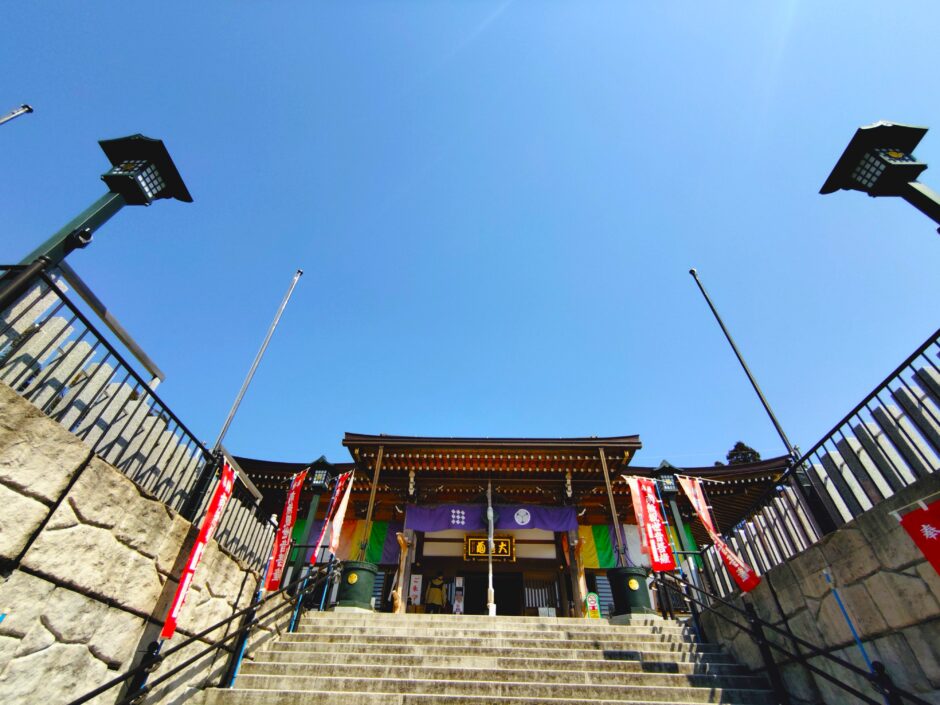

【Mount Tsukuba: Chuzen-ji Omido Overview】
Chuzen-ji Omido was founded in 782 (the first year of the Enryaku era). Legend has it that the high priest Tokuitsu, a master of the Hosso sect, entered Mount Tsukuba and reconstructed the dilapidated shrines on the summit, naming the deity “Tsukuba-san Daigongen.” Later, Kukai (Kobo Daishi) visited the mountain, established a training center for Esoteric Buddhism, and named the temple “Chisoku-in Chuzen-ji.”
![20260412 1244576252 520x300 - Mount Tsukuba Chuzen-ji Omido [Ibaraki]](https://japan-shrine.info/wp-content/uploads/20260412_1244576252-520x300.jpg "Mount Tsukuba Chuzen-ji Omido [Ibaraki]")
The temple flourished as the center of “Shinbutsu-shugo” (the syncretism of Shinto and Buddhism) on Mount Tsukuba and received deep patronage from the Tokugawa Shogunate during the Edo period. However, it was temporarily abolished during the Haibutsu Kishaku movement of the Meiji era. It was later revived and currently serves as a branch temple of Gokoku-ji in Otuka, Bunkyo-ku, Tokyo.
![DSC 1218 520x300 - Mount Tsukuba Chuzen-ji Omido [Ibaraki]](https://japan-shrine.info/wp-content/uploads/DSC_1218-520x300.jpg "Mount Tsukuba Chuzen-ji Omido [Ibaraki]")
The main deity enshrined here is the Eleven-headed Thousand-armed Kannon (Avalokitesvara).
【Chuzen-ji Omido: The Approach (Sando)】
The main approach has significant stone steps, but if you enter from the parking lot dedicated to Tsukuba-san Shrine, the path is relatively flat, allowing you to bypass the stairs.
![20260321 103044163 1024x768 - Mount Tsukuba Chuzen-ji Omido [Ibaraki]](https://japan-shrine.info/wp-content/uploads/20260321_103044163-1024x768.jpg "Mount Tsukuba Chuzen-ji Omido [Ibaraki]")
Located halfway up Mount Tsukuba, the temple offers a magnificent view of the Kanto Plain. On clear days, visitors can see Mt. Fuji and the Tokyo Skytree.
【Chuzen-ji Omido: Main Hall (Hondo)】
![20260321 103123100 1024x768 - Mount Tsukuba Chuzen-ji Omido [Ibaraki]](https://japan-shrine.info/wp-content/uploads/20260321_103123100-1024x768.jpg "Mount Tsukuba Chuzen-ji Omido [Ibaraki]")
The temple was reconstructed on this site in 1961, and the current Main Hall was rebuilt in 2020 (Reiwa 2). Inside, the golden Eleven-headed Thousand-armed Kannon is enshrined, radiating a brilliant glow.
【Chuzen-ji Omido: Bell Tower (Shorodo)】
![20260321 102328888 1024x768 - Mount Tsukuba Chuzen-ji Omido [Ibaraki]](https://japan-shrine.info/wp-content/uploads/20260321_102328888-1024x768.jpg "Mount Tsukuba Chuzen-ji Omido [Ibaraki]")
The original bell tower, donated by the third Shogun, Iemitsu, was moved to the nearby Keiryu-ji temple during the Meiji-era purge of Buddhism. The current bell tower was rebuilt in 2001.
![DSC 0348 520x300 - Mount Tsukuba Chuzen-ji Omido [Ibaraki]](https://japan-shrine.info/wp-content/uploads/DSC_0348-520x300.jpg "Mount Tsukuba Chuzen-ji Omido [Ibaraki]")
【Chuzen-ji Omido: Goshuin】
![tsukubasan omido GOSHUIN 735x1024 - Mount Tsukuba Chuzen-ji Omido [Ibaraki]](https://japan-shrine.info/wp-content/uploads/tsukubasan-omido-GOSHUIN-735x1024.jpg "Mount Tsukuba Chuzen-ji Omido [Ibaraki]")
【Tourist Spots Near Chuzen-ji Omido】
Tsukuba-san Shrine, Nantaisan Main Shrine (Mount Nantai), Nyotaisan Main Shrine (Mount Nyotai), Hitachi no Kuni Soshagu, Hitachi Fudoki no Oka (History Park)
![4072523 m 520x300 - Mount Tsukuba Chuzen-ji Omido [Ibaraki]](https://japan-shrine.info/wp-content/uploads/4072523_m-520x300.jpg "Mount Tsukuba Chuzen-ji Omido [Ibaraki]")
![29281739 m 1 520x300 - Mount Tsukuba Chuzen-ji Omido [Ibaraki]](https://japan-shrine.info/wp-content/uploads/29281739_m-1-520x300.jpg "Mount Tsukuba Chuzen-ji Omido [Ibaraki]")
![20260412 095337184 2 520x300 - Mount Tsukuba Chuzen-ji Omido [Ibaraki]](https://japan-shrine.info/wp-content/uploads/20260412_095337184-2-520x300.jpg "Mount Tsukuba Chuzen-ji Omido [Ibaraki]")
![20260412 1105194472 520x300 - Mount Tsukuba Chuzen-ji Omido [Ibaraki]](https://japan-shrine.info/wp-content/uploads/20260412_1105194472-520x300.jpg "Mount Tsukuba Chuzen-ji Omido [Ibaraki]")
【Chuzen-ji Omido Access】
Admin’s Impressions
The combination of the wide stone steps against the backdrop of Mount Tsukuba is truly picturesque. On clear days, the view of Mt. Fuji and the Skytree is a wonderful bonus. The newly built Main Hall features beautiful, fresh white wood (shiraki), and the Thousand-armed Kannon shines brilliantly in gold. The staff at the temple were also very kind when assisting with my Goshuin.
748 Tsukuba, Tsukuba City, Ibaraki Prefecture 300-4352
*Note: Paid parking available
![2a1edfd161198947bc57958043bd3d7d - Mount Tsukuba Chuzen-ji Omido [Ibaraki]](https://japan-shrine.info/wp-content/uploads/sng/2a1edfd161198947bc57958043bd3d7d.png "Mount Tsukuba Chuzen-ji Omido [Ibaraki]")