 Tour of Japanese shrines and temples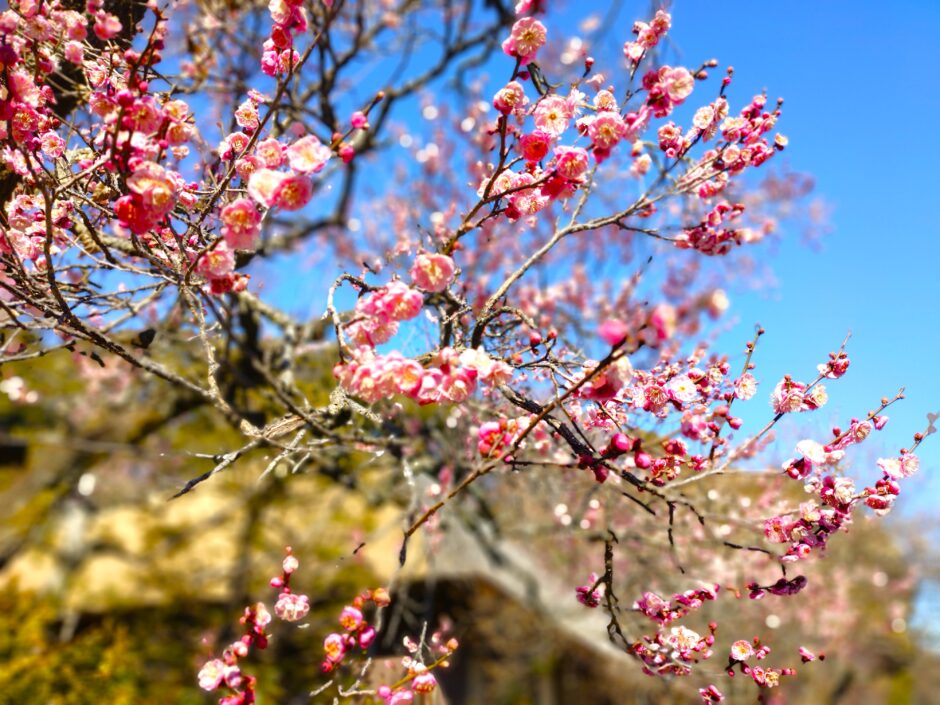

【Keiō Mogusaen Summary】
Keiō Mogusaen was established as a botanical garden during the reconstruction of Shōrenji Temple between 1716 and 1736 (the Kyōhō era). In the early Meiji period, Shōrenji Temple was abandoned and the site became the property of a local silk merchant. It was transferred to Keio Electric Railway in 1957 (Shōwa 32). It is known as a famous plum blossom viewing spot, boasting approximately 800 plum trees. The “Plum Blossom Festival” is held annually from February to March. It is currently designated as a Historic Site and Place of Scenic Beauty by Hino City, Tokyo.
【Keiō Mogusaen main gate】
![20260201 105134908 1024x768 - Keiō Mogusaen [Tokyo]](https://japan-shrine.info/wp-content/uploads/20260201_105134908-1024x768.jpg "Keiō Mogusaen [Tokyo]")
Keiō Mogusaen does not have a parking lot, so we recommend parking at a lot near the station and walking. While the distance isn’t particularly far, the slope is quite steep.
![20260201 101404486 1024x768 - Keiō Mogusaen [Tokyo]](https://japan-shrine.info/wp-content/uploads/20260201_101404486-1024x768.jpg "Keiō Mogusaen [Tokyo]")
Stone walls and other features become visible, so considering this to be a castle site, it must have been an excellent castle in its day.
【Keiō Mogusaen Shoren-an】
At the top of the stairs within the grounds lies Shoren-an. I believe this was likely the site of Shoren-ji Temple in the past.
![20260201 101950946 1024x768 - Keiō Mogusaen [Tokyo]](https://japan-shrine.info/wp-content/uploads/20260201_101950946-1024x768.jpg "Keiō Mogusaen [Tokyo]")
Over ten years ago when I visited, I remember enjoying the delicious “Mogusa soba” here while admiring the plum blossoms. It seems they only serve light meals now, which was disappointing as I had been looking forward to it.
![20260201 102041643 1024x768 - Keiō Mogusaen [Tokyo]](https://japan-shrine.info/wp-content/uploads/20260201_102041643-1024x768.jpg "Keiō Mogusaen [Tokyo]")
【Keiō Mogusaen Scene within the park】
![20260201 101901422 1024x768 - Keiō Mogusaen [Tokyo]](https://japan-shrine.info/wp-content/uploads/20260201_101901422-1024x768.jpg "Keiō Mogusaen [Tokyo]")
The Jushō plum tree within the garden is said to be a 300-year-old tree, as the legend goes.
![20260201 101821514 1024x768 - Keiō Mogusaen [Tokyo]](https://japan-shrine.info/wp-content/uploads/20260201_101821514-1024x768.jpg "Keiō Mogusaen [Tokyo]")
The grounds aren’t particularly spacious, but with plum blossoms in spring, hydrangeas in summer, and autumn foliage, it’s a garden where you can enjoy seasonal flowers throughout the year.
【Keiō Mogusaen Mogusa Castle Ruins】
Mogusa Castle Ruins is believed to have been active from the Kamakura to Sengoku periods, though it remains an unidentified mountain castle with no clear builder or lord. Following the path while viewing plum blossoms leads you up to the mountain castle. Remnants resembling castle ruins can be seen everywhere.
![20260201 102717197 1024x768 - Keiō Mogusaen [Tokyo]](https://japan-shrine.info/wp-content/uploads/20260201_102717197-1024x768.jpg "Keiō Mogusaen [Tokyo]")
Near the summit of the mountain castle within Mogusaen, a grove of large Japanese chestnut trees, said to be 300 to 400 years old, grows, and this is also quite a sight to behold. They are currently designated as a Natural Monument of Fuchu City.
![20260201 102521229 1024x768 - Keiō Mogusaen [Tokyo]](https://japan-shrine.info/wp-content/uploads/20260201_102521229-1024x768.jpg "Keiō Mogusaen [Tokyo]")
If it still existed, I would have found it to be an overall magnificent mountain castle.
【Keiō Mogusaen Nearby attractions】
MogusaHachiman Shrine, Ono Shrine, Takahata-Fudoson
![20260201 104355929 520x300 - Keiō Mogusaen [Tokyo]](https://japan-shrine.info/wp-content/uploads/20260201_104355929-520x300.jpg "Keiō Mogusaen [Tokyo]")
![20260201 093433972 520x300 - Keiō Mogusaen [Tokyo]](https://japan-shrine.info/wp-content/uploads/20260201_093433972-520x300.jpg "Keiō Mogusaen [Tokyo]")
![20260201 113517033 520x300 - Keiō Mogusaen [Tokyo]](https://japan-shrine.info/wp-content/uploads/20260201_113517033-520x300.jpg "Keiō Mogusaen [Tokyo]")
【This Stroll Route】
![WalkingMap202602 en 1024x559 - Keiō Mogusaen [Tokyo]](https://japan-shrine.info/wp-content/uploads/WalkingMap202602-en-1024x559.png "Keiō Mogusaen [Tokyo]")
【Keiō Mogusaen Access】
Manager’s Comments
Mogusa Castle → Shōrenji Temple → Mogusaen Garden. When you view it with an awareness of its history, you realize there are many points of interest. Visiting Mogusa Hachiman Shrine together with these sites further enhances the experience. While this garden is famous for its plum blossoms, I hear the autumn “Maple Festival” is also excellent, so I plan to visit in the fall next time. Its lack of popularity and recognition is likely largely due to the steep slope making physical access difficult, but personally, I think it’s a hidden gem.
![564a1bbff99238884d056e4bb1627e2e - Keiō Mogusaen [Tokyo]](https://japan-shrine.info/wp-content/uploads/sng/564a1bbff99238884d056e4bb1627e2e.png "Keiō Mogusaen [Tokyo]")
![20260201 104355929 150x150 - Keiō Mogusaen [Tokyo]](https://japan-shrine.info/wp-content/uploads/20260201_104355929-150x150.jpg "Keiō Mogusaen [Tokyo]")
![DSC 0348 150x150 - Keiō Mogusaen [Tokyo]](https://japan-shrine.info/wp-content/uploads/DSC_0348-150x150.jpg "Keiō Mogusaen [Tokyo]")
![DSC 2361 150x150 - Keiō Mogusaen [Tokyo]](https://japan-shrine.info/wp-content/uploads/DSC_2361-150x150.jpg "Keiō Mogusaen [Tokyo]")
![DSC 0248 150x150 - Keiō Mogusaen [Tokyo]](https://japan-shrine.info/wp-content/uploads/DSC_0248-150x150.jpg "Keiō Mogusaen [Tokyo]")