 Kanata's Japan Shrine Guide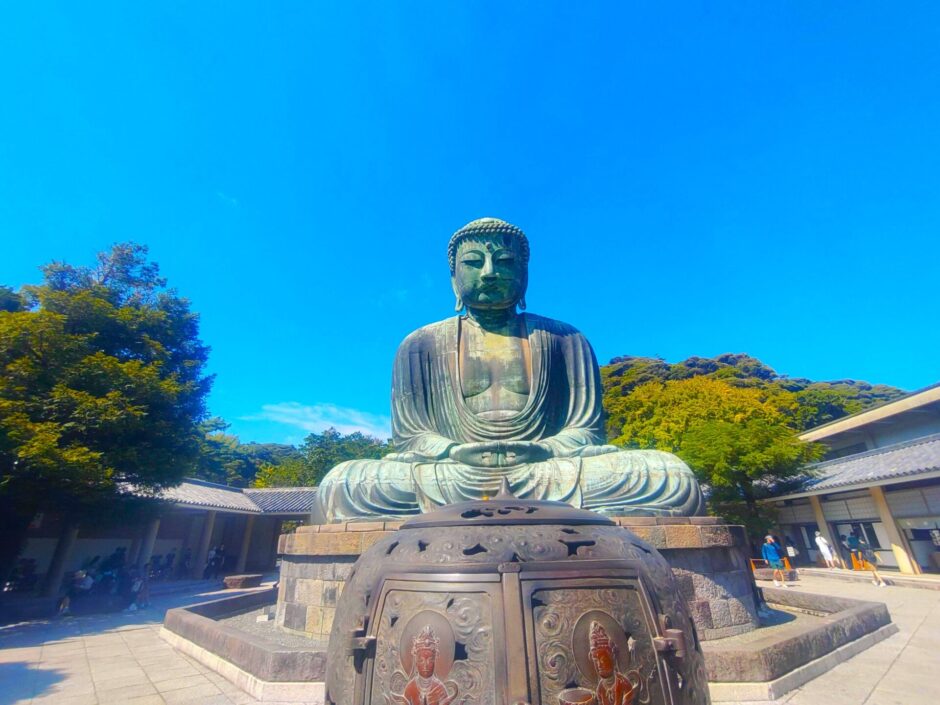

【Kotoku-in Temple Summary】
The founding of Kōtoku-in Temple began with the construction of the Great Buddha of Kamakura (a seated statue of Amida Nyorai), which commenced around 1252 (Kenchō 4). The Kamakura Daibutsu is believed to have been erected to pray for the stability of the Kamakura shogunate and the peace of the people. The exact founding priest and founder remain unknown. Historical records regarding the circumstances of the Daibutsu’s creation are scarce, leaving many aspects unclear, and the original sculptor has not been identified.
【Kotoku-in Temple Niomon】
Niomon is an octagonal gate with a copper-roofed gabled roof, traditionally believed to have been relocated around 1700 during the Edo period.
![DSC 2658 1 1024x768 - Kamakura Daibutsu (Great Buddha) Kotoku-in Temple [Kanagawa]](https://japan-shrine.info/wp-content/uploads/DSC_2658-1-1024x768.jpg "Kamakura Daibutsu (Great Buddha) Kotoku-in Temple [Kanagawa]")
Nio statues stand on either side, glaring menacingly. Passing through the Niomon gate, you’ll find the ticket booth. Admission is 300 yen.
【Kotoku-in Temple Kamakura Daibutsu (Great Buddha) 】
As you proceed past the ticket booth, the Great Buddha comes into view directly ahead. Its official name is the “National Treasure: Bronze Seated Statue of Amida Nyorai,” and it is currently designated as a National Treasure.
![DSC 2663 1024x768 - Kamakura Daibutsu (Great Buddha) Kotoku-in Temple [Kanagawa]](https://japan-shrine.info/wp-content/uploads/DSC_2663-1024x768.jpg "Kamakura Daibutsu (Great Buddha) Kotoku-in Temple [Kanagawa]")
Standing approximately 11.3 meters tall and weighing about 121 tons, it is one of Japan’s Three Great Buddha Statues.
Originally housed inside the Great Buddha Hall, the hall collapsed due to subsequent natural disasters (earthquakes, typhoons, tsunamis, etc.), leaving the statue exposed outdoors. A distinctive feature of the Kamakura Daibutsu is that visitors can enter its interior, allowing them to experience up close the bronze casting techniques used in its creation approximately 750 years ago. Admission is 50 yen.
![naraDSCN0098 1 160x160 - Kamakura Daibutsu (Great Buddha) Kotoku-in Temple [Kanagawa]](https://japan-shrine.info/wp-content/uploads/naraDSCN0098-1-160x160.jpg "Kamakura Daibutsu (Great Buddha) Kotoku-in Temple [Kanagawa]")
【Kotoku-in Temple big straw sandals】
Near the Great Buddha statue, there is a large pair of straw sandals at the rest area. These were donated by the Matsuzaka Children’s Association, hoping that the Great Buddha would wear them on a pilgrimage to bring happiness to all of Japan during its early post-war recovery period.
![DSC 2667 1024x768 - Kamakura Daibutsu (Great Buddha) Kotoku-in Temple [Kanagawa]](https://japan-shrine.info/wp-content/uploads/DSC_2667-1024x768.jpg "Kamakura Daibutsu (Great Buddha) Kotoku-in Temple [Kanagawa]")
Since 1951 (Showa 26), it has been remade and dedicated every three years, with each work possessing its own distinctive characteristics.
![DSC 1250 160x160 - Kamakura Daibutsu (Great Buddha) Kotoku-in Temple [Kanagawa]](https://japan-shrine.info/wp-content/uploads/DSC_1250-160x160.jpg "Kamakura Daibutsu (Great Buddha) Kotoku-in Temple [Kanagawa]") Ushiku Great Buddha(Ushiku Daibutsu) [Ibaraki]
Ushiku Great Buddha(Ushiku Daibutsu) [Ibaraki] The tallest standing Buddha statue in Japan is the “Ushiku Daibutsu” (120m) in Ibaraki Prefecture.
【Kotoku-in Temple GOSHUIN】
![kotoku in G 713x1024 - Kamakura Daibutsu (Great Buddha) Kotoku-in Temple [Kanagawa]](https://japan-shrine.info/wp-content/uploads/kotoku-in-G-713x1024.jpg "Kamakura Daibutsu (Great Buddha) Kotoku-in Temple [Kanagawa]")
【Kotoku-in Temple Nearby attractions】
Sasuke Inari Shrine, Kōzoku-ji Temple, Hasedera Temple, Goryō Shrine, Amanawa Shinmeigu Shrine
【Kotoku-in Temple Access】
Manager’s Comments
The Great Buddha, a symbol of Kamakura. While it was originally housed indoors, I personally think this Great Buddha looks best under the blue sky. Kotoku-in Temple also charms visitors with its seasonal scenery—cherry blossoms in spring and autumn foliage. It’s within walking distance from Kamakura Station and Hasedera Temple, so visiting while strolling is highly recommended. It’s truly one of Kamakura’s must-see spots. However, it gets very crowded with overseas tourists, so if you prefer a quiet stroll, early morning is best.
〒248-0016 4-2-28 Hase, Kamakura City, Kanagawa Prefecture
※Paid parking available
![2d845eb046a71682b531356d18755fe1 - Kamakura Daibutsu (Great Buddha) Kotoku-in Temple [Kanagawa]](https://japan-shrine.info/wp-content/uploads/sng/2d845eb046a71682b531356d18755fe1.jpg "Kamakura Daibutsu (Great Buddha) Kotoku-in Temple [Kanagawa]")