 Kanata's Japan Shrine Guide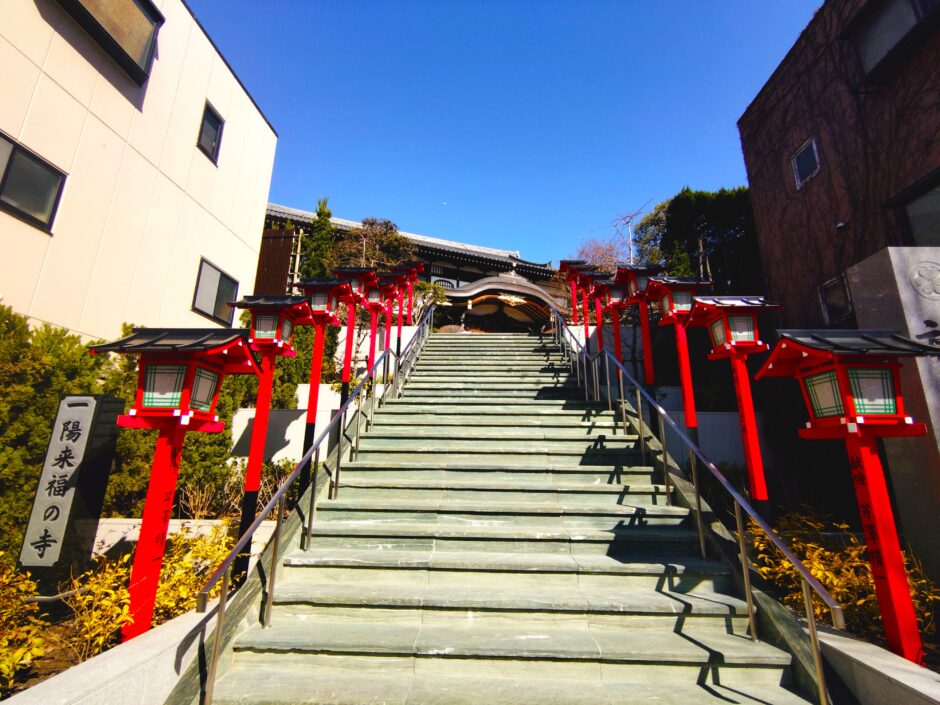

目次
【Overview of Hosho-ji Temple】
Hosho-ji was founded in 1641 (Kanei 18) adjacent to Ana Hachimangu Shrine as its betto-ji (managerial temple). During the Edo period, it practiced Shinbutsu-shugo (Shinto-Buddhist syncretism), where Shinto deities and Buddhist figures were worshipped together, essentially forming a single complex with the shrine. Following the Meiji government’s “Shinto-Buddhist Separation Order,” the two were officially divided into the neighboring entities seen today. It is now a temple of the Koyasan Shingon sect and serves as the 15th station of the Edo 33 Kannon Pilgrimage and the 30th station of the Gofunai 88 Temple Pilgrimage.
The principal deity enshrined here is Sho-Kanzeon Bosatsu.
【Hosho-ji: The Approach (Sando)】
![20260315 100111376 1024x768 - Hosho-ji Temple [Tokyo]](https://japan-shrine.info/wp-content/uploads/20260315_100111376-1024x768.jpg "Hosho-ji Temple [Tokyo]")
The temple features two atmospheric approaches lined with lanterns. The path coming from the Ana Hachimangu side is a gentle slope.
【Hosho-ji: Statue of Kobo Daishi】
While statues of Kobo Daishi can be found at many temples, they are an essential presence at any Shingon sect temple.
![20260315 095801967 1024x768 - Hosho-ji Temple [Tokyo]](https://japan-shrine.info/wp-content/uploads/20260315_095801967-1024x768.jpg "Hosho-ji Temple [Tokyo]")
【Hosho-ji: Main Hall (Hondo)】
![20260315 095819156 1024x768 - Hosho-ji Temple [Tokyo]](https://japan-shrine.info/wp-content/uploads/20260315_095819156-1024x768.jpg "Hosho-ji Temple [Tokyo]")
The Main Hall is profoundly dignified and solemn. The temple enjoyed strong patronage from the Tokugawa family, evidenced by the fact that it was permitted to use the “Aoi” (hollyhock) crest—the Tokugawa family emblem—as its official temple crest.
【Hosho-ji: Toro-do Hall & Jinben Daibosatsu】
![20260315 095959389 1024x768 - Hosho-ji Temple [Tokyo]](https://japan-shrine.info/wp-content/uploads/20260315_095959389-1024x768.jpg "Hosho-ji Temple [Tokyo]")
Inside the Toro-do (Lantern Hall) in front of the main building sits Jinben Daibosatsu, the founder of Shugendo (mountain asceticism), affectionately known as “Jinben-san.” He is widely believed to provide healing and strength to those with weak legs or mobility issues.
【Hosho-ji: Mizukake Jizo (Water-Splashing Jizo)】
![20260315 100008475 1024x768 - Hosho-ji Temple [Tokyo]](https://japan-shrine.info/wp-content/uploads/20260315_100008475-1024x768.jpg "Hosho-ji Temple [Tokyo]")
Mizukake Jizo is a traditional form of worship found throughout Japan where devotees pour water over a Jizo statue using a wooden ladle while offering prayers. The act of splashing water symbolizes the washing away of impurities. Visitors pray here for the purification of mind and body, the fulfillment of wishes, recovery from illness, or the peaceful rest of children.
【Tourist Spots Near Hosho-ji (Within a 30-minute walk)】
Ana Hachimangu Shrine, Nichiren-shu Horin-ji Temple, Shinjuku Suwa Shrine, Mizuinari Shrine, Hotel Chinzanso Tokyo, Zoshigaya Kishimojin-do.
![DSC 0809 520x300 - Hosho-ji Temple [Tokyo]](https://japan-shrine.info/wp-content/uploads/DSC_0809-520x300.jpg "Hosho-ji Temple [Tokyo]")
![20260315 101823942 2 520x300 - Hosho-ji Temple [Tokyo]](https://japan-shrine.info/wp-content/uploads/20260315_101823942-2-520x300.jpg "Hosho-ji Temple [Tokyo]")
![20260315 092610242 520x300 - Hosho-ji Temple [Tokyo]](https://japan-shrine.info/wp-content/uploads/20260315_092610242-520x300.jpg "Hosho-ji Temple [Tokyo]")
![DSC 3267 520x300 - Hosho-ji Temple [Tokyo]](https://japan-shrine.info/wp-content/uploads/DSC_3267-520x300.jpg "Hosho-ji Temple [Tokyo]")
![DSC 0454 1 520x300 - Hosho-ji Temple [Tokyo]](https://japan-shrine.info/wp-content/uploads/DSC_0454-1-520x300.jpg "Hosho-ji Temple [Tokyo]")
![20260616 133145860 2 520x300 - Hosho-ji Temple [Tokyo]](https://japan-shrine.info/wp-content/uploads/20260616_133145860-2-520x300.jpg "Hosho-ji Temple [Tokyo]")
I’ve put together a walking route below, so I hope you find it helpful for your visit.
![route to healing eye diseases 520x300 - Hosho-ji Temple [Tokyo]](https://japan-shrine.info/wp-content/uploads/route-to-healing-eye-diseases-520x300.jpe "Hosho-ji Temple [Tokyo]")
【Hosho-ji Access】
Admin’s Impressions
As soon as you step onto the grounds, the gentle scent of incense wafts through the air. The well-maintained approach and the stately presence of the Main Hall create a refreshing and quintessentially Shingon-style atmosphere. Compared to the bustling energy of Ana Hachimangu next door, you can offer your prayers here in a much more relaxed setting. I highly recommend visiting both together.
2-1-14 Nishiwaseda, Shinjuku City, Tokyo 162-0051
*Note: No parking lot available.
![80778e880cf9142b326061f6e607e50a - Hosho-ji Temple [Tokyo]](https://japan-shrine.info/wp-content/uploads/sng/80778e880cf9142b326061f6e607e50a.jpg "Hosho-ji Temple [Tokyo]")