 Kanata's Japan Shrine Guide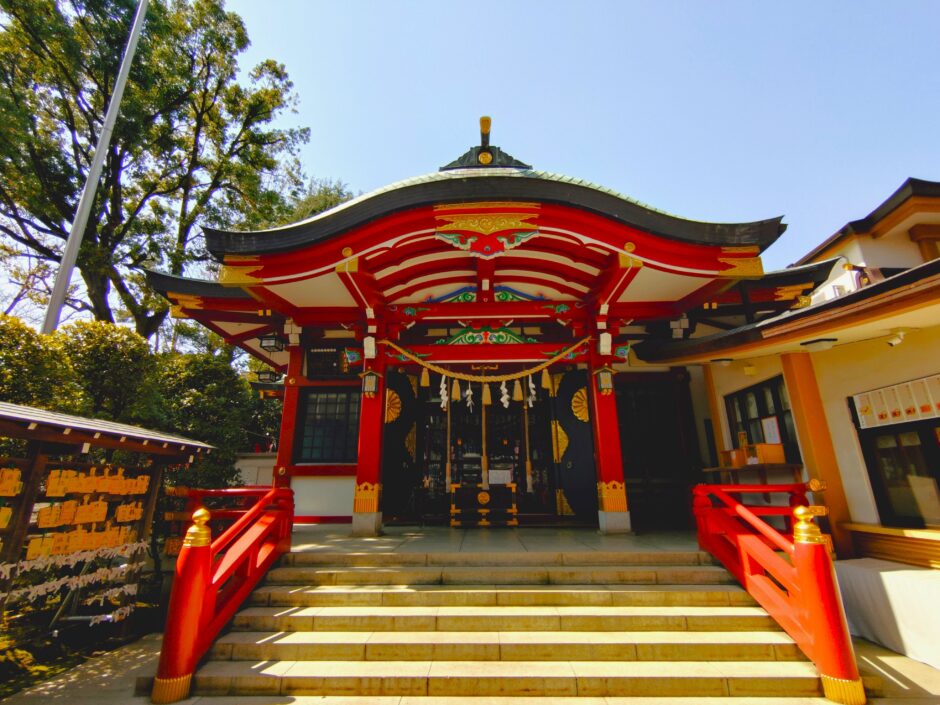

目次
- 【Overview of Irugi Shrine】
- 【Irugi Shrine: The Approach (Sando)】
- 【Irugi Shrine: Chozubachi (Purification Basin)】
- 【Irugi Shrine: Main Hall (Shaden)】
- 【Irugi Shrine: Fujizuka (Fuji Mound)】
- 【Irugi Shrine: Itsukushima Shrine (Subsidiary Shrine)】
- 【Irugi Shrine: Inari Shrine (Subsidiary Shrine)】
- 【Irugi Shrine: Goshuin】
- 【Tourist Spots Near Irugi Shrine (Within a 30-minute walk)】
- 【Irugi Shrine: Access】
- Admin’s Impressions
- Address of Irugi Shrine
【Overview of Irugi Shrine】
The exact founding year of Irugi Shrine is unknown. It is said that in the early Edo period (around 1600), it was located near the Yurugi Bridge (now Irugi Bridge) over the Meguro River. However, due to its proximity to the river, the shrine was prone to flood and storm damage. Consequently, villagers relocated it to its current, higher ground. At that time, its name changed from “Kijinomiya” to “Gosha Myojin” (after merging five deities from Kifune, Kasuga, Kokongen, and Inari). In 1872, it merged with Inari, Kawakami, and Motomura Shrines to become the “Irugi Shrine” we know today.
The main deity is Yamato Takeru no Mikoto. The shrine also enshrines several associate deities, including Takaokami no Kami, Okuninushi no Mikoto, Ukanomitama no Mikoto, Amanokoyane no Mikoto, Sugawara no Michizane, Tajikarao no Mikoto, Yodohime no Mikoto, and Oyamakui no Mikoto.
【Irugi Shrine: The Approach (Sando)】
![20260324 121712238 1024x768 - Irugi Shrine [Tokyo]](https://japan-shrine.info/wp-content/uploads/20260324_121712238-1024x768.jpg "Irugi Shrine [Tokyo]")
While the area is surrounded by modern redevelopment skyscrapers near Osaki Station, stepping onto the shrine path brings a calm atmosphere far removed from the city’s bustle.
![20260324 121748992 1024x768 - Irugi Shrine [Tokyo]](https://japan-shrine.info/wp-content/uploads/20260324_121748992-1024x768.jpg "Irugi Shrine [Tokyo]")
The torii gate at the entrance is a historic structure dedicated in 1792 (Kansei 4). Climbing the stone steps reveals a vibrant vermilion shrine hall.
【Irugi Shrine: Chozubachi (Purification Basin)】
![20260324 121835080 1024x768 - Irugi Shrine [Tokyo]](https://japan-shrine.info/wp-content/uploads/20260324_121835080-1024x768.jpg "Irugi Shrine [Tokyo]")
Like the torii gate, this stone basin was dedicated in 1792. It is designated as a Tangible Cultural Property of Shinagawa Ward.
【Irugi Shrine: Main Hall (Shaden)】
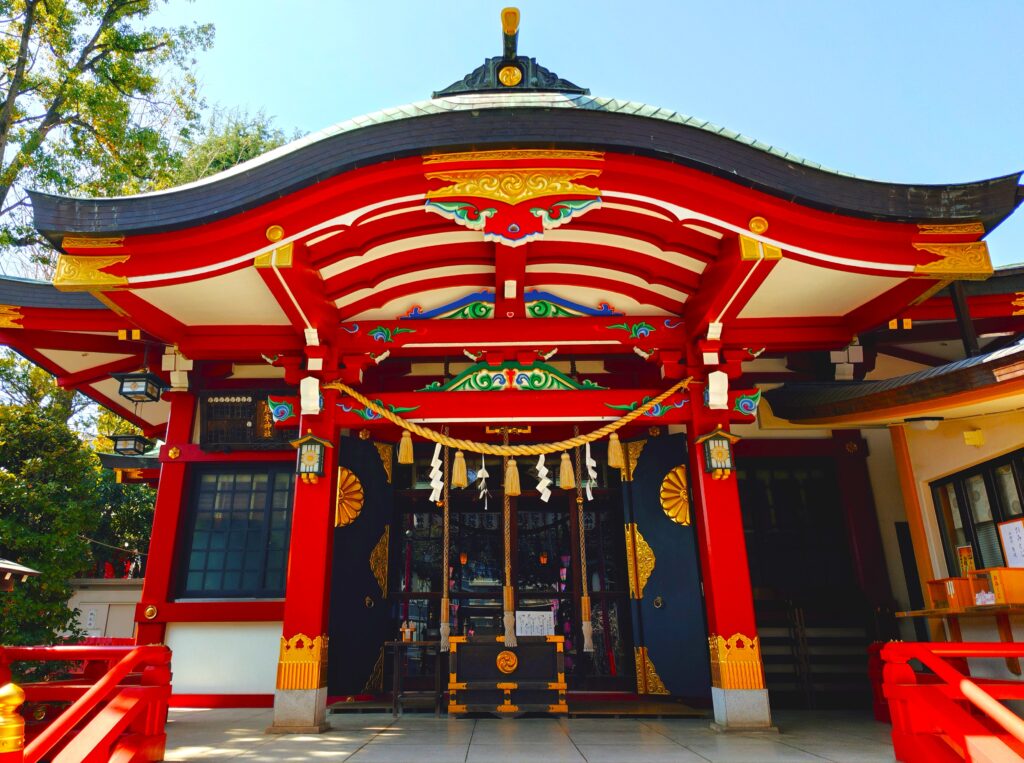
The original buildings were destroyed by fire during World War II in 1945. The current hall was rebuilt in 1978 (Showa 53).
【Irugi Shrine: Fujizuka (Fuji Mound)】
![20260324 123208252 1024x768 - Irugi Shrine [Tokyo]](https://japan-shrine.info/wp-content/uploads/20260324_123208252-1024x768.jpg "Irugi Shrine [Tokyo]")
To the side of the stone steps in front of the worship hall stands a Fujizuka—a miniature Mt. Fuji built from lava rock in 1933. It is selected as one of the “100 Views of Shinagawa.” Unlike some other Fuji mounds, this one appears not to be for climbing. Interestingly, this spot sits atop the “Irugibashi Shell Mound,” a Jomon period archaeological site. An information board provides details about its history as an ancient settlement.
【Irugi Shrine: Itsukushima Shrine (Subsidiary Shrine)】
![20260324 122630892 2 1024x774 - Irugi Shrine [Tokyo]](https://japan-shrine.info/wp-content/uploads/20260324_122630892-2-1024x774.jpg "Irugi Shrine [Tokyo]")
The stone torii gate of this shrine was erected in 1792 and is now a Tangible Cultural Property of Shinagawa Ward. It was originally the private family shrine (yashikigami) of the Matsubara family, who were major landowners in the former Irugibashi Village.
![20260324 122652677 2 1024x768 - Irugi Shrine [Tokyo]](https://japan-shrine.info/wp-content/uploads/20260324_122652677-2-1024x768.jpg "Irugi Shrine [Tokyo]")
The structure, featuring intricate colorful carvings, is estimated to date from the late Edo period. Although there are some missing parts, it appears to have undergone partial repairs during the early Meiji period.
【Irugi Shrine: Inari Shrine (Subsidiary Shrine)】
![20260324 122700519 2 1024x768 - Irugi Shrine [Tokyo]](https://japan-shrine.info/wp-content/uploads/20260324_122700519-2-1024x768.jpg "Irugi Shrine [Tokyo]")
This shrine sits to the left of Irugi Shrine, side-by-side with Itsukushima Shrine.
【Irugi Shrine: Goshuin】
![irugijinjya GOSHUIN 736x1024 - Irugi Shrine [Tokyo]](https://japan-shrine.info/wp-content/uploads/irugijinjya-GOSHUIN-736x1024.jpg "Irugi Shrine [Tokyo]")
【Tourist Spots Near Irugi Shrine (Within a 30-minute walk)】
Shinagawa Shrine, Togoshi Hachiman Shrine, Ebara Shrine.
![DSC 0630 520x300 - Irugi Shrine [Tokyo]](https://japan-shrine.info/wp-content/uploads/DSC_0630-520x300.jpg "Irugi Shrine [Tokyo]")
【Irugi Shrine: Access】
Admin’s Impressions
Despite the rapid redevelopment around Osaki Station, which has brought a wave of skyscrapers and high-rise apartments, the area around the shrine has preserved its lush greenery. The name “Irugi” (居木) literally means “the place where trees exist,” and the shrine seems to prioritize the natural environment. Many of the deities enshrined here are associated with water, likely to calm the Meguro River, which frequently flooded in the past. The history of the villagers working together to relocate the shrine shows how deeply it was cherished by the community—a feeling that clearly continues with the local residents today.