 Kanata's Japan Shrine Guide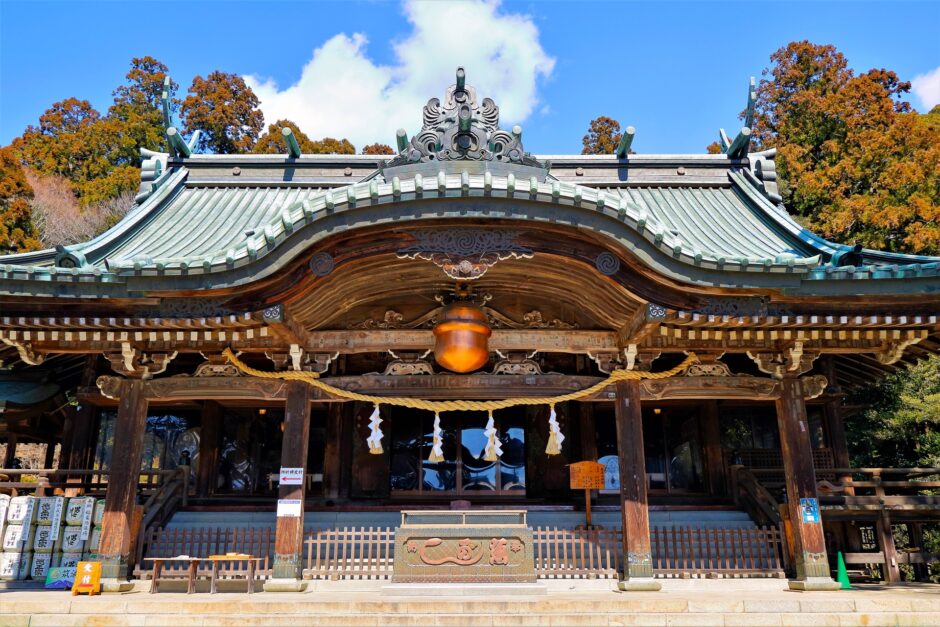

目次
- 【Overview of Mount Tsukuba Shrine】
- 【Mount Tsukuba Shrine: The Approach (Sando)】
- 【Mount Tsukuba Shrine: Sacred Bridge (Shinkyo)】
- 【Mount Tsukuba Shrine: Husband-and-Wife Cedar (Meoto Sugi)】
- 【Mount Tsukuba Shrine: Zuishinmon Gate】
- 【Mount Tsukuba Shrine: Main Shrine Building (Shaden)】
- 【Mount Tsukuba Shrine: The Sacred Great Cedar (O-sugi)】
- 【Mount Tsukuba Shrine Subsidiary Shrine: Kasuga Shrine】
- 【Mount Tsukuba Shrine Subsidiary Shrine: Itsukushima Shrine】
- 【Mount Tsukuba Shrine Subsidiary Shrine: Asahi Inari Shrine】
- 【Mount Tsukuba Shrine Subsidiary Shrine: Atagoyama Shrine】
- 【Toward the Mount Nantai Main Shrine】
- 【Tourist Spots Nearby】
- 【Mount Tsukuba Shrine Shrine: Access】
- Admin’s Impressions
- Address of Mount Tsukuba Shrine
【Overview of Mount Tsukuba Shrine】
While the exact founding year of Mount Tsukuba Shrine is unknown, it is one of the most prominent ancient shrines in the Kanto region, boasting a history of over 3,000 years. Records suggest that local governors (Tsukuba-no-kuni-no-miyatsuko) were already serving the shrine during the reign of Emperor Sujin, confirming that it has been established and revered since at least the 90s BCE.
According to the shrine’s legend, Mount Tsukuba Engi, Mount Tsukuba is “Onokoro Island”—the very first island created by the gods Izanagi and Izanami as described in the Kojiki (Records of Ancient Matters). Furthermore, it is considered a sacred mountain where the sun goddess Amaterasu Omikami descended. Another legend from the Mount Tsukuba Shiki even states that Amaterasu later moved from Tsukuba to Ise. (Note: This is one of several traditions.)
The ancient text Hitachi no Kuni Fudoki compares its majestic appearance to Mount Fuji, suggesting it has been an object of worship since humans first settled in the Kanto Plain.
The main deities enshrined here are Tsukuba-o-no-Kami (the male deity = Izanagi-no-Mikoto) and Tsukuba-me-no-Kami (the female deity = Izanami-no-Mikoto).
![20260321 104909822 2 1024x768 - Mount Tsukuba Shrine [Ibaraki]](https://japan-shrine.info/wp-content/uploads/20260321_104909822-2-1024x768.jpg "Mount Tsukuba Shrine [Ibaraki]")
(The photo above shows Mount Tsukuba)
【Mount Tsukuba Shrine: The Approach (Sando)】
You can reach the shrine from the side path near Chuzen-ji Omido, but this main approach comes from the east.
![20260321 123439594 1024x768 - Mount Tsukuba Shrine [Ibaraki]](https://japan-shrine.info/wp-content/uploads/20260321_123439594-1024x768.jpg "Mount Tsukuba Shrine [Ibaraki]")
Although it is a bit of a detour from Omido, I highly recommend entering through this approach if possible.
【Mount Tsukuba Shrine: Sacred Bridge (Shinkyo)】
![20260321 123334879 1024x768 - Mount Tsukuba Shrine [Ibaraki]](https://japan-shrine.info/wp-content/uploads/20260321_123334879-1024x768.jpg "Mount Tsukuba Shrine [Ibaraki]")
Spanning the center of the approach, the Sacred Bridge was built in 1633 (Kanei 10) and was reserved exclusively for the Shogun during the Edo period. It is normally closed to general worshippers. However, during the shrine’s “Ozagawari-sai” festival, portable shrines (mikoshi) and their attendants cross this bridge. It is currently designated as a Cultural Property of Ibaraki Prefecture.
【Mount Tsukuba Shrine: Husband-and-Wife Cedar (Meoto Sugi)】
![20260321 123210508 1024x768 - Mount Tsukuba Shrine [Ibaraki]](https://japan-shrine.info/wp-content/uploads/20260321_123210508-1024x768.jpg "Mount Tsukuba Shrine [Ibaraki]")
Just before the Zuishinmon Gate, separate from the main “sacred tree,” stands the Meoto Sugi—two cedar trees joined at their base. Symbolizing Mount Nantai (Male Deity) and Mount Nyotai (Female Deity) of Mount Tsukuba, it is a popular spot for visitors praying for good matchmaking and relationships.
【Mount Tsukuba Shrine: Zuishinmon Gate】
![20260321 103630784 1024x768 - Mount Tsukuba Shrine [Ibaraki]](https://japan-shrine.info/wp-content/uploads/20260321_103630784-1024x768.jpg "Mount Tsukuba Shrine [Ibaraki]")
Climbing the steps, you are greeted by a two-story gate (Romon) that boasts the largest scale in Ibaraki Prefecture. Originally donated by the 3rd Tokugawa Shogun, Iemitsu, it repeatedly burned down. The current gate was rebuilt in 1811 (Bunka 8).
![20260321 123024455 1024x768 - Mount Tsukuba Shrine [Ibaraki]](https://japan-shrine.info/wp-content/uploads/20260321_123024455-1024x768.jpg "Mount Tsukuba Shrine [Ibaraki]")
During the era of Shinto-Buddhist syncretism, it was known as the “Nio-mon” and housed Buddhist guardian statues (Kongo Rikishi). After the separation of Shinto and Buddhism, it became the “Zuishinmon.” Today, it houses Shinto warrior deities: Yamato Takeru-no-Mikoto on the left (facing the hall) and Toyokiirihiko-no-Mikoto on the right. It is now a designated Cultural Property of Ibaraki.
![20260321 102344800 520x300 - Mount Tsukuba Shrine [Ibaraki]](https://japan-shrine.info/wp-content/uploads/20260321_102344800-520x300.jpg "Mount Tsukuba Shrine [Ibaraki]")
【Mount Tsukuba Shrine: Main Shrine Building (Shaden)】
![20260321 104051132 2 1024x768 - Mount Tsukuba Shrine [Ibaraki]](https://japan-shrine.info/wp-content/uploads/20260321_104051132-2-1024x768.jpg "Mount Tsukuba Shrine [Ibaraki]")
In the Heian period, “Chisoku-in Chuzen-ji” was established, marking the beginning of Shinto-Buddhist syncretism where the gods of Tsukuba were called “Tsukuba Ryo-Daigongen.” Later, the Tokugawa Shogunate placed extreme importance on Mount Tsukuba as a spiritual protector of Edo Castle’s “Demon Gate” (northeast). Following the 1868 Separation of Shinto and Buddhism decree, the 1,000-year-old Chuzen-ji was abolished, and its Buddhist facilities were destroyed or relocated.
![20260321 103756103 1024x768 - Mount Tsukuba Shrine [Ibaraki]](https://japan-shrine.info/wp-content/uploads/20260321_103756103-1024x768.jpg "Mount Tsukuba Shrine [Ibaraki]")
The current shrine building is built on the ruins of Chuzen-ji’s Omido. A large bell hangs above the offertory box at the worship hall, but it has no rope, so it cannot be rung.
【Mount Tsukuba Shrine: The Sacred Great Cedar (O-sugi)】
To the right of the Zuishinmon Gate stands the “Great Cedar,” a sacred tree with an overwhelming presence that the Shoguns of the Edo Bakufu must have also looked up to.
![20260321 122504042 1024x768 - Mount Tsukuba Shrine [Ibaraki]](https://japan-shrine.info/wp-content/uploads/20260321_122504042-1024x768.jpg "Mount Tsukuba Shrine [Ibaraki]")
More than just a giant tree, it is cherished by many worshippers as a “power spot” symbolizing the spiritual energy of Mount Tsukuba. Estimated to be over 800 years old, this cedar was already a magnificent giant when Tokugawa Iemitsu lavishly rebuilt the Omido and shrine some 390 years ago. It is truly a witness to history, having watched over the entire rise and fall of the Shogunate.
【Mount Tsukuba Shrine Subsidiary Shrine: Kasuga Shrine】
![20260321 121849260 1024x768 - Mount Tsukuba Shrine [Ibaraki]](https://japan-shrine.info/wp-content/uploads/20260321_121849260-1024x768.jpg "Mount Tsukuba Shrine [Ibaraki]")
Donated by Tokugawa Iemitsu in 1633. The worship hall seems to be shared with Hie Shrine, and inside, Ebisu (one of the Hitachi Seven Lucky Gods) was enshrined. It is designated as a Tangible Cultural Property of Ibaraki.
Enshrined Deities: Takemikazuchi-no-Mikoto and Futsunushi-no-Mikoto.
【Mount Tsukuba Shrine Subsidiary Shrine: Itsukushima Shrine】
![20260321 122715384 1024x768 - Mount Tsukuba Shrine [Ibaraki]](https://japan-shrine.info/wp-content/uploads/20260321_122715384-1024x768.jpg "Mount Tsukuba Shrine [Ibaraki]")
Also donated by Tokugawa Iemitsu in 1633. True to its name, it sits on an island floating in a pond. The spirit was reportedly divided and brought here from Chikubu Island in Shiga Prefecture.
Enshrined Deity: Ichikishimahime-no-Mikoto.
【Mount Tsukuba Shrine Subsidiary Shrine: Asahi Inari Shrine】
![20260321 104648221 1024x768 - Mount Tsukuba Shrine [Ibaraki]](https://japan-shrine.info/wp-content/uploads/20260321_104648221-1024x768.jpg "Mount Tsukuba Shrine [Ibaraki]")
Although its exact founding is unknown, it is said to have been established in the Heian period by Prince Tadayoshi, son of the 52nd Emperor Saga.It is one of the “Seven Inari of Mount Tsukuba,” commonly known as “Shusse Inari” (Inari of Success).
![20260321 104719903 1024x768 - Mount Tsukuba Shrine [Ibaraki]](https://japan-shrine.info/wp-content/uploads/20260321_104719903-1024x768.jpg "Mount Tsukuba Shrine [Ibaraki]")
Enshrined Deities: Ota-no-Mikoto and Omiyanome-no-Mikoto.
【Mount Tsukuba Shrine Subsidiary Shrine: Atagoyama Shrine】
![20260321 122210085 1024x768 - Mount Tsukuba Shrine [Ibaraki]](https://japan-shrine.info/wp-content/uploads/20260321_122210085-1024x768.jpg "Mount Tsukuba Shrine [Ibaraki]")
The founding is unknown, but as an Atago shrine, the deity is presumed to be the fire god, Hinokagutsuchi.
![20260321 122256872 1024x768 - Mount Tsukuba Shrine [Ibaraki]](https://japan-shrine.info/wp-content/uploads/20260321_122256872-1024x768.jpg "Mount Tsukuba Shrine [Ibaraki]")
The atmosphere felt very similar to Mogusa Hachiman-gu, which I visited previously.Personally, this was my favorite spot within Mount Tsukuba Shrine.
![20260321 122021745 1024x768 - Mount Tsukuba Shrine [Ibaraki]](https://japan-shrine.info/wp-content/uploads/20260321_122021745-1024x768.jpg "Mount Tsukuba Shrine [Ibaraki]")
I couldn’t tell if the energy came from the large tree on the way to the shrine or the area around it, but it was an incredibly refreshing space where I ended up spending the most time. Just to be safe, it’s probably best not to touch the large tree on the way recklessly.
【Toward the Mount Nantai Main Shrine】
![20260321 105644098 1024x768 - Mount Tsukuba Shrine [Ibaraki]](https://japan-shrine.info/wp-content/uploads/20260321_105644098-1024x768.jpg "Mount Tsukuba Shrine [Ibaraki]")
If you face the worship hall and head left, you will see a sign guiding you to “Miyawaki Station” (for the cable car).
The route to the Mount Nantai peak is summarized below.
![29281739 m 520x300 - Mount Tsukuba Shrine [Ibaraki]](https://japan-shrine.info/wp-content/uploads/29281739_m-520x300.jpg "Mount Tsukuba Shrine [Ibaraki]")
【Tourist Spots Nearby】
Mount Tsukuba Chuzen-ji, Hitachi no Kuni Soshagu, Hitachi Fudoki no Oka.
![20260412 095337184 2 520x300 - Mount Tsukuba Shrine [Ibaraki]](https://japan-shrine.info/wp-content/uploads/20260412_095337184-2-520x300.jpg "Mount Tsukuba Shrine [Ibaraki]")
![20260412 1105194472 520x300 - Mount Tsukuba Shrine [Ibaraki]](https://japan-shrine.info/wp-content/uploads/20260412_1105194472-520x300.jpg "Mount Tsukuba Shrine [Ibaraki]")
【Mount Tsukuba Shrine Shrine: Access】
Admin’s Impressions
Beneath the glamorous surface of its ties to the Tokugawa family, a primitive mountain worship—predating written history—breathes deeply here. The awe that ancient people felt, viewing the towering Nantai and Nyotai peaks of the Kanto Plain as gods, continues to this day. Starting with the 800-year-old great cedar, the precinct is overflowing with flora possessing overwhelming energy. It is not just a tourist spot, but a place that makes you truly realize that “the entire mountain is a Goshintai” (an object of worship housing a divine spirit).
![3a479149fddff3e6e30ad98b1b2c7abc - Mount Tsukuba Shrine [Ibaraki]](https://japan-shrine.info/wp-content/uploads/sng/3a479149fddff3e6e30ad98b1b2c7abc.png "Mount Tsukuba Shrine [Ibaraki]")