 Tour of Japanese shrines and temples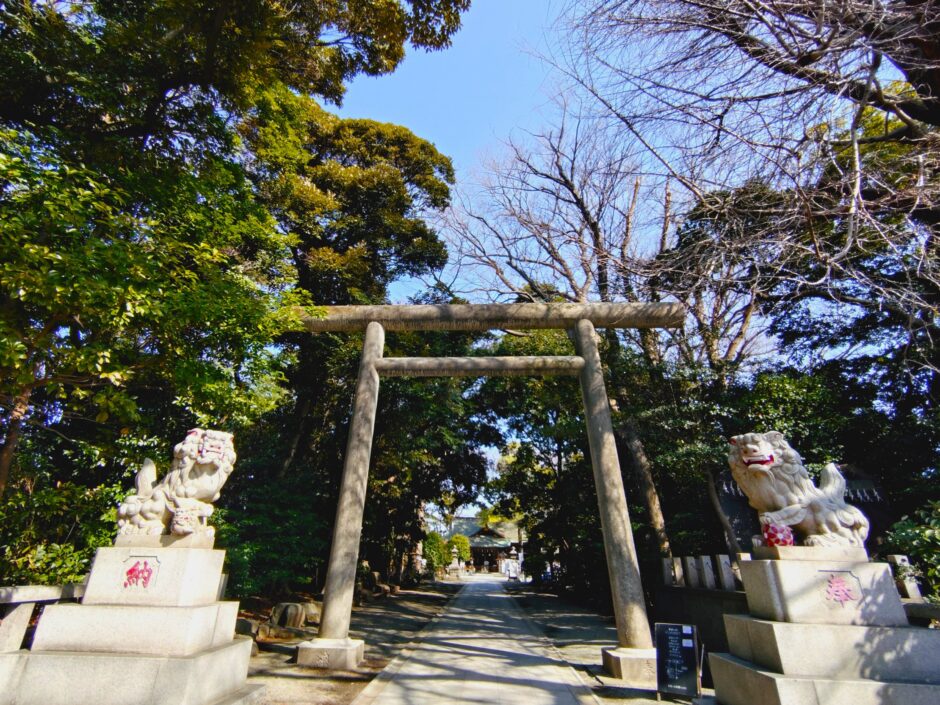

目次
- 【Overview of Sakitori Shrine】
- 【Sakitori Shrine: Approach (Sando)】
- 【Sakitori Shrine: Belfry (Shoro)】
- 【Sakitori Shrine: Main Hall (Shaden)】
- 【Sakitori Shrine: The Pine of Happiness (Shiawase no Matsu)】
- 【Sakitori Shrine: Godo Shrine (Subsidiary Shrine)】
- 【Sakitori Shrine: Shogaku Shrine (Subsidiary Shrine)】
- 【Sakitori Shrine Goshuin】
- 【Tourist Spots Near Sakitori Shrine】
- 【Sakitori Shrine: Access】
- Admin’s Impressions
- Sakitori Shrine Address
【Overview of Sakitori Shrine】
The exact year of Sakitori Shrine’s founding is unknown. However, its name is recorded in the Engishiki Jinmyocho (a registry of prominent shrines across the country compiled between 901 and 923). According to local legend, it is believed to have been founded in 368 (the 56th year of Emperor Nintoku’s reign).
The shrine’s origins are said to be tied to Uji no Wakiiratsuko no Mikoto, a son of Emperor Ojin and the half-brother of Emperor Nintoku. Although he was first chosen as the Crown Prince, he yielded the throne to Emperor Nintoku, moved from Uji to this area, and lived out his days here. It is said that his descendants enshrined him, which marked the beginning of this shrine.
Today, it serves as the Shinomiya (the 4th ranking shrine) of the former Sagami Province (modern-day Kanagawa) and is one of the “Six Shrines of Sagami.”
![20260301 090643249 520x300 - Sakitori Shrine [Kanagawa]](https://japan-shrine.info/wp-content/uploads/20260301_090643249-520x300.jpg "Sakitori Shrine [Kanagawa]")
![20260301 105210937 520x300 - Sakitori Shrine [Kanagawa]](https://japan-shrine.info/wp-content/uploads/20260301_105210937-520x300.jpg "Sakitori Shrine [Kanagawa]")
The enshrined deities are Uji no Wakiiratsuko no Mikoto, Oyamakui no Mikoto, and Yamato Takeru no Mikoto.
【Sakitori Shrine: Approach (Sando)】
![20260301 102118441 1024x768 - Sakitori Shrine [Kanagawa]](https://japan-shrine.info/wp-content/uploads/20260301_102118441-1024x768.jpg "Sakitori Shrine [Kanagawa]")
The shrine grounds begin past the Second Torii Gate, surrounded by magnificent giant trees. The approach is a long, straight path lined with cherry trees, which must offer a spectacular view in the spring.
【Sakitori Shrine: Belfry (Shoro)】
![20260301 100641260 1024x768 - Sakitori Shrine [Kanagawa]](https://japan-shrine.info/wp-content/uploads/20260301_100641260-1024x768.jpg "Sakitori Shrine [Kanagawa]")
Along the approach, I found a belfry dating back to 1790 (the 2nd year of the Kansei era). This is likely a remnant of Shinbutsu-shugo (the historical syncretism of Shinto and Buddhism). Anyone is allowed to ring the bell, so I gave it a try, and it produced a beautifully resonant sound.
【Sakitori Shrine: Main Hall (Shaden)】
![20260301 100948612 1024x768 - Sakitori Shrine [Kanagawa]](https://japan-shrine.info/wp-content/uploads/20260301_100948612-1024x768.jpg "Sakitori Shrine [Kanagawa]")
First-time visitors might misread the name, but the characters 前鳥 are read as “Sakitori.” The plaque on the Worship Hall was written as “左喜登利” (also read as Sakitori).
*Up until the Edo period, various kanji combinations such as 左喜登利, 埼取, and 前取 were used phonetically for the name, but today, based on the ancient Engishiki registry, the characters 前鳥 are officially used.
【Sakitori Shrine: The Pine of Happiness (Shiawase no Matsu)】
![20260301 101258198 1024x768 - Sakitori Shrine [Kanagawa]](https://japan-shrine.info/wp-content/uploads/20260301_101258198-1024x768.jpg "Sakitori Shrine [Kanagawa]")
To the right of the Worship Hall stands a splendid pine tree known as the “Pine of Happiness.” Rarely, you can find a cluster of pine needles with four blades instead of the usual number. It is said that finding and keeping these four-leaf pine needles brings good fortune.
【Sakitori Shrine: Godo Shrine (Subsidiary Shrine)】
![20260301 101638400 1024x768 - Sakitori Shrine [Kanagawa]](https://japan-shrine.info/wp-content/uploads/20260301_101638400-1024x768.jpg "Sakitori Shrine [Kanagawa]")
Godo Shrine enshrines Susanoo no Mikoto and Amaterasu Omikami. It features the Shinmei-zukuri architectural style, similar to the grand Ise Jingu.
【Sakitori Shrine: Shogaku Shrine (Subsidiary Shrine)】
![20260301 101606867 1024x768 - Sakitori Shrine [Kanagawa]](https://japan-shrine.info/wp-content/uploads/20260301_101606867-1024x768.jpg "Sakitori Shrine [Kanagawa]")
Shogaku Shrine enshrines Sugawara no Michizane (the deity of scholarship).
![20260301 101703141 1024x768 - Sakitori Shrine [Kanagawa]](https://japan-shrine.info/wp-content/uploads/20260301_101703141-1024x768.jpg "Sakitori Shrine [Kanagawa]")
Lord Sugawara no Michizane deeply loved plum blossoms. When he was unjustly demoted and exiled, he famously composed a poem to bid farewell to his beloved plum tree:
“When the east wind blows, send your fragrance to me, plum blossoms. Even though your master is gone, do not forget the spring.”
This is the reason why shrines dedicated to Sugawara no Michizane are almost always filled with plum trees.
【Sakitori Shrine Goshuin】
![sakitori GOSHUIN 718x1024 - Sakitori Shrine [Kanagawa]](https://japan-shrine.info/wp-content/uploads/sakitori-GOSHUIN-718x1024.jpg "Sakitori Shrine [Kanagawa]")
【Tourist Spots Near Sakitori Shrine】
Samukawa Shrine, Hiratsuka Hachimangu.
【Sakitori Shrine: Access】
Admin’s Impressions
When I visited Samukawa Shrine, I decided to stop by this nearby shrine as well. The grounds have a spacious parking lot, making it very accessible for visitors traveling from afar. I felt it was a wonderful shrine that is clearly deeply revered by the local community. It’s also fascinating that because the three sub-shrines here enshrine different deities, the architectural styles of their buildings vary as well. Since it is relatively close to Samukawa Shrine, I highly recommend visiting both together.
![6346287f142cadd101012aec52742c9b - Sakitori Shrine [Kanagawa]](https://japan-shrine.info/wp-content/uploads/sng/6346287f142cadd101012aec52742c9b.jpg "Sakitori Shrine [Kanagawa]")
![20260301 105210937 150x150 - Sakitori Shrine [Kanagawa]](https://japan-shrine.info/wp-content/uploads/20260301_105210937-150x150.jpg "Sakitori Shrine [Kanagawa]")
![20260301 090643249 150x150 - Sakitori Shrine [Kanagawa]](https://japan-shrine.info/wp-content/uploads/20260301_090643249-150x150.jpg "Sakitori Shrine [Kanagawa]")
![DSC 2626 2 150x150 - Sakitori Shrine [Kanagawa]](https://japan-shrine.info/wp-content/uploads/DSC_2626-2-150x150.jpg "Sakitori Shrine [Kanagawa]")
![24150496 m 150x150 - Sakitori Shrine [Kanagawa]](https://japan-shrine.info/wp-content/uploads/24150496_m-150x150.jpg "Sakitori Shrine [Kanagawa]")