 Tour of Japanese shrines and temples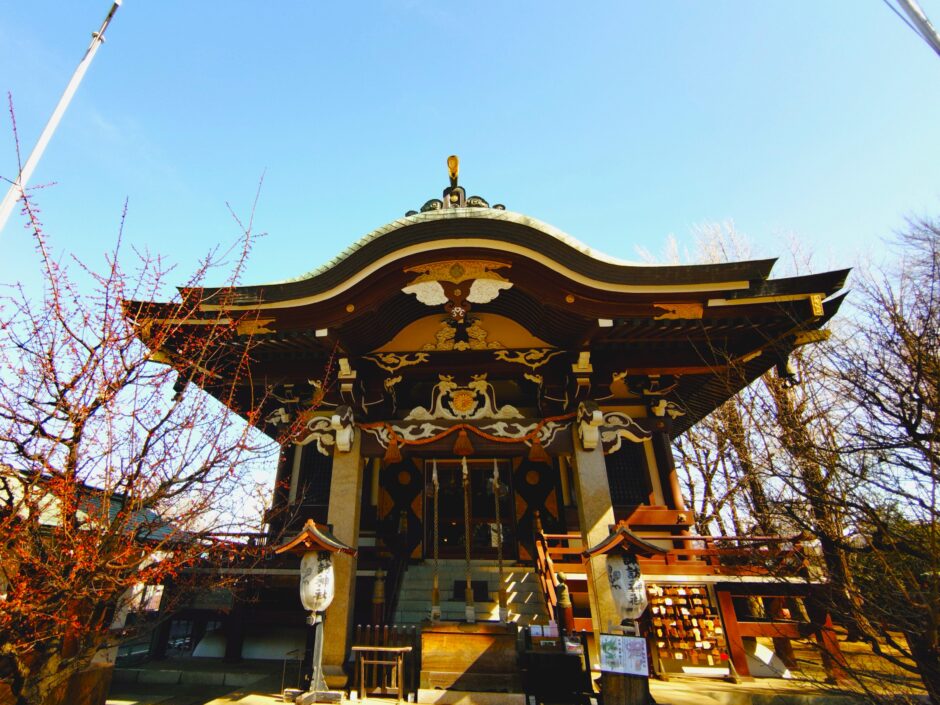

目次
- 【Overview of Shinjuku Suwa Shrine】
- 【Shinjuku Suwa Shrine: Torii Gate】
- 【Shinjuku Suwa Shrine: Chozuya】
- 【Shinjuku Suwa Shrine: Main Hall (Shaden)】
- 【Shinjuku Suwa Shrine: Subsidiary Shrines】
- 【Shinjuku Suwa Shrine: The “Sainokami Mihashira” Tower】
- 【Overview of Genkoku-ji Temple】
- 【Genkoku-ji Temple: Sanmon Gate】
- 【Genkoku-ji Temple: Main Hall (Hondo)】
- 【Genkoku-ji Temple: Hexagonal Benten-do】
- 【Genkoku-ji Temple: Quartz Crystal】
- 【Shinjuku Suwa Shrine: Goshuin and Amulets】
- 【Tourist Spots Near Shinjuku Suwa Shrine (Within a 30-minute walk)】
- 【Shinjuku Suwa Shrine Access】
- Admin’s Impressions
- Shinjuku Suwa Shrine Address
【Overview of Shinjuku Suwa Shrine】
Shinjuku Suwa Shrine was founded during the Konin era (810–824).
It is said to have begun when Ono no Takamura enshrined the deities Okuninushi and Kotoshironushi. In 1189, Minamoto no Yoritomo prayed here for victory before his Oshu campaign and later built the shrine buildings upon his triumphant return. Originally named Matsubara Shrine, it was renamed Suwa Shrine in the early Edo period after Tokugawa Yoshinao invited the Suwa deity from Shinano Province to be enshrined here. The shrine shares a deep history with the Tokugawa family’s falconry, and historical artifacts such as ema (votive tablets) from that time are still preserved.
The primary enshrined deities are Okuninushi-no-mikoto, Kotoshironushi-no-mikoto, and Takeminakata-no-mikoto.
【Shinjuku Suwa Shrine: Torii Gate】
![20260315 092450813 1024x768 - Shinjuku Suwa Shrine and Genkoku-ji Temple [Tokyo]](https://japan-shrine.info/wp-content/uploads/20260315_092450813-1024x768.jpg "Shinjuku Suwa Shrine and Genkoku-ji Temple [Tokyo]")
From the entrance, a magnificent main hall sits directly ahead past the torii gate. A chozuya (purification fountain) is located just before the gate.
【Shinjuku Suwa Shrine: Chozuya】
![20260315 092512983 1024x768 - Shinjuku Suwa Shrine and Genkoku-ji Temple [Tokyo]](https://japan-shrine.info/wp-content/uploads/20260315_092512983-1024x768.jpg "Shinjuku Suwa Shrine and Genkoku-ji Temple [Tokyo]")
The water here, known as the “Sacred Spring of Suwa,” has flowed from the grounds since ancient times. It is said to have miraculous healing powers for eye diseases and various other ailments. Note that signs indicate the water is not for drinking, so it should only be used for the ritual washing of hands.
【Shinjuku Suwa Shrine: Main Hall (Shaden)】
![20260315 093713845 1024x768 - Shinjuku Suwa Shrine and Genkoku-ji Temple [Tokyo]](https://japan-shrine.info/wp-content/uploads/20260315_093713845-1024x768.jpg "Shinjuku Suwa Shrine and Genkoku-ji Temple [Tokyo]")
The main hall comes into view after passing through the second torii gate. The precinct is relatively spacious, and it is refreshing to see that the view behind the hall isn’t obstructed by skyscrapers.
![20260315 092717482 1024x768 - Shinjuku Suwa Shrine and Genkoku-ji Temple [Tokyo]](https://japan-shrine.info/wp-content/uploads/20260315_092717482-1024x768.jpg "Shinjuku Suwa Shrine and Genkoku-ji Temple [Tokyo]")
The hall features intricate carvings and a dignified structure. Although built of reinforced concrete, it possesses a solid sense of stability that differs from traditional wooden structures.
![20260315 092746704 1024x768 - Shinjuku Suwa Shrine and Genkoku-ji Temple [Tokyo]](https://japan-shrine.info/wp-content/uploads/20260315_092746704-1024x768.jpg "Shinjuku Suwa Shrine and Genkoku-ji Temple [Tokyo]")
This hall was completed in 1980 as part of a renovation project commemorating the 100th anniversary of the Meiji era.
【Shinjuku Suwa Shrine: Subsidiary Shrines】
![20260315 093627759 1024x768 - Shinjuku Suwa Shrine and Genkoku-ji Temple [Tokyo]](https://japan-shrine.info/wp-content/uploads/20260315_093627759-1024x768.jpg "Shinjuku Suwa Shrine and Genkoku-ji Temple [Tokyo]")
Within the grounds are two smaller shrines: Mitake Shrine and Inari Shrine.
【Shinjuku Suwa Shrine: The “Sainokami Mihashira” Tower】
![20260315 093542377 1024x776 - Shinjuku Suwa Shrine and Genkoku-ji Temple [Tokyo]](https://japan-shrine.info/wp-content/uploads/20260315_093542377-1024x776.jpg "Shinjuku Suwa Shrine and Genkoku-ji Temple [Tokyo]")
Erected in 1682, this is the only “Sainokami” (boundary deity) tower in the ward. Towers inscribed with the specific words “Sainokami Mihashira” are rare, and it is currently designated as a Registered Tangible Folk Cultural Property of Shinjuku Ward.
【Overview of Genkoku-ji Temple】
Genkoku-ji was founded in 1601 and formerly served as the betto-ji (managerial temple) for the neighboring Suwa Shrine. It belongs to the Shingon Buzan sect, and its mountain name is Ryuchizan. The temple has a historical connection to the Meiji statesman Iwakura Tomomi; a portion of his former residence was relocated here to serve as the temple’s living quarters (kuri) during the late Taisho era.
The primary object of worship is Amida Nyorai, a seated statue roughly three feet tall known as the “Amida of the Three-Petal Flame.” It is said to be the work of the priest Gyoki and is also nicknamed the “Trial Amida” (Kokoromi no Amida).
【Genkoku-ji Temple: Sanmon Gate】
![20260315 091849792 1024x768 - Shinjuku Suwa Shrine and Genkoku-ji Temple [Tokyo]](https://japan-shrine.info/wp-content/uploads/20260315_091849792-1024x768.jpg "Shinjuku Suwa Shrine and Genkoku-ji Temple [Tokyo]")
The Iwakura family crest, the “Sasa-Rindo” (bamboo grass and gentian), can be seen in various places, including the gate.
【Genkoku-ji Temple: Main Hall (Hondo)】
![20260315 092253695 1024x768 - Shinjuku Suwa Shrine and Genkoku-ji Temple [Tokyo]](https://japan-shrine.info/wp-content/uploads/20260315_092253695-1024x768.jpg "Shinjuku Suwa Shrine and Genkoku-ji Temple [Tokyo]")
The grounds are impeccably clean, and the quiet atmosphere is very soothing. The main hall is also quite impressive.
【Genkoku-ji Temple: Hexagonal Benten-do】
![20260315 092114644 1024x768 - Shinjuku Suwa Shrine and Genkoku-ji Temple [Tokyo]](https://japan-shrine.info/wp-content/uploads/20260315_092114644-1024x768.jpg "Shinjuku Suwa Shrine and Genkoku-ji Temple [Tokyo]")
There is a Benten-do hall on the grounds where Benzaiten (the goddess of music and fortune) is enshrined.
【Genkoku-ji Temple: Quartz Crystal】
![20260315 092208751 1024x768 - Shinjuku Suwa Shrine and Genkoku-ji Temple [Tokyo]](https://japan-shrine.info/wp-content/uploads/20260315_092208751-1024x768.jpg "Shinjuku Suwa Shrine and Genkoku-ji Temple [Tokyo]")
While it is unclear why it is placed here, there is a magnificent, large quartz crystal. Quartz is believed to have purifying properties.
【Shinjuku Suwa Shrine: Goshuin and Amulets】
![20260315 150712962 1024x768 - Shinjuku Suwa Shrine and Genkoku-ji Temple [Tokyo]](https://japan-shrine.info/wp-content/uploads/20260315_150712962-1024x768.jpg "Shinjuku Suwa Shrine and Genkoku-ji Temple [Tokyo]")
I received a “Nyan-nyan” (cat-themed) goshuin and an eye protection amulet. The amulet has a design reminiscent of the Freemason symbol! The variety of goshuin was impressive and fun to browse.
【Tourist Spots Near Shinjuku Suwa Shrine (Within a 30-minute walk)】
Mizuinari Shrine, Hosho-ji Temple, Ana Hachimangu Shrine, Horin-ji Temple.
![DSC 3267 520x300 - Shinjuku Suwa Shrine and Genkoku-ji Temple [Tokyo]](https://japan-shrine.info/wp-content/uploads/DSC_3267-520x300.jpg "Shinjuku Suwa Shrine and Genkoku-ji Temple [Tokyo]")
![20260315 095635989 520x300 - Shinjuku Suwa Shrine and Genkoku-ji Temple [Tokyo]](https://japan-shrine.info/wp-content/uploads/20260315_095635989-520x300.jpg "Shinjuku Suwa Shrine and Genkoku-ji Temple [Tokyo]")
![DSC 0809 520x300 - Shinjuku Suwa Shrine and Genkoku-ji Temple [Tokyo]](https://japan-shrine.info/wp-content/uploads/DSC_0809-520x300.jpg "Shinjuku Suwa Shrine and Genkoku-ji Temple [Tokyo]")
![20260315 101823942 2 520x300 - Shinjuku Suwa Shrine and Genkoku-ji Temple [Tokyo]](https://japan-shrine.info/wp-content/uploads/20260315_101823942-2-520x300.jpg "Shinjuku Suwa Shrine and Genkoku-ji Temple [Tokyo]")
I’ve put together a walking route below, so I hope you find it helpful for your visit
![route to healing eye diseases 520x300 - Shinjuku Suwa Shrine and Genkoku-ji Temple [Tokyo]](https://japan-shrine.info/wp-content/uploads/route-to-healing-eye-diseases-520x300.jpe "Shinjuku Suwa Shrine and Genkoku-ji Temple [Tokyo]")
【Shinjuku Suwa Shrine Access】
Admin’s Impressions
While it lacks flashy decorations, the dignified torii and heavy-set main hall are wonderful. Because there are no tall buildings in the immediate vicinity, the landscape is preserved, creating a very pleasant atmosphere. It’s amazing that the spring water in the chozuya has been flowing for hundreds of years, though I felt it could be better promoted or maintained. As is often the fate of urban shrines, the grounds feel a bit cramped, but visiting it alongside the neighboring Genkoku-ji Temple makes for a fulfilling visit.
1-12-6 Takadanobaba, Shinjuku City, Tokyo 169-0075
*Note: No parking available.
![b671c4f5353e3ec4bf7bec72806a2e3f - Shinjuku Suwa Shrine and Genkoku-ji Temple [Tokyo]](https://japan-shrine.info/wp-content/uploads/sng/b671c4f5353e3ec4bf7bec72806a2e3f.png "Shinjuku Suwa Shrine and Genkoku-ji Temple [Tokyo]")
![DSC 1672 1 150x150 - Shinjuku Suwa Shrine and Genkoku-ji Temple [Tokyo]](https://japan-shrine.info/wp-content/uploads/DSC_1672-1-150x150.jpg "Shinjuku Suwa Shrine and Genkoku-ji Temple [Tokyo]")
![DSC 1823 1 150x150 - Shinjuku Suwa Shrine and Genkoku-ji Temple [Tokyo]](https://japan-shrine.info/wp-content/uploads/DSC_1823-1-150x150.jpg "Shinjuku Suwa Shrine and Genkoku-ji Temple [Tokyo]")
![DSC 1845 1 150x150 - Shinjuku Suwa Shrine and Genkoku-ji Temple [Tokyo]](https://japan-shrine.info/wp-content/uploads/DSC_1845-1-150x150.jpg "Shinjuku Suwa Shrine and Genkoku-ji Temple [Tokyo]")
![DSC 3267 150x150 - Shinjuku Suwa Shrine and Genkoku-ji Temple [Tokyo]](https://japan-shrine.info/wp-content/uploads/DSC_3267-150x150.jpg "Shinjuku Suwa Shrine and Genkoku-ji Temple [Tokyo]")