 Tour of Japanese shrines and temples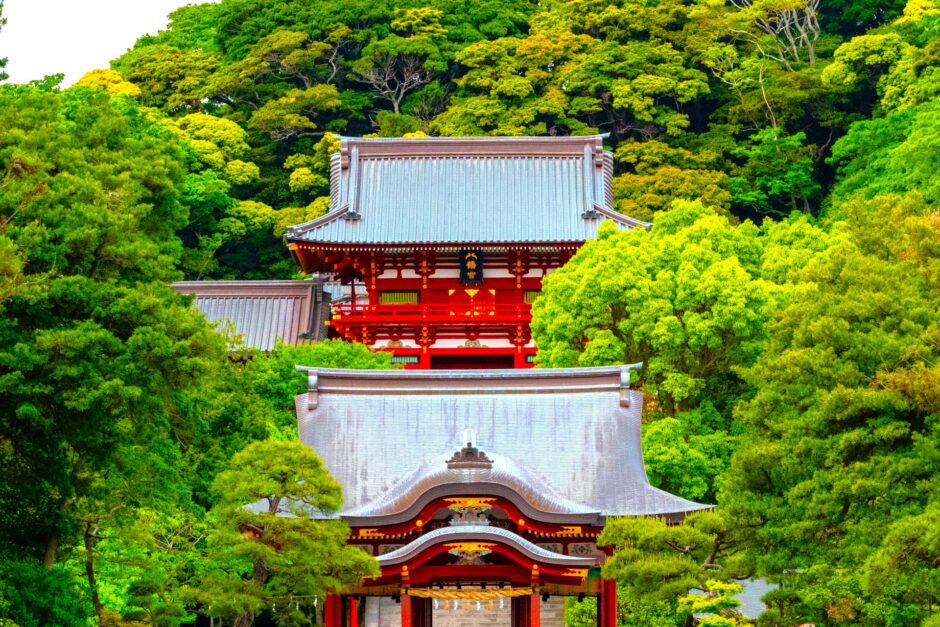

目次
- 【Tsurugaoka Hachimangu Shrine Summary】
- 【Tsurugaoka Hachimangu Shrine worshipper’s path】
- 【Tsurugaoka Hachimangu Shrine Dance Hall】
- 【Tsurugaoka Hachimangu Shrine Great Stone Steps】
- 【Tsurugaoka Hachimangu Shrine Zui-shin-mon・Main shrine】
- 【Tsurugaoka Hachimangu Shrine ritual of passing through a sacred grass ring】
- 【Tsurugaoka Hachimangu Shrine Maruyama Inari Shrine】
- 【Tsurugaoka Hachimangu Shrine GOSHUIN】
- 【Tsurugaoka Hachimangu Shrine Nearby attractions】
- 【Tsurugaoka Hachimangu Shrine Access】
- Manager’s Comments
- Address of Tsurugaoka Hachimangu Shrine
【Tsurugaoka Hachimangu Shrine Summary】
Tsurugaoka Hachimangu Shrine was founded in 1063. Its origins trace back to Minamoto no Yoriyoshi, who enshrined the deity from Kyoto’s Iwashimizu Hachimangu Shrine at Yuigahama Beach during his pacification of the northern provinces. Later, in 1180, Minamoto no Yoritomo relocated the shrine to its present site. It served as the guardian deity of the Kamakura Shogunate and played a pivotal role in religious policy, hosting official shogunate ceremonies. Even today, it attracts numerous visitors throughout the year seeking blessings for good relationships.
The enshrined deities are Emperor Ojin (the 15th Emperor), the Goddess Hime, and Empress Jingu.
【Tsurugaoka Hachimangu Shrine worshipper’s path】
The approach to Tsurugaoka Hachimangū Shrine is called Wakamiya-ōji, running almost north-south through the heart of Kamakura from Yuigahama Beach to the shrine. It is said that Minamoto no Yoritomo himself participated in its construction, modeled after Kyoto’s Suzaku-ōji.
![DSC 2626 4 1024x683 - Tsurugaoka Hachimangu Shrine [Kanagawa]](https://japan-shrine.info/wp-content/uploads/DSC_2626-4-1024x683.jpg "Tsurugaoka Hachimangu Shrine [Kanagawa]")
Wakamiya-ōji is approximately 1.8 kilometers long. It resembles the approach to Hikawa Shrine in Saitama Prefecture in both length and atmosphere.
![DSC 0082 1 520x300 - Tsurugaoka Hachimangu Shrine [Kanagawa]](https://japan-shrine.info/wp-content/uploads/DSC_0082-1-520x300.jpg "Tsurugaoka Hachimangu Shrine [Kanagawa]")
【Tsurugaoka Hachimangu Shrine Dance Hall】
Between the approach paths of Tsurugaoka Hachimangū Shrine stands the Dance Hall. At the site of the former Wakamiya Corridor here, Shizuka Gozen—the concubine of Minamoto no Yoshitsune, who opposed his brother Minamoto no Yoritomo—was captured and sent to Kamakura. It was here that she performed a dance expressing her longing for Yoshitsune, earning praise from Hōjō Masako.
![DSC 2626 1024x768 - Tsurugaoka Hachimangu Shrine [Kanagawa]](https://japan-shrine.info/wp-content/uploads/DSC_2626-1024x768.jpg "Tsurugaoka Hachimangu Shrine [Kanagawa]")
In addition to the Hachiman Shrine’s festival days, wedding ceremonies are now held here.
【Tsurugaoka Hachimangu Shrine Great Stone Steps】
![DSC 2626 5 1024x768 - Tsurugaoka Hachimangu Shrine [Kanagawa]](https://japan-shrine.info/wp-content/uploads/DSC_2626-5-1024x768.jpg "Tsurugaoka Hachimangu Shrine [Kanagawa]")
The main hall lies beyond the large stone steps. The large stone steps consist of 61 steps; once you reach the top, the Suijin Gate comes into view.
【Tsurugaoka Hachimangu Shrine Zui-shin-mon・Main shrine】
![DSC 2614 1 1024x768 - Tsurugaoka Hachimangu Shrine [Kanagawa]](https://japan-shrine.info/wp-content/uploads/DSC_2614-1-1024x768.jpg "Tsurugaoka Hachimangu Shrine [Kanagawa]")
The Zuishin-mon Gate, which leads to the Main Hall (Honden), houses statues of Zuishin (warrior attendants who guarded nobles). The Main Hall was rebuilt in 1828 by Tokugawa Ienari in the Nagare-Gongen-zukuri architectural style and is currently designated as an Important Cultural Property of Japan. Please note that photography is prohibited beyond the Zuishin-mon Gate.
Additionally, for an admission fee of 200 yen, you can visit the Treasure Hall located inside the Main Hall. Valuable artifacts are on display, such as portable shrines used in the annual festival and a small personal Buddhist statue that Minamoto no Yoritomo kept inside his topknot. Please be aware that photography is also prohibited here.
【Tsurugaoka Hachimangu Shrine ritual of passing through a sacred grass ring】
During my visit in August, Tsurugaoka Hachimangu Shrine also had a ritual of passing through a sacred grass ring set up.
![DSC 2622 1 1024x768 - Tsurugaoka Hachimangu Shrine [Kanagawa]](https://japan-shrine.info/wp-content/uploads/DSC_2622-1-1024x768.jpg "Tsurugaoka Hachimangu Shrine [Kanagawa]")
In Shinto, the sacred straw rope is said to purify evil spirits. By passing through this straw rope three times in the order of left, right, left, one purifies the sins and impurities accumulated over the past six months since New Year’s and prays for good health and the absence of disaster.
【Tsurugaoka Hachimangu Shrine Maruyama Inari Shrine】
![DSC 2611 1024x768 - Tsurugaoka Hachimangu Shrine [Kanagawa]](https://japan-shrine.info/wp-content/uploads/DSC_2611-1024x768.jpg "Tsurugaoka Hachimangu Shrine [Kanagawa]")
Perched atop a small hill to the left of Tsurugaoka Hachimangū, it seems less well-known and is not as crowded as the main shrine. The main hall is surrounded by red flags donated by those praying for prosperous business, and the approach stairs are lined with numerous red torii gates reminiscent of Fushimi Inari.
![DSC 2628 1024x768 - Tsurugaoka Hachimangu Shrine [Kanagawa]](https://japan-shrine.info/wp-content/uploads/DSC_2628-1024x768.jpg "Tsurugaoka Hachimangu Shrine [Kanagawa]")
This is the oldest Muromachi period building at Tsurugaoka Hachimangu Shrine and is currently designated as an Important Cultural Property. I checked, but it seems they do not offer goshuin here.
【Tsurugaoka Hachimangu Shrine GOSHUIN】
![tsuruoka hachimangu G 721x1024 - Tsurugaoka Hachimangu Shrine [Kanagawa]](https://japan-shrine.info/wp-content/uploads/tsuruoka-hachimangu-G-721x1024.jpg "Tsurugaoka Hachimangu Shrine [Kanagawa]")
【Tsurugaoka Hachimangu Shrine Nearby attractions】
Kenchō-ji Temple, Myōhon-ji Temple, Meigetsu-in Temple, Jōchi-ji Temple, Hongaku-ji Temple, Kamakura Shrine, Kotoku-in Temple (Great Buddha Hall)
【Tsurugaoka Hachimangu Shrine Access】
Manager’s Comments
Tsurugaoka Hachimangu Shrine is a special place where history, culture, and nature harmonize, offering new discoveries with every visit. The grounds were exceptionally clean and beautiful, meticulously maintained down to the last detail. However, with many inbound visitors, it seemed difficult to worship in quiet contemplation. If you wish to pay your respects at a leisurely pace, I recommend visiting between 6:00 AM and 9:00 AM. This time, I stopped by for my wife’s errands, so I look forward to exploring properly on my next visit.
〒248-8588 2-1-31 Yukinoshita Kamakura City, Kanagawa Prefecture
※Paid parking available
![3d13720aa2523c11c60f49037aa44464 - Tsurugaoka Hachimangu Shrine [Kanagawa]](https://japan-shrine.info/wp-content/uploads/sng/3d13720aa2523c11c60f49037aa44464.png "Tsurugaoka Hachimangu Shrine [Kanagawa]")
![DSC 1789 150x150 - Tsurugaoka Hachimangu Shrine [Kanagawa]](https://japan-shrine.info/wp-content/uploads/DSC_1789-150x150.jpg "Tsurugaoka Hachimangu Shrine [Kanagawa]")
![24150496 m 150x150 - Tsurugaoka Hachimangu Shrine [Kanagawa]](https://japan-shrine.info/wp-content/uploads/24150496_m-150x150.jpg "Tsurugaoka Hachimangu Shrine [Kanagawa]")
![DSC 0082 1 150x150 - Tsurugaoka Hachimangu Shrine [Kanagawa]](https://japan-shrine.info/wp-content/uploads/DSC_0082-1-150x150.jpg "Tsurugaoka Hachimangu Shrine [Kanagawa]")
![DSC 1074 150x150 - Tsurugaoka Hachimangu Shrine [Kanagawa]](https://japan-shrine.info/wp-content/uploads/DSC_1074-150x150.jpg "Tsurugaoka Hachimangu Shrine [Kanagawa]")