 Kanata's Japan Shrine Guide

【Overview & History of Akabane Hachiman Shrine】
Enshrined in Akabane-dai, Kita Ward, Tokyo, “Akabane Hachiman Shrine” (Akabane Hachiman Jinja) stands atop a hill through which the Tohoku and Joetsu Shinkansen bullet train tunnels run directly below its main hall. Renowned as the only shrine in Japan “enshrined above a Shinkansen railway line,” it is affectionately cherished by railway enthusiasts. Furthermore, its amulets and limited-edition Goshuin featuring the “infinity” symbol ($\infty$)—associated with the “Feng Shui Period 8” (Kagen Hachion)—boast immense popularity for granting victory, luck, and good fortune.
【History & Origins】An Ancient Shrine Standing on the Musashino Plateau Associated with Sakanoue no Tamuramaro
The founding of Akabane Hachiman Shrine is said to date back to the early Heian period (during the Enryaku era: 782–806 AD). It is believed to have originated in 784 (Enryaku 3) when Sakanoue no Tamuramaro, the Sei-i Taishogun (barbarian-subduing generalissimo), set up camp on this land during his expedition to suppress Oshu (northeastern Japan) and consecrated the Three Hachiman Deities to pray for continued martial success. Later restored by Minamoto no Yorimitsu, Minamoto no Yorimasa, Ota Dokan, and the Ota clan, the shrine once boasted vast divine grounds. However, with the construction of military roads and railways (the present-day Saikyo Line and Shinkansen), it was redeveloped into its current layout.
【Enshrined Deities & Divine Blessings】Divine Virtues of the Three Hachiman Deities Bestowing Victory Luck and Protection Against Evil
The enshrined deities (Gonsaijin) consist of three gods: Hondawake-no-mikoto (Emperor Ojin), Emperor Chuai, and Empress Jingu.
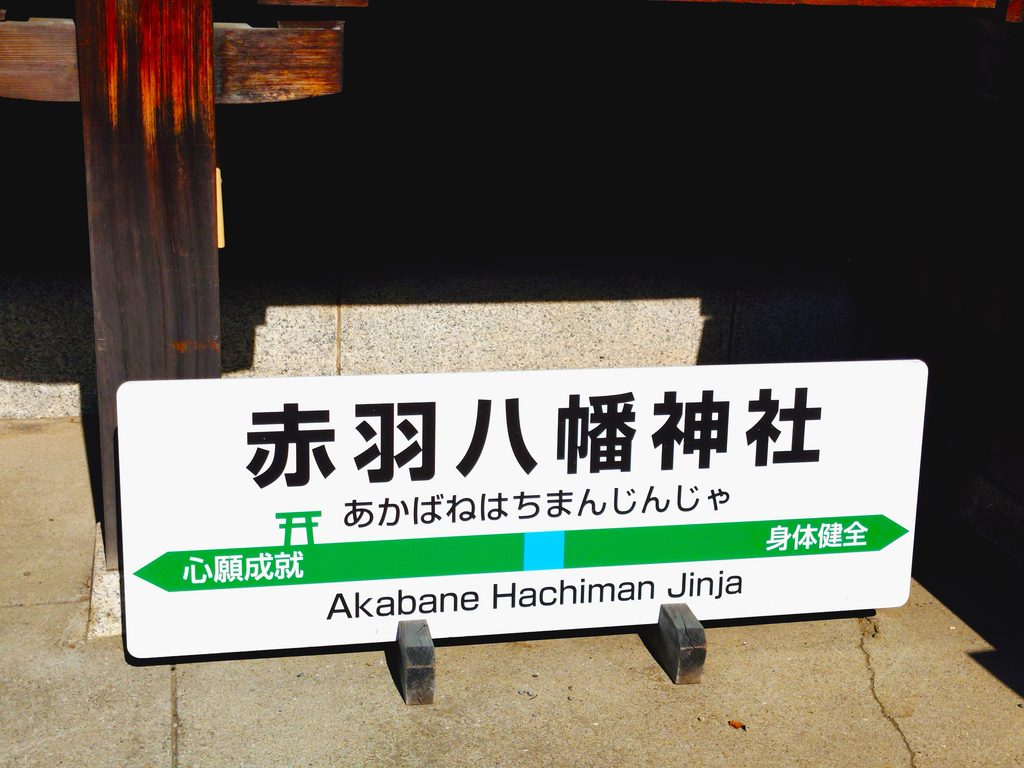
- Protection for Victory Luck & Warding Off Evil (Good Fortune): Stemming from the legend that Sakanoue no Tamuramaro prayed for martial success here and its history of attracting devotion from generations of famous samurai commanders (such as Minamoto no Yorimitsu and Ota Dokan), the shrine is renowned for blessings in match luck, career success, warding off evil, and directional protection (hoi-yoke).
- Matchmaking & Romantic Fulfillment: The sub-shrine “Okuninushi Shrine” (enshrining Okuninushi-no-mikoto / Daikoku-sama) located within the grounds is beloved as a matchmaking power spot. Beside it stands a stone statue of a white rabbit that acts as a matchmaker.
- Deity of Learning (Academic Success): The sub-shrine “Kitano Shrine” enshrines Sugawara no Michizane-ko, the deity of learning.
- Other Blessings: The shrine is also widely revered for protecting all aspects of daily life, including traffic safety and household security.
【Highlights & Recommended Worship Route of Akabane Hachiman Shrine】
Only One in Japan! “The Shrine Enshrined Above the Shinkansen”
The biggest reason it is called the only one of its kind in Japan lies in its extremely rare structural layout: a Shinkansen tunnel (Akabane-dai Tunnel) cuts directly through the earth right underneath the shrine grounds (beneath the shrine office). When opening the Tohoku and Joetsu Shinkansen lines, the route unavoidably had to pass through this elevated plateau. Following consultations, an unprecedented design was realized: “running a tunnel underneath a shrine’s sacred grounds.”
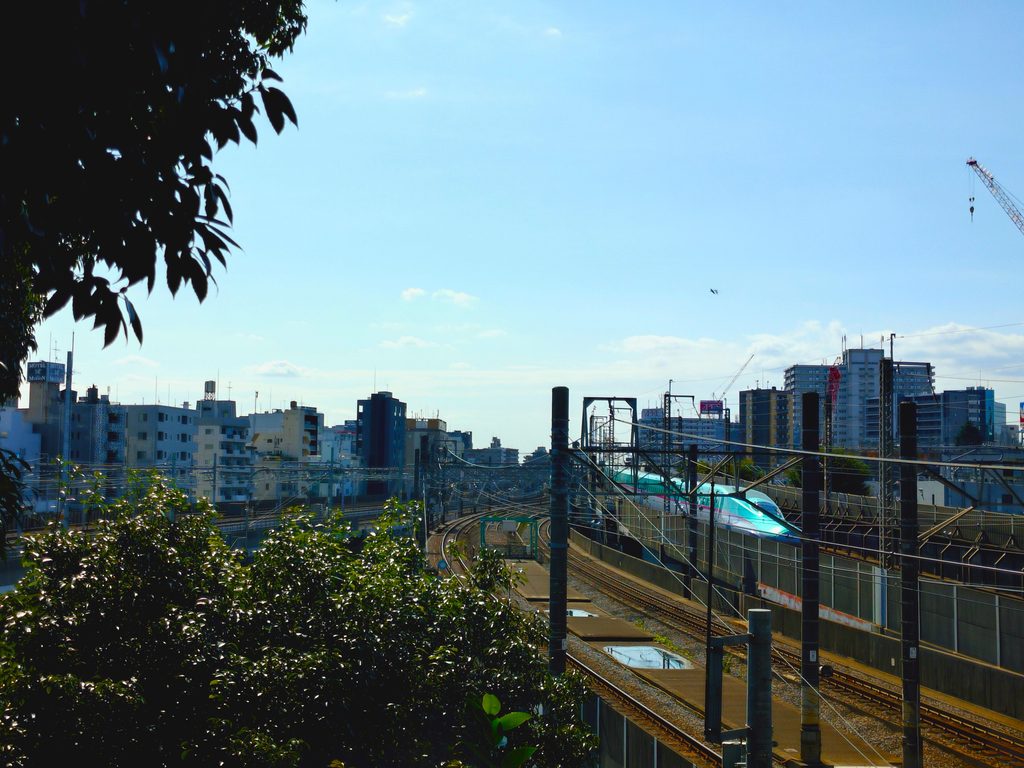
From the grounds situated on a hill approximately 20 meters above sea level (especially from the observation space deep within the grounds or near the Torii gate on the slope), one can take in a sweeping view of the vast railway tracks spreading below. Because the train frequency is extremely high, if your timing is good, you might even witness a miraculous moment where up to three trains pass by simultaneously—such as two Shinkansen passing each other or a Shinkansen running side-by-side with a Saikyo Line train.
【Main Approach & Rear Approach Grand Torii Gate】Grand Torii Gates of the Main and Rear Approaches with Distinct Atmospheres
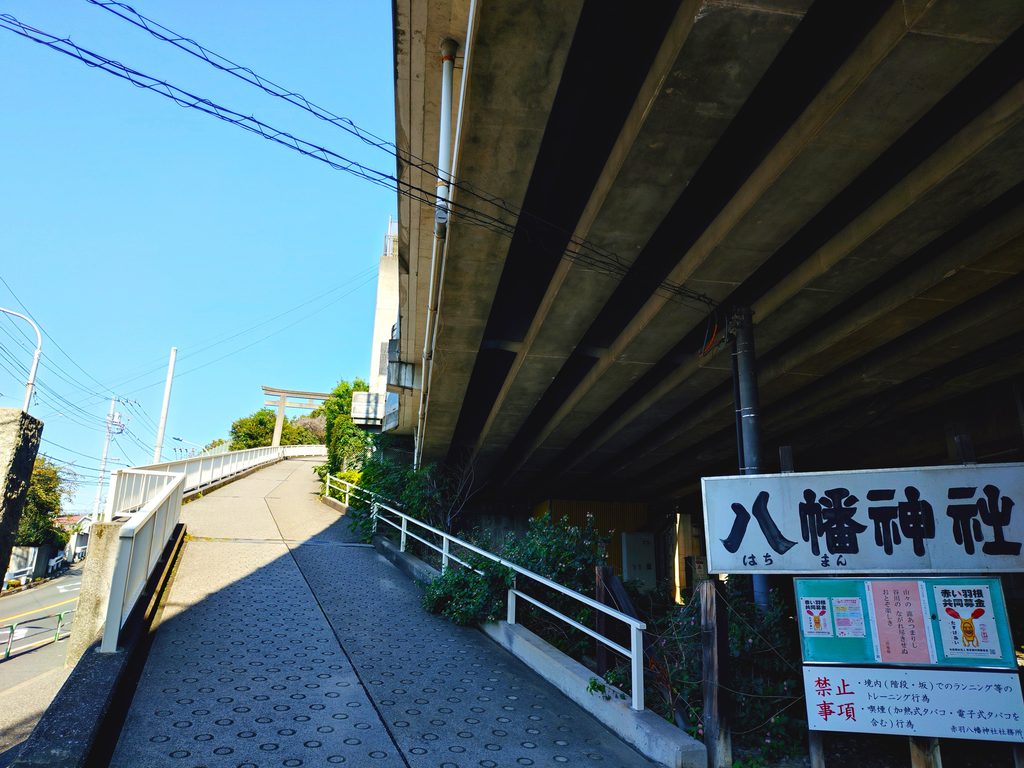
Walking along the elevated tracks from Akabane Station, you will see a sign reading “Hachiman Shrine Entrance,” where the path splits into two routes: a staircase route and a slope route.
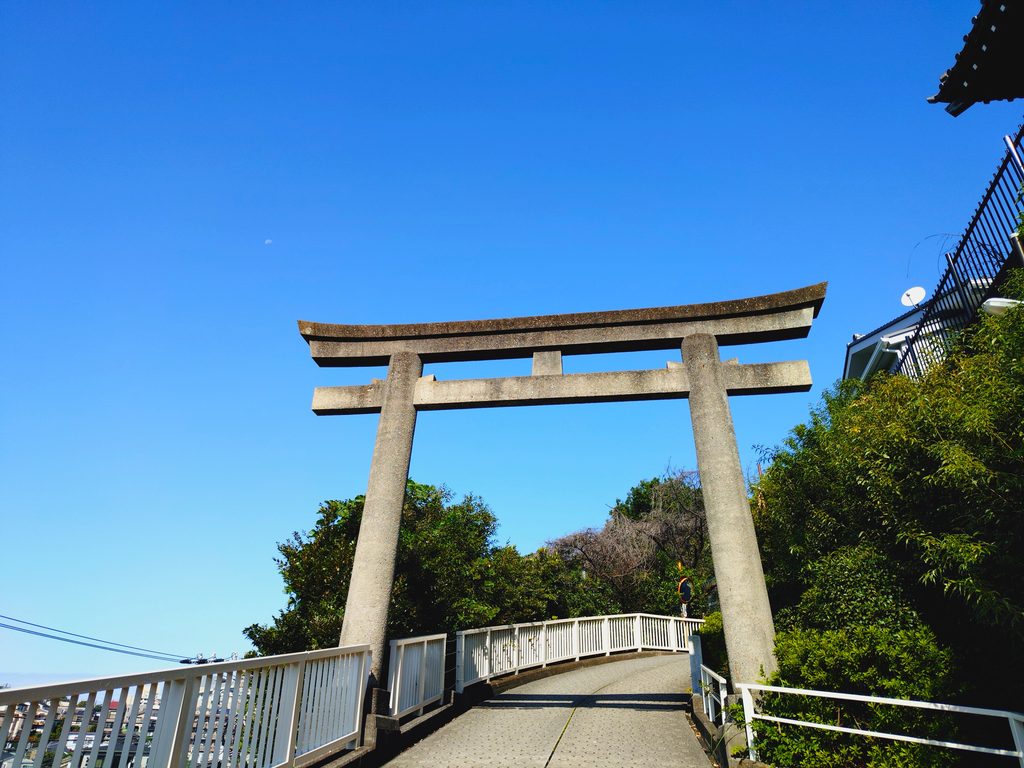
The slope route is a roadway for vehicles accessing the elevated grounds (parking lot), marked by a large Torii gate. If you are lucky, you might spot a Shinkansen running right between the pillars of the rear approach Torii gate. Since I am not particularly interested in trains, I bypassed this route.
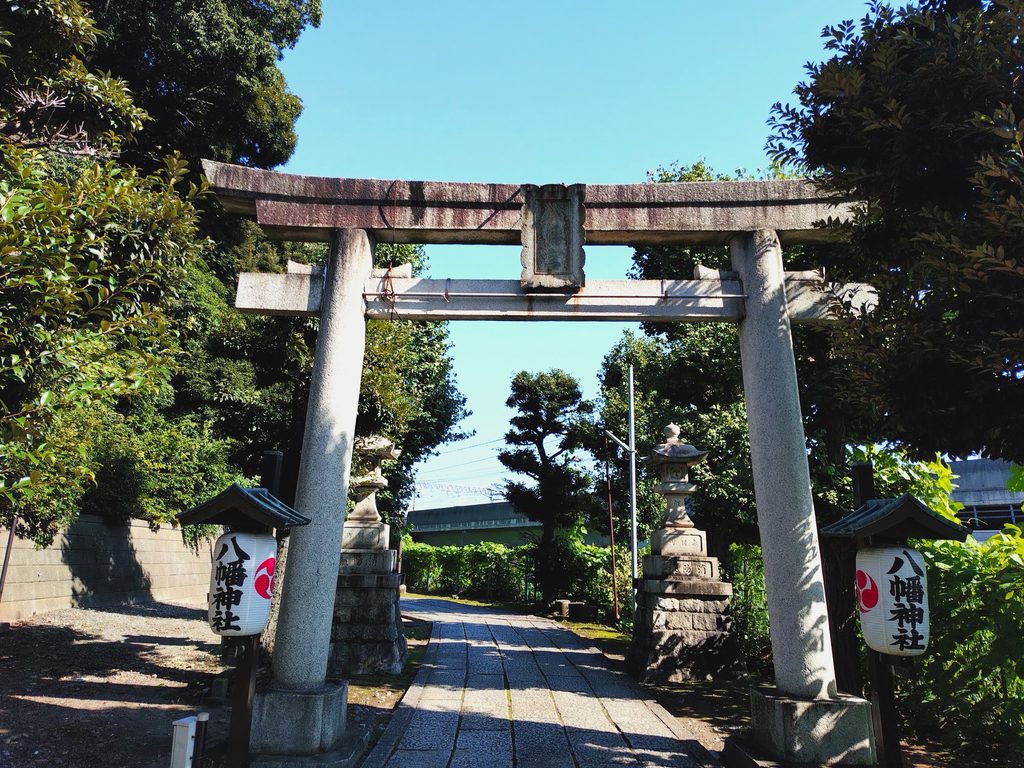
Taking the staircase route to the right at the fork leads to a Torii gate. Proceeding further brings you to steep stone steps leading directly to the front of the Main Hall.
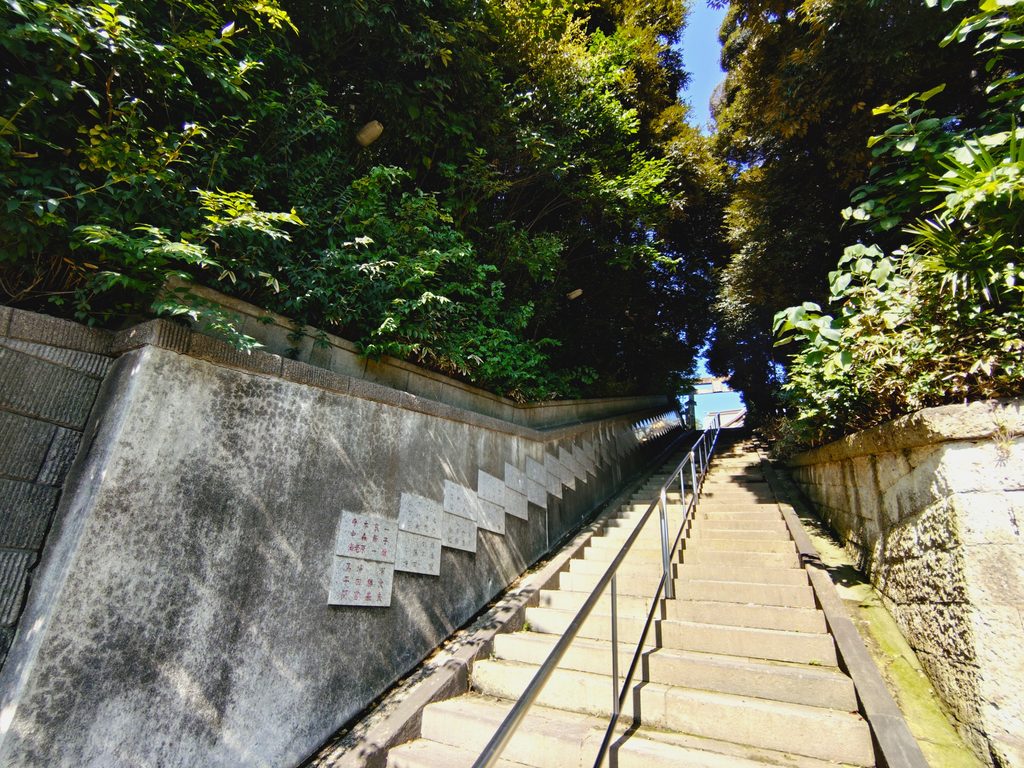
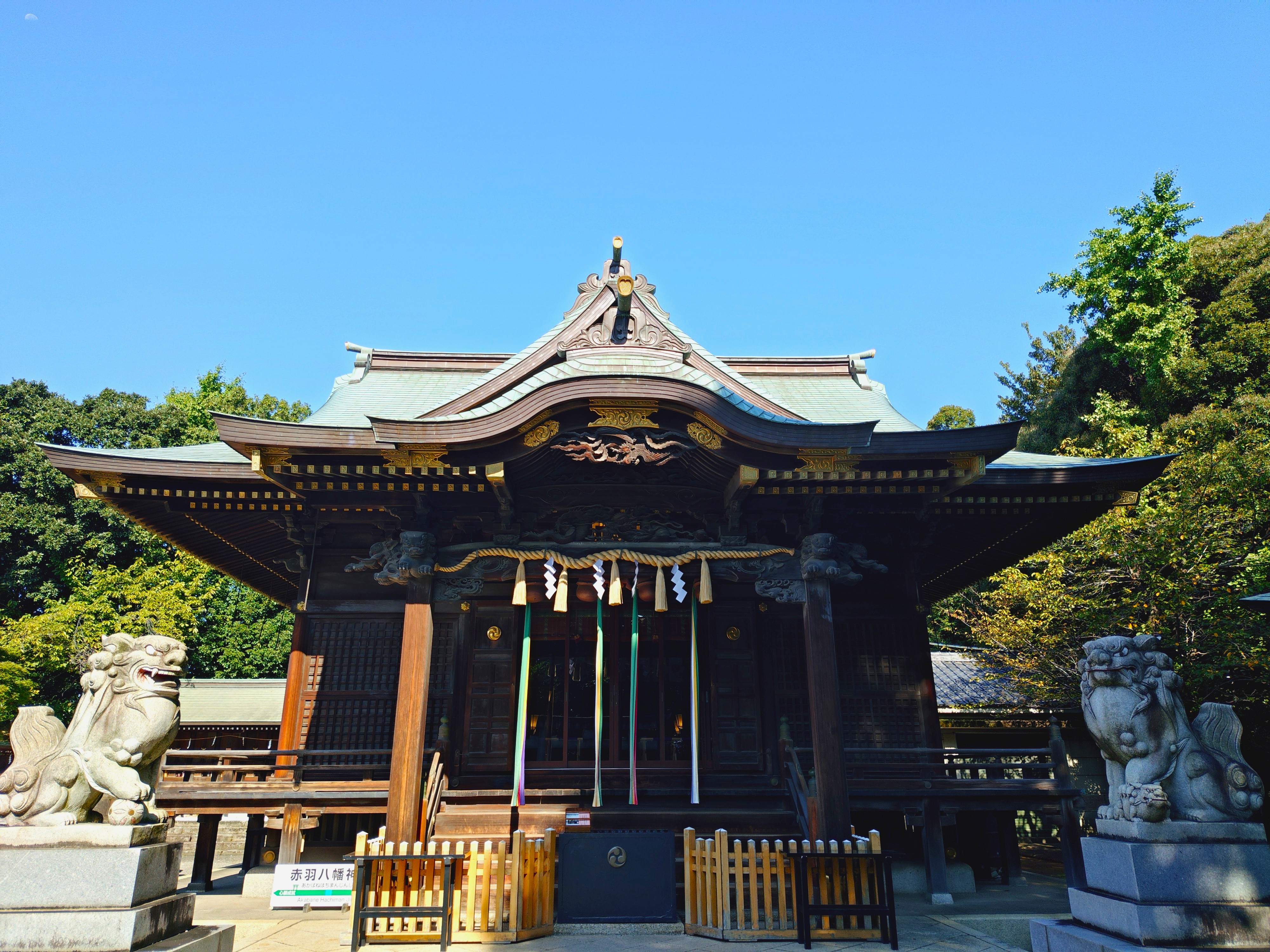
Upon reaching the top of the approach path, a Torii gate stands directly in front of the shrine hall.
【Shrine Halls】Solemn Main Hall and Worship Hall Watching Over the Town from the Hill
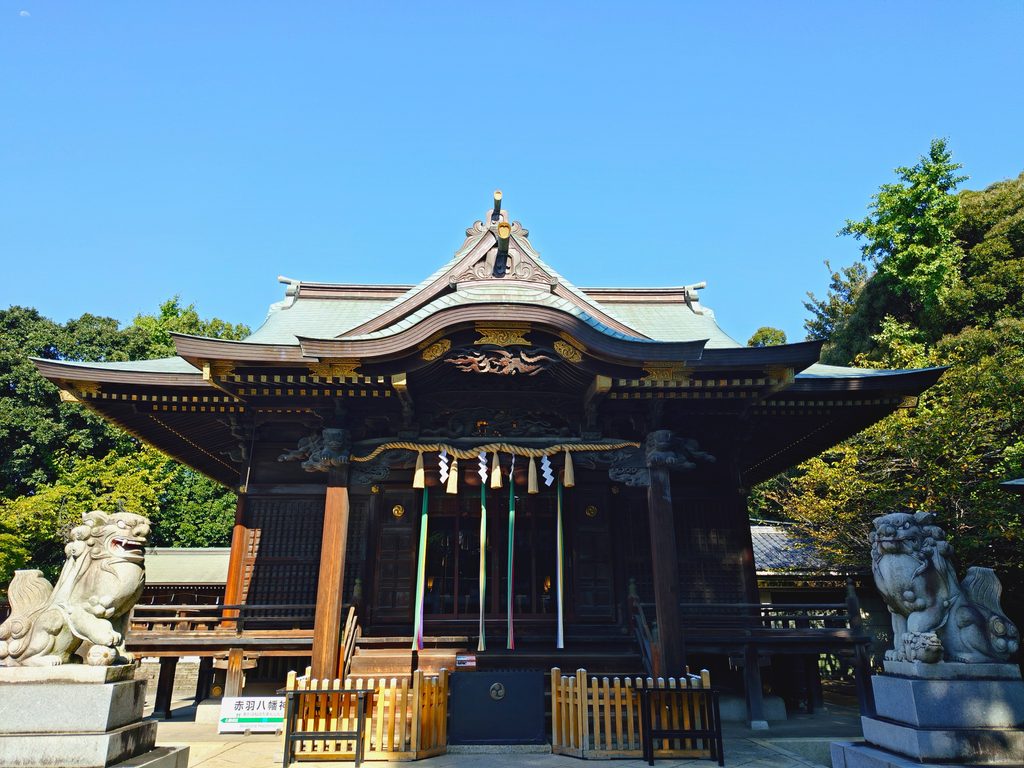
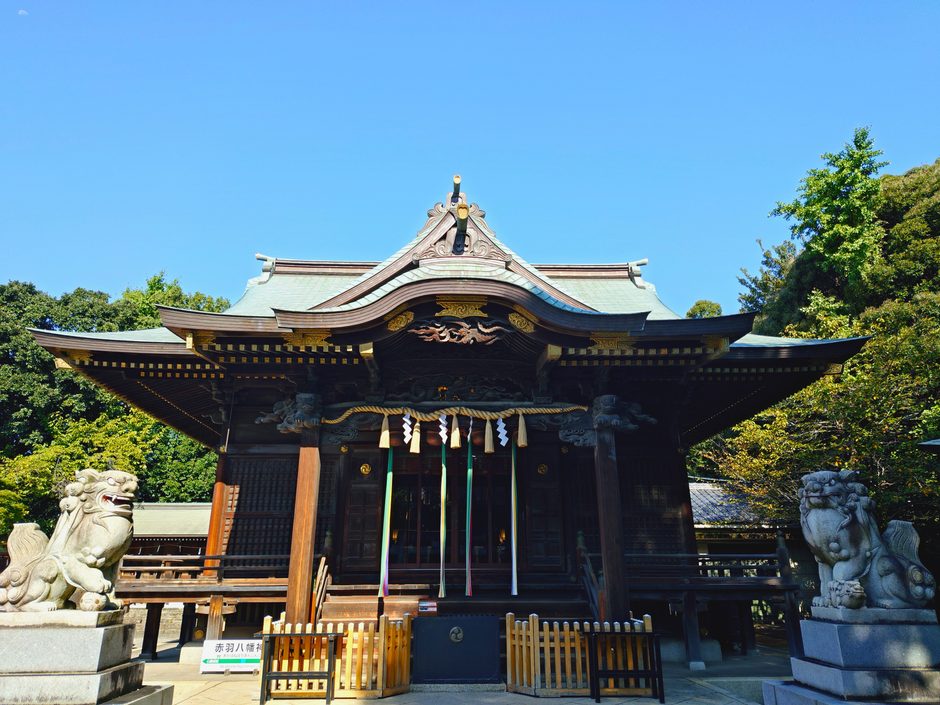
Historical records show several rebuilds; most recently, it collapsed during the Great Kanto Earthquake but was rebuilt through the cooperation of local parishioners (ujiko). The current shrine halls were repaired and restored in 1931 (Showa 6).
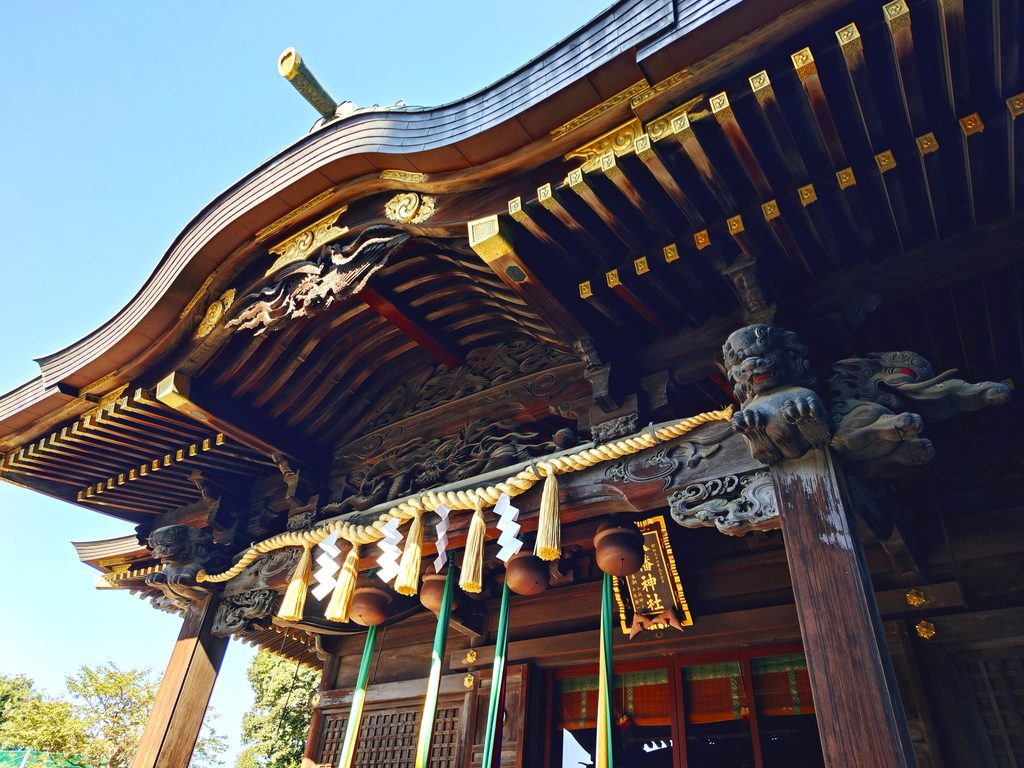
The Main Hall (Honden), Offering Hall (Heiden), and Worship Hall (Haiden) adopt an integrated Gongen-zukuri architectural style. Beautiful carvings and a coffered ceiling (gotenjo) adorn the interior of the Haiden, carrying the design aesthetics of early Showa shrine architecture into the modern era.
【Kagura Hall & Sub-shrines】Kagura Hall Conveying Tradition and Unique Sub-shrines
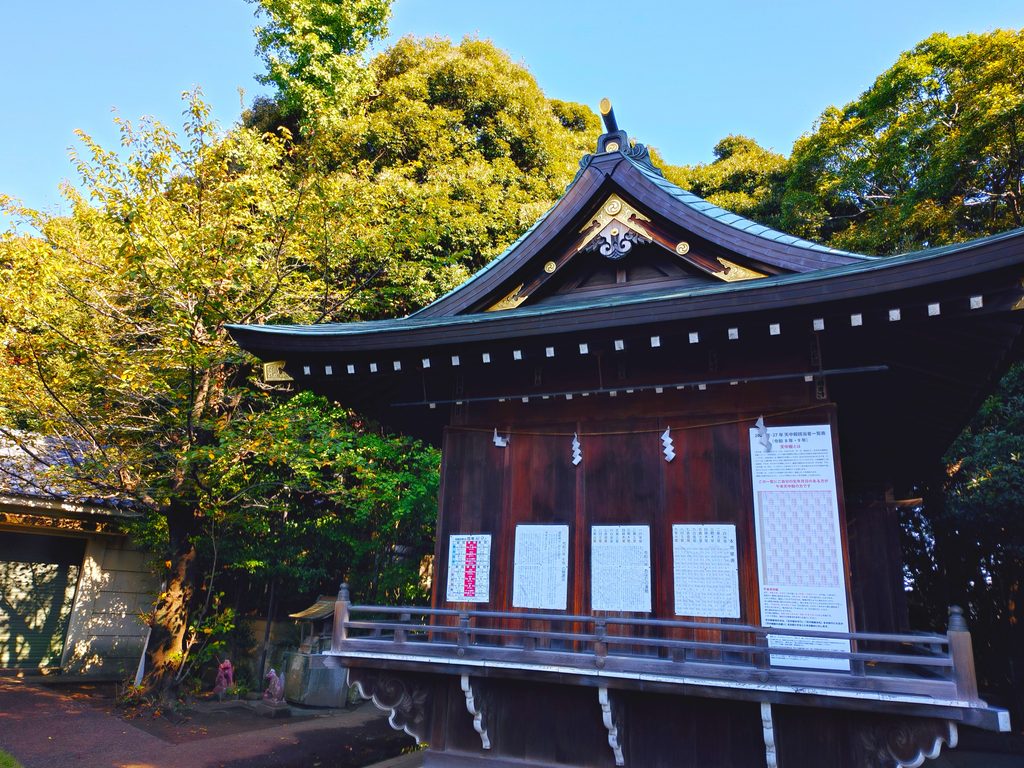
To the right of the shrine halls stands the Kagura Hall (Kaguraden). This Kagura Hall also serves as an Ema-do (picture scroll hall), housing historic votive tablets (ema). During the Annual Festival (Reitaisai) held in mid-September every year, the front of the Kagura Hall is opened wide. Accompanied by the traditional sounds of flutes and drums (ohayashi), dancers wearing Kagura masks and ornate costumes perform prestigious sacred dances (kagura).
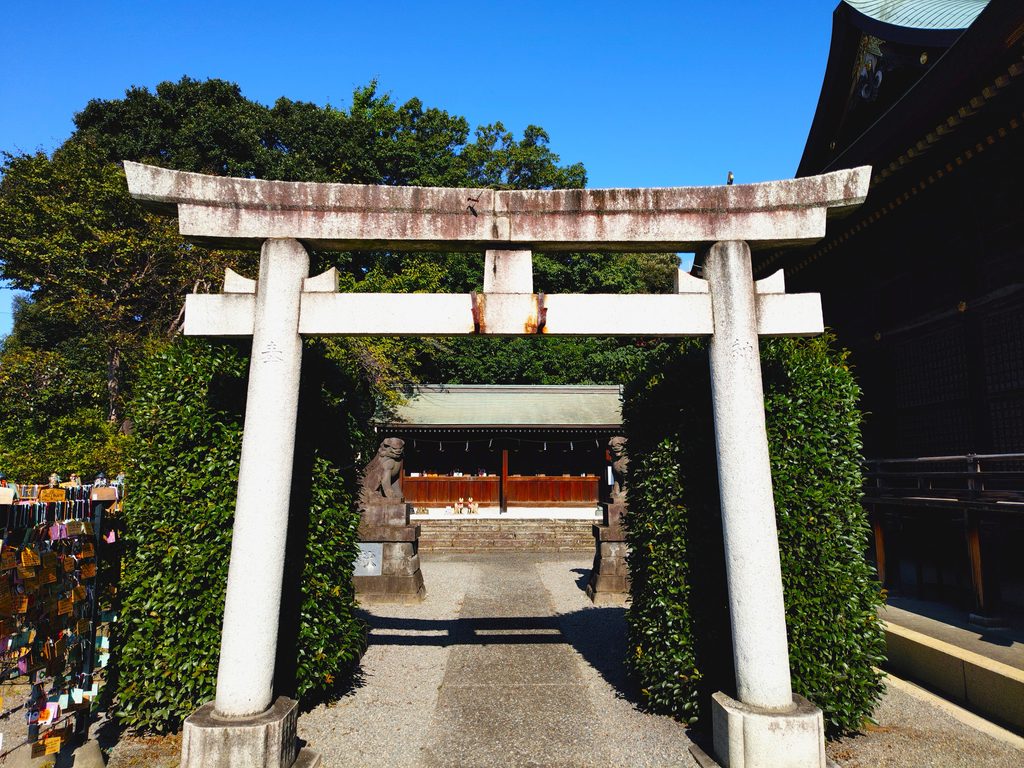
On the left side of the shrine halls, a row of sub-shrines jointly enshrines various deities worshipped in the local community. Passing under the Torii gate, you will see the Joint Sub-shrine Hall straight ahead, lined up from right to left in the following order:
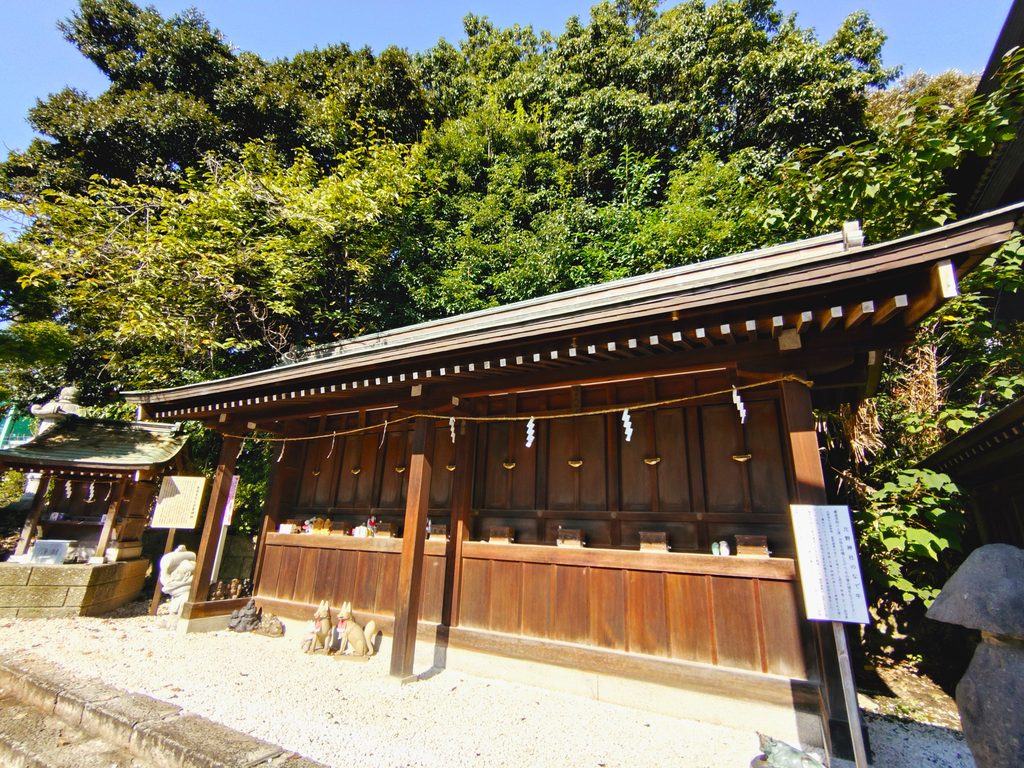
Kitano Shrine (Kitano Jinja) enshrines Sugawara no Michizane-ko, a Heian-period scholar and politician revered nationwide as the most famous “deity of learning.” To the back-left of the shrine hall lies a stone statue of a “Stroking Cow” (Nade-ushi). It is said that stroking this cow’s head and then stroking your own head grants wisdom, academic achievement, and success in examinations. It is a popular spot visited by many students during exam season.
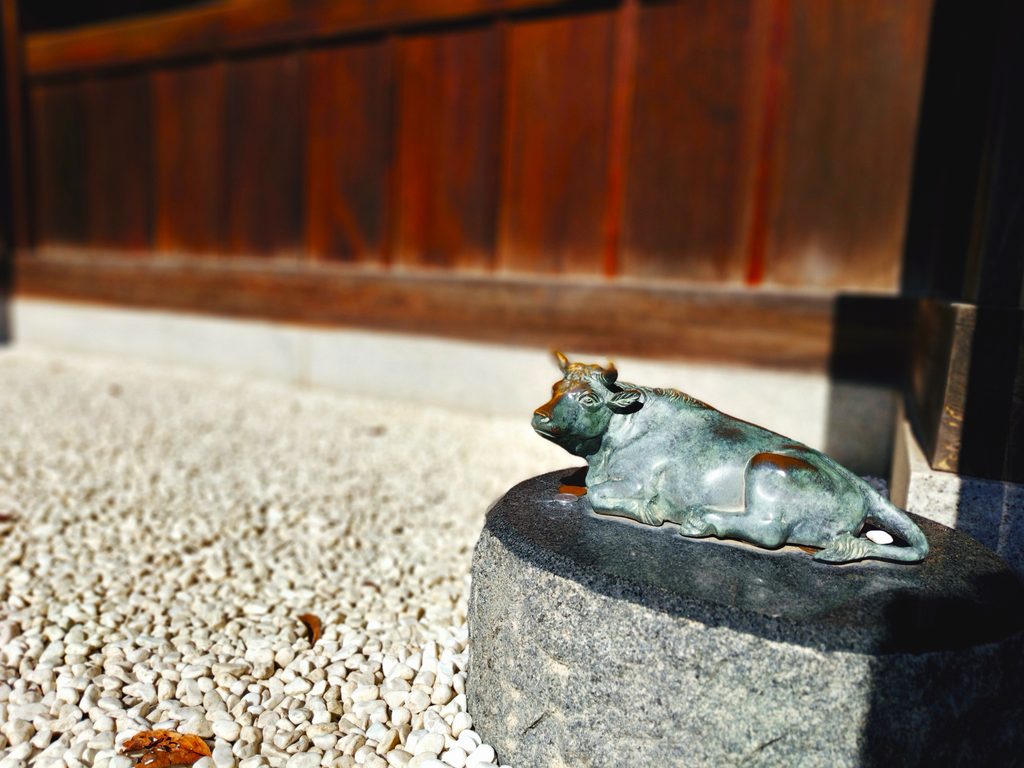
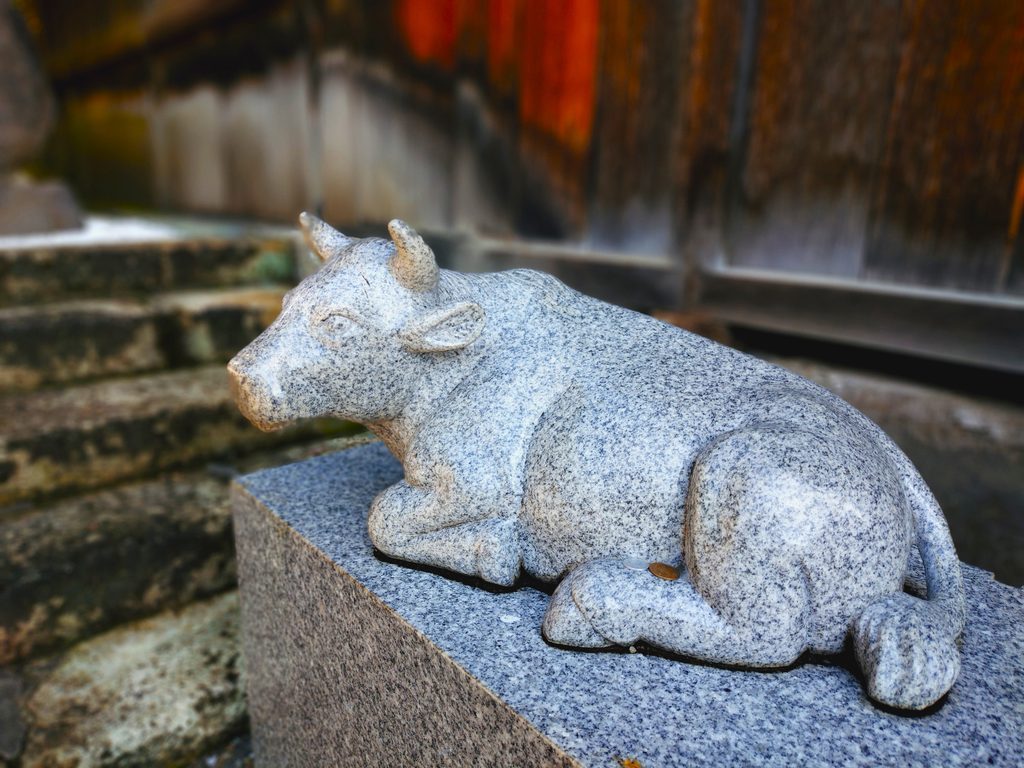
Akabane Hachiman is a shrine with deep blessings for matchmaking and good relationships throughout its grounds, notably through Okuninushi Shrine (Inaba’s White Rabbit). Rather than just symbols of academic success, interpreting these two cows as a “married couple” or “parent and child” supporting each other might be the warmest way to embrace your own prayers during your visit.
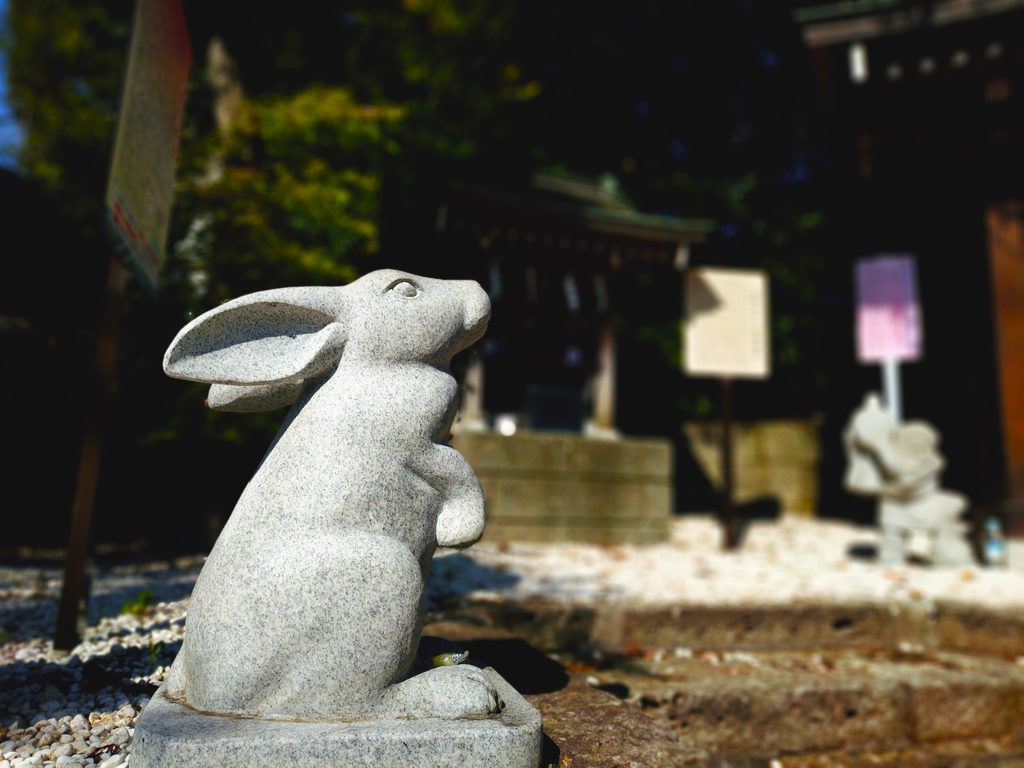
Okuninushi Shrine (Okuninushi Jinja) enshrines Japan’s representative “Deity of Matchmaking,” famous as the principal deity of Izumo Taisha Grand Shrine. In front of the small shrine stand cute stone statues of “Daikoku-sama and the White Rabbit of Inaba,” inspired by the famous myth. When praying here, it is customary to follow the Izumo Taisha style of “two bows, four claps, and one bow.”
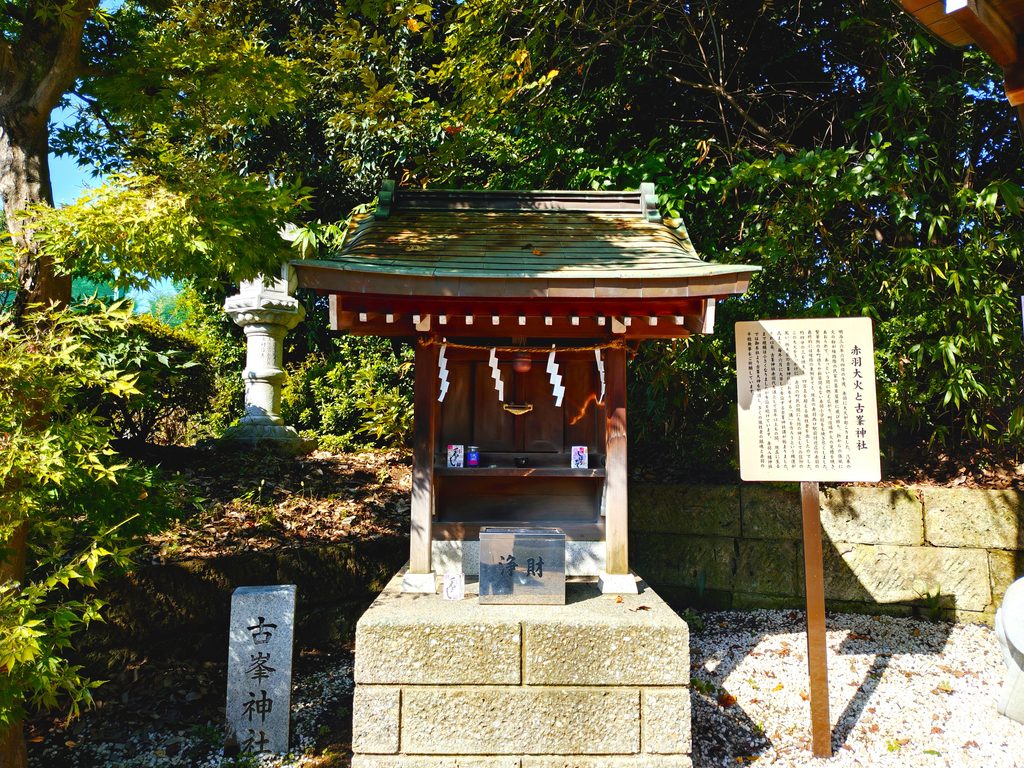
Furumine Shrine (Furumine Jinja) houses a divided spirit (gofunrei) from Furumine Shrine in Kanuma City, Tochigi Prefecture, which is famous for Tengu worship. From the Edo period through the Meiji era, it was devoutly worshipped across the Kanto region as a “god of fire prevention” to protect towns from fires, and was enshrined here by Akabane’s local parishioners. The enshrined deity is Yamatotakeru-no-mikoto.
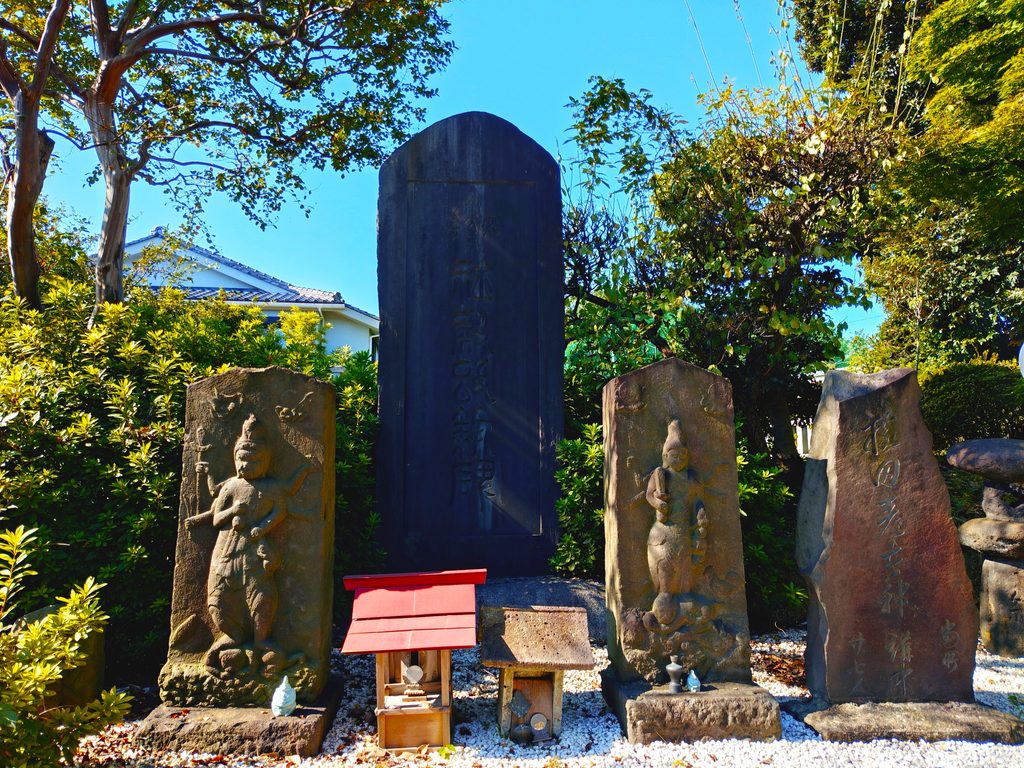
The Sarutahiko Koshin Towers (Sarutahiko Koshin-to) were originally a group of stone monuments scattered along the former Itabashi Highway. After several relocations, they were moved to the grounds of Akabane Hachiman Shrine in 2017 (Heisei 29).
Surrounding the area are stone monuments engraved with the characters “Sarutahiko Okami” (erected in 1851, Kaei 4, among others). These are believed to grant powerful blessings not only for traffic safety but also for “path-opening” (michihiraki), guiding matters in a positive direction. Additionally, beautiful stone towers remain carved with the image of “Shomen Kongo”—the Buddhist principal figure of Koshin beliefs—alongside evil spirits crushed beneath its feet and the iconic “Three Monkeys” (See no evil, Speak no evil, Hear no evil) symbolizing Koshin.
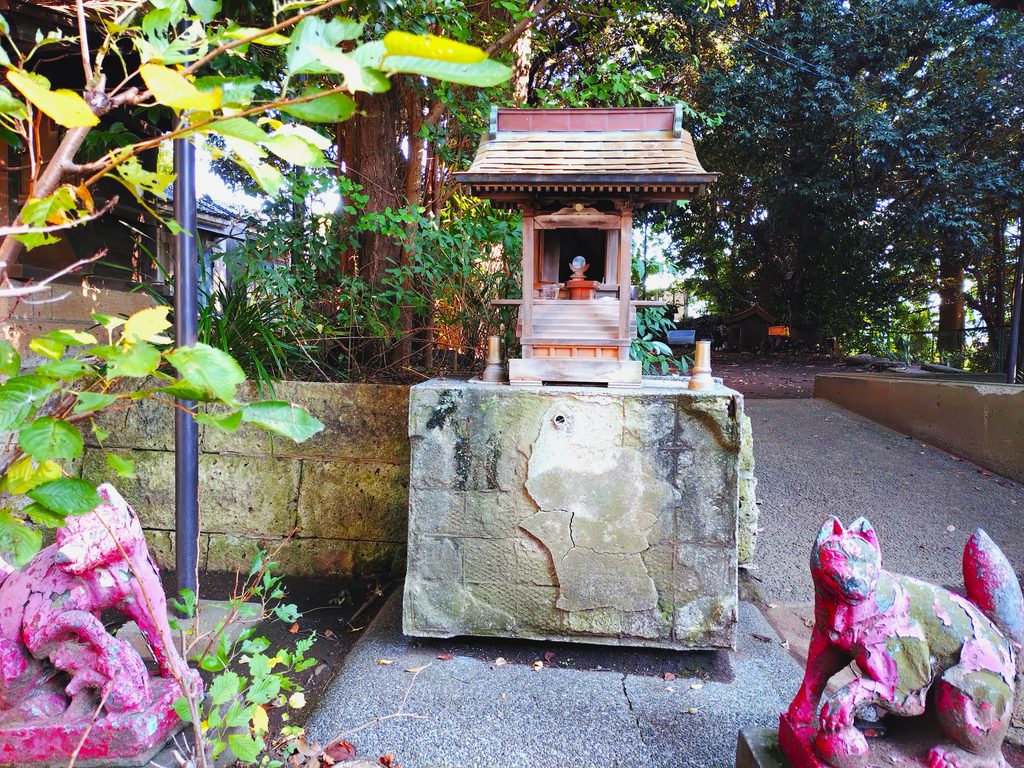
The Inari shrine next to the Kagura Hall is rumored among local history experts to feature fox statues originally worshipped elsewhere, such as “Sakutoku Inari Daimyojin.” It presents a precious sight where unique regional customs and devotional forms have been preserved intact. The fox statues (Shincho) at this Inari shrine are painted entirely in red, which is extremely rare nationwide. However, as the paint has peeled over the years, it looks a bit eerie…
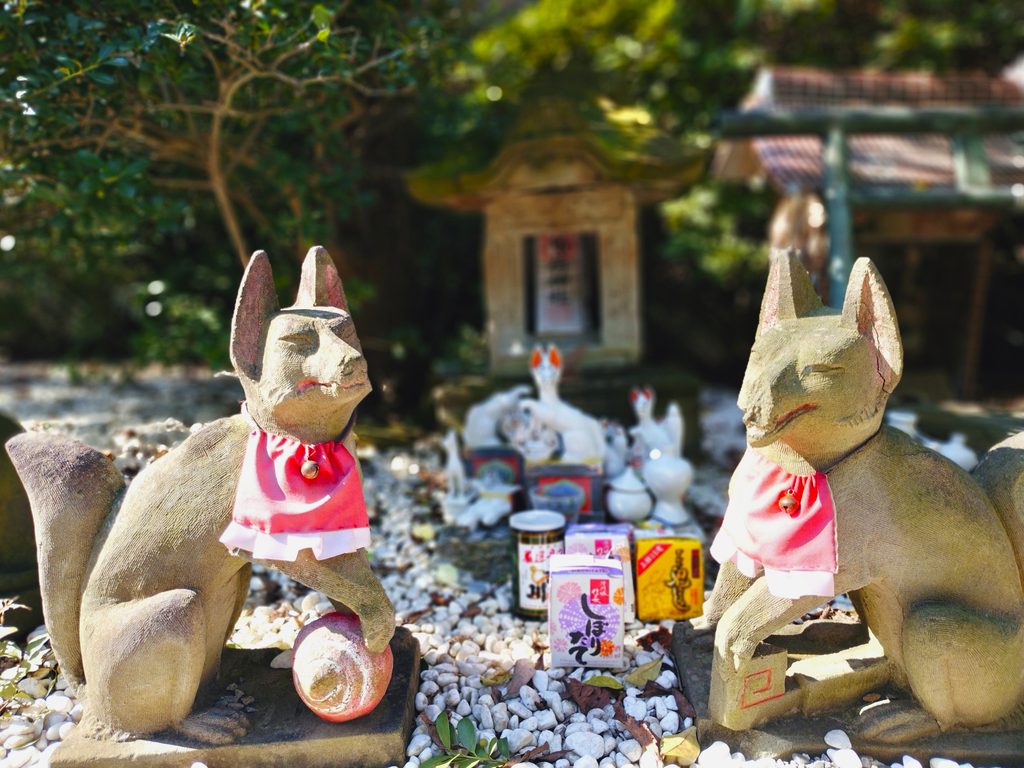
Elsewhere, small fox statues from other relocated Inari shrines in the neighborhood have been gathered underneath the shrine office.
【Akabane Hachiman Shrine Goshuin】

Based on the “Feng Shui Period 8” (Kagen Hachion) cycle, amulets, votive tablets (ema), and Goshuin decorated with the infinity symbol ($\infty$) are issued here. Because of this, the shrine is affectionately nicknamed “Eight Shrine” (Eight Jinja) among fans of SUPER EIGHT (formerly Kanjani∞).
【Akabane Hachiman Shrine On-Site Visit Report & Original Evaluation】
Akabane Hachiman Shrine On-Site Review & Evaluation Score
| Evaluation Category | Score | Key Features / Highlights |
|---|---|---|
| Accessibility | (4.5) | Highly convenient, taking about a 7-minute walk from both JR “Akabane Station” and Tokyo Metro Namboku Line “Akabane-Iwabuchi Station.” |
| Goshuin Variety | (4.5) | Extremely diverse and immensely popular, featuring vibrant monthly designs and “infinity” (∞) motif Goshuin. |
| History & Heritage | (4.0) | A prestigious ancient shrine serving as the local guardian of Akabane, originating from legends of Sakanoue no Tamuramaro setting up camp in Enryaku 8 (784 AD) during the early Heian period. |
| Tranquility | (3.5) | Situated on the high ground of Akabane-dai; despite its unique location where Shinkansen and other trains pass right below, the shrine grounds remain peaceful. |
| Nature & Scenery | (3.0) | A rare train-view landscape nationwide, with the Tohoku and Joetsu Shinkansen tunnel running directly beneath the shrine grounds. |
| Scale & Grounds | (3.0) | An orderly shrine ground neatly bringing together the Main Hall, Worship Hall, and multiple sub-shrines (such as Shokon-sha and Taikobo-sha) atop the hill. |
【On-Site Report | Personal Impressions and Atmosphere】
Because it is situated on the elevated Akabane Plateau, there is a refreshing sense of openness the moment you reach the top of the approach stairs or slope. However, Akabane Hachiman Shrine was far more than just a “rare shrine where you can see trains.” Because it is firmly grounded in a long history of deep faith by priests and parishioners who have protected this region since ancient times (evident in the sub-shrines, Kagura Hall, and Koshin towers), the bold modern infrastructure of a Shinkansen tunneling directly underneath harmonizes strangely yet beautifully with the surroundings. From railway fans aiming their camera lenses to students praying for exam success and locals quietly offering prayers, everyone enjoys the pleasant breeze on this high ground with their own purpose. It is a wonderfully welcoming shrine overflowing with vibrant energy.
【Nearby Sightseeing Spots to Visit Together】
Josho-ji Temple, Oji Inari Shrine, Oji Shrine

【Basic Information & Access】
【Access by Train / Car and Parking】
*Free parking available.
【Address & Official Website】
4-1-6 Akabanedai, Kita-ku, Tokyo 115-0053