 Kanata's Japan Shrine Guide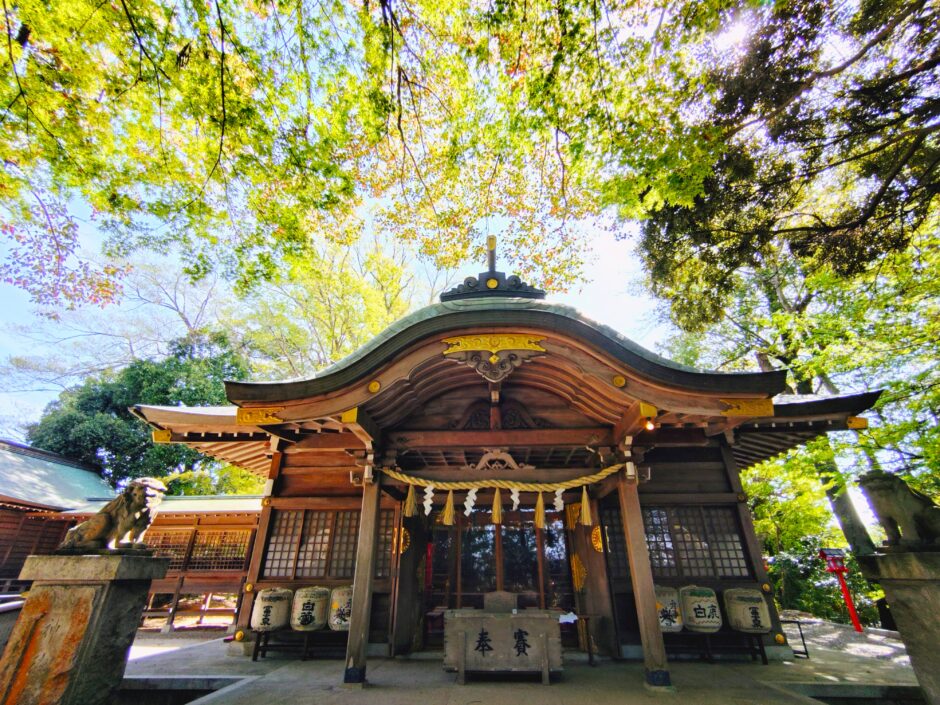

目次
- 【Overview of Hitachi no Kuni Soshagu】
- 【Hitachi no Kuni Soshagu: The Approach (Sando)】
- 【Hitachi no Kuni Soshagu: Chozu-ya (Purification Fountain)】
- 【Hitachi no Kuni Soshagu: Sumo Ring】
- 【Hitachi no Kuni Soshagu: Zuishinmon Gate】
- 【Hitachi no Kuni Soshagu: The Precinct】
- 【Hitachi no Kuni Soshagu: The Sacred Tree】
- 【Hitachi no Kuni Soshagu: Main Hall (Shaden)】
- 【Hitachi no Kuni Soshagu: The Resting Stone of Yamato Takeru】
- 【Hitachi no Kuni Soshagu: Subsidiary Shrines】
- 【Hitachi no Kuni Soshagu: Ichinen Antai Fortune】
- 【Hitachi no Kuni Soshagu: Goshuin】
- 【Tourist Spots Nearby】
- 【Hitachi no Kuni Soshagu: Access】
- Admin’s Impressions
- Address of Hitachi no Kuni Soshagu
【Overview of Hitachi no Kuni Soshagu】
Hitachi no Kuni Soshagu was founded during the Tenpyo era (729–749). According to shrine legend, it began when Emperor Shomu ordered the enshrinement of the Tenjin Chigi (six primary deities of heaven and earth) to serve as guardians of the nation. Within the grounds lies the “Resting Stone of Yamato Takeru,” which has been revered as a “stone inhabited by a god” since long before the shrine itself was built. It is said that the presence of this sacred stone was the very reason this site was chosen for the “Sosha” (General Shrine) during Emperor Shomu’s reign.
The shrine worships the Six Deities of Rokusho Myojin: Izanagi no Mikoto, Izanami no Mikoto, Ninigi no Mikoto, Okuninushi no Mikoto, Omiyahime no Mikoto, and Furu no Okami.
![naraDSCN0098 1 520x300 - Hitachi no Kuni Soshagu [Ibaraki]](https://japan-shrine.info/wp-content/uploads/naraDSCN0098-1-520x300.jpg "Hitachi no Kuni Soshagu [Ibaraki]")
【Hitachi no Kuni Soshagu: The Approach (Sando)】
There appear to be three paths to the shrine: the Old Approach, the Main Approach, and a path leading to the side of the Main Hall. I found myself naturally walking along the side path because it felt so pleasant.
![20260412 095053493 1024x576 - Hitachi no Kuni Soshagu [Ibaraki]](https://japan-shrine.info/wp-content/uploads/20260412_095053493-1024x576.jpg "Hitachi no Kuni Soshagu [Ibaraki]")
The layout likely follows the original constraints of the land, as it was adjacent to the former Hitachi Provincial Capital and part of the site of Ishioka Castle (Fuchu Castle).
【Hitachi no Kuni Soshagu: Chozu-ya (Purification Fountain)】
![20260412 100133862 2 1024x768 - Hitachi no Kuni Soshagu [Ibaraki]](https://japan-shrine.info/wp-content/uploads/20260412_100133862-2-1024x768.jpg "Hitachi no Kuni Soshagu [Ibaraki]")
The area to purify oneself is located along this uniquely winding path. In recent years, the shrine has delighted visitors with Hana-chozu—water basins beautifully decorated with seasonal flowers.
【Hitachi no Kuni Soshagu: Sumo Ring】
![20260412 100113764 2 1024x768 - Hitachi no Kuni Soshagu [Ibaraki]](https://japan-shrine.info/wp-content/uploads/20260412_100113764-2-1024x768.jpg "Hitachi no Kuni Soshagu [Ibaraki]")
Next to the Zuishinmon Gate is a sumo ring (dohyo). To this day, dedicated sumo matches (Honno Sumo) are held here during the Grand Festival (Ishioka no Omatsuri).
【Hitachi no Kuni Soshagu: Zuishinmon Gate】
![20260412 100053738 2 1024x768 - Hitachi no Kuni Soshagu [Ibaraki]](https://japan-shrine.info/wp-content/uploads/20260412_100053738-2-1024x768.jpg "Hitachi no Kuni Soshagu [Ibaraki]")
Reconstructed around 1627 (Kanbun 4), this is one of the oldest structures in the precinct. It features a thatched (kayabuki) roof—a rarity in modern shrines—giving it a distinct sense of elegance and prestige. As a reminder of the shrine’s history with sumo, Edo-period sumo ranking charts (banzuke) are still pasted on the ceiling.
【Hitachi no Kuni Soshagu: The Precinct】
![20260412 100235094 1024x768 - Hitachi no Kuni Soshagu [Ibaraki]](https://japan-shrine.info/wp-content/uploads/20260412_100235094-1024x768.jpg "Hitachi no Kuni Soshagu [Ibaraki]")
The spatial design is unique: after passing through the Zuishinmon Gate, you turn 90 degrees to the right to face the Main Hall. Instead of seeing the hall immediately upon entering, the full view is revealed only after you take a few steps inside.
【Hitachi no Kuni Soshagu: The Sacred Tree】
The sacred tree is estimated to be approximately 600 years old. This thick-trunked evergreen spreads its branches wide, keeping its lush green leaves year-round. Due to its powerful vitality, it is revered as a symbol of longevity and good health.
![20260412 095438177 1024x768 - Hitachi no Kuni Soshagu [Ibaraki]](https://japan-shrine.info/wp-content/uploads/20260412_095438177-1024x768.jpg "Hitachi no Kuni Soshagu [Ibaraki]")
Its presence wraps the entire precinct in a solemn, pure atmosphere, making you feel as though you are deep within a forest.
【Hitachi no Kuni Soshagu: Main Hall (Shaden)】
Reconstructed in 1627, the current hall displays the sophisticated yet calm architectural style of the early Edo period.
![20260412 100457352 1024x768 - Hitachi no Kuni Soshagu [Ibaraki]](https://japan-shrine.info/wp-content/uploads/20260412_100457352-1024x768.jpg "Hitachi no Kuni Soshagu [Ibaraki]")
The exquisite carvings reflect the high level of craftsmanship of that era. The hall is aligned so that Mt. Tsukuba is visible from the front, possibly in connection with the “Resting Stone.” It is designated as a Tangible Cultural Property of Ishioka City.
【Hitachi no Kuni Soshagu: The Resting Stone of Yamato Takeru】
Located beside the worship hall, this sacred stone is where the legendary Prince Yamato Takeru is said to have sat to gaze at Mt. Tsukuba during his eastern expedition.
![20260412 100410019 1024x768 - Hitachi no Kuni Soshagu [Ibaraki]](https://japan-shrine.info/wp-content/uploads/20260412_100410019-1024x768.jpg "Hitachi no Kuni Soshagu [Ibaraki]")
Approximately 1,900 years ago, the prince (son of the 12th Emperor Keiko) visited this region (Hitachi Province) to pacify the east and rested his weary body on this very stone.
【Hitachi no Kuni Soshagu: Subsidiary Shrines】
![20260412 095602204 1024x768 - Hitachi no Kuni Soshagu [Ibaraki]](https://japan-shrine.info/wp-content/uploads/20260412_095602204-1024x768.jpg "Hitachi no Kuni Soshagu [Ibaraki]")
To the left (west) of the worship hall stands a row of shrines known as the “Ju-ni Massha” (Twelve Subsidiary Shrines). These include famous names such as Kashima Shrine, Shizu Shrine, Yoshida Shrine, Oarai/Sakatsura Isosaki Shrine, and Inari Shrine.
【Hitachi no Kuni Soshagu: Ichinen Antai Fortune】
![20260412 1011129322 1024x768 - Hitachi no Kuni Soshagu [Ibaraki]](https://japan-shrine.info/wp-content/uploads/20260412_1011129322-1024x768.jpg "Hitachi no Kuni Soshagu [Ibaraki]")
The “Ichinen Antai” (Peace Throughout the Year) fortune is a charming and lucky activity where you “fish” for a sea bream-shaped charm using a small fishing rod. The fortunes are tucked into the tails of red or gold bream. The name is a play on words: Tai means sea bream, and Antai means peace/security. You can take the fish home as a lucky charm or interior decoration.
【Hitachi no Kuni Soshagu: Goshuin】
![sosyagu GOSHUIN 716x1024 - Hitachi no Kuni Soshagu [Ibaraki]](https://japan-shrine.info/wp-content/uploads/sosyagu-GOSHUIN-716x1024.jpg "Hitachi no Kuni Soshagu [Ibaraki]")
![sosyagu GOSHUIN2 681x1024 - Hitachi no Kuni Soshagu [Ibaraki]](https://japan-shrine.info/wp-content/uploads/sosyagu-GOSHUIN2-681x1024.jpeg "Hitachi no Kuni Soshagu [Ibaraki]")
The ancestors of the legendary manga artist Tezuka Osamu served as official physicians for the Hitachi Fuchu Domain (modern-day Ishioka) during the Edo period. Because of this deep connection, a collaboration with Tezuka Productions began around 2014. Today, the shrine offers official talismans and goshuin featuring Tezuka’s iconic characters.
【Tourist Spots Nearby】
Hitachi Fudoki no Oka, Tayasu Shrine, Soga Shrine, Atago Shrine (Kasama), Tsukuba-san Shrine, Chuzen-ji Temple.
![20260412 1105194472 520x300 - Hitachi no Kuni Soshagu [Ibaraki]](https://japan-shrine.info/wp-content/uploads/20260412_1105194472-520x300.jpg "Hitachi no Kuni Soshagu [Ibaraki]")
![20260412 1244576252 520x300 - Hitachi no Kuni Soshagu [Ibaraki]](https://japan-shrine.info/wp-content/uploads/20260412_1244576252-520x300.jpg "Hitachi no Kuni Soshagu [Ibaraki]")
![4072523 m 520x300 - Hitachi no Kuni Soshagu [Ibaraki]](https://japan-shrine.info/wp-content/uploads/4072523_m-520x300.jpg "Hitachi no Kuni Soshagu [Ibaraki]")
![20260321 102344800 520x300 - Hitachi no Kuni Soshagu [Ibaraki]](https://japan-shrine.info/wp-content/uploads/20260321_102344800-520x300.jpg "Hitachi no Kuni Soshagu [Ibaraki]")
【Hitachi no Kuni Soshagu: Access】
Admin’s Impressions
The legends—like the hero from 1,900 years ago gazing at Mt. Tsukuba from the Resting Stone while the 600-year-old tree watched over—don’t just feel like dry facts here. In the silence of the precinct, the story feels incredibly real. The air is exceptionally pure and refreshing, centered around the sacred tree. Also, if you look closely at the Resting Stone, it actually sparkles, suggesting it might be made of a unique type of mineral.
2-8-1 Sosha, Ishioka City, Ibaraki Prefecture 315-0016
*Note: Free parking available.
![0b2efb80c734a333077a33cd92b833d3 - Hitachi no Kuni Soshagu [Ibaraki]](https://japan-shrine.info/wp-content/uploads/sng/0b2efb80c734a333077a33cd92b833d3.png "Hitachi no Kuni Soshagu [Ibaraki]")