 Kanata's Japan Shrine Guide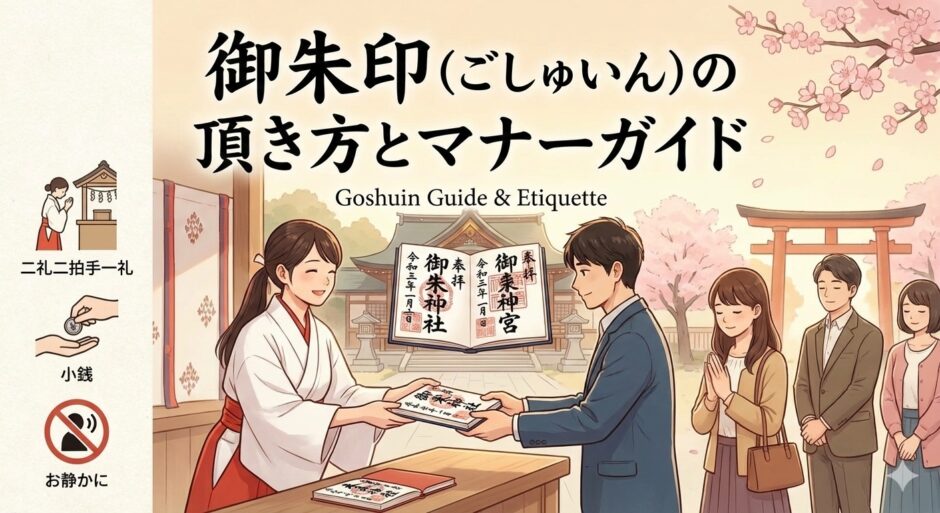

When visiting shrines and temples in Japan, you will often spot Shinto priests or Buddhist monks running their brush pens across a booklet inside a fragrant, ink-scented administrative office (Shamusho). In recent years, collecting these sacred stamps—known as “Goshuin”—has grown into an immense trend.
The breathtaking designs woven by masterful calligraphy brushed in black ink and vibrant, cinnabar-red stamps look exactly like a singular piece of fine art. However, a Goshuin originally possesses a deeply sacred meaning. For those who wish to embark on a Goshuin-collecting journey, this guide provides a detailed explanation of its true meaning, the step-by-step procedure to receive one, and the essential etiquette you absolutely must know.
What is a Goshuin? It is Far More Than a Mere Stamp
A Goshuin is granted strictly as “proof of your worship and prayer” at a shrine or temple.
Unlike the “commemorative ink stamps” found at standard tourist destinations, a Goshuin is a sacred object that is treated as an extension or embodiment of the deities and Buddhas themselves. Generally, it consists of the following distinct elements:
![akabane hachman G 765x1024 - [A Must-Read for Beginners] The Complete Guide to Receiving Goshuin and Shrine/Temple Etiquette: Artistic Beauty and Proof of Worship](https://japan-shrine.info/wp-content/uploads/akabane-hachman-G-765x1024.jpg "[A Must-Read for Beginners] The Complete Guide to Receiving Goshuin and Shrine/Temple Etiquette: Artistic Beauty and Proof of Worship")
![2025 02 21 20 03 Office Lens 784x1024 - [A Must-Read for Beginners] The Complete Guide to Receiving Goshuin and Shrine/Temple Etiquette: Artistic Beauty and Proof of Worship](https://japan-shrine.info/wp-content/uploads/2025_02_21-20_03-Office-Lens-784x1024.jpg "[A Must-Read for Beginners] The Complete Guide to Receiving Goshuin and Shrine/Temple Etiquette: Artistic Beauty and Proof of Worship")
![hie G 680x1024 - [A Must-Read for Beginners] The Complete Guide to Receiving Goshuin and Shrine/Temple Etiquette: Artistic Beauty and Proof of Worship](https://japan-shrine.info/wp-content/uploads/hie-G-680x1024.jpg "[A Must-Read for Beginners] The Complete Guide to Receiving Goshuin and Shrine/Temple Etiquette: Artistic Beauty and Proof of Worship")
- The Black Ink Calligraphy (Sumigaki): The name of the shrine or temple, the name of the enshrined deity, and the date of your visit are elegantly brushed with a traditional calligraphy brush.
- The Red Stamp (Shuin): The official seal of the shrine or special Sanskrit characters (Bonji) representing the primary Buddhist deity are stamped onto the page.
Because the brushwork varies naturally depending on the specific calligrapher, no two Goshuin are ever identical—even when received at the exact same shrine. Part of the great allure is being able to appreciate each one as a truly “once-in-a-lifetime” piece of art.
Prepare the Essential Tool: A “Goshuincho” (Stamp Booklet)
o receive a Goshuin, you must have a dedicated booklet known as a “Goshuincho.” Requesting a calligrapher to write on a standard notebook, memo pad, or sketchbook is considered highly disrespectful, and in almost all cases, your request will be politely declined.
The Joy of Picking a Design Many shrines and temples design and offer their own highly unique, original Goshuincho on-site:
- Booklets adorned with gorgeous, intricate embroidery
- Booklets featuring elegant wooden covers
- Booklets beautifully depicting famous local landscapes or traditional festivals
We highly recommend picking up a volume that speaks directly to your intuition and makes you think, “This is beautiful!”—and letting that book mark the official beginning of your journey.
![DSC 1683 2 1024x768 - [A Must-Read for Beginners] The Complete Guide to Receiving Goshuin and Shrine/Temple Etiquette: Artistic Beauty and Proof of Worship](https://japan-shrine.info/wp-content/uploads/DSC_1683-2-1024x768.jpg "[A Must-Read for Beginners] The Complete Guide to Receiving Goshuin and Shrine/Temple Etiquette: Artistic Beauty and Proof of Worship")
Step-by-Step Guide: How to Receive a Goshuin
To ensure even absolute beginners can feel completely at ease, here is the basic, respectful flow of the process:
1. First, Offer Your Prayers (Sanpai)
As a general principle, a Goshuin is a certificate of worship. Going straight to the stamp office without offering a prayer first is a major breach of etiquette. Begin by purifying your hands and mouth at the Temizuya fountain, and then pay your respects to the deities or Buddhas.
![ladle1 1 1024x683 - [A Must-Read for Beginners] The Complete Guide to Receiving Goshuin and Shrine/Temple Etiquette: Artistic Beauty and Proof of Worship](https://japan-shrine.info/wp-content/uploads/ladle1-1-1024x683.jpg "[A Must-Read for Beginners] The Complete Guide to Receiving Goshuin and Shrine/Temple Etiquette: Artistic Beauty and Proof of Worship")
2. Locate the Administrative Office (Shamusho / Nokyo-jo)
Head over to the amulet and talisman counter or the temple office. Look out for signboards that explicitly display the characters for “御朱印所” (Goshuin-jo / Stamp Office).
3. Present the Booklet Open to the Correct Page
Remove any fabric or plastic protective covers from your Goshuincho, open the book directly to the specific blank page where you want the calligraphy to be brushed, and hand it over gently while saying, “Onegai shimasu” (Please). *Handing over a closed book without showing where to write places the calligrapher in an awkward position and delays the process.
4. Pay the Hatsuhoryo (Sacred Fee)
Generally, the standard token fee ranges between 300 to 500 yen per stamp, though special elaborate designs like paper-cuts (Kirie) may cost around 1,000 yen. [CRITICAL NOTE] Please prepare exact change or small coins in advance. Forcing temple or shrine staff to count out tiny fractions of change in a deeply sacred space is considered unrefined and unsophisticated.
5. Wait Quietly and Patiently
While your stamp is actively being brushed, maintain a quiet, reflective mind. Peering over the counter to watch them write, taking photos or videos with your smartphone, talking in a loud voice, or eating and drinking are all strictly forbidden.
6. Accept the Booklet with Gratitude
Express your sincere appreciation by saying, “Arigatou gozaimasu” (Thank you very much) as you respectfully receive your booklet back.
Crucial Reminders and Etiquette to Keep in Mind
Standard Notebooks or Scraps of Paper are a Strict No-Go
As mentioned previously, a dedicated Goshuincho is mandatory. If you happen to forget your booklet at home or at your hotel, you can request a “Kak置き” (Kakoki)—which is a pre-brushed Goshuin written on a detached sheet of traditional paper. Once you return home, you can carefully and neatly glue this sheet into your personal Goshuincho.
Should You Separate Shrines and Temples?
At the vast majority of places, mixing Shinto shrines and Buddhist temples within the same booklet causes absolutely no issues. However, a select few institutions with strict religious rules may rarely decline to write in your book if it contains a mix of both. To avoid any potential awkwardness, the safest and most seamless approach is to carry two separate booklets: one dedicated exclusively to shrines, and one for temples.
Reselling or Purchasing via Online Auctions is Strictly Prohibited
In recent times, limited-edition Goshuin are occasionally resold online at inflated, exorbitant prices. This act can only be described as a profound desecration of faith. A Goshuin holds true spiritual value precisely because you personally traveled to the site, walked the grounds, and offered your own prayers.
Special Goshuin and the Tapestry of Travel Memories
Lately, the cultural variety of Goshuin has blossomed immensely, showcasing colorful seasonal themes, stunning multi-page spreads, and incredibly vivid paper-cut designs.
![2024 04 21 15 00 Office Lens 1024x753 - [A Must-Read for Beginners] The Complete Guide to Receiving Goshuin and Shrine/Temple Etiquette: Artistic Beauty and Proof of Worship](https://japan-shrine.info/wp-content/uploads/2024_04_21-15_00-Office-Lens-1024x753.jpg "[A Must-Read for Beginners] The Complete Guide to Receiving Goshuin and Shrine/Temple Etiquette: Artistic Beauty and Proof of Worship")
When you flip back through the pages of your Goshuincho, the specific weather of that day, the crisp atmosphere of the shrine grounds, and the long road you traveled to get there will come flooding back in vivid detail. Rather than treating it as a mindless collection checklist, we hope you enjoy Goshuin hunting for what it truly is: “a beautiful, sacred record of your own footsteps, travels, and personal prayers.”