 Kanata's Japan Shrine Guide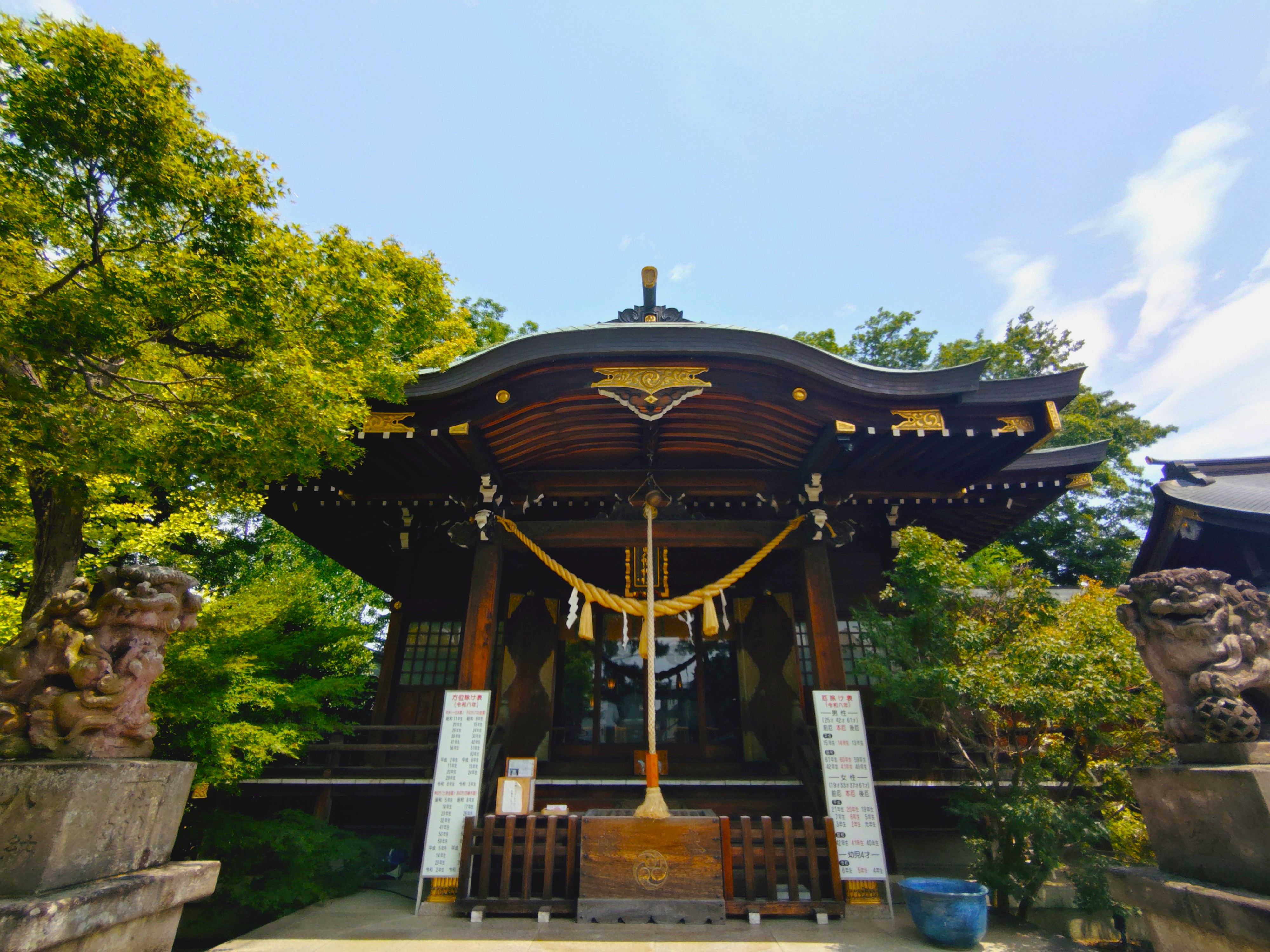

目次
- 【Overview of Gyoda Hachiman Shrine】
- 【Approach of Gyoda Hachiman Shrine】
- 【Shrine Buildings of Gyoda Hachiman Shrine】
- 【Nade-Momo (Stroke Peach)】
- 【Auxiliary Shrine: Me no Kamisha (Eye Shrine)】
- 【Auxiliary Shrine: Kasamori Inari Shrine】
- 【Auxiliary Shrine: Atago Shrine】
- 【Auxiliary Shrine: Okuninushi Shrine & Ebisu Shrine】
- 【Path Behind the Main Sanctuary】
- 【Gyoda Hachiman Shrine Goshuin (Temple/Shrine Stamp)】
- 【Nearby Tourist Spots】
- 【Gyoda Hachiman Shrine Access】
- Admin’s Impressions
- Gyoda Hachiman Shrine Address
- Gyoda Hachiman Shrine Official Website
【Overview of Gyoda Hachiman Shrine】
Gyoda Hachiman Shrine (Gyoda Hachiman-jinja) is a historic shrine enshrined in Gyoda City, Saitama Prefecture, boasting approximately 1,000 years of history. Historically, it was deeply revered by successive lords of Oshi Castle as the protective guardian deity and main tutelary shrine of the surrounding castle town. Known by the alternate name “Fuji-no-Miya” (Shrine of Sealing/Wardship), worshippers from across the country visit this power spot for its potent blessings in severing diseases, afflictions, and bad habits.
【Origins and History of Gyoda Hachiman Shrine】
The shrine’s founding is said to date back to the 1050s (the mid-Heian period). At that time, to quell the “Former Nine Years’ War” (Zenkunen no Eki), a large-scale rebellion in Oshu (present-day Tohoku region), the military commander Minamoto no Yoriyoshi, acting on imperial orders, advanced his troops with his son Minamoto no Yoshiie (also known as Hachiman Taro) and set up camp in this land of Gyoda. To ensure victory in the upcoming battles, the father and son solemnly branch-enshrined (kanjo) Hachiman Okami, the deity of martial power, at this site and prayed fervently for success. This is considered the origin of the shrine.
When originally founded, it was not located at its current site, but rather a short distance away in “Sama Village Tanaka” (near present-day Sama, Gyoda City), where it was affectionately known as “Denchu Hachiman.”
The primary enshrined deities include Homudawake no Mikoto (Emperor Ojin), Okinagatarashihime no Mikoto (Empress Jingu), Hime no Okami, Omononushi no Kami, and Kamususamoo no Mikoto.
【Approach of Gyoda Hachiman Shrine】
![20260802 120633239 1024x768 - Gyoda Hachiman Shrine [Saitama]](https://japan-shrine.info/wp-content/uploads/20260802_120633239-1024x768.jpg "Gyoda Hachiman Shrine [Saitama]")
Upon passing through the torii gate, what immediately surprises visitors is how short the approach path (sando) to the worship hall (haiden) is. During the Sengoku period, Nagayasu Narita, lord of Oshi Castle, relocated the shrine to its present location, which was in the heart of a densely populated castle town (jokamachi) inhabited by samurai and townspeople. Unlike shrines in mountains or suburbs that could secure expansive grounds, building within a constrained urban boundary meant there was no space to extend a long approach path, inevitably resulting in its compact structure.
【Shrine Buildings of Gyoda Hachiman Shrine】
The present shrine hall was newly constructed in 1989 (Heisei 1) to commemorate the 2,650th year of the Imperial era. The roof follows the traditional Irimoya-zukuri (hip-and-gable) style, presenting a solid sense of composure, elegance, and dignity when viewed from the front.
![20260802 121415222 2 1024x768 - Gyoda Hachiman Shrine [Saitama]](https://japan-shrine.info/wp-content/uploads/20260802_121415222-2-1024x768.jpg "Gyoda Hachiman Shrine [Saitama]")
Typically, Japanese shrines are constructed facing south or east. However, the shrine building of Gyoda Hachiman Shrine faces west. When it was relocated to its current site during the Tenbun era by the warlord Nagayasu Narita, it was reportedly built facing west so as to protect Oshi Castle located to the west, and to allow the castle lord to worship it directly from the castle at any time.
【Nade-Momo (Stroke Peach)】
Enshrined beside the main sanctuary (honden) is a large, brilliantly gleaming golden peach sculpture, surrounded by many adorable peach-shaped votive tablets (ema) dedicated by worshippers.
![20260802 121949943 1024x768 - Gyoda Hachiman Shrine [Saitama]](https://japan-shrine.info/wp-content/uploads/20260802_121949943-1024x768.jpg "Gyoda Hachiman Shrine [Saitama]")
The enshrined deity here is Okamuzumi no Mikoto. Astonishingly, this deity is the peach fruit itself. Since ancient times in China, peaches have been revered as a symbol of eternal youth and longevity, but in Japanese mythology (Kojiki), they also appear as the ultimate evil-warding item.
Stemming from this myth, the peach became a symbol of warding off illness and misfortune, leading to the veneration of the “Nade-Momo” (Stroke Peach) at Gyoda Hachiman Shrine.
【Auxiliary Shrine: Me no Kamisha (Eye Shrine)】
Me no Kamisha (Eye Shrine) serves as a reassuring presence that pinpoint-addresses eye-related concerns, amid Gyoda Hachiman Shrine’s broader role as “Fuji-no-Miya” in severing all manner of bodily illnesses and afflictions.
![20260802 121041758 1024x768 - Gyoda Hachiman Shrine [Saitama]](https://japan-shrine.info/wp-content/uploads/20260802_121041758-1024x768.jpg "Gyoda Hachiman Shrine [Saitama]")
The enshrined deity is Ajisukitakahikone no Mikoto, a deity who has been deeply worshipped since ancient times as the “God of Eyes.”
【Auxiliary Shrine: Kasamori Inari Shrine】
Kasamori Inari Shrine commands deep devotion, particularly from female worshippers, as a deity for healing skin diseases such as boils, breakouts, and eczema, which by extension has evolved into veneration for beautiful skin and cosmetics.
![20260802 121914661 1024x768 - Gyoda Hachiman Shrine [Saitama]](https://japan-shrine.info/wp-content/uploads/20260802_121914661-1024x768.jpg "Gyoda Hachiman Shrine [Saitama]")
The enshrined deity is Ukanomitama no Mikoto.
【Auxiliary Shrine: Atago Shrine】
Atago Shrine is an auxiliary shrine dedicated to the god of fire. Precisely because the town of Gyoda and this shrine itself suffered repeatedly from “Great Gyoda Fires” between the Edo and Meiji periods and resiliently rebuilt each time, this deity is reverently enshrined to protect the town and its people from fire disasters.
![20260802 121127013 1024x768 - Gyoda Hachiman Shrine [Saitama]](https://japan-shrine.info/wp-content/uploads/20260802_121127013-1024x768.jpg "Gyoda Hachiman Shrine [Saitama]")
The enshrined deity is Kagutsuchi no Mikoto.
【Auxiliary Shrine: Okuninushi Shrine & Ebisu Shrine】
Okuninushi Shrine is enshrined alongside Ebisu Shrine in a single hall under the “Nisha Itto” style (a single structure housing two shrines side by side). Because Daikoku-sama and Ebisu-sama sit side-by-side, simply praying here grants visitors powerful dual blessings for career fortune, financial prosperity, and business success.
![20260802 121135715 1024x768 - Gyoda Hachiman Shrine [Saitama]](https://japan-shrine.info/wp-content/uploads/20260802_121135715-1024x768.jpg "Gyoda Hachiman Shrine [Saitama]")
The enshrined deities are Okuninushi no Kami and Kotoshironushi no Kami.
【Path Behind the Main Sanctuary】
![20260802 121316766 1024x768 - Gyoda Hachiman Shrine [Saitama]](https://japan-shrine.info/wp-content/uploads/20260802_121316766-1024x768.jpg "Gyoda Hachiman Shrine [Saitama]")
The Path Behind the Main Sanctuary (Honden Ura no Komichi) is a narrow walking path that starts from beyond Atago Shrine at the far left back of the worship hall, looping around directly behind the main sanctuary. Beside the path are bamboo groves, lush trees, and the quietly nestled “Kagami-ike” (Mirror Pond), allowing visitors to experience a refreshing sense of mental purification just by walking under the sunbeams filtering through the leaves (komorebi).
![weekend drive gyoda historic retro route - Gyoda Hachiman Shrine [Saitama]](https://japan-shrine.info/wp-content/uploads/weekend-drive-gyoda-historic-retro-route.jpg "Gyoda Hachiman Shrine [Saitama]")
Routes to Gyoda City are summarized below. We hope you find this helpful as a reference.
【Gyoda Hachiman Shrine Goshuin (Temple/Shrine Stamp)】
![gyodahachiman GOSHUIN 736x1024 - Gyoda Hachiman Shrine [Saitama]](https://japan-shrine.info/wp-content/uploads/gyodahachiman-GOSHUIN-736x1024.jpeg "Gyoda Hachiman Shrine [Saitama]")
【Nearby Tourist Spots】
Vert Cafe (Former Oshi Town Credit Union Building), Sakitama Museum of Ancient Funerary Mounds, Sakitama Shrine, Oshi Castle Three-Story Yagura (Turret), Oshi Toshogu Shrine, Gyoda Tower
![20260802 113325654 - Gyoda Hachiman Shrine [Saitama]](https://japan-shrine.info/wp-content/uploads/20260802_113325654.jpg "Gyoda Hachiman Shrine [Saitama]")
![20260802 102935112 2 - Gyoda Hachiman Shrine [Saitama]](https://japan-shrine.info/wp-content/uploads/20260802_102935112-2.jpg "Gyoda Hachiman Shrine [Saitama]")
![20260802 1000068422 - Gyoda Hachiman Shrine [Saitama]](https://japan-shrine.info/wp-content/uploads/20260802_1000068422.jpg "Gyoda Hachiman Shrine [Saitama]")
![20260802 130256702 - Gyoda Hachiman Shrine [Saitama]](https://japan-shrine.info/wp-content/uploads/20260802_130256702.jpg "Gyoda Hachiman Shrine [Saitama]")
![20260802 123655916 - Gyoda Hachiman Shrine [Saitama]](https://japan-shrine.info/wp-content/uploads/20260802_123655916.jpg "Gyoda Hachiman Shrine [Saitama]")
![20260802 091029271 2 - Gyoda Hachiman Shrine [Saitama]](https://japan-shrine.info/wp-content/uploads/20260802_091029271-2.jpg "Gyoda Hachiman Shrine [Saitama]")
【Gyoda Hachiman Shrine Access】
Admin’s Impressions
Passing through the torii gate, the approach to the worship hall is wonderfully compact! Since there’s no need to walk a long distance, even those who may lack stamina can visit with ease. When visiting Gyoda Hachiman Shrine, one spot you absolutely shouldn’t pass by is the “Path Behind the Main Sanctuary.” Secretly extending from behind Atago Shrine, this narrow path felt like a quiet world apart, contrasting completely with the lively atmosphere out front. As you stroll through the path enclosed by bamboo groves and trees, you can pray up close right behind the main sanctuary where the deity is enshrined, so be sure to take a walk along it.
![ba48ced1f2e714af4624c967ca5e4320 - Gyoda Hachiman Shrine [Saitama]](https://japan-shrine.info/wp-content/uploads/sng/ba48ced1f2e714af4624c967ca5e4320.png "Gyoda Hachiman Shrine [Saitama]")