 Kanata's Japan Shrine Guide

【Overview & History of Karasawayama Shrine】
Perched atop the summit of Mount Karasawa (elevation 242 meters) in Sano City, Tochigi Prefecture, Karasawayama Shrine (Karasawayama Jinja) sits within the former main enclosure (Honmaru) of the “Karasawayama Castle Ruins,” a designated National Historic Site where impressive medieval high stone walls and castle bailey earthworks—rare for the Kanto region—are remarkably well preserved. Known also for sweeping views of the Kanto Plain from its observation deck, seasonal limited-edition Goshuin stamps, and friendly resident shrine cats, it is a popular destination packed with history and relaxation.
【History & Origins】A Shrine on the Ruins of Karasawayama Castle Enshrining Fujiwara no Hidesato, the Warrior Who Defeated Taira no Masakado
Karasawayama Shrine (Karasawayama Jinja) was founded in 1883 (Meiji 16).
The site where Karasawayama Shrine stands was once “Karasawayama Castle” (Karasawayama-jo), built during the Heian period by Fujiwara no Hidesato and hailed as one of the premier fortresses in the Kanto region for its formidable defenses. Legend has it that even Uesugi Kenshin, the famed “God of War,” attacked the castle nearly ten times yet failed to capture it by force—earning it a reputation as an “impregnable fortress.”
Long revered as the hero of the Johei-Tengyo Rebellion for suppressing Taira no Masakado’s uprising, Fujiwara no Hidesato inspired his descendants—including the Sano clan and descendants of former retainers—to petition the government to establish a shrine in his honor. When selecting a site, this castle ruin (Honmaru main enclosure), sharing the deepest historical bond with him, was chosen.
【Enshrined Deity & Divine Blessings】Virtues of Good Fortune, Victory, Academic Success, and Fulfillment of Wishes Granted by Lord Fujiwara no Hidesato
The enshrined deity is Fujiwara no Hidesato.
- Winning Luck & Prayers for Victory: Grants the strength to triumph in pivotal moments—such as athletic matches, entrance exams, and crucial business negotiations.
- Rising Luck & Good Fortune: Built upon the high-energy ground of the castle’s main enclosure (Honmaru ruins), the shrine is believed to possess powerful energy that elevates overall fortune.
- Warding Off Evil & Misfortune: Stemming from Hidesato’s martial valor in subduing Taira no Masakado and his legend of slaying a giant centipede, he bestows strong protection against calamities and evil spirits.
- Household Safety & Business Prosperity: As the guardian deity watching over the entire region, he supports stability in people’s daily lives and livelihoods.
Because Hidesato was a master archer, numerous worshipers continue to visit today seeking blessings for “winning luck,” “warding off evil,” and “good fortune.”
【Highlights & Recommended Worship Route of Karasawayama Shrine】
【Approach Path & Azaleas】A Lush Green Approach Retaining Mountain Castle Stone Walls and Seasonal Azaleas
At Karasawayama Shrine, the approach pathway leading up to the summit Main Hall is itself a “massive fortress (castle ruin),” offering an imposing presence that sets it apart from ordinary shrine approaches. Many stray and community cats live on the shrine grounds, making it a favorite spot where they can often be seen napping.
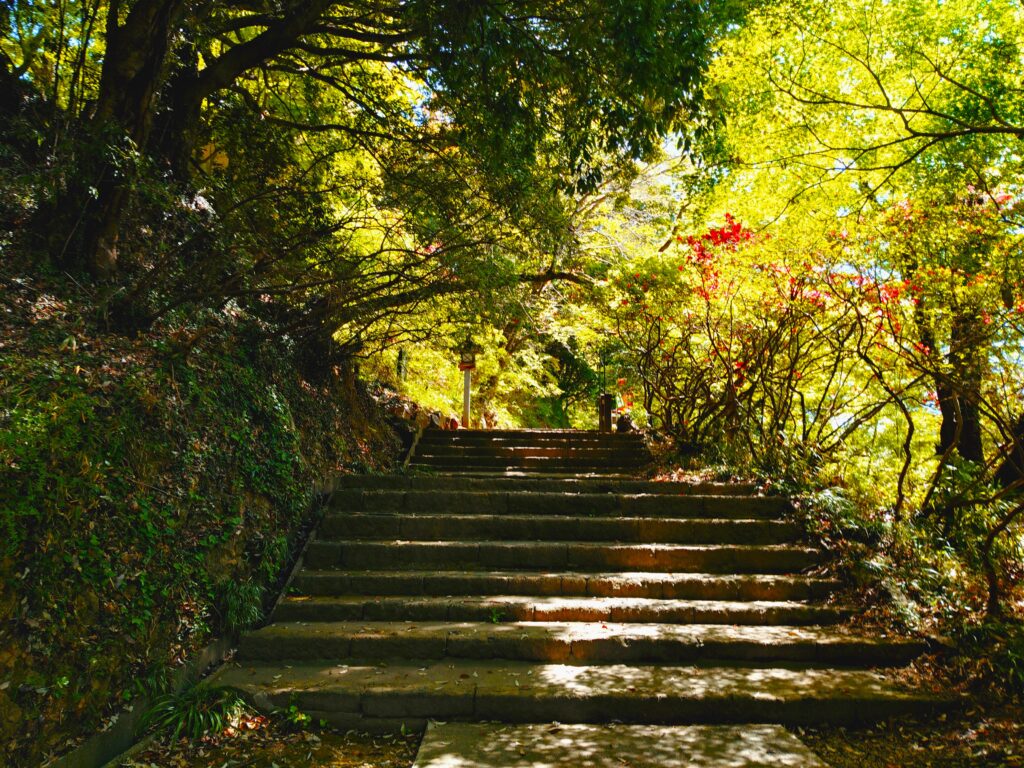
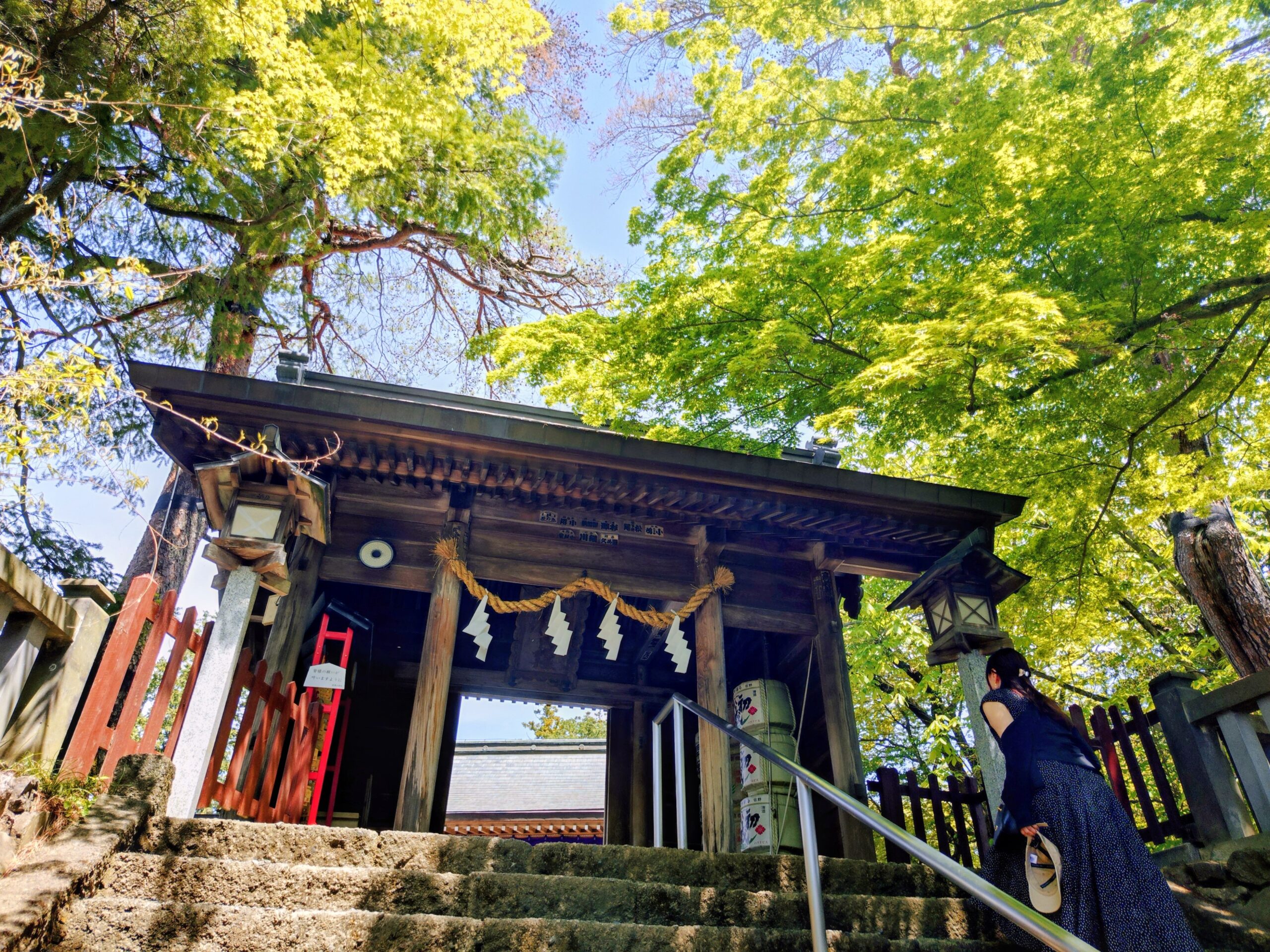
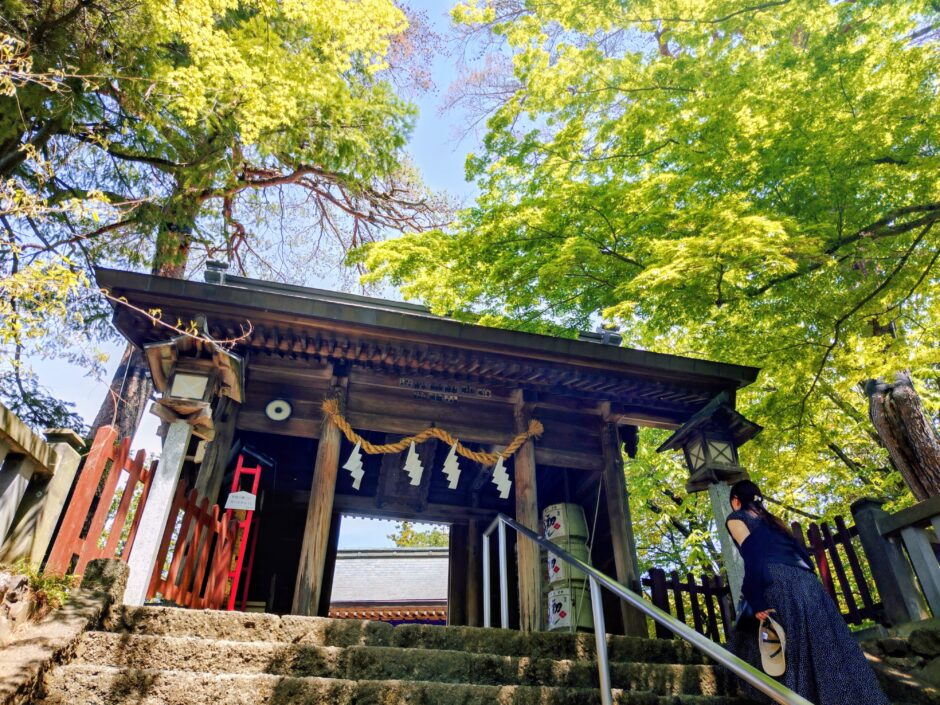
Looking up at the Shinmon Gate from the approach path creates a striking visual angle. Especially during seasons of fresh green foliage and autumn leaves, the gate framed by trees stands out beautifully.
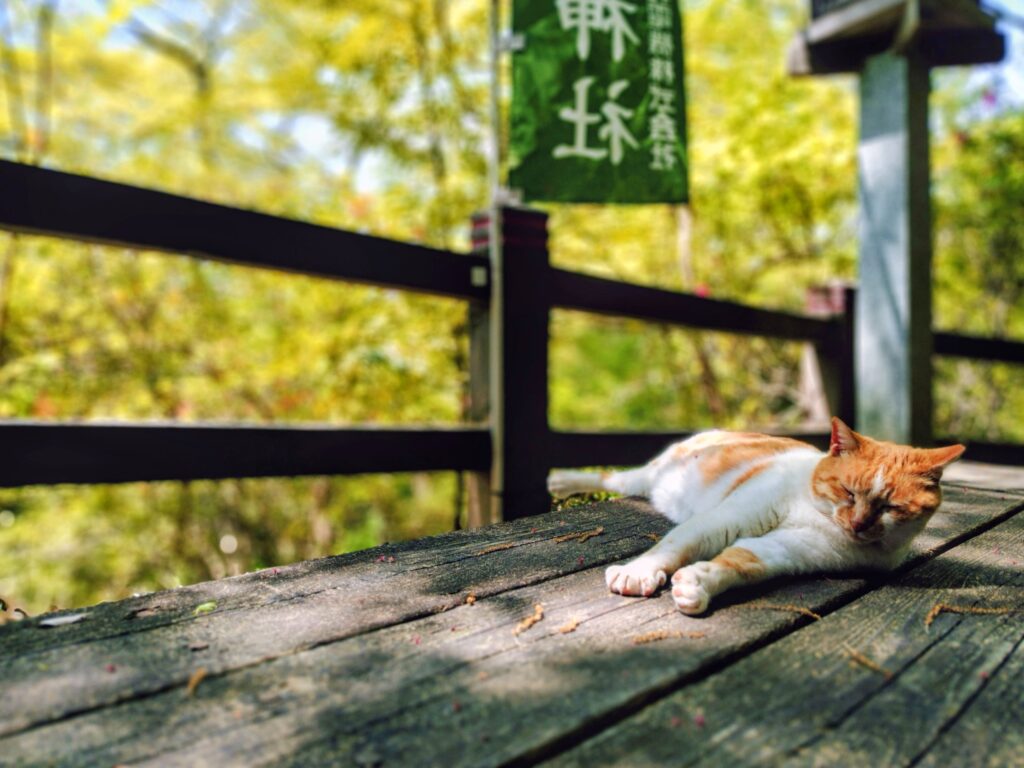
Along the way, a shrine cat was fast asleep on a bench beside the path.
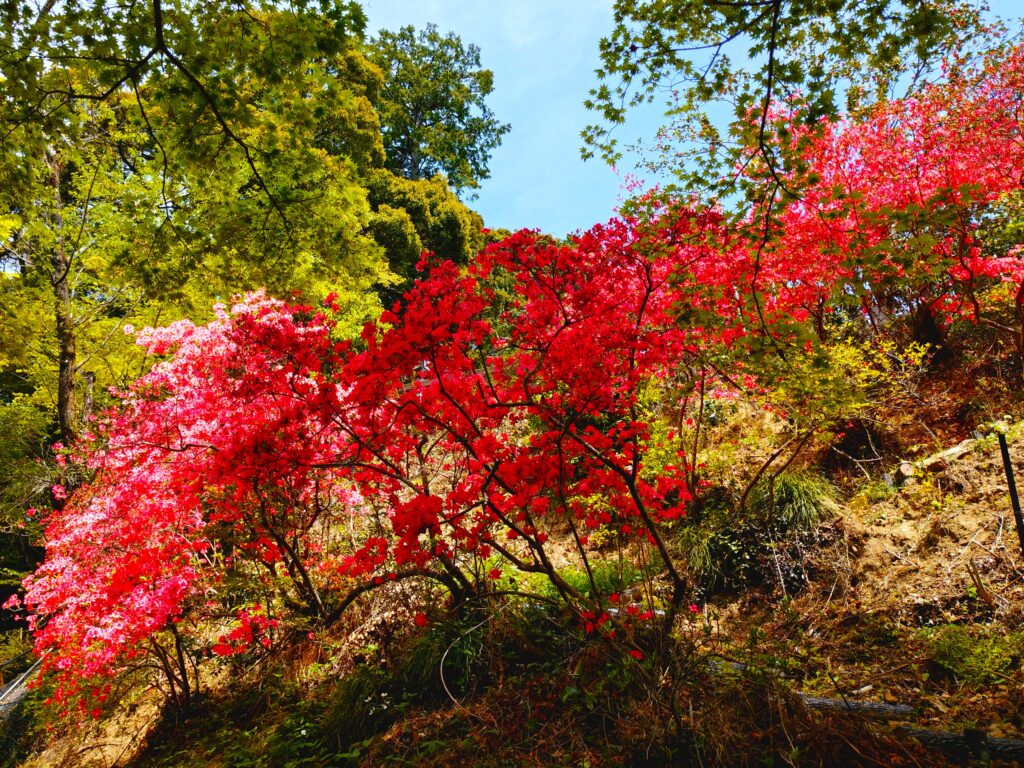
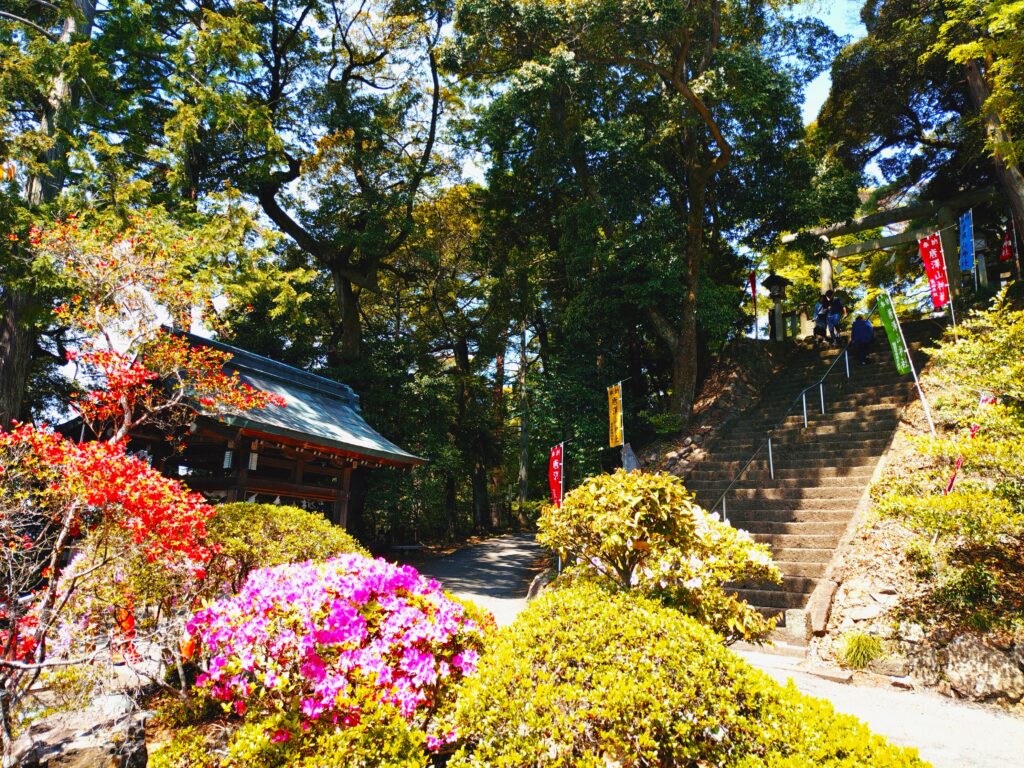
Approximately 5,000 azalea bushes (tsutsuji) in red, white, and pink are planted primarily across the precincts. Centered around mountain azaleas (yamatsutsuji), their vibrant contrast against fresh spring greenery is a signature highlight.
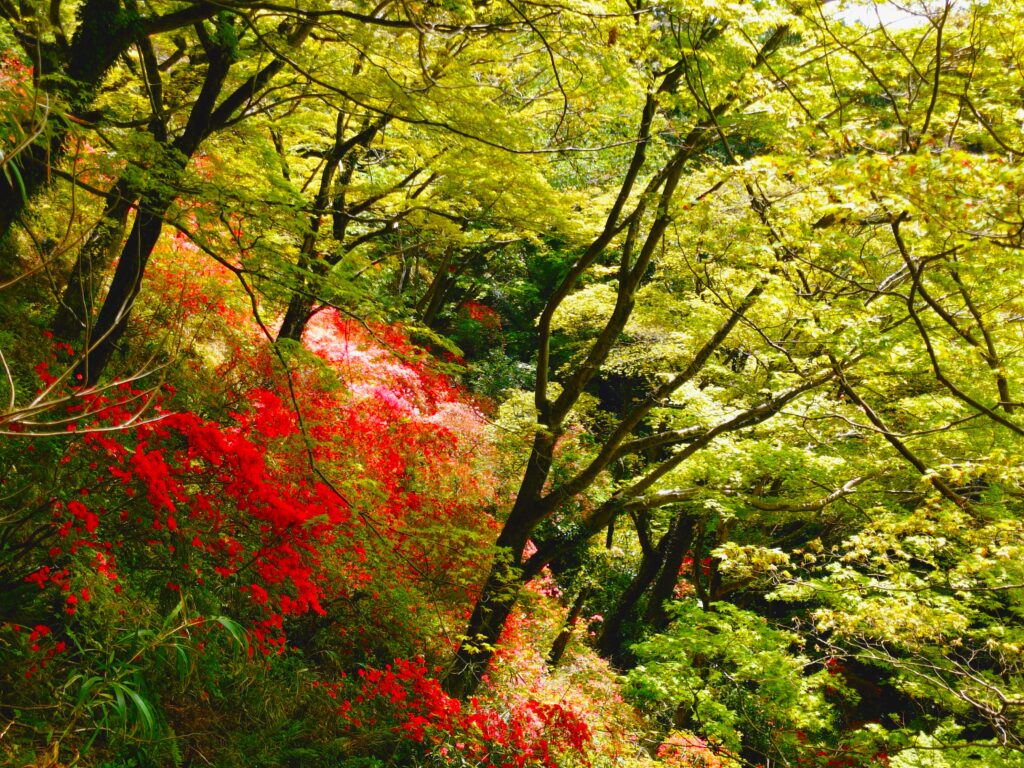
Depending on weather conditions, they generally reach full bloom in late April and can often be enjoyed through the Golden Week holidays. Continuing up the azalea-lined approach brings the Temizuya (purification pavilion) into view.
【Temizuya & Shinmon Gate】Through the Pure Purification Pavilion to the Majestic Shinmon Gate Marking the Entrance to the Sacred Precinct
Although it unfortunately was not decorated as a floral hanachozu during this visit, seasonal flowers are usually floated on the water.
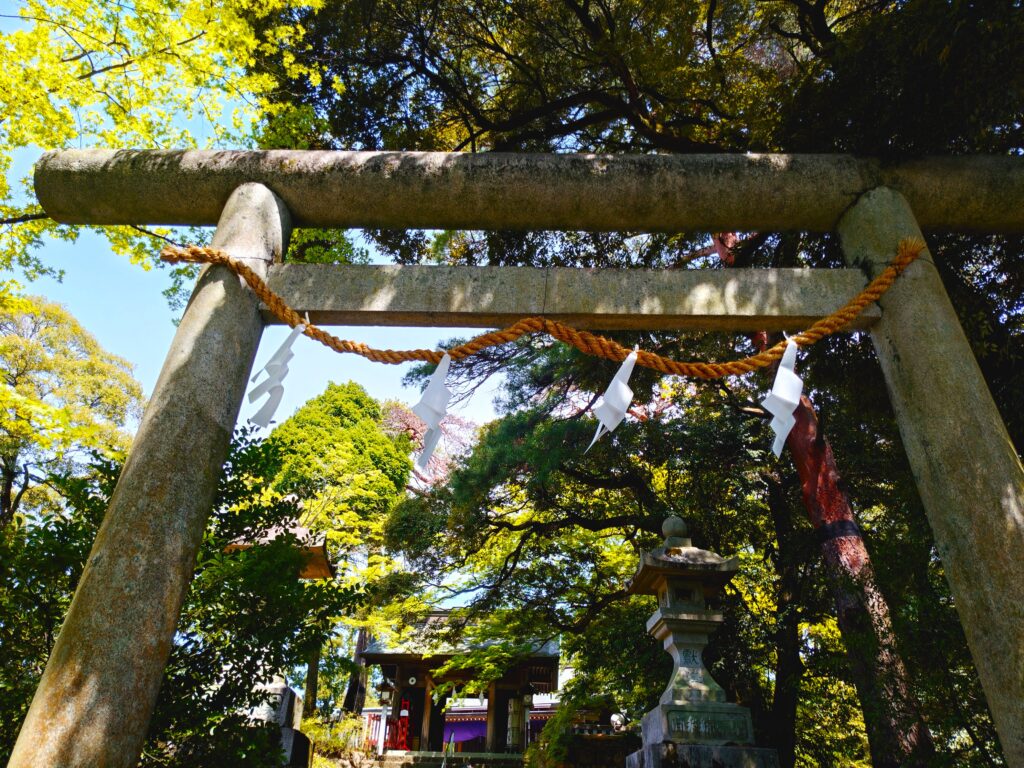
From the Temizuya, a stone stairway leads directly up to the Shinmon Gate.
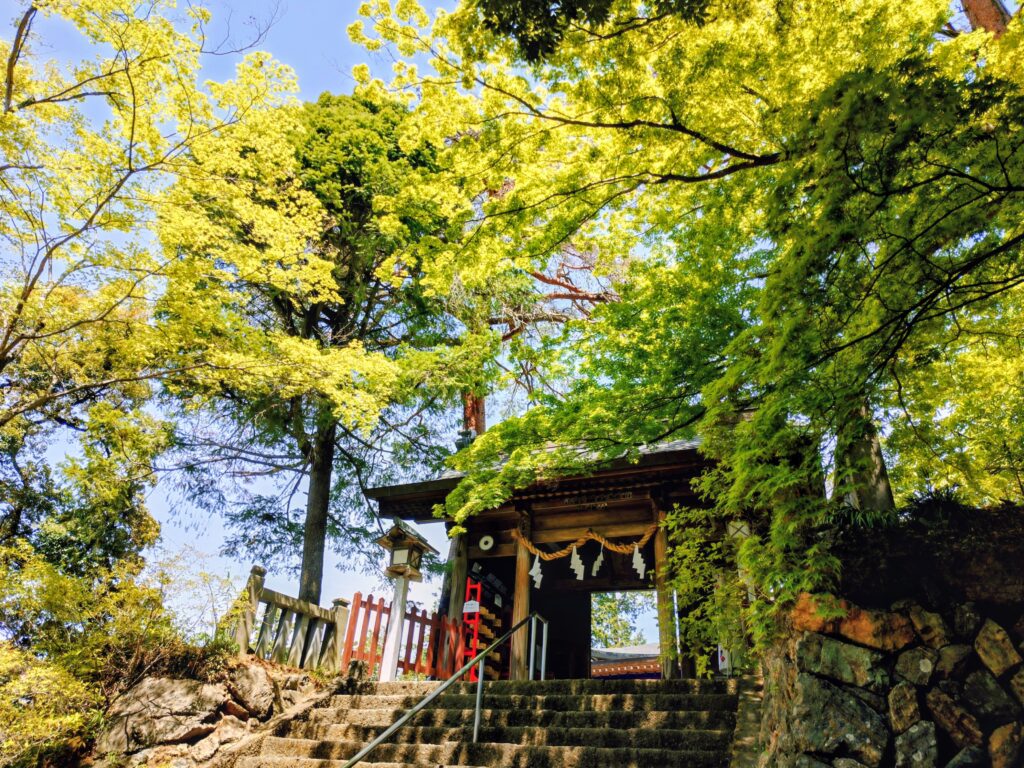
Climbing the stairs and passing the Torii gate reveals the Shinmon Gate ahead. Standing on the exact spot that once served as the castle’s primary defensive stronghold, this gateway into the sacred sanctuary symbolizes the passage of history.
【Shrine Halls】The Main Hall and Worship Hall Seated Atop the Former Honmaru Heights
Upon entering through the Shinmon Gate, the Worship Hall is not aligned straight ahead, but rather positioned at a slight angle—a remnant of castle architecture designed to prevent enemies from charging directly inside in a single rush.
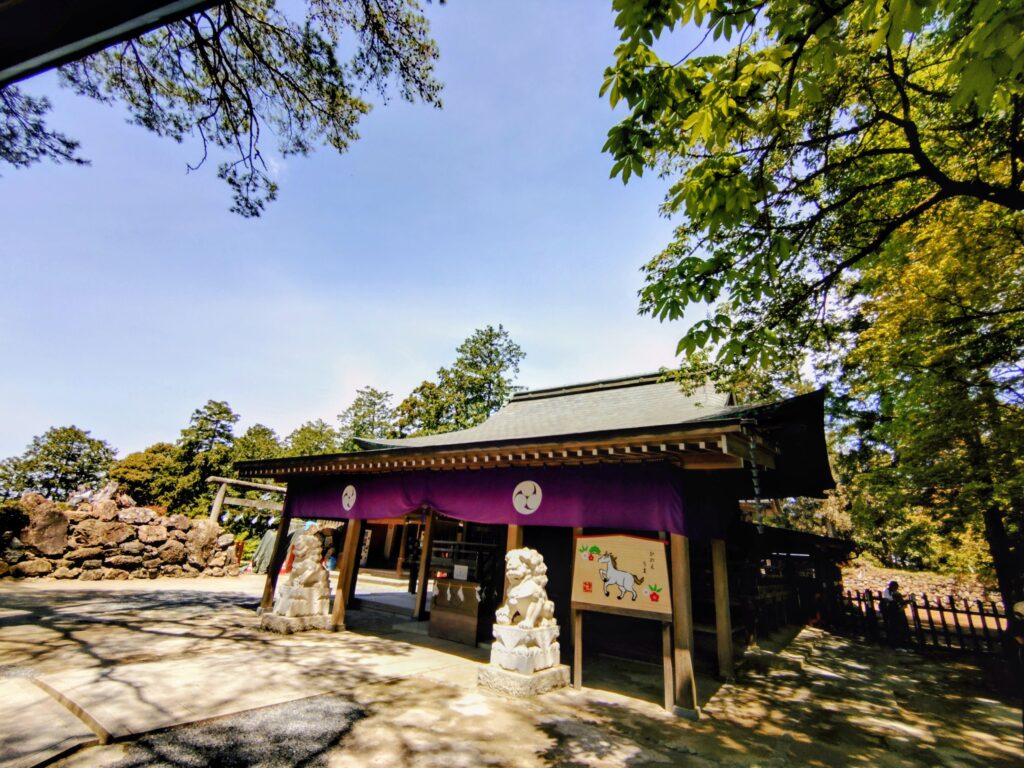
Because the complex sits on a flat terrace enclosed by Sengoku-period earthen ramparts (dorui), it retains a distinctive “fortress-like” layout despite being Shinto shrine architecture. The current shrine buildings were constructed between the shrine’s founding in 1883 (Meiji 16) and the late 1880s (Meiji 20s).
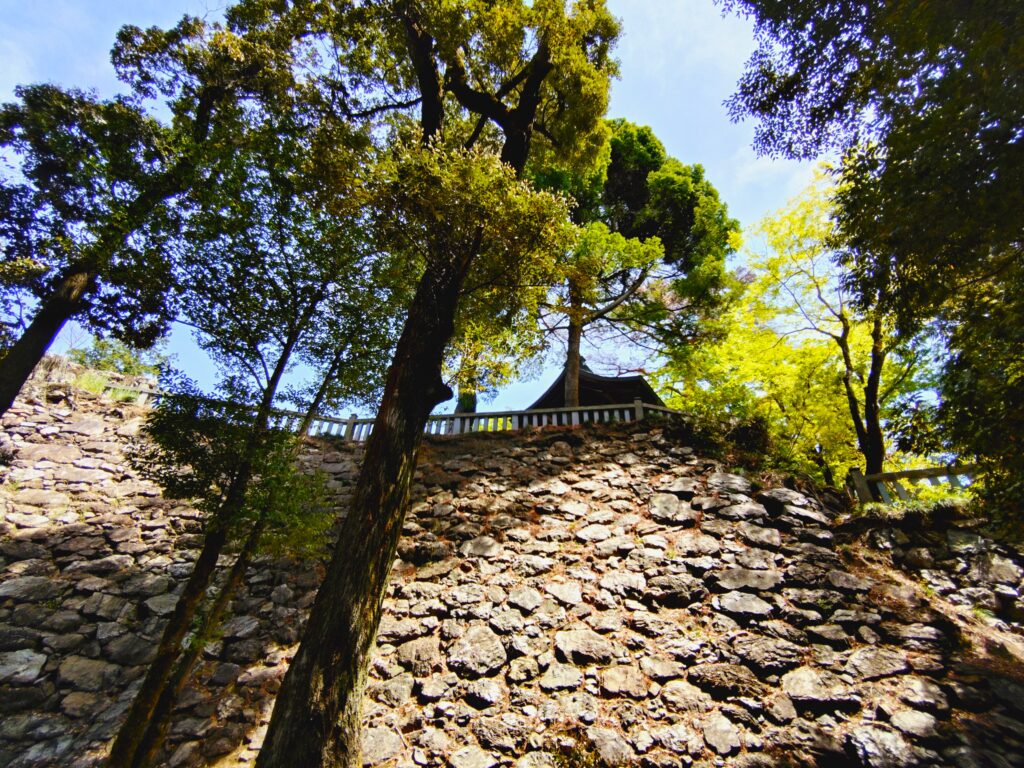
Viewed from below, it truly looks just like a castle.
【Sub-shrines (Ryujin-gu, Wago Inari Shrine & Ashioyama Shrine)】Distinctive Auxiliary Shrines Enshrined Within the Precincts
Ryujin-gu (Dragon God Shrine): Located on a tree-lined slope just off the main approach path, this shrine is rooted in the legend that the Dragon God of Lake Biwa asked Fujiwara no Hidesato to slay the Giant Centipede of Mount Mikami and rewarded him with various treasures upon his triumph.
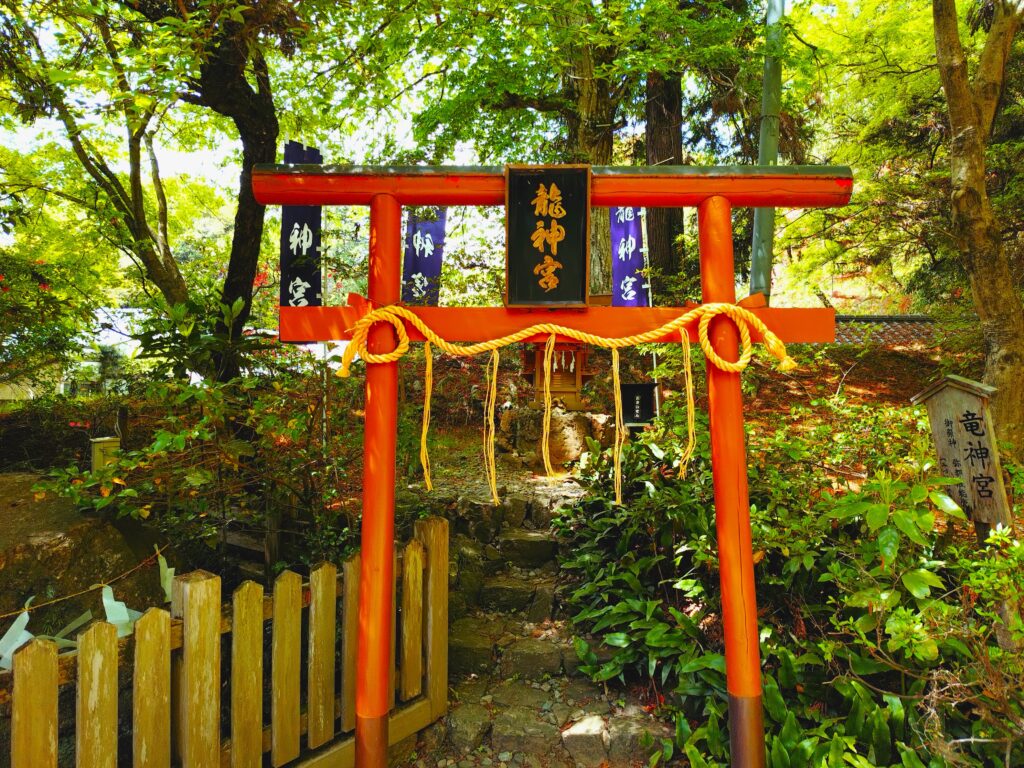
Enshrining the Dragon God who aided Lord Hidesato, it is cherished as a protector of the shrine and bringer of life-giving water to the region. The enshrined deity is Ryujin (the Dragon Deity of Water).
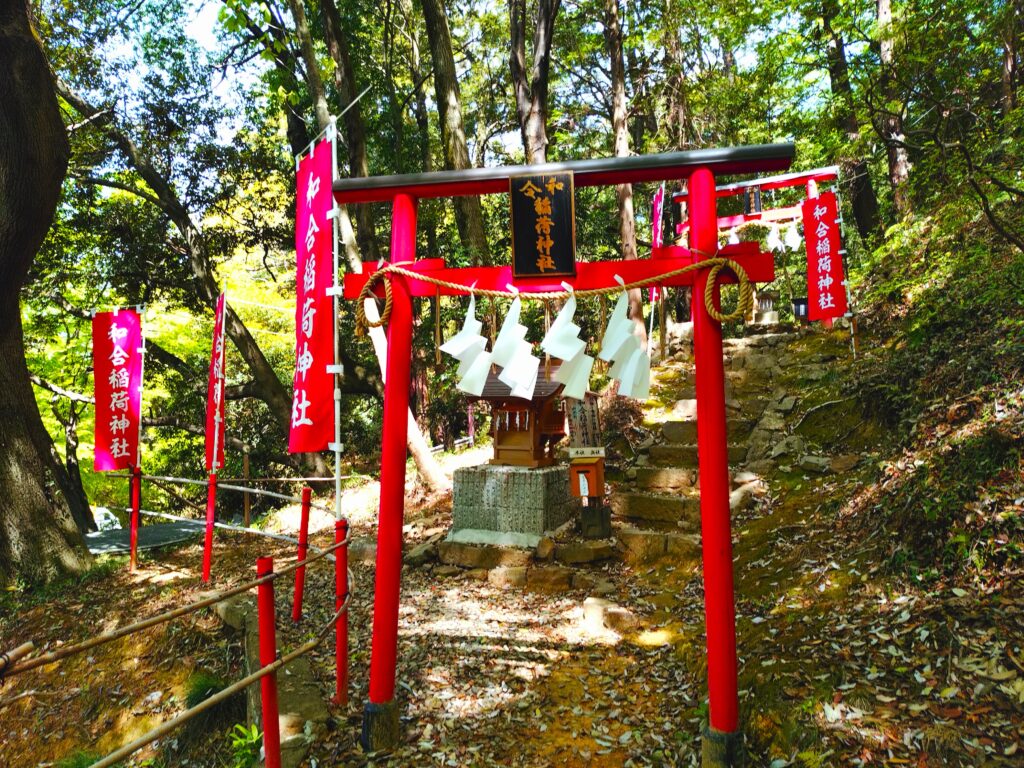
Wago Inari Shrine: Situated on the left side further along the approach past Ryujin-gu, this shrine offers traditional Inari blessings of business prosperity and abundant harvests, while the word “Wago” (Harmony) in its name draws many worshipers praying for household safety, harmonious relationships, and good matchmaking. The enshrined deity is Ukanomitama-no-mikoto.
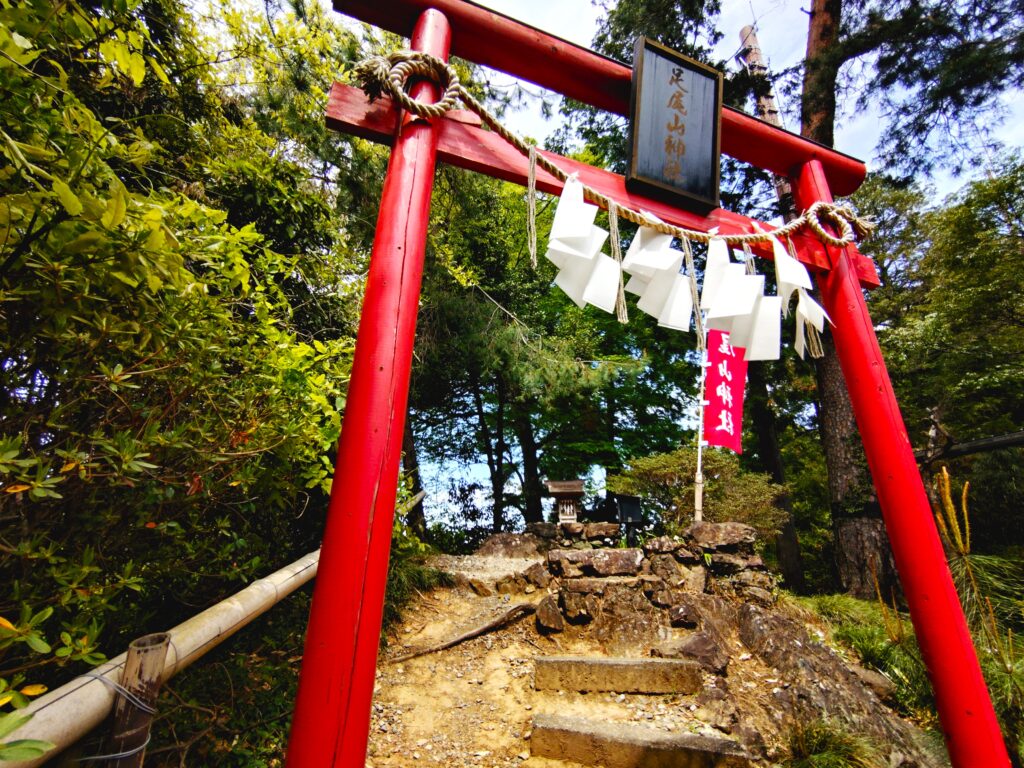
Ashioyama Shrine: Tucked in a somewhat understated spot along the path descending from the former San-no-maru (Third Bailey) toward the approach, the “Ashioyama” faith originated as mountain worship centered on Mount Ashio in Ibaraki Prefecture—where praying for “strong legs and healthy feet” (kenkyaku) was a vital wish for ascetics and locals traversing steep mountain trails. The Sano clan, then lords of the castle, enshrined various deities at strategic points throughout the fortress to pray for the safety of their family, retainers, and domains. The enshrined deities are three gods: Sarutahiko-no-kami, Omodaru-no-kami, and Kunitokotachi-no-mikoto.
【Views from Nanjo-kan & Tengu-iwa Rock】Scenic Lookouts Overlooking the Kanto Plain and a Giant Castle-Site Boulder
Nanjo-kan: Located right next to the current shrine office on the site where the feudal lord’s residential palace once stood, this terrace opens wide to the south.
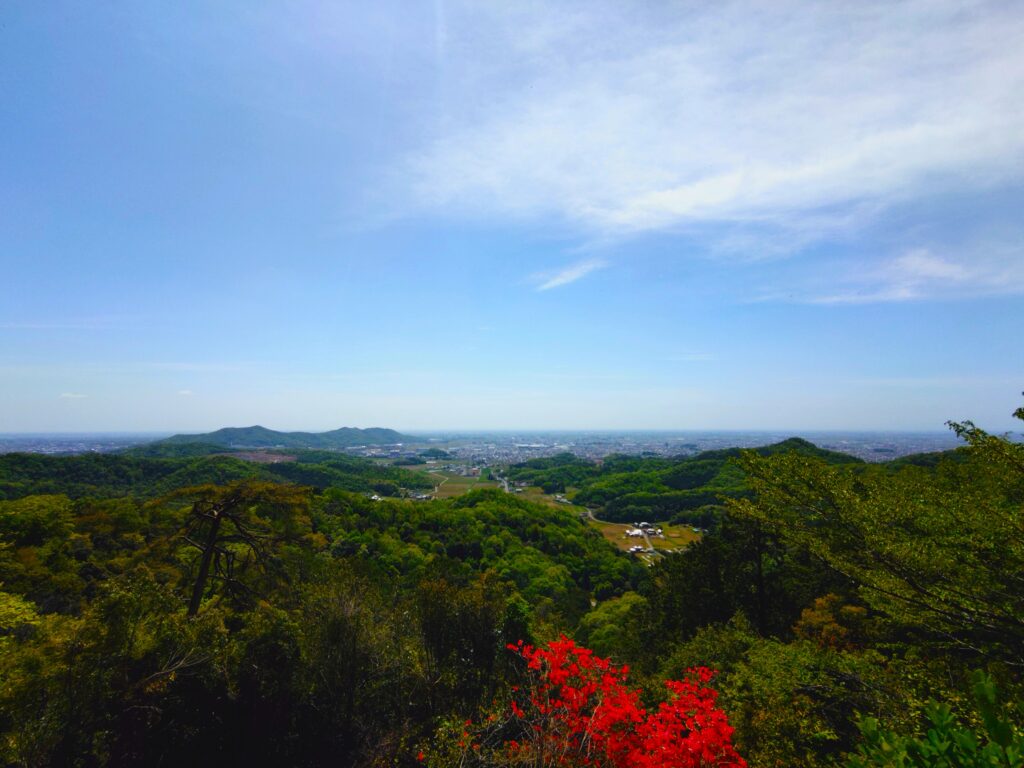
Below stretches the cityscape of Sano, with the vast Kanto Plain extending endlessly beyond. With nothing obstructing the view, a breathtaking nightscape—often compared to “Matsushima on Land”—unfolds after dark, making it a popular spot among photographers as well.
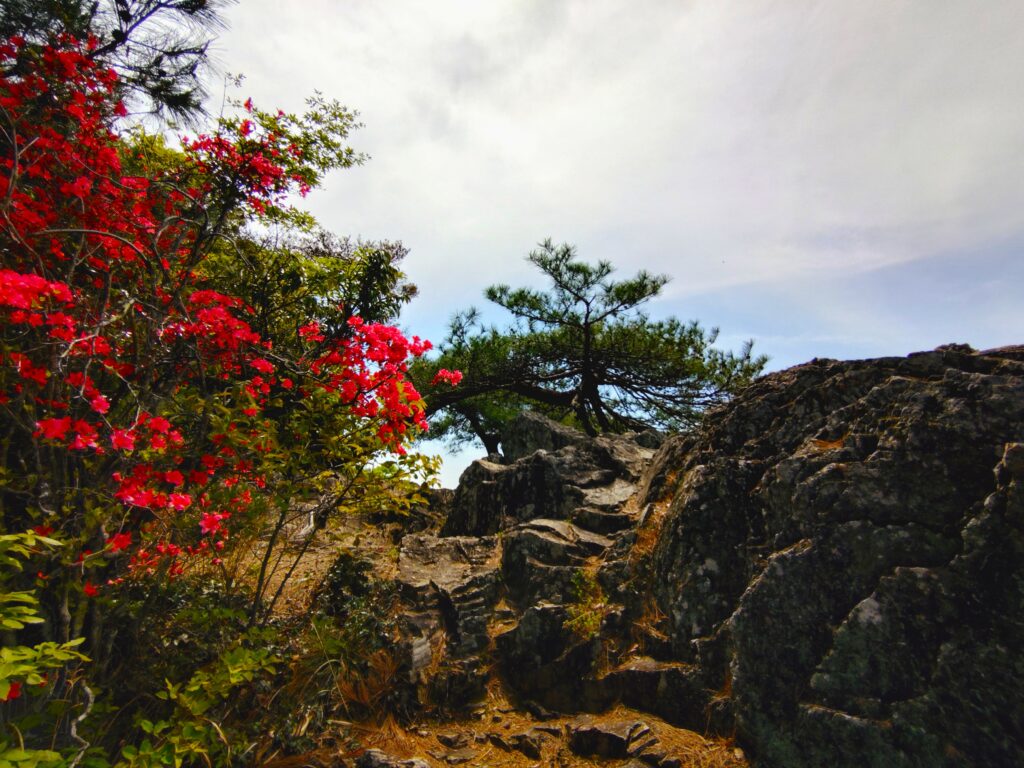
Tengu-iwa Rock: Heading into the castle grounds from the parking lot, a climbing trail appears on the right leading to Tengu-iwa, a massive rock formation that once functioned as a “watchtower” (monomi-yagura) for Karasawayama Castle.
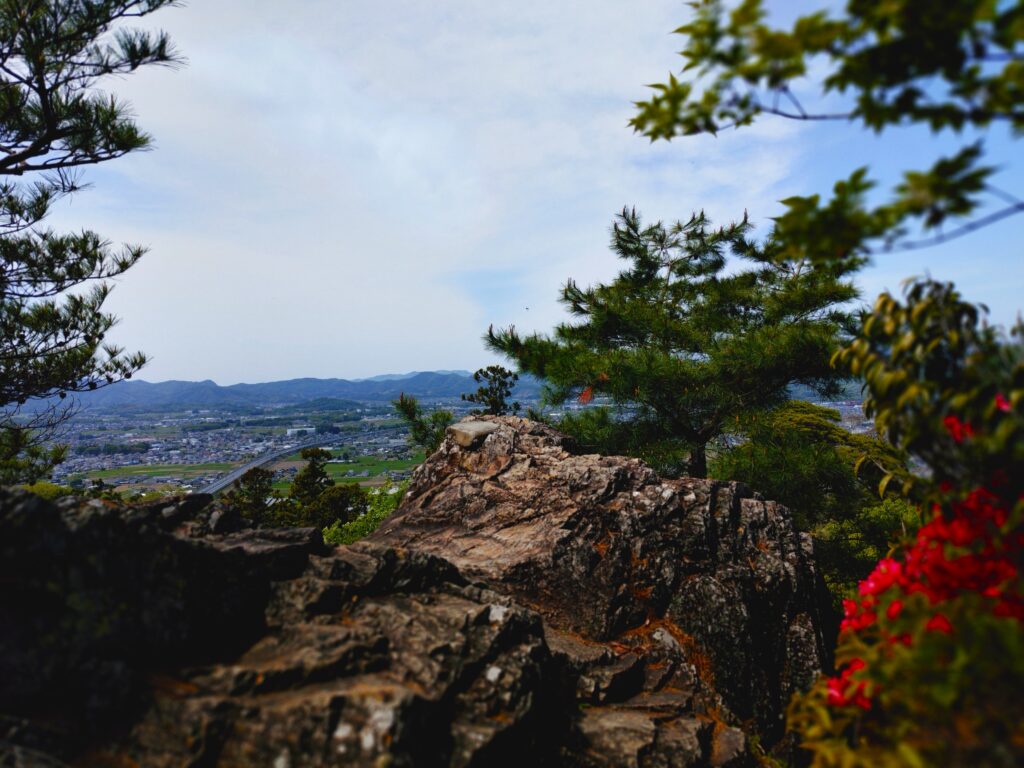
From atop this giant crag, visitors can enjoy a 180-degree panorama of the Kanto Plain; on clear days, even Mount Fuji and Tokyo Skytree can sometimes be seen.
【Karasawayama Shrine Goshuin】
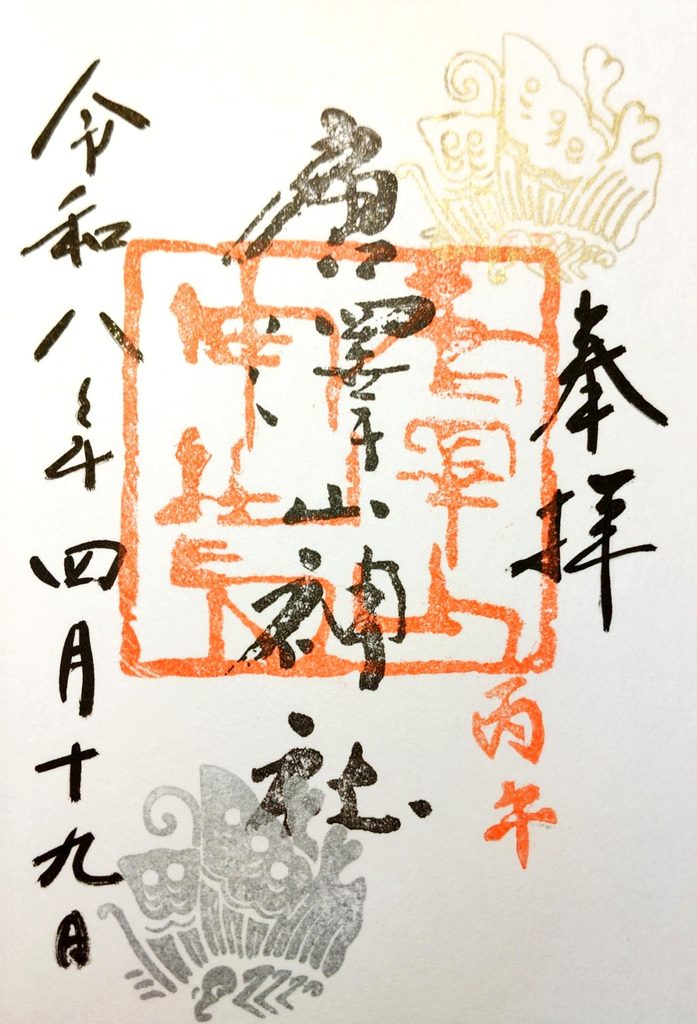
【Karasawayama Shrine On-Site Visit Report & Original Evaluation】
Karasawayama Shrine On-Site Review & Evaluation Score
| Evaluation Category | Score | Key Features / Highlights |
|---|---|---|
| Nature & Scenery | (4.5) | Sweeping views overlooking the Kanto Plain from the 242-meter-high summit. Expansive, majestic mountain forest scenery unfolds across all four seasons, including spring azaleas and autumn foliage. |
| History & Heritage | (4.0) | A Special Imperial Shrine (Bekkaku Kanpeisha) enshrining Lord Fujiwara no Hidesato (Tawara Toda), who defeated Taira no Masakado. A historic sanctuary preserving the high stone walls of the National Historic Site “Karasawayama Castle Ruins.” |
| Scale & Grounds | (4.0) | The entire castle ruin forms an expansive precinct offering rewarding walking routes past the Ote area (note: *toratsugumi* in source text), castle bailey ruins, and the shrine halls on the former Honmaru site. |
| Goshuin Variety | (4.0) | Highly artistic designs featuring trendy clear/transparent Goshuin (*clear goshuin*), seasonal limited-edition stamps, and Goshuin motifs inspired by the shrine’s rescued/resident cats. |
| Tranquility | (4.0) | Enveloped in refreshing mountaintop breezes and deep greenery, offering a luxurious setting away from the hustle and bustle below to worship and explore the castle ruins in peaceful calm. |
| Accessibility | (2.0) | Taxi or car recommended from “Yoshimizu Station” on the Tobu Sano Line or “Sano Station” on the JR line. A large free parking lot is provided near the summit. |
【On-Site Report | Personal Impressions and Atmosphere】
What makes this sanctuary so fascinating is the ability to enjoy a dual layer of history: while its history as a shrine spans roughly 140 years, the history of the castle forming its foundation stretches back nearly a millennium. Climbing the stairs up to the Main Hall provides quite a brisk workout step by step, yet the well-maintained approach is wonderfully pleasant, making the walk while listening to the rustling trees a truly luxurious moment. Along the way, I even encountered cats napping peacefully—resulting in a fulfilling visit combining just the right amount of exercise with ultimate relaxation. Rather than a typical shrine, the whole place carried the unmistakable atmosphere of a mountain castle.
【Nearby Sightseeing Spots to Visit Together】
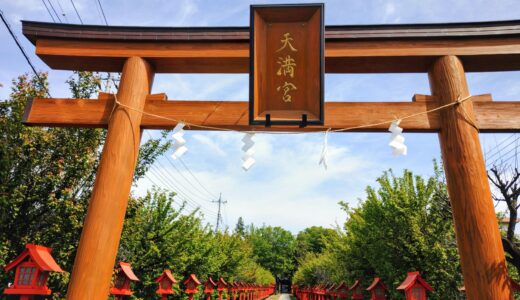
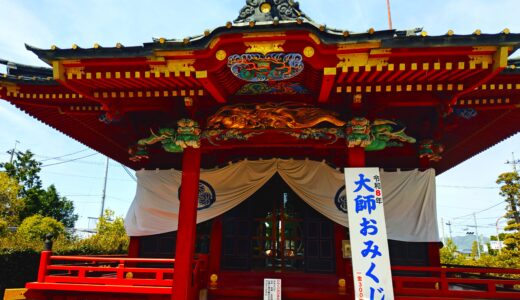
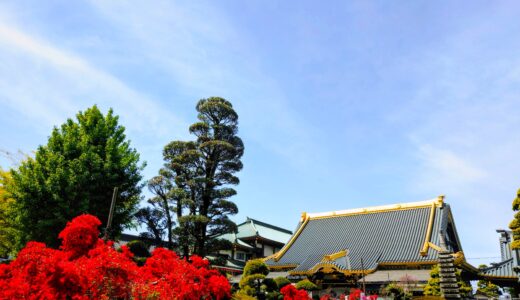
Asahimori Tenmangu Shrine, Kasugaokayama Toshogu Shrine, Sano Yakuyoke Daishi
【Basic Information & Access】
【Access by Train / Car and Parking】
*Free parking available.
【Address & Official Website】
Kanainouemachi, Sano City, Tochigi Prefecture 327-0015