 Kanata's Japan Shrine Guide

目次
- 【Overview of Soshinzan Kosen-ji】
- 【The Kosen-ji Staircase】
- 【Sammon Gate】
- 【Shorodo (Bell Tower)】
- 【The Main Hall (Hondo)】
- 【Shaka-do Hall】
- 【The Five-Story Pagoda (Gojunoto)】
- 【Yuami Benzaiten】
- 【Statue of Koso Kobo Daishi of the Shingon Sect】
- 【Illumination / Light-up】
- 【Soshinzan Kosen-ji Temple Goshuin】
- 【Soshinzan Kosen-ji Temple Nearby Tourist Spots】
- 【Soshinzan Kosen-ji Temple Access】
- Admin’s Impressions
- Address of Soshinzan Kosen-ji Temple
- Official Website of Soshinzan Kosen-ji
【Overview of Soshinzan Kosen-ji】
According to temple legend, when the high priest Gyoki visited Kusatsu in 721 (the 5th year of the Yoro era) and prayed for the sick, hot spring waters miraculously gushed forth. In order to protect these waters with their exceptional healing qualities and establish a sanctuary for curing illnesses, Gyoki personally carved and enshrined a statue of Yakushi Nyorai. Because of this origin, Kosen-ji is counted as one of “Japan’s Three Great Hot Spring Yakushi Temples,” alongside Arima Onsen (Hyogo) and Yamanaka Onsen (Ishikawa).
![20260505 1212521412 1024x768 - Soshinzan Kosen-ji Temple [Gunma]](https://japan-shrine.info/wp-content/uploads/20260505_1212521412-1024x768.jpg "Soshinzan Kosen-ji Temple [Gunma]")
Although the temple later fell into a temporary decline, it was renamed “Kosen-ji” in 1193 (the 4th year of the Kenkyu era) when the Shogun Minamoto no Yoritomo visited Kusatsu, changing it from its previous names like Yakushi-do. Following this, the temple grounds were extensively developed and rebuilt by the Yumoto clan, who were the ruling lords of Kusatsu.
The temple enshrines Yakushi Nyorai (the Medicine Buddha) as its primary deity.
【The Kosen-ji Staircase】
The staircase of Kosen-ji is a highly iconic spot that directly connects the temple to the “Yubatake” (the hot spring fields), the ultimate symbol of Kusatsu Onsen.
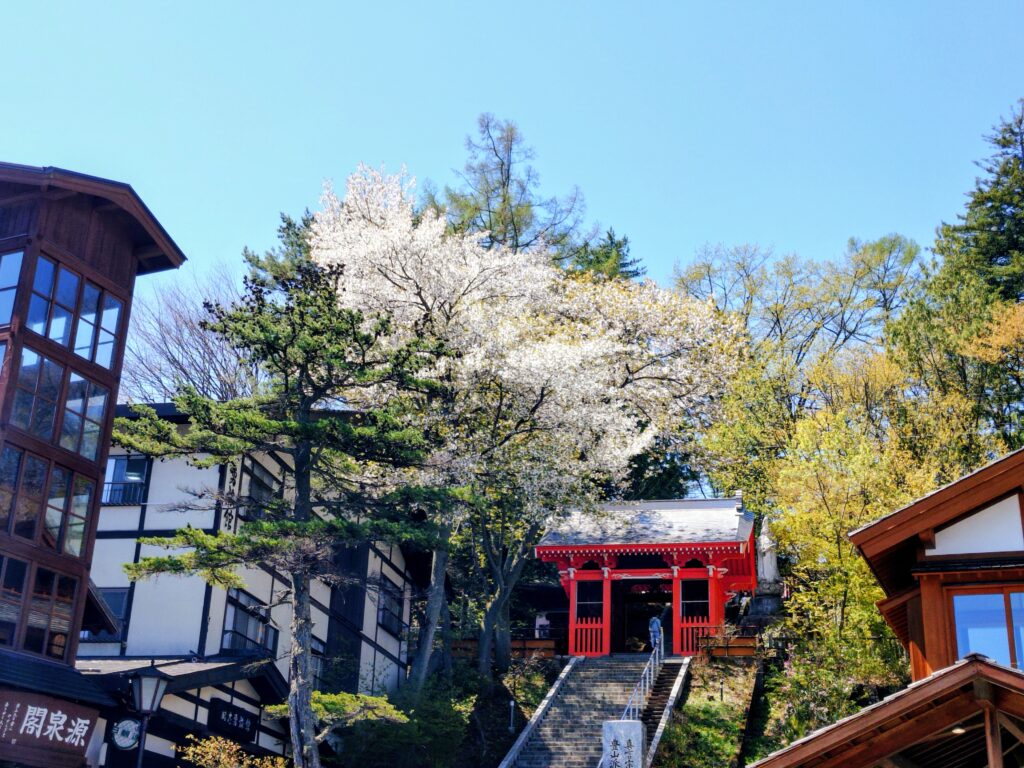
Once you finish climbing the roughly 120 steps leading up to the Sammon Gate and turn around with your back to the gate, a breathtaking panoramic view of the entire Yubatake unfolds right beneath your eyes. Far more than just a walkway, it is a “spot for stunning views and health” that anyone visiting Kusatsu should experience at least once.
【Sammon Gate】
![20260505 105544912 1024x768 - Soshinzan Kosen-ji Temple [Gunma]](https://japan-shrine.info/wp-content/uploads/20260505_105544912-1024x768.jpg "Soshinzan Kosen-ji Temple [Gunma]")
Records state that the foundation for the current structure was laid around the year 1200 (the 2nd year of the Shoji era), when the ruling lord Yumoto clan rebuilt and developed the temple grounds. Since Kosen-ji was plagued by numerous fires throughout its long history, the current Sammon Gate is believed to be a reconstruction from the Edo period or a result of restoration work in later generations.
![20260505 105554085 1024x768 - Soshinzan Kosen-ji Temple [Gunma]](https://japan-shrine.info/wp-content/uploads/20260505_105554085-1024x768.jpg "Soshinzan Kosen-ji Temple [Gunma]")
Enshrined on both sides of the gate are Kongorikishi statues (Nio Guardian Gods), keeping a sharp, fierce watch as the protective deities safeguarding the temple.
【Shorodo (Bell Tower)】
![20260505 105810918 1024x768 - Soshinzan Kosen-ji Temple [Gunma]](https://japan-shrine.info/wp-content/uploads/20260505_105810918-1024x768.jpg "Soshinzan Kosen-ji Temple [Gunma]")
The Shorodo of Kosen-ji stands immediately to your right after passing through the Sammon Gate. The hanging bell was cast in 1701 (the 14th year of the Genroku era), and general worshippers are completely free to ring it.
【The Main Hall (Hondo)】
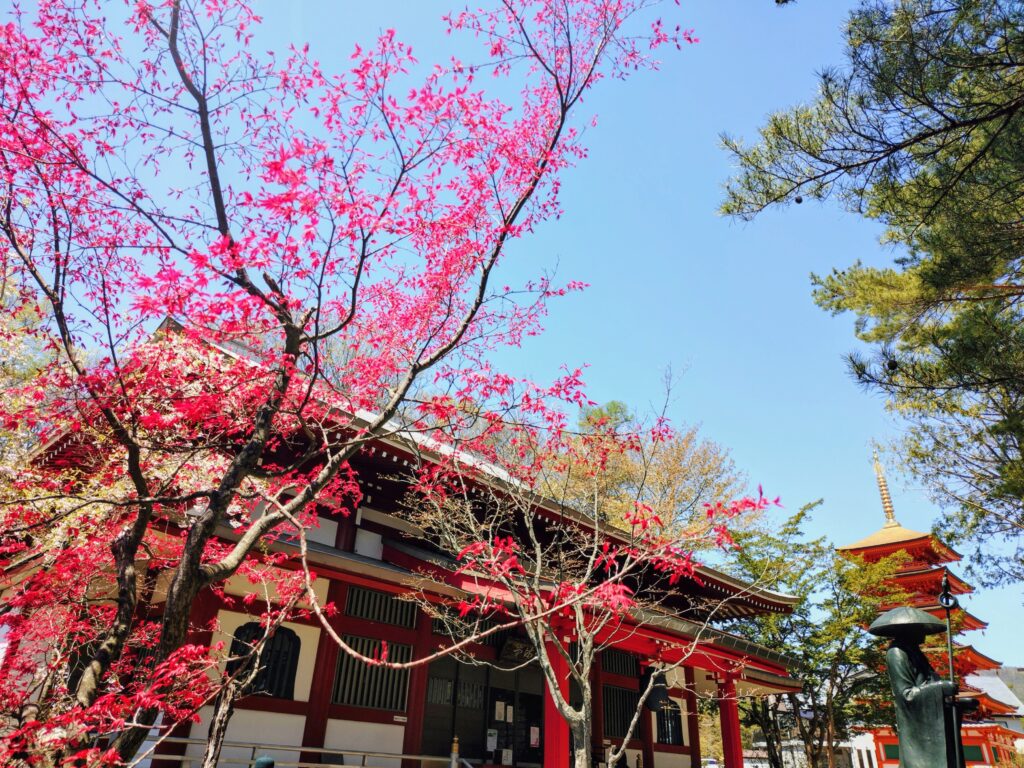
Standing at the center of the Kosen-ji precinct, the Main Hall was completed in 1971 (the 46th year of the Showa era). Throughout Kosen-ji’s long history, the main hall was rebuilt multiple times due to fires and other disasters. This current building marks its “fifth reconstruction.” Built out of reinforced concrete, it features a highly robust and durable structure designed to withstand the heavy snows of Kusatsu’s severe winter environment.
【Shaka-do Hall】
The Shaka-do Hall, erected in 1703 (the 16th year of the Genroku era), is the oldest surviving building within the Kosen-ji precinct. It is a precious wooden structure that beautifully preserves its appearance from over 300 years ago, vividly retaining the architectural styles of that era.
![20260505 1059198092 1024x768 - Soshinzan Kosen-ji Temple [Gunma]](https://japan-shrine.info/wp-content/uploads/20260505_1059198092-1024x768.jpg "Soshinzan Kosen-ji Temple [Gunma]")
Enshrined Deity: Shaka Nyorai (The “Late-Blooming” Buddha who grants wishes)
For a long time, the statue inside was quietly enshrined as a mystery, with no one knowing who carved it or where it came from. However, a formal investigation in 2005 revealed that it was the work of High Priest Kokei Shonin, the legendary figure who rebuilt the famous Todai-ji Temple in Nara. Because it sat quietly for roughly 300 years without anyone realizing its immense cultural value, it was affectionately named the “Osozaki Nyorai” (The Late-Blooming Buddha).
【The Five-Story Pagoda (Gojunoto)】
The Five-Story Pagoda of Kosen-ji was completed recently in 2023 (the 5th year of the Reiwa era). A construction plan had originally been drawn up during the Bunka-Bunsei eras (1804–1830) of the Edo period, but historical misfortunes, including devastating fires, forced the temple to abandon the project.
![20260505 110512070 1024x768 - Soshinzan Kosen-ji Temple [Gunma]](https://japan-shrine.info/wp-content/uploads/20260505_110512070-1024x768.jpg "Soshinzan Kosen-ji Temple [Gunma]")
Its completion in 2023 means that a “200-year-old dream” has finally been realized.
【Yuami Benzaiten】
![20260505 110208797 1024x768 - Soshinzan Kosen-ji Temple [Gunma]](https://japan-shrine.info/wp-content/uploads/20260505_110208797-1024x768.jpg "Soshinzan Kosen-ji Temple [Gunma]")
The Yuami Benzaiten is affectionately referred to as the “Spring of Compassion,” named after the glowing spring discovered by the high priest Gyoki.
【Statue of Koso Kobo Daishi of the Shingon Sect】
![20260505 110132510 1024x768 - Soshinzan Kosen-ji Temple [Gunma]](https://japan-shrine.info/wp-content/uploads/20260505_110132510-1024x768.jpg "Soshinzan Kosen-ji Temple [Gunma]")
Standing in front of the Main Hall is the Statue of Koso Kobo Daishi, erected in 2019 (the 1st year of the Reiwa era). While Kosen-ji is said to have been founded by Gyoki during the Nara period, it became a temple of the Shingon sect (currently the Shingon Sect Chizan School) from the Heian period onward. Enshrining a statue of Kobo Daishi, the sect’s founder, in front of the main hall is an extremely common practice in Shingon temples as a central symbol of devotion.
【Illumination / Light-up】
![20260504 202807812 1024x768 - Soshinzan Kosen-ji Temple [Gunma]](https://japan-shrine.info/wp-content/uploads/20260504_202807812-1024x768.jpg "Soshinzan Kosen-ji Temple [Gunma]")
At night, the Five-Story Pagoda, the area beneath the Sammon Gate, and the Yakushi-do Hall within the precinct are beautifully illuminated every single evening. Visitors can enjoy a deeply mystical night view from all around the Yubatake area.
![20260504 202405402 1024x768 - Soshinzan Kosen-ji Temple [Gunma]](https://japan-shrine.info/wp-content/uploads/20260504_202405402-1024x768.jpg "Soshinzan Kosen-ji Temple [Gunma]")
【Soshinzan Kosen-ji Temple Goshuin】
![kousenji 711x1024 - Soshinzan Kosen-ji Temple [Gunma]](https://japan-shrine.info/wp-content/uploads/kousenji-711x1024.jpg "Soshinzan Kosen-ji Temple [Gunma]")
【Soshinzan Kosen-ji Temple Nearby Tourist Spots】
Kusatsu Onsen Yubatake, Shirane Shrine, Sai-no-Kawara Park
![20260505 104243659 2 520x300 - Soshinzan Kosen-ji Temple [Gunma]](https://japan-shrine.info/wp-content/uploads/20260505_104243659-2-520x300.jpg "Soshinzan Kosen-ji Temple [Gunma]")
![20260505 113850858 520x300 - Soshinzan Kosen-ji Temple [Gunma]](https://japan-shrine.info/wp-content/uploads/20260505_113850858-520x300.jpg "Soshinzan Kosen-ji Temple [Gunma]")
![20260505 091126852 520x300 - Soshinzan Kosen-ji Temple [Gunma]](https://japan-shrine.info/wp-content/uploads/20260505_091126852-520x300.jpg "Soshinzan Kosen-ji Temple [Gunma]")
【Soshinzan Kosen-ji Temple Access】
Admin’s Impressions
During the day, the vermilion Five-Story Pagoda contrasts beautifully against the crisp blue sky, and the staircase offers a sweeping view of the vibrant, bustling Yubatake below. At night, however, the scene completely transforms. Wrapped in silence and an ethereal, mystical light, the illuminated temple grounds were stunning, with clouds of hot spring steam drifting up into the dark night sky. I felt that this stark contrast between the “action” of the day and the “stillness” of the night is the true essence and joy of visiting Kosen-ji.
The late-blooming cherry blossoms blooming in the precinct were absolutely gorgeous. Watching them stand tall and bloom a bit later than others after enduring the harsh, biting cold overlapped perfectly with the “Late-Blooming Buddha” who serves as the symbol of this temple. Combined with the hot springs of Kusatsu, it was a truly wonderful pilgrimage.
Ko-446 Kusatsu, Kusatsu-machi, Agatsuma-gun, Gunma Prefecture 377-1711
*No parking available on site.
![741b3e754b16374aa16ed14da11cfcc7 - Soshinzan Kosen-ji Temple [Gunma]](https://japan-shrine.info/wp-content/uploads/sng/741b3e754b16374aa16ed14da11cfcc7.jpg "Soshinzan Kosen-ji Temple [Gunma]")