 Kanata's Japan Shrine Guide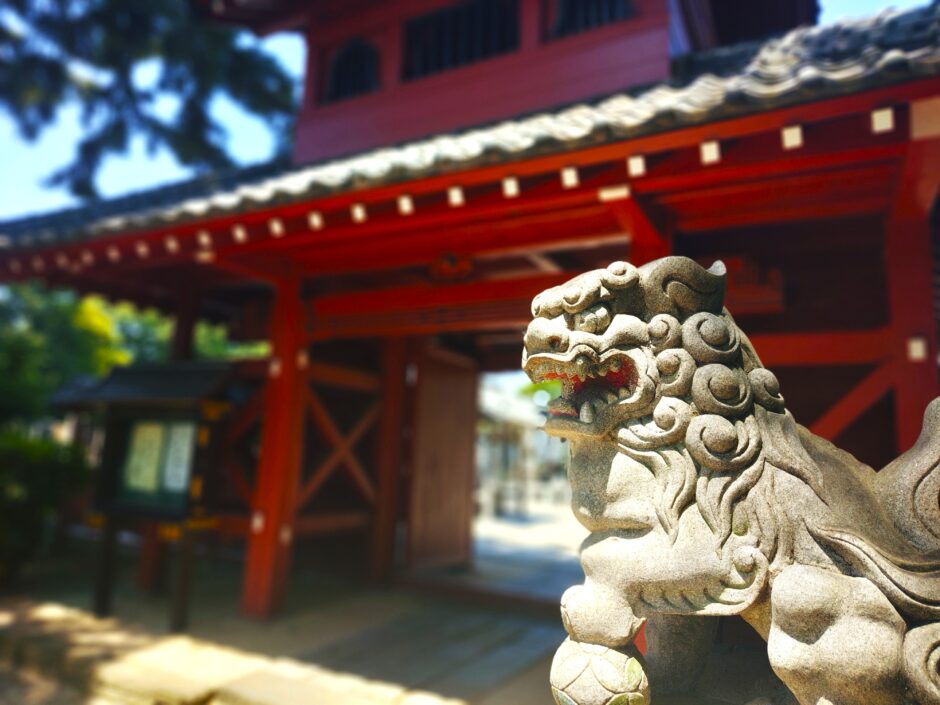

目次
- 【Overview of Shitozan Tengaku-ji】
- 【The Yakuimon Gate (The Black Gate)】
- 【The Akamon (The Red Gate)】
- 【The Shorodou (The Bell Tower)】
- 【The Hondo (Main Hall)】
- 【Nearby Tourist Spots (Within a 30-Minute Walk)】
- 【Shitozan Tengaku-ji Temple Access】
- Admin’s Impressions
- Address of Shitozan Tengaku-ji Temple
- Hisaizu Shrine / Tengaku-ji Temple Description Page
【Overview of Shitozan Tengaku-ji】
Shitozan Tengaku-ji Temple was founded in 1478 (Bunmei 10). It was established by the renowned warrior commander Ota Dokan—famous for building Edo Castle—who invited his own maternal uncle, the high priest “Sena Gensho,” to serve as the temple’s founding abbot. The Tokugawa Shogunate family frequently visited both Hisaizu Shrine and Tengaku-ji Temple. During the Edo period, the temple received a 15-koku feudal estate domain (Shuichi-chi, a land grant stamped with the Shogun’s red seal) from Tokugawa Ieyasu. Furthermore, it was elevated to the prestigious status of “Furegashira,” a high administrative position tasked with overseeing and regulating all neighboring temples in the district.
The primary object of worship (Gohonzon) enshrined here is Amida Nyorai (Amitabha Buddha), who is revered as the most fundamentally important Buddha within the teachings of Jodo Buddhism (Pure Land Sect).
【The Yakuimon Gate (The Black Gate)】
The Yakuimon gate standing proudly at the entrance of Tengaku-ji is finished in a majestic black lacquer appropriate for a high-status temple, earning it the affectionate local nickname “Kuromon” (The Black Gate).
![20260517 104501759 1024x768 - Shitozan Tengaku-ji Temple [Saitama]](https://japan-shrine.info/wp-content/uploads/20260517_104501759-1024x768.jpg "Shitozan Tengaku-ji Temple [Saitama]")
Historical records state that the 4th chief abbot of the temple was the third prince of Emperor Ogimachi. Due to this prestigious imperial connection, the Onigawara (ogre-faced ridge tiles) of the mountain gate are uniquely engraved with the Sixteen-Petal Chrysanthemum Crest (Juyou Kikkamon), the sacred emblem of the Japanese Imperial Family, which is an exceptionally rare sight at a Buddhist temple. Passing through this black Yakuimon gate, the vibrant red gate authorized by Tokugawa Ieyasu will come into view ahead.
【The Akamon (The Red Gate)】
![20260517 104730891 1024x768 - Shitozan Tengaku-ji Temple [Saitama]](https://japan-shrine.info/wp-content/uploads/20260517_104730891-1024x768.jpg "Shitozan Tengaku-ji Temple [Saitama]")
As concrete proof of receiving official patronage and authorization from Lord Ieyasu himself, the temple was permitted to erect a brilliantly lacquered “Akamon” (The Red Gate) within its precincts, which still conveys its historical prestige today. Just like their visits to Hisaizu Shrine, the 2nd Shogun Hidetada and the 3rd Shogun Iemitsu also stopped by this temple numerous times during their falconry excursions.
![20260517 104749829 2 1024x768 - Shitozan Tengaku-ji Temple [Saitama]](https://japan-shrine.info/wp-content/uploads/20260517_104749829-2-1024x768.jpg "Shitozan Tengaku-ji Temple [Saitama]")
Carved directly into the center of the Red Gate is a detailed sculpture of an ogre-like creature known as a Jaki (an evil imp or demon).
In traditional Buddhism, a Jaki is typically viewed as a malicious demon that brings misfortune and disaster to humankind. However, when they are strategically placed near temple gates or the roofs of main halls, their meaning completely transforms into a protective device: “Having reformed their ways, they now use their ferocious strength to keep watch and prevent evil from entering the temple (acting as a charm against evil and bad directions).” With its bright red body desperately supporting the heavy roof with a strained “Hnngh!” expression, this little ogre has a wonderfully comical charm.
【The Shorodou (The Bell Tower)】
![20260517 104824406 1024x768 - Shitozan Tengaku-ji Temple [Saitama]](https://japan-shrine.info/wp-content/uploads/20260517_104824406-1024x768.jpg "Shitozan Tengaku-ji Temple [Saitama]")
The temple originally housed a historically invaluable bell cast in the early Edo period in the year 1737 (Genbun 1). However, during World War II, the temple was forced to surrender it due to the Metal Collection Act. After the war, in order to once again ring out the iconic sound of the temple’s bell across the local community, a new Buddhist temple bell (Bonsho) was recast in 1965 (Show 40) and hung in the current bell tower structure.
【The Hondo (Main Hall)】
![20260517 104852386 1024x768 - Shitozan Tengaku-ji Temple [Saitama]](https://japan-shrine.info/wp-content/uploads/20260517_104852386-1024x768.jpg "Shitozan Tengaku-ji Temple [Saitama]")
During the Edo period, Tengaku-ji was a massive, sprawling institution that commanded five tacchu (sub-temples) within its precincts, and it was said that every single resident of the Koshigaya-shuku post town was registered as a parishioner (danka). However, entering the modern era, a catastrophic fire tragically destroyed the historic original Main Hall. The current Hondo standing today was meticulously reconstructed in 1966 (Showa 41).
【Nearby Tourist Spots (Within a 30-Minute Walk)】
Hisaizu Shrine, Koshigaya Katori Shrine, Daisho-ji Temple
![20260517 100034179 520x300 - Shitozan Tengaku-ji Temple [Saitama]](https://japan-shrine.info/wp-content/uploads/20260517_100034179-520x300.jpg "Shitozan Tengaku-ji Temple [Saitama]")
![20260517 112023665 520x300 - Shitozan Tengaku-ji Temple [Saitama]](https://japan-shrine.info/wp-content/uploads/20260517_112023665-520x300.jpg "Shitozan Tengaku-ji Temple [Saitama]")
![20260517 125300063 520x300 - Shitozan Tengaku-ji Temple [Saitama]](https://japan-shrine.info/wp-content/uploads/20260517_125300063-520x300.jpg "Shitozan Tengaku-ji Temple [Saitama]")
【Shitozan Tengaku-ji Temple Access】
Admin’s Impressions
On the day of my visit, a private memorial service was actively being held for another family inside. Out of respect, I deliberately refrained from wandering around too closely or taking a detailed look inside the Main Hall—where the primary deity and the city-designated cultural property, the “Nirvana Statue,” are enshrined.
This temple holds so many fascinating highlights yet to be explored, from its profound historical ties to the Tokugawa Shogunate family to the tiny Jaki demon sculpture carved into the gate. While this visit resulted in quietly offering a prayer from a respectful distance, I would love to return during the season when the wisteria at the neighboring Hisaizu Shrine reaches its peak bloom, so I can spend plenty of time taking a slow, leisurely stroll through these historic grounds.
![175a59d9b89e4490a2b6cfdf3725783a - Shitozan Tengaku-ji Temple [Saitama]](https://japan-shrine.info/wp-content/uploads/sng/175a59d9b89e4490a2b6cfdf3725783a.jpg "Shitozan Tengaku-ji Temple [Saitama]")