 Kanata's Japan Shrine Guide
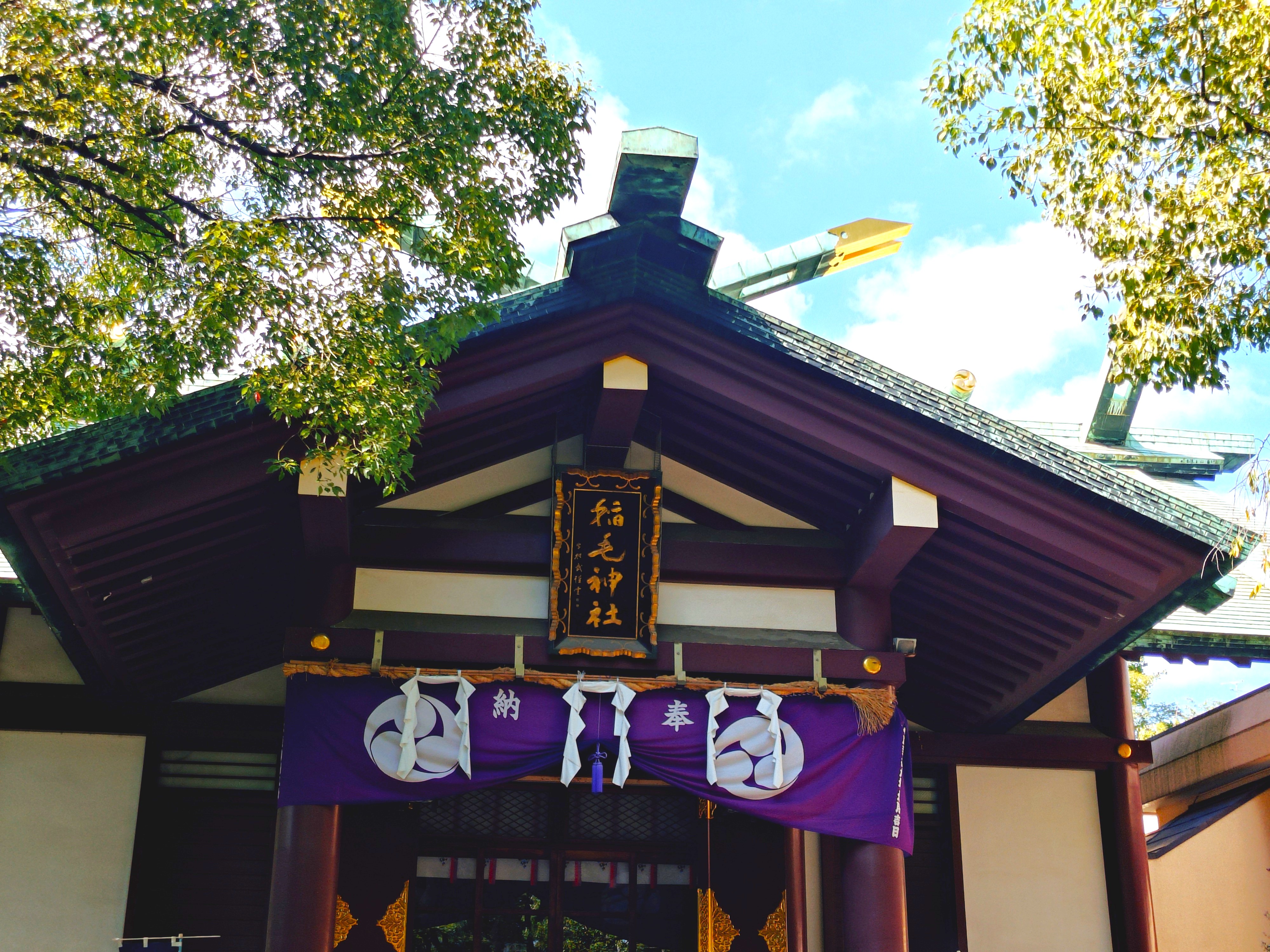

【Overview & History of Inage Shrine】
Located in Miyamoto-cho, Kawasaki Ward, Kawasaki City, Kanagawa Prefecture, Inage Shrine (Inage Jinja) is a cherished shrine known since ancient times as the guardian deity of the city of Kawasaki. Enshrining Takemikazuchi-no-kami as its primary deity, it is renowned for the divine virtues of “Victory and Harmony” (Kachi to Wa). During the Edo period, it attracted widespread devotion as “Kawasaki Sanno-sha,” the overall guardian shrine of the Kawasaki-juku post town along the Tokaido road.
【History & Origins】An Ancient Shrine Enshrined During Emperor Kinmei’s Reign Watching Over Kawasaki
While the exact year of founding is not documented in detail, according to shrine legend, it originated during the reign of the 29th Emperor Kinmei (reigned 539–571 AD), when imperial forces visiting the region to pacify the eastern provinces enshrined the war god Takemikazuchi-no-kami. Another account states that during the reign of Emperor Shomu (724–749 AD), a provincial governor (kokushi) erected the shrine building upon receiving a divine oracle.
While there is no officially confirmed year or date, tracing back legends points to an origin theory around the 6th century (Kofun to Asuka periods), and verifiable physical evidence such as the age of its sacred trees confirms that the shrine already existed by at least the 11th century (Heian period).
On this site, the reign of the 29th Emperor Kinmei (539–571 AD) noted in shrine records is classified under the “Kofun Period.”
Originally named “Takemikazuchi-no-miya,” from the late Heian period through the Kamakura period, Saburo Shigenari Inage—a powerful samurai warrior who ruled the surrounding region (parts of present-day Kawasaki and Yokohama)—deeply revered it as his clan deity (ujigami). Consequently, it came to bear the name of “Inage” as the overall guardian shrine of his domain.
During the Keicho era, Tokugawa Ieyasu conducted land surveys of the shrine estates and officially guaranteed its territory (sharyo). From the early Edo period until the Meiji Restoration, it was called “Kawasaki Sanno-sha,” appearing under that name in official records and ukiyo-e prints by Utagawa Hiroshige. When the Kawasaki-juku post station on the Tokaido was established in 1601 (Keicho 6), Inage Shrine was designated as the overall guardian shrine of the entire post town.
Following the separation of Shinto and Buddhism (Shinbutsu-bunri) after the Meiji Restoration, it was renamed to its current name, “Inage Shrine,” in 1870 (Meiji 3) and was later ranked as a District Shrine (Gosha).
【Enshrined Deities & Divine Blessings】Divine Virtues of Victory, Harmony, and Expanding Networks Granted by Takemikazuchi-no-Kami and Other Deities
The enshrined deities of Inage Shrine consist of five gods, led by the primary deity Takemikazuchi-no-kami, alongside Futsunushi-no-kami, Kukuri-hime-no-kami, Izanagi-no-kami, and Izanami-no-kami.
Because these five deities are enshrined together under one roof, the shrine has long been widely worshipped for bestowing the divine virtues of “Victory and Harmony” (Kachi to Wa).
Main Divine Blessings: Prayers for Victory, Triumph in Competition, Business Success, Warding Off Evil & Good Fortune, Recovery from Illness, Matchmaking, and Marital Harmony.
【Highlights & Recommended Worship Route of Inage Shrine】
【Approach Path】A Refreshing Approach Path Away from the City Hustle
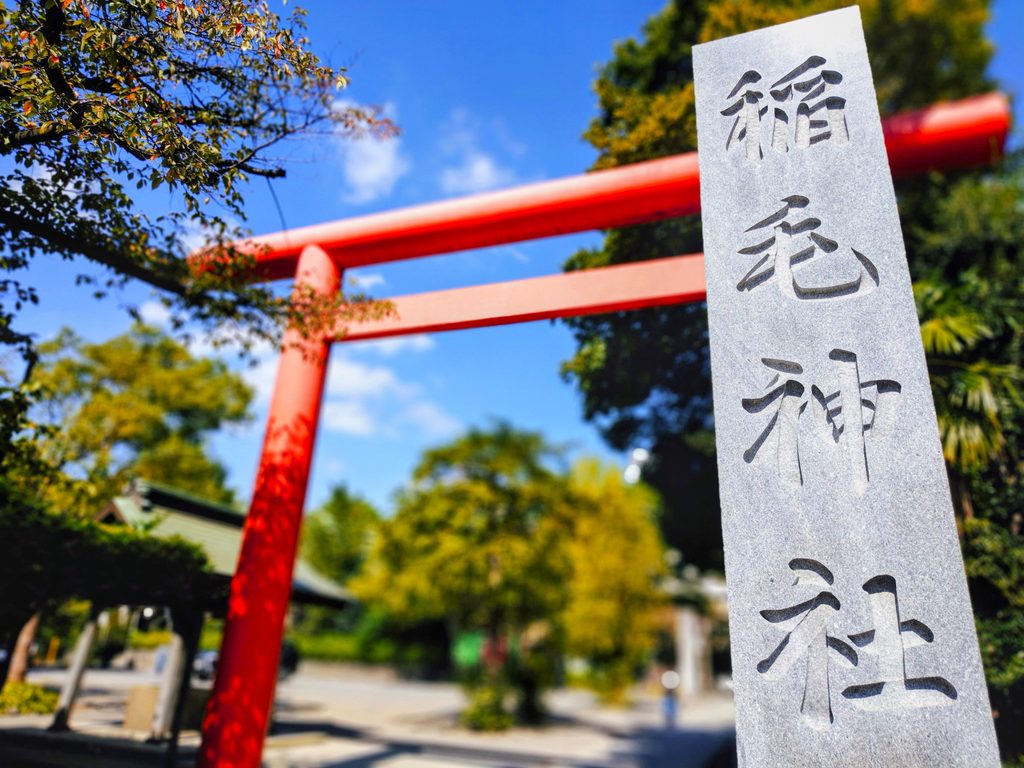
The first structure welcoming worshipers is the grand Torii gate standing proudly along the main approach (Omotesando).
【The Great Ginkgo Tree】A Symbolic Sacred Tree Over 1,000 Years Old Bestowing Life Force
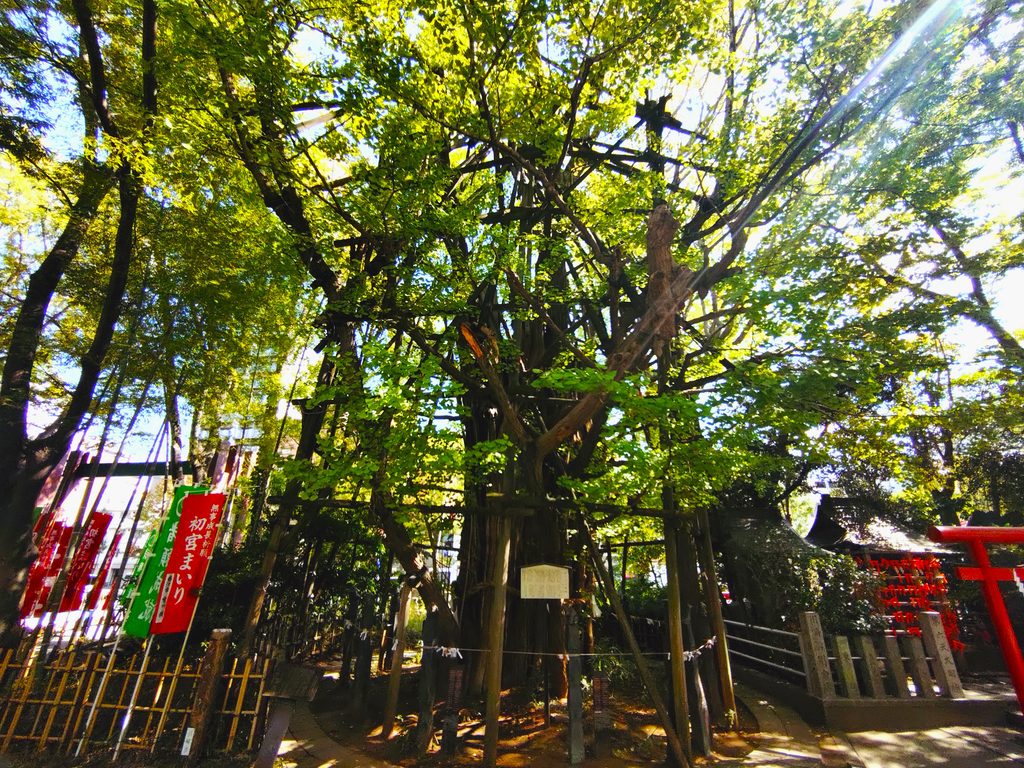
Proceeding down the approach, towering with overwhelming presence on the right side just before the shrine hall is Inage Shrine’s symbol: the sacred Great Ginkgo Tree (O-icho). Estimated to be over 1,000 years old, it is a famous tree even depicted in Edo-period ukiyo-e prints.
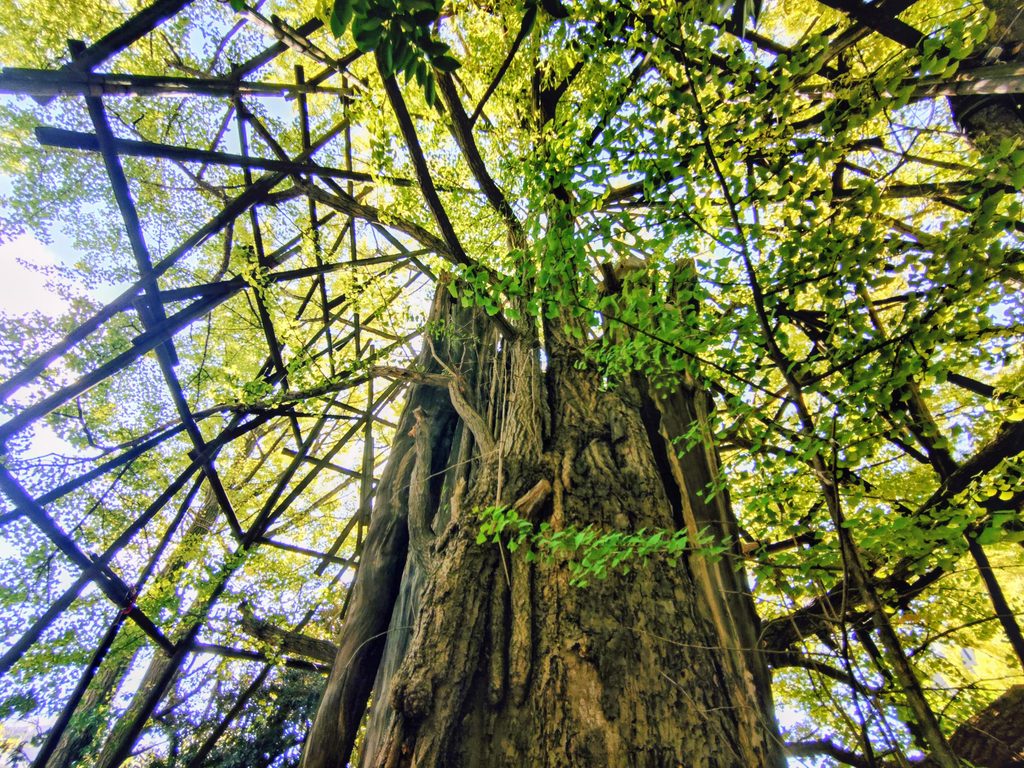
Burned pitch black during the Kawasaki Air Raids of 1945 (Showa 20), it was once thought to have withered and died, only to miraculously sprout fresh green leaves and revive a few years later. Its “indomitable life force” draws deep faith from visitors.
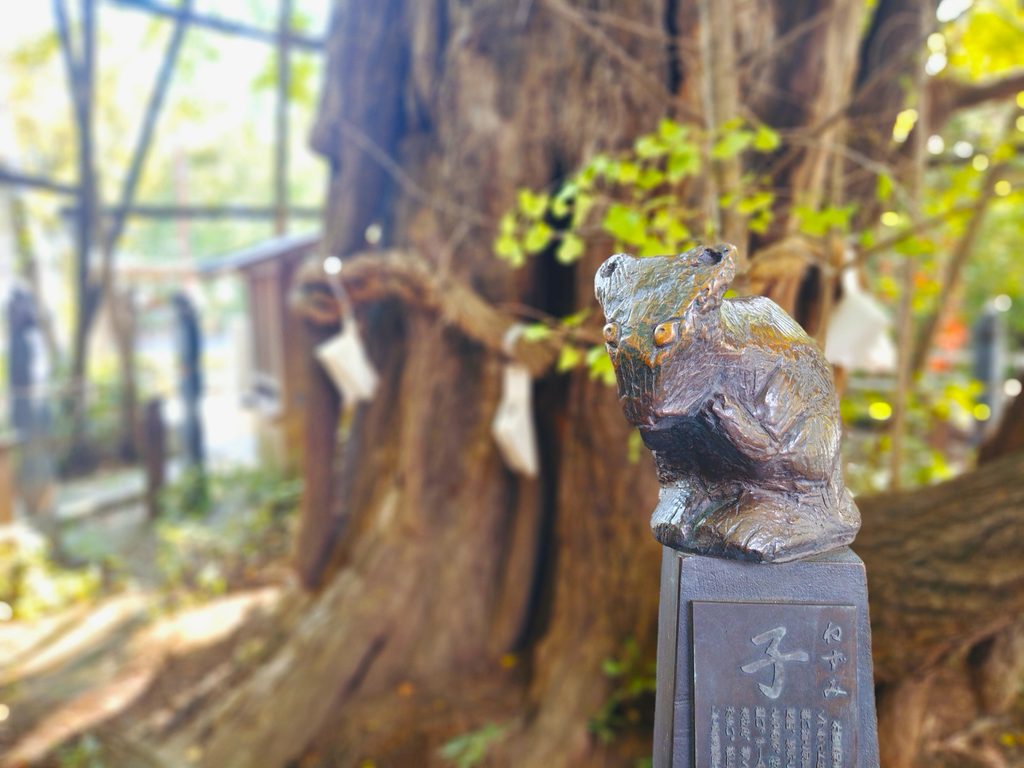
Walking around the trunk while reciting your wish is believed to grant blessings for matchmaking, conception, and wisdom for academic improvement. Furthermore, bronze statues of the Twelve Chinese Zodiac animals are arranged around the sacred tree, and praying while stroking your own zodiac sign is also very popular.
【Shrine Halls】A Dignified Worship Hall Where Locals Gather to Offer Prayers
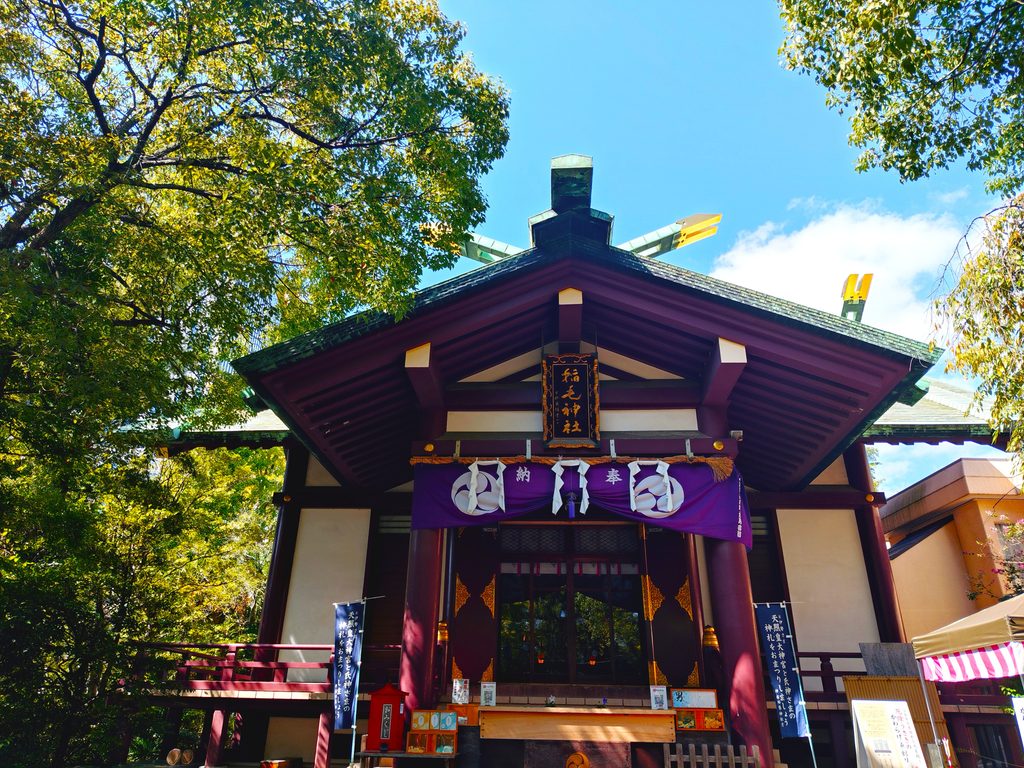
Enshrined directly facing the Great Ginkgo Tree is the powerful, beautiful shrine hall rebuilt in 1963 (Showa 38). During the Kawasaki Air Raids on April 15, 1945 (Showa 20), the precious Edo-period shrine buildings standing there were completely destroyed by fire. However, the sacred mirror/image (goshintai) and the sacred Great Ginkgo miraculously escaped the flames, and the imposing reinforced-concrete shrine hall standing today was rebuilt in 1963.
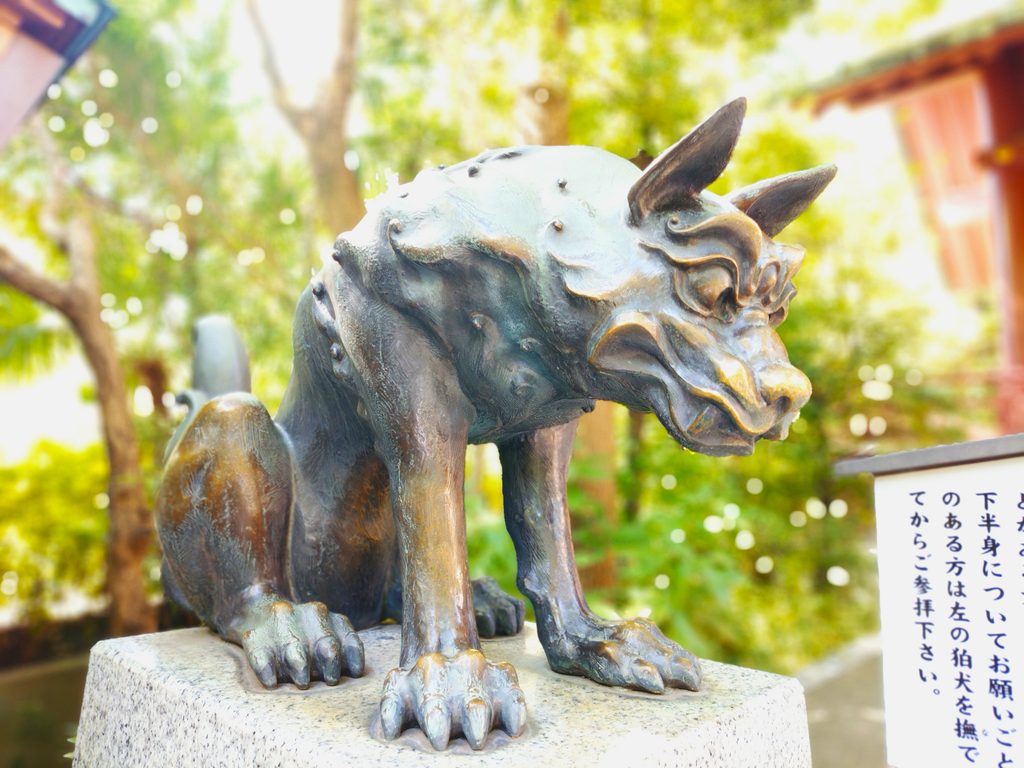
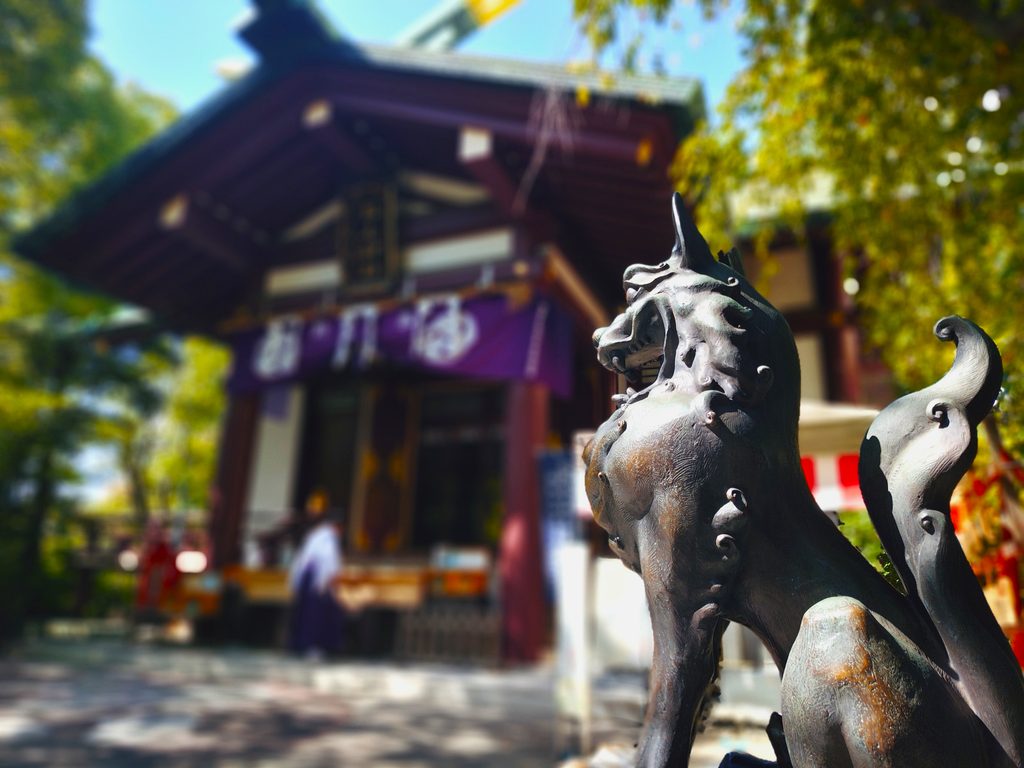
Standing powerfully in front of the shrine hall are bronze guardian lion-dogs (Komainu) called the “Heaven-and-Earth-Glaring Komainu” (Tenchi-nirami no Komainu), erected in 1991 (Heisei 3) to commemorate the Enthronement Ceremony (Gotaitten) of the Emperor. Working in harmonious “A-Un” coordination, one statue glares sharply up toward the heavens while the other glares intently down toward the earth.
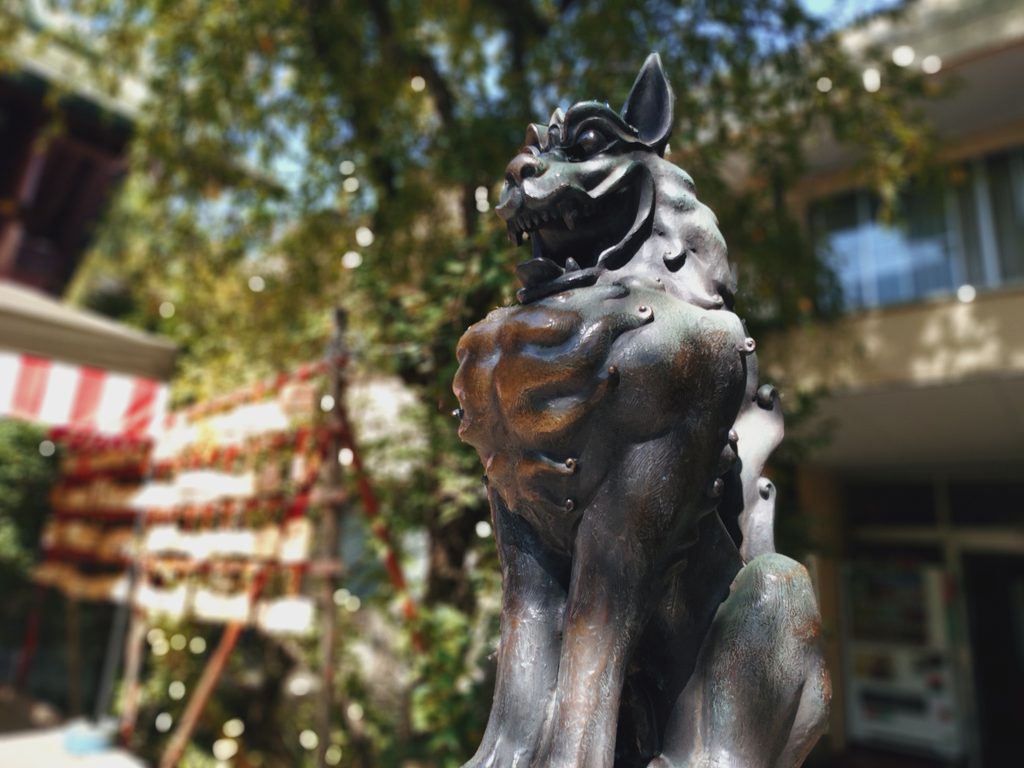
These Komainu are also valuable works of art created by sculptor Satoshi Yabuuchi, known worldwide as the creator of Nara Prefecture’s official mascot character, “Sento-kun.” Having been erected in 1991, they also attract attention from art fans as an “older brother” figure born before Sento-kun.
【Important Sub-shrines & Eight Massha】Shrines with Deep Historical Ties and Sub-shrines Lining the Approach
Inage Shrine is famous not only for the five deities enshrined in its main hall, but also for the numerous sub-shrines (sessha and massha) located within its grounds.
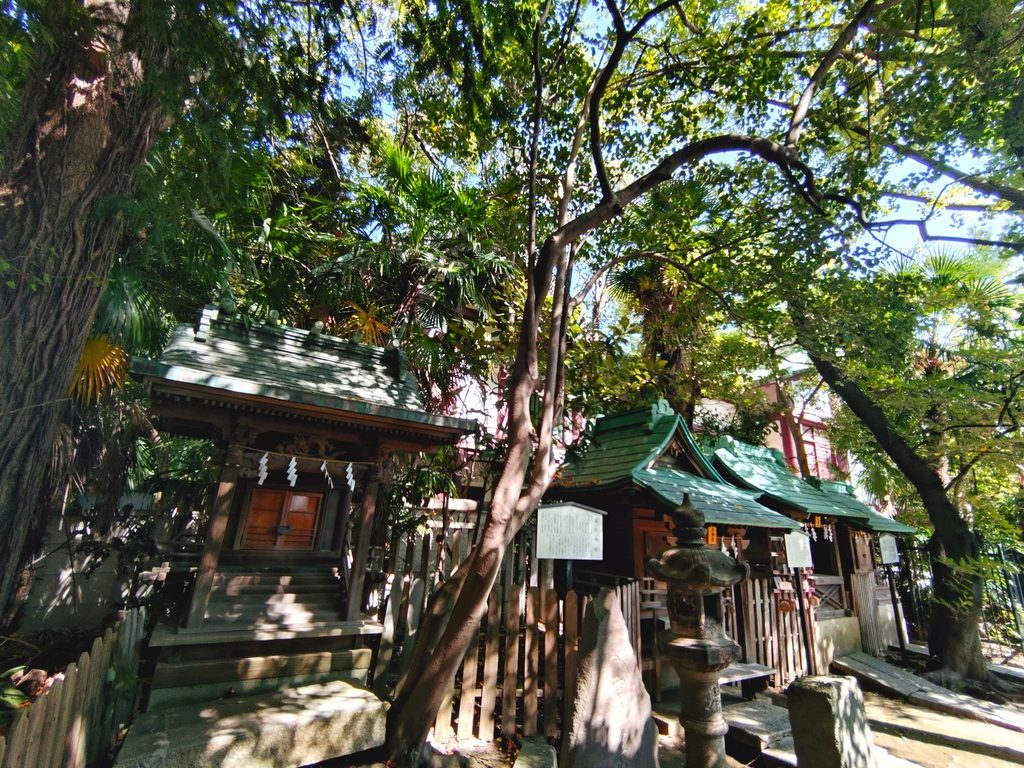
Numbering over a dozen large and small shrines combined (17 according to one count), this number stands out among shrines in the Kawasaki area.
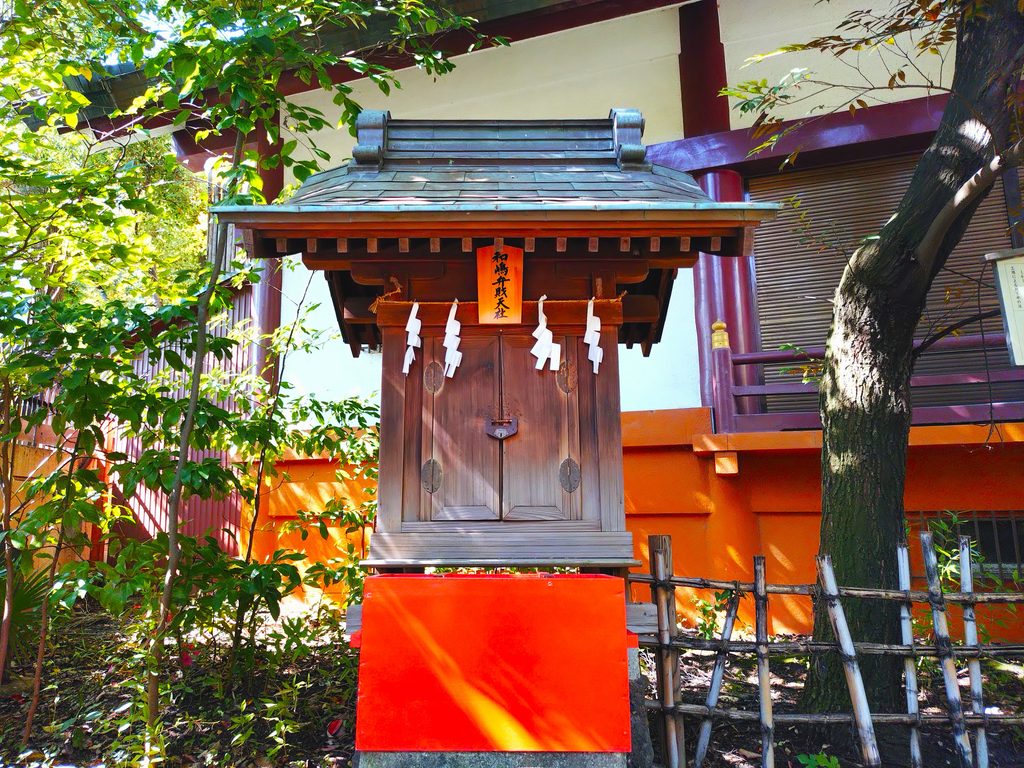
Wajima Benzaiten Shrine (Wajima Benzaiten-sha): Formerly, a vast “Benten Pond” existed within Inage Shrine’s grounds (with a stream said to have flowed up to the area of present-day Daiichi Keihin National Route), and this Benzaiten was enshrined on an island in its center. It is cherished for blessings in improving performing arts, increasing financial fortune, and business prosperity.
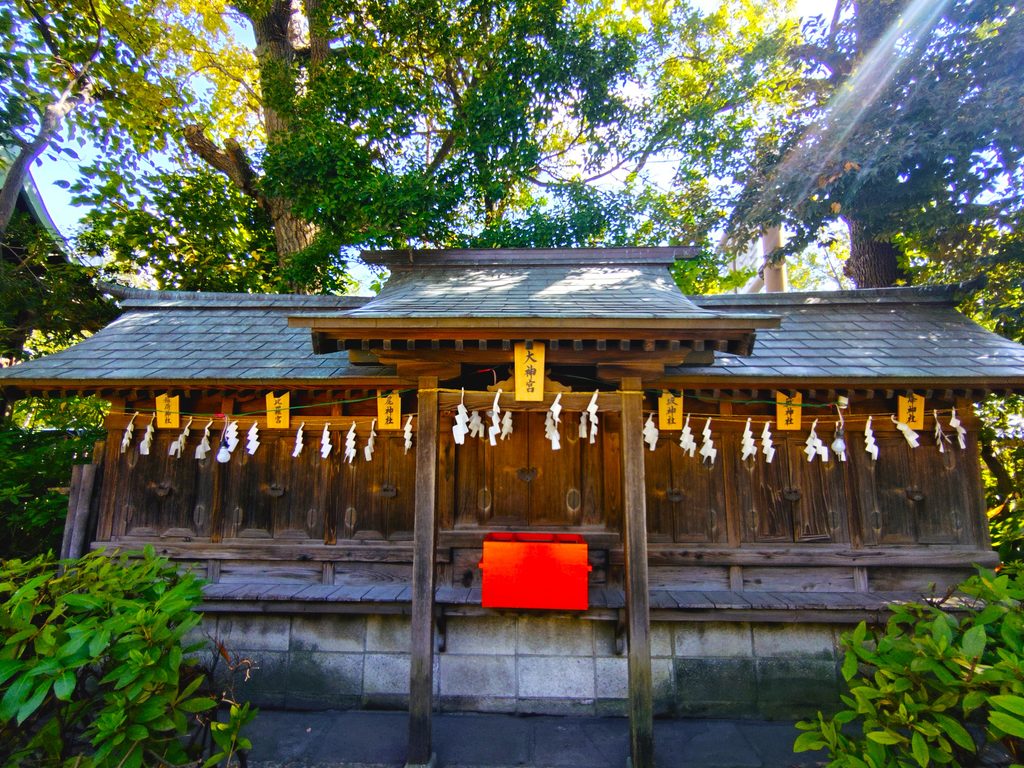
Along the approach just past the Temizuya purification pavilion stand a row of unique sub-shrines:
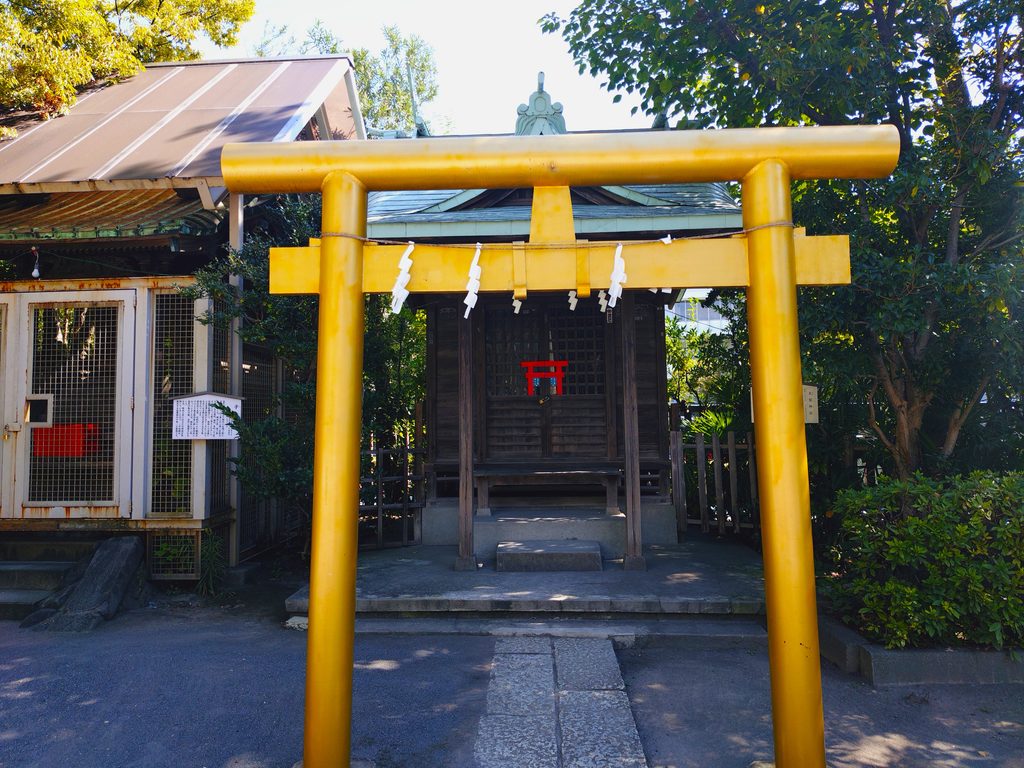
Otori Shrine (Otori Jinja): A deity of “Business Prosperity” and “Good Fortune.” Every November at Inage Shrine, the lively Tori-no-Ichi (Rooster Fair) is held as the annual festival of Otori Shrine, heralding the arrival of winter in Kawasaki. The enshrined deity is Yamatotakeru-no-mikoto.
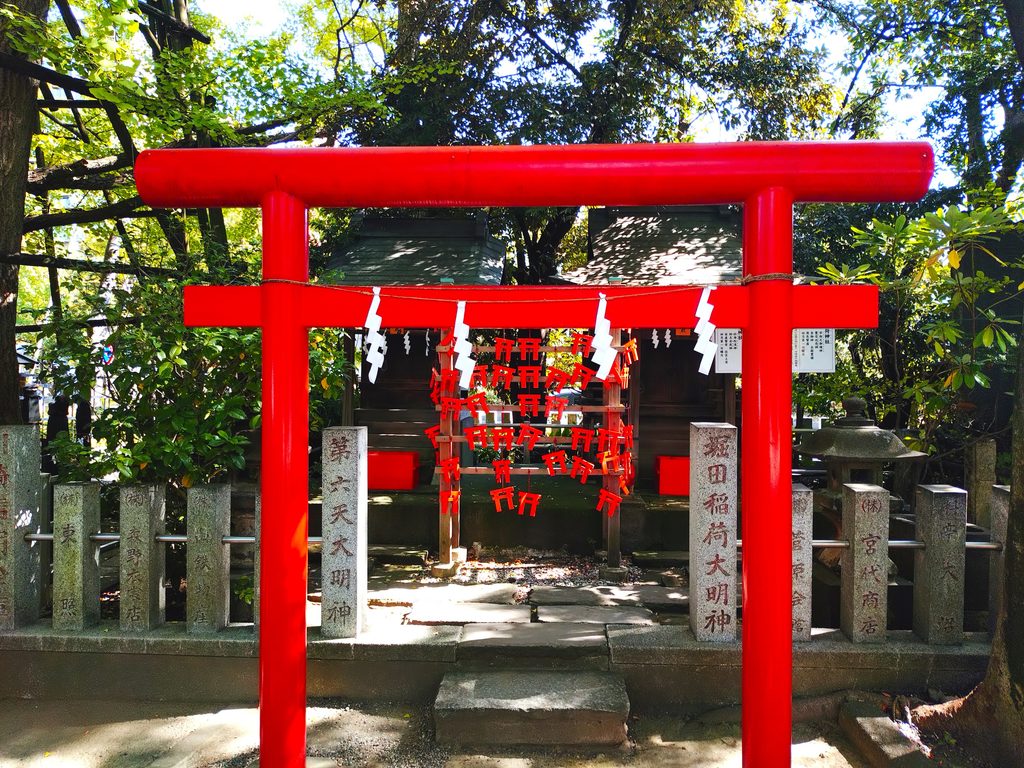
Other Sub-shrines: Sengen Shrine, Hotta Inari Shrine, Dairokuten Shrine, Ne Shrine, Mitsumine Shrine, Mitake Shrine, and Daijingu.
【Inage Shrine Goshuin】
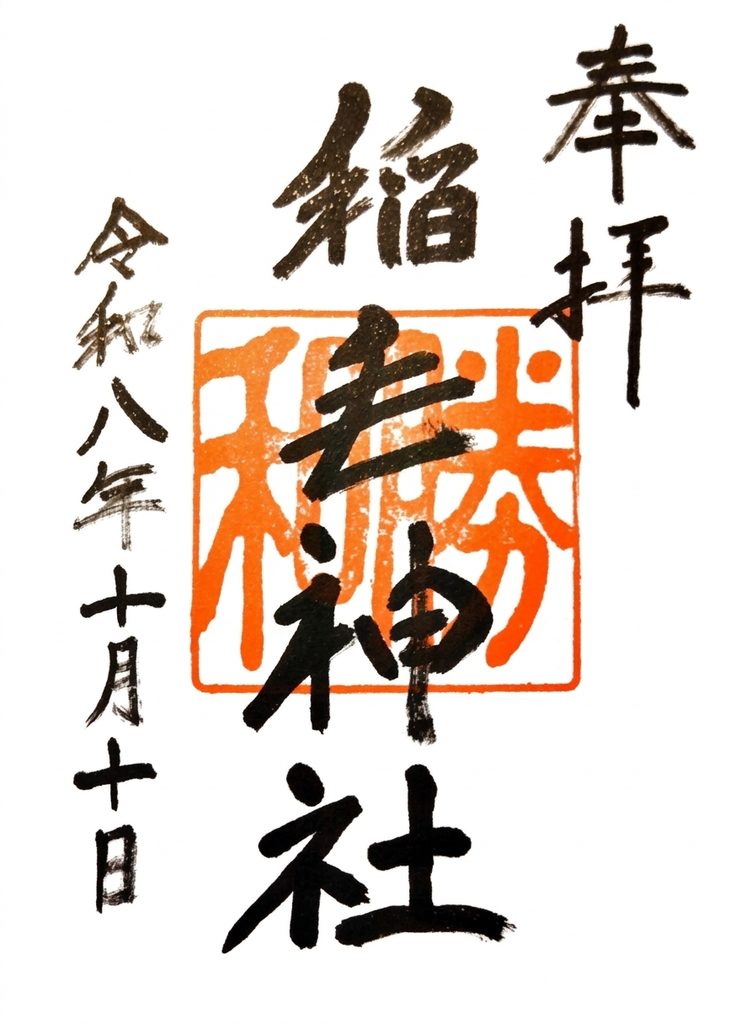
【Inage Shrine On-Site Visit Report & Original Evaluation】
Inage Shrine On-Site Review & Evaluation Score
| Evaluation Category | Score | Key Features / Highlights |
|---|---|---|
| Accessibility | (5.0) | Extremely good access from the city center, located about a 5-minute walk from “Keikyu Kawasaki Station” on the Keikyu Main Line and about an 8-minute walk from the East Exit of JR “Kawasaki Station.” |
| History & Heritage | (4.0) | Said to be founded during the reign of Emperor Kinmei, this prestigious ancient shrine is connected to Kamakura samurai Saburo Shigenari Inage and flourished as the overall guardian shrine of the Tokaido Kawasaki-juku post town. |
| Nature & Scenery | (3.5) | An atmospheric shrine landscape harmonizing the over 1,000-year-old “Sacred Great Ginkgo Tree”—a symbol of life force that sprouted anew after war damage—with the Twelve Zodiac statues and the grand Torii gate. |
| Tranquility | (3.0) | Due to its convenient location near Kawasaki’s downtown district and City Hall, there is a steady stream of worshipers, yet stepping inside the grounds surrounds you with green trees and fills the air with a calm, sacred energy. |
| Scale & Grounds | (3.0) | A well-balanced precinct layout featuring the imposing reinforced-concrete shrine hall, the Heaven-and-Earth-Glaring Komainu, and sub-shrines such as Fuji Sengen Shrine. |
| Goshuin Variety | (3.0) | Standard Goshuin of “Inage Shrine,” seals inscribed with the divine virtues of “Victory and Harmony” (Kachi to Wa), as well as seasonal and Sanno Festival (Kawasaki Sanno Matsuri) limited-edition Goshuin are issued. |
【On-Site Report | Personal Impressions and Atmosphere】
About a 10-minute walk from Kawasaki Station through the lively commercial district, a large stone Torii gate suddenly appears along Daiichi Keihin (National Route 15)—this is the entrance to Inage Shrine.
Stepping inside, the sound of passing cars and the bustle of the station area fade away as if they were an illusion, enveloping you in a pleasant serenity. The straight approach path is covered by lush trees; simply walking while bathed in dappled sunlight brings a sacred air that naturally calms and aligns the mind. Mid-way through the grounds, radiating an overwhelming presence, is the sacred Great Ginkgo Tree.
Far more massive than it appears in photographs, its thick trunk and vigorously extending branches possess an embracing warmth that gently wraps the entire grounds. Having survived the flames of the Kawasaki Air Raids, its presence overflows with a tremendous “energy for life” that goes far beyond being merely an “old tree.”
Inage Shrine was a place where not only ancient history, but also a “powerful life force” reborn from the ashes of war, continues to breathe vibrantly today. Despite being situated in the middle of a major metropolis like Kawasaki, stepping inside anytime recharges the spirit—truly a shrine worthy of being called an urban oasis.
【Nearby Sightseeing Spots to Visit Together】
Wakamiya Hachimangu Shrine, Kawasaki Daishi Heiken-ji Temple, Rokugo Shrine
【Basic Information & Access】
【Access by Train / Car and Parking】
*Free parking available.
【Address & Official Website】
7-7 Miyamoto-cho, Kawasaki Ward, Kawasaki City, Kanagawa Prefecture 210-0004