 Kanata's Japan Shrine Guide

目次
- 【Overview & History of Kawasaki Daishi Heiken-ji Temple】
- 【Highlights & Recommended Worship Route of Kawasaki Daishi Heiken-ji Temple】
- 【Kawasaki Daishi Heiken-ji Temple Goshuin】
- 【Kawasaki Daishi Heiken-ji Temple On-Site Visit Report & Original Evaluation】
- 【Nearby Sightseeing Spots to Visit Together】
- 【Basic Information & Access】
【Overview & History of Kawasaki Daishi Heiken-ji Temple】
Located in Daishi-cho, Kawasaki Ward, Kawasaki City, Kanagawa Prefecture, Kawasaki Daishi Heiken-ji Temple (Kawasaki Daishi Heiken-ji) is a Grand Head Temple (Dai-Honzan) of the Chizan Sect of Shingon Buddhism, known as one of the Three Great Head Temples of the Kanto Region alongside Mount Takao Yakuo-in and Naritasan Shinsho-ji. Deeply worshipped nationwide since ancient times as the “Grand Master of Warding Off Evil” (Yakuyoke no Odaishi-sama), it is one of Japan’s premier historic temples, ranking among the very top in the country for New Year’s Hatsumode visitors (welcoming over 3 million worshipers annually).
【History & Origins】A Prestigious Temple Revered as the Master of Warding Off Evil Since Its Founding in the Late Heian Period
Kawasaki Daishi Heiken-ji Temple is a historic temple that began in 1128 (Daiji 3) at the very end of the Heian period, when Kanekata Hirama—a samurai wandering due to a false accusation—enshrined a statue of Kobo Daishi he pulled up from the sea together with the high priest Sonken Shonin. In 1813 (Bunka 10) during the Edo period, when the 11th Shogun Tokugawa Ienari visited the temple during his critical age of calamity (yakudoshi, age 50), it gained explosive popularity across Edo as the “Master of Warding Off Evil.” The full details are described below.
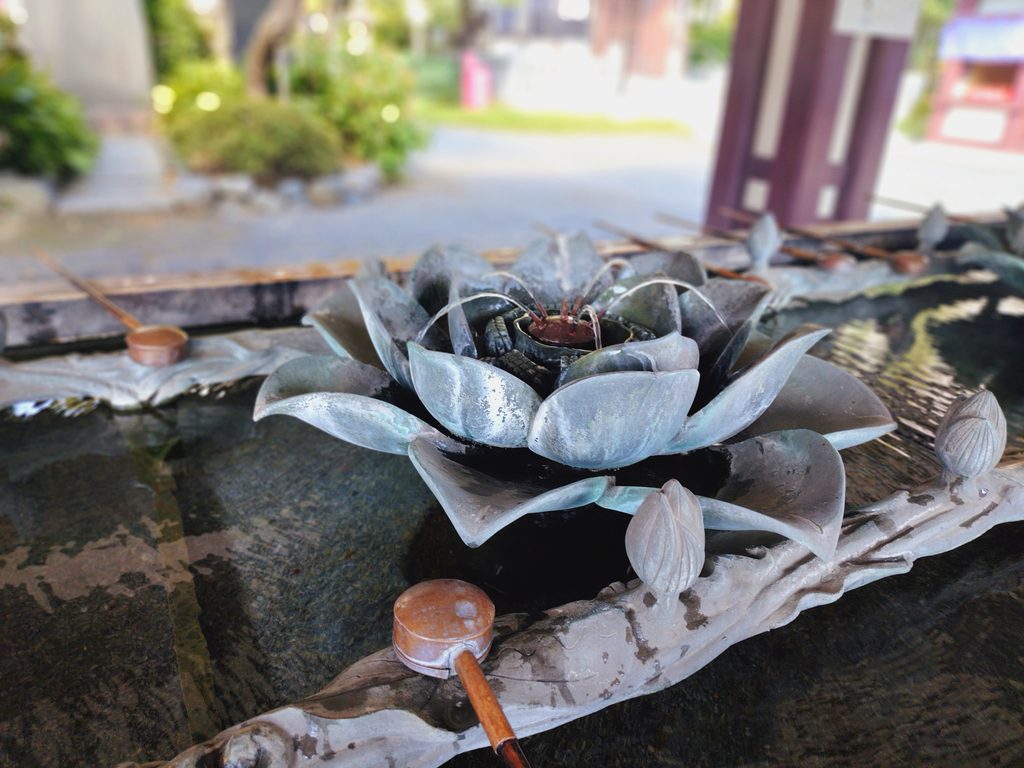
Kanekata Hirama, a samurai from Owari Province (present-day Aichi Prefecture), had his ancestral territories in Owari confiscated due to a false charge. Unable to remain in his homeland, he wandered through various regions before arriving in Kawasaki, which was then still a quiet fishing village, abandoning his samurai status to live poorly as a fisherman.
Praying fervently to Kobo Daishi to clear his false accusation, Kanekata received a divine oracle from a high priest in a dream one night. Following the dream’s instructions, Kanekata cast his fishing net into the sea of present-day Kawasaki and pulled up a wooden statue of Kobo Daishi radiating a dazzling light. Kanekata enshrined this statue with utmost care, making daily offerings and prayers.
Later, when Sonken Shonin, a high priest of Shingon Buddhism on a pilgrimage from Mount Koya, visited Kawasaki, he was deeply moved by the spiritual efficacy of the Kobo Daishi statue enshrined by Kanekata. In 1128 (Daiji 3), Sonken Shonin and Kanekata Hirama joined forces to erect a temple building enshrining this Daishi statue as its principal deity. This marked the beginning of present-day Heiken-ji Temple.
Several years after the temple was established, in 1134 (Chosho 3), Kanekata’s false charges were finally and completely cleared, restoring his honor. Happily returning to his homeland of Owari Province as a samurai, Kanekata donated half of his awarded stipend to this temple as a token of gratitude.
The catalyst that propelled Kawasaki Daishi into becoming one of Japan’s foremost spiritual centers for warding off evil occurred in 1813 (Bunka 10) during the late Edo period.
Tokugawa Ienari, the 11th Shogun of the Edo Shogunate, made an official visit (Shogunal pilgrimage) to Kawasaki Daishi on the occasion of his critical age of misfortune (age 50) to receive large-scale evil-warding prayers.
Following this event, an explosive Kawasaki Daishi boom erupted among the commoners of Edo, celebrating it as “a powerful Master of Warding Off Evil endorsed even by the Shogun.” At that time, making a pilgrimage from Edo to Kawasaki Daishi (Daishi-mode) became established as a major sightseeing excursion, bringing bustling prosperity to the Tokaido Kawasaki-juku post town and the temple town.
Entering the Meiji era and beyond, Kawasaki Daishi continued to prosper as one of Kanto’s top sacred sites, even prompting the construction of Japan’s first electric railway (the present-day Keikyu Daishi Line) specifically to transport worshipers to the temple.
However, during the Kawasaki Air Raids in April 1945 (Showa 20), almost every temple building (garan) on the grounds was reduced to ashes. Even so, the principal deity statue of Kobo Daishi was safely protected by devotees and priests. After the war, through generous donations from believers across Japan, magnificent halls led by the “Great Main Hall” (Daihondo) were rebuilt one after another, achieving a splendid restoration to the overwhelming scale seen today.
【Principal Image & Divine Blessings】Virtues of Warding Off Evil, Fulfilling Wishes, and Family Safety Granted by Kobo Daishi Kukai
The principal image enshrined here is Kobo Daishi Kukai, the founder of Shingon Buddhism. The legendary wooden statue pulled from the sea remains carefully enshrined deep inside the Great Main Hall as a secret Buddha (hibutsu). Kawasaki Daishi’s greatest blessing is unquestionably powerful “warding off evil” (yakuyoke). Stemming from the history of founder Kanekata Hirama overcoming a “false accusation (misfortune)” and achieving a brilliant comeback, it is believed to possess the power to dispel all calamities and turn one’s life around for the better.
In addition, worshipers can receive a wide range of blessings including:
- Warding Off Evil & Misfortune: Dispels bad luck for those in critical years (yakudoshi) and brings peaceful days.
- Household Safety: Protects all family members so they can live healthily without illness or injury.
- Opening Good Fortune & Fulfillment: Opens up pathways of luck and brings wishes to fruition.
- Business Prosperity & Enterprise Success: Devoutly worshipped by merchants of the temple town as well as many business executives.
- Traffic Safety (Automobile Prayer): The grounds feature Japan’s first “Automobile Traffic Safety Prayer Hall,” famous as a place to pray for the safety of cars and drivers.
【Highlights & Recommended Worship Route of Kawasaki Daishi Heiken-ji Temple】
【Nakamise Street & Approach Path】A Lively Street Lined with Shops Selling Famous Kuzumochi and Tontoko Candy
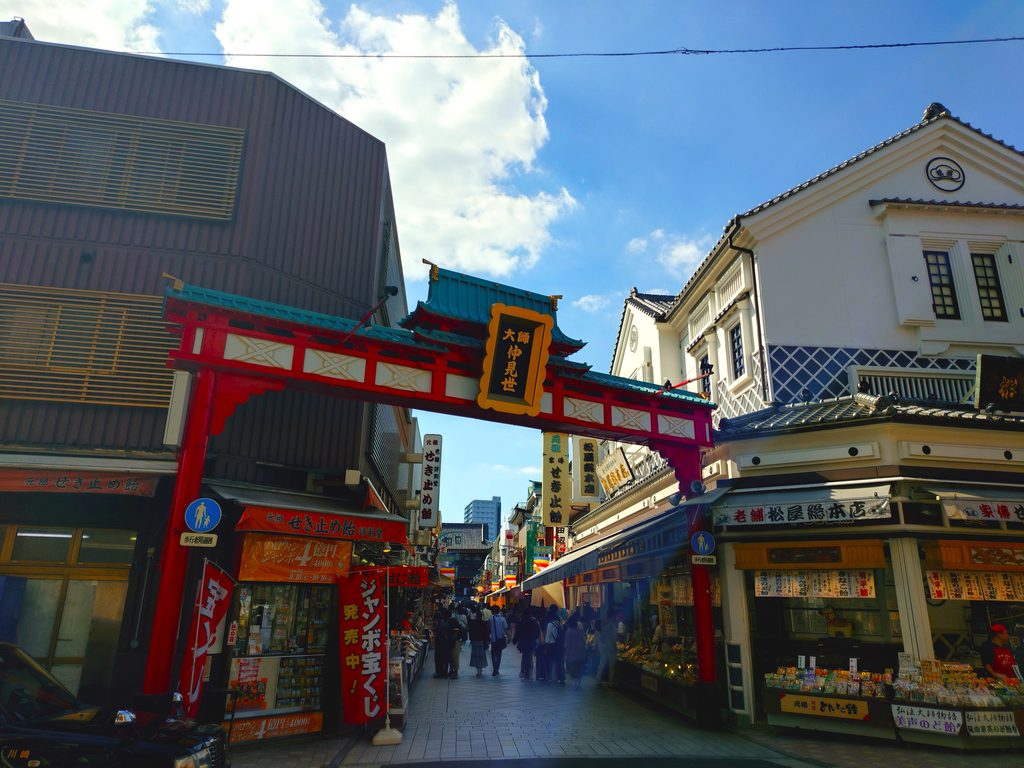
Nakamise Street (Nakamise-dori) is an approach path dating back to the Edo period leading toward Kawasaki Daishi’s “Great Sanmon Gate” (Daisanmon). Along this approximately 150-meter street, long-established shops selling famous candies, kuzumochi (arrowroot-style sweets), and daruma dolls stand tightly packed, constantly bustling with crowds of worshipers.
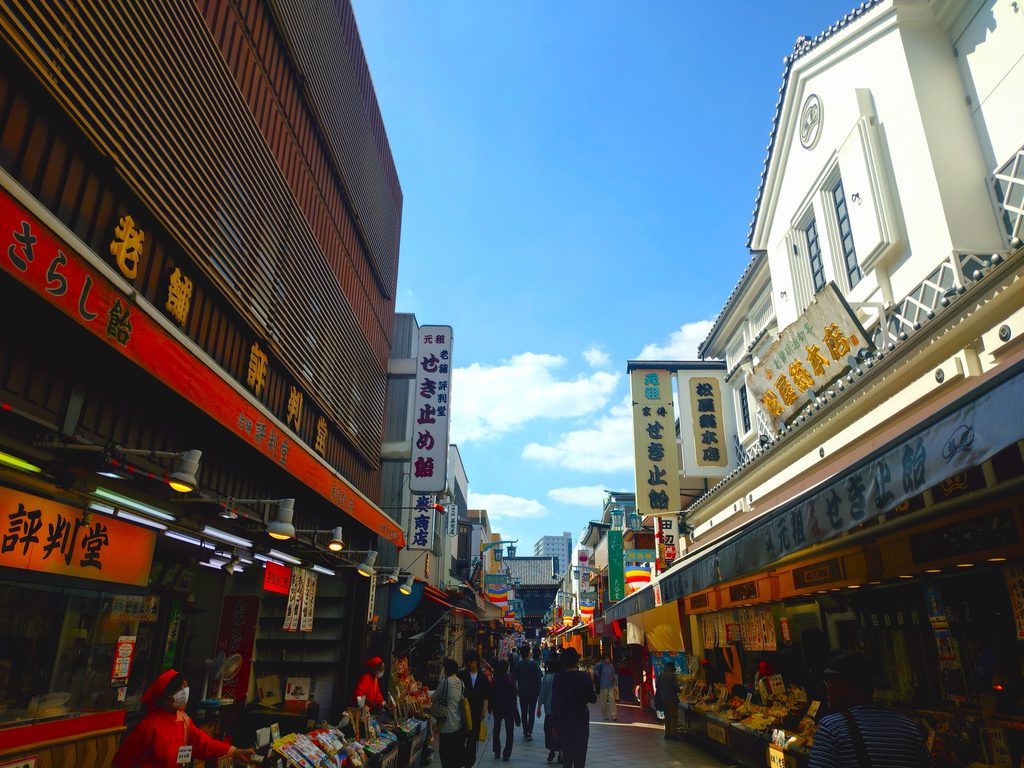
Walking down Nakamise Street, the first thing that reaches your ears is the brisk rhythmic sound of “tontoko, tontoko.” This is the sound of artisans rhythmically chopping famous candies with knives—an iconic seasonal tradition of Kawasaki Daishi. Known for sarashi-ame (pulled white candy) and cough candies, watching skilled craftsmen stretch long strands of candy and chop them into pieces in an instant on a cutting board is a must-see.
【Great Sanmon Gate (Daisanmon)】A Massive Main Gate Guarded by Statues of the Four Heavenly Kings
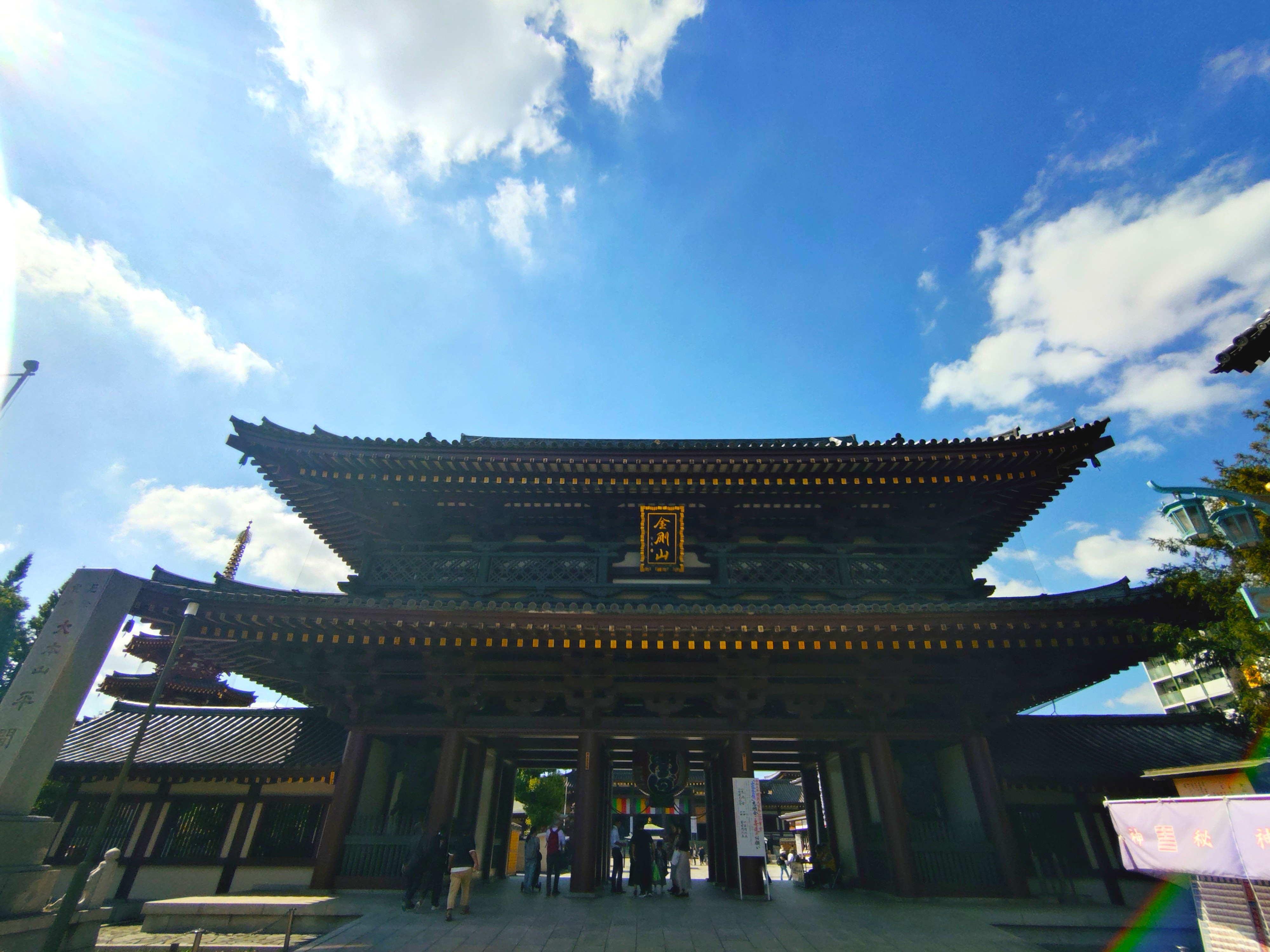
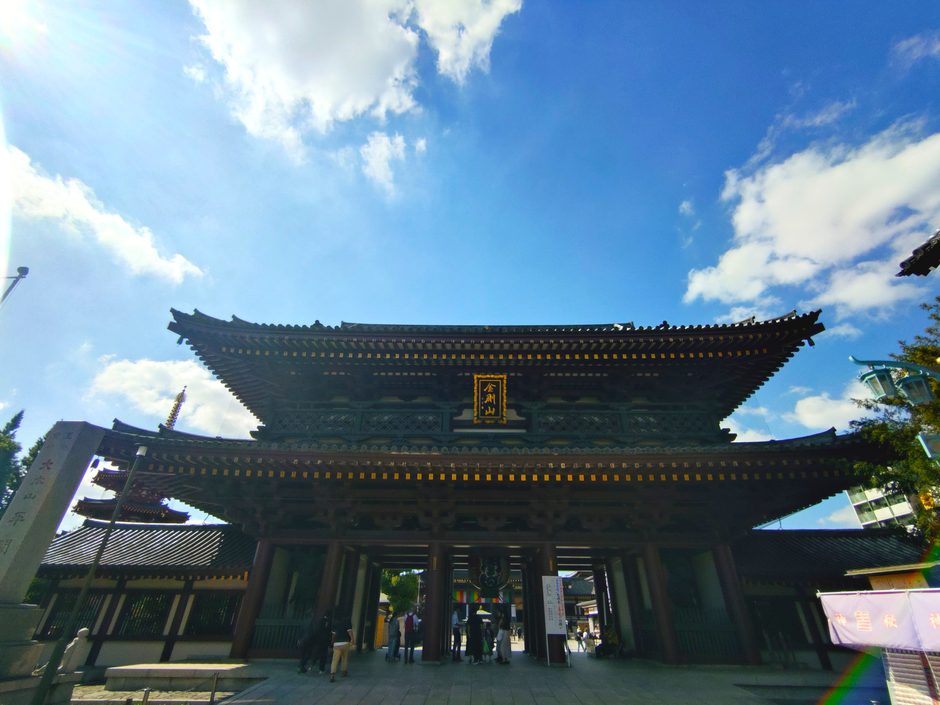
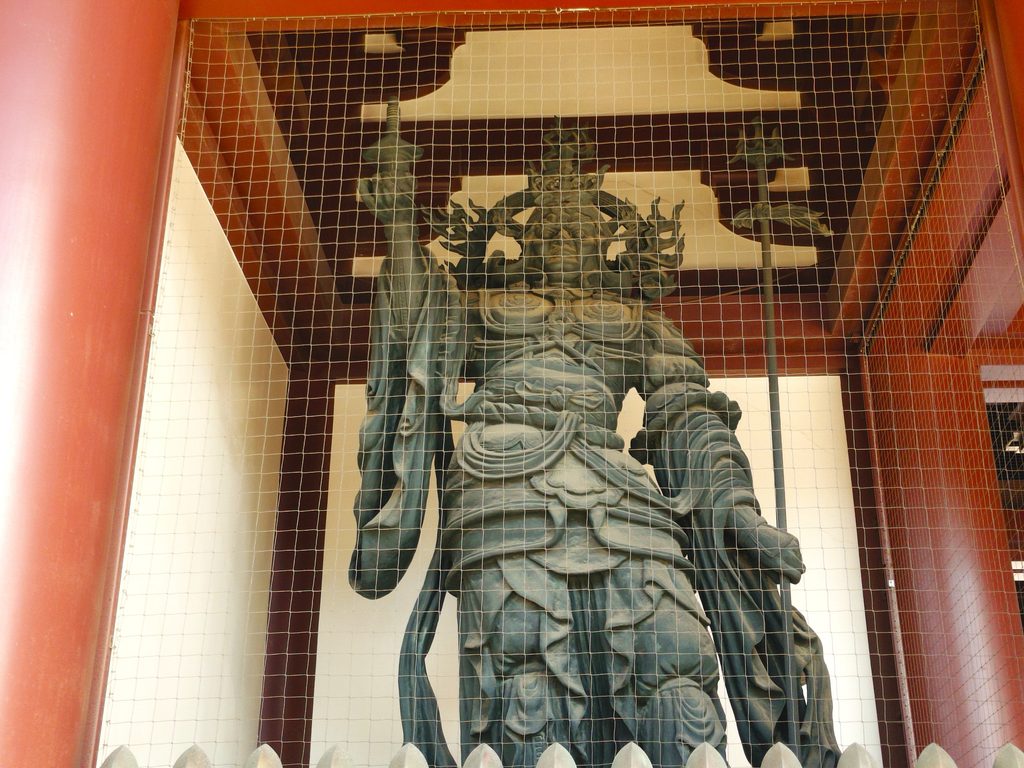
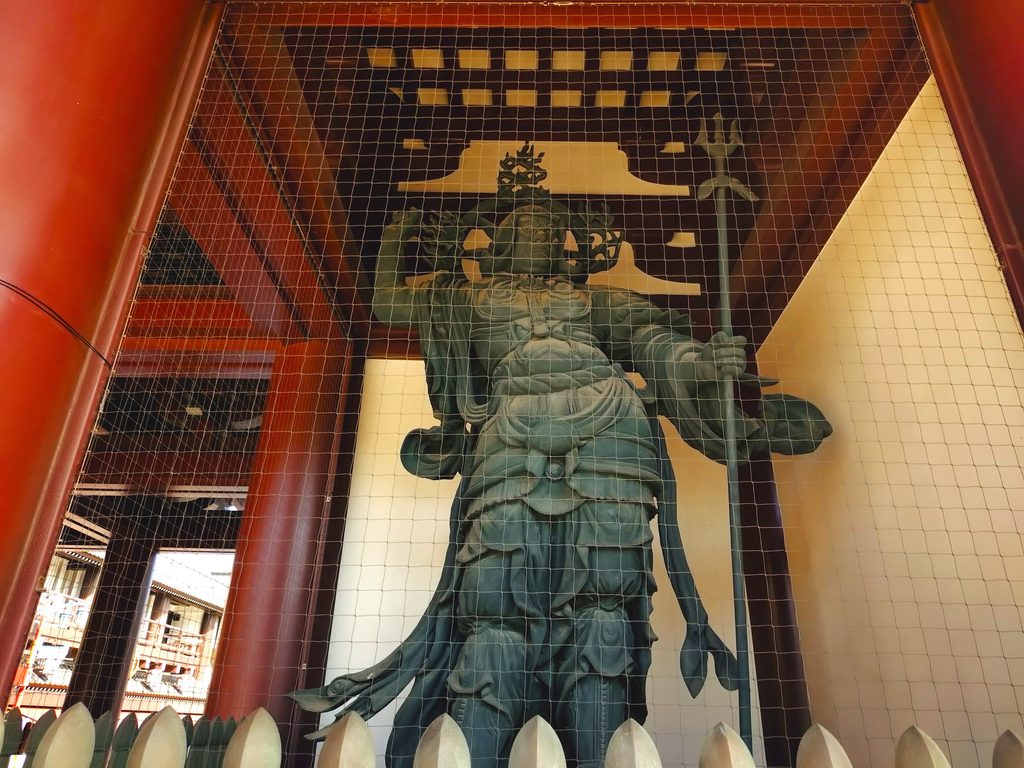
The Great Sanmon Gate (Daisanmon) is the main front gate (somon) of Kawasaki Daishi Heiken-ji Temple, standing proudly beyond the lively streets of Nakamise.
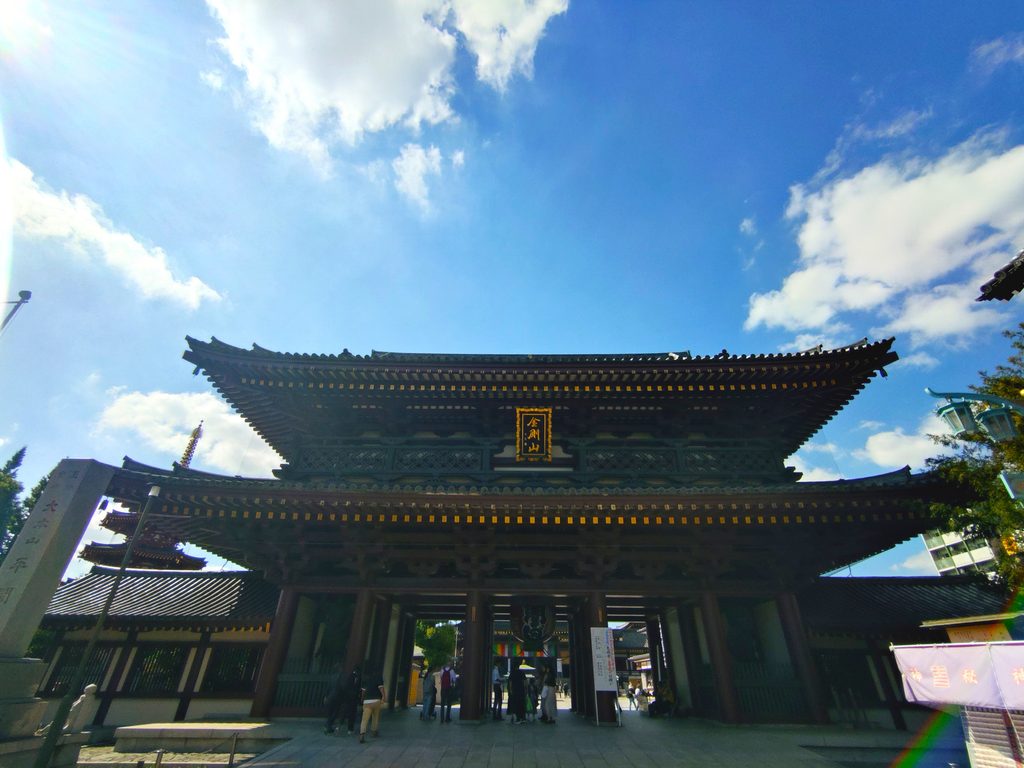
Completed in 1977 (Showa 52) as a commemorative project for the 850th anniversary of the temple’s founding, the current Great Sanmon Gate is a relatively new yet massively solid structure. Built in an imposing two-story Romon (tower gate) style with a hip-and-gable (irimoya-zukuri) traditional tiled roof, its grand timber construction—reminiscent of ancient temples in Kyoto and Nara—overwhelms visiting worshipers.
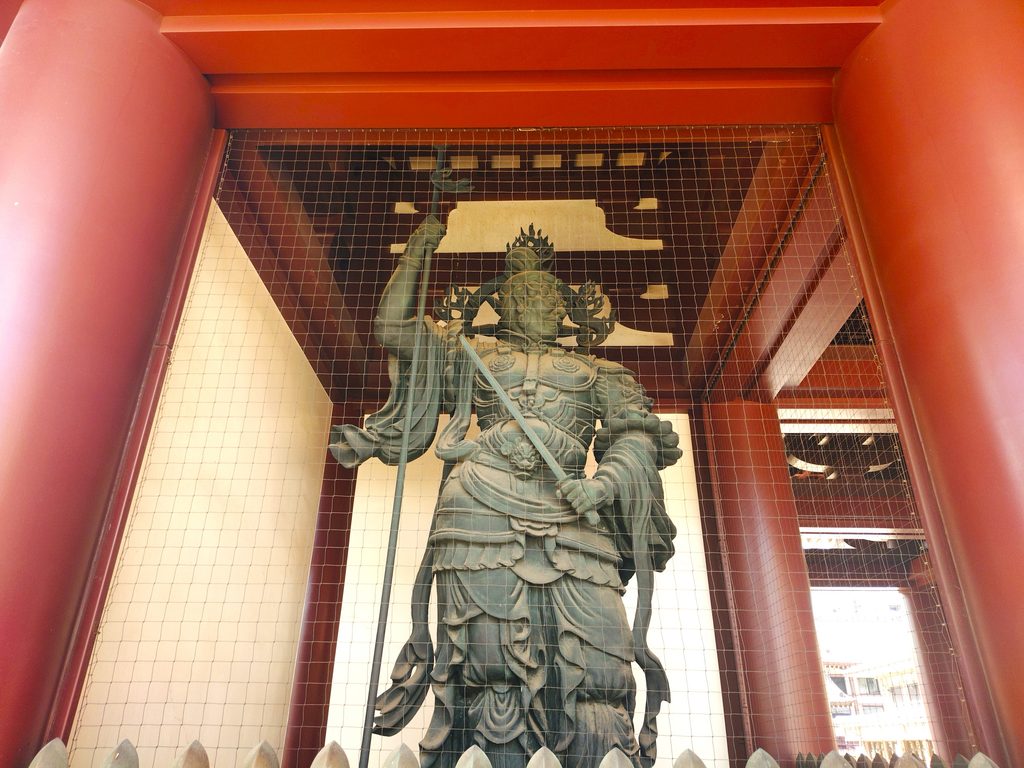
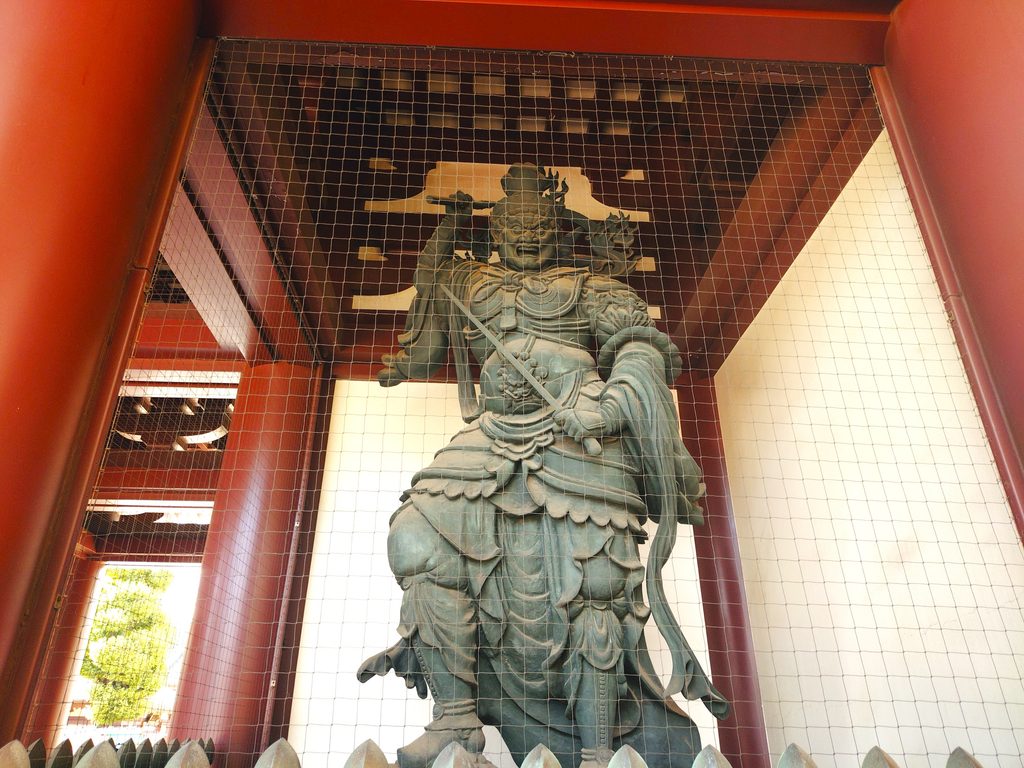
While standard temple gates typically enshrine Nio guardian statues, Kawasaki Daishi’s Great Sanmon Gate is guarded on all four sides by statues of the Four Heavenly Kings (Shitenno), the Buddhist guardian deities.
Hanging in the center of the Great Sanmon Gate, the eye-catching giant crimson lantern is one of Kawasaki Daishi’s iconic visual symbols.
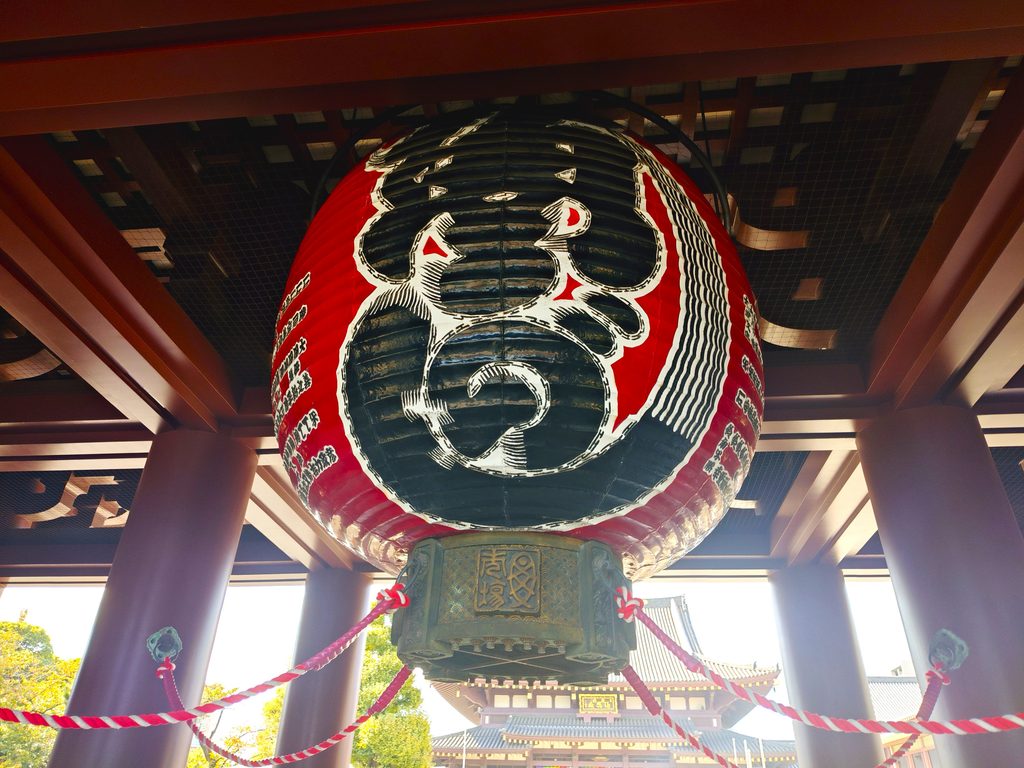
Reminiscent of the Kaminarimon Gate at Senso-ji in Asakusa, this giant lantern features the large inscription “Uogashi” (Fish Market). Dedicated since the Taisho era by devotees of the fish market guild in Tsukiji (now Toyosu), Tokyo, it adds a touch of vibrant Edo flair to the solemn atmosphere in front of the gate.
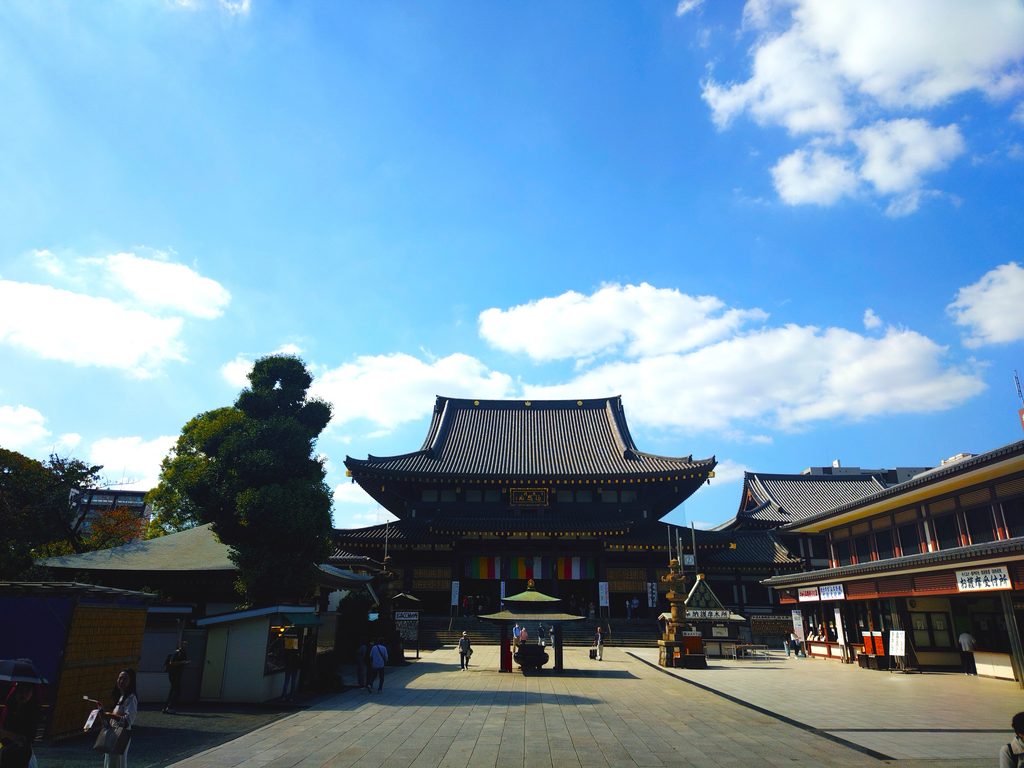
Passing under the Great Sanmon Gate reveals the vast temple grounds and the Great Main Hall directly ahead.
【Great Main Hall (Daihondo) & Sutra Repository (Kyozo)】The Main Hall Enshrining the Principal Image and the Kyozo with Magnificent Ceiling Paintings
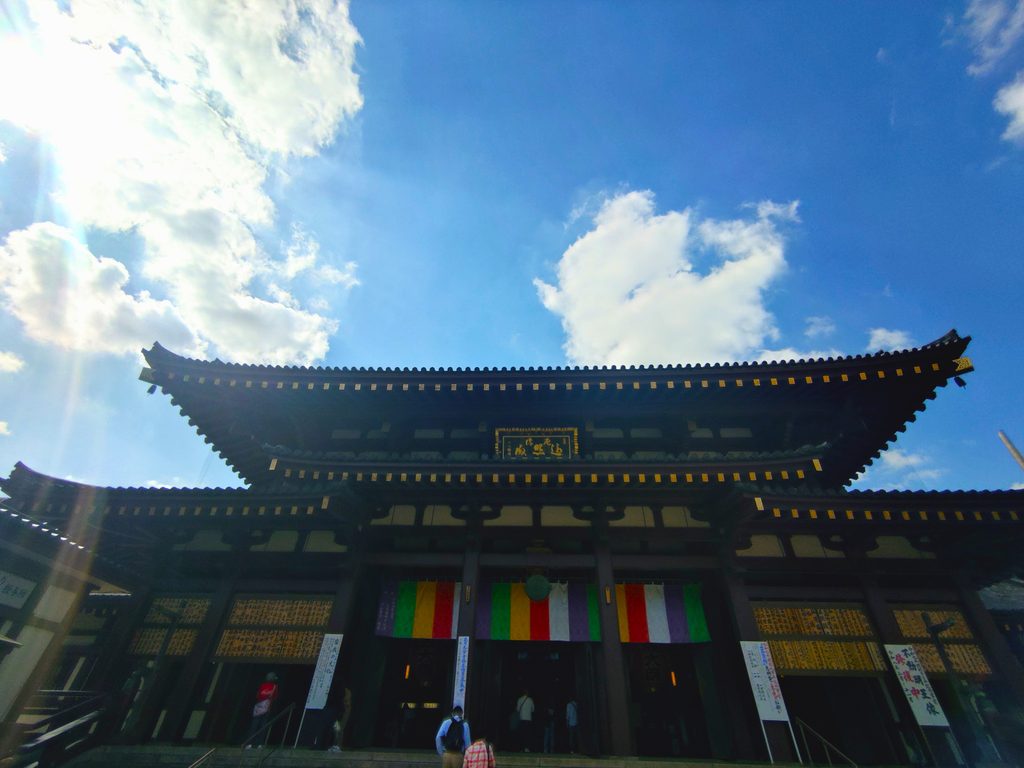
After being destroyed by fire during the Kawasaki Air Raids in 1945 (Showa 20), the Great Main Hall (Daihondo) was rebuilt in 1963 (Showa 38). It is a massive reinforced-concrete building modeled after the early “Asuka Style,” reflecting the period when Buddhism first arrived in Japan.
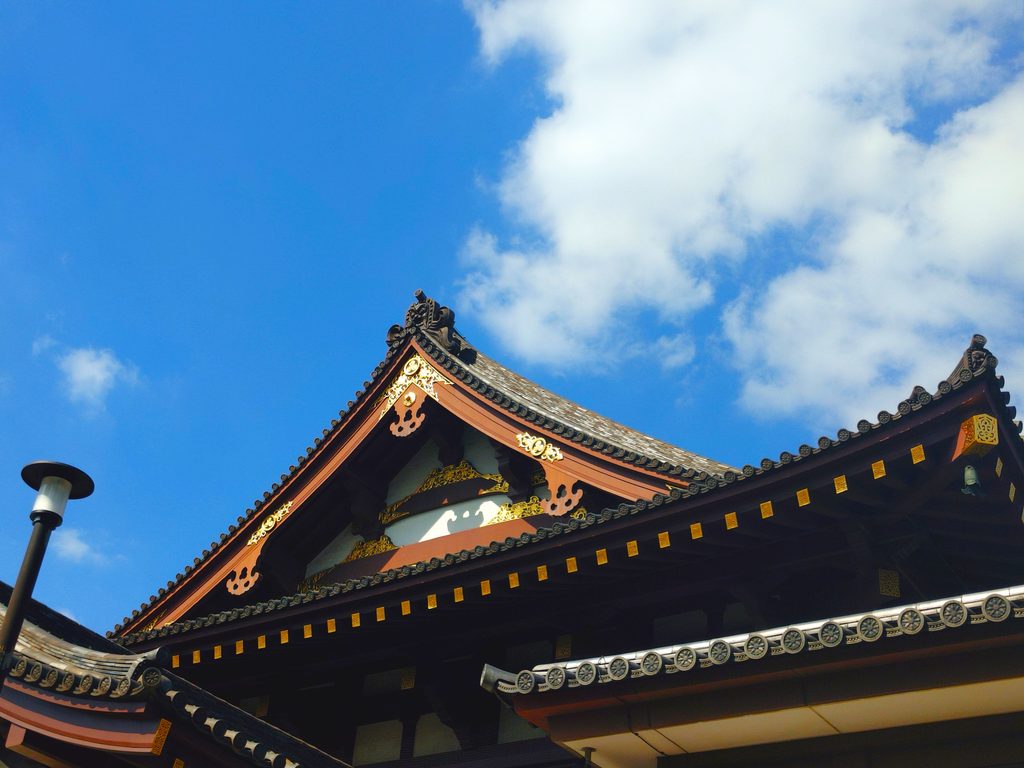
The graceful curves of its roof and rows of stately pillars are highly acclaimed as a Showa-era architectural masterpiece seamlessly blending modern engineering with ancient Buddhist aesthetics.
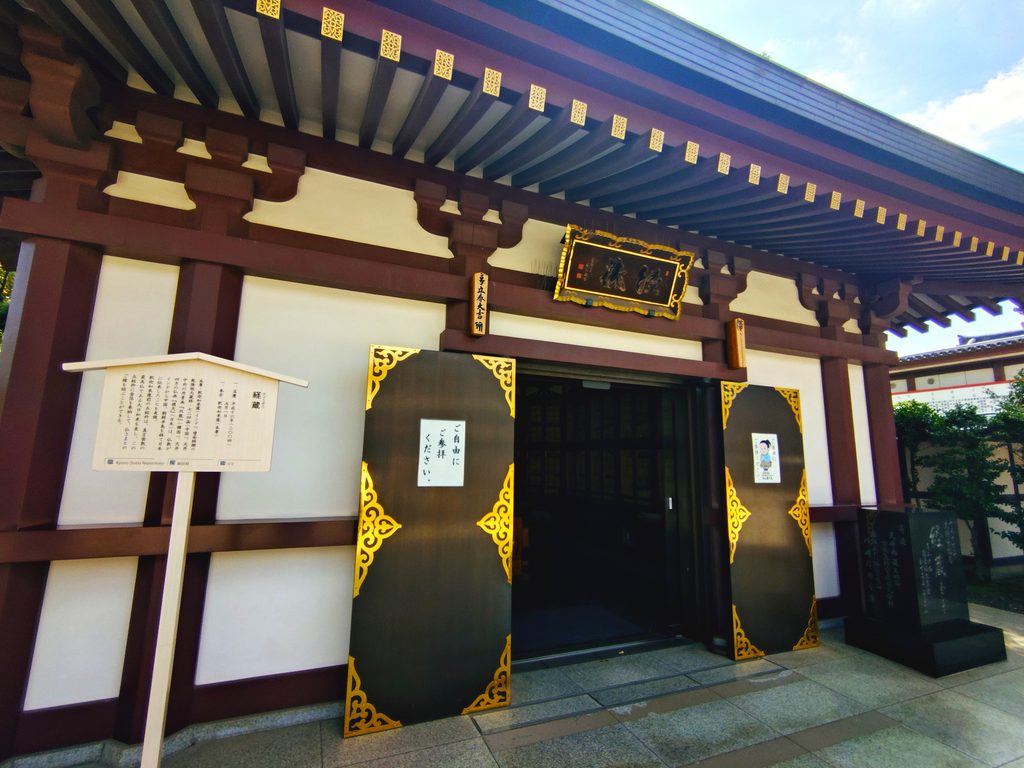
Standing to the left facing the front of the Great Main Hall is the Kawasaki Daishi Sutra Repository (Kyozo), a hall built to house Buddhist scriptures. Erected in 2004 (Heisei 16) to commemorate the Grand Daikaicho (special exhibition) service, the completion of this Kyozo literally fulfilled the traditional “Seven-Hall Temple Complex” (Shichido Garan), making it an exceedingly important structure marking the culmination of Kawasaki Daishi’s postwar reconstruction.
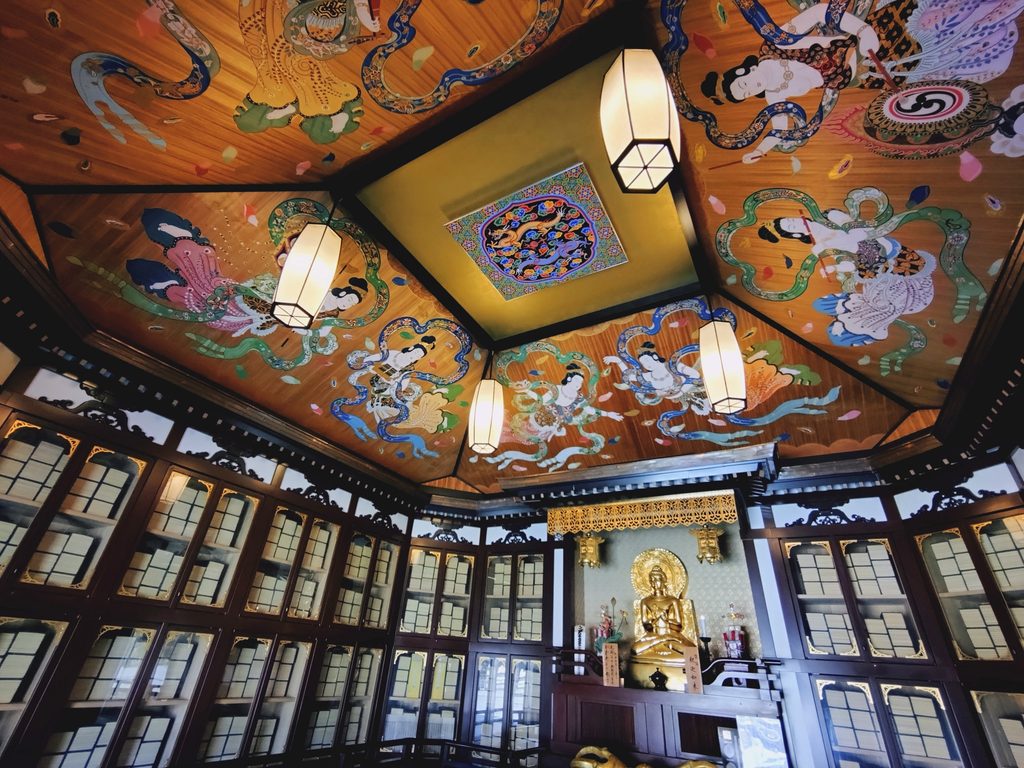
Inside the Kyozo, all 724 cases totaling 7,240 volumes of the Qianlong Edition of the Buddhist Canon (Kenryu-ban Daizokyo)—considered China’s final woodblock-printed Buddhist canon—are neatly stored. The sight of these vast scriptures encapsulating all Buddhist teachings lined up beautifully carries a breathtaking, sacred intensity the moment you step inside.
【Statues of Prayer and Peace】Golden Group Statues Erected to Pray for World Peace
Standing right beside Kawasaki Daishi’s Octagonal Five-Story Pagoda, the Statues of Prayer and Peace form a beautiful monument shining in dazzling gold. Erected on the grounds in 1984 (Showa 59), they commemorate the 1,150th memorial anniversary (Go-onki) of sect founder Kobo Daishi and the decennial Grand Daikaicho Exhibition held once every ten years.
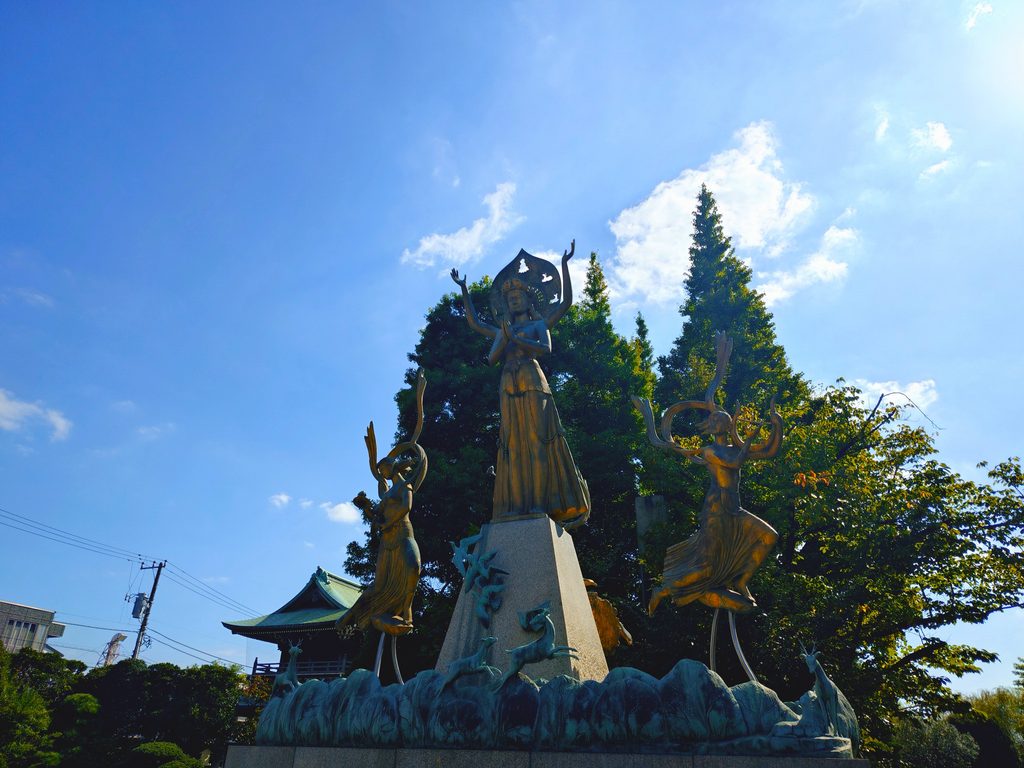
The sculptor, Katsuzo Entsuba, was a genius Japanese artist representing the Showa era who later received the Order of Culture, Japan’s highest artistic honor. Originally from Hiroshima Prefecture (present-day Onomichi City), Entsuba was living in Kawasaki during the war when he learned of the atomic bombing of his hometown, Hiroshima—an event that left a deep, lifelong shock. Because Kawasaki Daishi also shared the tragic past of losing everything in the Kawasaki Air Raids, the temple’s resolute message—”never repeat the tragedy of war; pray for eternal tranquility and lasting peace”—synchronized with Entsuba’s artistic vision to bring these Statues of Prayer and Peace to life.
【Fudo-do Hall & Octagonal Five-Story Pagoda】Hall Enshrining Fudo Myoo and a Beautiful Pagoda Symbolizing All-Embracing Compassion
Located in the rear-right area facing the Great Main Hall, Fudo Gate (Fudomon) is a wooden gate of high historical value standing directly in front of “Fudo-do Hall,” which enshrines a divided spirit of Naritasan Shinsho-ji Temple.
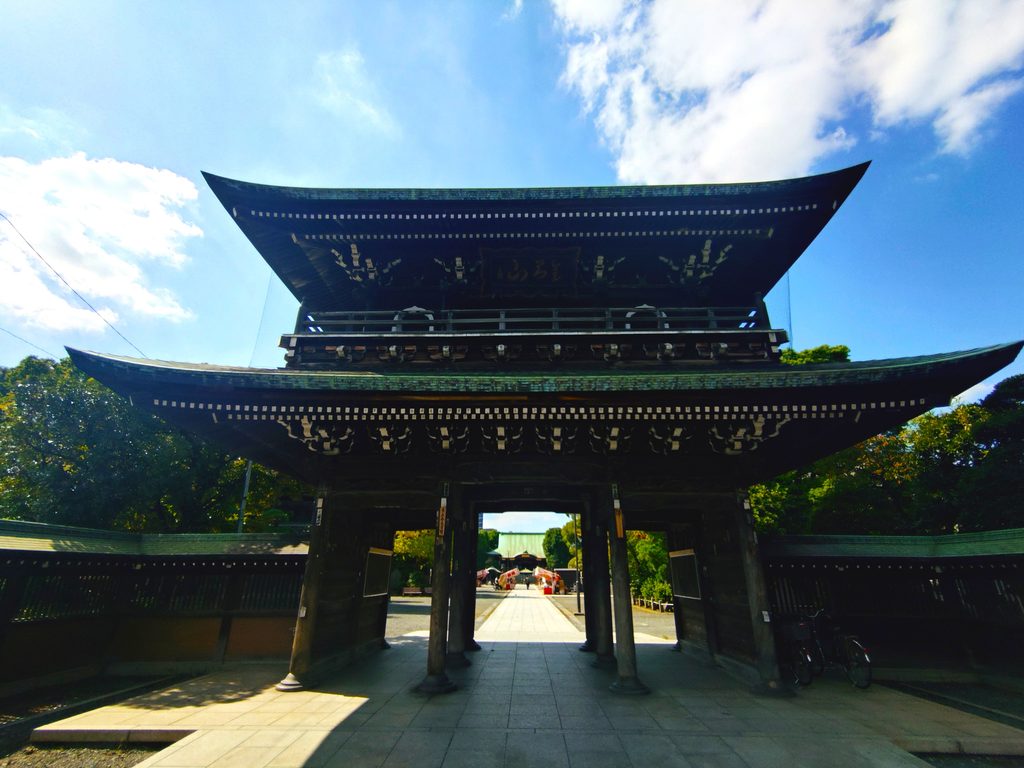
During the Kawasaki Air Raids on April 15, 1945 (Showa 20), Kawasaki Daishi lost almost all of its temple buildings to fire. To revive the temple from the scorched earth, the 43rd Abbot, Archbishop Ryucho, acquired this gate in 1948 (Showa 23)—shortly after the war—from a historically connected site in Fukushima Prefecture (said to be a temple gate) and relocated it onto the grounds. Because the current Great Sanmon Gate did not yet exist at the time, this relocated gate was erected on the site of the main gate and served for many years as the temporary front gate welcoming worshipers.
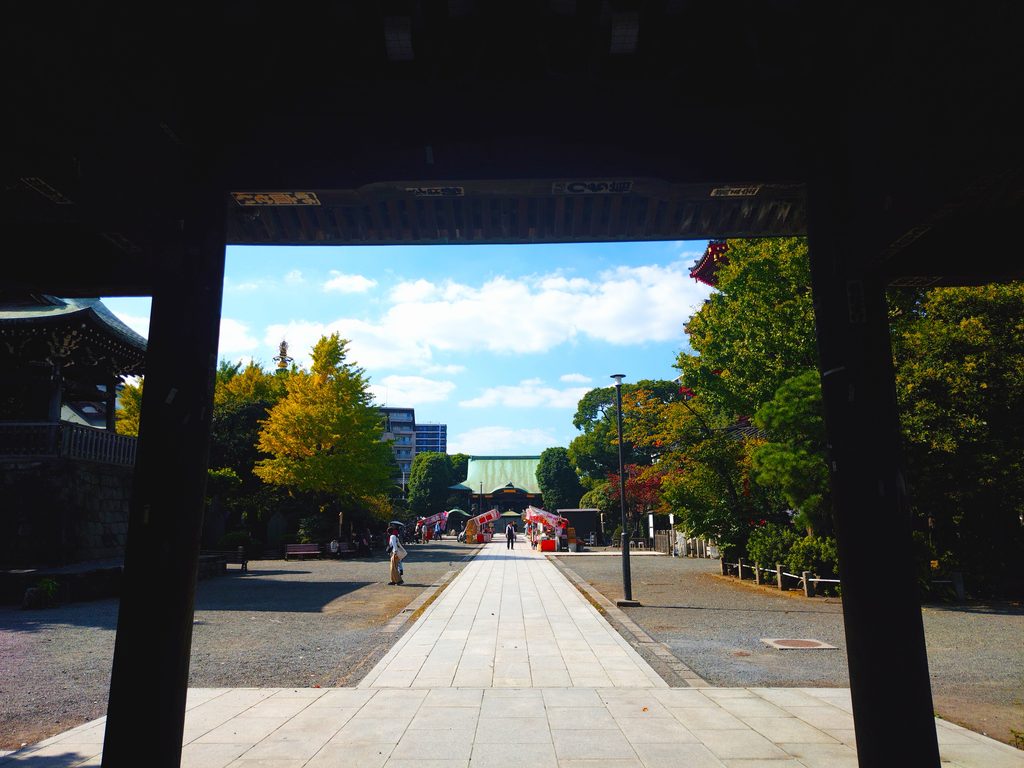
Passing through this gate leads to Fudo-do Hall, which enshrines a divided spirit of the principal deity of Naritasan Shinsho-ji and is designated as Temple No. 1 of the Buso Fudoson Pilgrimage and Temple No. 7 of the Kanto 36 Fudo Pilgrimage. Passing through the gate reveals the Five-Story Pagoda and halls straight ahead.
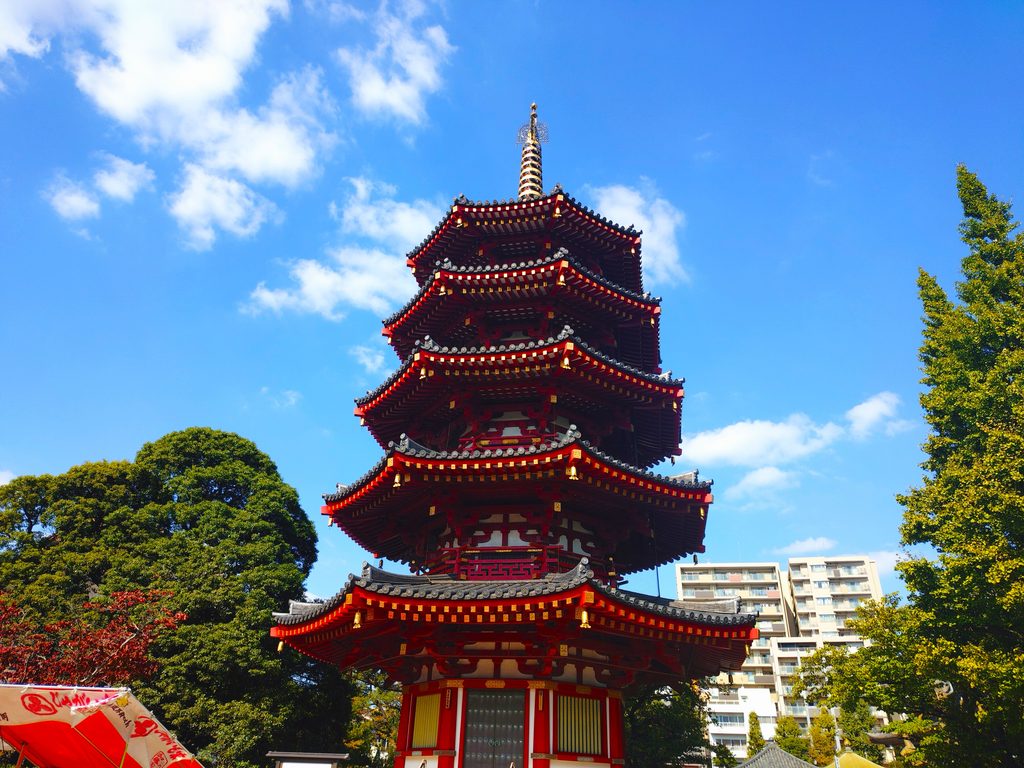
Standing tall on the right side facing the Great Main Hall, the Octagonal Five-Story Pagoda (Hakkaku Goju-no-to) is the most vibrant and beautiful symbolic structure on Kawasaki Daishi’s grounds. Completed in 1984 (Showa 59) to commemorate the 1,150th memorial anniversary of Kobo Daishi, it features a remarkably rare “octagonal” shape when viewed from above, hailed as a pinnacle of Showa-period Buddhist architecture.
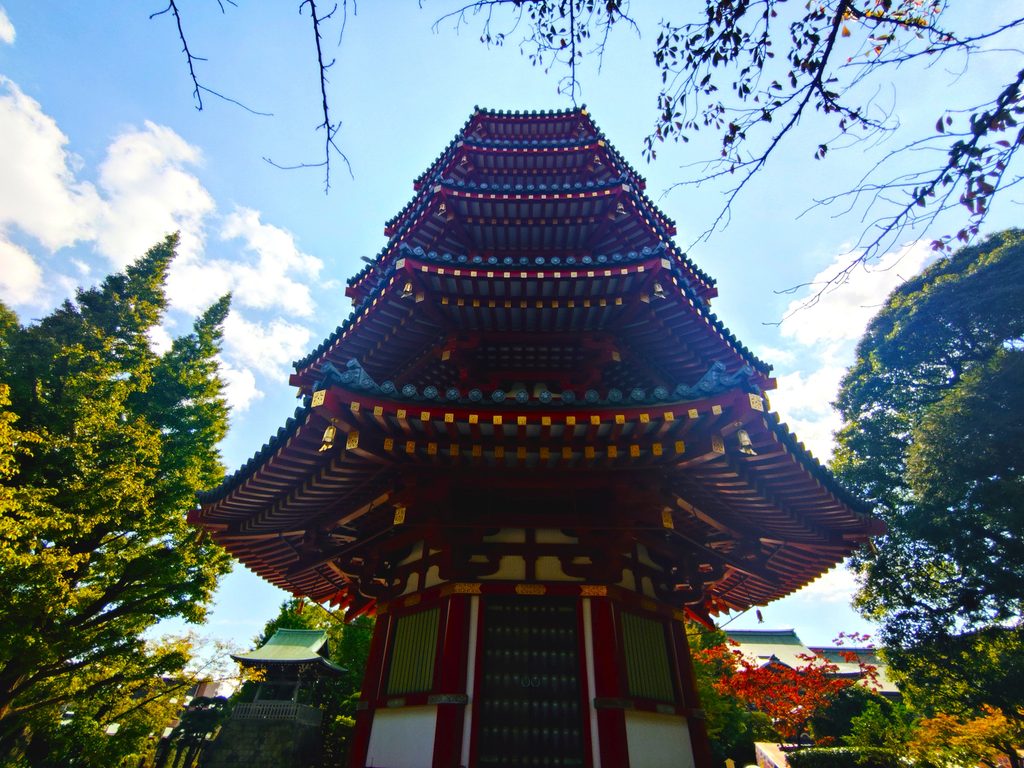
While almost all five-story pagodas in Japan are square-shaped, Kawasaki Daishi’s pagoda adopts an octagonal structure rarely seen anywhere in the country. The octagon represents “all directions” (shiho-happo), symbolizing the boundless compassion of Kobo Daishi to “save and embrace all people without exception.” Furthermore, in Buddhism, an octagon—whose increased angles approach a circle—signifies the state of supreme harmony and perfection (enman), making it an auspicious geometric form.
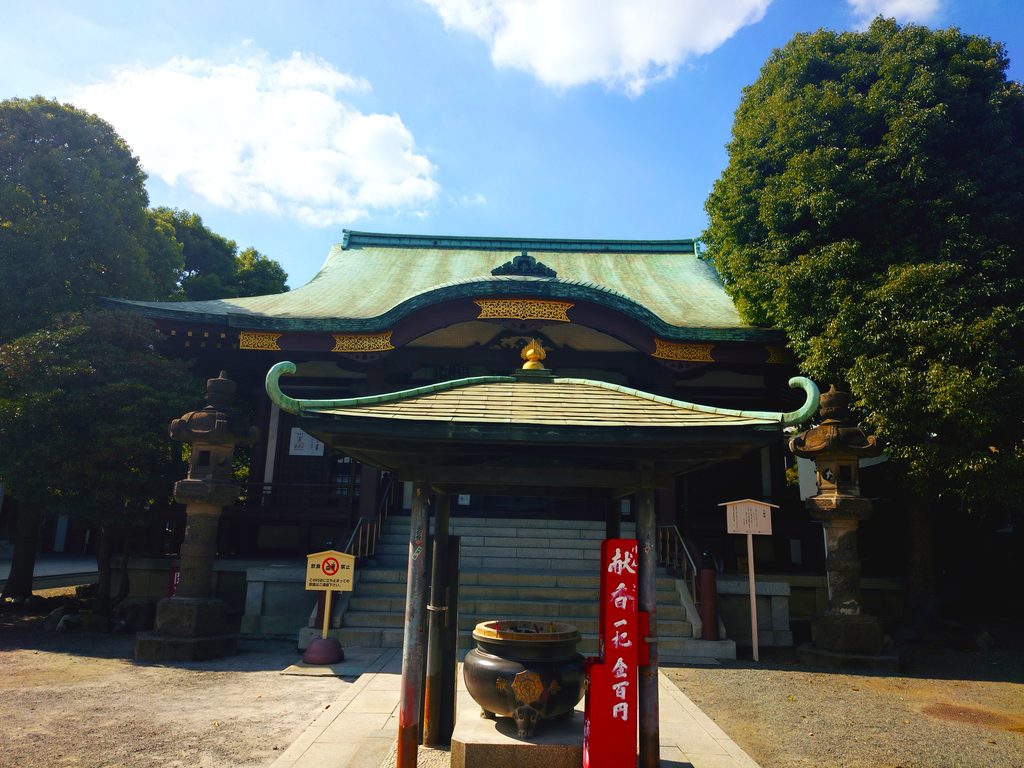
Fudo-do Hall (Fudo-do) was originally founded in 1890 (Meiji 23) but burned down in the April 1945 air raids. The current building, reconstructed in April 1964 (Showa 39), is a single-story reinforced-concrete hall with a hip-and-gable roof and a kara-hafu gabled entrance canopy. It enshrines a divided spirit (gofuntai) of Fudo Myoo, the principal deity of Naritasan Shinsho-ji in Chiba Prefecture.
【Pilgrimage Statue of Kobo Daishi & Bell Tower】Ascetic Daishi Statue for “Sand-Treading” Worship and a Historic Bell Tower
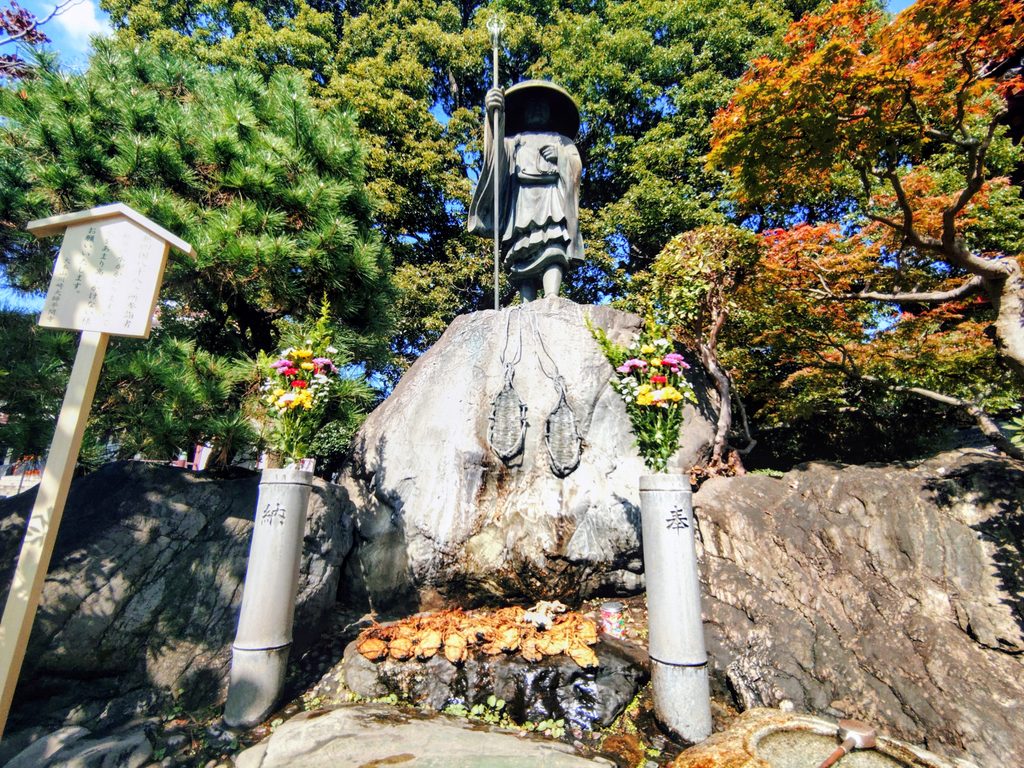
Standing near the Octagonal Five-Story Pagoda, the Pilgrimage Statue of Kobo Daishi (Kobo Daishi Henro Sonzo) depicts the Great Master traveling across Japan to bring salvation to the people.
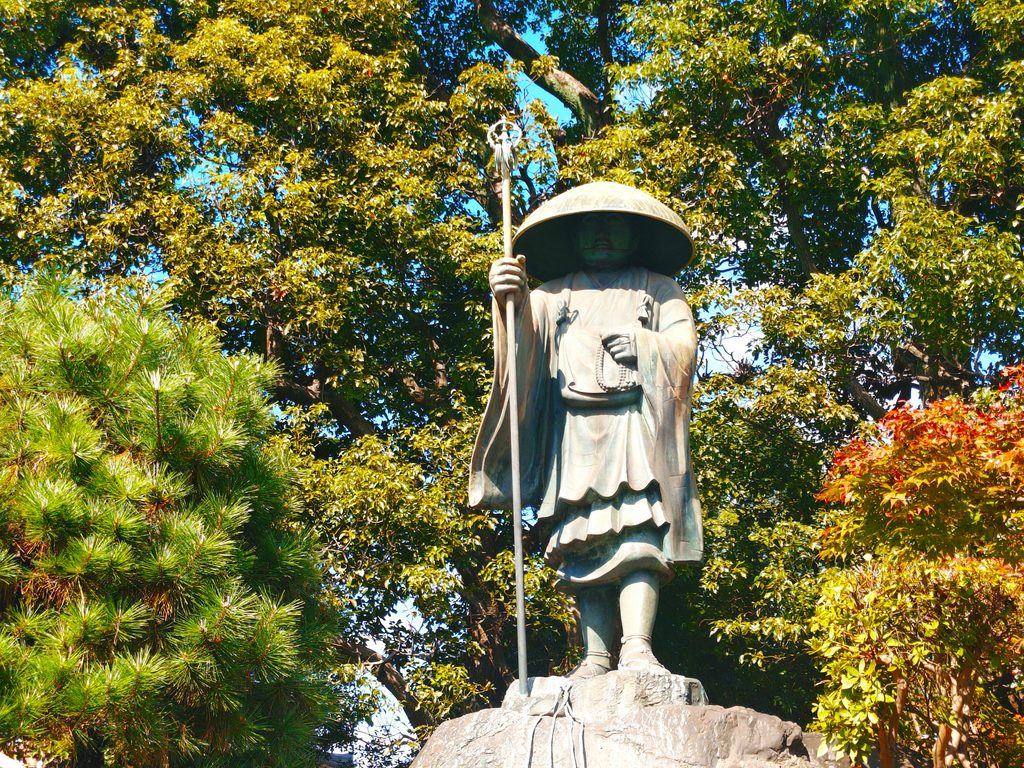
Erected in 1973 (Showa 48) as a commemorative project for the 1,200th anniversary of Kobo Daishi’s birth, the statue portrays him wearing a woven sedge hat (ajiro-gasa) and straw sandals while holding a pilgrim’s staff (kongo-zue) on his ascetic journey (junshaku), rendered with such dynamic realism that he looks ready to step forward at any moment.
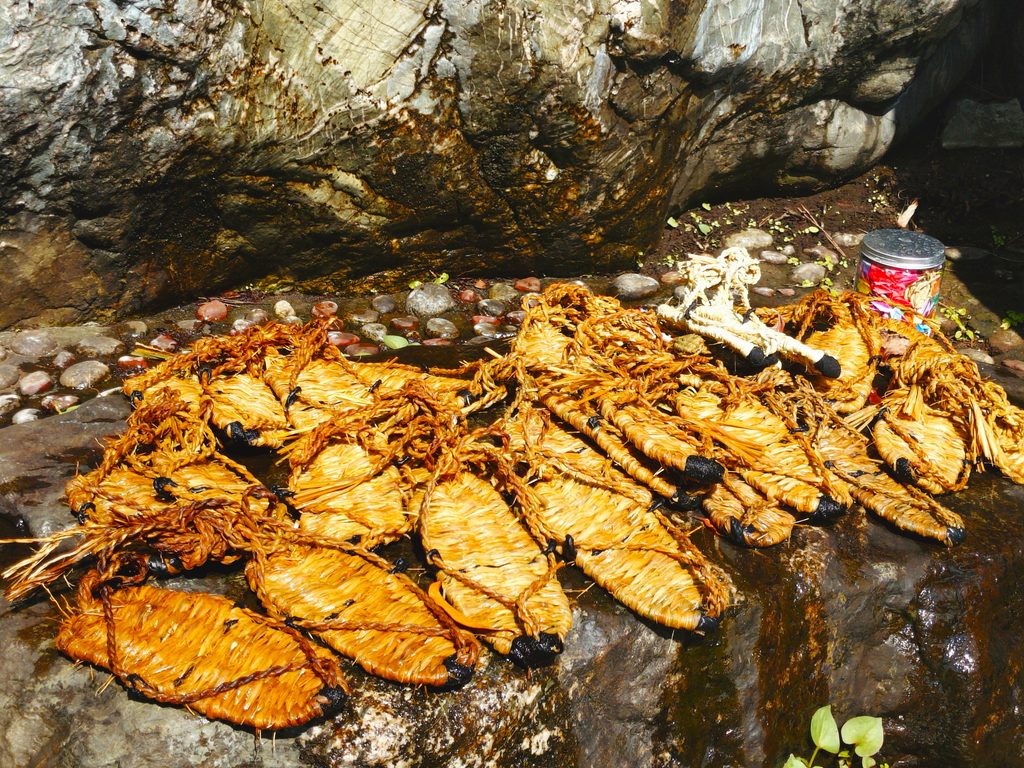
To worship here, use the ladle (hishaku) placed at the base of the statue to pour water over the Great Master’s feet and join your hands in prayer.
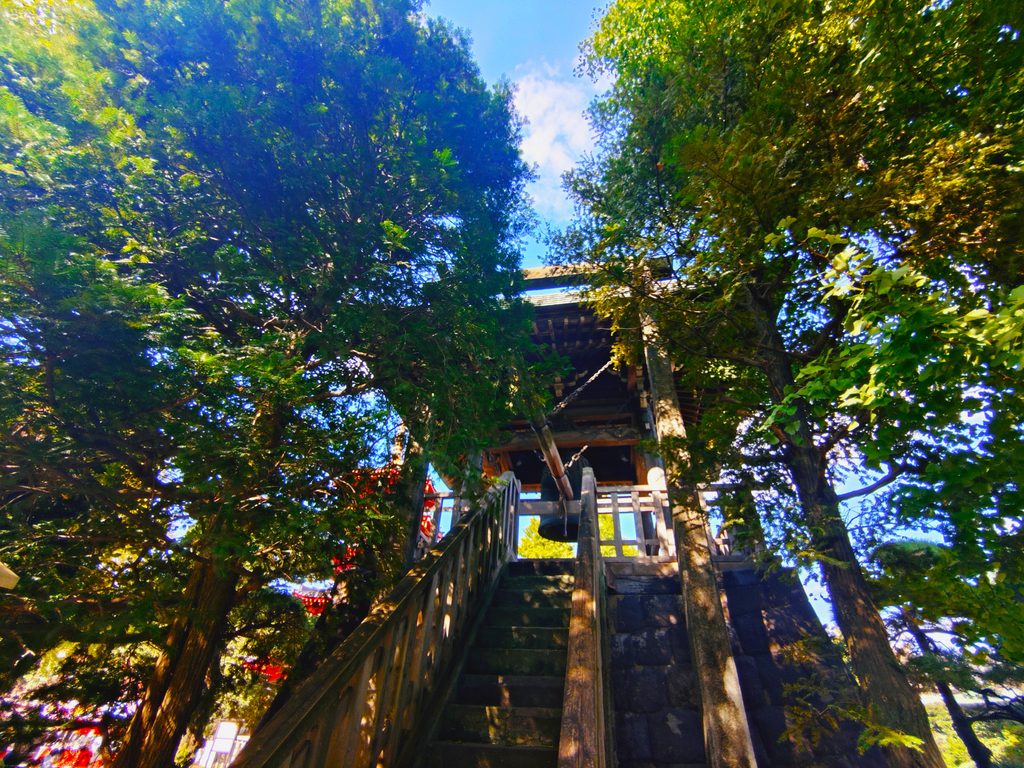
Standing just before the Octagonal Five-Story Pagoda, the Bell Tower (Shoro-do) is a sacred pavilion known nationwide for its New Year’s Eve “Watch-Night Bell” (Joya no Kane). Although Kawasaki Daishi lost most of its buildings in the 1945 air raids, the bronze temple bell (bonsho) hanging inside this Bell Tower is a precious cultural property that miraculously escaped the flames.
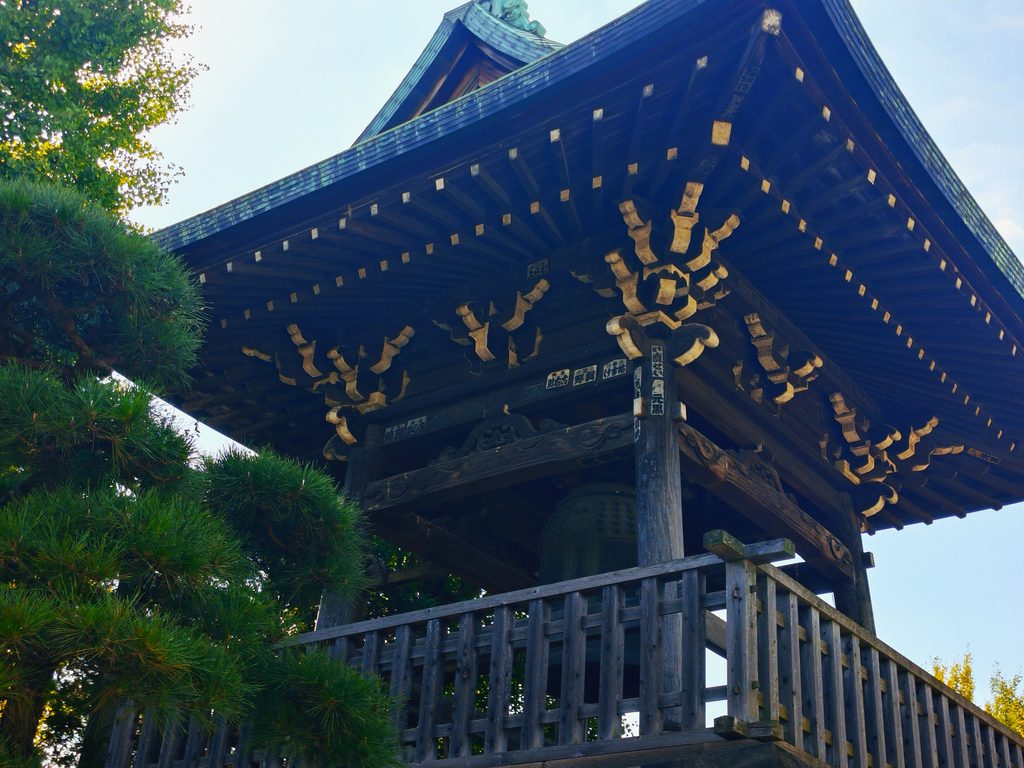
On New Year’s Eve, as the grounds fill with Hatsumode worshipers, the very first strike of the bell rings out at precisely midnight. Frequently broadcast live on television programs such as Yuku Toshi Kuru Toshi, the sound of Kawasaki Daishi’s New Year’s Eve bell is widely cherished as an iconic tradition ushering in the New Year (and the First Daruma Fair).
【Shozuka no Baba Statue & Statue of Kitanoumi】Beliefs for Toothache Relief & Beautiful Hair and the Statue of a Great Showa Yokozuna
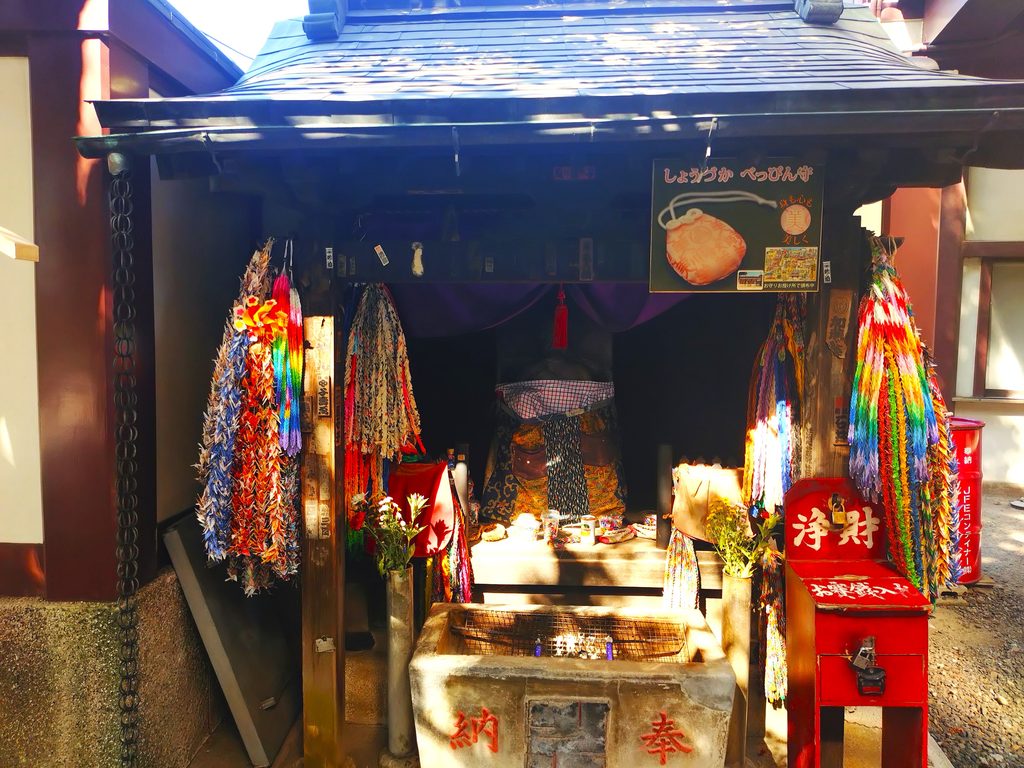
Shozuka no Baba (Old Woman of the Shozuka River) is a stone statue enshrined in a small shrine near the West Liberation Gate (Nishi-Gedatsumon, rear-left of the Great Main Hall) within Kawasaki Daishi’s grounds.
In Buddhism, “Shozuka” refers to the “Sanzu River” (Sanzu-no-kawa), which separates the living world from the afterlife.
In other words, the true identity of this old woman is “Datsueba,” the legendary hag sitting by the banks of the Sanzu River who strips the clothes off deceased souls. Although she appears at first glance to be a terrifying guardian of hell, folk belief interpreted “stripping away clothes” as “cleanly stripping away bad karma, disasters, and the root causes of illness,” gradually transforming her into a gentle grandmotherly figure beloved for saving ordinary people.
Kawasaki Daishi’s Shozuka no Baba possesses unique divine blessings not found at other temples or shrines. In the past, when modern dentists and painkillers did not exist, people suffered terribly from toothaches; Shozuka no Baba sparked a massive boom as a deity who could instantly stop severe dental pain. Additionally, stemming from her power to “strip away,” she is worshipped today as a guardian deity of beauty who “strips away dead skin cells, blemishes, and bad luck, bestowing beautiful skin and appearance.”
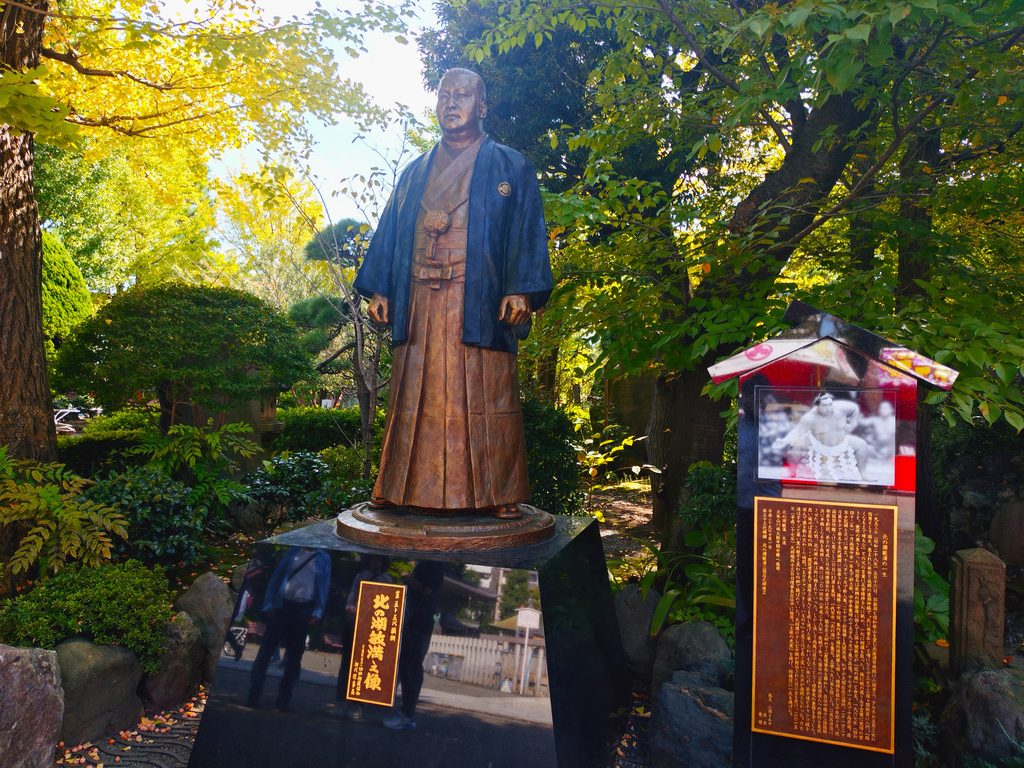
Standing near the front of Kawasaki Daishi’s Octagonal Five-Story Pagoda is a magnificent bronze statue erected in memory of Kitanoumi (real name: Toshimitsu Obata), a great Yokozuna of the Showa era and former Chairman of the Japan Sumo Association. He had donated his ceremonial apron (kesho-mawashi) upon promotion to Yokozuna and his championship plaque from his undefeated 1977 tournament victory to Kawasaki Daishi, and his grave is also located in Kawasaki Daishi’s cemetery. On the occasion of the third memorial service (October 1, 2017) following his sudden passing at age 62 in November 2015, this bronze statue was erected through donations from his wife Tomiko and family members with the temple’s support.
【Tsuru-no-Ike (Crane Pond) & Yakushi-den Hall】A Pond Spanned by the Vermilion Yasuragi Bridge and a Hall Enshrining Yakushi Nyorai
Tsuru-no-Ike (Crane Pond), stretching out as you walk from the Great Main Hall toward Yakushi-den Hall, is the premier healing spot on the grounds, harmonizing seasonal nature with profound Buddhist messages.
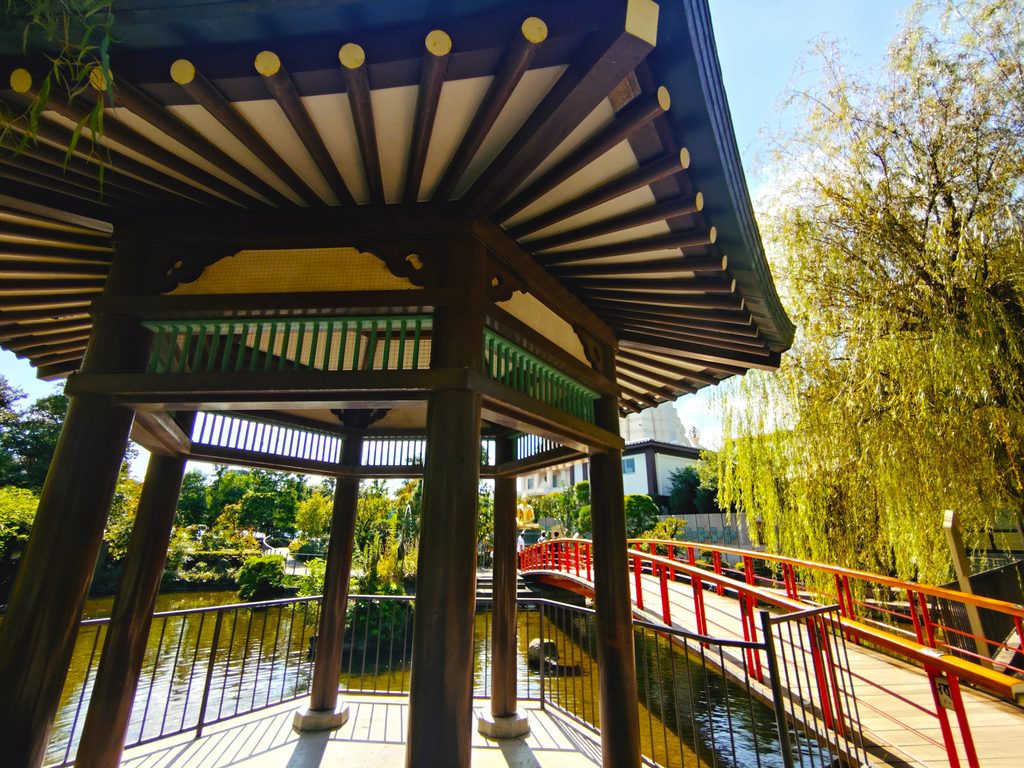
Spanning the pond, the Yasuragi Bridge (“Bridge of Peace”) gleams beautifully with vermilion and gold railings engraved with Sanskrit characters (bonji) representing Buddhist wisdom and compassion. Crossing this bridge symbolizes moving from our world of delusion and suffering toward the world of enlightenment and peace (Higan) where Buddha awaits, and simply walking across it is believed to purify the mind. Inside the pond, numerous brightly colored nishikigoi (koi carp) swim gracefully.
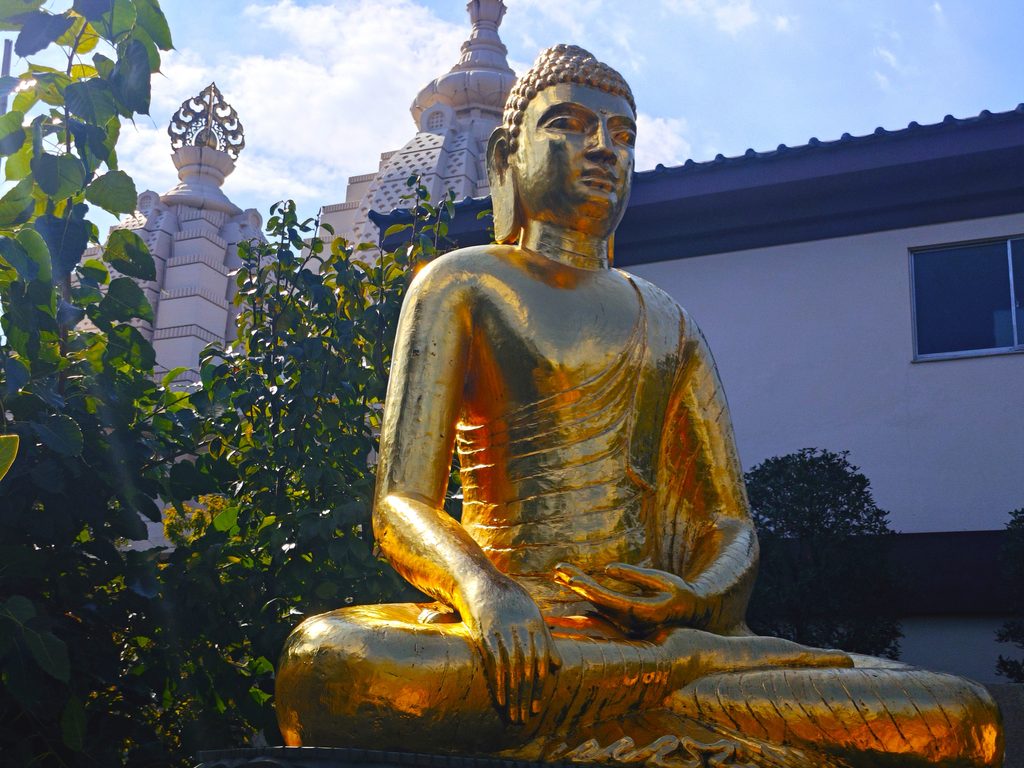
By the shore of Tsuru-no-Ike rests a sacred bronze statue of Shakyamuni Buddha (Shakuson) shining in gold. This statue depicts the moment Shakyamuni, after severe ascetic practices, overcame the temptations and demons appearing within his mind and finally attained true enlightenment, achieving “genuine peace and tranquility” (Goma Jodo). Quietly joining your hands in prayer before this statue is said to dispel mental confusion and negative thoughts. Directly beyond this point stands Yakushi-den Hall.
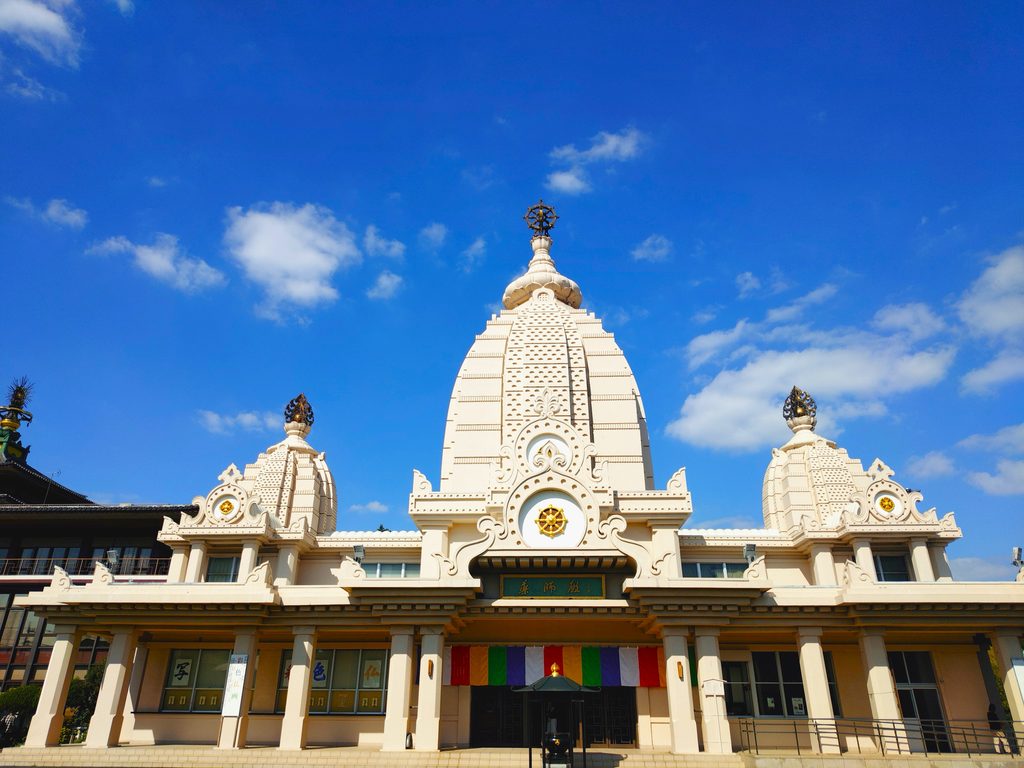
Yakushi-den Hall (Yakushi-den) is an exotic prayer hall dedicated to praying for “the health and peace of all humanity.” Originally erected in 1963 (Showa 38) to commemorate the 1,200th anniversary of Kobo Daishi’s birth, it was inaugurated in its current magnificent form in 2008 (Heisei 20). Though situated within Kawasaki Daishi’s grounds, it distinguishes itself from traditional Japanese temples with a distinctly Oriental atmosphere incorporating traditional Buddhist architectural motifs from India—the birthplace of Buddhism—such as woven textile patterns and cave-temple designs.
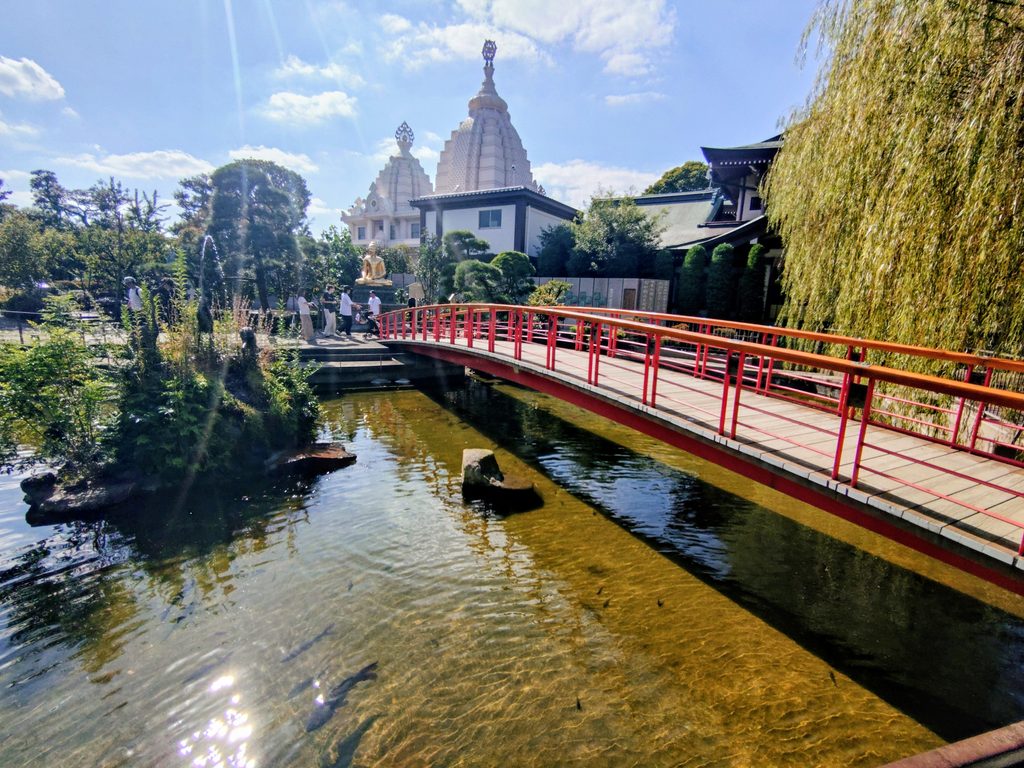
After visiting the various halls, experiencing the intense energy of the Goma fire rituals, and enjoying the lively bustle of Nakamise Street, sitting on a bench along Tsuru-no-Ike to catch your breath while watching the swimming carp and listening to the gentle murmur of water appeared to be the classic way for worshipers to unwind.
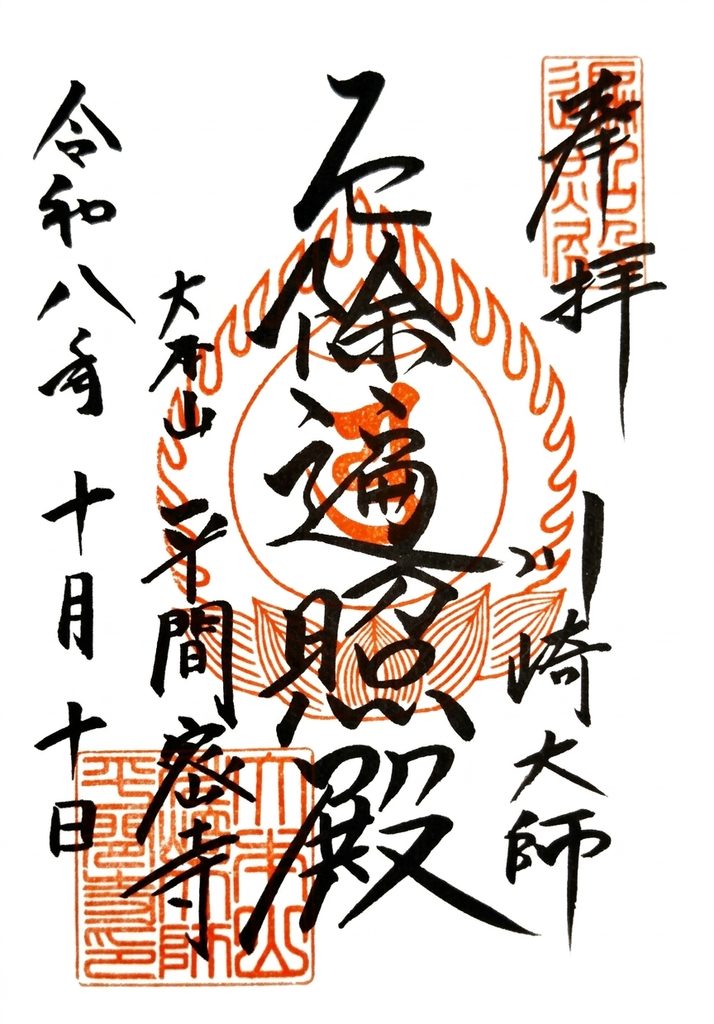
【Kawasaki Daishi Heiken-ji Temple Goshuin】
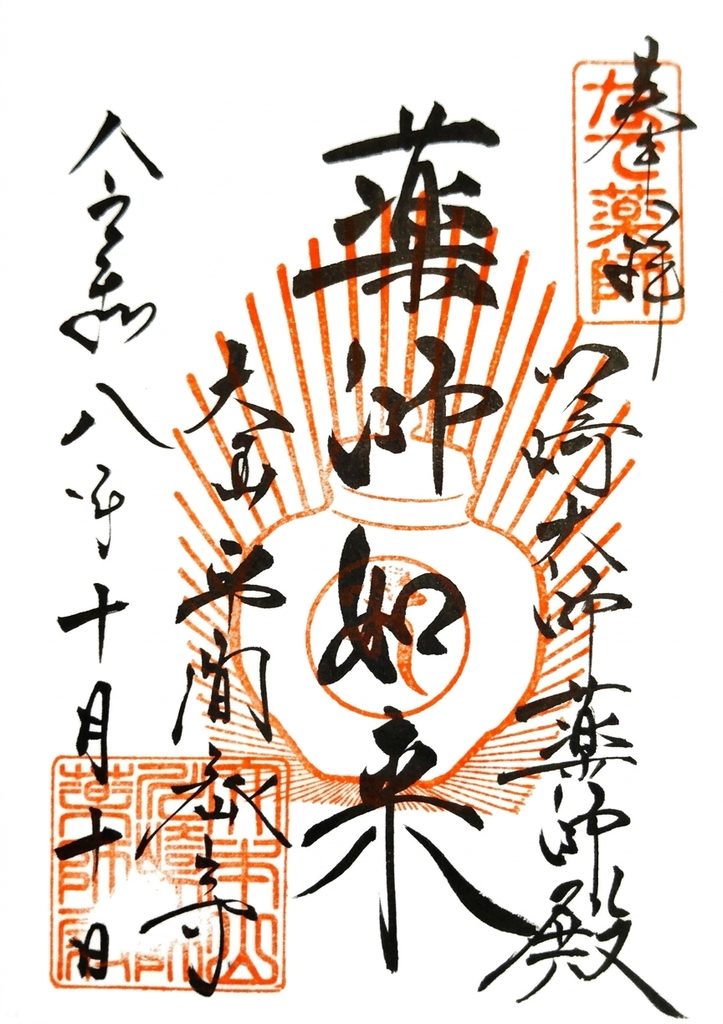
【Kawasaki Daishi Heiken-ji Temple On-Site Visit Report & Original Evaluation】
Kawasaki Daishi Heiken-ji Temple On-Site Review & Evaluation Score
| Evaluation Category | Score | Key Features / Highlights |
|---|---|---|
| Accessibility | (5.0) | Outstanding location, about an 8-minute walk from “Kawasaki-Daishi Station” or “Higashimonzen Station” on the Keikyu Daishi Line, accessed via the lively Omotesando shopping street. |
| Scale & Grounds | (4.5) | A breathtaking grand temple complex lined with the magnificent Great Main Hall (Daihondo), the Great Sanmon Gate enshrining the Four Heavenly Kings, the vibrant Octagonal Five-Story Pagoda, the Indian-style Yakushi-den Hall, and Fudo-do Hall. |
| History & Heritage | (4.0) | Founded in 1128 (Daiji 3). A grand historic temple renowned nationwide as the “Kobo Daishi of Warding Off Evil” following the Edo-period pilgrimage by the 11th Shogun Tokugawa Ienari to ward off misfortune. |
| Nature & Scenery | (3.5) | A rich temple landscape harmonizing the vermilion Yasuragi Bridge and pond garden, the scenic beauty of the Octagonal Five-Story Pagoda, and the greenery of adjacent Daishi Park. |
| Tranquility | (3.0) | While the approach path echoing with Tontoko candy chopping, Goma fire rituals, and Hatsumode crowds is lively, the deeper areas of the vast grounds and around Yakushi-den Hall offer a peaceful environment for worship. |
| Goshuin Variety | (3.0) | Several types of Goshuin are issued for each hall, starting with “Kobo Daishi” at the Great Main Hall, as well as Fudo-do Hall, Yakushi-den Hall, and the Automobile Traffic Safety Prayer Hall. |
【On-Site Report | Personal Impressions and Atmosphere】
Kawasaki Daishi was a vast sacred complex brimming with overwhelming depth and captivating charm—far too rich to treat as a place where you simply “offer a quick prayer and leave.”
From the earth-rumbling taiko drums of the Goma fire ritual echoing from the Great Main Hall and the beauty of the vermilion Octagonal Five-Story Pagoda piercing the sky, to rare historical curiosities tucked into corners of the grounds like “Shozuka no Baba” and the “Chojuro Pear Monument,” every step deeper reveals a new discovery. It overflows with multifaceted appeal that keeps your heart racing with anticipation over where to explore next.
Above all, what resonates most deeply is the historical weight of knowing this magnificent temple complex was miraculously resurrected from scorched earth—after losing everything in the Kawasaki Air Raids—purely through people’s “prayers for restoration.” Seeing the weathered Fudo Gate and Bell Tower that endured the flames of war standing in effortless harmony alongside the grand modern Main Hall powerfully conveys the indomitable vitality of the people living in this city and their extraordinary devotion to Kobo Daishi.
Energized by the lively calls of shopkeepers in the temple town, overwhelmed by the roaring flames of the ritual fire, soothed by the serenity of the waterside, and entrusting your wishes to lesser-known sacred spots—this spiritually potent sanctuary goes far beyond personal “warding off evil,” satisfying all five senses and granting vitality for tomorrow as a true “treasure trove of experiences.”
【Nearby Sightseeing Spots to Visit Together】
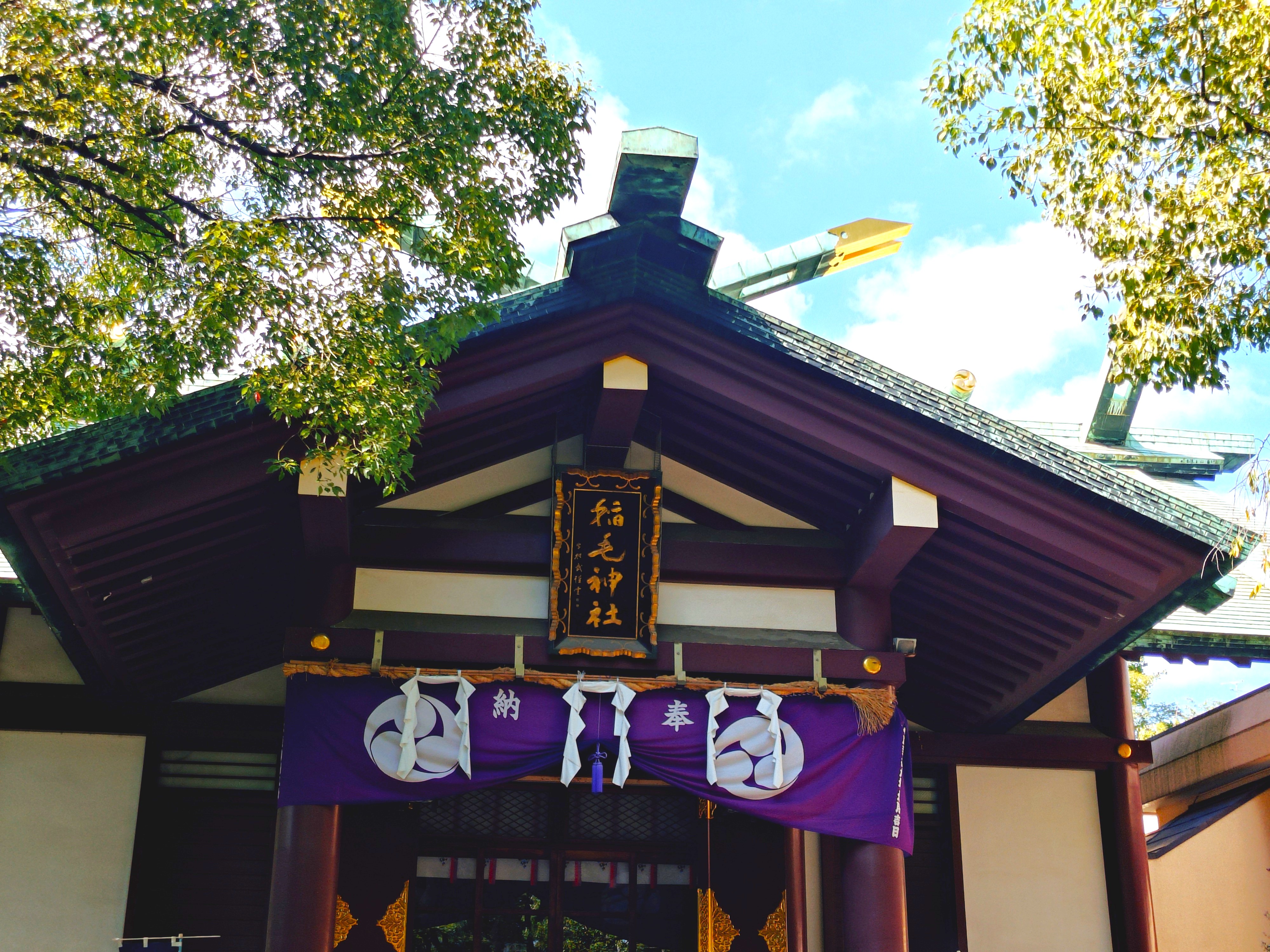
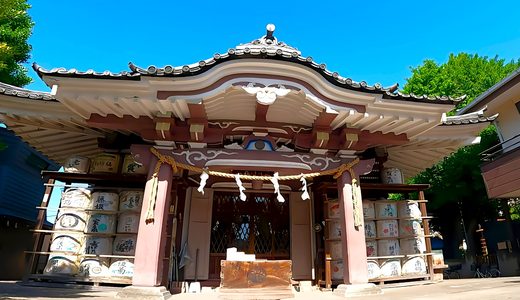
Inage Shrine, Wakamiya Hachimangu Shrine, Rokugo Shrine
【Basic Information & Access】
【Access by Train / Car and Parking】
*Free parking available.
4-48 Daishi-cho, Kawasaki Ward, Kawasaki City, Kanagawa Prefecture 210-8521