 Kanata's Japan Shrine Guide

【Overview & History of Toeizan Kanei-ji Kaisan-do】
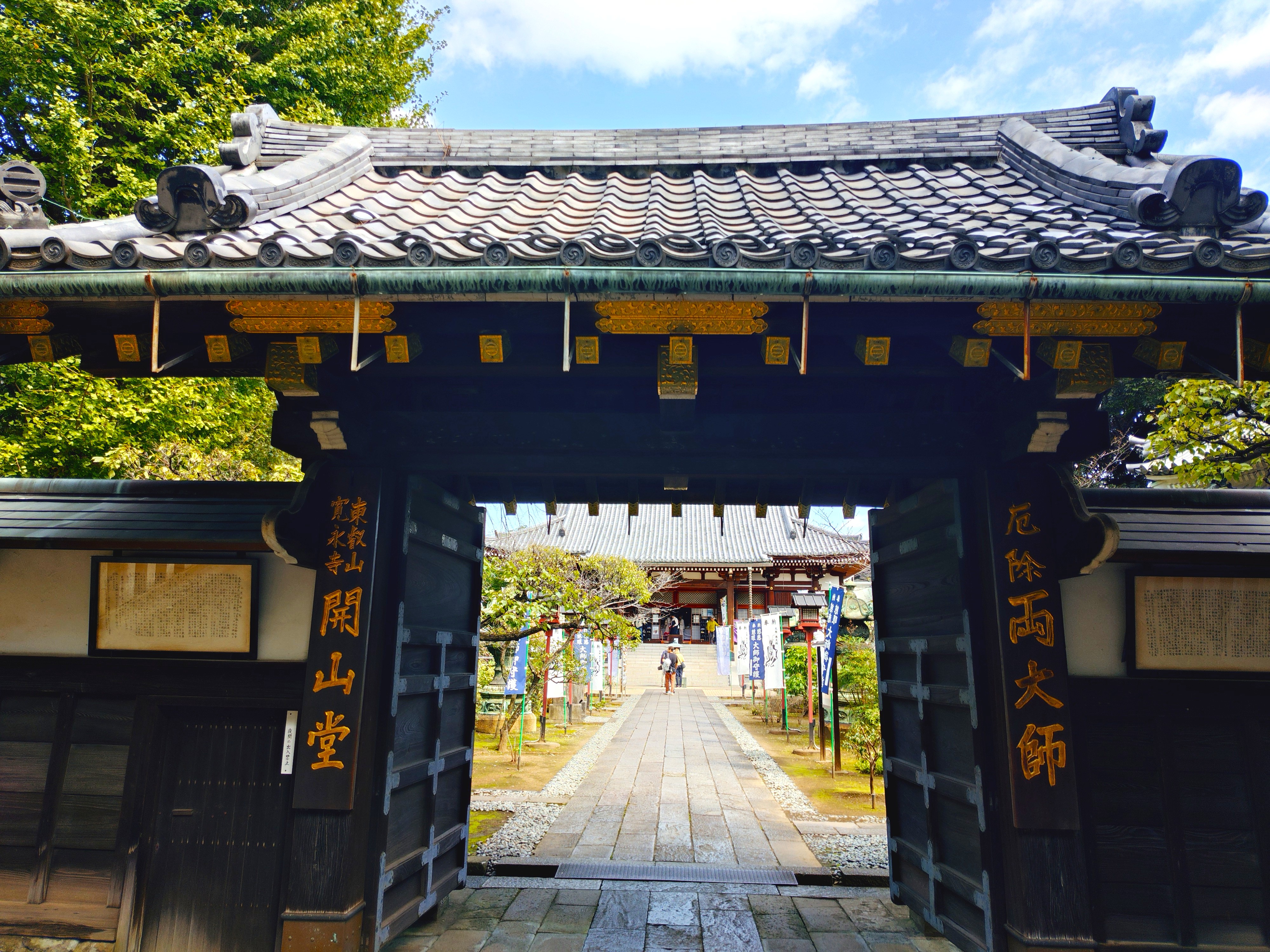
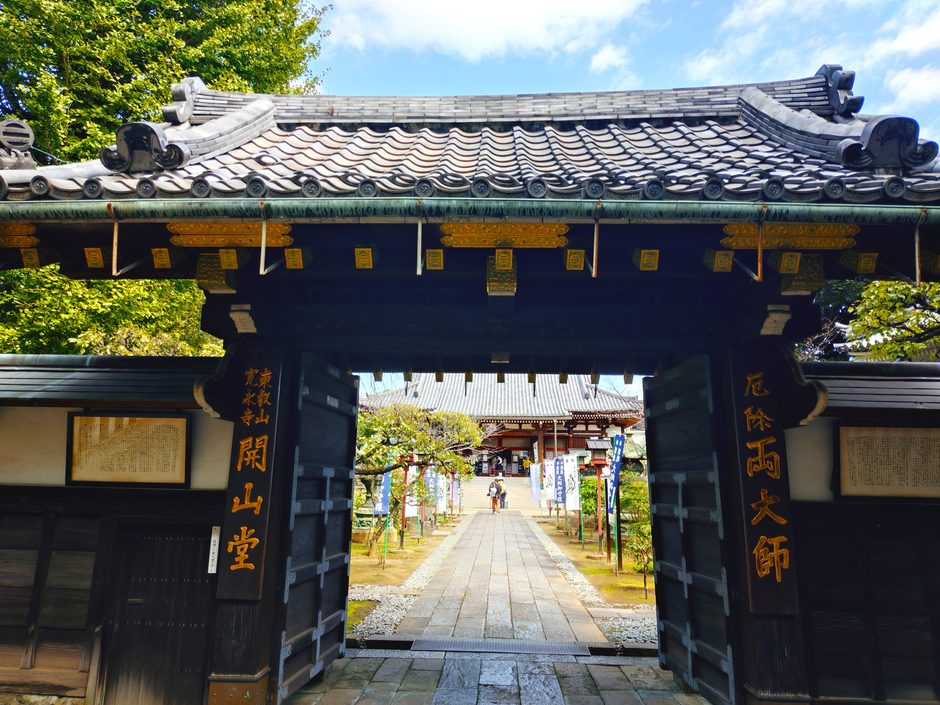
Located in Ueno Park, Taito Ward, Tokyo, Kaisan-do (Former Honbo) is a sub-temple (tatchu) of Toeizan Kanei-ji Temple. It is widely and affectionately known by its nickname, “Ryo-Daishi” (Two Great Masters). Along with the Former Honbo Front Gate (an Important Cultural Property) and the Amida-do Hall inside the grounds, it is a precious historic site conveying the deep history shared between the Edo Shogunate and Kanei-ji Temple into modern times.
【History & Origins】Founded in the Early Edo Period as a Hall Enshrining the Two Great Masters, Jikei and Jigan
In 1643 (Kanei 20), Abbot Tenkai (Jigan Daishi), the great monk who founded Kanei-ji Temple, passed away at the age of 108 (though accounts vary).
The following year, 1644 (Shoho 1), by order of the 3rd Shogun Tokugawa Iemitsu, “Kaisan-do” was built at its present location behind the main quarters (honbo) to honor Tenkai’s achievements and enshrine his statue. During his lifetime, Abbot Tenkai deeply revered Abbot Ryogen (Jikei Daishi / Ganzan Daishi), who was the restorer of Mount Hiei’s Enryaku-ji Temple and a central figure of warding-off-evil beliefs. Thus, in 1699 (Genroku 12) under the 5th Shogun Tokugawa Tsunayoshi, the statue of Ganzan Daishi enshrined inside Kanei-ji’s Honbo was moved to Kaisan-do. Enshrining the “Two Great Masters”—Tenkai and Ryogen—together in one hall led Edo commoners to affectionately call it “Ryo-Daishi” (Two Great Masters).
Ganzan Daishi is the affectionate nickname for Ryogen (912–985 AD), a real-life high priest of the Tendai Sect during the Heian period. In modern Japanese Buddhism and folk faith, he is immensely revered as the “strongest deity for warding off evil” and the “father of Omikuji (fortunes).” Because he passed away on the 3rd day of the New Year (January 3), he came to be called “Ganzan Daishi,” meaning “the great master connected to the 3rd day of New Year’s Day.”
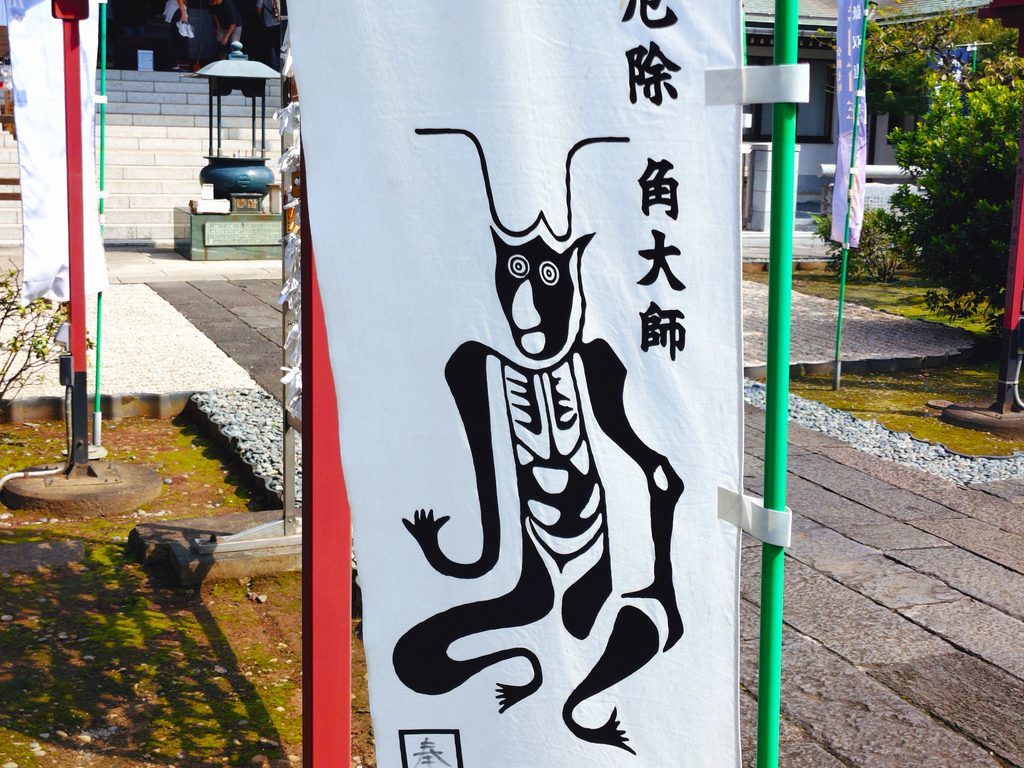
Speaking of Ganzan Daishi, talismanic paper amulets depicting a slender, ogre-like figure are famous. This figure is called “Tsuno Daishi” (Horned Master). Even today, visiting Tendai Sect temples (such as Sano Yakuyoke Daishi, Jindai-ji, and Kanei-ji) allows you to receive these evil-repelling talismans of Tsuno Daishi.
 Sano Yakuyoke Daishi [Tochigi]
【Principal Deities & Divine Blessings】Virtues of Warding Off Evil and Inviting Good Fortune Granted by the Two Masters
Enshrined inside the hall are not Buddha statues, but wooden statues (zonsou) of two real-life high priests: Abbot Tenkai and Ganzan Daishi (Ryogen).
- Powerful Evil Repelling & Protection (Tsuno Daishi Faith): Legend says Ganzan Daishi saved people from epidemic demons by transforming into “an intimidating demon of mere bones” (Tsuno Daishi: Horned Master). Consequently, its efficacy for warding off evil spirits is considered among the strongest in the Kanto region. Affixing the “Tsuno Daishi Talisman” (gofu) issued at the hall near the entrance of your home is believed to dispel all disasters, illnesses, and thieves.
- Health, Longevity & Family Safety: Drawing upon the vibrant energy of Abbot Tenkai—who lived beyond 100 years and played an active role on the historical stage for a long time—numerous worshippers visit to pray for recovery from illness, health, longevity, and family prosperity.
- Clarity of Wisdom & Fulfillment of Great Wishes (Father of Omikuji): Ganzan Daishi is regarded as the founder who created the system of modern fortune slips (omikuji / Ganzan Daishi Hyakusen) used in shrines and temples today. As a deity who lends divine wisdom to guide people onto the right path, worshipping here grants wisdom to cut through hesitation and fulfill one’s wishes.
【Highlights & Recommended Worship Route of Toeizan Kanei-ji Kaisan-do】
【Standing Jizo Statues, Jizo-do Hall & Bell Tower】Merciful Jizo Deities, Historic Bell Tower, and Sacred Halls
Looking inside the “Amida-do Hall” located immediately to the right upon passing through the Sanmon Gate, three revered statues sit enshrined side-by-side:
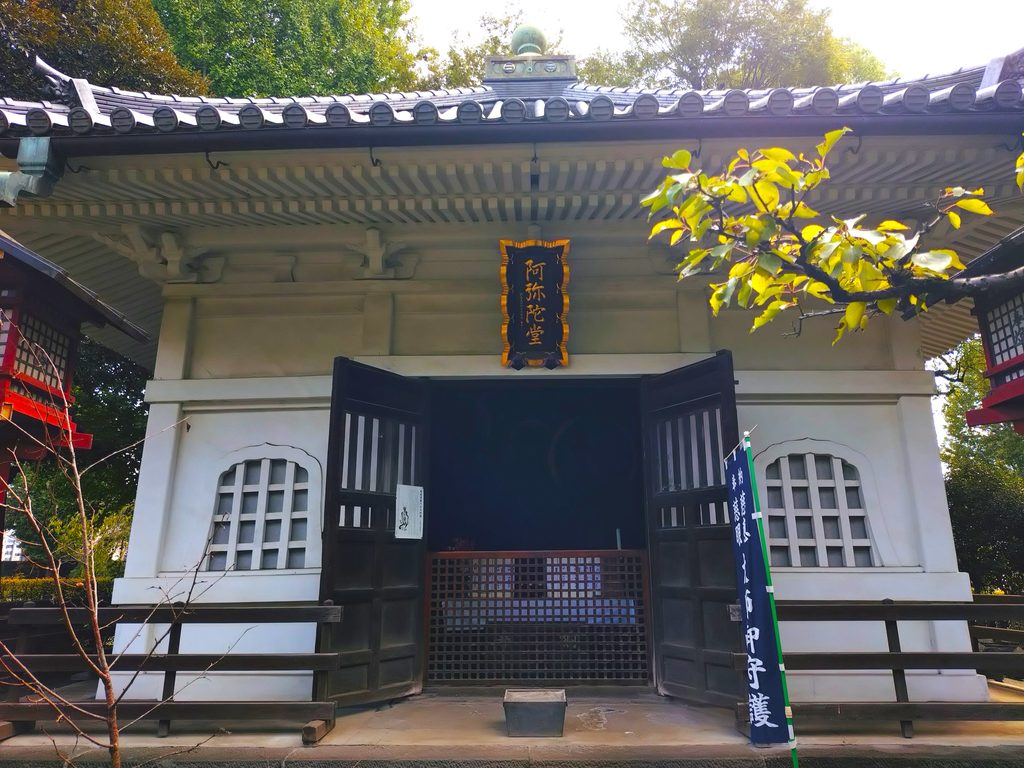
- Left: Standing Jizo Bosatsu (Namu Jizo Dai-Bosatsu)
- Center: Seated Amida Nyorai
- Right: Seated Kokuzo Bosatsu (Kokuzo Bosatsu Zazo)
The scale ratio of the flanking Jizo Bosatsu and Kokuzo Bosatsu relative to the central Amida Buddha is slightly unbalanced. This is said to be because these historic statues, originally enshrined in different places or halls, were gathered here into Amida-do Hall over time to be worshipped together.
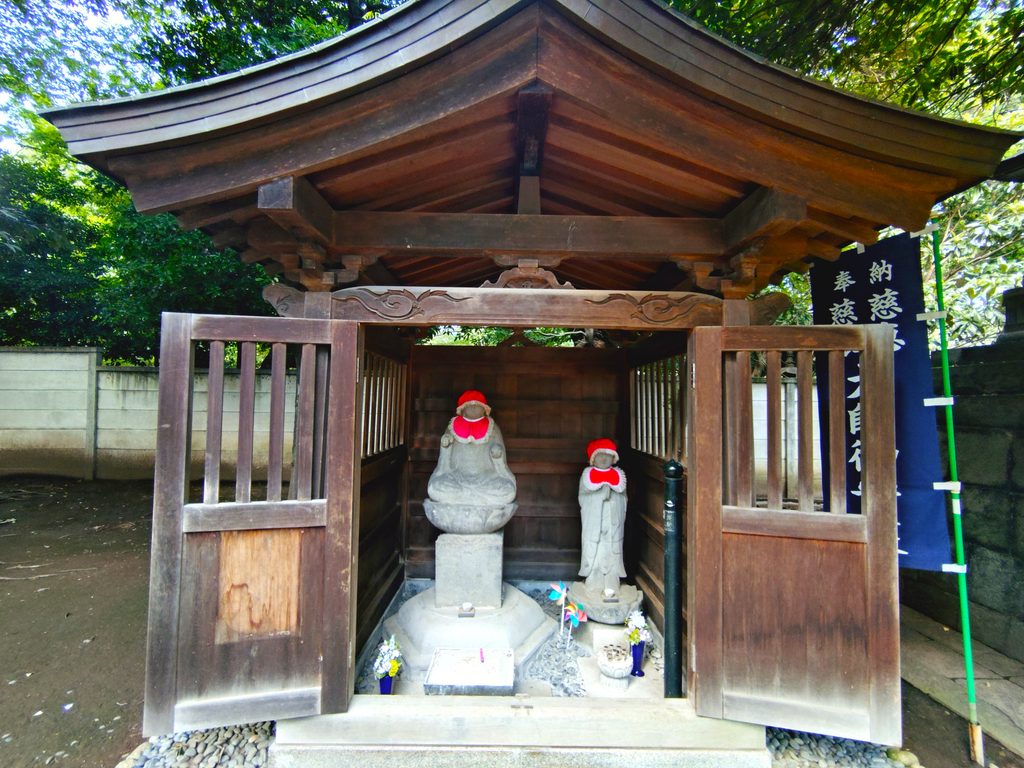
On the opposite side, immediately to the left after entering the Sanmon Gate, stands the “Jizo-do Hall.” It enshrines a historic Jizo statue that has received the daily prayers of local residents, prayers for safe travels, and hopes for children’s healthy growth since the Edo period.
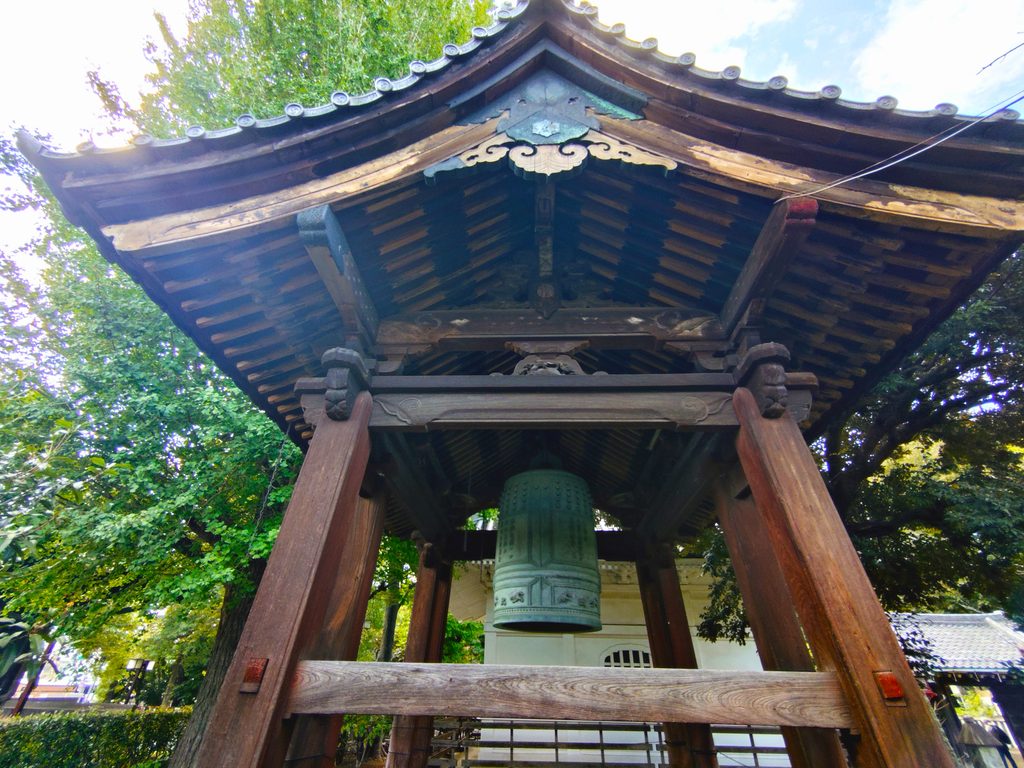
Proceeding further down the approach brings you to an atmospheric Bell Tower (Shoro). Standing quietly amidst the lush greenery of the grounds, it plays a vital role on New Year’s Eve, ringing out Kanei-ji’s New Year’s Eve bell (Joya no Kane) alongside the bell of Kompon Chudo.
【Temizuya Purification Pavilion】Water Basin to Purify Mind and Body Before Praying
To the left after passing through the Sanmon Gate, in front of the Shoin (Aoi-no-ma), stands the Temizuya purification pavilion.
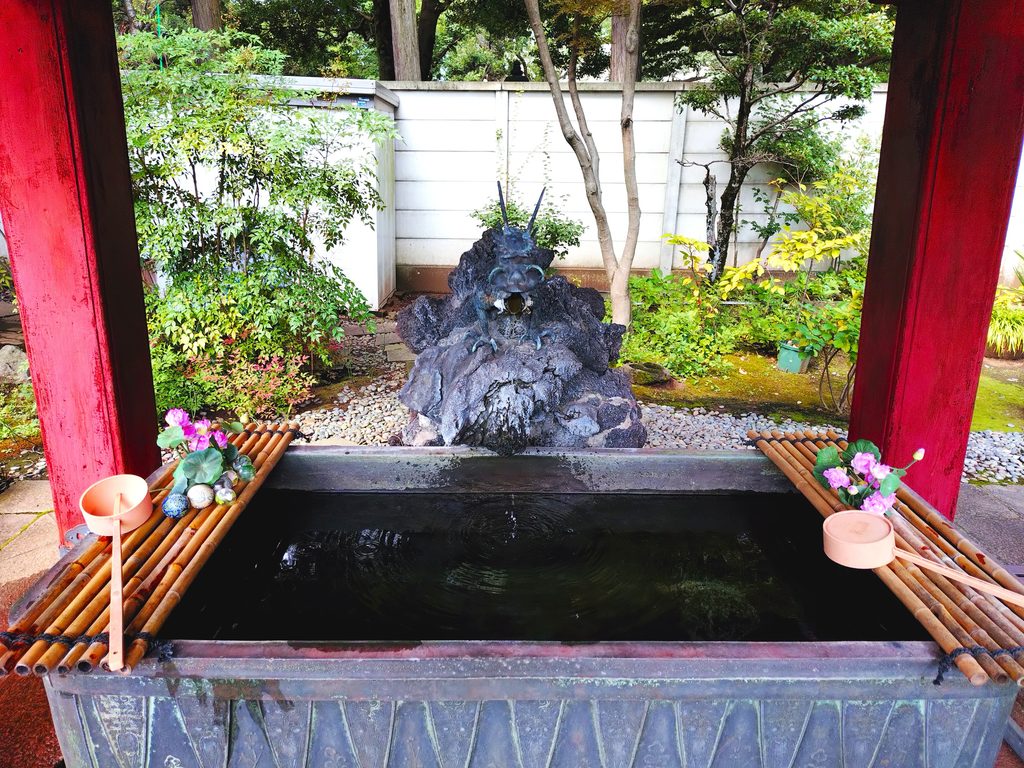
The highlight of this Temizuya is the bronze dragon statue boasting exquisite artistic craftsmanship. This dragon is a highly valuable historical relic created by Shiina Iyo-no-kami Yoshihiro, who was renowned as a top-tier master founder (artisan) retained by the Shogunate during the Edo period.
【Main Hall (Ryo-Daishi-do)】A Solemn Hall Enshrining the Spirits of the Two Masters
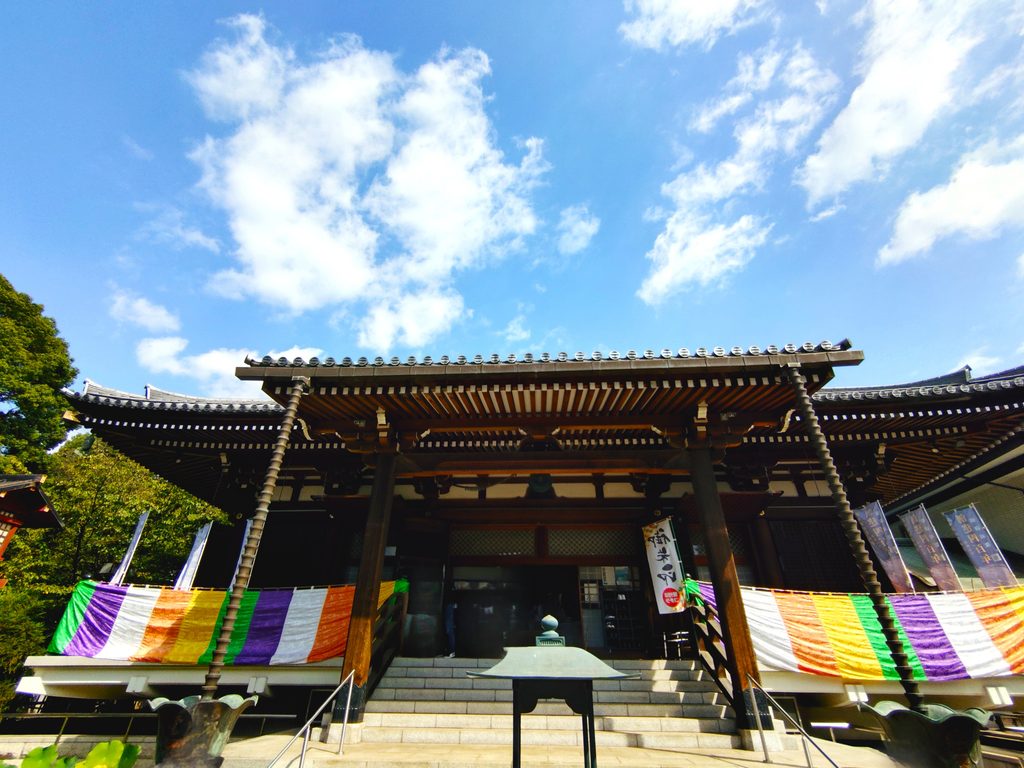
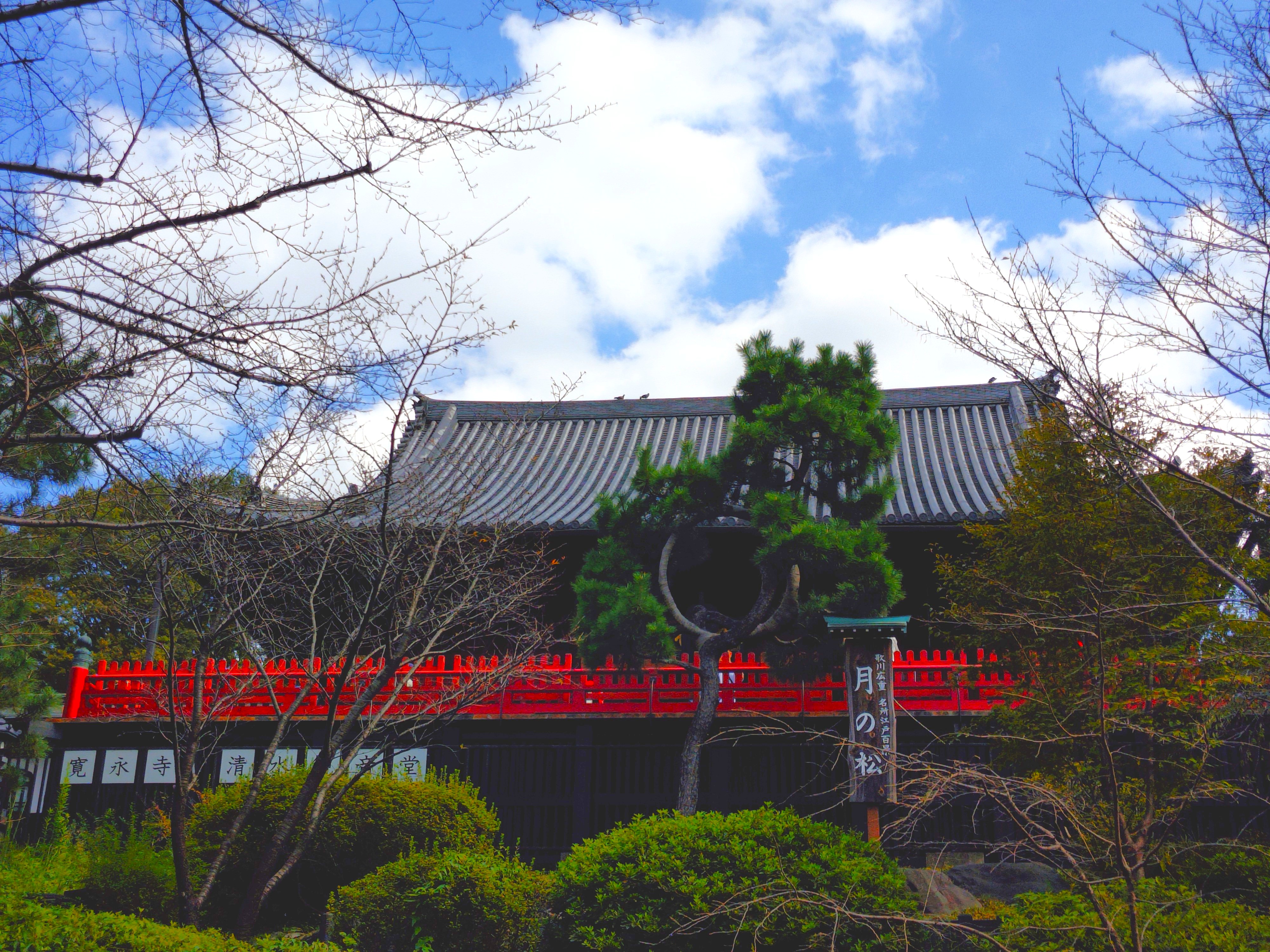
Although Kaisan-do miraculously escaped the fires of the Battle of Ueno (1868) at the end of the Edo period, the original grand hall built at its founding was destroyed by a fire in 1899 (Meiji 32). It was later rebuilt, but due to severe aging over time, it was reconstructed in 1993 (Heisei 5) into the magnificent modern structure standing today. Visitors can remove their shoes and pray inside the Main Hall.
【Toeizan Kanei-ji Kaisan-do (Former Honbo) On-Site Visit Report & Original Evaluation】
Toeizan Kanei-ji Kaisan-do (Former Honbo) On-Site Review & Evaluation Score
| Evaluation Category | Score | Key Features / Highlights |
|---|---|---|
| Accessibility | (5.0) | Prime location next to Tokyo National Museum, about a 5-minute walk from the Park Exit of JR “Ueno Station” and about a 7-minute walk from the South Exit of JR “Uguisudani Station.” |
| History & Heritage | (4.0) | Founded in 1644 (Shoho 1). A historic sacred site where Abbot Tenkai and Ganzan Daishi are enshrined—known as “Ryo-Daishi”—and where Kanei-ji’s main head quarters (Honbo) was formerly located. |
| Tranquility | (2.0) | Located right next to Tokyo National Museum and facing a major arterial road in Ueno Park’s cultural zone, creating a lively environment with many visitors and passersby. |
| Nature & Scenery | (2.0) | An orderly urban temple layout lined with the Former Honbo Front Gate (Former Honbo Site) and Amida-do Hall. While greenery is limited, historical architecture stands out prominently. |
| Scale & Grounds | (2.0) | A compact temple grounds arrangement bringing together Kaisan-do (Ryo-Daishi-do), Amida-do Hall, the Temizuya, and the Former Honbo Front Gate (Black Gate) of the Rinnoji Monzeki site. |
| Goshuin Variety | (2.0) | Standard Goshuin of Kaisan-do showcasing striking calligraphy of “Ryo-Daishi (Jikei Daishi / Jigan Daishi)” as well as Goshuin for Amida Nyorai are issued. |
【On-Site Report | Personal Impressions and Atmosphere】
Although the grounds are compact, the density of highlights and the passion of the worshippers were high. Many visitors to Kaisan-do were trying their luck with the fortune slips (omikuji). In fact, Ganzan Daishi enshrined here is the “founder of Omikuji.” For this reason, the Omikuji here differs from typical modern ones, preserving the traditional ratio where “a bad fortune (Kyo) appears with a fairly high probability.” The grounds were filled with the lively voices of worshippers reacting to their fortune results. Even if you draw a “Kyo” (Bad Fortune), it serves as a gracious piece of advice from the Great Master: “Things cannot get any worse than this, so stay focused.” When visiting here, joining the crowd to draw this authentic Omikuji is highly recommended. It was a wonderful hall overflowing with energy, where past history and modern prayers intersect pleasantly.
【Nearby Sightseeing Spots to Visit Together】
Moto-Mishima Shrine, Ono Terusaki Shrine, Tokyo National Museum, Ueno Toshogu Shrine, Hanazono Inari & Gojo Tenjin Shrine, Shinobazu Pond Bentendo, Toeizan Kanei-ji Temple



【Basic Information & Access】
【Access by Train / Car and Parking】
*No parking available.
14-5 Ueno Park, Taito Ward, Tokyo 110-0007