 Kanata's Japan Shrine Guide

【Overview of Kongosan Shofuku-ji Temple】
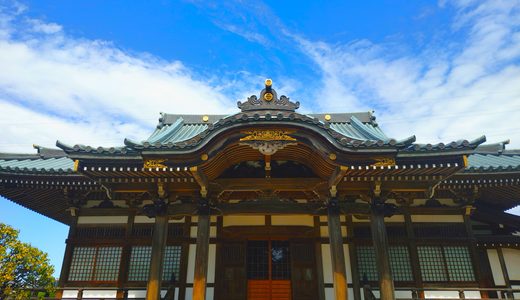
Located in Higashimurayama City, Tokyo, Kongosan Shofuku-ji Temple (Kongosan Shofuku-ji) is an ancient temple of the Rinzai Sect Kencho-ji School housing the “Jizo-do” (Sentai Jizo-do Hall), the only wooden National Treasure building in Tokyo. Originating from the legend of Hojo Tokimune—the regent of the Kamakura Shogunate—recovering from a serious illness, its history is marked by Muromachi-period architecture miraculously preserved into modern times.
【History & Origins】An Ancient Rinzai Sect Temple Housing Tokyo’s Only Wooden National Treasure Building
According to temple legend, it was founded in 1278 (Koan 1) during the mid-Kamakura period. Furthermore, the National Treasure “Jizo-do Hall,” the iconic symbol of the grounds, was erected later in 1407 (Oei 14).
When Hojo Tokimune, the 8th regent of the Kamakura Shogunate, visited Higashimurayama for hawking, he fell suddenly and critically ill. That night, Jizo Bosatsu (Ksitigarbha) wearing yellow robes appeared at Tokimune’s bedside in a dream and granted him a single pill. Upon waking, Tokimune was completely cured. Deeply grateful for this divine miracle, Tokimune worshipped Jizo Bosatsu and invited master carpenters from Hida to construct a full temple complex (garan) centered around the Jizo-do Hall. For this reason, the Hojo family crest, “Mitsu-uroko” (Three Scales), can still be seen in various places today, including the Main Hall. Although it remained largely unknown to the general public for a long time, an investigation by the Tokyo Metropolitan Government in 1927 (Showa 2) recognized its architectural beauty and historical value, leading to its official designation as a “National Treasure.”
【Main Image & Divine Blessings】Blessings of Good Health and Longevity Brought by Jizo Bosatsu
The principal image enshrined at Kongosan Shofuku-ji Temple is Senju Sengen Kanzeon Bosatsu (Thousand-Armed, Thousand-Eyed Avalokitesvara).
The main divine blessings include fulfilling all wishes (wish fulfillment), marital harmony, avoiding difficult childbirth / safe delivery, and protection against insect poisons. Kannon is believed to overlook no person’s suffering, extending a helping hand with a thousand arms and a thousand eyes, and is worshipped for granting every worldly desire.
The divine blessings of the National Treasure Jizo-do Hall (Sentai Jizo-do) include recovery from illness (dispelling severe illness), child-rearing / child memorial services, warding off evil, and fire prevention.
Ever since the origin story (the Legend of the Pill) in which Regent Hojo Tokimune instantly recovered from a sudden illness using a pill granted by Jizo Bosatsu, the temple has been devoutly worshipped since ancient times as an “O-Jizo-sama that cures severe illness.” Inside the Jizo-do Hall, approximately 900 small wooden Jizo statues, each about 30 cm tall, are dedicated.
【Highlights & Key Spots】
【Sanmon Gate】Shofuku-ji’s Front Gate Leading to the Tranquil Grounds
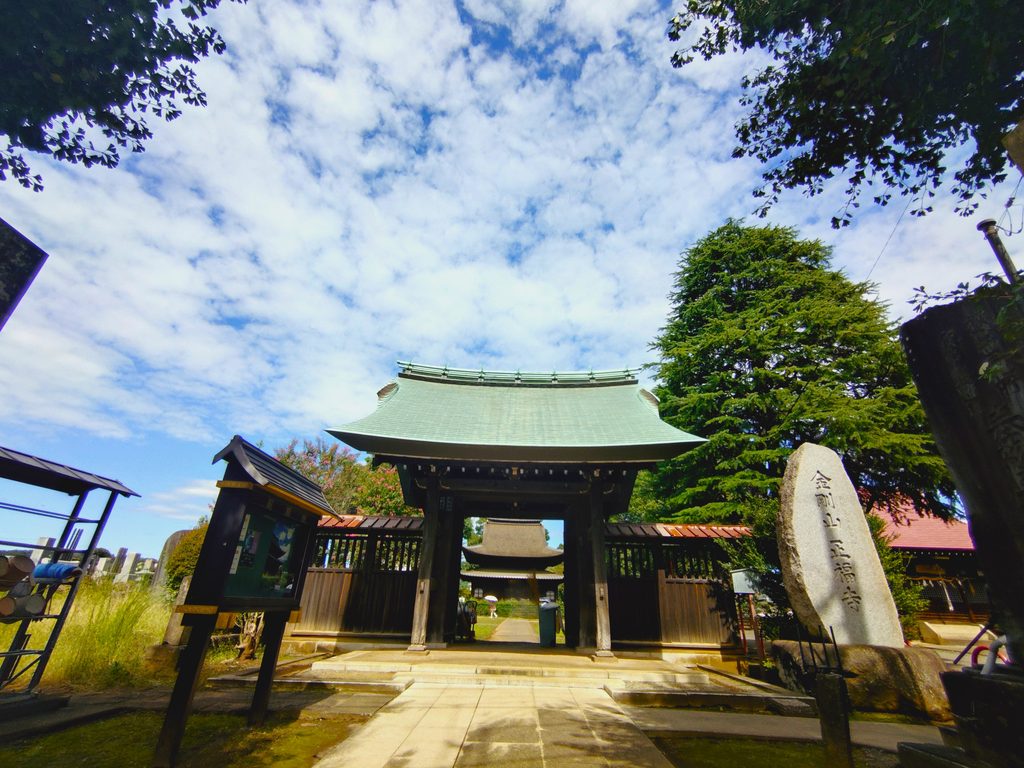
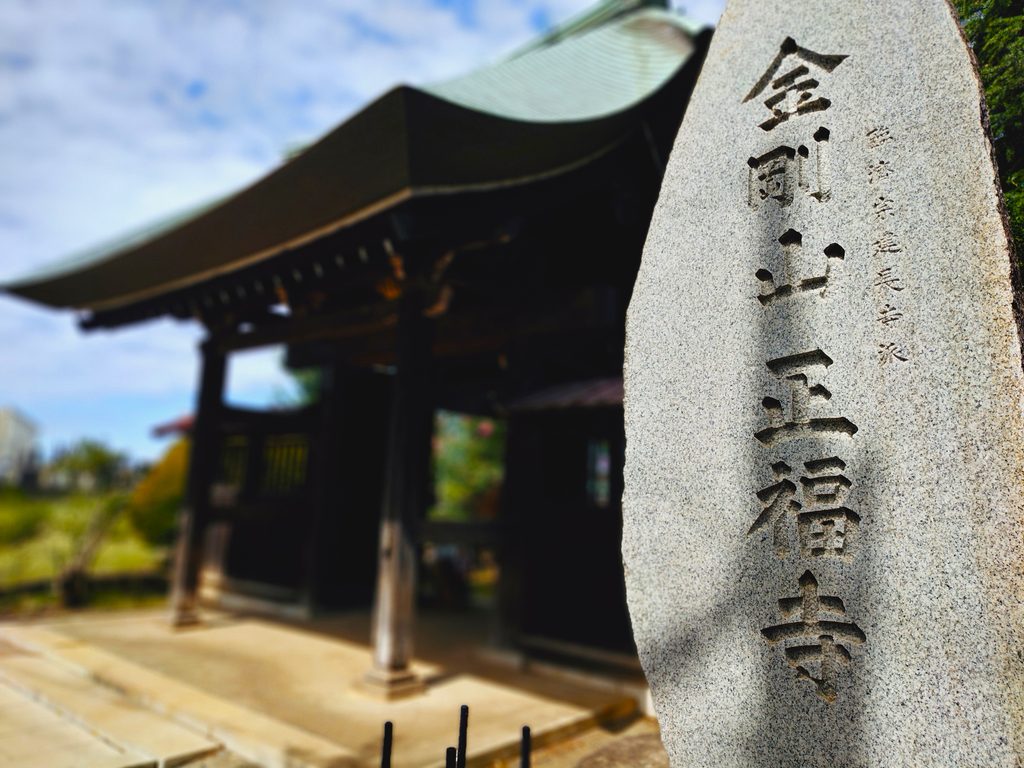
Standing at the entrance of the grounds, this stately wooden gate was erected in 1701 (Genroku 14) during the mid-Edo period. It has been designated as a Municipal Tangible Cultural Property as an important structure conveying the layout of Shofuku-ji’s temple complex (garan) during the mid-Edo period.
【National Treasure: Jizo-do Hall (Sentai Jizo-do)】Tokyo’s Only Wooden National Treasure Conveying Zen-Style Architecture of the Muromachi Period
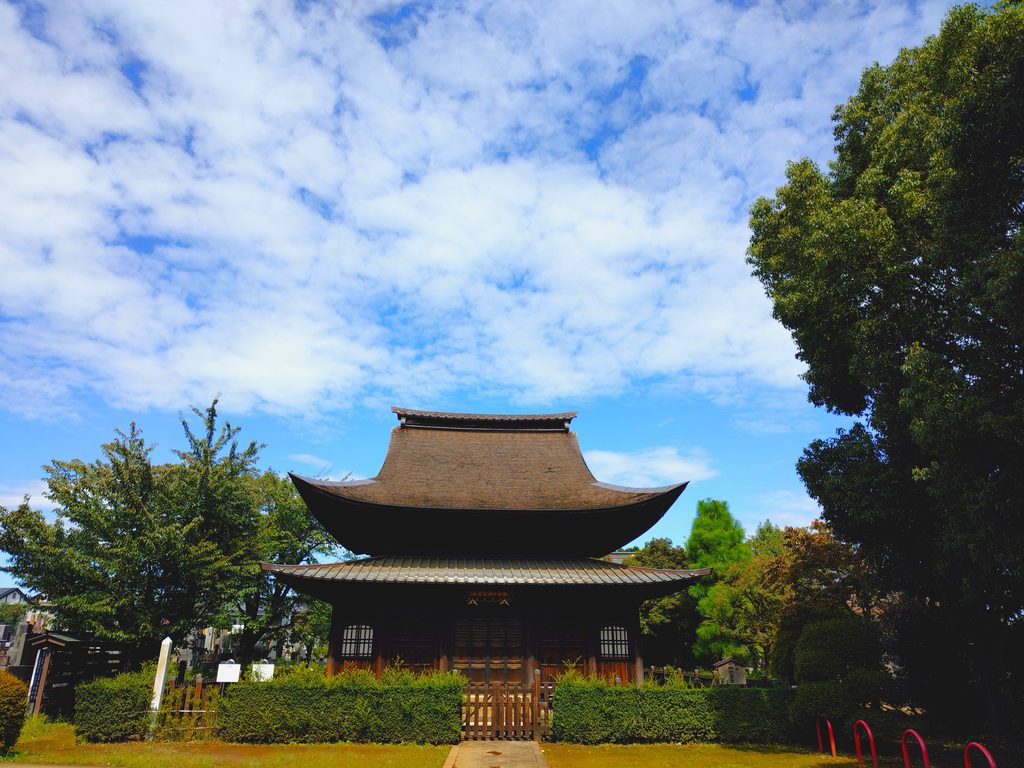
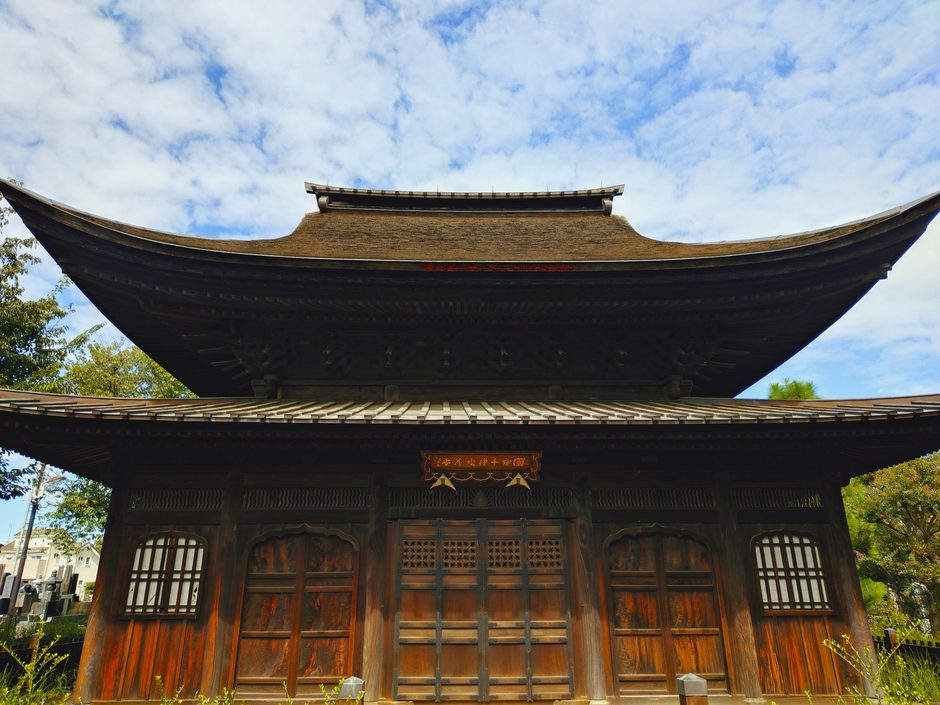
Proceeding down the approach, the National Treasure Jizo-do Hall—the symbol of Shofuku-ji—stands on the left side of the grounds. Built in 1407 (Oei 14) during the Muromachi period, it is Tokyo’s only wooden National Treasure building. Visitors can appreciate the architectural beauty of authentic “Zen-shu-yo” (Tang style)—featuring an upturned thatched-style roof, wave-like curved “Namiko-ranma” (wavy transoms), and “Kato-mado” (pointed arch windows) lined with thin vertical wood pieces—from 360 degrees, standing alongside the Shari-den of Engaku-ji Temple in Kamakura.
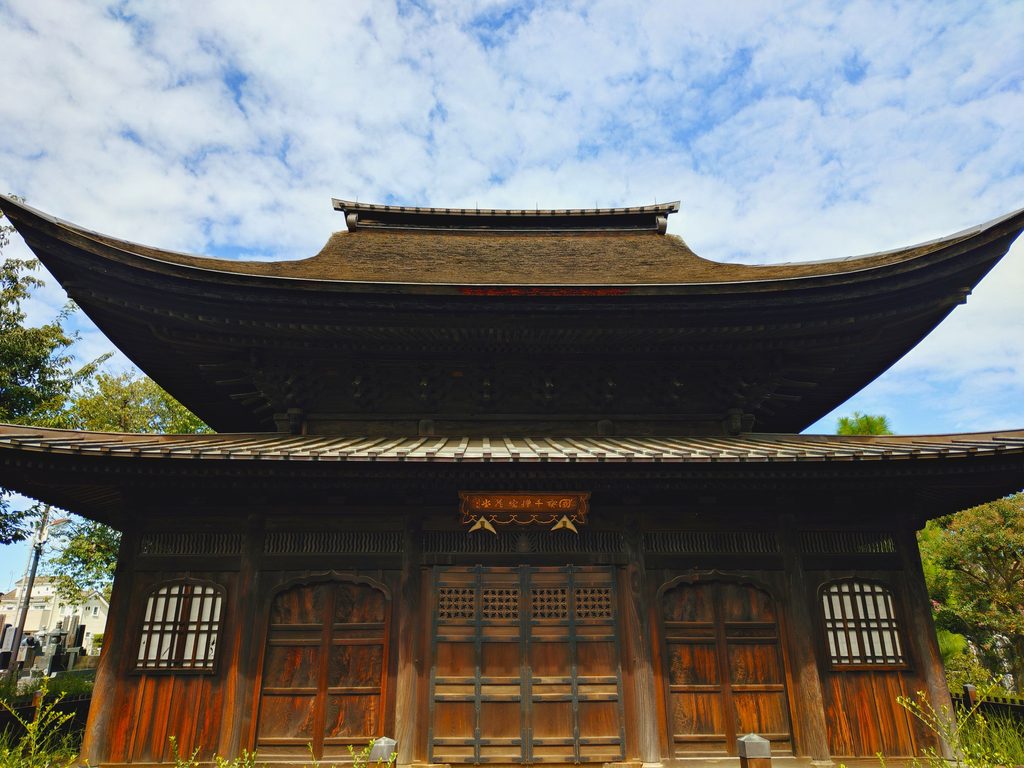
Many historic wooden structures tend to mix in styles from different eras due to later repairs. However, Shofuku-ji’s Jizo-do Hall preserves its original 1407 (Muromachi period) design and techniques in an almost pure state. With no unnecessary modifications or flashy coloring added in later years, the master craftsmanship from 600 years ago remains as if frozen in time. While unpretentious, the more closely you observe it, the more the stripped-down Zen spirit (wabi-sabi) comes through—making it truly a “connoisseur’s National Treasure.”
【Stone Statues on the Grounds】Thirteen Buddhas Stone Statues and Seated Kanzeon Bosatsu Statue Along the Approach
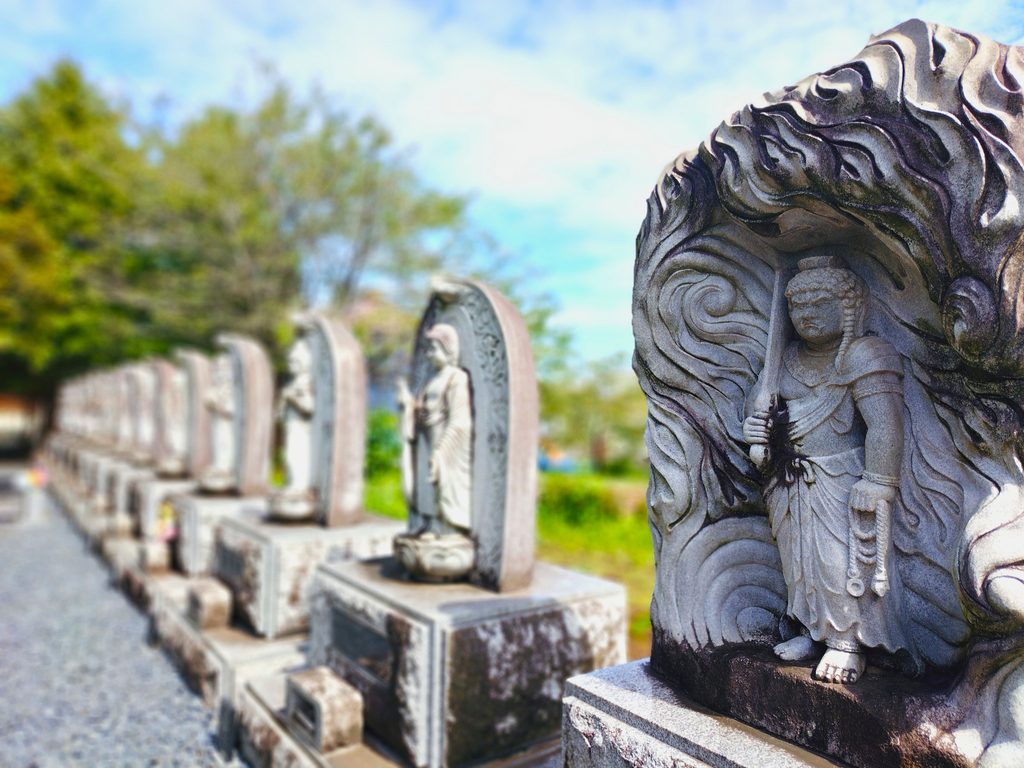
Lined up along the right side of the path from the approach to the Main Hall, the “Thirteen Buddhas (Jusanbutsu) Stone Statues” depict the 13 Buddhas and Bodhisattvas who preside over the afterlife and conduct trials in the underworld after a person passes away. These relatively new stone statues were erected and dedicated in 2006 (Heisei 18) to commemorate the 730th anniversary of Shofuku-ji’s founding.
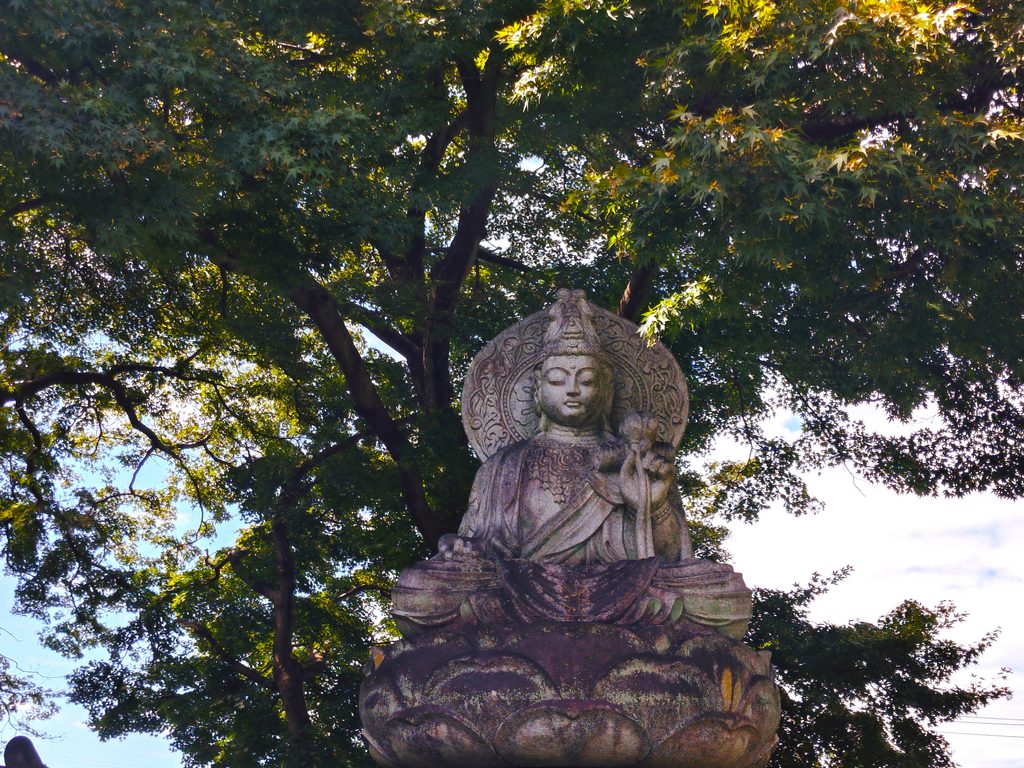
Also enshrined along the approach to the Main Hall is a Peace Kannon statue known as the Seated Statue of Kanzeon Bosatsu. Erected in 1988 (Showa 63), this statue was dedicated to commemorate the crew members of a US Military B-29 bomber who died when their plane crashed in Higashimurayama during World War II (essentially the “enemy soldiers” at the time) and to pray for world peace.
【Main Hall】The Main Hall Welcoming Visitors in Solemn Splendor
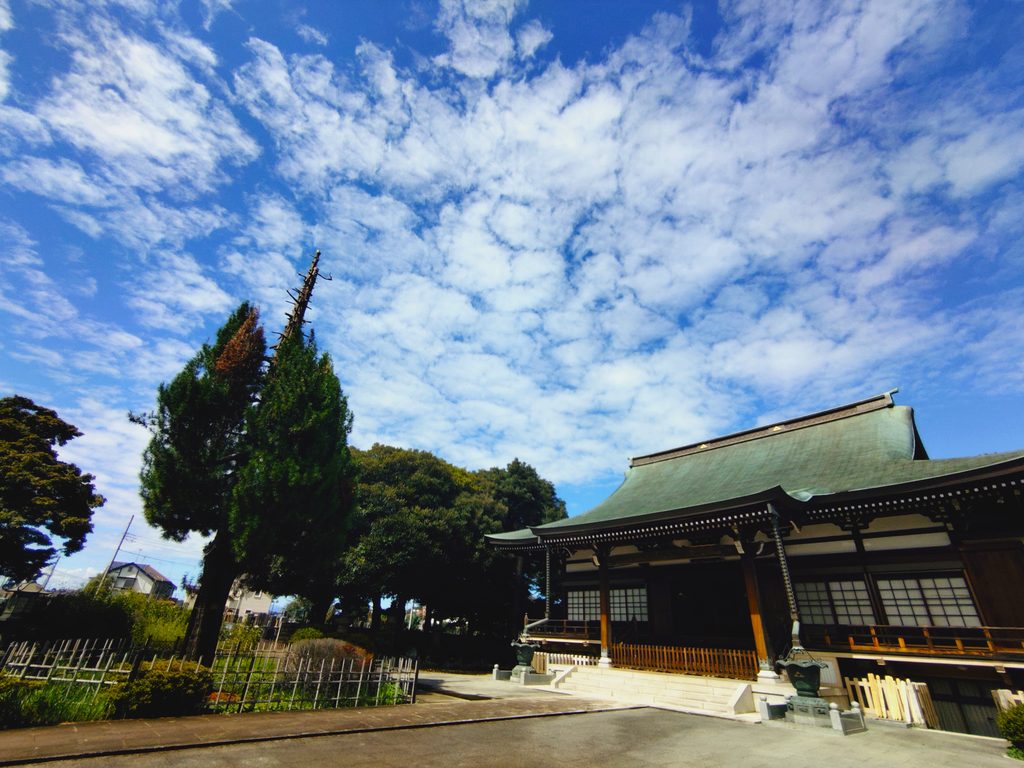
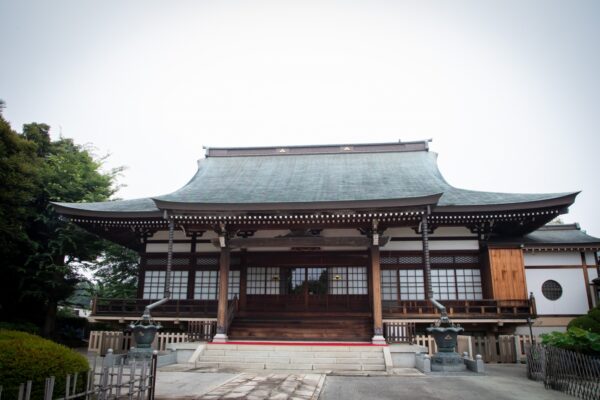
Standing grandly at the end of the approach path is Shofuku-ji’s Main Hall (Hondo). Having once been destroyed in a fire during the Edo period (1662), the current building was later reconstructed. Enshrining the principal image, Senju Sengen Kanzeon Bosatsu, it serves as the central hub for daily services and prayers by parish members. Crests of the Hojo family, “Mitsu-uroko” (Three Scales), can also be seen here.
【Shofuku-ji Yasaka Shrine】A Shrine Within the Grounds Conveying the History of Shinto-Buddhist Syncretism
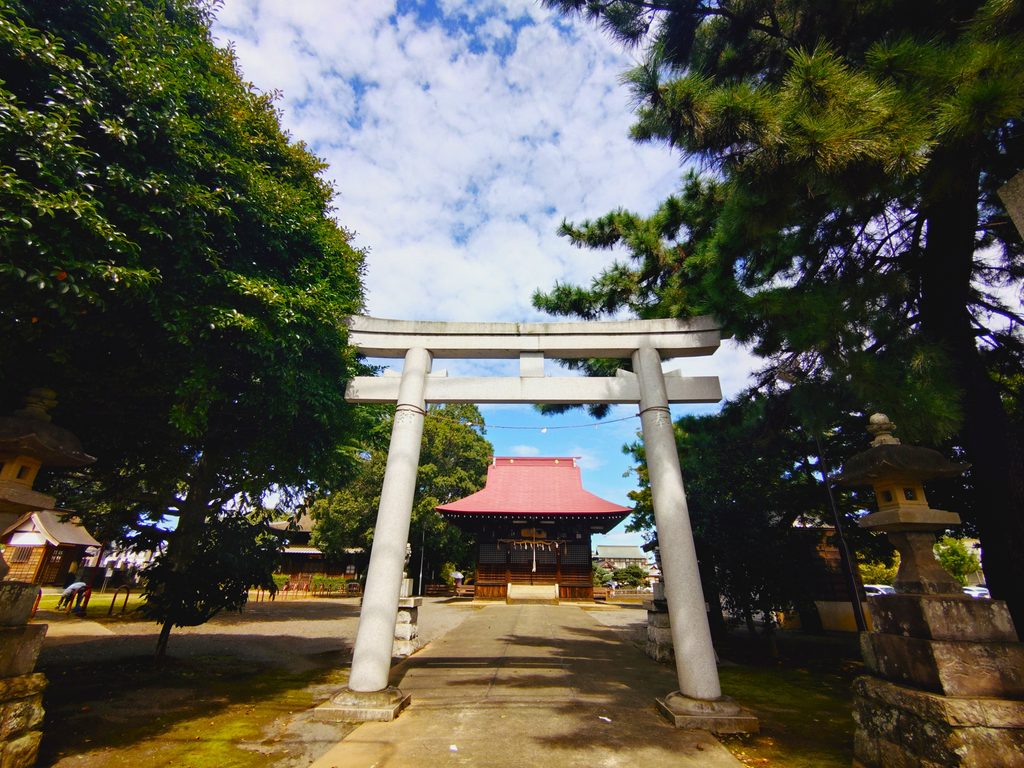
During the era when Japan worshipped Shinto deities and Buddhist figures together (Shinbutsu-shugo), shrines were commonly built inside temple grounds to protect the temples. This Yasaka Shrine also originated when it was consecrated (kanjo) on the grounds during the Kamakura period (or Muromachi period) as a tutelary shrine (chinju) to protect Shofuku-ji. At the time, it was devoutly worshipped under the names “Noguchi no Tenno-sama” or “Gozu Tenno-sha.”
【Kongosan Shofuku-ji Temple Goshuin】
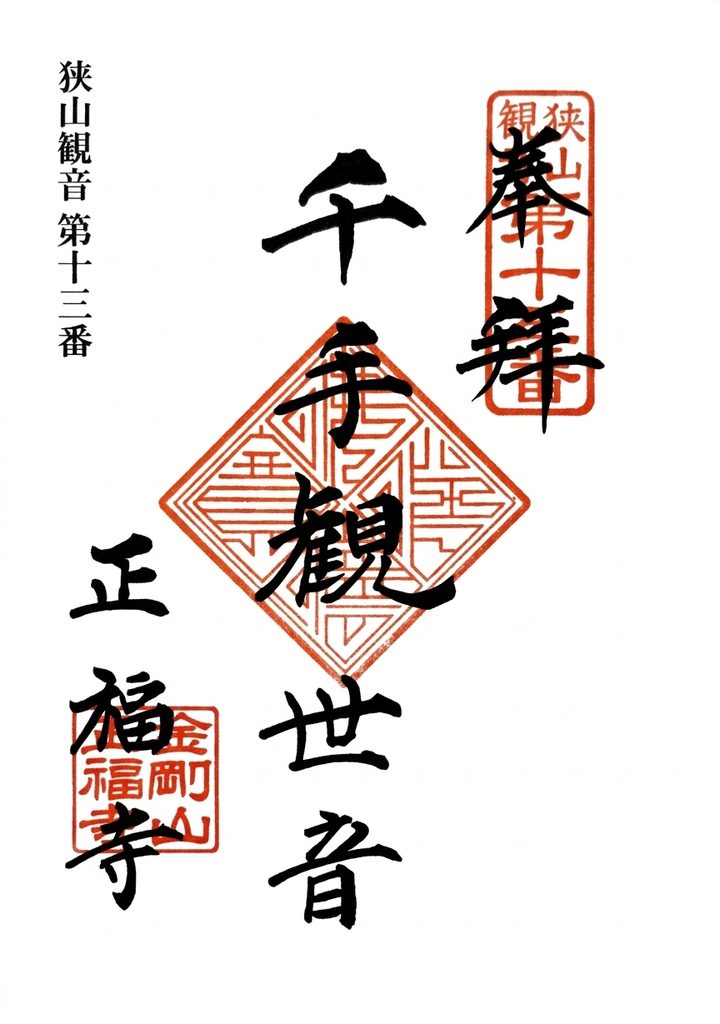
Kongosan Shofuku-ji Temple On-Site Visit Report & Evaluation
Kongosan Shofuku-ji Temple On-Site Review & Evaluation Score
| Evaluation Category | Score | Key Features / Highlights |
|---|---|---|
| History & Heritage | (4.5) | A historic temple housing the “Jizo-do (Sentai Jizo-do Hall),” Tokyo’s only wooden National Treasure building, conveying Kara-yo (Zen-style) architecture of the Muromachi period to the present day. |
| Tranquility | (4.0) | Tucked away quietly in a residential neighborhood, exuding the serene and calm atmosphere unique to an ancient temple removed from the hustle and bustle. |
| Accessibility | (3.5) | About a 12–15 minute walk from the West Exit of “Higashi-Murayama Station” on the Seibu Shinjuku and Kokubunji Lines. A suitable walking distance to combine with exploring Higashimurayama or Mount Hachikoku. |
| Nature & Scenery | (3.0) | A dignified temple landscape featuring greenery surrounding the National Treasure Jizo-do Hall and a gently sloping hip-and-gable (Irimoya-zukuri) roof. |
| Scale & Grounds | (3.0) | While the grounds are compact, key features like the Main Hall, National Treasure Jizo-do, Bell Tower, and Higashimurayama Seven Lucky Gods (Hoteison) are neatly arranged. |
| Goshuin Variety | (2.0) | Mainly offers standard Goshuin such as the principal deity and the Higashimurayama Seven Lucky Gods (Hoteison). Planning a visit around public viewing days (like the Jizo Festival on Nov 3) is recommended. |
【On-Site Report | Personal Impressions and Atmosphere】
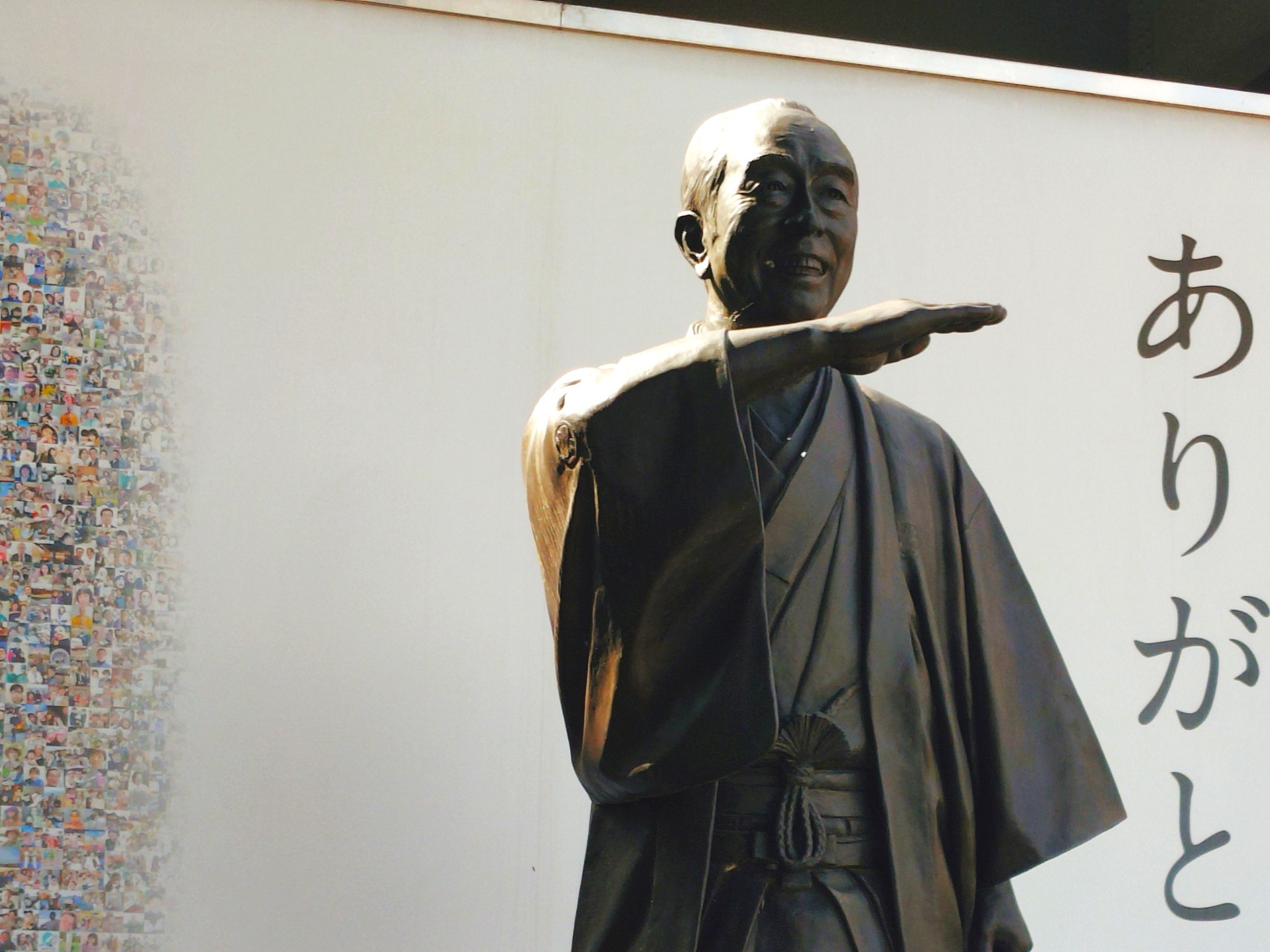
Kongosan Shofuku-ji Temple in Higashimurayama City, Tokyo, is a historic temple tucked quietly away in a residential area. While it lacks the flashy grandeur of Kyoto or Nara, it boasts the “Jizo-do Hall,” Tokyo’s only wooden National Treasure building. Visiting Shofuku-ji alone might yield a lower satisfaction score on its own, but since Higashimurayama City is also the hometown of the famous comedian Ken Shimura, combining a historical stroll through the temple with a “sacred pilgrimage tracing Ken Shimura’s roots” makes for a great trip.
【Nearby Sightseeing Spots to Visit Together】
Statue of Ken Shimura, Baigan-ji Temple (Higashimurayama City)
【Basic Information & Access】
【Access by Train / Car and Parking】
*Free parking available
4-6-1 Noguchicho, Higashimurayama City, Tokyo 189-0022