 Kanata's Japan Shrine Guide

【Overview & History of Kikuta Shrine】
Located in Tsudanuma, Narashino City, Chiba Prefecture, Kikuta Shrine (Kikuta Jinja) was formerly known as “Kukuda Daimyojin.” An ancient shrine boasting roughly 1,200 years of history since its founding in the Heian period, it has recently gained massive buzz—especially on social media—for its unique guardian lion-dog statues nicknamed the “Aiiin Komainu” and its colorful monthly-changing Goshuin stamps, making it a popular power spot attracting many worshipers even from afar.
【History & Origins】An Ancient Shrine Founded in the Konin Era of the Early Heian Period Watching Over the Village of Kukuda
The shrine is said to have been founded during the Konin era (810s AD) in the early Heian period. Although hard to imagine from the modern cityscape around Tsudanuma Station today, an inlet of Tokyo Bay once extended deeply into this entire area. According to ancient legend, the current grounds of Kikuta Shrine were originally a small isolated island formed by accumulated sand and soil.
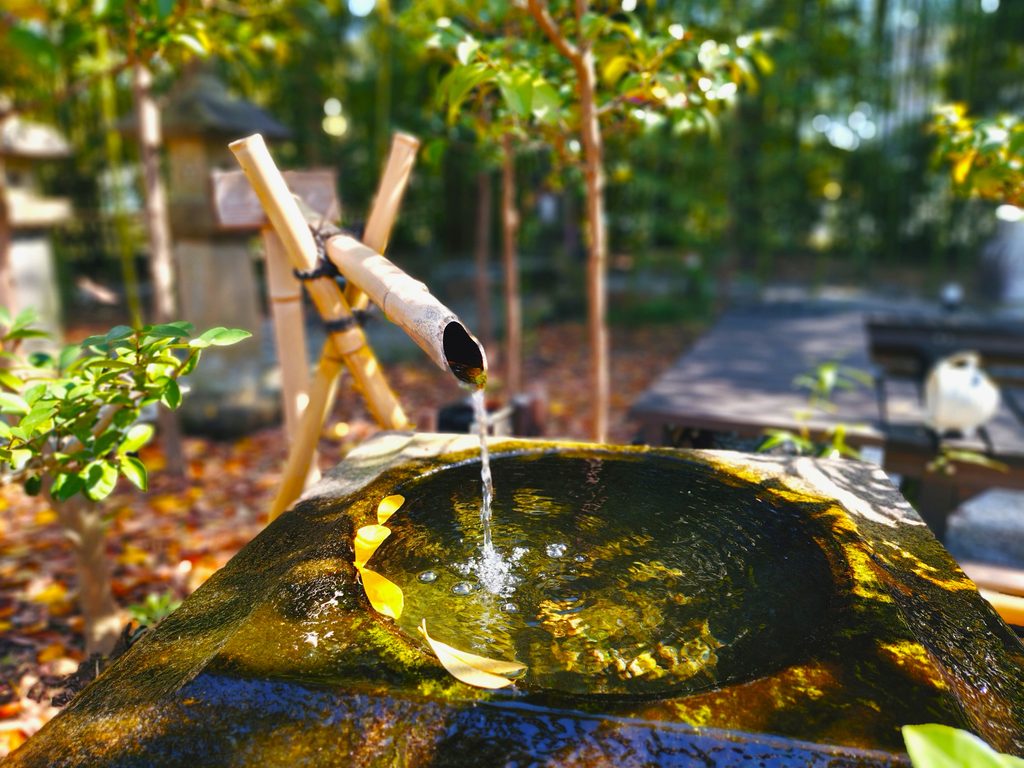
The shrine began when Onamuchi-no-Okami—another name for Okuninushi-no-mikoto—was enshrined on that island as the guardian deity of the land. People at the time called it “Kukuda Daimyojin” and deeply worshipped it as a deity of abundant harvests and matchmaking.
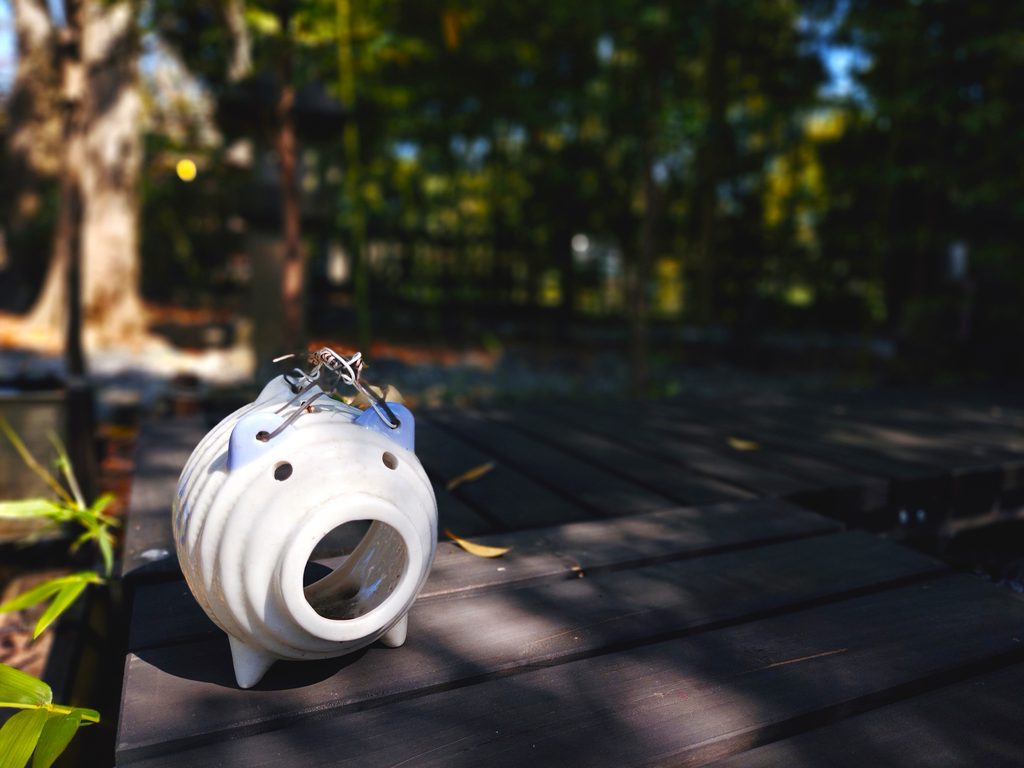
During the Jisho era (1177–1181, or 1180 according to one account), members of the Fujiwara clan—including Fujiwara no Morotsune and Moronaga—were caught up in late-Heian political turmoil and exiled (demoted) to Shimousa Province. Attempting to cross the sea by boat from Sagami Province (present-day Kanagawa Prefecture), they encountered violent seas in Tokyo Bay (Sodegaura) and faced mortal peril. Desperately searching for calm waters, they suddenly saw before them the inlet of Kukuda-ura and a small island (present-day Kikuta Shrine). Safely making landfall, the clan wept with gratitude, believing that “we survived that ferocious storm because the deity enshrined on this island hid and protected us from the curse of Lord Sugawara no Michizane.” Choosing this land as their final home (a place of peaceful settlement), they simultaneously enshrined the spirit of their ancestor, Fujiwara no Tokihira, alongside the local deity—praying that “by having the powerful Izumo deity who saved our lives embrace Lord Tokihira in His bosom, the longstanding karma and curse involving Lord Michizane will be completely severed, allowing both our clan and this region to prosper peacefully from now on.”
Fujiwara no Tokihira was a top-ranking court noble (kugyo) and supreme political power holder active during the early Heian period (late 9th to early 10th century).
While widely known in history textbooks as “the villain who schemed to exile Sugawara no Michizane to Dazaifu,” he was also an ultra-elite statesman who rose to the pinnacle of government at a young age and accomplished numerous vital political reforms with brilliant skill. However, despite reaching the height of power as a political genius, Tokihira died of illness in 909 (Engi 9) at the remarkably young age of 39.
Following his premature death, Emperor Daigo’s Crown Prince (Tokihira’s nephew) died young in succession, and lightning struck the Imperial Palace killing many courtiers—leading society to rumor that “all of these tragedies are the curse (tatari) of the vengeful spirit of Sugawara no Michizane, who died in bitter regret.” As a result, Tokihira’s family line fell rapidly into decline.
【Enshrined Deities & Divine Blessings】Virtues of Matchmaking, Warding Off Evil, and Business Prosperity Granted by Onamuchi-no-Mikoto and Fujiwara no Tokihira
The enshrined deities are two gods: Onamuchi-no-Okami and Fujiwara no Tokihira-no-mikoto.
- Matchmaking, Marital Harmony & Ancestral Prosperity: In addition to primary deity Onamuchi-no-Okami (Okuninushi-no-mikoto) being Japan’s supreme deity of matchmaking, the shipwrecked Fujiwara clan joined hands with local residents to sustain and prosper their lineage for generations—inspiring deep faith in “forming wonderful relationships and living happily as a family forever.” Since ancient times, local lore holds that “forming a union around these parishioners leads to marital harmony, with children growing up healthy and enjoying longevity.”
- Overcoming Crises, Warding Off Misfortune & Traffic Safety: Stemming from the origin story in which Lord Tokihira’s descendants miraculously survived a violent storm in Tokyo Bay (a desperate life-or-death crisis) and landed safely, the shrine grants “the power to safely navigate life’s rough waves and difficult situations.” It also bestows strong blessings for warding off evil and travel safety.
- Business Prosperity & Academic Achievement (Improved Work Luck): Drawing upon the intellect of Lord Tokihira—a first-rate statesman and man of culture who rose to the top of politics in his twenties and led the compilation of legal codes as well as the creation of the first imperial poetry anthology (Kokin Wakashu)—the shrine brings career advancement and success in work and studies.
- Safe Childbirth & Child-Rearing: As a sanctuary that gently watches over the birth and growth of new life, many worshipers also visit for safe childbirth prayers, Shichi-Go-San celebrations, and children’s health.
*Note: Shrines enshrining Fujiwara no Tokihira as a deity are extraordinarily rare nationwide, existing almost exclusively within a narrow area of northwestern Chiba Prefecture.
【Highlights & Recommended Worship Route of Kikuta Shrine】
【Approach Path】A Quiet Pathway Inviting You Through the Grand Torii into Lush Shrine Grounds
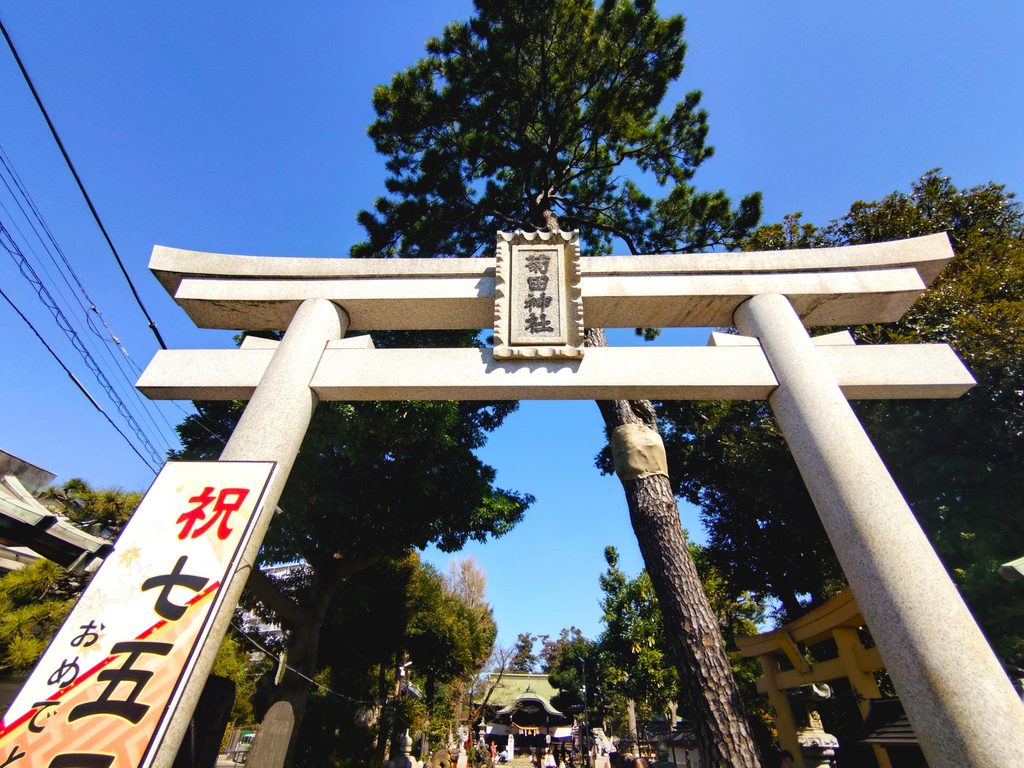
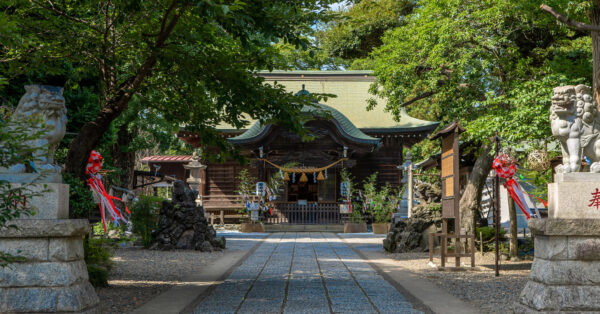
From the Torii gate to the Worship Hall, a beautifully swept, straight stone-paved approach path stretches forward. Tall, stately pine trees and greenery are planted along both sides, forming a calming green tunnel.
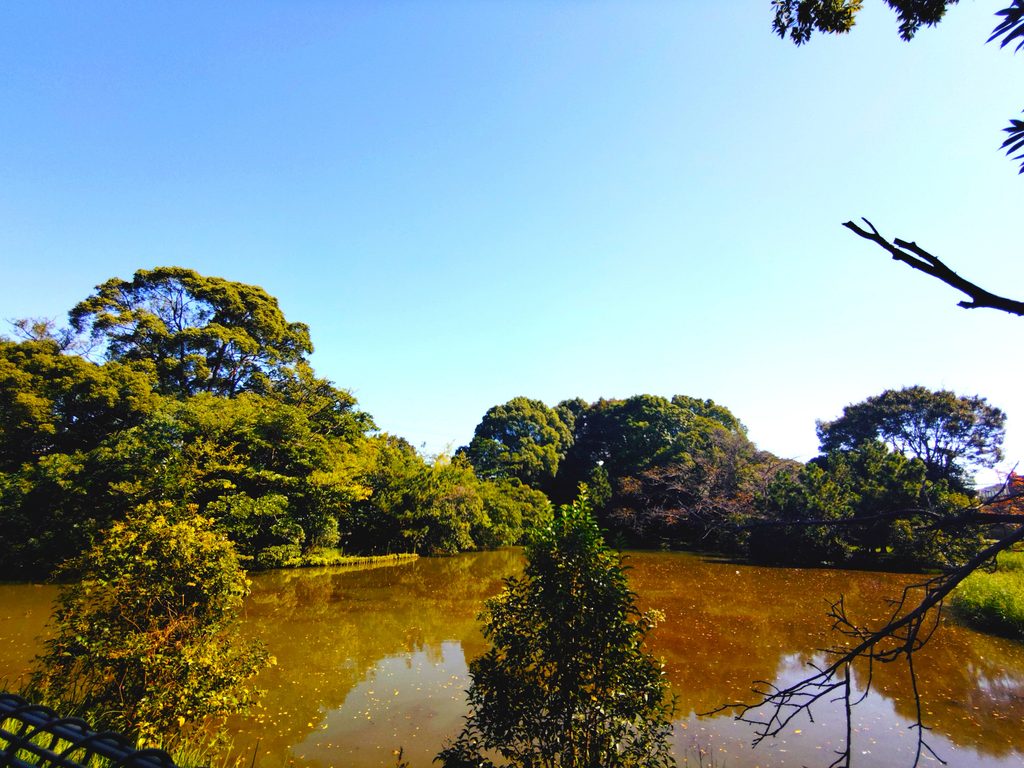
Because the large pond of Kikuta Waterfowl Park lies adjacent immediately to the left (west side) of the approach, a pleasant waterside breeze occasionally blows across the path as you walk. Through the scent of the wind and water, you can faintly sense the history of when this place was once an isolated island floating in the sea. (The surrounding area including the pond was originally part of Kikuta Shrine’s precincts and is now maintained as a public park managed by Narashino City.)
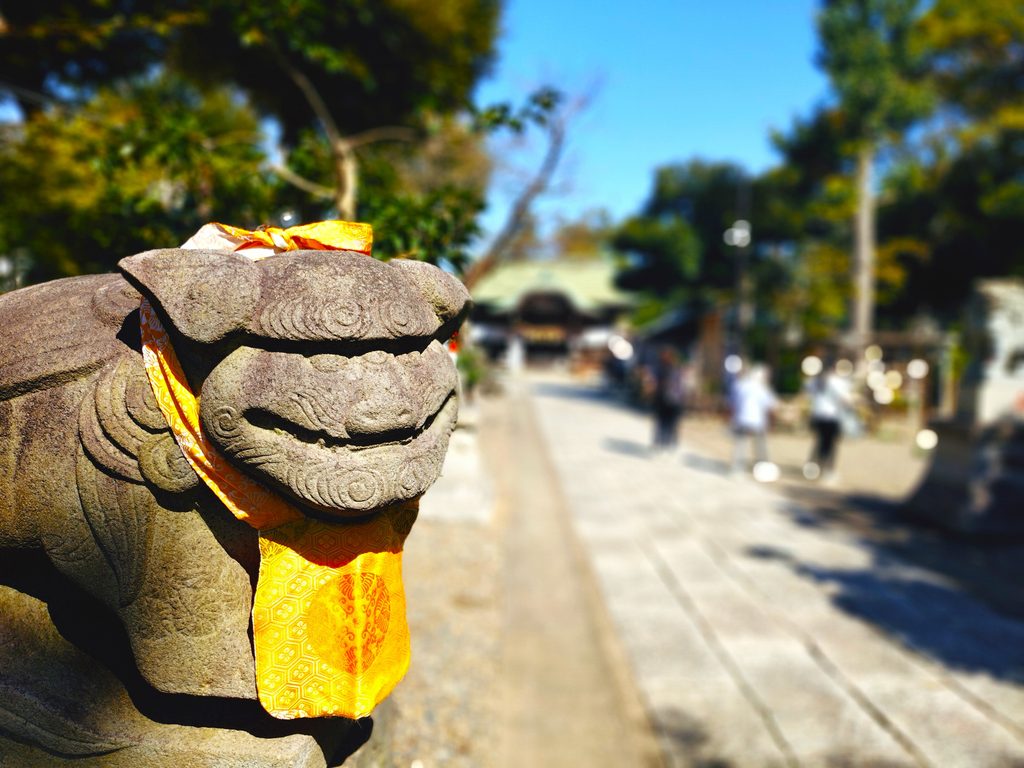
Midway along the approach, the standout symbols of the shrine are its guardian lion-dogs (Komainu). With their lower jaws jutting boldly forward, they wear charming, endearing expressions as if grinning happily with a big smile.
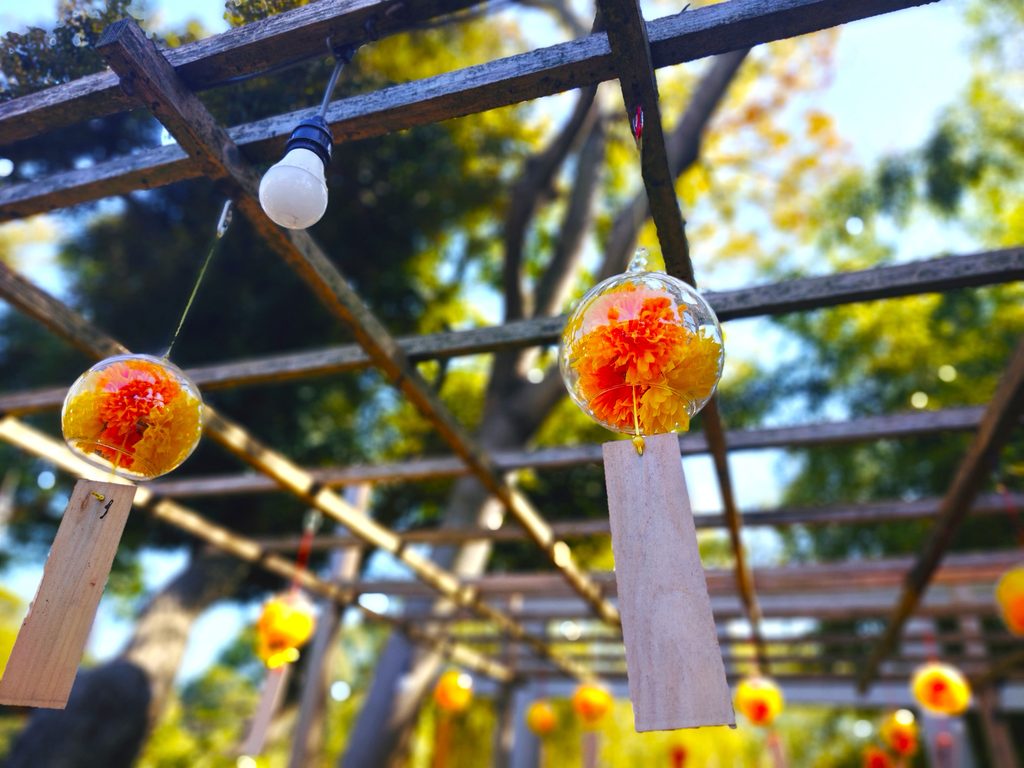
Near the ema votive plaque rack along the path leading toward Kikuta Waterfowl Park’s pond, wooden racks hung with wind chimes (furin) were set up. Decorated seasonally with wind chimes, they delight both the eyes and ears of visiting worshipers.
【Shrine Halls】A Worship Hall Where Distinctive Komainu Welcome Visitors and Gather Local Faith
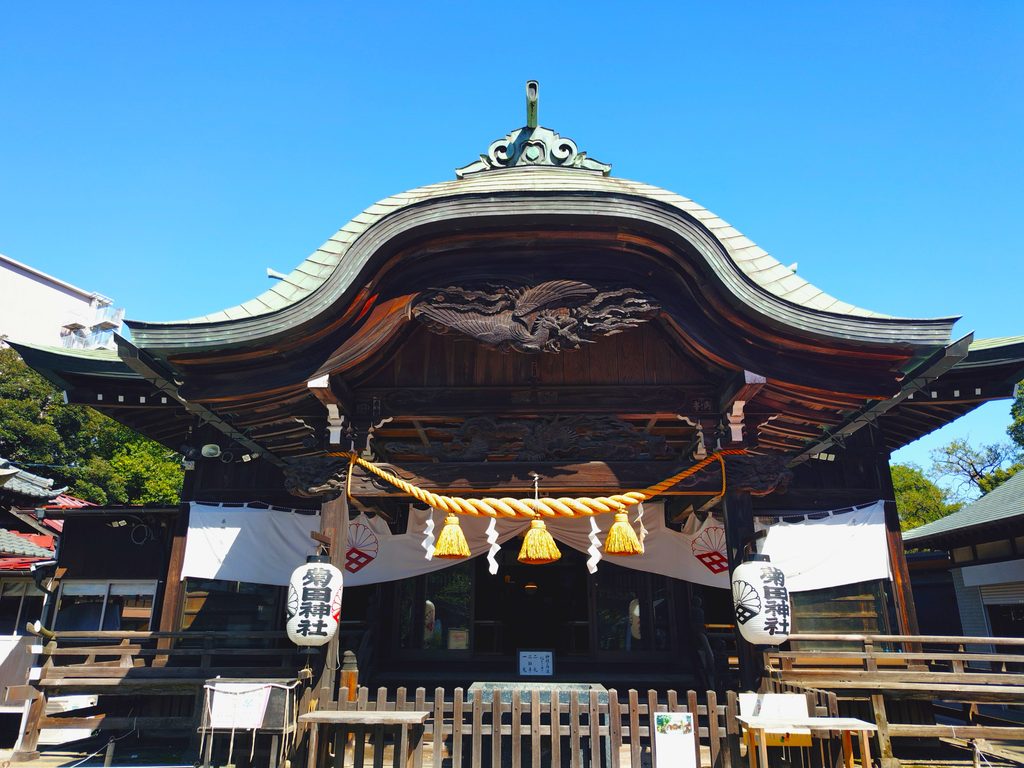
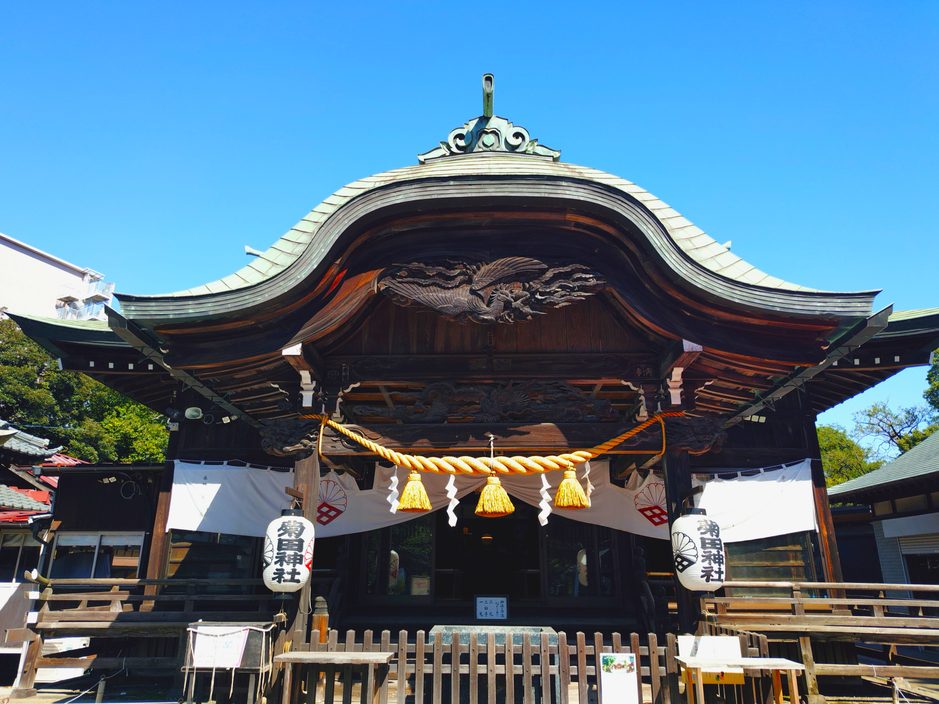
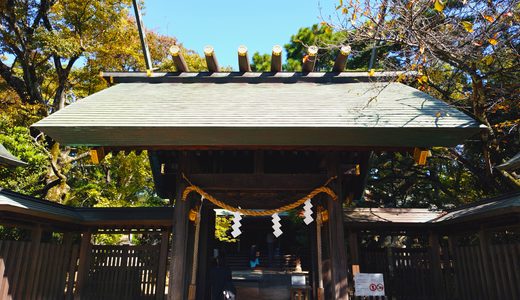
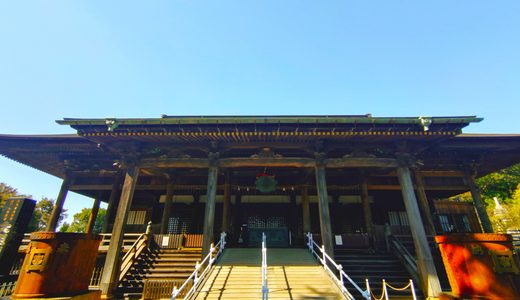
Built in 1893 (Meiji 26), the Worship Hall features an Irimoya-zukuri (hip-and-gable) roof covered with copper-plate tiles. Its rich wooden texture, seasoned over more than 130 years, exudes deep charm.
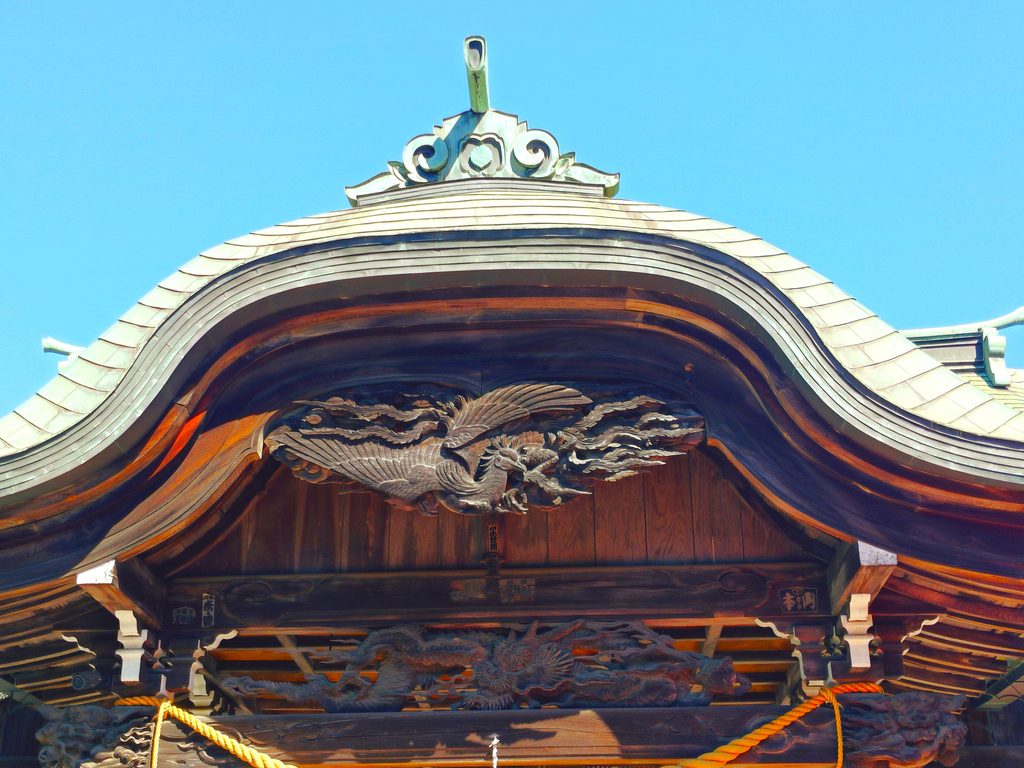
Looking directly up above the offertory box, you will find intricate wooden carvings of a highly three-dimensional Phoenix (Ho-o) and, writhing powerfully beneath it, a Dragon (Ryu). Carved in such fine detail that they look ready to spring to life at any moment, they embody the extraordinary craftsmanship of Meiji-era artisans.
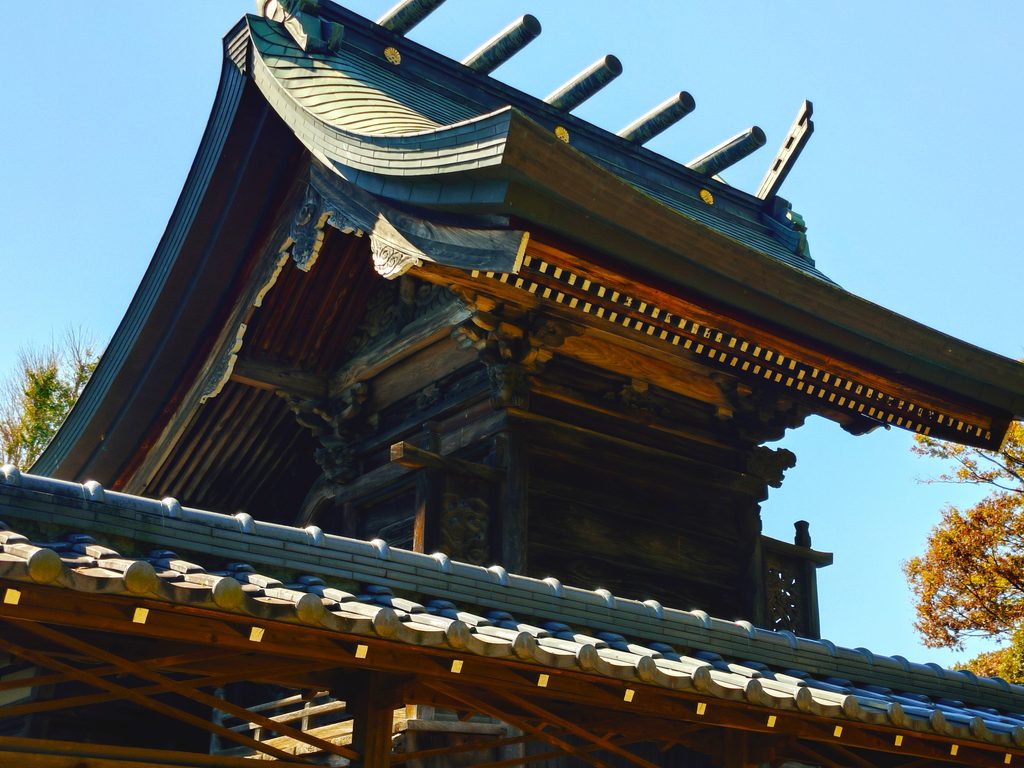
The Main Hall (Honden) located behind the Worship Hall appears to follow the Irimoya-zukuri architectural style—a substantial roof design combining a gabled upper section (resembling an open book placed face down) with a hipped lower section sloping in all four directions.
【Sub-shrine Kotohira Shrine】A Precinct Shrine for Praying for Financial Luck, Maritime Safety, and Traffic Safety
Passing through the Grand Torii gate, Kotohira Shrine (Kotohira Jinja) stands along the approach path as a small shrine with a pale cream-colored Torii gate.
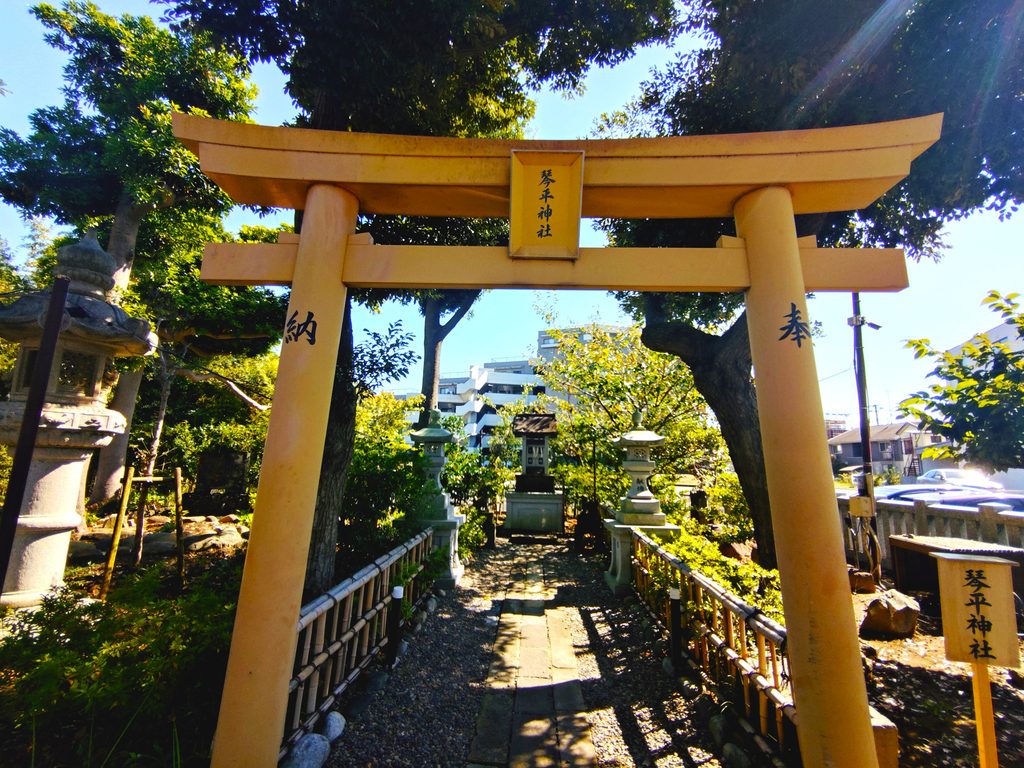
Originally, it was worshipped independently within the Tsudanuma neighborhood (around former Kukuda Village) as “Kotohira Shrine” (Konpira-san). In November 1912 (Taisho 1), during the government policy consolidating regional deities into single shrine precincts (Jinja Goshi), it was relocated onto Kikuta Shrine’s grounds alongside Yasaka Shrine and Inari Shrine to become a sub-shrine.
The enshrined deity is Omononushi-no-kami.
【Other Auxiliary Shrines (Massha)】Deeply Connected Sub-shrines Quietly Watching Over People in a Corner of the Grounds
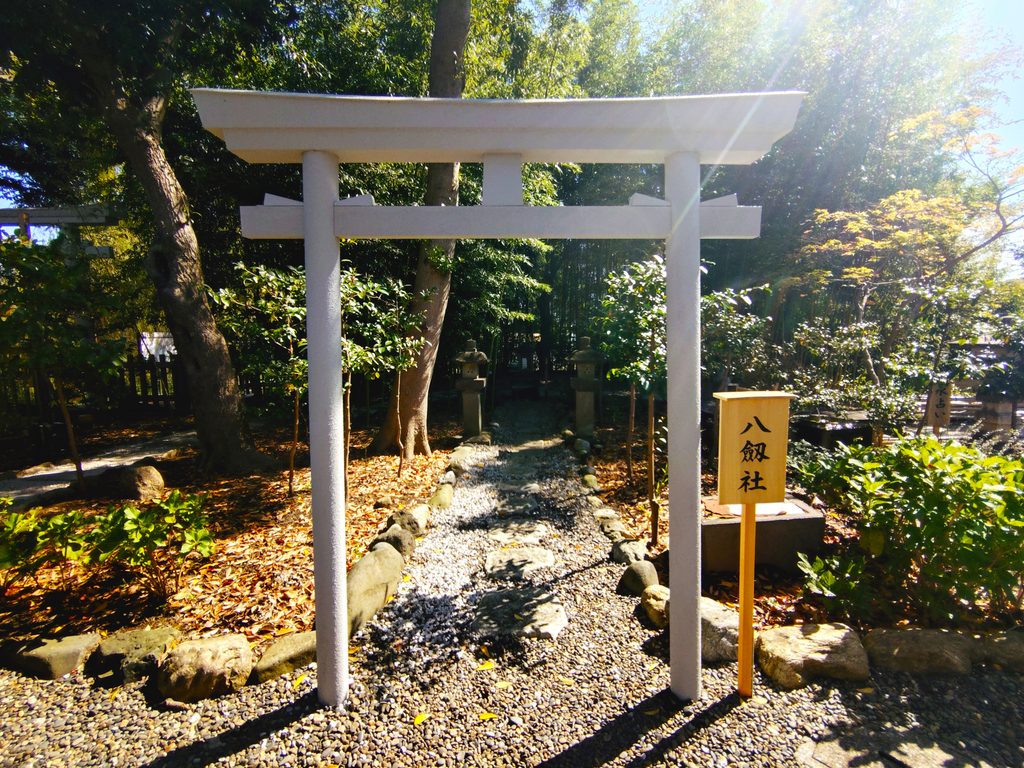
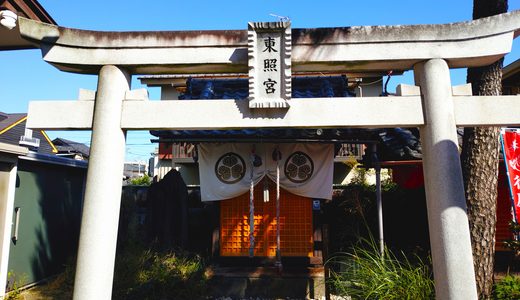
Partly due to surrounding shrines being merged here during the Taisho era, various deities stand lined up on both the left and right sides of the approach path.
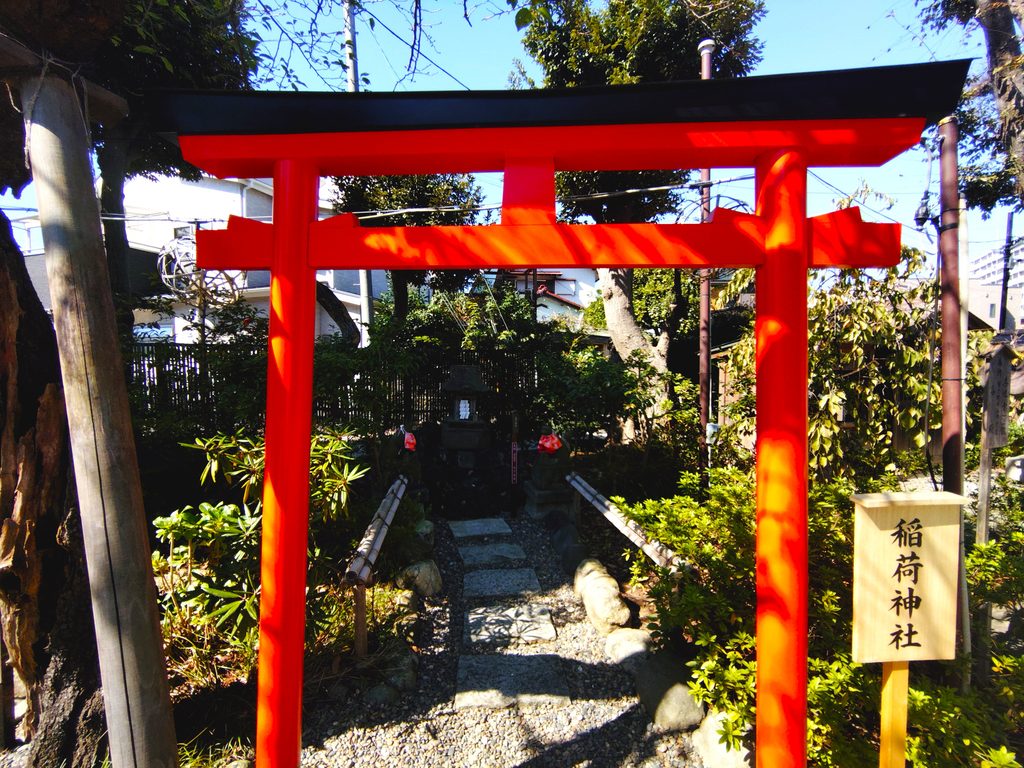
Enshrined here are Koyasu Shrine, Osugi Shrine, Inari Shrine, Yatsurugi-sha, and Mitsumine Shrine.
【Kikuta Shrine Goshuin】
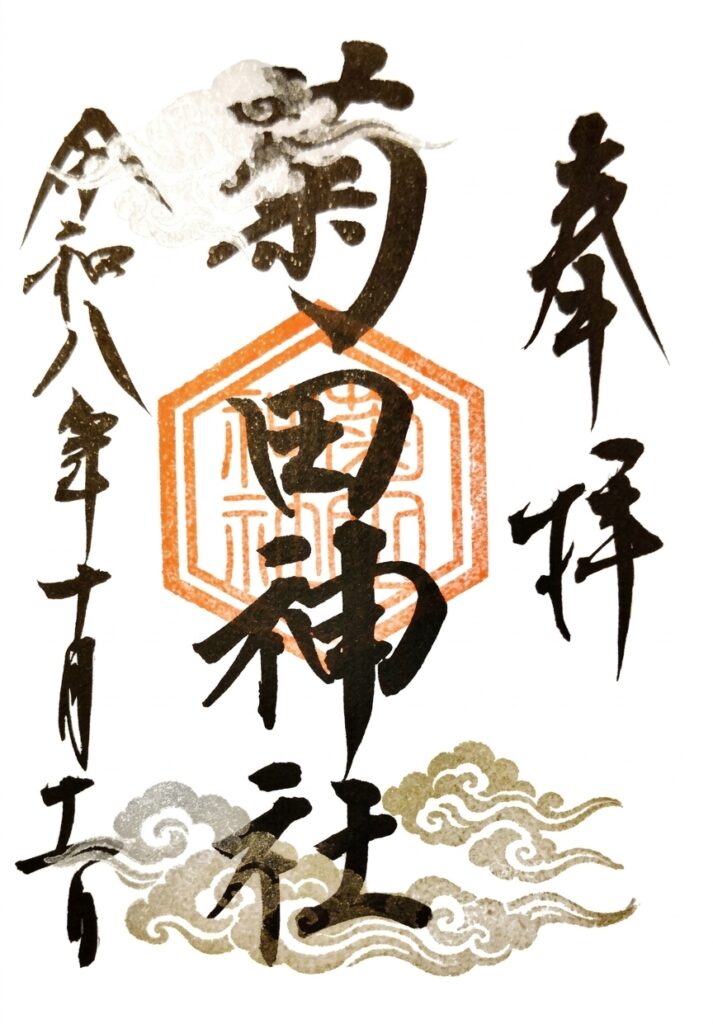
【Kikuta Shrine On-Site Visit Report & Original Evaluation】
Kikuta Shrine On-Site Review & Evaluation Score
| Evaluation Category | Score | Key Features / Highlights |
|---|---|---|
| Accessibility | (5.0) | Outstanding location, about a 3-minute walk from “Keisei-Tsudanuma Station” on the Keisei Main Line and Shin-Keisei Line, and about a 12-minute walk from JR “Tsudanuma Station” on the Sobu Line. |
| Goshuin Variety | (5.0) | Offering one of the finest selections nationwide, including illustrated Goshuin depicting the famous endearing Komainu, colorful monthly and seasonal limited-edition art stamps, and Goshuincho stamp books. |
| History & Heritage | (4.0) | An ancient shrine said to have been founded during the Konin era (810–824) in the Heian period, revered as the tutelary deity (ubusuna-gami) of the former “Kukuda Village (Tsudanuma).” |
| Nature & Scenery | (3.5) | A tranquil landscape embraced by the pond and lush trees of adjacent Kikuta Waterfowl Park, where the uniquely expressive “Aiiin Komainu” and vermilion Torii gates stand out beautifully. |
| Scale & Grounds | (3.5) | An impressive precinct featuring the Main and Worship Halls with their beautiful verdigris-patinated copper roofs, alongside a mikoshi storehouse, auxiliary shrines, strength stones (chikara-ishi), and a pair of characterful Komainu. |
| Tranquility | (3.0) | Due to its close proximity to the station and the popularity of its limited-edition Goshuin, there is a steady stream of worshipers, though a pleasant serenity lingers under the shade of trees facing the Waterfowl Park. |
【On-Site Report | Personal Impressions and Atmosphere】
Kikuta Shrine is an extraordinarily rare sanctuary nationwide enshrining Fujiwara no Tokihira—the rival who engineered Sugawara no Michizane’s downfall—preserving the legend that when Tokihira’s descendants were caught in a massive storm feared in the capital as “Michizane’s curse,” the local deity gently embraced and saved their lives.
Out of devotion to Lord Tokihira who saved their ancestors, local parishioners faithfully kept a centuries-old vow never to worship at Tenjin shrines (dedicated to Michizane) despite Tenjin’s immense nationwide popularity—a testament to the strength of their single-minded bond. Offering not only photogenic scenery that delights the eye, it was a wonderful, locally cherished shrine tightly packed with historical romance and modern charm.
【Nearby Sightseeing Spots to Visit Together】
Ohi Shrine, Funabashi Toshogu Shrine, Ninomiya Shrine, Ohara Shrine, Nakayama Hokekyo-ji Temple
【Basic Information & Access】
【Access by Train / Car and Parking】
*Free parking available.
【Address & Official Website】
3-2-5 Tsudanuma, Narashino City, Chiba Prefecture 275-0016