 Kanata's Japan Shrine Guide

【Overview & History of Funabashi Toshogu Shrine】
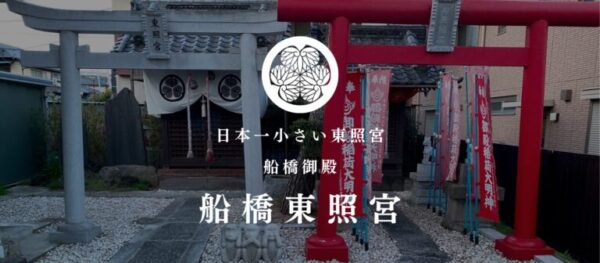
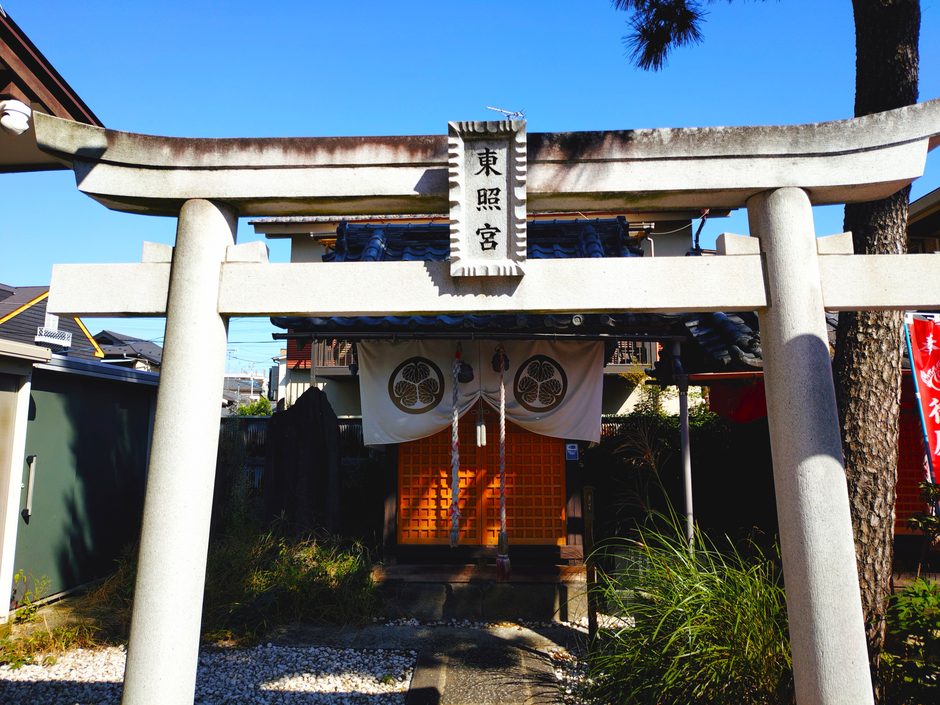
Located in Honcho, Funabashi City, Chiba Prefecture, Funabashi Toshogu Shrine (Funabashi Toshogu) enshrines Tokugawa Ieyasu as its primary deity. Tucked quietly away down a narrow alley in a residential neighborhood, it is affectionately known by its nickname, “The Smallest Toshogu Shrine in Japan.”
【History & Origins】A Historic Shrine Founded on the Former Site of Funabashi Palace to Enshrine Lord Tokugawa Ieyasu
This site was originally a dedicated Shogunate facility called “Funabashi Goten” (Funabashi Palace), built around 1614 (Keicho 19) on the orders of Tokugawa Ieyasu as a lodging and resting residence when traveling to the Togane area of Chiba Prefecture for falconry (takagari). Ieyasu actually stayed overnight at this palace. On that very night, a major fire broke out in the town of Funabashi. Local legends still pass down stories surrounding this incident, suggesting that “it may have been an arson attempt targeting Ieyasu’s life,” or that “a Shinto priest from Funabashi Daijingu rescued Ieyasu after he was shot at.” The palace remained in use until the 2nd Shogun Hidetada, after which it was abolished once falconry excursions were discontinued.
During the Jokyo era (1684–1688) in the mid-Edo period, this land was sold off to the Tomi clan, who served as Shinto priests at Funabashi Daijingu. While utilizing the former palace grounds as farmland, the Tomi clan erected a Toshogu shrine right in the center to honor Lord Ieyasu’s great achievements. This marked the beginning of present-day Funabashi Toshogu Shrine.
 Ohi Shrine (Funabashi Daijingu) [Chiba]
*Note: Rather than being built by the Shogunate, this Toshogu was established as a private shrine by a local priest out of personal devotion to Lord Ieyasu on the former palace site. Because of its extremely small scale, it is not registered with official organizations such as the “National Association of Toshogu Shrines,” yet it is designated as a Cultural Property (Historic Site) by Funabashi City and is recognized as an “authentic Toshogu Shrine.”
The former Funabashi Goten occupied a vast area bounded by the south side of present-day Funabashi Elementary School, the west bank of the Ebi River, and the north side of Goten-dori Street. After the palace was abolished, this expansive land was sold to the Tomi clan and divided into several plots according to usage.
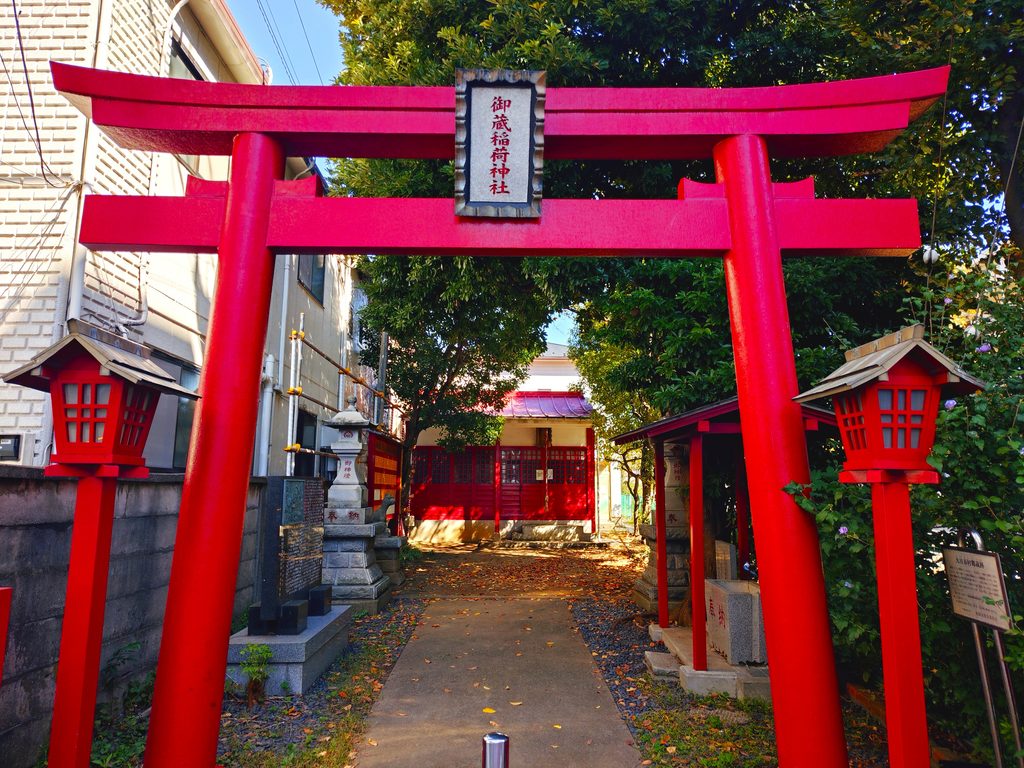
On one corner of the palace grounds (near present-day 4-31 Honcho, along Goten-dori Street), a community granary called a Gogura (or Go-okura) was built during the Edo period to store grain in preparation for famines. Out of gratitude to this granary for helping villagers survive famines, Okura Inari Shrine was enshrined there. Even today, a stone monument marking the “Site of Funabashi Goten” stands beside its grounds.
Funabashi Toshogu Shrine is said to occupy the very heart of the former palace, where the Tomi clan enshrined Lord Ieyasu to establish the shrine.
【Enshrined Deity & Divine Blessings】Virtues of Career Advancement, Warding Off Evil, and Winning Luck Granted by Lord Tokugawa Ieyasu
The enshrined deity is Tosho Daigongen (Lord Tokugawa Ieyasu).
- Career Advancement & Improved Work Luck: Drawing upon the power of Lord Ieyasu—who rose from a Sengoku feudal lord to the supreme ruler as Seii Taishogun—worshiping here grants tremendous blessings to those praying for professional success, promotions, advancement, and career growth.
- Household Safety & Ancestral Prosperity: Because the Tokugawa Shogunate endured across 15 generations and ushered in a long era of peace (Tenka Taihei), the deity watches over family health, domestic harmony, and the lasting prosperity of one’s lineage.
- Warding Off Evil & Misfortune: Inspired by Lord Ieyasu’s extraordinary luck in surviving countless battles and life-threatening crises (such as his famed escape during the Honno-ji Incident), this shrine grants the strength to dispel life’s calamities and overcome crises.
【Highlights & Recommended Worship Route of Funabashi Toshogu Shrine】
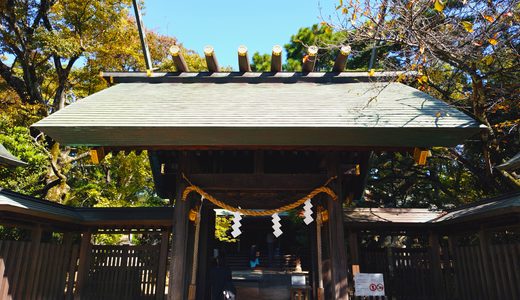
【Approach Path】A Quiet Pathway Leading from the Stone Torii in a Residential Area to the Worship Hall
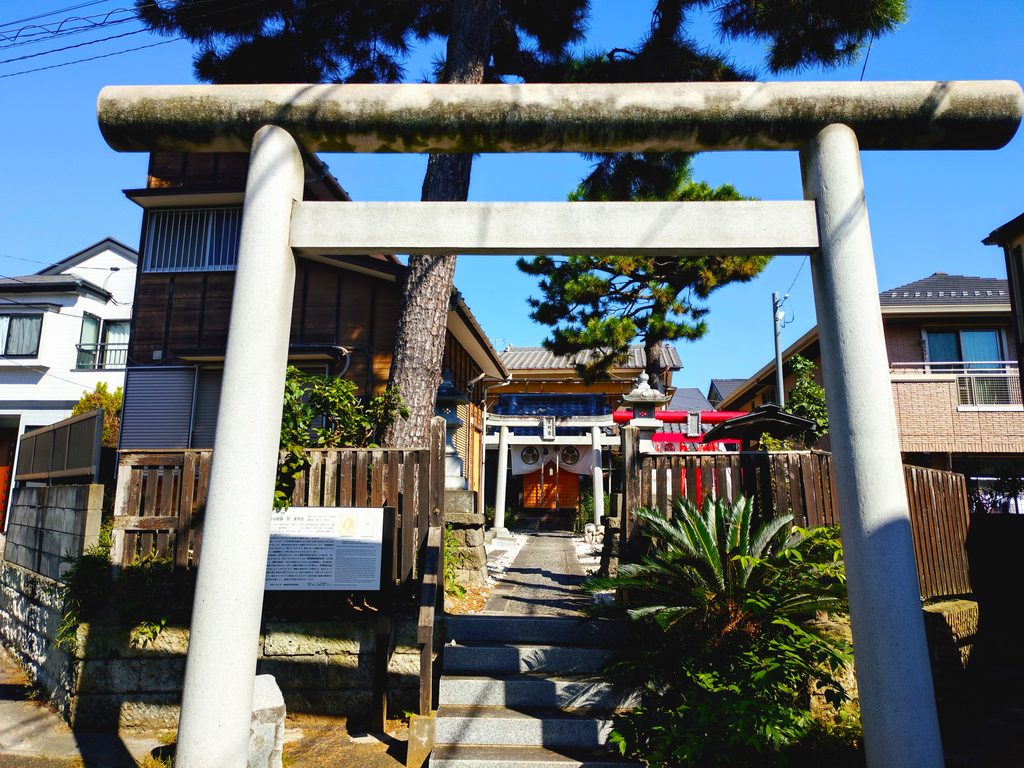
On a compact plot roughly the size of an ordinary private house lot, a small shrine hall and an Inari shrine sit neatly side by side.
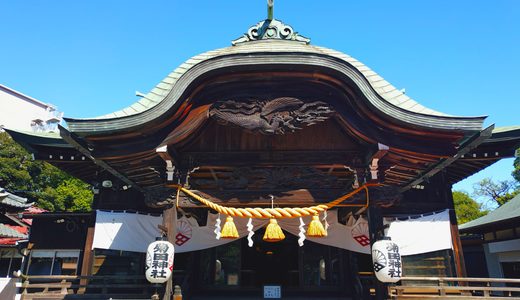
【Shrine Halls】An Atmospheric Worship Hall and Grounds Cherished as “The Smallest Toshogu Shrine in Japan”
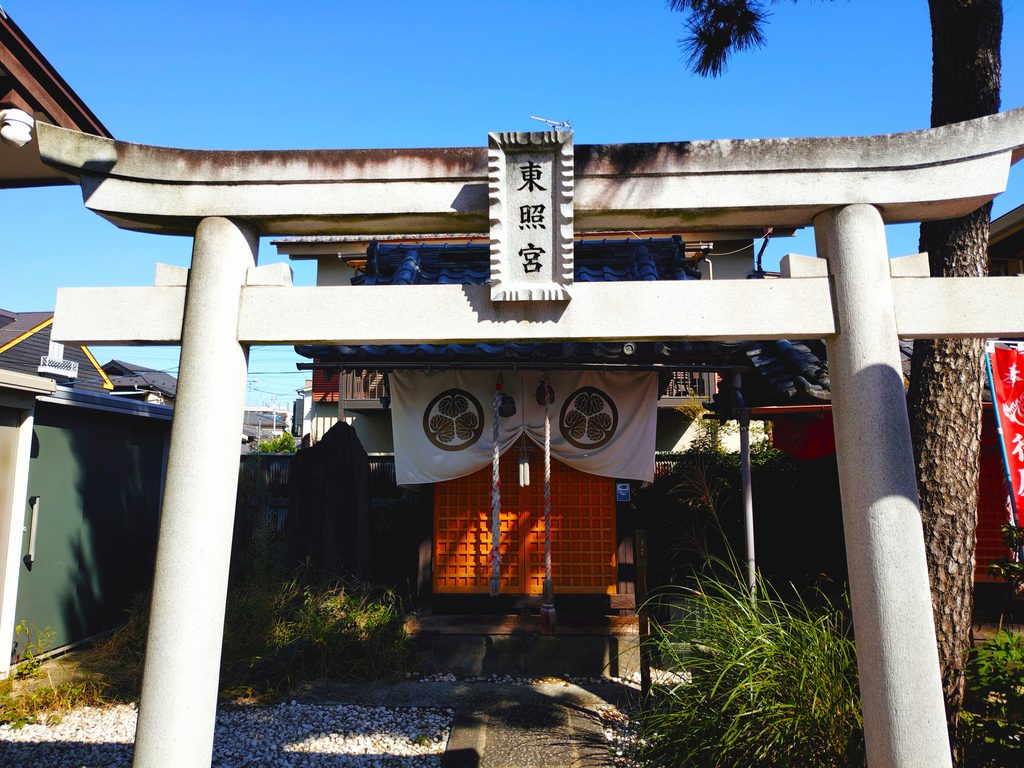
Carrying high historical value as the former site of a prestigious Shogunal palace, the current shrine hall was rebuilt in 1857 (Ansei 4) and is designated as a Cultural Property (Historic Site) by Funabashi City.
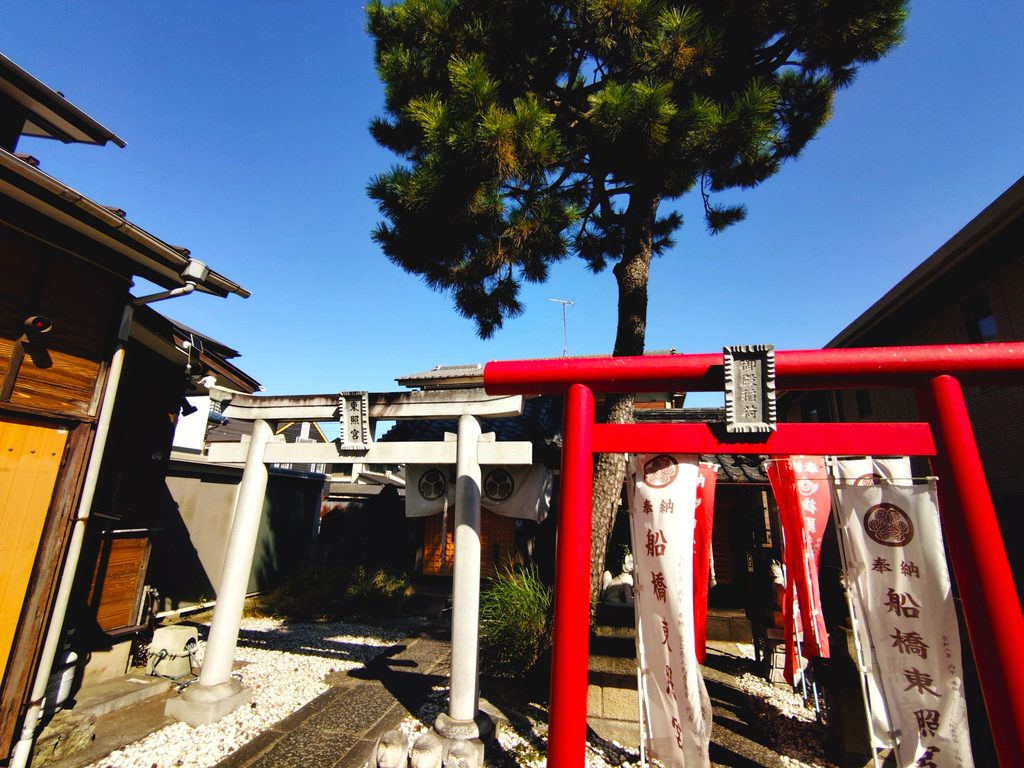
Within the small precinct, “Goten Inari Shrine” (Goten Inari Jinja) is also enshrined right alongside it.
【Funabashi Toshogu Shrine On-Site Visit Report & Original Evaluation】
Funabashi Toshogu Shrine On-Site Review & Evaluation Score
| Evaluation Category | Score | Key Features / Highlights |
|---|---|---|
| Tranquility | (4.0) | Tucked quietly down a back alley deep within a residential area of the city, offering a calm, peaceful environment with little foot traffic for quiet worship. |
| Accessibility | (3.5) | About a 10-minute walk from “Keisei-Funabashi Station” on the Keisei Main Line, and about a 12-minute walk from JR “Funabashi Station” on the Sobu Line. Also about a 15-minute walk from Funabashi Daijingu. |
| History & Heritage | (3.0) | A historic site shrine erected out of reverence for Lord Tokugawa Ieyasu by a local chief priest on the former grounds of “Funabashi Goten” (Funabashi Palace), where Ieyasu stayed during falconry excursions to Togane. |
| Nature & Scenery | (2.0) | Despite its small plot surrounded by private residences, the Torii gate, small shrine, and signboard marking the site of Funabashi Palace stand in neat order, giving it the distinct charm of a historic landmark. |
| Scale & Grounds | (1.5) | An ultra-compact precinct affectionately known as “The Smallest Toshogu Shrine in Japan,” where a tiny shrine hall and Torii gate stand charmingly. |
| Goshuin Variety | (0.0) | Operating as an unstaffed shrine without a permanent shrine office or resident priests, Goshuin stamps are currently not issued. |
【On-Site Report | Personal Impressions and Atmosphere】
Without Funabashi Toshogu Shrine, the tangible historical footprint that “Lord Ieyasu stayed overnight in Funabashi and narrowly escaped assassination” (the palace site) might have remained buried in history. Even while knowing that the official “Tokiwa Shrine” existed nearby, the local priest went out of his way to erect a small Toshogu right on the palace ruins—and I feel that the priest’s extraordinary affection and pride toward Lord Ieyasu are tightly packed into this smallest Toshogu in Japan. Since it is located about a 15-minute walk from Funabashi Daijingu, visiting both of these “two Toshogu-related shrines” connected to Ieyasu together as a set allows you to truly savor the historical depth of Funabashi.
【Nearby Sightseeing Spots to Visit Together】
Ohi Shrine, Kikuta Shrine, Ninomiya Shrine, Ohara Shrine, Nakayama Hokekyo-ji Temple
【Basic Information & Access】
【Access by Train / Car and Parking】
*No parking available.
【Address & Official Website】
4-29-12 Honcho, Funabashi City, Chiba Prefecture 273-0005