 Kanata's Japan Shrine Guide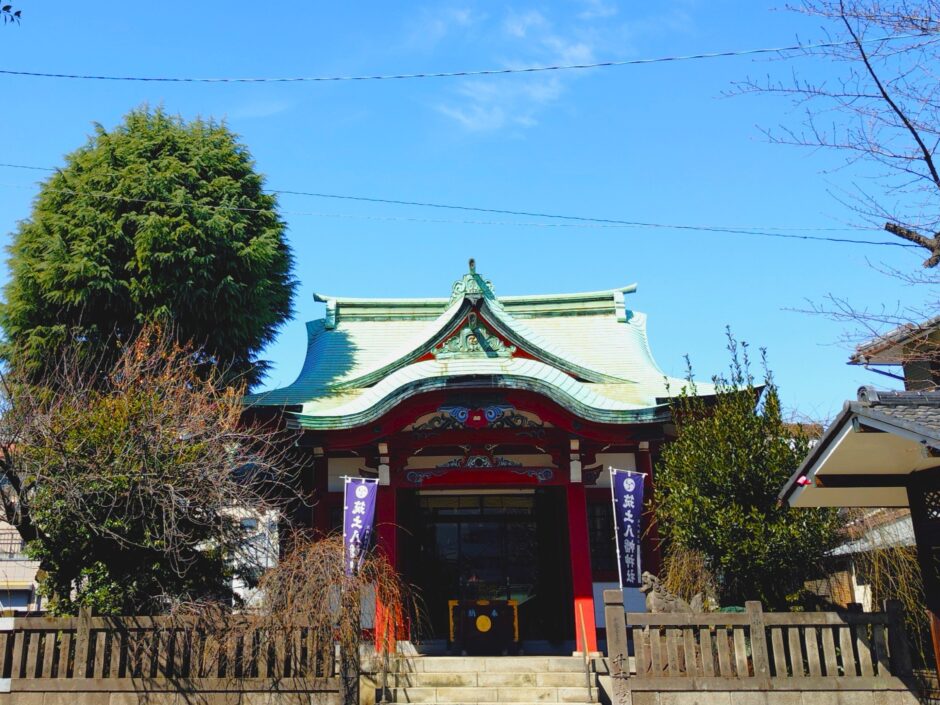

目次
- 【Overview of Tsukudo Hachiman Shrine】
- 【Tsukudo Hachiman Shrine: The Approach (Sando) 】
- 【Tsukudo Hachiman Shrine: Stone Torii Gate】
- 【Tsukudo Hachiman Shrine: Main Hall (Shaden)】
- 【Tsukudo Hachiman Shrine: Koshin Tower】
- 【Tsukudo Hachiman Shrine: Miyabi Shrine (Subsidiary Shrine)】
- 【Tsukudo Hachiman Shrine: The Legend of Taira no Masakado】
- 【Tourist Spots Near Tsukudo Hachiman Shrine (Within a 30-minute walk)】
- 【Tsukudo Hachiman Shrine: Access】
- Admin’s Impressions
- Tsukudo Hachiman Shrine:Address
【Overview of Tsukudo Hachiman Shrine】
Tsukudo Hachiman Shrine was founded during the reign of Emperor Saga (809–823). Its origins trace back to a devout old man living nearby, who enshrined the deity after receiving an oracle from Hachiman-gami in a dream. When Ennin (Jikaku Daishi), a monk of the Tendai sect, visited the eastern provinces, he built a small shrine here and installed a statue of Amida Nyorai, which was said to have been carved by Saicho (Dengyo Daishi). The shrine came to be called “Tsukudo Hachimangu” because its foundation was laid using sacred soil brought from Usa Jingu Shrine in Tsukushi (an ancient term referring to Fukuoka Prefecture, northern Kyushu, or the entire Kyushu region).
The enshrined deities are Emperor Ojin, Empress Jingu, and Emperor Chuai.
【Tsukudo Hachiman Shrine: The Approach (Sando) 】
![20260315 111649648 1024x768 - Tsukudo Hachiman Shrine [Tokyo]](https://japan-shrine.info/wp-content/uploads/20260315_111649648-1024x768.jpg "Tsukudo Hachiman Shrine [Tokyo]")
Located between Kagurazaka and Iidabashi, the approach to the shrine is a steep flight of stairs.
【Tsukudo Hachiman Shrine: Stone Torii Gate】
![20260315 111735539 1024x768 - Tsukudo Hachiman Shrine [Tokyo]](https://japan-shrine.info/wp-content/uploads/20260315_111735539-1024x768.jpg "Tsukudo Hachiman Shrine [Tokyo]")
The stone torii gate along the approach was dedicated in 1726 (Kyoho 11) by Kuroda Naokuni, the lord of the Shimodate Domain in Hitachi Province. It is currently the oldest torii in Shinjuku Ward and is designated as a Registered Tangible Cultural Property (Structure) of the ward.
【Tsukudo Hachiman Shrine: Main Hall (Shaden)】
![20260315 112321713 1024x768 - Tsukudo Hachiman Shrine [Tokyo]](https://japan-shrine.info/wp-content/uploads/20260315_112321713-1024x768.jpg "Tsukudo Hachiman Shrine [Tokyo]")
At the top of the stairs, you emerge into a relatively spacious precinct. White Winter Daphne (Jinchoge) was blooming along the edge of the grounds. In the language of flowers, it signifies “eternity,” “glory,” “immortality,” and “indestructibility.”
![20260315 111851606 1024x768 - Tsukudo Hachiman Shrine [Tokyo]](https://japan-shrine.info/wp-content/uploads/20260315_111851606-1024x768.jpg "Tsukudo Hachiman Shrine [Tokyo]")
The original shrine building was constructed during the Bunmei era (1469–1487) by Uesugi Tomooki, who ruled this region, but it burned down completely due to air raids in World War II. The current Main Hall is a post-war reinforced concrete structure.
【Tsukudo Hachiman Shrine: Koshin Tower】
This is a boat-shaped stone Koshin Tower erected in 1664 (Kanbun 4), featuring carvings of the sun and moon, a peach tree, and two monkeys.
![20260315 112026820 1024x768 - Tsukudo Hachiman Shrine [Tokyo]](https://japan-shrine.info/wp-content/uploads/20260315_112026820-1024x768.jpg "Tsukudo Hachiman Shrine [Tokyo]")
It is considered extremely rare because it depicts only two monkeys (a male and a female holding peach branches) instead of the usual three (the Three Wise Monkeys). It is currently designated as a Tangible Folk Cultural Property of Shinjuku Ward.
【Tsukudo Hachiman Shrine: Miyabi Shrine (Subsidiary Shrine)】
Originally located since ancient times at a hatamoto (shogunal retainer) residence in Shimomiyabi-cho, this shrine was relocated to its current site in 1907 (Meiji 40). It was destroyed by US air raids in 1945 during the Greater East Asia War (WWII), but was rebuilt in 1962 (Showa 37) through donations collected by the Iidabashi Neighborhood Association.
![20260315 111830403 2 1024x768 - Tsukudo Hachiman Shrine [Tokyo]](https://japan-shrine.info/wp-content/uploads/20260315_111830403-2-1024x768.jpg "Tsukudo Hachiman Shrine [Tokyo]")
The enshrined deity is Miyabi-no-kami, also known as Omiyanome-no-mikoto or Ame-no-uzume-no-mikoto.
【Tsukudo Hachiman Shrine: The Legend of Taira no Masakado】
In 1616 (Genna 2), Tayasu Myojin—originally located near the Tayasu Gate of Edo Castle—was moved next to Tsukudo Hachiman Shrine, where it became known as Tsukudo Myojin Shrine. After burning down completely in WWII, it was relocated to Kudankita, Chiyoda Ward, and is now known as Tsukudo Shrine.
![DSC 1621 1 520x300 - Tsukudo Hachiman Shrine [Tokyo]](https://japan-shrine.info/wp-content/uploads/DSC_1621-1-520x300.jpg "Tsukudo Hachiman Shrine [Tokyo]")
Currently, there are no signboards or statues honoring Taira no Masakado on the grounds. However, because Masakado was enshrined at this location (the former site of Tsukudo Myojin) until the Edo period, the area is still known as a place tied to the Masakado legend.
![DSC 1672 1 520x300 - Tsukudo Hachiman Shrine [Tokyo]](https://japan-shrine.info/wp-content/uploads/DSC_1672-1-520x300.jpg "Tsukudo Hachiman Shrine [Tokyo]")
![DSC 3267 520x300 - Tsukudo Hachiman Shrine [Tokyo]](https://japan-shrine.info/wp-content/uploads/DSC_3267-520x300.jpg "Tsukudo Hachiman Shrine [Tokyo]")
![20260315 112352480 2 520x300 - Tsukudo Hachiman Shrine [Tokyo]](https://japan-shrine.info/wp-content/uploads/20260315_112352480-2-520x300.jpg "Tsukudo Hachiman Shrine [Tokyo]")
![DSC 0260 2 520x300 - Tsukudo Hachiman Shrine [Tokyo]](https://japan-shrine.info/wp-content/uploads/DSC_0260_2-520x300.jpg "Tsukudo Hachiman Shrine [Tokyo]")
![DSC 3433 520x300 - Tsukudo Hachiman Shrine [Tokyo]](https://japan-shrine.info/wp-content/uploads/DSC_3433-520x300.jpg "Tsukudo Hachiman Shrine [Tokyo]")
![DSC 1824 520x300 - Tsukudo Hachiman Shrine [Tokyo]](https://japan-shrine.info/wp-content/uploads/DSC_1824-520x300.jpg "Tsukudo Hachiman Shrine [Tokyo]")
【Tourist Spots Near Tsukudo Hachiman Shrine (Within a 30-minute walk)】
Akagi Shrine, Tokyo Daijingu, Koishikawa Korakuen Gardens, Ichigaya no Mori Hon to Katsuji-kan (Museum of Books and Typography), Ichigaya Kamegaoka Hachimangu, Yasukuni Shrine.
![DSC 0834 520x300 - Tsukudo Hachiman Shrine [Tokyo]](https://japan-shrine.info/wp-content/uploads/DSC_0834-520x300.jpg "Tsukudo Hachiman Shrine [Tokyo]")
![26709359 m 520x300 - Tsukudo Hachiman Shrine [Tokyo]](https://japan-shrine.info/wp-content/uploads/26709359_m-520x300.jpg "Tsukudo Hachiman Shrine [Tokyo]")
![DSC 2361 520x300 - Tsukudo Hachiman Shrine [Tokyo]](https://japan-shrine.info/wp-content/uploads/DSC_2361-520x300.jpg "Tsukudo Hachiman Shrine [Tokyo]")
![23740271 m 520x300 - Tsukudo Hachiman Shrine [Tokyo]](https://japan-shrine.info/wp-content/uploads/23740271_m-520x300.jpg "Tsukudo Hachiman Shrine [Tokyo]")
![20260315 131040184 520x300 - Tsukudo Hachiman Shrine [Tokyo]](https://japan-shrine.info/wp-content/uploads/20260315_131040184-520x300.jpg "Tsukudo Hachiman Shrine [Tokyo]")
![20260315 131943370 520x300 - Tsukudo Hachiman Shrine [Tokyo]](https://japan-shrine.info/wp-content/uploads/20260315_131943370-520x300.jpg "Tsukudo Hachiman Shrine [Tokyo]")
【Tsukudo Hachiman Shrine: Access】
Admin’s Impressions
Personally, since there had been no direct connection to Usa Jingu in the Hachiman shrines I’ve visited so far, I decided to look into it. Currently, the address of Tsukudo Hachiman Shrine is Tsukudohachiman-cho, but right next to it is Tsukudo-cho (津久戸町). The pronunciation “Tsukudo” is exactly the same for both, suggesting that the kanji characters were assigned phonetically later on. In other words, because Tsukudo Myojin (津久戸明神) was located here, it’s possible this whole area was originally Tsukudo-cho (津久戸町). The characters for Tsukudo (筑土 – referencing the soil from Tsukushi) may have been applied after the shrine was relocated. If you consider the possibility that the original name Tsukudo (津久戸) might have been intentionally erased or altered, the legend of Taira no Masakado suddenly gains a bit more credibility.
2-1 Tsukudohachiman-cho, Shinjuku City, Tokyo 162-0815
*Note: No parking lot available.
![a69bf48198478fc23fb4ea292fdc3ac4 - Tsukudo Hachiman Shrine [Tokyo]](https://japan-shrine.info/wp-content/uploads/sng/a69bf48198478fc23fb4ea292fdc3ac4.jpg "Tsukudo Hachiman Shrine [Tokyo]")