 Kanata's Japan Shrine Guide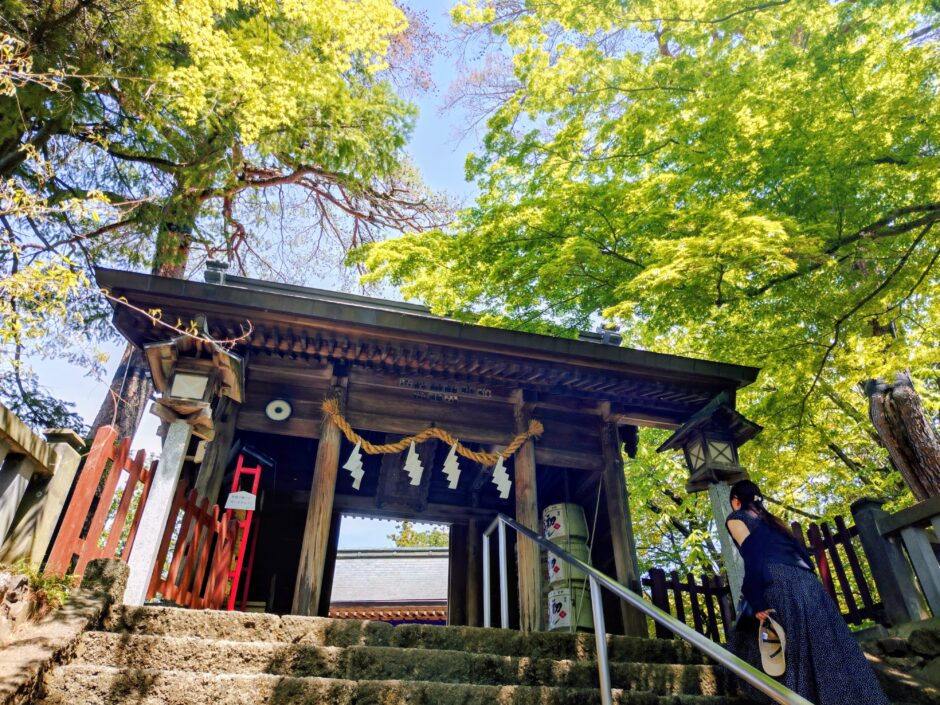

目次
- 【Overview of Karasawayama Shrine】
- 【Karasawayama Shrine: The Approach (Sando)】
- 【Karasawayama Shrine: Azaleas (Tsutsuji)】
- 【Karasawayama Shrine: Chozuya (Purification Fountain)】
- 【Karasawayama Shrine: Shinmon Gate】
- 【Karasawayama Shrine: Main Precinct (Shaden)】
- 【Karasawayama Shrine: View from Nanjokan】
- 【Subsidiary Shrine: Ryujingu】
- 【Subsidiary Shrine: Wago Inari Shrine】
- 【Subsidiary Shrine: Ashiosan Shrine】
- 【Karasawayama Shrine: Tengu-iwa Rock】
- 【Karasawayama Shrine Nearby Tourist Spots】
- 【Karasawayama Shrine Access】
- Admin’s Impressions
- Address of Karasawayama Shrine
- Official Website of Karasawayama Shrine
【Overview of Karasawayama Shrine】
Karasawayama Shrine was founded in 1883. It stands on the former site of Karasawayama Castle, which was built by Fujiwara no Hidesato during the Heian period. Renowned as one of the most formidable fortresses in the Kanto region, it is famous for the legend of the “Impregnable Castle.” Even the legendary “War God” Uesugi Kenshin reportedly besieged the castle nearly ten times but was never able to take it by force.
Fujiwara no Hidesato, who suppressed the rebellion of Taira no Masakado (the Johei-Tengyo Rebellion), has been revered as a hero since ancient times. Descendants of the Sano family (Hidesato’s lineage) and the descendants of his former vassals petitioned the government to establish this shrine. The site of the castle’s former Honmaru (inner bailey) was chosen for the shrine due to its deep historical ties.
The shrine enshrines the deity Fujiwara no Hidesato.
Because Hidesato was a master archer, many people visit the shrine today to pray for victory, protection against evil, and good fortune.
【Karasawayama Shrine: The Approach (Sando)】
The path leading to the main shrine at the summit is a journey through a “giant fortress.” Unlike typical shrine approaches, this one possesses the raw power of a castle ruin.
This shrine is also home to many resident cats, and you can often find them napping in various spots.
![20260419 105322147 1024x768 - Karasawayama Shrine [Tochigi]](https://japan-shrine.info/wp-content/uploads/20260419_105322147-1024x768.jpg "Karasawayama Shrine [Tochigi]")
The angle looking up at the Shinmon (shrine gate) from the approach is incredibly striking, especially during the seasons of fresh greenery or autumn leaves.
![20260419 1054417932 1024x768 - Karasawayama Shrine [Tochigi]](https://japan-shrine.info/wp-content/uploads/20260419_1054417932-1024x768.jpg "Karasawayama Shrine [Tochigi]")
A shrine cat napping on a bench along the path.
【Karasawayama Shrine: Azaleas (Tsutsuji)】
![20260419 112133040 2 1024x768 - Karasawayama Shrine [Tochigi]](https://japan-shrine.info/wp-content/uploads/20260419_112133040-2-1024x768.jpg "Karasawayama Shrine [Tochigi]")
The grounds are home to approximately 5,000 azaleas in shades of red, white, and pink. The “Yamatsutsuji” (mountain azaleas) offer a stunning contrast against the fresh green of spring.
![20260419 112357770 1024x768 - Karasawayama Shrine [Tochigi]](https://japan-shrine.info/wp-content/uploads/20260419_112357770-1024x768.jpg "Karasawayama Shrine [Tochigi]")
Depending on the weather, they usually reach full bloom in late April and can be enjoyed through the Golden Week holidays.
【Karasawayama Shrine: Chozuya (Purification Fountain)】
![20260419 111138600 1024x768 - Karasawayama Shrine [Tochigi]](https://japan-shrine.info/wp-content/uploads/20260419_111138600-1024x768.jpg "Karasawayama Shrine [Tochigi]")
Unfortunately, there was no Hanazode (flower-floating decoration) during this visit, but the fountain is usually adorned with seasonal flowers. From here, stairs lead up to the Shinmon Gate.
【Karasawayama Shrine: Shinmon Gate】
![20260419 105848279 1024x768 - Karasawayama Shrine [Tochigi]](https://japan-shrine.info/wp-content/uploads/20260419_105848279-1024x768.jpg "Karasawayama Shrine [Tochigi]")
Climbing the stairs beyond the torii gate reveals the Shinmon.
![20260419 1104030592 1024x768 - Karasawayama Shrine [Tochigi]](https://japan-shrine.info/wp-content/uploads/20260419_1104030592-1024x768.jpg "Karasawayama Shrine [Tochigi]")
Once a key defensive point of the castle, it now serves as the entrance to sacred ground—a spot that truly symbolizes the transition from military history to spiritual sanctuary.
【Karasawayama Shrine: Main Precinct (Shaden)】
Upon entering the gate, the worship hall (Haiden) is not immediately visible; instead, it is positioned at an angle.This is a remnant of castle architecture designed to prevent enemies from making a straight-line charge.
![20260419 1102244652 1024x768 - Karasawayama Shrine [Tochigi]](https://japan-shrine.info/wp-content/uploads/20260419_1102244652-1024x768.jpg "Karasawayama Shrine [Tochigi]")
Built on flat ground surrounded by Sengoku-period earthen walls (dobure), the layout feels more like a “fortress” than a typical shrine. The current buildings were completed between 1883 and the late 1890s.
![20260419 111606841 1024x768 - Karasawayama Shrine [Tochigi]](https://japan-shrine.info/wp-content/uploads/20260419_111606841-1024x768.jpg "Karasawayama Shrine [Tochigi]")
From below, it looks exactly like a castle.
【Karasawayama Shrine: View from Nanjokan】
The Nanjokan is located next to the shrine office. This was once the site of the lord’s palace (goten) and opens up grandly to the south.
![20260419 110944132 1024x768 - Karasawayama Shrine [Tochigi]](https://japan-shrine.info/wp-content/uploads/20260419_110944132-1024x768.jpg "Karasawayama Shrine [Tochigi]")
Below, the cityscape of Sano stretches out, meeting the vast Kanto Plain that continues as far as the eye can see. With no obstructions, the night view is so beautiful it is compared to “Matsushima on Land,” making it a popular spot for photographers.
【Subsidiary Shrine: Ryujingu】
Located on a tree-covered slope just off the main path, this shrine is based on the legend that a Dragon God from Lake Biwa asked Hidesato to slay the “Great Centipede.” After his success, the Dragon God granted him various treasures.
![20260419 112711830 1024x768 - Karasawayama Shrine [Tochigi]](https://japan-shrine.info/wp-content/uploads/20260419_112711830-1024x768.jpg "Karasawayama Shrine [Tochigi]")
By enshrining the Dragon God who aided Hidesato, the shrine is protected and brings the blessing of water to the region.
Enshrined Deity: Ryujin (Dragon God / God of Water)
【Subsidiary Shrine: Wago Inari Shrine】
Located to the left as you continue past Ryujingu.
![20260419 105326977 1024x768 - Karasawayama Shrine [Tochigi]](https://japan-shrine.info/wp-content/uploads/20260419_105326977-1024x768.jpg "Karasawayama Shrine [Tochigi]")
Like most Inari shrines, it brings blessings for business prosperity and bountiful harvests. However, because the name includes “Wago” (harmony), many visitors also pray for family safety, interpersonal harmony, and good matchmaking.
Enshrined Deity: Ukanomitama-no-Mikoto
【Subsidiary Shrine: Ashiosan Shrine】
Tucked away in a less conspicuous spot on the way down from the Sannomaru (third bailey). The “Ashiosan” faith originated from Mt. Ashio in Ibaraki Prefecture; for mountain practitioners and locals walking steep trails, “strong legs” (kenkyaku) was a vital prayer.
![20260419 113651194 1024x768 - Karasawayama Shrine [Tochigi]](https://japan-shrine.info/wp-content/uploads/20260419_113651194-1024x768.jpg "Karasawayama Shrine [Tochigi]")
The Sano clan, who ruled the castle, enshrined various deities at key points to pray for the safety of their vassals and people.
Enshrined Deities: Sarutahiko-no-Kami, Omodaru-no-Kami, Kuninotokotachi-no-Mikoto
【Karasawayama Shrine: Tengu-iwa Rock】
The entrance is on the right as you enter the castle grounds from the parking lot.
![20260419 113203727 1024x768 - Karasawayama Shrine [Tochigi]](https://japan-shrine.info/wp-content/uploads/20260419_113203727-1024x768.jpg "Karasawayama Shrine [Tochigi]")
Tengu-iwa is a massive rock formation that served as a lookout tower (mon-mi yagura) for the former castle.
![20260419 113119896 1024x768 - Karasawayama Shrine [Tochigi]](https://japan-shrine.info/wp-content/uploads/20260419_113119896-1024x768.jpg "Karasawayama Shrine [Tochigi]")
From atop this giant rock, you can enjoy a 180-degree panoramic view of the Kanto Plain. On clear days, Mt. Fuji and the Tokyo Skytree are visible.
【Karasawayama Shrine Nearby Tourist Spots】
Asahimori Tenmangu, Kasugaokayama Toshogu, Sano Yakuyoke Daishi.
![20260419 0923001232 520x300 - Karasawayama Shrine [Tochigi]](https://japan-shrine.info/wp-content/uploads/20260419_0923001232-520x300.jpg "Karasawayama Shrine [Tochigi]")
![20260419 100131936 520x300 - Karasawayama Shrine [Tochigi]](https://japan-shrine.info/wp-content/uploads/20260419_100131936-520x300.jpg "Karasawayama Shrine [Tochigi]")
![20260419 1010506072 520x300 - Karasawayama Shrine [Tochigi]](https://japan-shrine.info/wp-content/uploads/20260419_1010506072-520x300.jpg "Karasawayama Shrine [Tochigi]")
【Karasawayama Shrine Access】
Admin’s Impressions
While the shrine itself has a history of about 140 years, its foundation rests on a castle with nearly 1,000 years of history. Enjoying this “double history” is what makes this site so fascinating. The stairs to the main hall are quite a workout, but the well-maintained approach is incredibly pleasant, and walking while listening to the rustling of the trees was a luxurious experience. Encountering cats napping peacefully along the way made for a perfect balance of exercise and healing. It felt more like visiting a castle than a shrine!
Kanaiue-cho, Sano City, Tochigi Prefecture 327-0015
※Free parking available.