 Kanata's Japan Shrine Guide

【Overview & History of Chinju Hikawa Shrine】
Enshrined in Aoki, Kawaguchi City, Saitama Prefecture, “Chinju Hikawa Shrine” (Chinju Hikawa Jinja) is a shrine of Hikawa faith with a history spanning approximately 700 years. As a direct branch of Musashi Ichinomiya Hikawa Shrine in Omiya Ward, it has been fondly cherished by locals since ancient times as a “Small Taisha” and as the “Guardian Shrine of Shimo-Aoki.”
【History & Origins】A Local Guardian Shrine of Aoki, Kawaguchi Said to Be Founded in the Muromachi Period
Chinju Hikawa Shrine is said to have been founded during the Oei era (1394–1428) in the early Muromachi period. When developing the land of the Kawaguchi region at that time, it originated by welcoming the deity from Musashi Ichinomiya Hikawa Shrine—the head shrine of Hikawa faith—to serve as a spiritual pillar (Chinju-sama) for praying for the safety and prosperity of the entire village.
 Hikawa Shrine (Musashi Ichinomiya) [Saitama]
Entering the Meiji era, numerous surrounding small shrines were merged (goushi—enshrining multiple deities in one location) into Chinju Hikawa Shrine in accordance with governmental policies. By 1907 (Meiji 40), numerous nearby shrines—including Mito Shrine, Shinmei Shrine, Inari Shrine, Tenjin Shrine, and Suwa Shrine—were merged. Today, eight small sub-shrines stand in a row surrounding the main hall. This arrangement appears to be a trace of how villagers in those days brought deities from various places, thinking “our village also needs a deity of learning (Tenjin)” or “we want a deity to ward off illnesses,” carefully preserving and passing them down.
【Enshrined Deities & Divine Blessings】Warding Off Evil and Matchmaking Bestowed by Susanoo-no-Mikoto
The main enshrined deities (Gonsaijin) are the married couple deities Susanoo-no-mikoto and Kushinadahime-no-mikoto, with Oanamuchi-no-mikoto and Sukunabikona-no-mikoto worshipped as associate deities (haishijin).
- Warding Off Misfortune / Evil Spirits: Powered by the divine authority of Susanoo-no-mikoto, who defeated evil monsters with mighty strength, the shrine grants divine blessings for purifying misfortunes, disasters, and negative energy.
- Matchmaking, Marital Harmony & Romantic Fulfillment: Susanoo-no-mikoto and Kushinadahime-no-mikoto are known as an “ideal married couple deity” with an exceptionally close bond among various myths. For this reason, they are believed to lend great power toward binding good relationships (matchmaking) and deepening marital ties (marital harmony).
- Safe Childbirth, Child-rearing & Fertility: Because this married couple deity was blessed with abundant offspring and enriched the nation, they gently watch over people wishing for fertility, safe delivery, and the healthy growth of children (child-rearing).
- Recovery from Illness & Health/Longevity: As Sukunabikona-no-mikoto, the deity of medicine, is also enshrined, the shrine offers blessings for recovering from illness and for all family members to live healthy, long lives.
【Highlights & Recommended Worship Route of Chinju Hikawa Shrine】
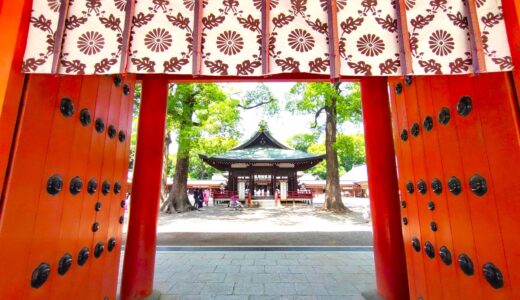
【Approach Path】A Tranquil Approach Path Surrounded by Lush Trees
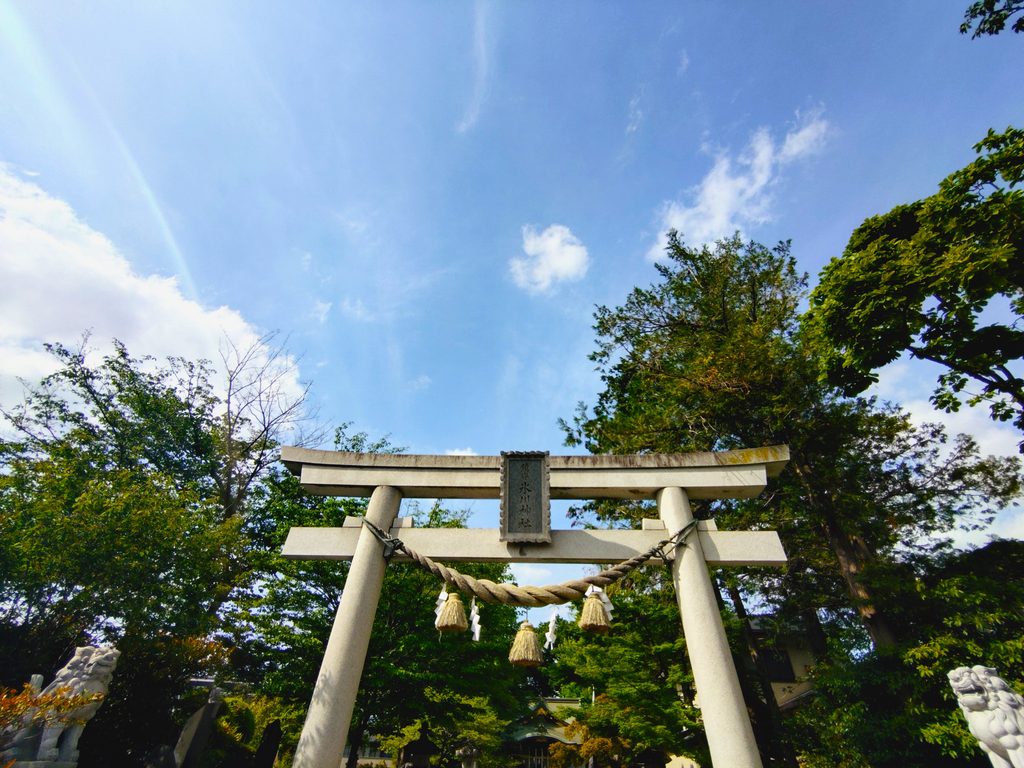
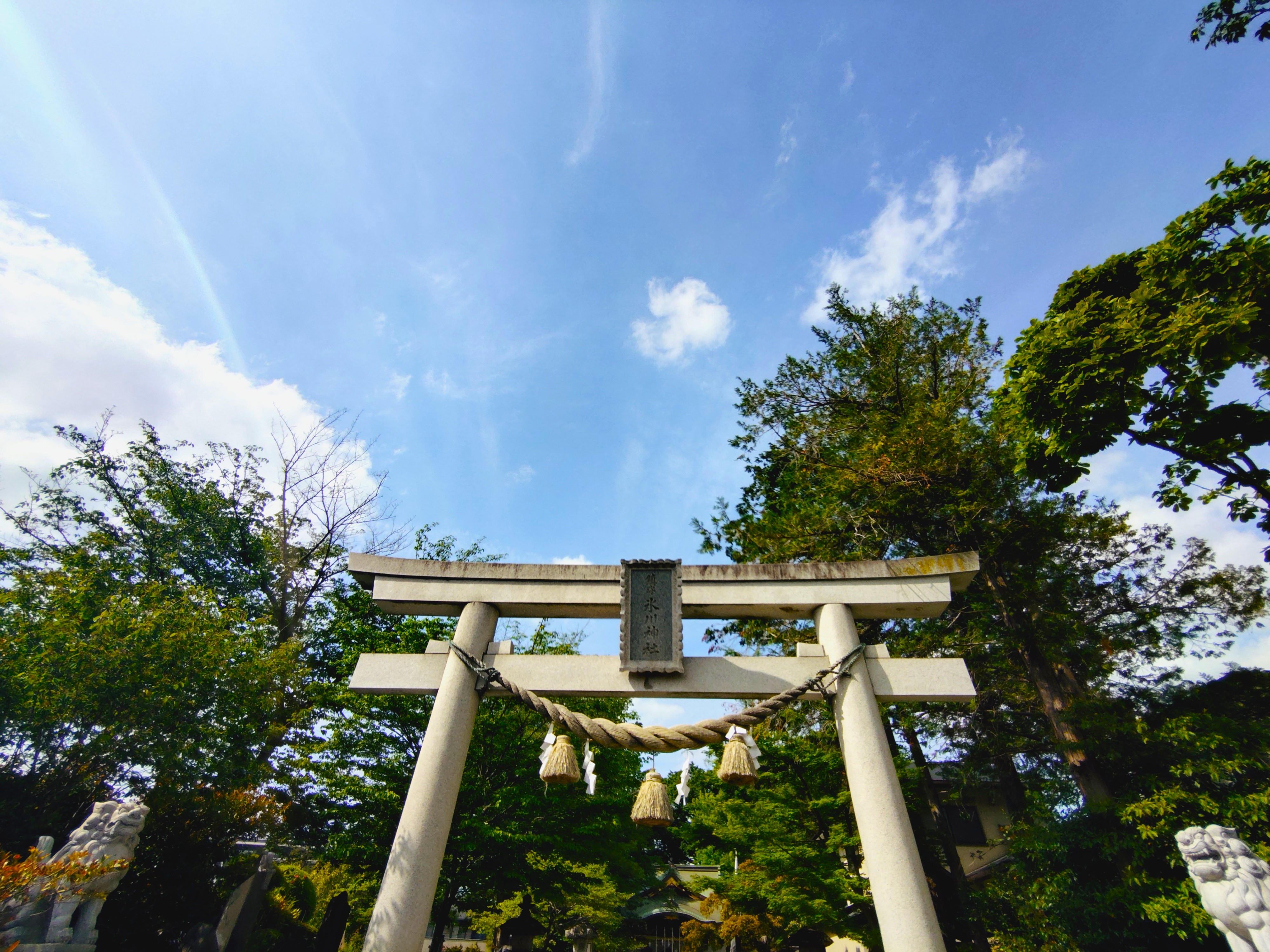
Regrettably, the original Torii gate facing the street collapsed during the Great Kanto Earthquake of 1923 (Taisho 12). Driven by the enthusiasm of local parishioners (ujiko), the current Torii gate was rebuilt in 1927 (Showa 2) and has been carefully maintained, restored, and passed down to this day.
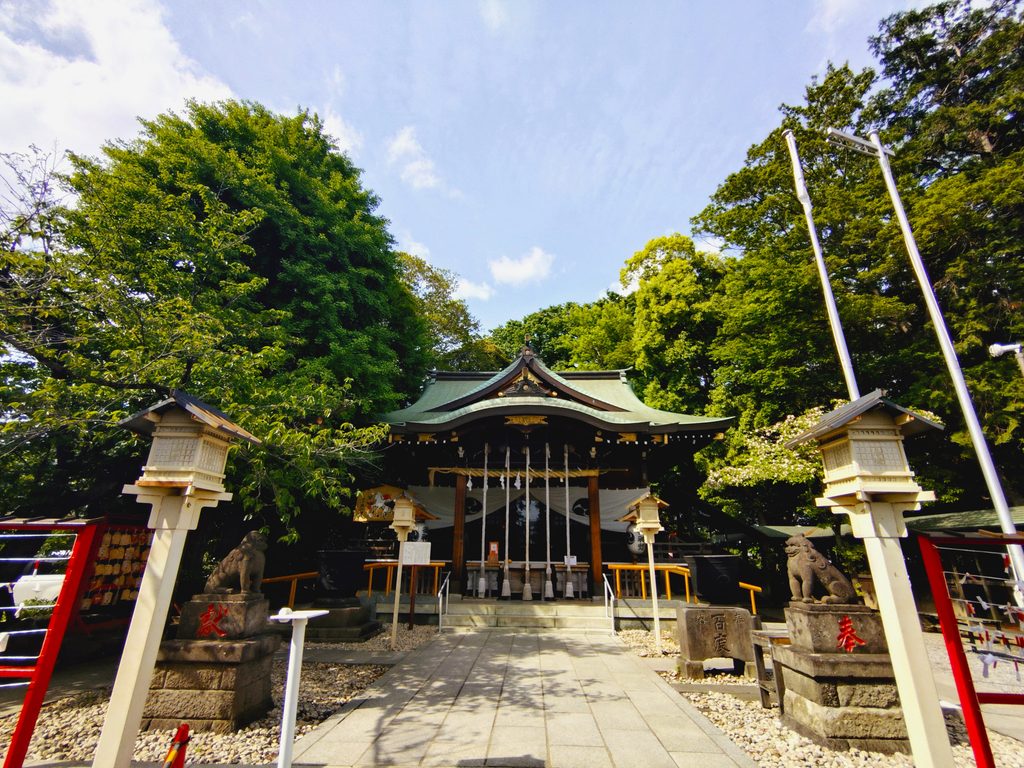
Passing under the Torii gate opens up a pleasant approach path (sandou) leading straight toward the worship hall.
【Shrine Halls & Grounds Sub-shrines】Beautifully Carved Shrine Halls and Sub-shrines Resting on the Grounds
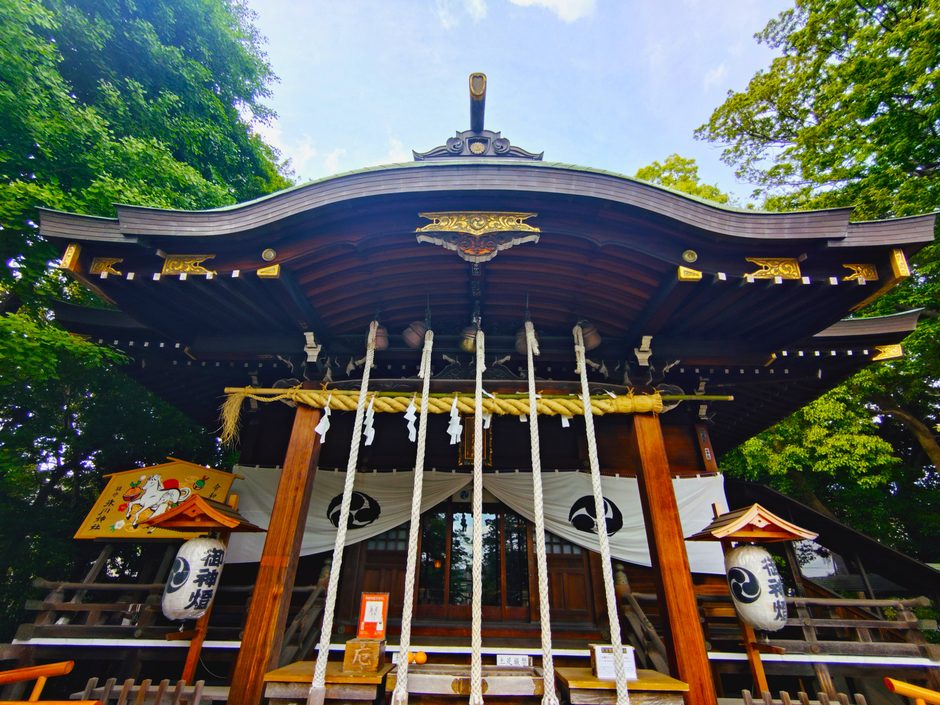
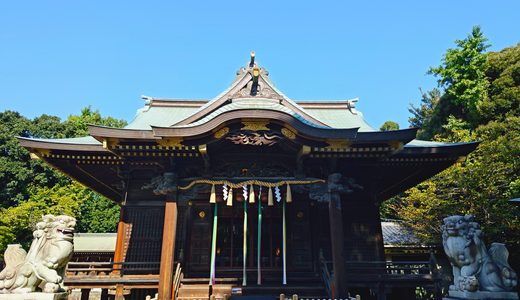
The current shrine building (shaden) was rebuilt on May 25, 1986 (Showa 61), through the generous support of local parishioners and worshippers. Its basic structure adopts the Nagare-zukuri style, the most widely used style in Japanese shrine architecture.
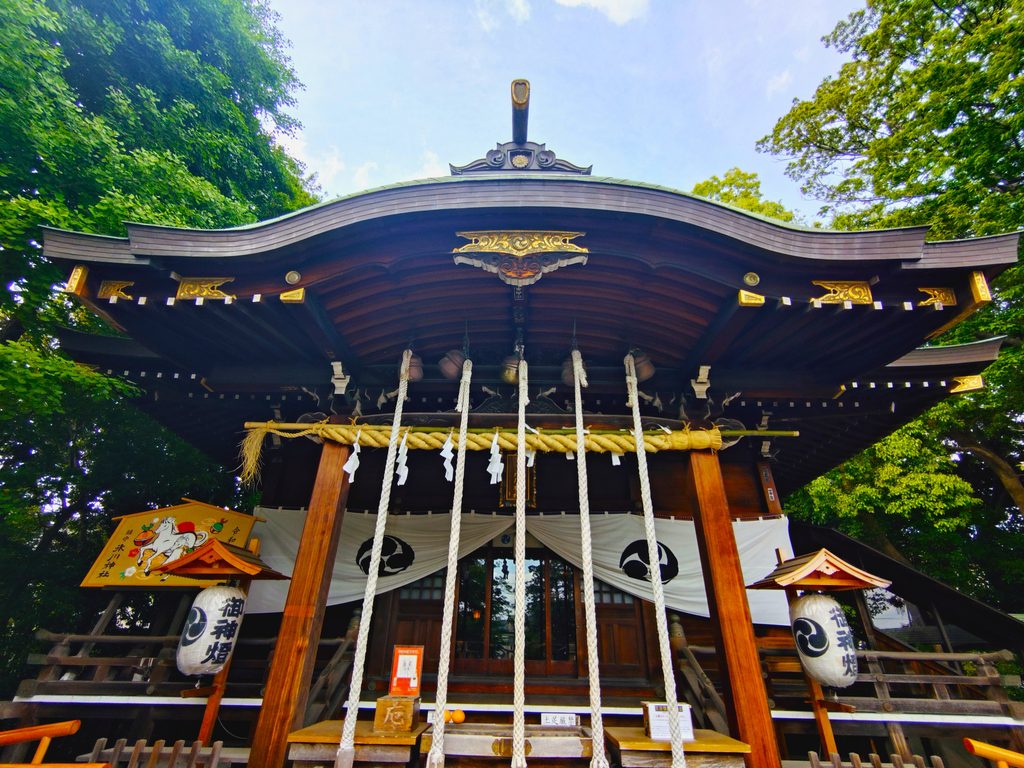
Furthermore, a Kara-hafu roof—featuring a unique curved beauty raised in the center like a bow—is attached to the front of the worship hall (haiden). This gives the building a traditional yet dignified presence that leaves a strong impression on visitors.
At Chinju Hikawa Shrine, the sub-shrines merged during the Meiji era stand neatly arranged around this central main hall (honden). The shrine features a unique layout that allows worshipers to visit these sub-shrines in sequence after offering prayers at the main hall.
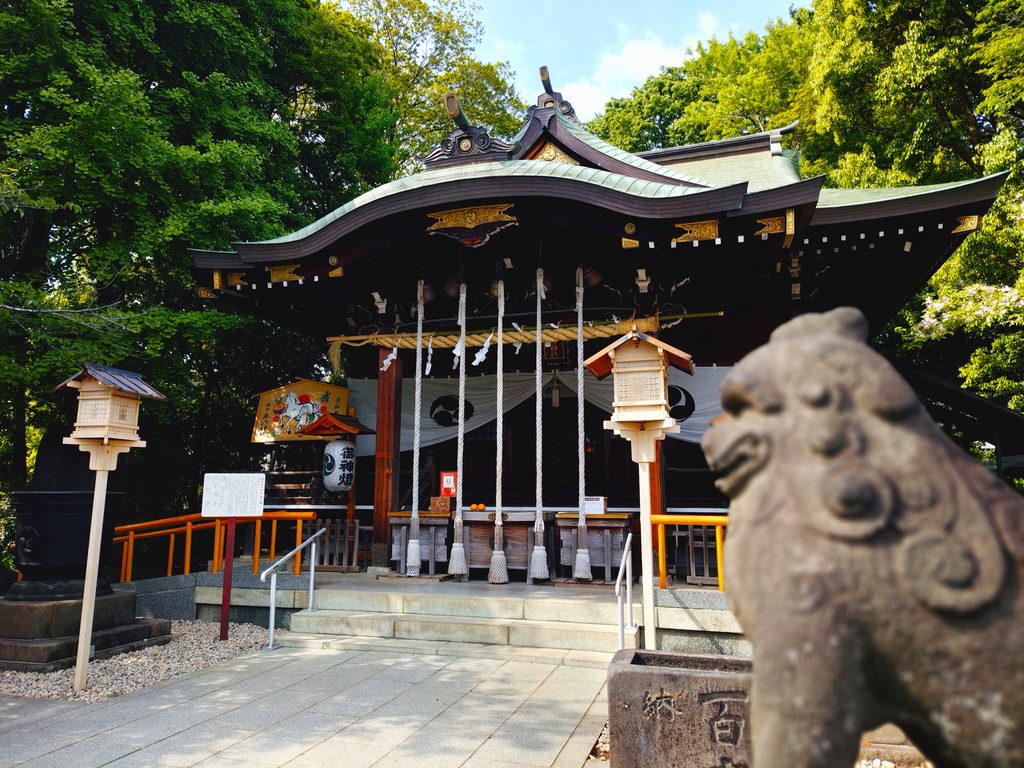
After praying to the primary married couple deities, walking around these eight sub-shrines in order provides a reassuring worship experience, as if specialized deities are watching over every aspect of your life—including education, career/business, health, and daily living. When visiting these sub-shrines (sessha/massha), the standard worship route is clockwise (from left to right facing the main hall).
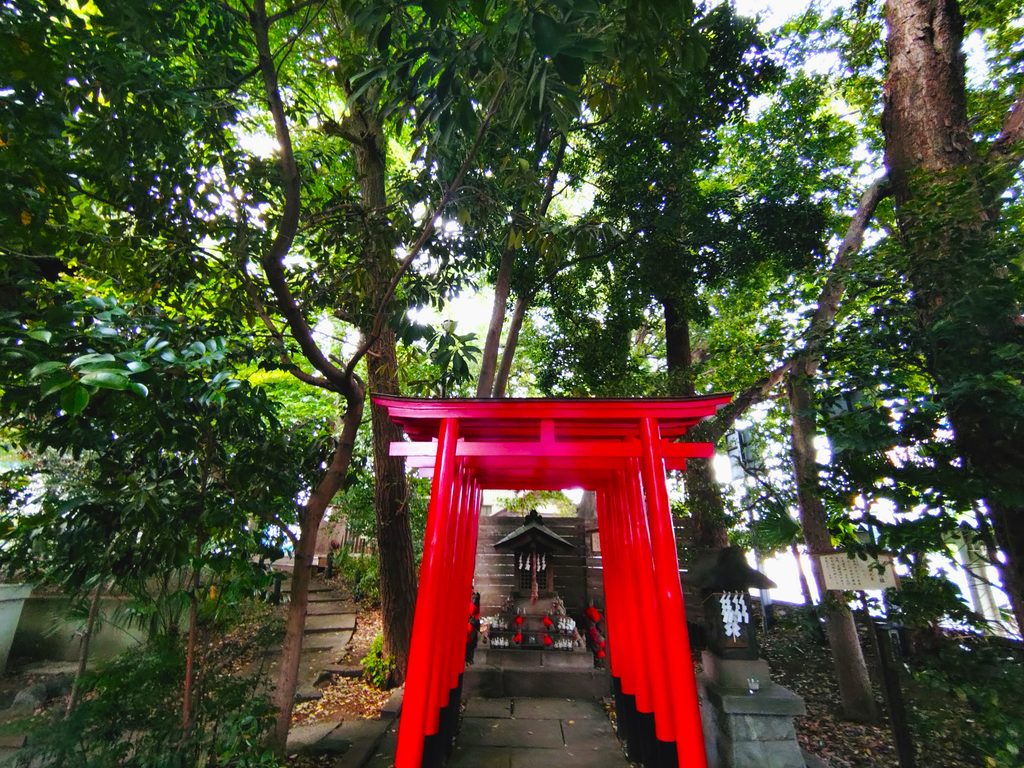
Sub-shrines include Benten Shrine (Benten-sha), Isozaki Shrine, Fudo-son Hall, Tenjin Shrine (Tenjin-sha), and Mitsumine Shrine / Inari Shrine (Inari-sha). Other shrines such as Shinmei Shrine, Suwa Shrine, Mito Shrine, and Hoso Shrine are believed to be enshrined together within these sub-shrines.
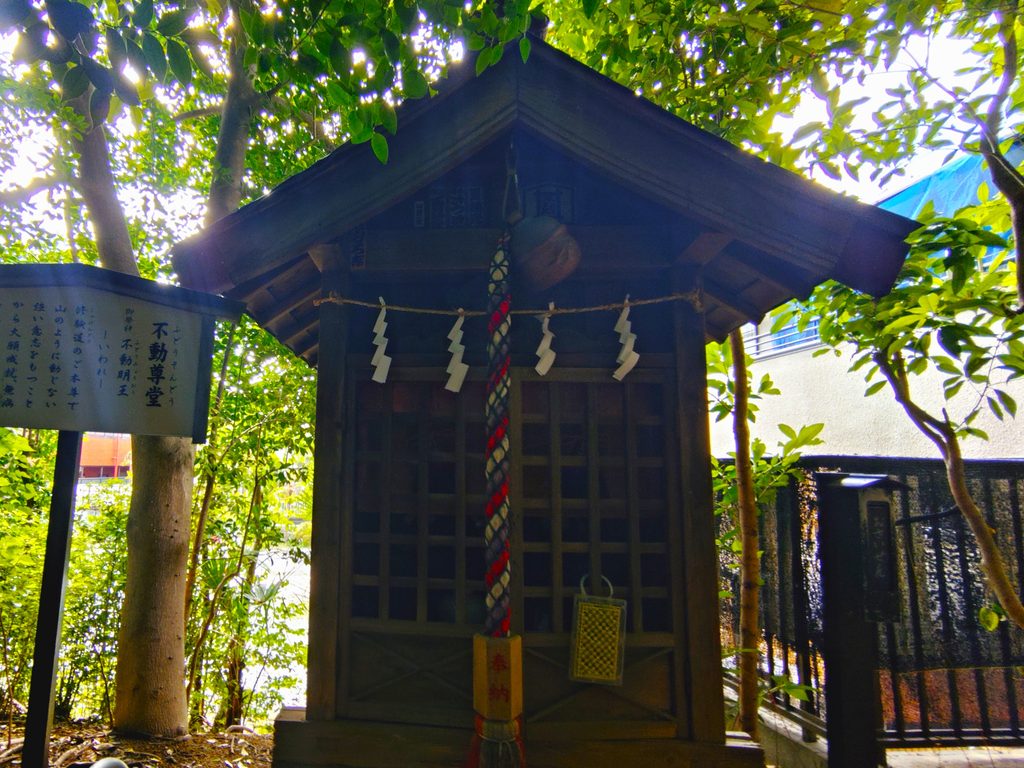
The Fudo-son Hall houses a statue said to be the former principal image of “Hannya-in,” a temple that once adjoined the shrine to manage it as a administrative temple (betto-ji) before being abolished during the separation of Shinto and Buddhism (shinbutsu-bunri).
【Sacred Trees & Married Couple Mukunoki】The Married Couple Mukunoki Symbolizing Matchmaking and a 400-Year-Old Giant Zelkova
Chinju Hikawa Shrine features two sacred trees (goshinboku), each with distinct origins and divine blessings.
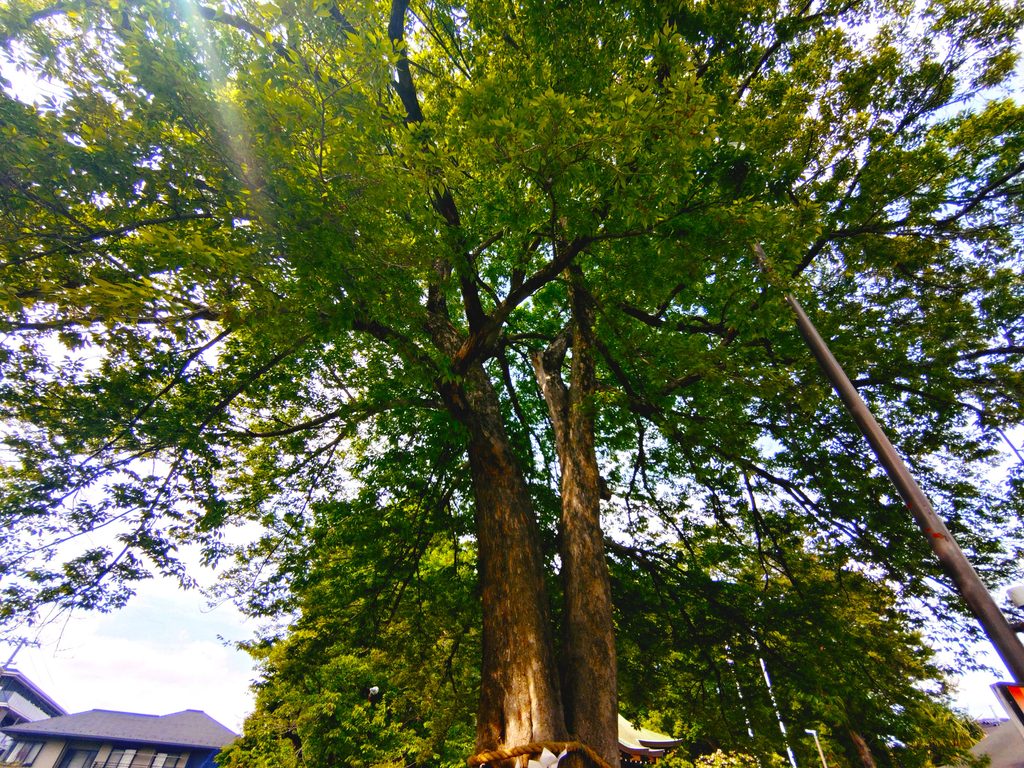
Located along the approach path is a mukunoki (Aphananthe aspera) estimated to be around 200 years old. Originally two separate trees, they grew in an extremely rare manner with their roots tightly joining into one as they matured. Because of this, it is devoutly worshipped as a “Matchmaking Tree” that firmly binds ties between people.
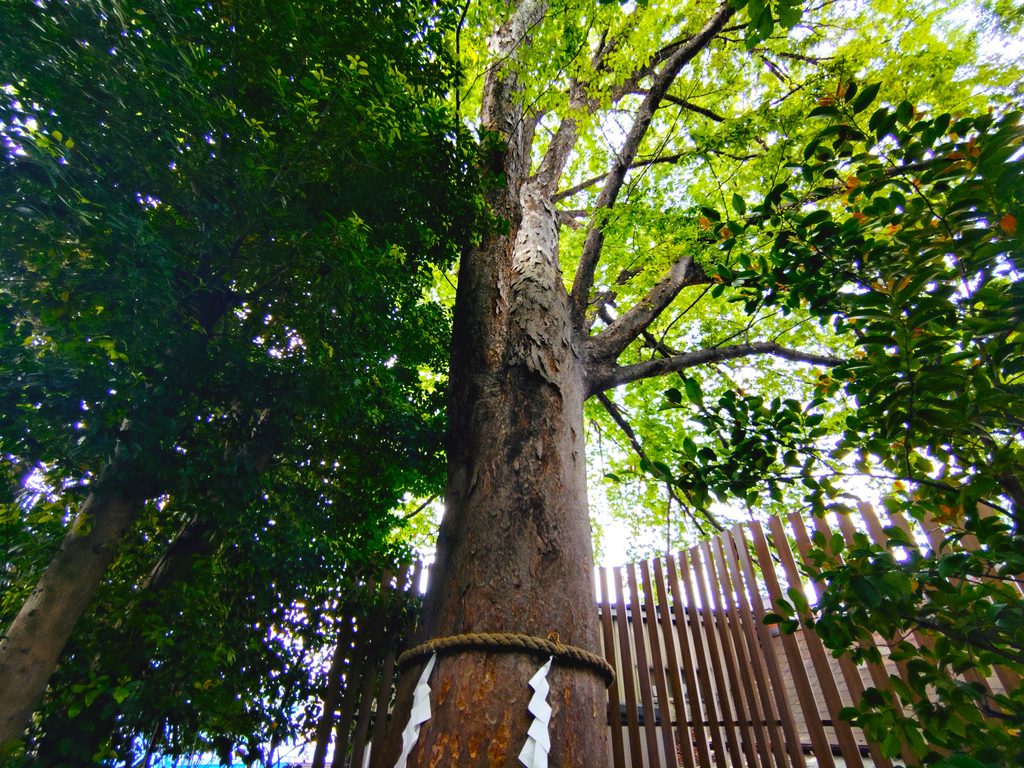
The other is a magnificent sacred tree towering behind the shrine building (rear right) with an age exceeding 400 years. Since ancient times, it has been said that receiving power from this tree when one’s spirit feels drained (kigare / impurity) due to worries or stress allows one to regain their original vitality (genki). It is an imposing giant tree designated as a Natural Monument of Kawaguchi City. (Though the sound leakage from the dance studio behind this sacred tree is quite loud…)
【Aoki Fuji (Fuji-zuka)】A Fuji Mound Conveying the History of Fuji Worship to the Present Day
Built within the grounds in 1860 (Man’en 1), there is a historic Fuji mound (Fuji-zuka), designated as a Tangible Folk Cultural Property of Kawaguchi City.
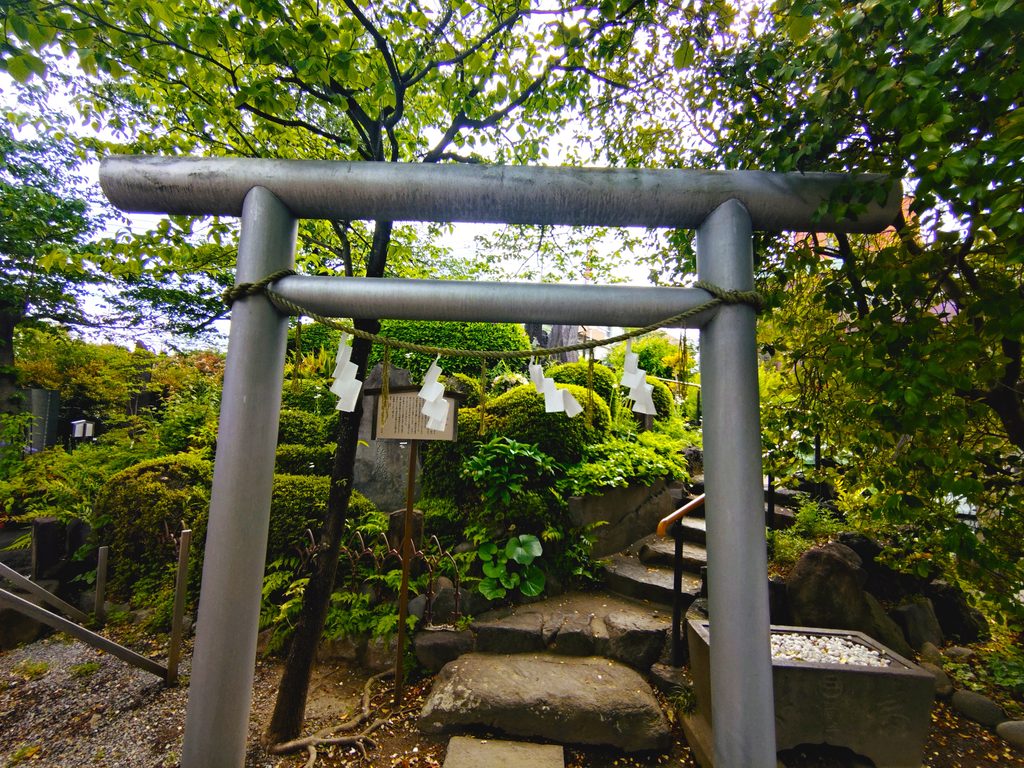
During the Edo period, when climbing the actual Mount Fuji was difficult for most people, it was built based on the belief that climbing this mound granted the same divine blessings as climbing Mount Fuji. It is a valuable historic site conveying the local history of Fuji worship to modern times.
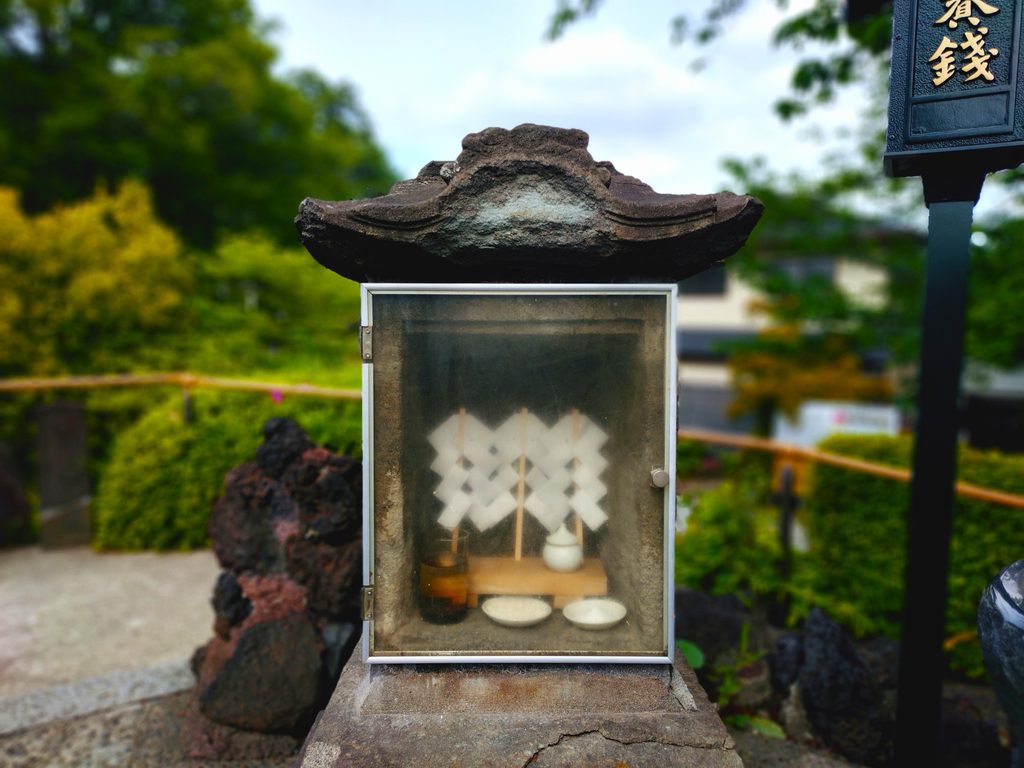
At the foot of the Fuji mound sits Sengen Shrine, which enshrines Konohanasakuya-hime-no-mikoto, the goddess of Mount Fuji, serving as a place to pray for safety before climbing.
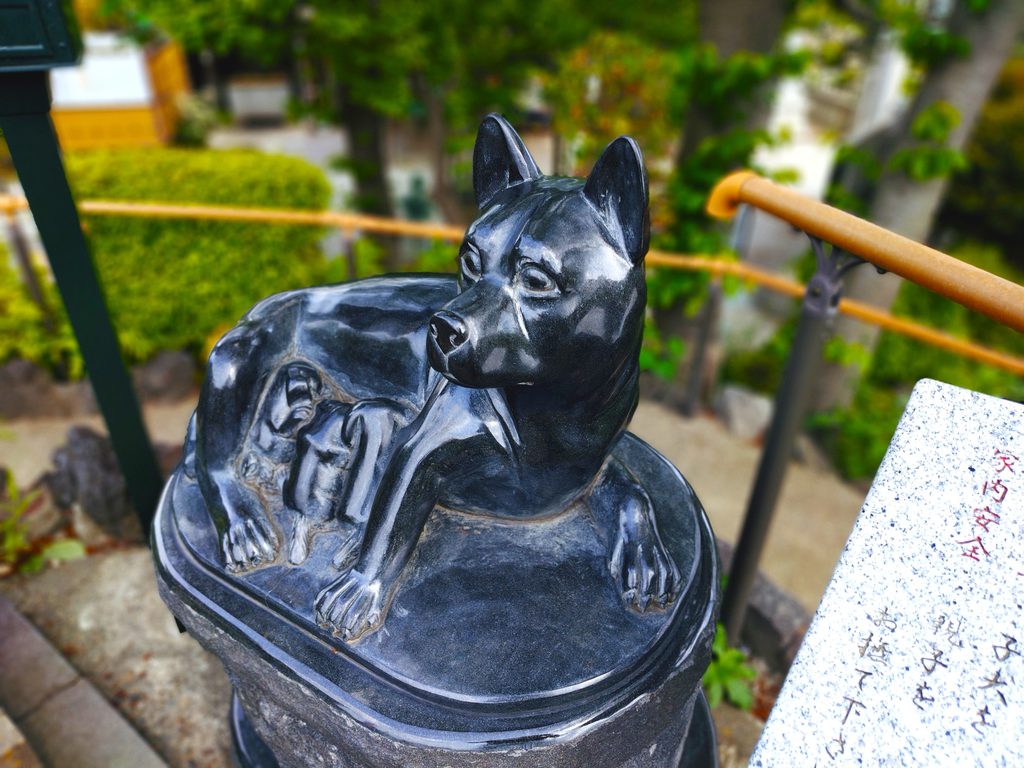
Climbing to the top of Aoki Fuji reveals a sacred stone shrine (sekishi) alongside a cute stone dog statue called the “Stroking Dog” (Nade-inu). The Stroking Dog at the summit is believed to grant different divine blessings depending on which part of its body you stroke. Since Chinju Hikawa Shrine is also a deity of “safe childbirth and child-rearing,” dogs—which give birth to many puppies easily—have long been considered a symbol of safe delivery. Looking down at the peaceful grounds from the summit while gently stroking the dog according to your personal wish is the classic way to pray.
【Chinju Hikawa Shrine Goshuin】
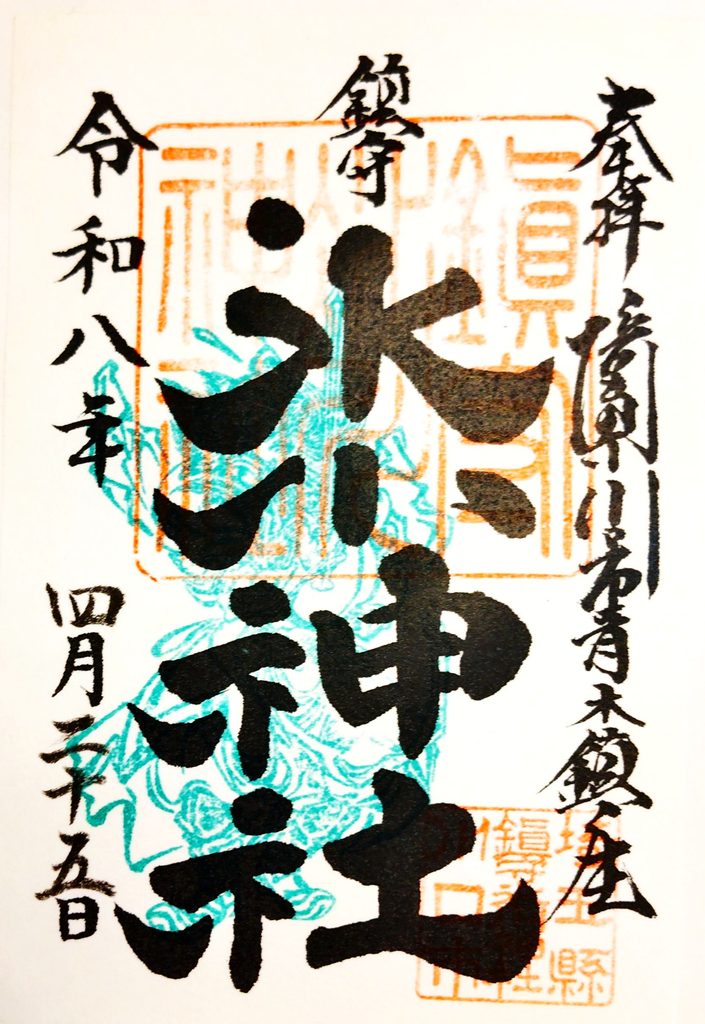
【On-Site Visit Report & Original Evaluation】
Chinju Hikawa Shrine On-Site Review & Evaluation Score
| Evaluation Category | Score | Key Features / Highlights |
|---|---|---|
| Tranquility | (3.5) | Though located in a residential area, the shrine grounds are rich in greenery with a calm and peaceful atmosphere floating throughout. |
| History & Heritage | (3.5) | Said to have been founded in the Muromachi period, this historic shrine has gathered deep faith from local residents in Kawaguchi since ancient times. |
| Nature & Scenery | (3.5) | A beautiful shrine landscape harmonizing neatly manicured greenery, sacred trees, and seasonal flowers. |
| Scale & Grounds | (3.0) | A well-organized site where a grand shrine hall, Kagura hall, and amulet office are balanced in a harmonious layout. |
| Goshuin Variety | (3.0) | In addition to regular Goshuin, special Goshuin for specific seasons and events are thoughtfully issued. |
| Accessibility | (2.0) | About a 20-minute walk from “Minami-Hatogaya Station” on the Saitama Rapid Railway. Tucked away in a residential neighborhood with dedicated parking available. |
【On-Site Report | Personal Impressions and Atmosphere】
Chinju Hikawa Shrine was a wonderful place that is not only rich in history, but also conveys the warmth of local residents who have protected and passed it down for roughly seven hundred years. The only regret during my visit was that heavy bass from modern, loud music resonated loudly across the shrine grounds from what appeared to be a dance studio behind the sacred tree. Before the historic sacred tree and Fuji mound where I wished to quietly offer prayers and immerse myself in a solemn atmosphere, this blast of noise inevitably drained my spirit, and I could not help but feel quite disappointed.
Because the depth of traditional faith and the healing nature harmonize so beautifully here, the noise issue from the adjacent modern facility is truly regrettable. However, if you choose your visiting hours carefully, you should be able to fully experience the serene, deeply quiet atmosphere original to a true guardian grove (chinju no mori).
【Nearby Sightseeing Spots to Visit Together】
Hatogaya Hikawa Shrine, Musashi Ichinomiya Hikawa Shrine, Akabane Hachiman Shrine
【Basic Information & Access】
【Access by Train / Car and Parking】
*Free parking available.
【Address & Official Website】
5-18-48 Aoki, Kawaguchi City, Saitama Prefecture 332-0031