 Kanata's Japan Shrine Guide

【Overview & History of Moto-Mishima Shrine】
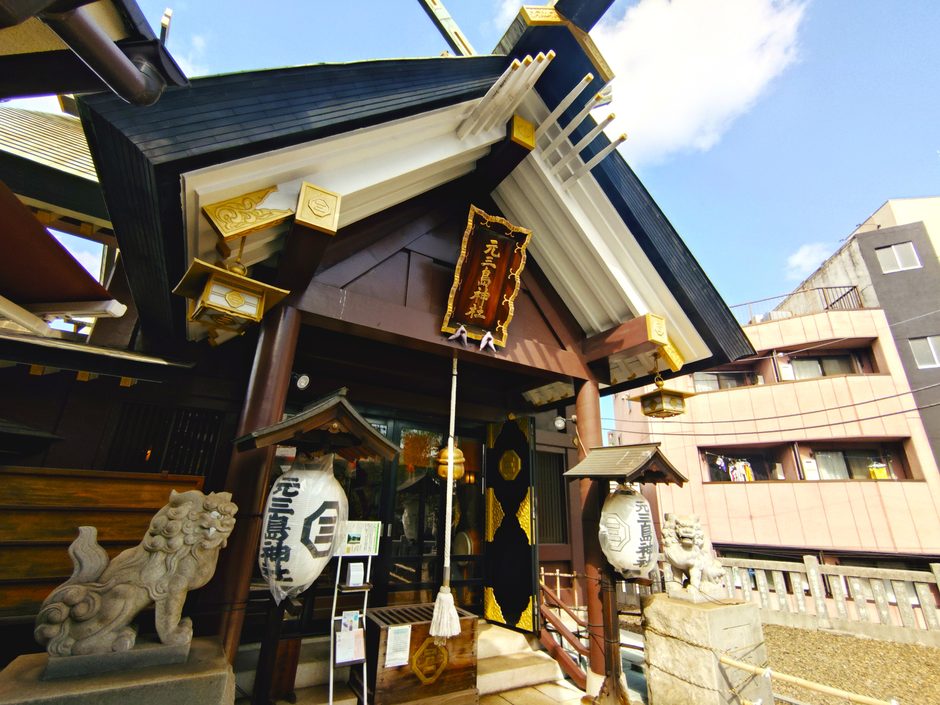
Enshrined in Negishi, Taito Ward, Tokyo, Moto-Mishima Shrine (Moto-Mishima Jinja) is a historic ancient shrine said to have been founded when Kono Michiari consecrated Oyamazumi Shrine from Iyo Province. It reached its present site after undergoing land clearing and redevelopments by the Edo Shogunate during the Edo period. Boasting exceptional accessibility located just a short walk from the North Exit of JR Uguisudani Station, it is fondly cherished as one of the Shitaya Seven Lucky Gods (Jurojin). It is also a spot where history and downtown Edo charm breathe vibrantly, housing a haiku monument associated with Masaoka Shiki on the grounds.
【History & Origins】An Ancient Shrine in Taito Ward Consecrated by Kono Michiari from Iyo-Omishima
The shrine’s history dates back to 1281 (Koan 4) during the Koan Campaign (the second Mongol invasion of Japan).
Kono Michiari, a vassal (gokenin) of the Kamakura Shogunate and a brave commander who led the Iyo Navy, prayed for victory to his clan deity (ujigami), Oyamazumi Shrine, before departing for battle. Upon returning after achieving brilliant martial feats on the battlefield, Michiari received a divine revelation (reimu) in a dream. Following this oracle, it is said to have originated when he consecrated a spirit from Oyamazumi Shrine—located in Omishima, Imabari City, Ehime Prefecture (the Ichinomiya of Iyo Province and the overall guardian shrine of Japan)—at the Kono clan’s residence in Toshima District, Musashi Province (present-day Ueno-yanouchi).
Entering the Edo period, the shrine reached peak prosperity, receiving shrine land grants from the Tokugawa Shogun family. However, urban planning and land designations by the Shogunate forced the shrine to relocate twice. When it was moved to Asakusa, local parishioners (ujiko) who had been worshipping in Kanasugi Village raised strong appeals, saying, “It is troublesome if our local guardian deity moves far away.”
Thus, in 1710 (Hoei 7), the parishioners remaining in Kanasugi Village temporarily relocated (or merged) the sacred image of Mishima Shrine onto the grounds of Kumano Shrine, which existed at that location, worshipping it as their local guardian deity once again. Originating from the meaning of “the historic place where Mishima Myojin was originally enshrined” or “the location close to Mount Ueno prior to the relocation,” it is said to have been named “Moto-Mishima Shrine” (“Original Mishima Shrine”) in contrast to Mishima Shrine (the head shrine) in Asakusa.
【Enshrined Deities & Divine Blessings】Divine Virtues of Victory Prayers and Good Fortune Granted by Oyamazumi-no-Mikoto and Other Deities
The primary enshrined deity (Shusaijin) is Oyamazumi-no-mikoto, with Izanagi-no-mikoto enshrined in the side altar (Aidenjin), alongside Jurojin, one of the Shitaya Seven Lucky Gods. Because deities presiding over mountain abundance, sea protection, and nation-building are enshrined together, it is believed to bring comprehensive good fortune.
- Increasing Financial Fortune & Business Prosperity: Because mountains yield abundant blessings (such as timber and minerals), the deity is deeply worshipped as a “Deity of Bountiful Blessings” that builds wealth and expands business.
- Prayers for Victory & Warding Off Evil: Originating from the history of a brave Kamakura-period Iyo Navy commander praying for military success and accomplishing great feats during the Mongol invasions, worshipers receive strong protection for competitions and overcoming hardships.
- Safe Childbirth, Ancestral Prosperity & Family Safety: Watched over by Izanagi-no-mikoto, the deity of nation-building, and deities of nature overflowing with life force, the shrine protects new life and family safety.
- Health, Longevity, Wealth & Long Life: Jurojin of the Shitaya Seven Lucky Gods enshrined on the grounds is a deity of longevity holding a gourd filled with the elixir of immortality. It is believed to bring not just long life, but a “happy longevity accompanied by wealth.”
【Highlights & Recommended Worship Route of Moto-Mishima Shrine】
【Approach Path】A Unique Approach Path Tucked Between Buildings in a Commercial District
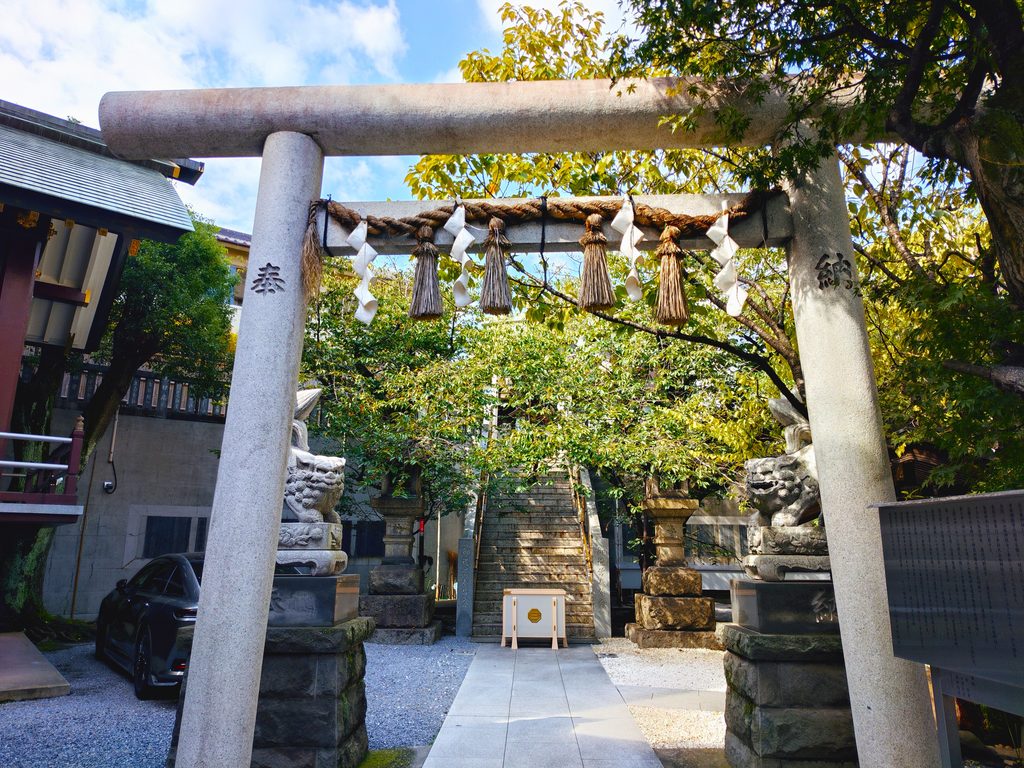
Right outside the North Exit of JR Uguisudani Station stands a stone monument engraved with “Mishima Shrine.” Proceeding slightly down an alley lined with hotels from there brings you to the shrine entrance and the stone “Ichino-torii” (First Torii Gate).
Passing under the Torii gate reveals a steep flight of stone steps leading toward the worship hall.
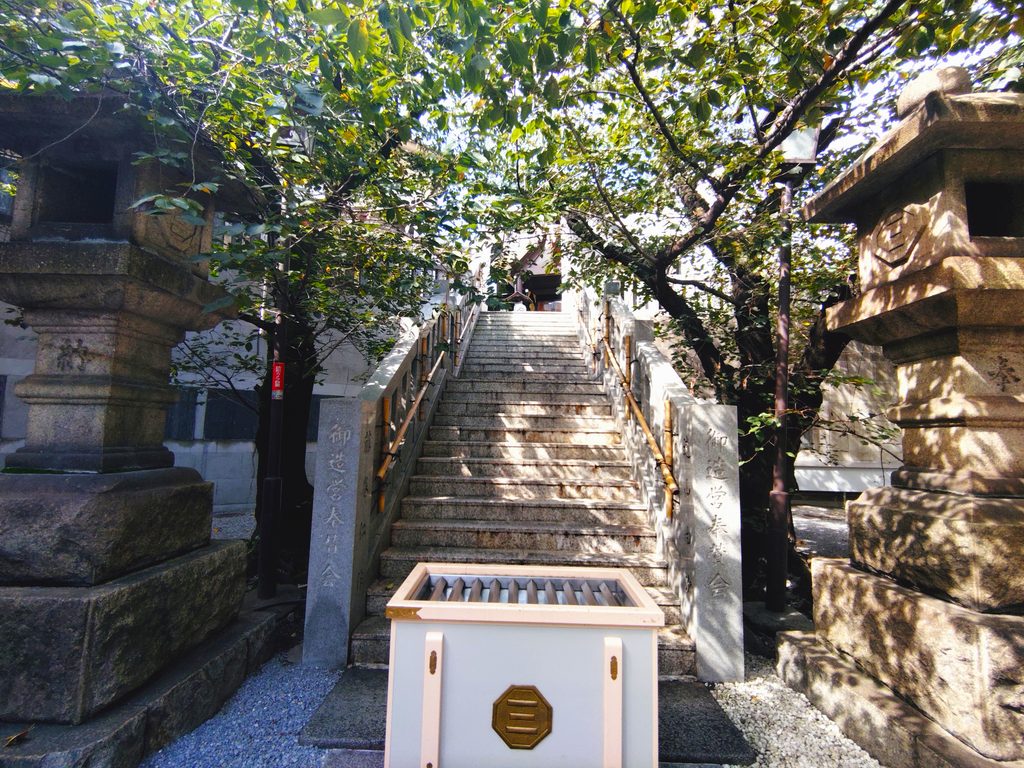
Reaching the top of the stone steps brings you to a modern reinforced-concrete worship hall standing proudly atop the high ground.
【Shrine Halls】Solemn Honden and Haiden Unique to an Urban Shrine Integrated with Buildings
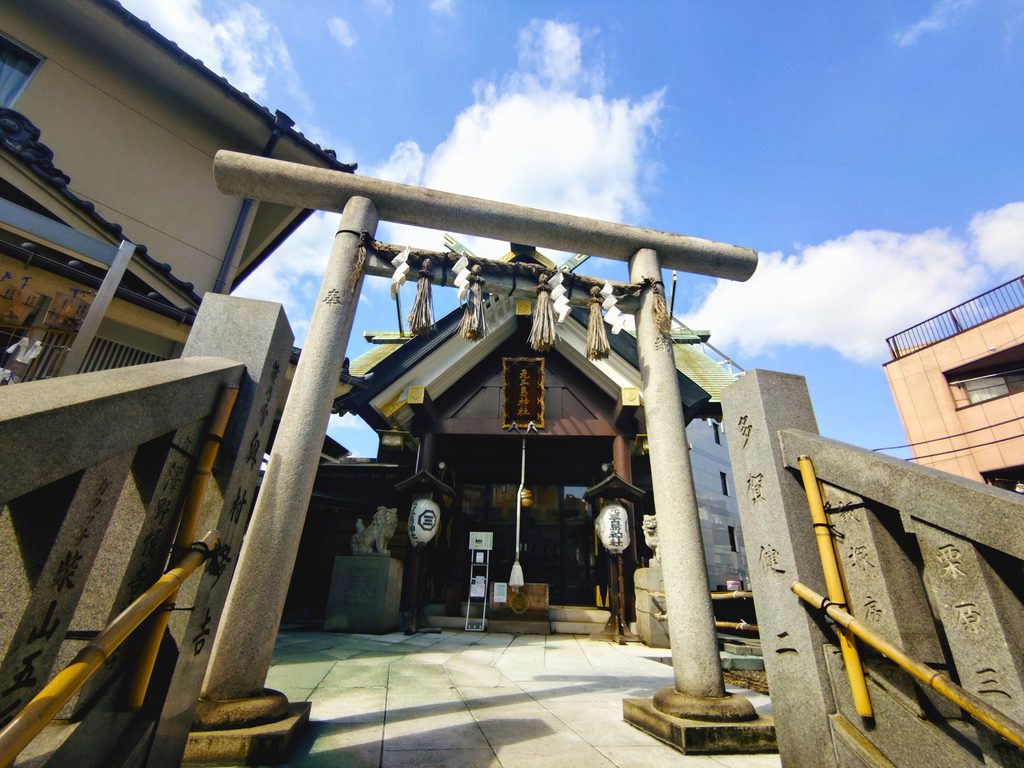
The former shrine halls built in 1871 (Meiji 4) were very grand, but were completely destroyed by fire during the Tokyo Air Raids in 1945 (Showa 20). Rebuilt after the war, those structures also suffered severe aging over the years. Considering safety, they were newly rebuilt in 1976 (Showa 51) into the present sturdy concrete foundation and wooden shrine structure.
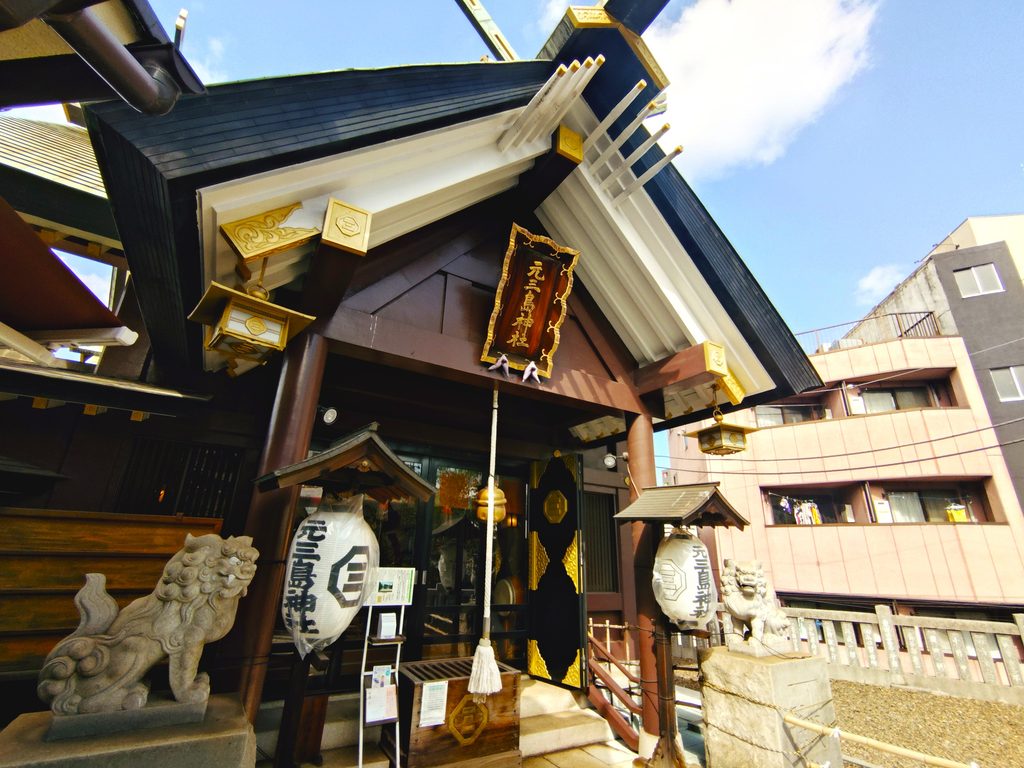
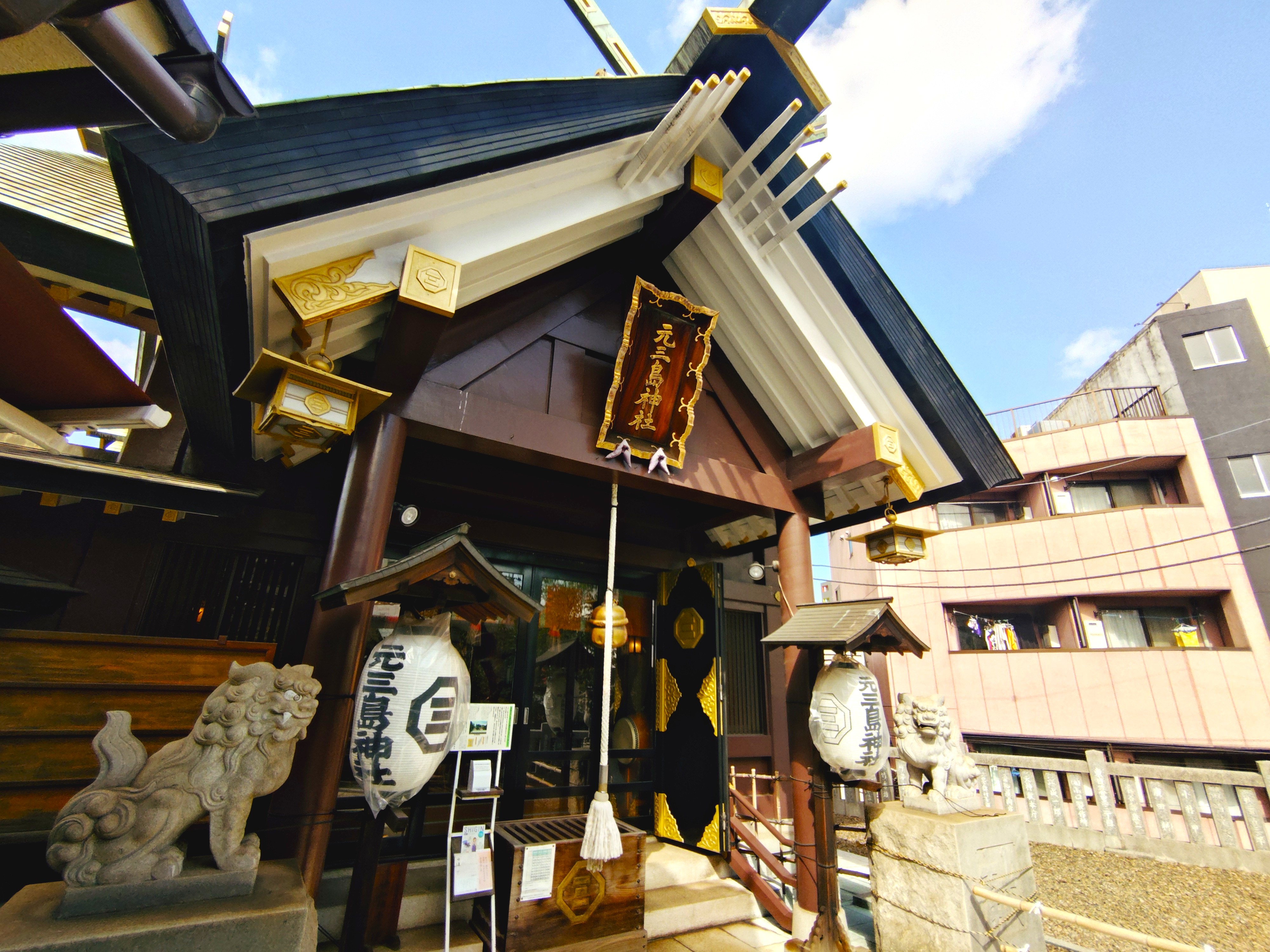
The greatest feature of Moto-Mishima Shrine is that the shrine hall and shrine office are enshrined on the “second floor” atop a concrete artificial platform. This is a piece of modern ingenuity often seen in urban building-type shrines or elevated shrines with limited land space.
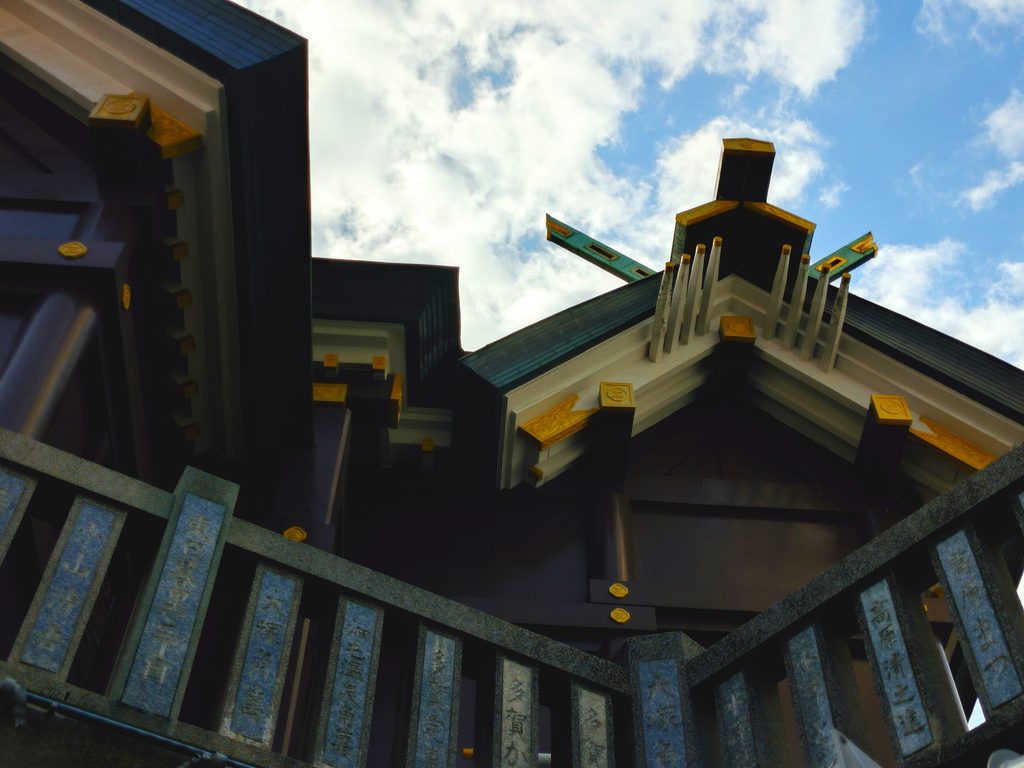
Despite its modern two-story structure, the single-story wooden shrine building resting on the artificial platform adopts an authentic Shinmei-zukuri style following traditional shrine architecture. Though compact, it boasts a very serene, beautiful triple shrine hall arrangement with the Worship Hall (Haiden), Offering Hall (Heiden), and Main Hall (Honden) lined up in a straight line from front to back. One can feel the fresh, ancient Japanese architectural design represented by Ise Jingu, seen in the straight lines of the roof and the ridge-supporting pillars (munamochi-bashira).
【Hiyoke Inari Shrine】A Sub-shrine Praying for Fire Prevention and Business Prosperity
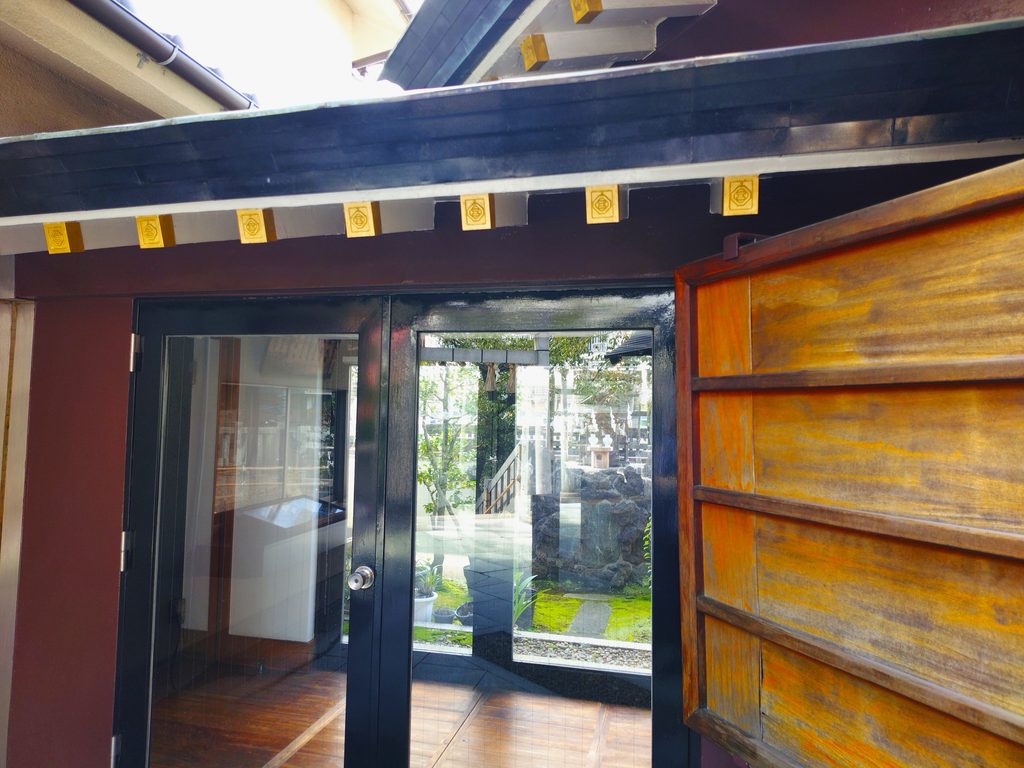
Lined up alongside the worship hall is the sub-shrine “Hiyoke Inari Shrine” (Hiyoke Inari Jinja). The enshrined deity is Ukemochi-no-mikoto (Ukanomitama-no-kami).
In the town of Edo where fires were once frequent, this Inari shrine retains the traditional mood of Edo, deeply worshipped by local residents as a guardian deity protecting people from fires.
【Moto-Mishima Shrine Goshuin】
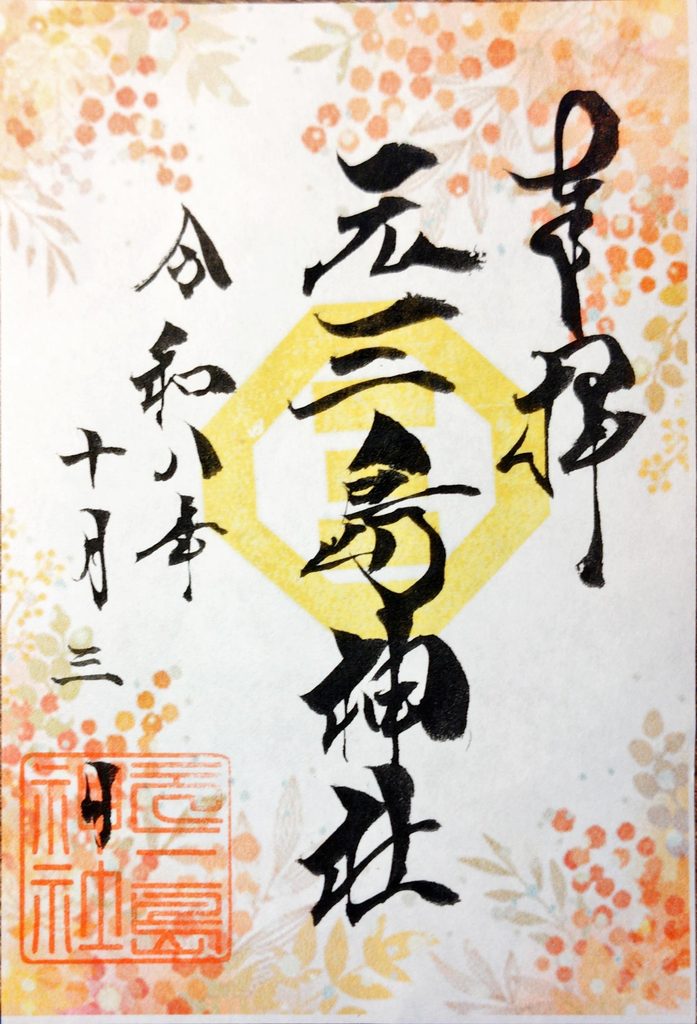
【Moto-Mishima Shrine On-Site Visit Report & Original Evaluation】
Moto-Mishima Shrine On-Site Review & Evaluation Score
| Evaluation Category | Score | Key Features / Highlights |
|---|---|---|
| Accessibility | (5.0) | Boasts outstanding accessibility, located about a 1-minute walk from the North Exit of “Uguisudani Station” on the JR Yamanote and Keihin-Tohoku Lines. |
| Tranquility | (3.5) | Despite its highly convenient location in front of the station, a relatively calm and peaceful atmosphere flows through the shrine grounds. |
| History & Heritage | (3.5) | Said to be founded in the late Kamakura period, it is also known as an enshrined site of the Shitaya Seven Lucky Gods (Jurojin) and a location tied to Masaoka Shiki. |
| Goshuin Variety | (3.5) | Thoughtful service is provided for regular Goshuin as well as during special periods such as the Shitaya Seven Lucky Gods Pilgrimage. |
| Nature & Scenery | (2.0) | Because it is located in an urban building district and tight space in front of the station, the natural expanse and scenic views are compact. |
| Scale & Grounds | (2.0) | The site is compact, with shrine halls and structures efficiently arranged to make effective use of the elevation changes. |
【On-Site Report | Personal Impressions and Atmosphere】
The defining characteristic of Moto-Mishima Shrine is its “two-story” structure utilizing city-center land. As you climb step-by-step up the steep stone stairs at the end of the approach path, you feel a mysterious sense of calm, physically and mentally distancing yourself from the bustling atmosphere in front of the station. The 2nd-floor grounds atop the stairs are surprisingly open with great views. The beautiful Shinmei-zukuri shrine hall stands with dignified grace, exuding a hidden-gem atmosphere that makes you completely forget you are right in the middle of an entertainment district.
However, from late afternoon through the night, the area around Uguisudani Station shifts heavily into an adult nightlife atmosphere. If visiting alone as a female traveler wishing to peacefully enjoy the grounds, praying in the morning when light streams in and the grounds shine most refreshingly is overwhelmingly recommended. Since it is close to the station, heading straight inside the station right after praying is advised. (If traveling alone as a woman, it is better not to wander around the immediate neighborhood.)
【Nearby Sightseeing Spots to Visit Together】
Ono Terusaki Shrine, Kanei-ji Temple, Tokyo National Museum, Kanei-ji Kaisando Hall, Ueno Toshogu Shrine, Hanazono Inari & Gojo Tenjin Shrine, Shinobazu Pond Bentendo



【Basic Information & Access】
【Access by Train / Car and Parking】
*No parking available.
【Address & Official Website】
1-7-11 Negishi, Taito Ward, Tokyo 110-0003