 Kanata's Japan Shrine Guide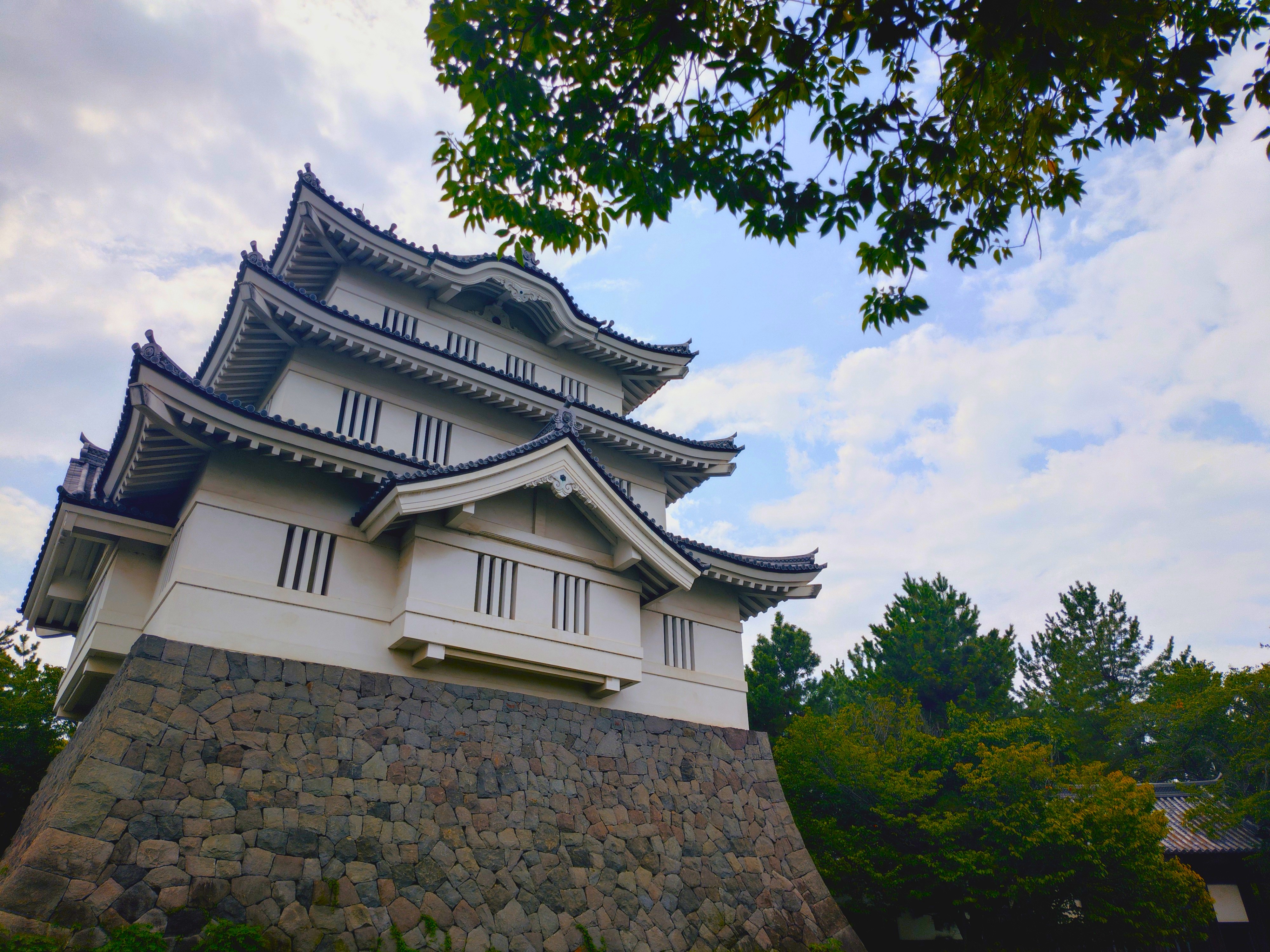

目次
- 【Overview of Oshi Castle Three-Story Yagura】
- 【Inside Gyoda City Museum】
- 【Museum Armor & Sword Exhibition】
- 【Museum Haniwa Exhibition】
- 【Bell of Oshi Castle】
- 【Oshi Castle East Gate】
- 【Reconstructed Oshi Castle Three-Story Yagura】
- 【Nearby Tourist Spots】
- 【Oshi Castle Three-Story Yagura Access】
- Admin’s Impressions
- Oshi Castle Three-Story Yagura Address
- Oshi Castle Three-Story Yagura Web Page
【Overview of Oshi Castle Three-Story Yagura】
Located in Gyoda City, Saitama Prefecture, the Oshi Castle Three-Story Yagura (Gosankai Yagura) was a structure that served as the de facto keep (tenshu) and symbol of the 100,000-koku Oshi Domain. Widely known as the setting for the movie The Floating Castle (Nobou no Shiro), it is now cherished by many tourists as an exhibition room for the Gyoda City Museum (with an observation room on the top floor).
【History of Oshi Castle Three-Story Yagura】
Oshi Castle was built around 1478 (Bunmei 10) during the mid-Muromachi period by the Narita clan (father and son Shoto and Akitasu Narita), local powerful warlords who unified the area and expanded their influence. At the time, another local clan known as the “Oshi clan” was based on that land.
The Narita clan defeated them, seized the land, and dramatically transformed the surrounding marshlands into a massive fortress—Oshi Castle—to demonstrate their dignity as the new rulers. Built on this unique terrain surrounded entirely by deep marshes, when Mitsunari Ishida of Toyotomi Hideyoshi’s army launched a massive “water siege” (mizugoseme) in 1590, the castle did not sink. Instead, it appeared to float on the water, giving rise to its impregnable legend and the praised moniker “The Floating Castle” (Uki-jo).
Regrettably, due to the Abolition of the Han System (1871) and the Castle Abolition Edict (1873) following the Meiji Restoration, all structures of Oshi Castle (including the three-story yagura, inner citadel palace, gates, and walls) were auctioned off and thoroughly demolished. Although the site where the current Oshi Castle Three-Story Yagura stands is the former location of the inner citadel (honmaru), it is not the original historical structure itself, but a newly developed area maintained as a historic park.
【Inside Gyoda City Museum】
Inside the museum, authentic historical artifacts related to the Abe and Matsudaira clans, who ruled the Oshi Domain during the Edo period, are lined up in abundance. Heavy armor (yoroi) said to have been used by domain lords, sharply gleaming swords, and beautifully lacquered furnishings are on display, allowing visitors to sense the refinement of a 100,000-koku feudal lord (daimyo) culture.
![20260802 124553696 1024x768 - Oshi Castle Three-Story Yagura [Saitama]](https://japan-shrine.info/wp-content/uploads/20260802_124553696-1024x768.jpg "Oshi Castle Three-Story Yagura [Saitama]")
【Museum Armor & Sword Exhibition】
![20260802 124837242 1024x768 - Oshi Castle Three-Story Yagura [Saitama]](https://japan-shrine.info/wp-content/uploads/20260802_124837242-1024x768.jpg "Oshi Castle Three-Story Yagura [Saitama]")
Unlike the rugged armor of the Warring States period, the armor (tosei gusoku) exhibited in the museum possesses the artistic beauty crafted during the peaceful Edo period as a symbol of status for feudal lords and samurai.
【Museum Haniwa Exhibition】
Many of the haniwa (terracotta clay figures) exhibited in the Gyoda City Museum were excavated from the Sakamaki No. 14 Kofun within the city. Because they are exceptionally well-preserved and retain their original forms so beautifully, they have been collectively designated as Important Cultural Properties of Japan.
![20260802 124936785 1024x768 - Oshi Castle Three-Story Yagura [Saitama]](https://japan-shrine.info/wp-content/uploads/20260802_124936785-1024x768.jpg "Oshi Castle Three-Story Yagura [Saitama]")
A wide variety of haniwa are displayed—not only horses, but also warriors holding shields, women in kimono, and even figures shaped like houses and waterfowl—leaving visitors awestruck by the high level of craftsmanship possessed by ancient people.
【Bell of Oshi Castle】
![20260802 130014355 1024x768 - Oshi Castle Three-Story Yagura [Saitama]](https://japan-shrine.info/wp-content/uploads/20260802_130014355-1024x768.jpg "Oshi Castle Three-Story Yagura [Saitama]")
This bell was not originally cast at Oshi Castle. When the Matsudaira clan was ordered to relocate from Ise Province (Kwana City, Mie Prefecture) to the Oshi Domain (Gyoda) in 1823 (Bunsei 6), they loaded their favorite giant bell onto a ship and transported it across a distance of roughly 500 kilometers.
![20260802 125105398 1024x768 - Oshi Castle Three-Story Yagura [Saitama]](https://japan-shrine.info/wp-content/uploads/20260802_125105398-1024x768.jpg "Oshi Castle Three-Story Yagura [Saitama]")
The bell currently hanging in the bell tower is a second-generation replica recreated in 1992 (Heisei 4). The “authentic bell” is on permanent display inside the Gyoda City Museum (a City-designated Cultural Property), where visitors can view its heavy inscriptions and historical battle scars up close.
【Oshi Castle East Gate】
The East Gate is an imposing wooden castle gate positioned at the entrance leading into the inner citadel (honmaru).
![20260802 130140110 1024x768 - Oshi Castle Three-Story Yagura [Saitama]](https://japan-shrine.info/wp-content/uploads/20260802_130140110-1024x768.jpg "Oshi Castle Three-Story Yagura [Saitama]")
It is said to have been reconstructed and restored in modern times based on the “Former Yoshikawa Family Front Gate,” a valuable remaining artifact of a samurai residence in Gyoda City. It stands as a gate packed with the passion and attention to detail of museum curators who meticulously brought a lost part of the castle back to life using real data from local samurai culture.
【Reconstructed Oshi Castle Three-Story Yagura】
![20260802 130256702 1024x768 - Oshi Castle Three-Story Yagura [Saitama]](https://japan-shrine.info/wp-content/uploads/20260802_130256702-1024x768.jpg "Oshi Castle Three-Story Yagura [Saitama]")
Reconstructed in 1988 (Showa 63), this yagura features striking white walls. The beautiful overlapping roof gables unique to Japanese castles, such as chidori-hafu (dormer gables) and kara-hafu (undulating bargeboards), make for a picturesque view from any angle. The interior is connected to the Gyoda City Museum’s exhibition rooms, and from the 3rd-floor observation deck, visitors can look out over the streetscapes of Gyoda and Maruhakayama Kofun, where Mitsunari Ishida set up his war camp.
![weekend drive gyoda historic retro route - Oshi Castle Three-Story Yagura [Saitama]](https://japan-shrine.info/wp-content/uploads/weekend-drive-gyoda-historic-retro-route.jpg "Oshi Castle Three-Story Yagura [Saitama]")
Routes to Gyoda City are summarized below. We hope you find this helpful as a reference.
【Nearby Tourist Spots】
Gyoda Hachiman Shrine, Vert Cafe, Sakitama Museum of Ancient Funerary Mounds, Sakitama Shrine, Ancient Lotus Park & Gyoda Tower, Oshi Castle Three-Story Yagura, Oshi Toshogu Shrine
![20260802 121415222 2 - Oshi Castle Three-Story Yagura [Saitama]](https://japan-shrine.info/wp-content/uploads/20260802_121415222-2.jpg "Oshi Castle Three-Story Yagura [Saitama]")
![20260802 113325654 - Oshi Castle Three-Story Yagura [Saitama]](https://japan-shrine.info/wp-content/uploads/20260802_113325654.jpg "Oshi Castle Three-Story Yagura [Saitama]")
![20260802 102935112 2 - Oshi Castle Three-Story Yagura [Saitama]](https://japan-shrine.info/wp-content/uploads/20260802_102935112-2.jpg "Oshi Castle Three-Story Yagura [Saitama]")
![20260802 1000068422 - Oshi Castle Three-Story Yagura [Saitama]](https://japan-shrine.info/wp-content/uploads/20260802_1000068422.jpg "Oshi Castle Three-Story Yagura [Saitama]")
![20260802 091029271 2 - Oshi Castle Three-Story Yagura [Saitama]](https://japan-shrine.info/wp-content/uploads/20260802_091029271-2.jpg "Oshi Castle Three-Story Yagura [Saitama]")
![20260802 123655916 - Oshi Castle Three-Story Yagura [Saitama]](https://japan-shrine.info/wp-content/uploads/20260802_123655916.jpg "Oshi Castle Three-Story Yagura [Saitama]")
【Oshi Castle Three-Story Yagura Access】
Admin’s Impressions
An unmissable spot when walking around Gyoda is the site of Oshi Castle, a beautiful castle surrounded by lush greenery. Although the original buildings were lost during the Meiji period, the site is now immaculately maintained as a historic park. Inside the climate-controlled, comfortable museum, there are not only textbook-like historical exhibits, but also cute figures like ancient horse haniwa, as well as radiant lacquered armor and swords. Even without deep historical knowledge, it can be enjoyed much like visiting an art gallery.
![a363f275300bd9b54dcaf810a1afb901 - Oshi Castle Three-Story Yagura [Saitama]](https://japan-shrine.info/wp-content/uploads/sng/a363f275300bd9b54dcaf810a1afb901.jpg "Oshi Castle Three-Story Yagura [Saitama]")