 Kanata's Japan Shrine Guide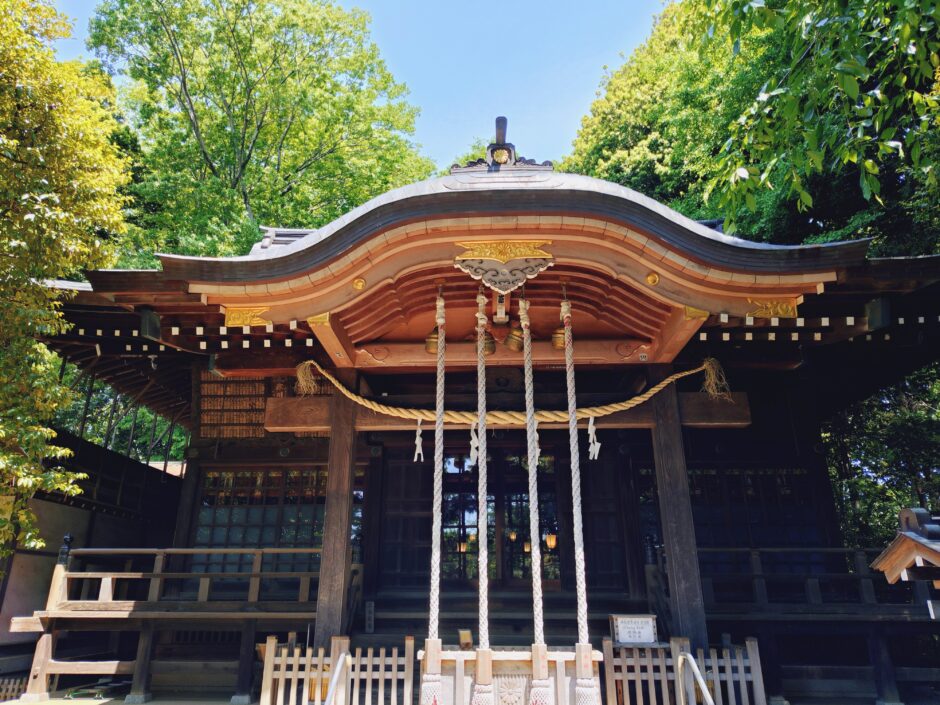

目次
- [Overview of Shakujii Hikawa Shrine]
- [Shakujii Hikawa Shrine Grounds]
- 【Shakujii Hikawa Shrine Buildings (Shaden)】
- 【Subsidiary Shrines (Keinai-masha)】
- 【Overview of Shakujii Park (Sanpoji Pond)】
- 【Sanpoji Pond Itsukushima Shrine (External Subsidiary)】
- 【Uga Shrine (External Subsidiary)】
- 【Mizusuji Shrine (External Subsidiary)】
- 【Himeduka (The Princess Mound)】
- 【Food Trucks】
- 【Shakujii Hikawa Shrine Goshuin】
- 【Shakujii Hikawa Shrine Nearby Tourist Spots (Within a 30-Minute Walk)】
- 【Shakujii Hikawa Shrine Access】
- Admin’s Impressions
- Address of Shakujii Hikawa Shrine
- Official Website of Shakujii Hikawa Shrine
[Overview of Shakujii Hikawa Shrine]
Shakujii Hikawa Shrine is said to have been founded during the Oei era (1394–1428) of the Muromachi period. The origins date back to when the Toshima clan, the lords ruling this region, chose to enshrine a go-bunrei (a divided divine spirit) from Omiya’s Hikawa Shrine—the head shrine of Musashi Province—inside their stronghold, Shakujii Castle, to act as its guardian. Since Sanpoji Pond, located just north of the shrine, was a critically valuable water source at the time, it is highly likely that the shrine was also positioned to protect this essential water.
The shrine dedicated the Hikawa Sanjin (the Three Deities of Hikawa):
Susanoo-no-Mikoto,Inadahime-no-Mikoto,Onamuchi-no-Mikoto (also known as Okuninushi-no-Mikoto / Daikoku-sama)
[Shakujii Hikawa Shrine Grounds]
![20260502 105354801 1024x768 - Shakujii Hikawa Shrine & Shakujii Park [Tokyo]](https://japan-shrine.info/wp-content/uploads/20260502_105354801-1024x768.jpg "Shakujii Hikawa Shrine & Shakujii Park [Tokyo]")
Passing through the torii gate, the main shrine building comes into view straight ahead.
![20260502 110256672 1024x768 - Shakujii Hikawa Shrine & Shakujii Park [Tokyo]](https://japan-shrine.info/wp-content/uploads/20260502_110256672-1024x768.jpg "Shakujii Hikawa Shrine & Shakujii Park [Tokyo]")
While the precinct itself is relatively compact, it is nestled against a deep forest spanning over 6,600 square meters (2,000 tsubo). This gives the shrine a sense of depth and mysticism rarely found in the middle of Tokyo.
【Shakujii Hikawa Shrine Buildings (Shaden)】
![20260502 1107590663 1024x768 - Shakujii Hikawa Shrine & Shakujii Park [Tokyo]](https://japan-shrine.info/wp-content/uploads/20260502_1107590663-1024x768.jpg "Shakujii Hikawa Shrine & Shakujii Park [Tokyo]")
The current buildings underwent a major reconstruction and expansion in 1972, funded by generous donations from the local parishioners (ujiko). While inheriting the traditional architecture of the Edo period, the structures are meticulously maintained and exude a refreshing, crisp atmosphere.
【Subsidiary Shrines (Keinai-masha)】
Along the path leading from the main precinct toward Sanpoji Pond, you will find a collection of small subsidiary shrines.
![20260502 110625479 1024x768 - Shakujii Hikawa Shrine & Shakujii Park [Tokyo]](https://japan-shrine.info/wp-content/uploads/20260502_110625479-1024x768.jpg "Shakujii Hikawa Shrine & Shakujii Park [Tokyo]")
These enshrine Kitano Shrine, Mitake Shrine, Afuri Shrine, Mitsumine Shrine, Sengen Shrine, and Inari Shrine.
【Overview of Shakujii Park (Sanpoji Pond)】
Shakujii Park is a metropolitan park located in Nerima Ward, Tokyo. It is centered around two large bodies of water: Sanpoji Pond and Shakujii Pond. Sanpoji Pond is an ancient natural spring pond home to the “Sanpoji Pond Marsh Plant Community,” a designated National Natural Monument. The surrounding area gathers rich historical sites, including Shakujii Hikawa Shrine, Itsukushima Shrine, the ruins of Shakujii Castle, and Himeduka (the Princess Mound).
![20260502 1116561642 2 1024x768 - Shakujii Hikawa Shrine & Shakujii Park [Tokyo]](https://japan-shrine.info/wp-content/uploads/20260502_1116561642-2-1024x768.jpg "Shakujii Hikawa Shrine & Shakujii Park [Tokyo]")
This guide primarily focuses on the area around Sanpoji Pond.
The pure waters here were once counted as one of the “Three Great Springs of Musashi.” Well-maintained wooden boardwalks loop around the water, allowing visitors to walk right alongside nature.
![20260502 115158697 1024x768 - Shakujii Hikawa Shrine & Shakujii Park [Tokyo]](https://japan-shrine.info/wp-content/uploads/20260502_115158697-1024x768.jpg "Shakujii Hikawa Shrine & Shakujii Park [Tokyo]")
Walking from Shakujii Hikawa Shrine toward Sanpoji Temple, a torii gate comes into view.
【Sanpoji Pond Itsukushima Shrine (External Subsidiary)】
![20260502 111933072 1024x768 - Shakujii Hikawa Shrine & Shakujii Park [Tokyo]](https://japan-shrine.info/wp-content/uploads/20260502_111933072-1024x768.jpg "Shakujii Hikawa Shrine & Shakujii Park [Tokyo]")
It is said that the Toshima clan founded Sanpoji Pond Itsukushima Shrine during the same Oei era (1394–1428) as the main Hikawa shrine.They invited the deity from the famous Itsukushima Shrine in Hiroshima to serve as the guardian of Sanpoji Pond, which is the source of the Shakujii River.
![20260502 111611616 1024x768 - Shakujii Hikawa Shrine & Shakujii Park [Tokyo]](https://japan-shrine.info/wp-content/uploads/20260502_111611616-1024x768.jpg "Shakujii Hikawa Shrine & Shakujii Park [Tokyo]")
Enshrined Deity: Ichikishimahime-no-Mikoto—syncretized with Benzaiten (the goddess of fortune and water).
【Uga Shrine (External Subsidiary)】
Uga Shrine sits on the northern shore of Sanpoji Pond, right next to Itsukushima Shrine.
While no written records remain to confirm its exact founding year, the prevailing theory is that it was established during the Oei era alongside the other shrines to protect the castle and the water source.
![20260502 112000300 1024x768 - Shakujii Hikawa Shrine & Shakujii Park [Tokyo]](https://japan-shrine.info/wp-content/uploads/20260502_112000300-1024x768.jpg "Shakujii Hikawa Shrine & Shakujii Park [Tokyo]")
Enshrined Deity: Ugajin (a mysterious deity typically depicted with the head of an old man and the body of a snake).
Tip for travelers: You can see a prominent statue of Ugajin in front of the Shinobazu-no-ike Bentendo hall inside Ueno Park in Taito Ward, Tokyo.
 Shinobaz Pond Benten Temple [Tokyo]
 ![DSC 0216 1024x768 - Shakujii Hikawa Shrine & Shakujii Park [Tokyo]](https://japan-shrine.info/wp-content/uploads/DSC_0216-1024x768.jpg "Shakujii Hikawa Shrine & Shakujii Park [Tokyo]")
Since ancient times, rumors have persisted that a giant serpent—the master of Sanpoji Pond—lives in a cave near here. Enshrining Ugajin at this location likely stems from the locals’ deep fear and reverence for this spiritual “master” of the pond.
【Mizusuji Shrine (External Subsidiary)】
![20260502 112154142 1024x768 - Shakujii Hikawa Shrine & Shakujii Park [Tokyo]](https://japan-shrine.info/wp-content/uploads/20260502_112154142-1024x768.jpg "Shakujii Hikawa Shrine & Shakujii Park [Tokyo]")
Mizusuji Shrine is located very close to Itsukushima Shrine. Though its founding year is also unknown, it is believed to have been established around the same time as the others to appease the spirits of the water.
Enshrined Deity: Mizuhanome-no-Kami
Mizuhanome-no-Kami is celebrated in Japanese mythology (Kojiki and Nihon Shoki) as one of Japan’s foremost water goddesses. Because she controls the waters that irrigate farm fields, she would have been one of the most vital deities for the farmers of the historic Shakujii village.
【Himeduka (The Princess Mound)】
Himeduka is located on the northern shore of Sanpoji Pond.
![20260502 113718337 1024x768 - Shakujii Hikawa Shrine & Shakujii Park [Tokyo]](https://japan-shrine.info/wp-content/uploads/20260502_113718337-1024x768.jpg "Shakujii Hikawa Shrine & Shakujii Park [Tokyo]")
According to local legend, when Shakujii Castle fell in 1477, the castle lord, Toshima Yasutsune, tied a golden saddle to his horse and dove into the pond to his death. His daughter, Princess Teru (Teruhime), followed her father and threw herself into the waters.
Pitying her tragic fate, the local villagers recovered her body, buried her here, and planted a pine tree to mark the grave. This tree came to be known as “Teruhime’s Pine” and has been replanted through the generations.
(Note: The massive tree near the mound is actually a designated famous tree of Nerima, a Shirakashi (White Oak). “Teruhime’s Pine” is a completely separate tree planted directly atop the mound itself, slightly apart from the oak).
【Food Trucks】
On the day of my visit, a food truck was parked at the back of Shakujii Hikawa Shrine (the area leading toward Sanpoji Pond).
![20260502 115602706 1024x768 - Shakujii Hikawa Shrine & Shakujii Park [Tokyo]](https://japan-shrine.info/wp-content/uploads/20260502_115602706-1024x768.jpg "Shakujii Hikawa Shrine & Shakujii Park [Tokyo]")
Enjoying a warm coffee and light snacks at the edge of the forest while soaking in the peaceful afterglow of the shrine visit was incredibly refreshing.
【Shakujii Hikawa Shrine Goshuin】
![shakujii hikawa 724x1024 - Shakujii Hikawa Shrine & Shakujii Park [Tokyo]](https://japan-shrine.info/wp-content/uploads/shakujii-hikawa-724x1024.jpg "Shakujii Hikawa Shrine & Shakujii Park [Tokyo]")
【Shakujii Hikawa Shrine Nearby Tourist Spots (Within a 30-Minute Walk)】
Sanpoji Temple, Dojo-ji Temple, Shakujii Park, Nerima City Shakujii Park Furusato Culture Museum.
![20260502 1222518732 520x300 - Shakujii Hikawa Shrine & Shakujii Park [Tokyo]](https://japan-shrine.info/wp-content/uploads/20260502_1222518732-520x300.jpg "Shakujii Hikawa Shrine & Shakujii Park [Tokyo]")
![20260502 1304402602 520x300 - Shakujii Hikawa Shrine & Shakujii Park [Tokyo]](https://japan-shrine.info/wp-content/uploads/20260502_1304402602-520x300.jpg "Shakujii Hikawa Shrine & Shakujii Park [Tokyo]")
I have summarized the walking/strolling routes below for your reference. I hope you find this helpful!
![walk in shakujii park 520x300 - Shakujii Hikawa Shrine & Shakujii Park [Tokyo]](https://japan-shrine.info/wp-content/uploads/walk-in-shakujii-park-520x300.jpg "Shakujii Hikawa Shrine & Shakujii Park [Tokyo]")
【Shakujii Hikawa Shrine Access】
Admin’s Impressions
The precinct of Shakujii Hikawa Shrine is quite intimate and compact. Yet, standing on ground that still holds the memories of the old Shakujii Castle, you can truly feel the weight of accumulated history.
As you step behind the shrine toward Sanpoji Pond, the air instantly shifts into a thick, rich forest atmosphere that completely makes you forget you are in the middle of Tokyo. Walking along the sun-dappled wooden boardwalks and experiencing a primeval ecosystem sustained by natural spring water makes this one of the few places in Tokyo where you can truly escape and reset.
The crisp forest of the Hikawa Shrine, the stately architecture of Sanpoji Temple, and the mystical waters of Sanpoji Pond—looping through these three spots together makes for a wonderful stroll that brings the deep history of Shakujii to light.
![f40318ab63705e25e4bc1b2f014139b1 - Shakujii Hikawa Shrine & Shakujii Park [Tokyo]](https://japan-shrine.info/wp-content/uploads/sng/f40318ab63705e25e4bc1b2f014139b1.png "Shakujii Hikawa Shrine & Shakujii Park [Tokyo]")