 Kanata's Japan Shrine Guide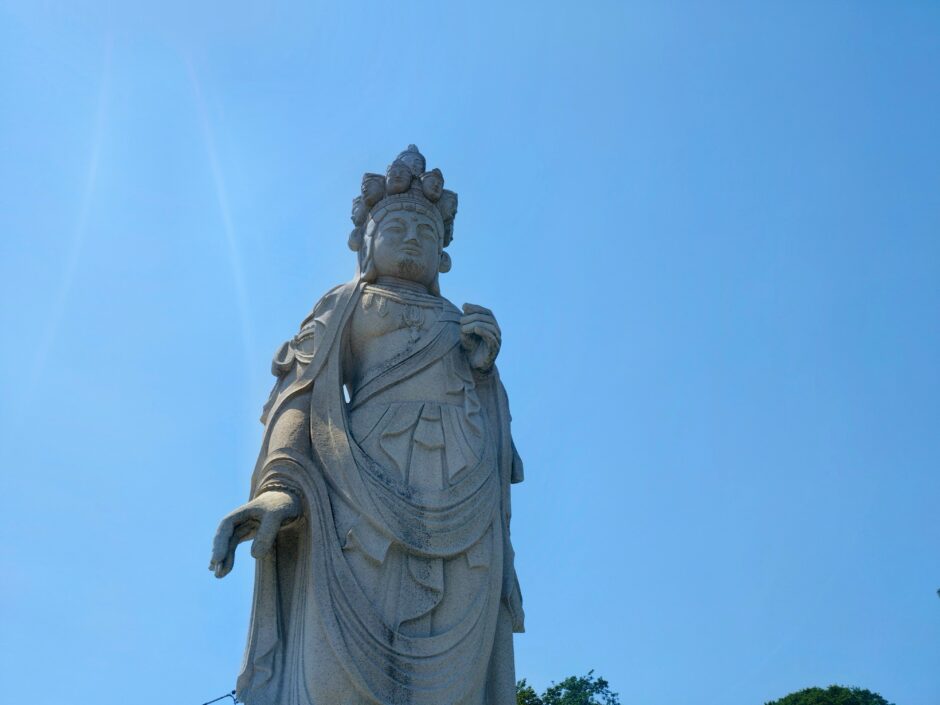

目次
- 【Overview of Sanpoji Temple】
- 【Sanpoji Temple Onarimon Gate】
- 【Sanpoji Temple Bronze Bell (Bonsho)】
- 【Kaiun Shusse Daikokuten】
- 【The Chozuya (Purification Fountain)】
- 【Sanpoji Temple Main Hall (Hondo)】
- 【Sanpoji Temple Konpon Daito (Tahoto Pagoda)】
- 【Sanpoji Temple Heiwa Kannon Statue (Eleven-Headed Kannon)】
- 【Sanpoji Temple Nyoirin Kannon-do Hall】
- 【The Shikoku 88-Temple Osunafumi Pilgrimage Ground】
- 【The Former Katshu Kaishu Mansion Nagayamon Gate】
- 【Sanpoji Temple Nearby Tourist Spots (Within a 30-Minute Walk)】
- 【Sanpoji Temple Access】
- Admin’s Impressions
- Address of Sanpoji Temple
- Sanpoji Temple Article Page
【Overview of Sanpoji Temple】
Like the neighboring Shakujii Hikawa Shrine, Sanpoji Temple is said to have been founded during the Oei era (1394–1428) of the Muromachi period. Its official name is Shakujii-zan Sanpoji. It was originally established by the lord of Shakujii Castle, the Toshima clan, to serve both as their bodaiji (family temple where the clan’s lineage rests) and as a strategic defensive outpost for the castle.
Following the fall of Shakujii Castle in 1477, the temple temporarily declined. However, once Tokugawa Ieyasu entered the Kanto region, the temple received strong patronage as a Goshuindi (land officially recognized and granted by the Shogunate), allowing it to flourish once more.
The temple enshrines Juichimen Kanzeon Bosatsu (Eleven-Headed Kannon Bodhisattva) as its primary deity.
【Sanpoji Temple Onarimon Gate】
As you proceed along the temple approach, a magnificent gate comes into view.
![20260502 124427667 1024x768 - Sanpoji Temple [Tokyo]](https://japan-shrine.info/wp-content/uploads/20260502_124427667-1024x768.jpg "Sanpoji Temple [Tokyo]")
The Onarimon Gate was built exclusively for the third Tokugawa Shogun, Iemitsu, to pass through whenever he stopped by Sanpoji Temple during his falconry (takagari) expeditions. While there are various theories regarding the exact year of its construction, it is traditionally said to have been built during the Kan’ei era (1624–1644) of the early Edo period.
![20260502 124413985 1024x768 - Sanpoji Temple [Tokyo]](https://japan-shrine.info/wp-content/uploads/20260502_124413985-1024x768.jpg "Sanpoji Temple [Tokyo]")
The gate was developed to coincide with the period when Shogun Iemitsu began frequently visiting Sanpoji for his hunts.
【Sanpoji Temple Bronze Bell (Bonsho)】
Next to the Onarimon Gate stands the Bonsho (large bronze temple bell).
![20260502 124333519 1024x768 - Sanpoji Temple [Tokyo]](https://japan-shrine.info/wp-content/uploads/20260502_124333519-1024x768.jpg "Sanpoji Temple [Tokyo]")
Like the Onarimon Gate, the Bonsho of Sanpoji is a historical bell cast during the reign of the third Shogun, Iemitsu. It is highly regarded as a masterpiece by Shiina Hyogo Yoshinori, one of the most prominent metal casters of the Edo period.
During World War II, a vast majority of temple bells across Japan were requisitioned for military metal drives (melted down to manufacture weapons). However, this specific bell was spared from the metal drive due to its immense historical value and remains here today. It is currently designated as a Tangible Cultural Property of Nerima Ward.
【Kaiun Shusse Daikokuten】
Beyond the Onarimon Gate, the hall dedicated to Kaiun Shusse Daikokuten comes into view.
![20260502 121555661 1024x768 - Sanpoji Temple [Tokyo]](https://japan-shrine.info/wp-content/uploads/20260502_121555661-1024x768.jpg "Sanpoji Temple [Tokyo]")
Although Sanpoji temporarily declined after the fall of the castle, it achieved a spectacular revival and prosperity (shusse, which also means career advancement or rising in the world) during the Edo period under the grand protection of the Tokugawa Shogunate as a Goshuindi. The temple’s history itself—”blooming magnificently once more after experiencing complete downfall”—came to be viewed as a symbol of “opening one’s luck and rising in the world.” Thus, Daikokuten was enshrined here as the deity embodying this spiritual power.
![20260502 121618562 1024x768 - Sanpoji Temple [Tokyo]](https://japan-shrine.info/wp-content/uploads/20260502_121618562-1024x768.jpg "Sanpoji Temple [Tokyo]")
As a highly auspicious place visited by the Shogun—the ultimate ruler of the land—the temple placed great importance on Daikokuten, the quintessential God of Fortune, as a way to share those divine blessings and good fortune with the local community.
【The Chozuya (Purification Fountain)】
Continuing past the Daikokuten hall, the Chozuya and the Main Hall come into view.
![20260502 1217348192 1024x768 - Sanpoji Temple [Tokyo]](https://japan-shrine.info/wp-content/uploads/20260502_1217348192-1024x768.jpg "Sanpoji Temple [Tokyo]")
While the structure of the Chozuya is simple and modest, it is equipped with a motion sensor; water automatically overflows as you approach it.
【Sanpoji Temple Main Hall (Hondo)】
![20260502 121800671 1024x768 - Sanpoji Temple [Tokyo]](https://japan-shrine.info/wp-content/uploads/20260502_121800671-1024x768.jpg "Sanpoji Temple [Tokyo]")
The original Main Hall was erected during the Oei era of the Muromachi period, but that initial structure was lost to the flames of war when Shakujii Castle fell in 1477. The current Main Hall is a historical building reconstructed during the Bunsei era (1818–1831) of the late Edo period.
【Sanpoji Temple Konpon Daito (Tahoto Pagoda)】
Looking to the right of the Main Hall, a Tahoto (a traditional two-tiered Buddhist pagoda) and a statue of Kannon come into view.
![20260502 122142479 1024x768 - Sanpoji Temple [Tokyo]](https://japan-shrine.info/wp-content/uploads/20260502_122142479-1024x768.jpg "Sanpoji Temple [Tokyo]")
The Konpon Daito pagoda was constructed as a part of a commemorative project celebrating the 600th anniversary of the temple’s founding.
【Sanpoji Temple Heiwa Kannon Statue (Eleven-Headed Kannon)】
![20260502 122156966 1024x768 - Sanpoji Temple [Tokyo]](https://japan-shrine.info/wp-content/uploads/20260502_122156966-1024x768.jpg "Sanpoji Temple [Tokyo]")
The Heiwa Kannon (Peace Kannon) Statue was erected in 1953, eight years after the end of World War II, during a time when the scars of war still ran deep. It was established to comfort the souls of those who perished in the war and to pray for world peace, ensuring that such a tragic conflict would never happen again.
【Sanpoji Temple Nyoirin Kannon-do Hall】
The current structure of the Nyoirin Kannon-do Hall was rebuilt in 1842 during the late Edo period (the 13th year of the Tenpo era).
![20260502 122418296 2 1024x768 - Sanpoji Temple [Tokyo]](https://japan-shrine.info/wp-content/uploads/20260502_122418296-2-1024x768.jpg "Sanpoji Temple [Tokyo]")
It enshrines Nyoirin Kannon Bosatsu (the Bodhisattva of Compassion holding the wish-fulfilling jewel) as its primary deity.
【The Shikoku 88-Temple Osunafumi Pilgrimage Ground】
![20260502 122726656 1024x768 - Sanpoji Temple [Tokyo]](https://japan-shrine.info/wp-content/uploads/20260502_122726656-1024x768.jpg "Sanpoji Temple [Tokyo]")
The Shikoku 88-Temple Osunafumi Pilgrimage Ground is a deeply sacred place of spiritual practice. It allows visitors to earn the exact same spiritual merits (goryaku) as the famous Shikoku Pilgrimage simply by walking a short distance through the temple precinct, without actually having to travel to Shikoku.
![20260502 123859215 2 1024x894 - Sanpoji Temple [Tokyo]](https://japan-shrine.info/wp-content/uploads/20260502_123859215-2-1024x894.jpg "Sanpoji Temple [Tokyo]")
This area was created out of the temple’s deep compassion for individuals who found it difficult to make the arduous journey to Shikoku—such as the elderly, the sick, and the impoverished—so that they too could forge a karmic connection with the Buddhas.
![20260502 122844757 1024x768 - Sanpoji Temple [Tokyo]](https://japan-shrine.info/wp-content/uploads/20260502_122844757-1024x768.jpg "Sanpoji Temple [Tokyo]")
To perform the ritual properly, you first bow to the statue of Kobo Daishi (the great master) at the entrance, chant the mantra “Namu Daishi Henjo Kongo” silently in your heart, and then proceed through the route in numerical order.
![20260502 123202961 1024x768 - Sanpoji Temple [Tokyo]](https://japan-shrine.info/wp-content/uploads/20260502_123202961-1024x768.jpg "Sanpoji Temple [Tokyo]")
Nestled quietly along this pilgrimage path is an Inari shrine named Naritasan Shusse Inari. In Japanese Buddhism (especially esoteric sects like Shingon), it is very common to enshrine Shinto deities (Chinjugami, or guardian gods) within temple grounds. This Inari deity was ritually invited (kanjo) from the famous Naritasan Shinshoji Temple in Chiba Prefecture to serve as a guardian deity overseeing the temple grounds and the paths of spiritual training.
【The Former Katshu Kaishu Mansion Nagayamon Gate】
The Former Katsu Kaishu Mansion Gate is a surviving remnant of the residence where Katsu Kaishu—the legendary trailblazer of the late Tokugawa shogunate—once lived. During the Meiji period, when the Katsu estate was being transferred to new ownership, the chief priest of Sanpoji Temple at the time requested to claim it, stating a desire to “protect an object of immense historical value,” and had it relocated here.
![20260502 125421899 1024x768 - Sanpoji Temple [Tokyo]](https://japan-shrine.info/wp-content/uploads/20260502_125421899-1024x768.jpg "Sanpoji Temple [Tokyo]")
It brings a profound sense of historical gravity to realize that Katsu Kaishu himself walked through this very gate every single day, including on his way to negotiate the bloodless surrender of Edo Castle with Saigo Takamori.
【Sanpoji Temple Nearby Tourist Spots (Within a 30-Minute Walk)】
Shakujii Hikawa Shrine, Dojo-ji Temple, Shakujii Park, Nerima City Shakujii Park Furusato Culture Museum.
![20260502 1055377902 520x300 - Sanpoji Temple [Tokyo]](https://japan-shrine.info/wp-content/uploads/20260502_1055377902-520x300.jpg "Sanpoji Temple [Tokyo]")
![20260502 1304402602 520x300 - Sanpoji Temple [Tokyo]](https://japan-shrine.info/wp-content/uploads/20260502_1304402602-520x300.jpg "Sanpoji Temple [Tokyo]")
The walking routes and itineraries are summarized below for your reference.
![walk in shakujii park 520x300 - Sanpoji Temple [Tokyo]](https://japan-shrine.info/wp-content/uploads/walk-in-shakujii-park-520x300.jpg "Sanpoji Temple [Tokyo]")
【Sanpoji Temple Access】
Admin’s Impressions
In stark contrast to the “silent forest” of the neighboring Hikawa Shrine, the sight of the Peace Kannon Statue and the brilliant vermilion Konpon Daito pagoda makes you feel the raw power of “shapes of prayer” built up by human hands. The narrow path lined with stone Buddhas for the Shikoku 88-Temple pilgrimage, in particular, felt like a special space where one can quietly face oneself.
From the elegant Onarimon Gate built exclusively for the Tokugawa Shogun to the heavy Nagayamon Gate relocated from Katsu Kaishu’s estate, the memories of the Muromachi, Edo, and Bakumatsu periods coexist beautifully within a single precinct. It was a deeply satisfying stroll steeped in rich layers of history.
1-15-6 Shakujiidai, Nerima Ward, Tokyo 177-0045
*Free parking available.
![f804ed72966d262c7128a242cf6c8d36 - Sanpoji Temple [Tokyo]](https://japan-shrine.info/wp-content/uploads/sng/f804ed72966d262c7128a242cf6c8d36.jpg "Sanpoji Temple [Tokyo]")