 Kanata's Japan Shrine Guide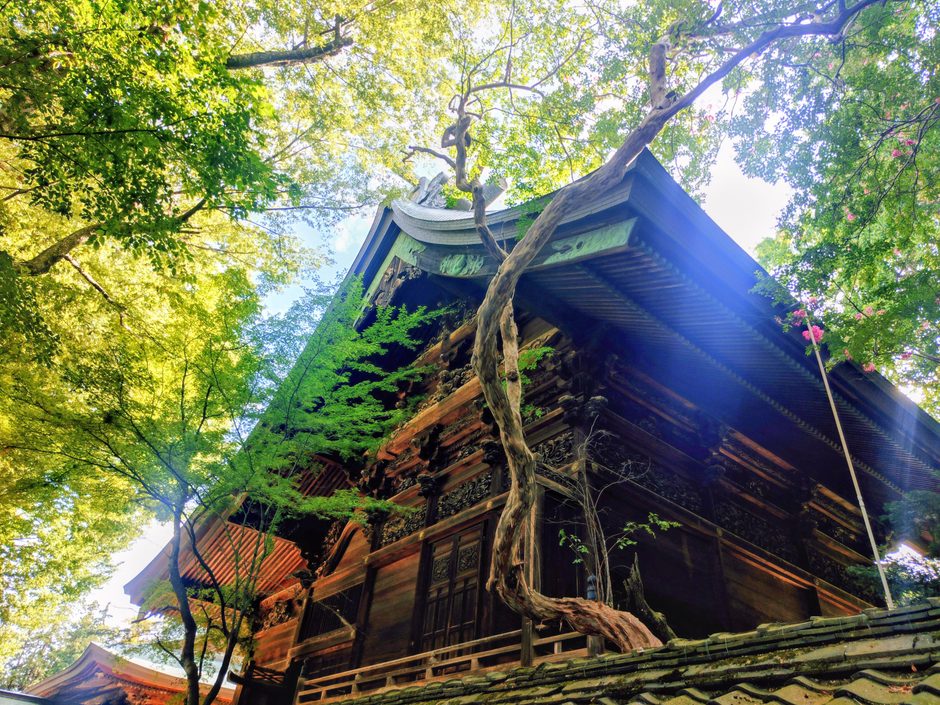

目次
- 【Overview and History of Takemizuwake Shrine】
- 【Highlights of Takemizuwake Shrine】
- 【Must-See Subsidiary and Auxiliary Shrines】
- 【Local Specialty: Uzura-Mochi】
- 【Takemizuwake Shrine Goshuin】
- 【Takemizuwake Shrine On-Site Visit Report & Original Evaluation】
- 【Nearby Tourist Spots to Visit Together】
- 【Basic Information & Access】
【Overview and History of Takemizuwake Shrine】
Nestled in Yahata, Chikuma City, Nagano Prefecture, Takemizuwake Shrine (Takemizuwake-jinja) is a remarkably ancient shrine in Northern Shinano. It was recorded in the Heian-period Engishiki Jinmeicho (Register of Deities) as a Myojin Taisha—the highest rank of shrine prestige—and is honored as the Fourth Shrine (Shinano-no-Kuni Shinomiya) of Shinano Province. As the guardian deity of “water and land,” it governs flood control for the Chikuma River (Shinano River)—the longest river system in Japan—as well as bountiful harvests for Zenkoji-daira, the largest granary region in Nagano Prefecture. To this day, it preserves a unique form of faith as a spiritual haven for taming the wild currents of the Chikuma River. Since the Heian period, when Hachiman deities were solemnly transferred (kanjo) from Iwashimizu Hachimangu Shrine in Kyoto, it also accumulated history as a shrine for “martial valor,” earning the deep reverence of Sengoku warlords like Takeda Shingen and Uesugi Kenshin. Locals affectionately refer to it as “Yahata’s Hachiman-sama.”
【Ancient Origins and Foundation Before the Common Era】
According to shrine legend, a deity first settled on this land—deifying the local environment itself—during the reign of the 8th Emperor Kogen (circa 214–156 BC). During the era of the subsequent 10th Emperor Sujin, local people plagued by repeated floods from the Chikuma River enshrined Takemizuwake-no-Okami, the indigenous deity over water, to pray for control over the river. This act marks the shrine’s formal founding. Successful water management calmed the raging Chikuma River, laying the foundation for the surrounding area to develop into the rich agricultural haven known today as the Zenkoji-daira (Nagano Basin). During the An’wa era (968–970 AD), the three Hachiman deities—led by Homutawake-no-Mikoto (Emperor Ojin), the tutelary deity of the Genji clan—were jointly invited and enshrined (kanjo) from Kyoto’s Iwashimizu Hachimangu Shrine.
【Enshrined Deities and Divine Blessings】
The enshrined deities are Takemizuwake-no-Okami and the Three Hachiman Deities (Hachiman Sanshin).
The shrine is widely known for blessings such as warding off evil (yakuyoke) and attracting good fortune, traffic safety, victory/luck in competition, and business prosperity.
【Highlights of Takemizuwake Shrine】
【Overwhelming Scale: The First Torii Gate (Otorii)】
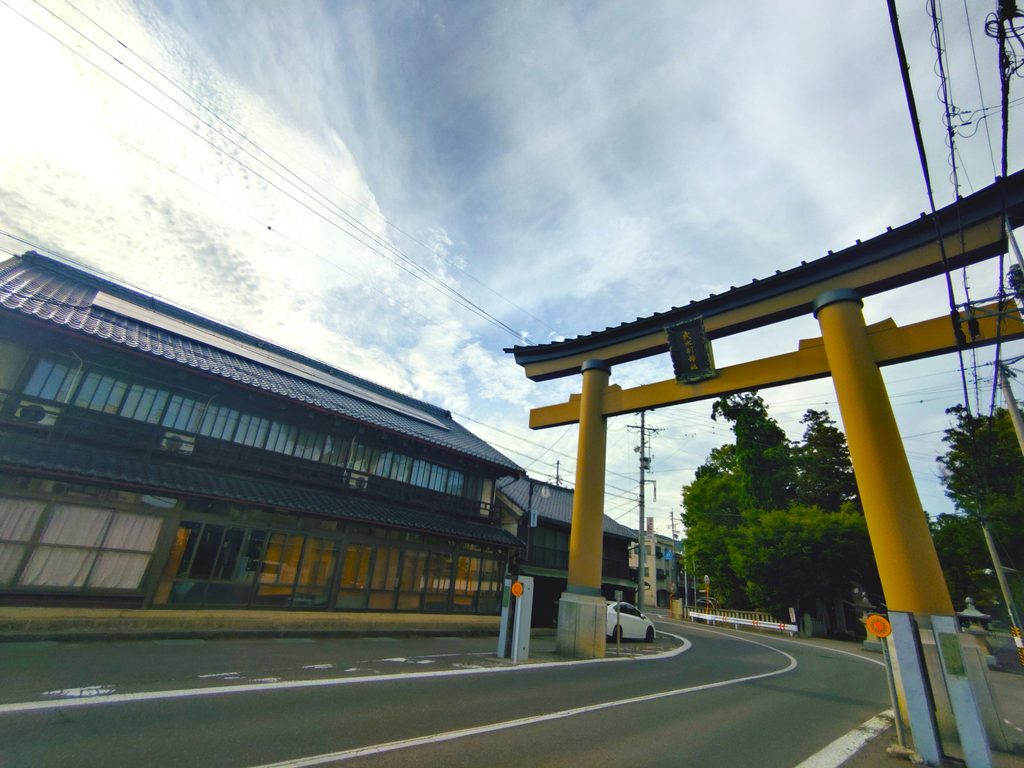
Suddenly appearing amidst a residential area along Prefectural Route 77 is the main entrance of the shrine, the First Torii (Ichino-Torii or Otorii). Built in the Myojin Torii style, featuring gracefully upward-curving top lintels (kasagi), its imposing figure spans across an active public road at an overwhelming scale.
【Taiko-bashi (Arched Drum Bridge)】
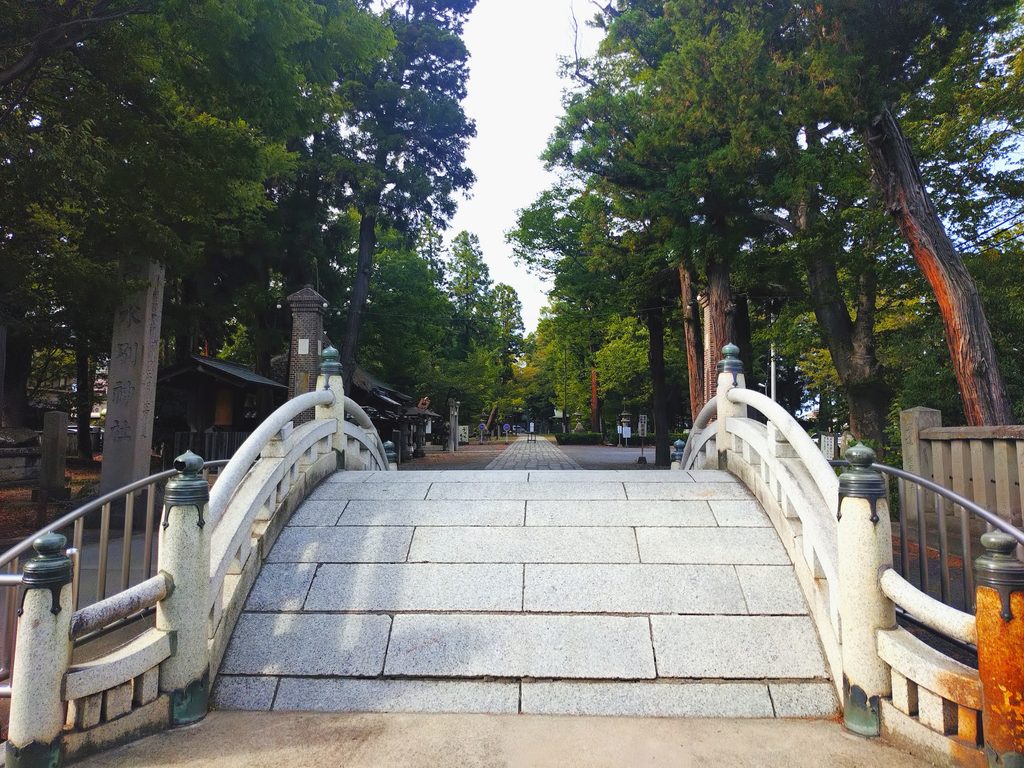
Passing through the Otorii, an extremely steep stone drum bridge (Taiko-bashi) appears right before your eyes. Also known as the Geba-bashi (“Dismount Bridge”), samurai—no matter how high their rank—were historically required to dismount their horses at this spot. Even today, it remains a sacred bridge reserved exclusively for the deities and the chief ritual performer (Tonin) chosen during the Great Otogashira Festival in December. Regular visitors proceed toward the inner grounds by walking past the left side of the bridge.
【A Beautiful Straight Approach and Ancient Trees】
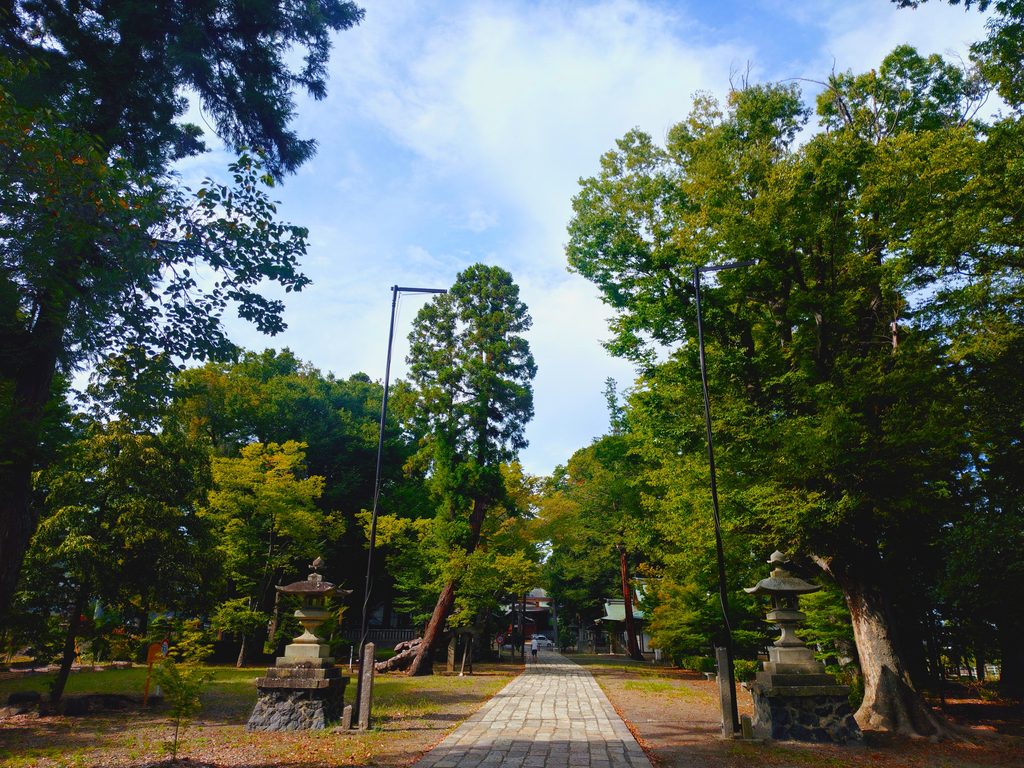
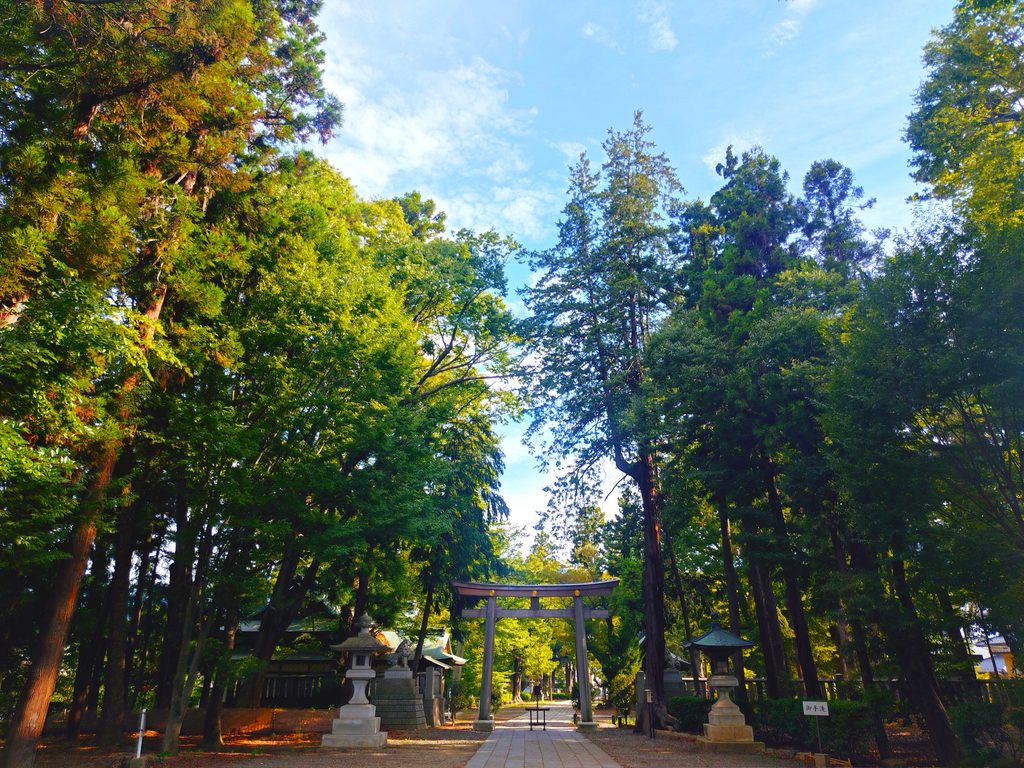
Bypassing the drum bridge leads to a broad, beautifully straight approach (sando) extending directly toward the main hall (honden). Flanking both sides of the approach is the Takemizuwake Shrine Shoso (a dense sacred forest surrounding the shrine grounds), designated as a Natural Monument of Nagano Prefecture.
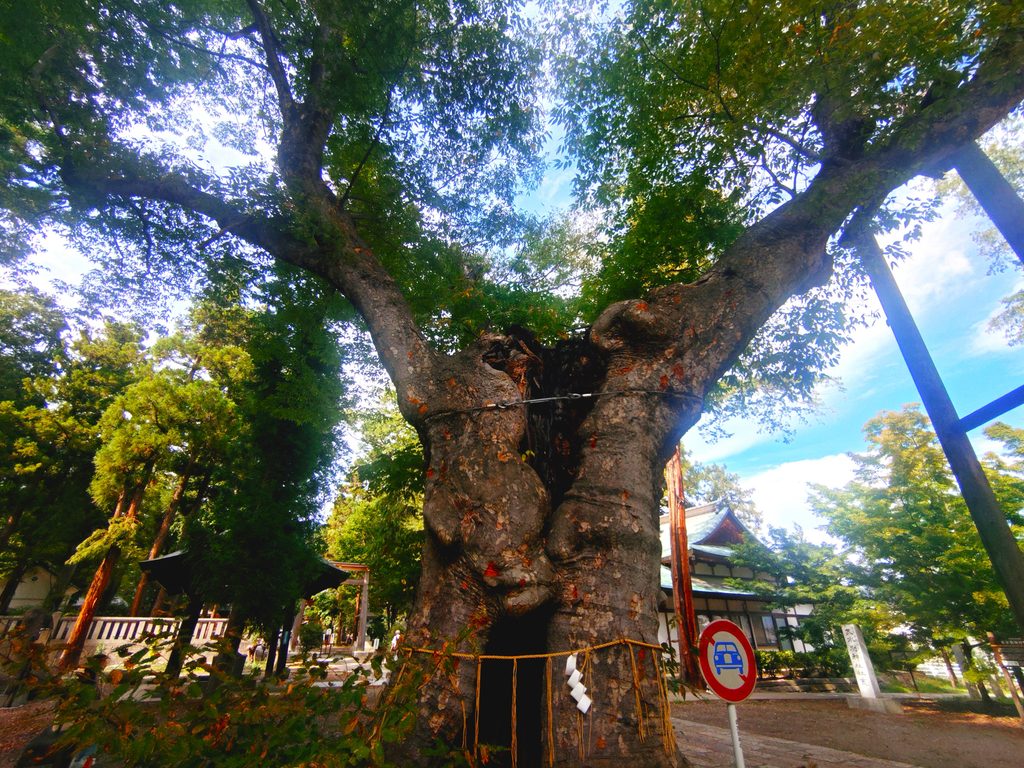
Dozens of massive, ancient Japanese cedars (sugi) and zelkova (keyaki) trees—some over 400 years old—stand in rows. With every step, surrounding urban sounds fade away, filling the atmosphere with refreshing, solemn natural power.
【Warmth of the Second Torii Gate (Naka-Torii)】
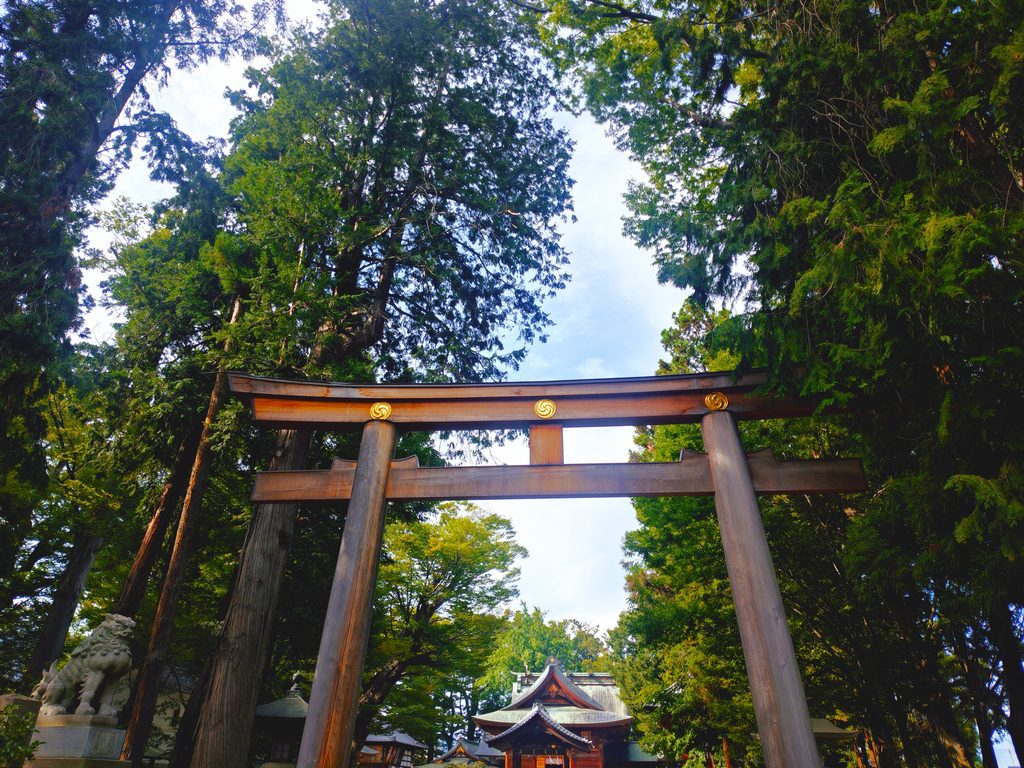
Advancing roughly 100 meters down the zelkova-lined approach brings you to the Second Torii (Nino-Torii or Naka-Torii), which quietly marks the area directly preceding the worship hall. Unlike the concrete First Torii, this gate is constructed from unpainted, natural timber (su-ki) in the Myojin Torii style, offering a warm and inviting feel.
【Worship Hall in the Irimoya-zukuri Style】
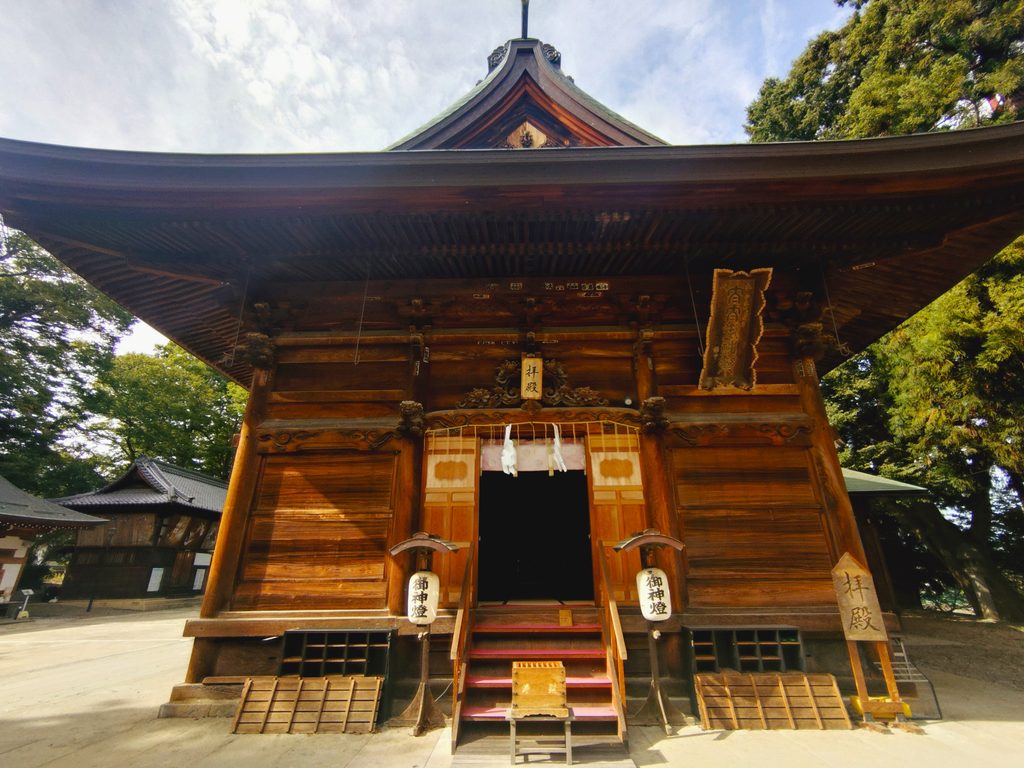
Walking along the approach and passing through the Second Torii brings you face-to-face with a grand building: the Worship Hall (haiden). Its roof features the sweeping curves of the hip-and-gable (irimoya-zukuri) style, exuding an authoritative yet welcoming aura.
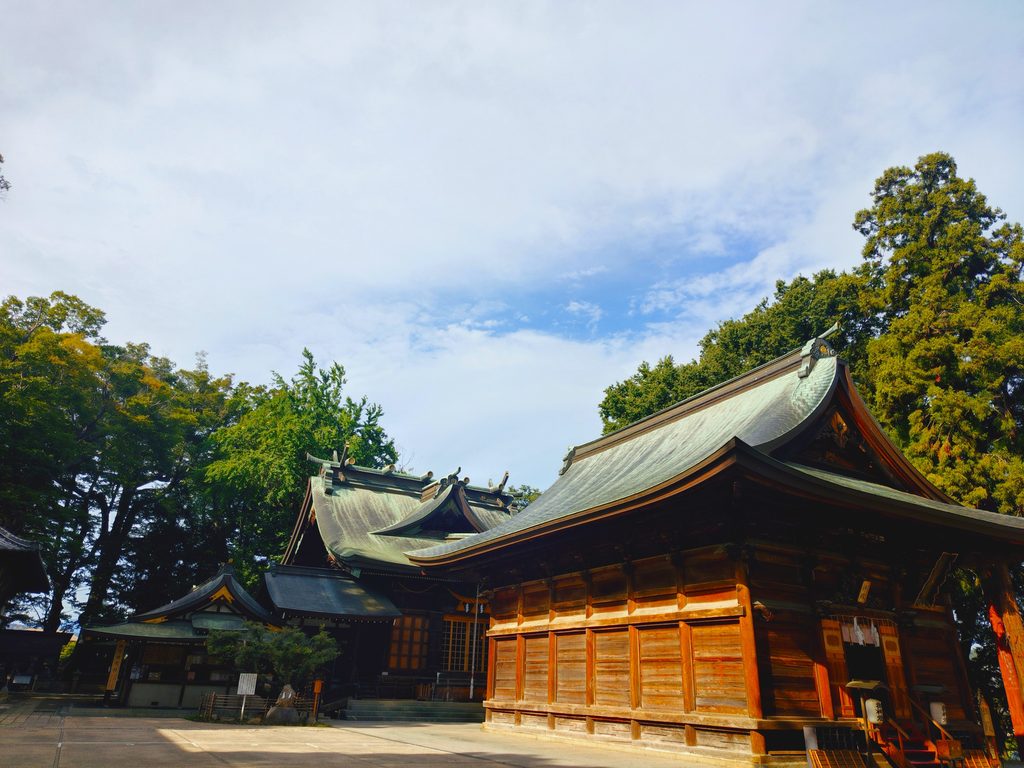
The Main Hall (honden) stands behind the Worship Hall.
【Main Hall Featuring Tatekawa-School Carvings】
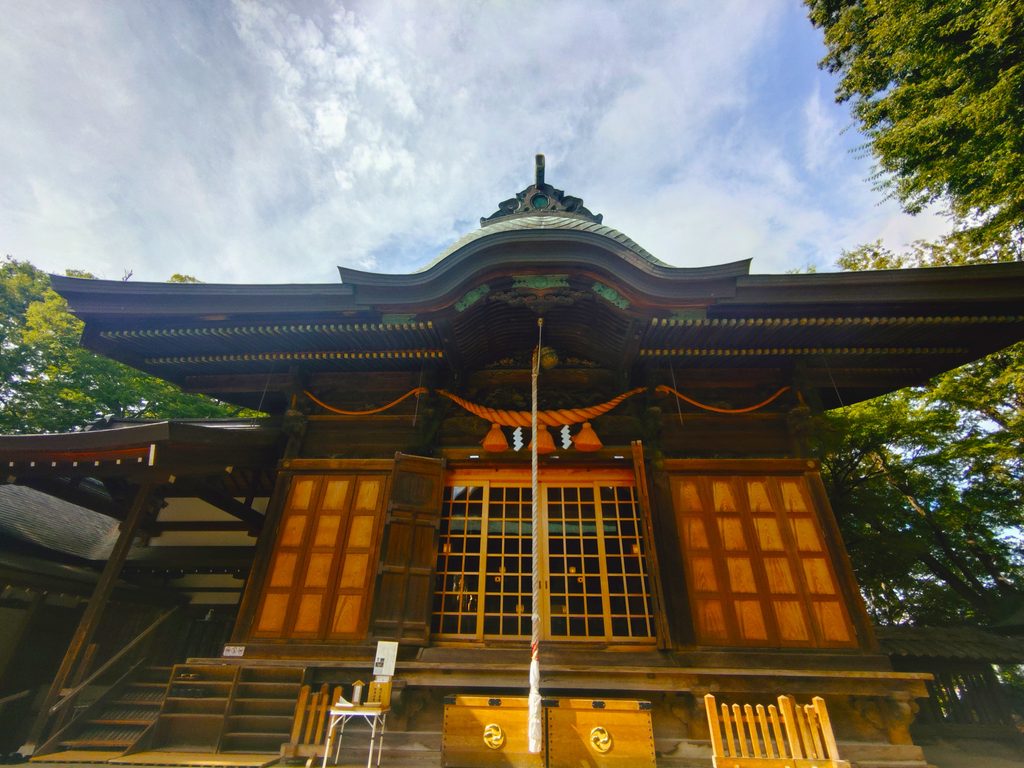
Standing tucked away directly behind the worship hall is the most sacred structure: the Main Hall (honden). Although entry inside is normally restricted, visitors can admire its magnificent exterior from over the surrounding wooden fence (tamagaki).
After being destroyed by a catastrophic fire in 1842 (Tenpo 13), its reconstruction suffered further misfortune when struck by the Great Zenkoji Earthquake in 1847. However, driven by the intense devotion of local parishioners (ujiko), it was successfully rebuilt in 1850 (Kaei 3).
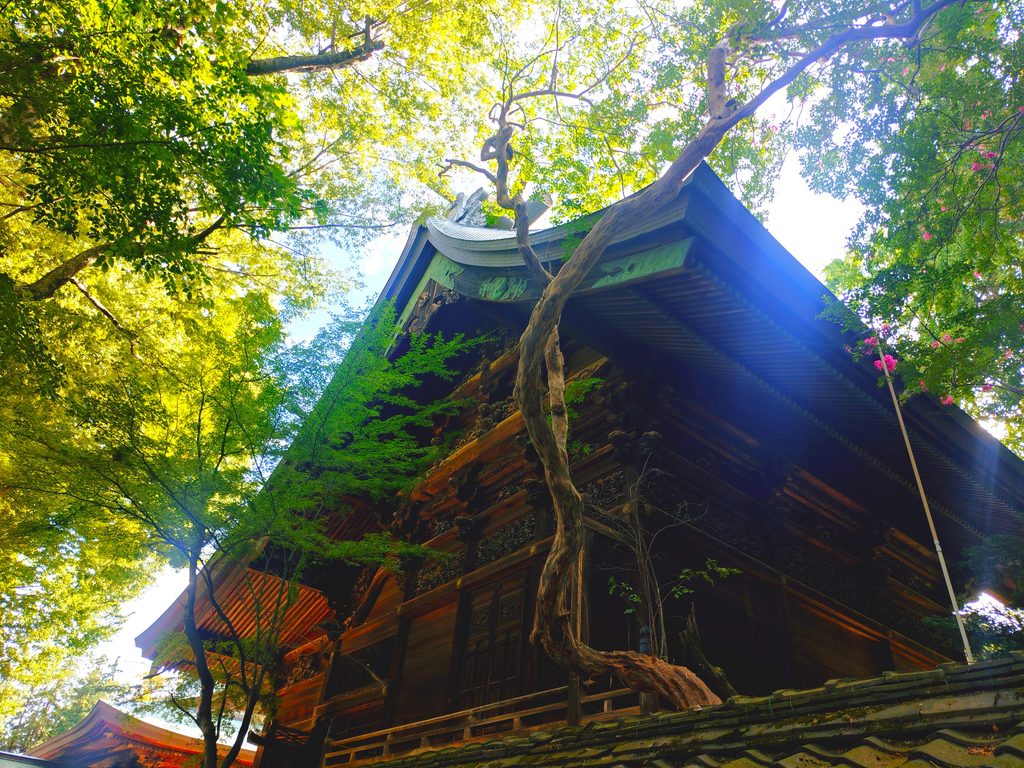
The architectural design and intricate wood carvings were executed by Tatekawa Washiro (Tomimasa III), the pinnacle master of the “Tatekawa-ryu” school—a legendary lineage of master temple carpenters in the Edo period. He was a master artisan whose works also include Suwa Taisha and Sengen Shrine in Shizuoka.
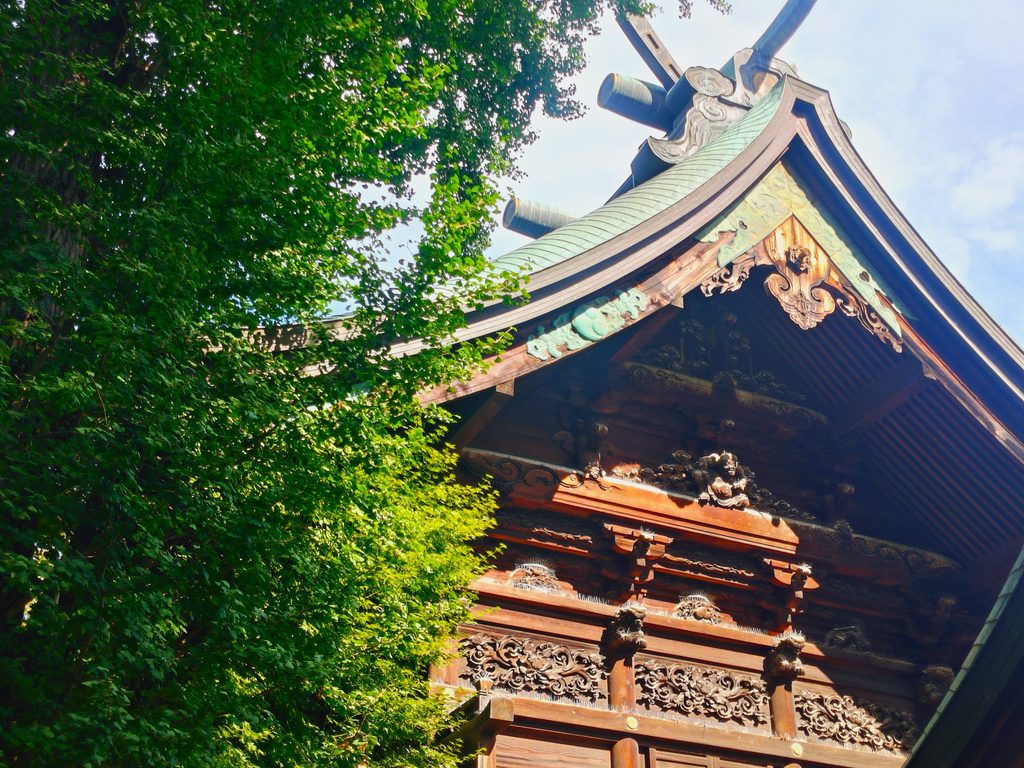
Takemizuwake Shrine employs a rare “Circumambulation Style” (Kaihai-shiki), allowing visitors to walk around the sides and rear of the Main Hall to view the intricate three-dimensional carvings up close from all four directions. Tomimasa’s carvings belong to the su-ki chokoku (unpainted wood carving) style, preserving the natural grain of the wood without pigments. Unlike brightly painted carvings, they never lose their aesthetic appeal due to peeling paint. The carvings seen today retain sharp, pristine edges that belie their 170-year age—a testament to the meticulous care bestowed by the shrine and local community.
【Symbols Welcoming Worshipers: Sazare-Ishi and the Legendary “Mearai-Ishi”】
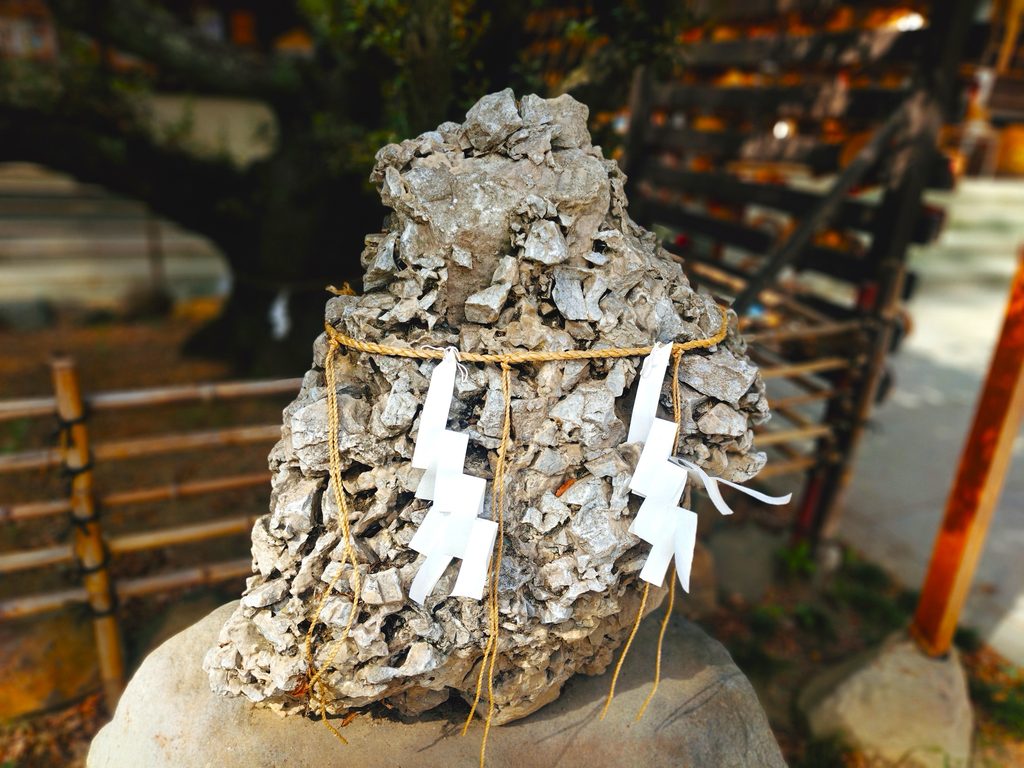
Positioned near the front of the Main Hall is a Sazare-ishi (conglomerate rock), famous for being immortalized in Japan’s national anthem, Kimi ga Yo.
As the Second Shrine (Shinano-no-Kuni Ninomiya) of Shinano Province, Takemizuwake Shrine boasts a proud martial lineage where renowned warlords like Kiso Yoshinaka, Takeda Shingen, and Uesugi Kenshin prayed for victory and unity. Consequently, the Sazare-ishi—symbolizing unity and resilience among people—complements the shrine’s historical and spiritual identity, serving as a cherished symbol welcoming all who enter.
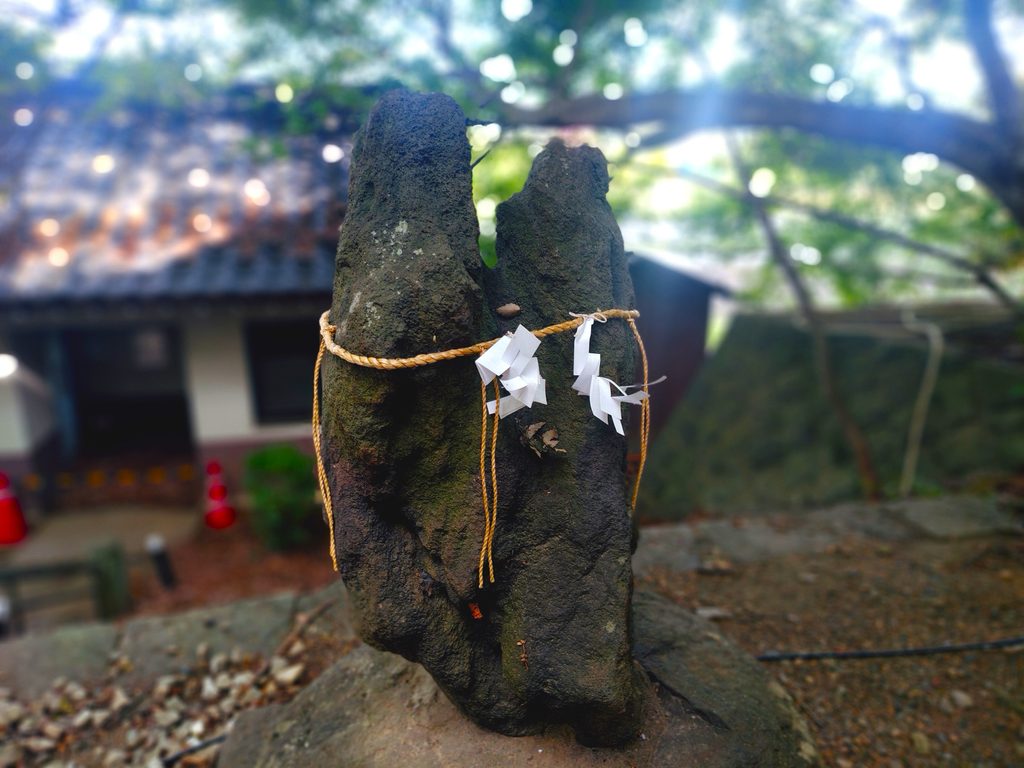
Tucked quietly behind the western rear of the Main Hall rests the Mearai-ishi (“Eye-Washing Stone”), a legendary stone tied to eye-healing folk beliefs from a time when eye diseases swept through the region.
【Must-See Subsidiary and Auxiliary Shrines】
【Subsidiary Shrine: Kora-sha】
Passing the Second Torii brings you to a significant subsidiary shrine standing right near the Worship Hall: Kora-sha. Having miraculously escaped past fires, Kora-sha preserves valuable Muromachi-period architecture, earning it designation as an Important Cultural Property (Prefectural Treasure) of Nagano Prefecture.
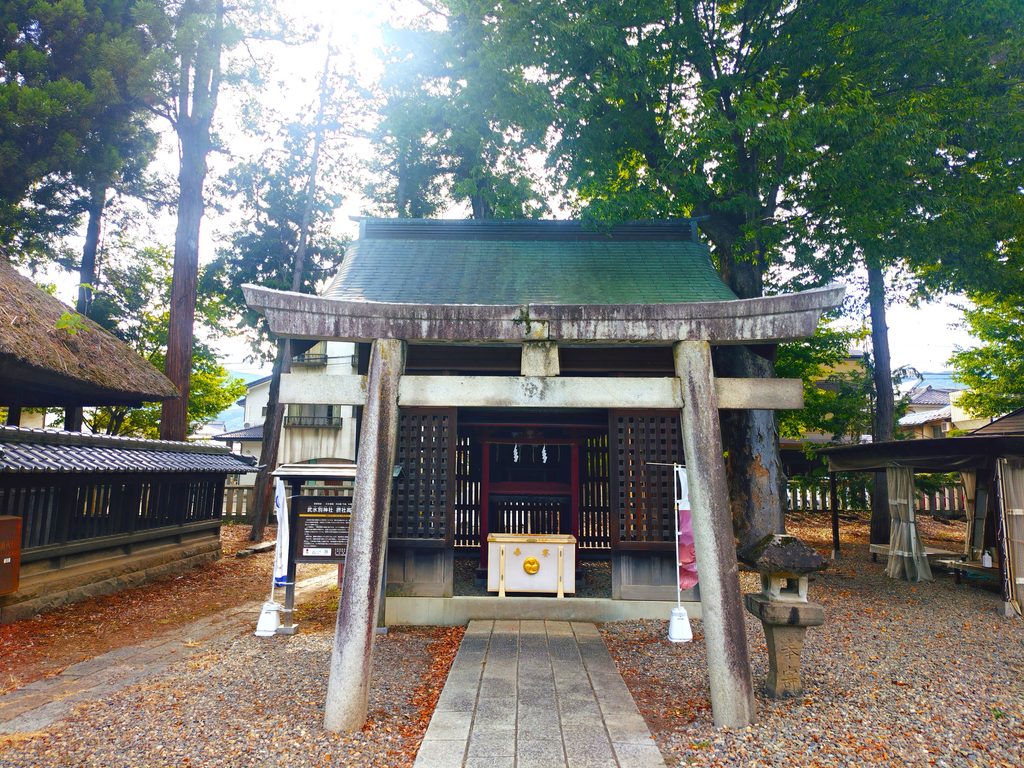
The enshrined deity is Kora Tamatare-no-Mikoto.
He was a legendary long-lived deity who served as a chief minister under the primary deity, Hachiman Okami (Emperor Ojin). Because he is enshrined as a major subsidiary deity at the head shrine, Iwashimizu Hachimangu, Takemizuwake Shrine follows suit by revering him with immense care. He is worshipped as a deity of warding off evil and extending longevity.
【Auxiliary Shrine: Twelve Shrine (Juuni-jinja) with a Rare Horizontal Structure】
Located deep on the right side of the Main Hall, Juuni-jinja is an unusually structured auxiliary shrine enshrining a total of 12 deities: the Seven Generations of the Age of the Gods (Kamiyo Nanadai) and the Five Generations of Earthly Deities (Chijin Godai) from Japanese mythology.
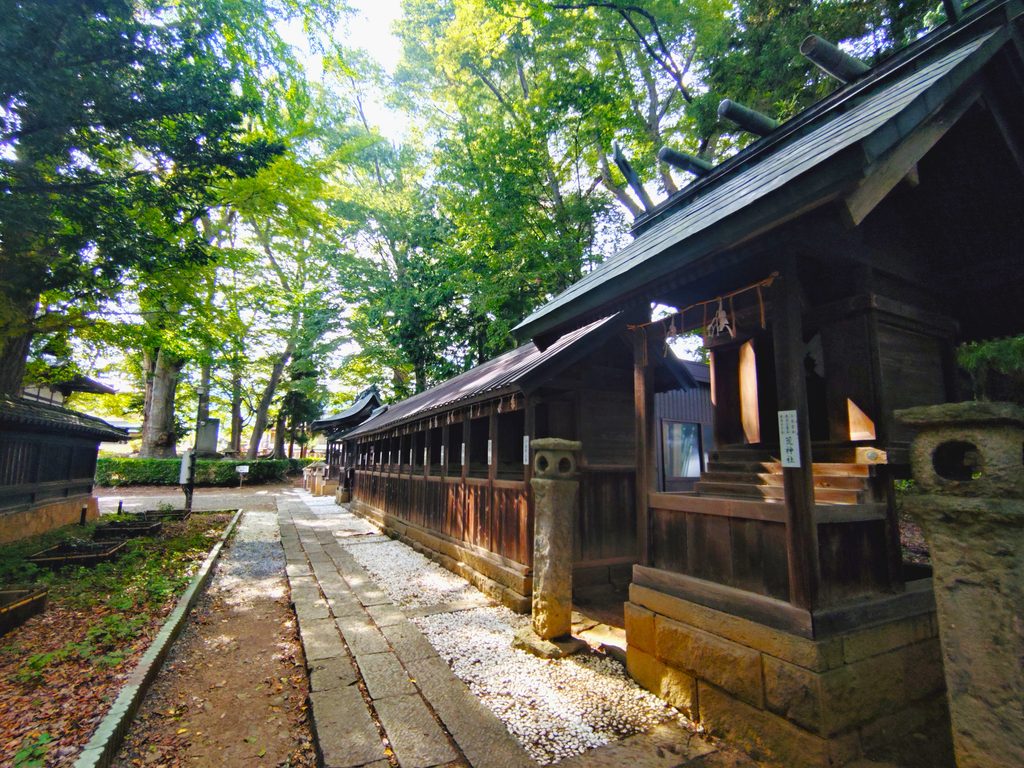
While standard shrines typically feature a ikken-sha (one bay between pillars/doors) or san’ken-sha (three bays) structure, Juuni-jinja arranges 12 deities side by side in a single horizontally extended building. This creates a rare long facade with 12 bays and 12 aligned doors in the nagare-zukuri style—an extraordinary multi-bay layout seldom seen elsewhere.
【Other Auxiliary Shrines】
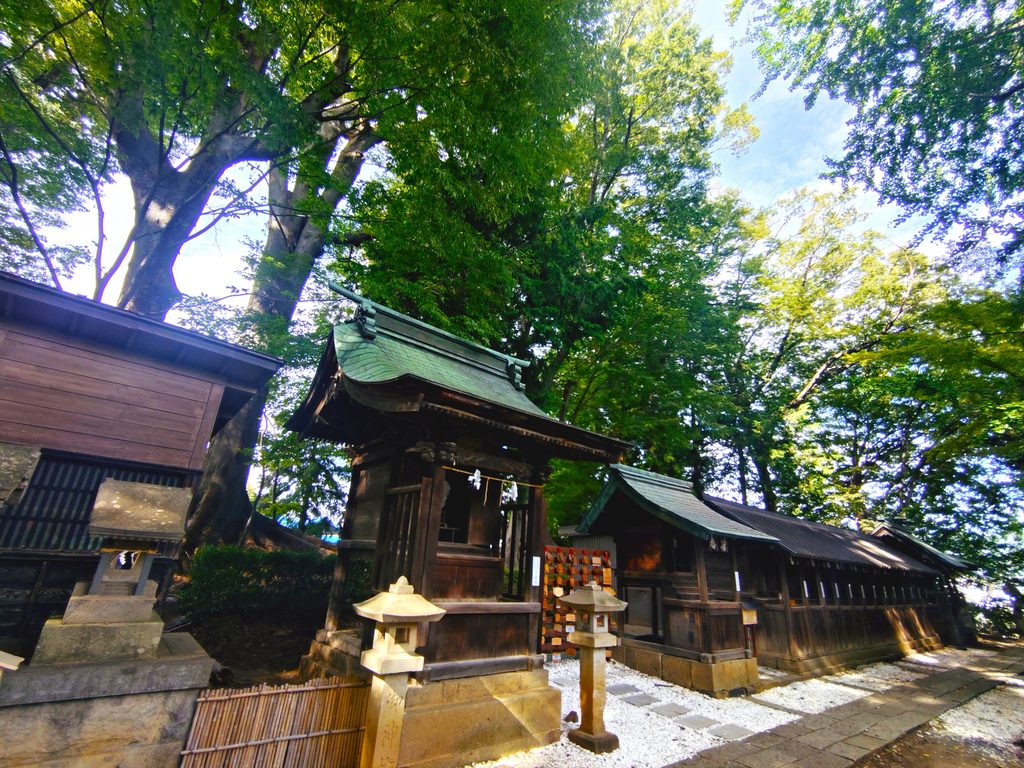
Adjacent to the Main Hall are other small, warm shrines protecting families and daily life, including Koyasu-sha, Tenjin-sha, and Kojin-sha, housed in traditional small wooden structures.
【Auxiliary Shrines: Akiba-sha and Kashima-sha】
The Akiba Shrine at Takemizuwake Shrine is housed not in a large wooden building, but in small stone shrines known as sekishi.
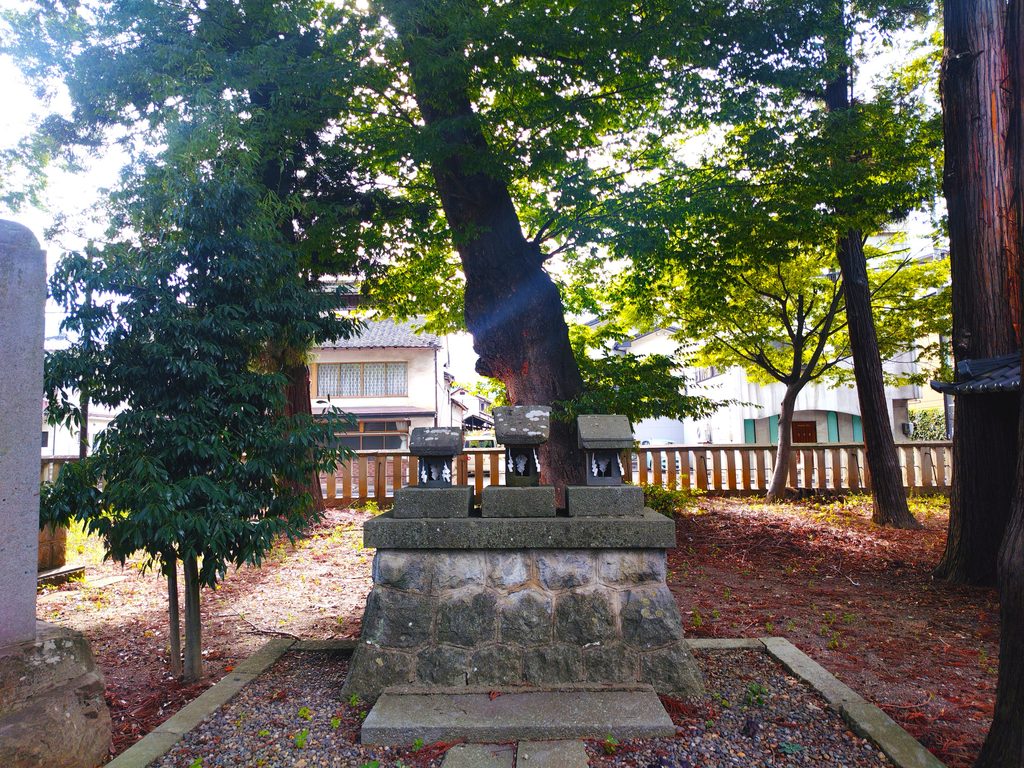
Three stone shrines stand side by side: the outer left and right shrines are dedicated to Akiba-sha, while the central shrine is dedicated to Kashima-sha. It is a unique arrangement to see the same deity of fire protection split across two distinct stone shrines.
【Local Specialty: Uzura-Mochi】
This local specialty can be purchased at the retro tea house within the shrine grounds or at the shop in Hotel Uzuraya located directly behind the shrine. At the tea house, you can enjoy them on the spot alongside freshly brewed green tea.
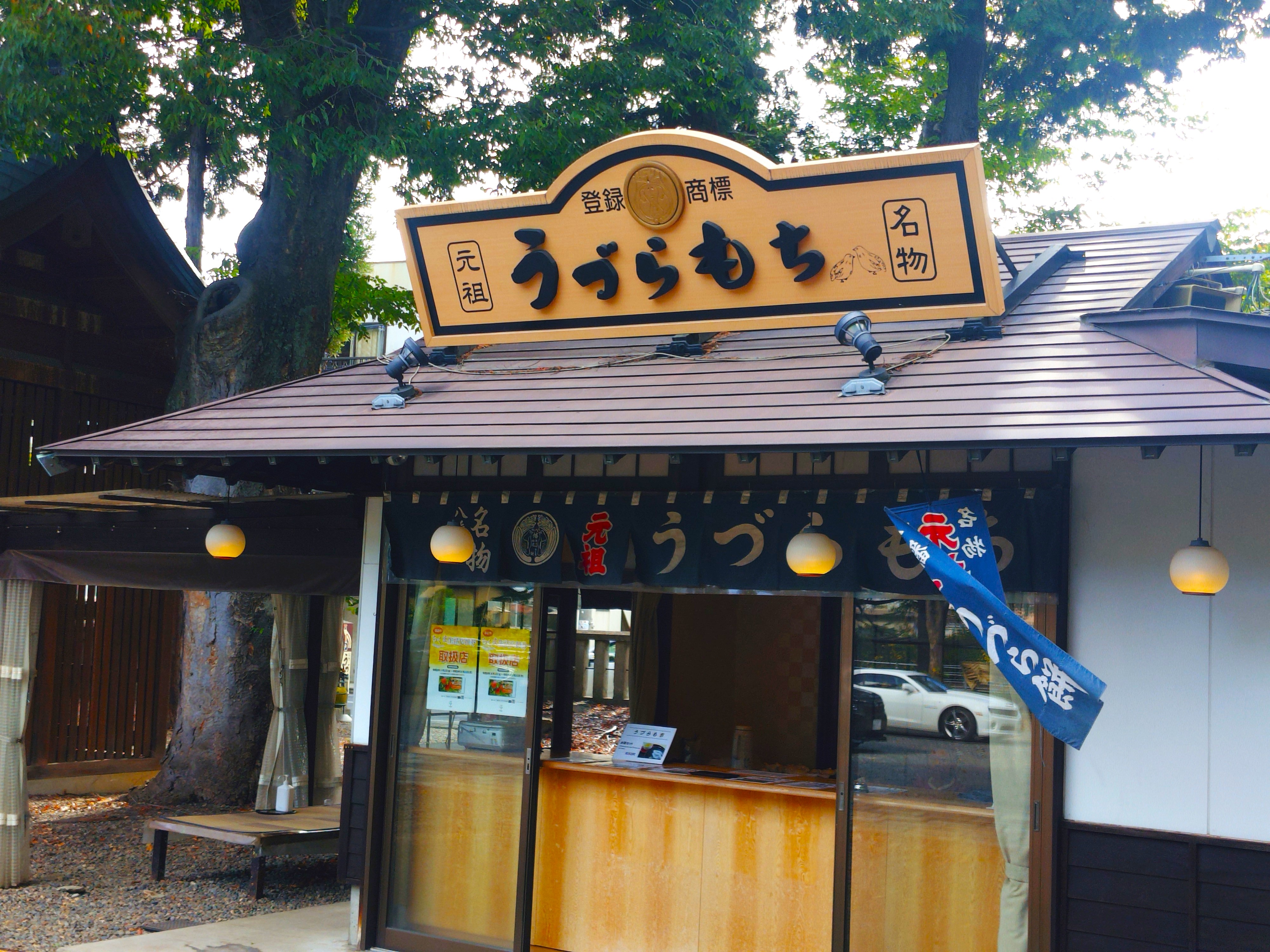
When Takemizuwake Shrine was rebuilt following a fire in the Edo period, master craftsman Tatekawa Washiro Tomimasa carved a quail (uzura) onto the main pillar of the shrine hall, inspired by the flocks of quails that inhabited the nearby Chikuma River banks. Inspired by this deep bond between the shrine and quails, Otobei Takei, the founder of Hotel Uzuraya adjacent to the shrine, created Uzura-Mochi. Since then, it has been widely cherished as an offering (goku) to the Yahata deity.
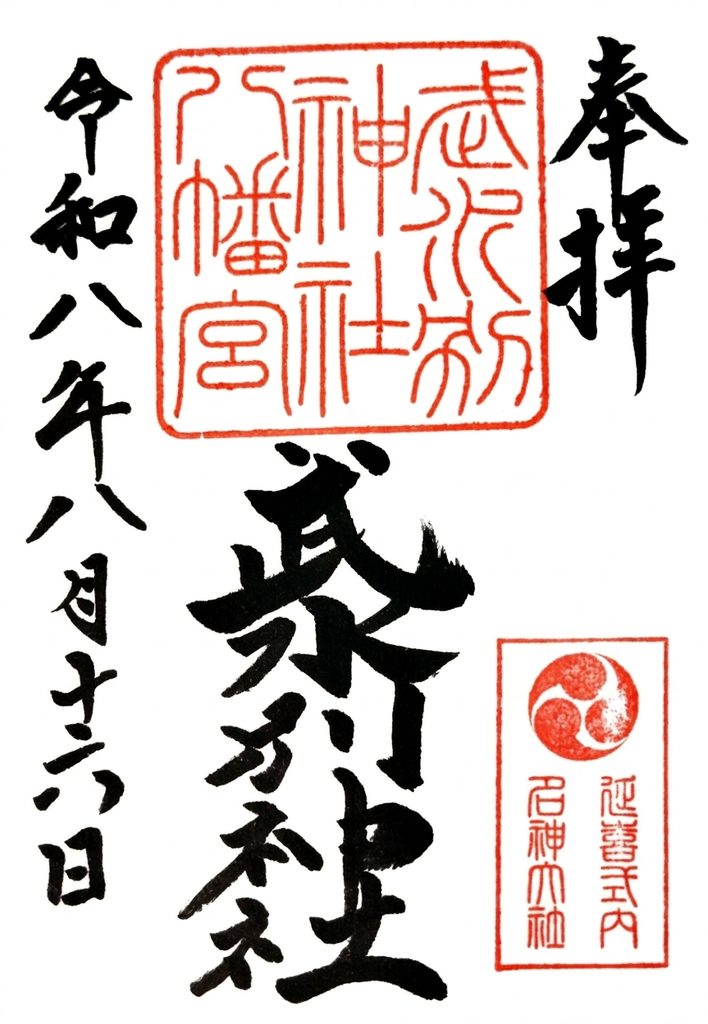
【Takemizuwake Shrine Goshuin】
【Takemizuwake Shrine On-Site Visit Report & Original Evaluation】
Takemizuwake Shrine On-Site Visit Review & Evaluation Score
| Evaluation Category | Score | Key Features / Highlights |
|---|---|---|
| History & Heritage | ★★★★★ (5.0) | Rich history tied to Takeda Shingen and majestic shrine grounds |
| Tranquility | ★★★★☆ (4.5) | Solemn atmosphere stretching from the approach to the shrine grounds |
| Goshuin Variety | ★★★★☆ (4.5) | Rich selection of limited-edition and seasonal Goshuin seals |
| Nature & Scenery | ★★★★☆ (4.0) | Beautiful scenery created by ancient trees and the straight approach |
| Grounds Scale | ★★★☆☆ (3.5) | Comfortable size ideal for a leisurely stroll |
| Accessibility | ★☆☆☆☆ (1.0) | Limited public transportation options (Visiting by car recommended) |
*While public transportation access is challenging, the shrine receives very high marks for its historical value, tranquility, and rich selection of Goshuin seals.
On-Site Report | Personal Impressions
All physical things eventually weather with time—perhaps that is the inevitable fate of wooden architecture. Yet, standing before the carvings of Takemizuwake Shrine’s Main Hall makes one forget such notions. The fact that we can admire Edo-period masterpieces in such pristine condition today, despite surviving harsh fires and heavy snowfalls, is entirely due to the noble baton of preservation passed down daily by the shrine priests and local community. Feeling a sacred aura within the deepening hues of aged wood—I am profoundly grateful to Yahata-sama for giving me such a luxurious experience. When visiting, be sure to walk all the way around the sides and back of the Main Hall to feel the true breath of those master artisans.
【Nearby Tourist Spots to Visit Together】
Zenkoji Temple, Takei Shrine, Ikushima Ashishima Shrine, Tokkosan Zensanji Temple
![20260816 121543137 2 520x300 - Takemizuwake Shrine [Nagano]](https://japan-shrine.info/wp-content/uploads/20260816_121543137-2-520x300.jpg "Takemizuwake Shrine [Nagano]")
![20260816 115712522 2 520x300 - Takemizuwake Shrine [Nagano]](https://japan-shrine.info/wp-content/uploads/20260816_115712522-2-520x300.jpg "Takemizuwake Shrine [Nagano]")
![20260817 133355127 520x300 - Takemizuwake Shrine [Nagano]](https://japan-shrine.info/wp-content/uploads/20260817_133355127-520x300.jpg "Takemizuwake Shrine [Nagano]")
![20260817 1417366502 520x300 - Takemizuwake Shrine [Nagano]](https://japan-shrine.info/wp-content/uploads/20260817_1417366502-520x300.jpg "Takemizuwake Shrine [Nagano]")
【Basic Information & Access】
【Access by Train / Car and Parking】
*Free parking available.
3012 Yahata, Chikuma City, Nagano Prefecture 387-0023
![a43d379fc096e994af395eb70531f145 - Takemizuwake Shrine [Nagano]](https://japan-shrine.info/wp-content/uploads/sng/a43d379fc096e994af395eb70531f145.png "Takemizuwake Shrine [Nagano]")