 Kanata's Japan Shrine Guide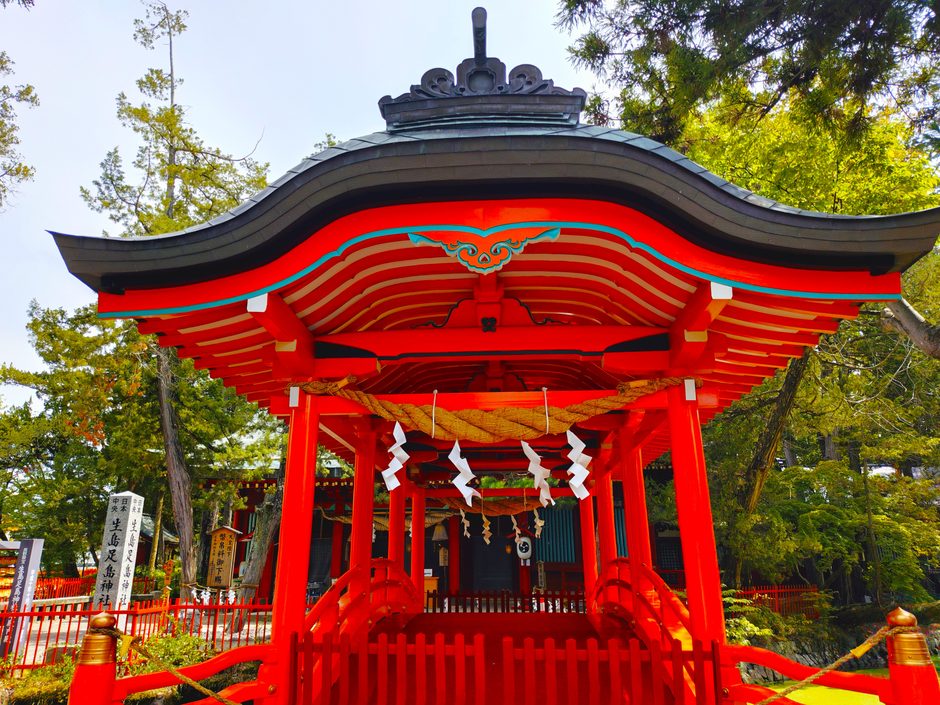

目次
- 【Overview and History of Ikushimatarushima Shrine】
- 【Highlights of Ikushimatarushima Shrine】
- 【Must-See Subsidiary/Auxiliary Shrines and Nationally Designated Important Cultural Properties】
- 【Ikushimatarushima Shrine On-Site Visit Report & Original Evaluation】
- 【Ikushimatarushima Shrine Goshuin】
- 【Nearby Sightseeing Spots to Visit Together】
- 【Basic Information & Access】
【Overview and History of Ikushimatarushima Shrine】
Nestled in Shimonogo, Ueda City, Nagano Prefecture, “Ikushimatarushima Shrine” (Ikushimatarushima-jinja) is one of Shinano’s premier ancient shrines (Myojin Taisha), recorded in the Heian-period Engishiki Jinmeicho (Register of Deities). Situated at what is traditionally believed to be the center of the Japanese archipelago, it preserves an extremely rare form of faith across Japan in which the “earth” itself serves as the sacred object of worship (goshintai).
【History of BC Foundation and the Origin of Being Called “The Center of Japan”】
While the exact founding date of Ikushimatarushima Shrine is unknown, legend states that it has been “enshrined since time immemorial as the soul/spirit of Oyashima (the Japanese archipelago),” tracing its origin back to the age of mythology (the period of Japan’s nation-building). While speculative, if mythic accounts are taken literally, its roots date back to the BC era (around 2,700 years ago). From a historical and archaeological perspective, it is generally accepted that the foundation of the current faith was established between 300 AD and 500 AD (the Kofun period).
In mythic times, Takeminakata-tomi-no-Mikoto (later Suwa Okami), who entered Shinano Province from Izumo, halted at this location on his way to Suwa. There, he greeted the two resident deities, Ikushima and Tarushima, and cooked and offered them rice porridge. This myth corresponds precisely to the period surrounding Japan’s nation-building (the end of the Age of the Gods). Around 660 BC in Japanese history corresponds to the transition period (a time of great upheaval) from the Jomon to the Yayoi period. It is inferred that the historical memory of groups possessing rice-cultivation culture and new religious beliefs (such as the Izumo clan) migrating and flowing into Shinano was preserved in the form of mythology.
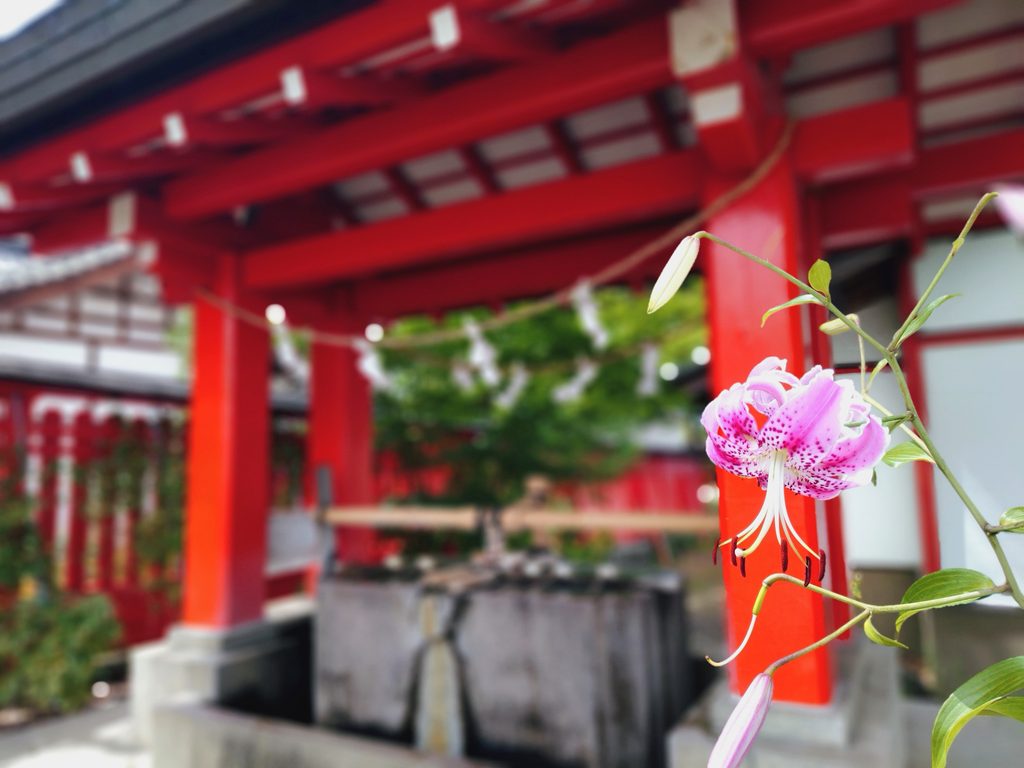
Subsequent records show that in 806 AD, the Imperial Court donated kambe (estates dedicated to supporting shrines), and in the early 900s, it was listed as a Myojin Taisha, the highest shrine rank, in the Engishiki Jinmeicho.
【Why is it Called the “Center of Japan”?】
Hearing “the center of Japan,” many people might think of modern maps or Japan Standard Time (Akashi City, Hyogo Prefecture). However, the reason Ikushimatarushima Shrine is regarded as the “center” lies in a geographical perspective and special religious beliefs inherited from ancient times.
The Center of the “Tosando”, an Ancient Transportation Hub: The Tosando was an ancient trunk road connecting the capital (Kyoto/Nara) with eastern provinces (Kanto/Tohoku). Located right in the middle of this highway was Chiisagata District in Shinano Province (the present-day area around Ueda City). To the people of that era, this was literally the “central dividing point between east and west Japan.”
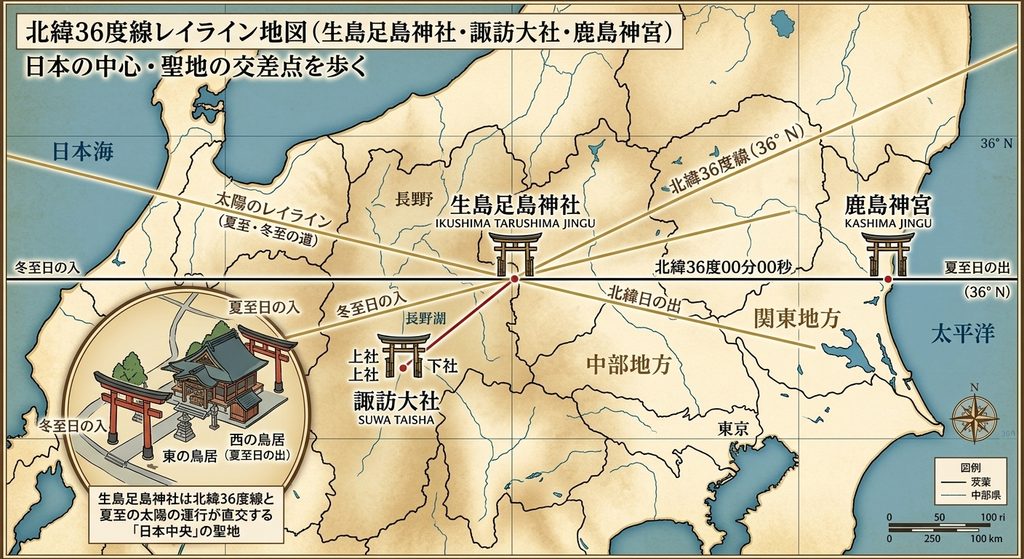
The Existence of a Sacred Ley Line Drawn by the Sun: This shrine sits on the 36th parallel north ley line, which connects Nagano’s “Suwa Taisha” and Ibaraki’s “Kashima Jingu” in a straight line. Ancient people revered it as a sacred site closely connected to celestial movements; on the summer solstice, the rising sun from the east illuminates the shrine grounds, while on the winter solstice, the sun sets over the southern mountain range.
Pride as the “Nihon Sochinju” (Overall Guardian Shrine of Japan) Enshrining the Land Itself: The most significant reason lies in the object of worship itself. While most other shrines enshrine specific deities, Ikushimatarushima Shrine enshrines “the land (territory) of Japan itself” as its goshintai. Because of this, it has long received exceptional reverence as “a shrine located in the center of Japan that protects the entire nation of Japan (Nihon Sochinju).”
It is fascinating how this faith is grounded in ancient science (philosophy), combining “solar movement (astronomy)” and “veneration of the earth.”
【Enshrined Deities and Divine Blessings】
The enshrined deities are two: Ikushima-no-Okami and Tarushima-no-Okami.
Enshrining “Ikushima-no-Okami,” who bestows vitality upon all living things, and “Tarushima-no-Okami,” who brings fulfillment, the shrine is believed to grant blessings such as good fortune/prosperous luck, increased wealth, matchmaking, marital harmony, and childbirth/safe delivery.
【Highlights of Ikushimatarushima Shrine】
【The Otorii Gate, East Sando, and East Momon Lined Up on the Ley Line (Path of the Sun)】
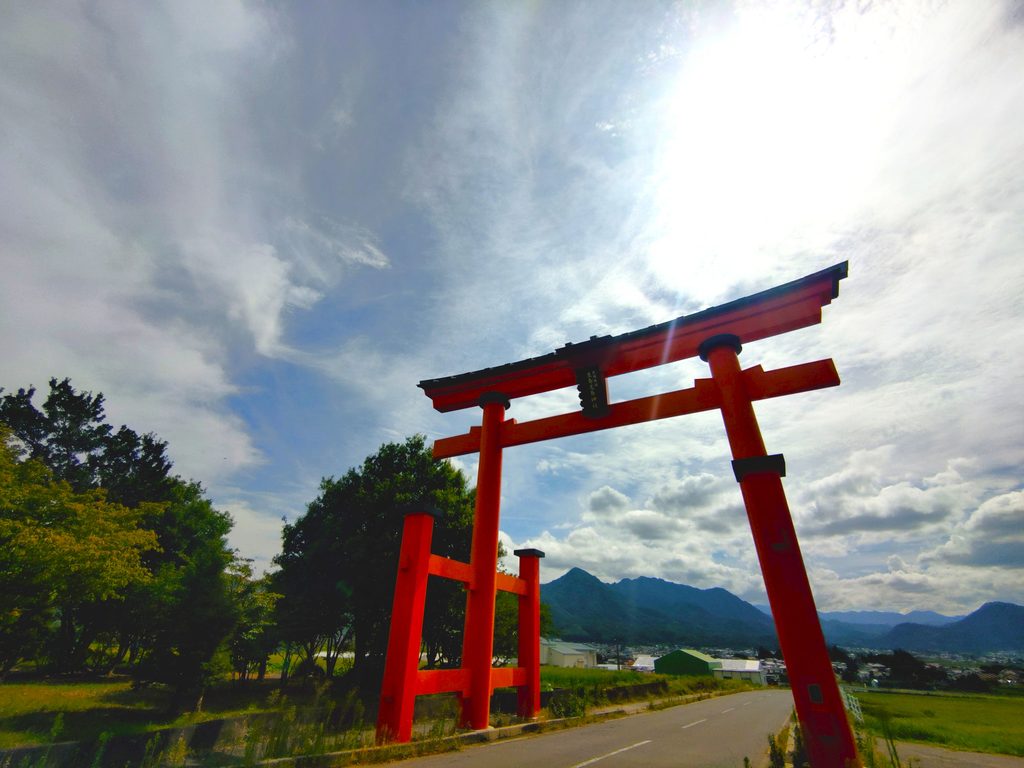
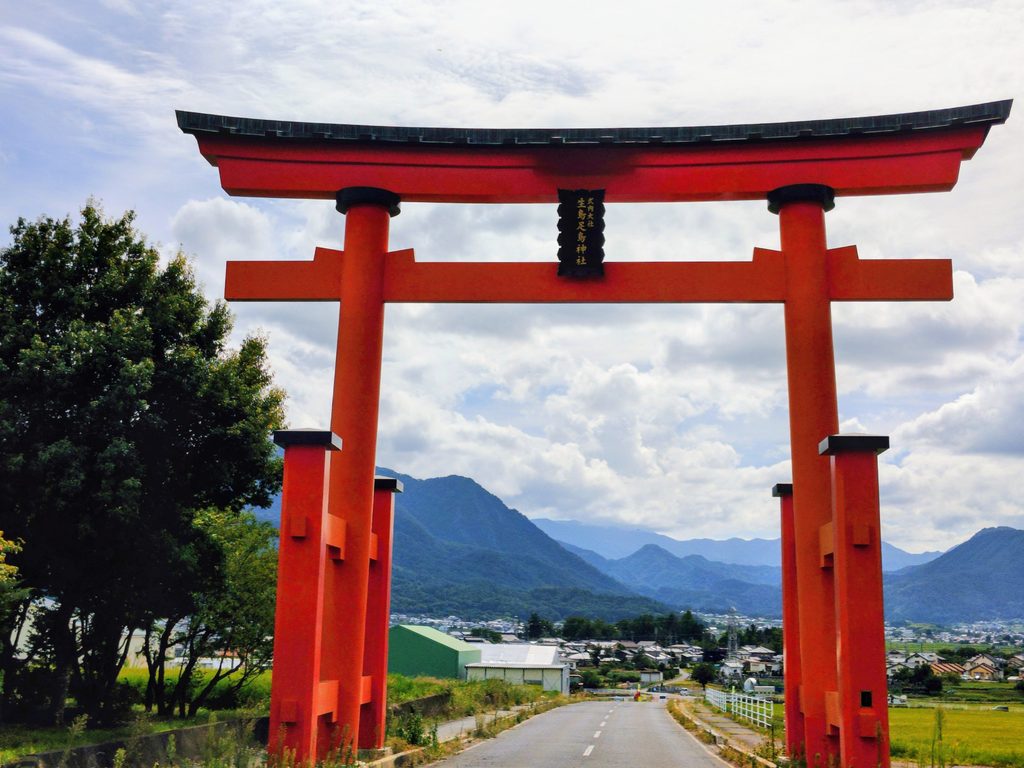
The Otorii (Great Torii) stands about a 3-minute drive from the shrine grounds where the Main Hall is located. This Otorii is also an important part of the “Ley Line (Path of the Sun)” registered as a Japan Heritage site.
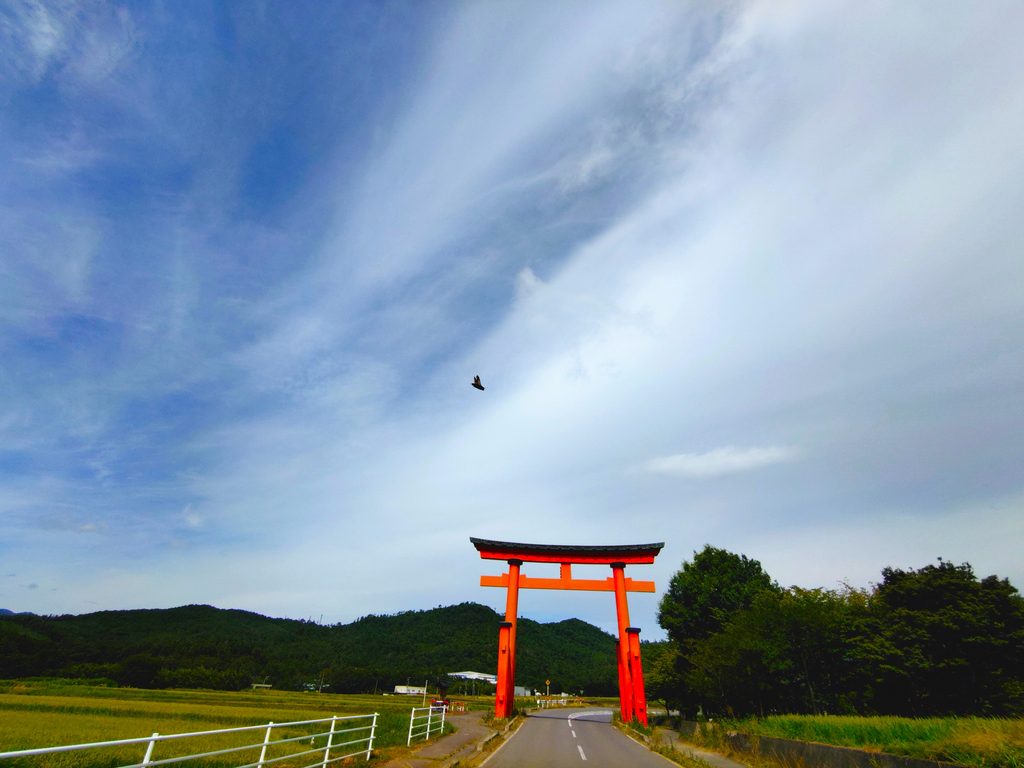
It is designed so that early in the morning on the summer solstice, the sun rises from the exact center of this Otorii, allowing its light to shine directly into the Main Hall.
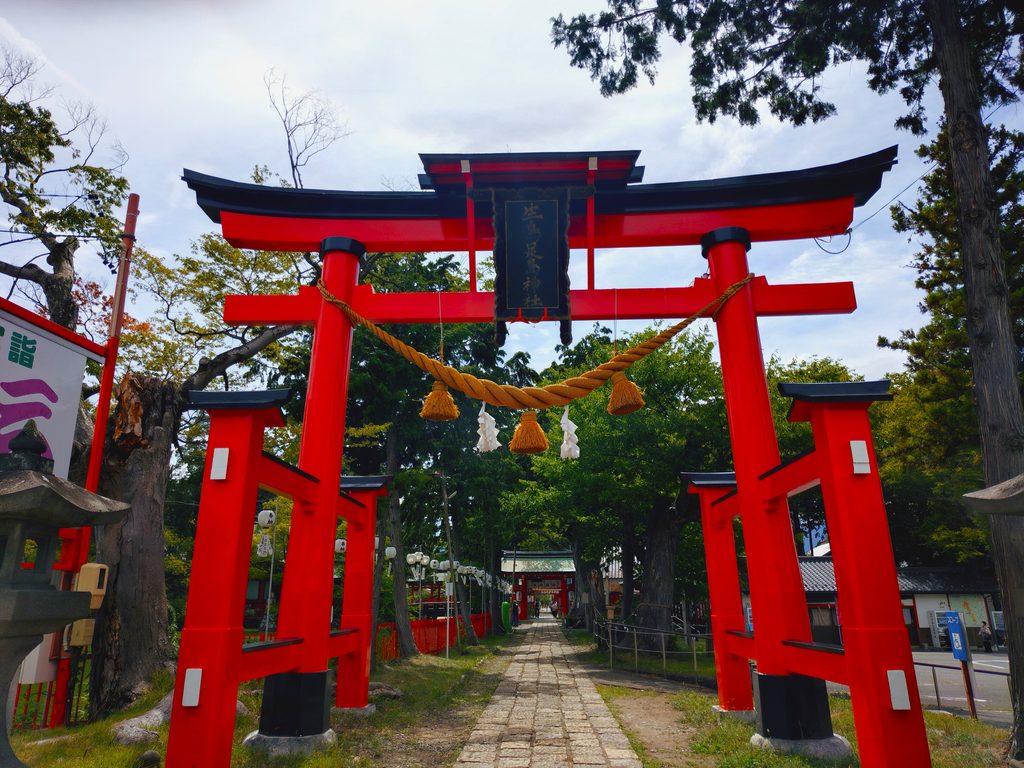
There are eastern and western approaches; visitors enter through the eastern approach (sando), which runs in a straight line from the Otorii. It is connected in a straight line with the aforementioned Otorii.
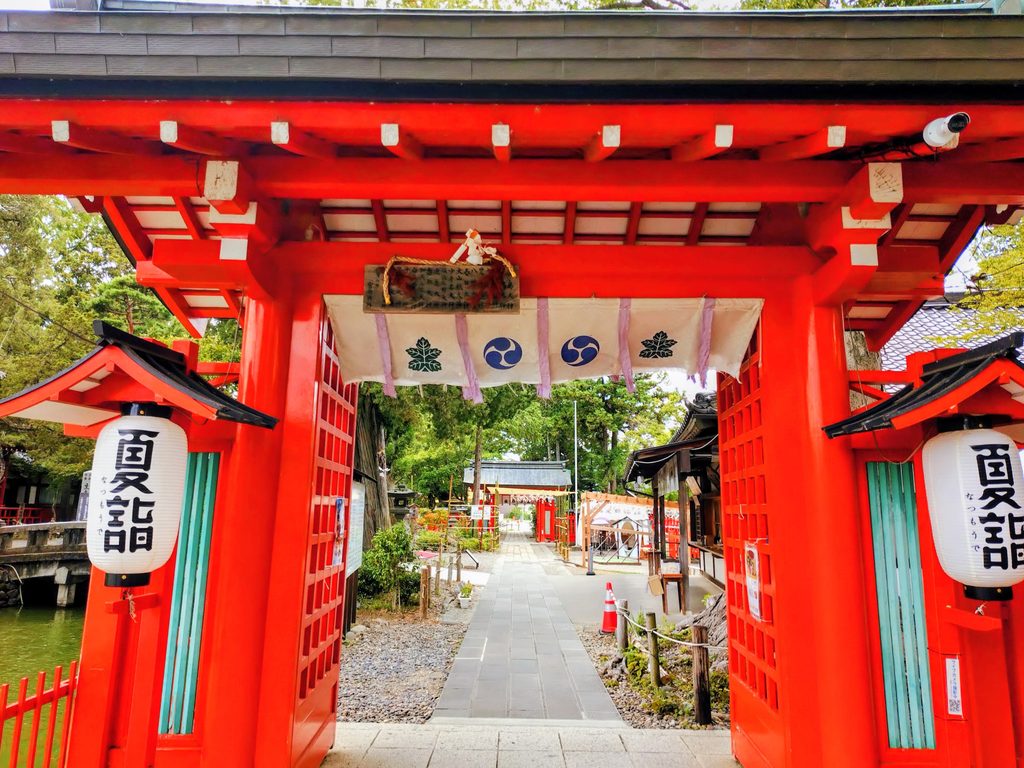
Along the “Path of the Sun (Ley Line)” symbolizing Ikushimatarushima Shrine, the East Gate (Higashi-momon) and the East Torii before it hold crucial significance. On the morning of the summer solstice, the sun rises straight along this eastern line, passing through the East Gate to illuminate the sacred object (goshintai / the earth) of the Main Hall.
【The Vermilion “Goshinbashi (Taiko-bashi Bridge)” Floating on the Shinchi Pond】
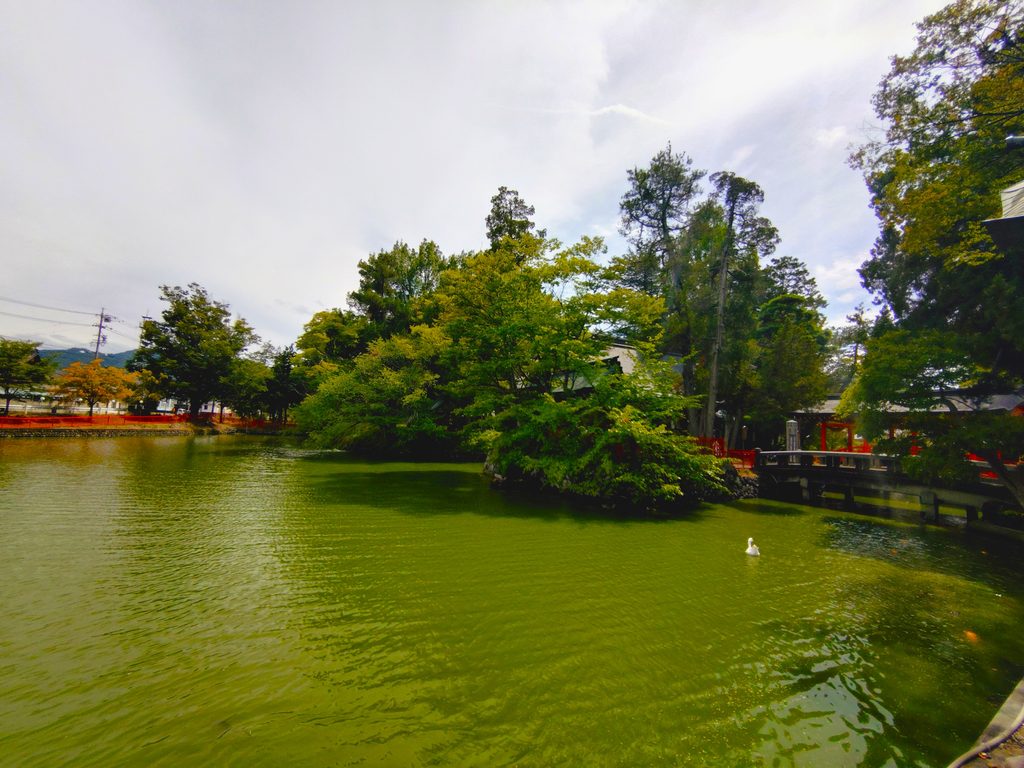
The Shinchi (Sacred Pond) spreading at the center of Ikushimatarushima Shrine grounds is not a mere scenic pond, but an extremely important sanctuary that shapes the shrine’s religious framework itself.
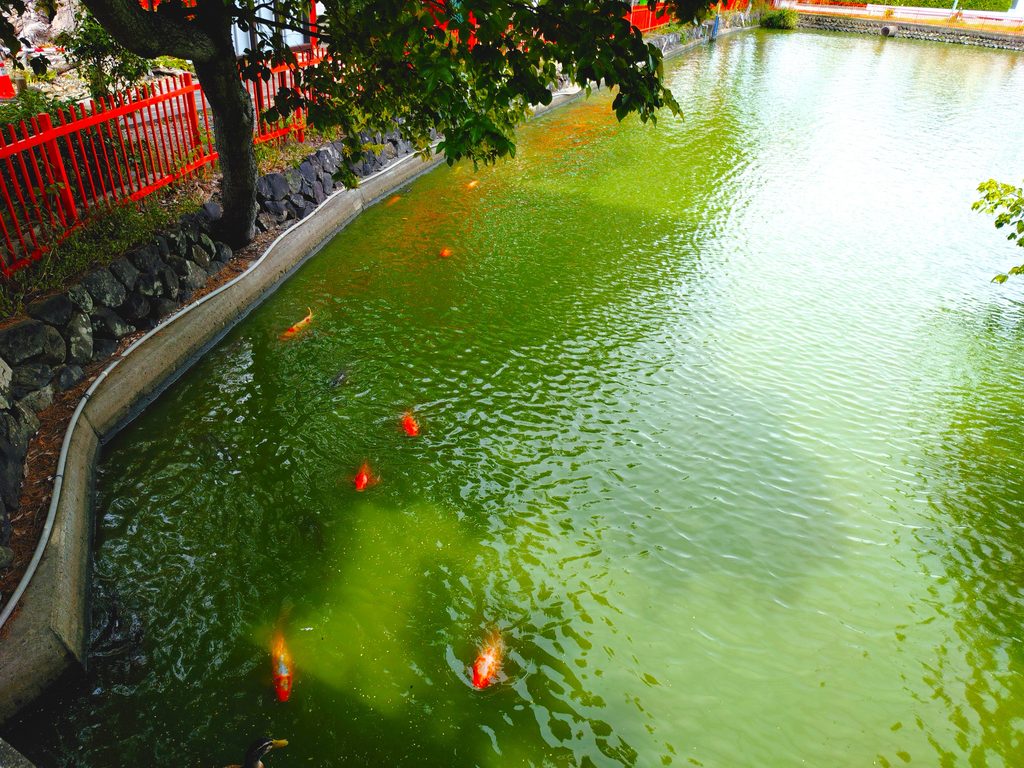
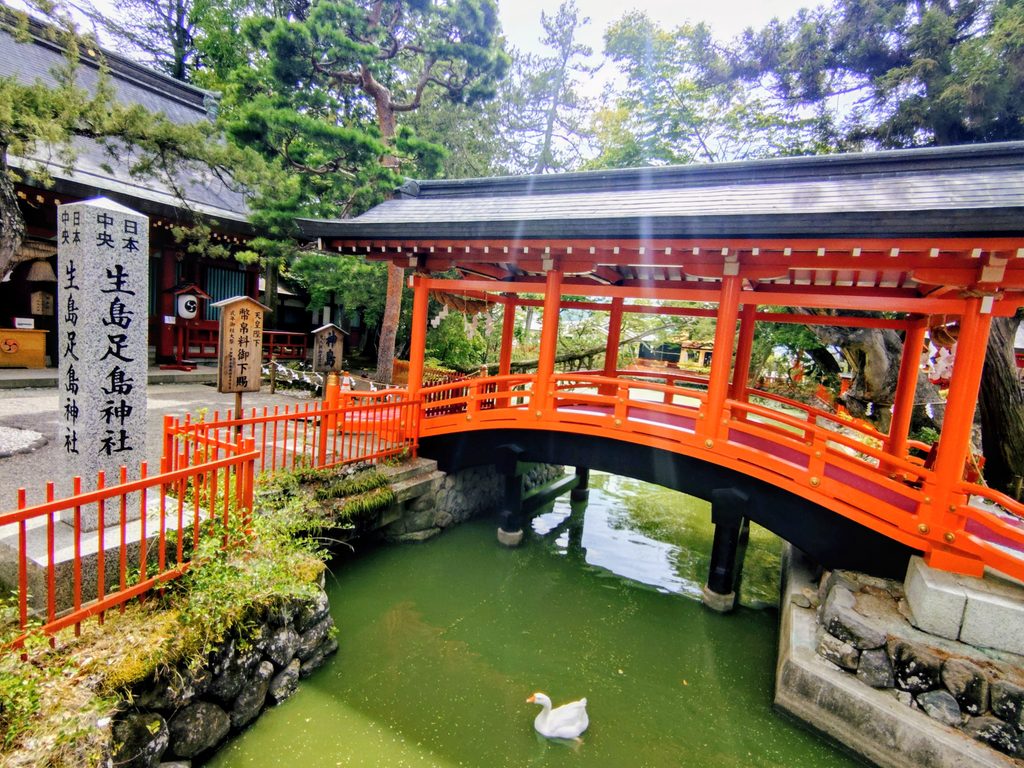
The structure of creating a small island called “Kamishima” in the sacred pond and placing the Main Shrine (Kamigusha) upon it is termed Ikekokoro-no-Miya Enchi (Pond Garden of the Shrine at the Heart of the Pond).
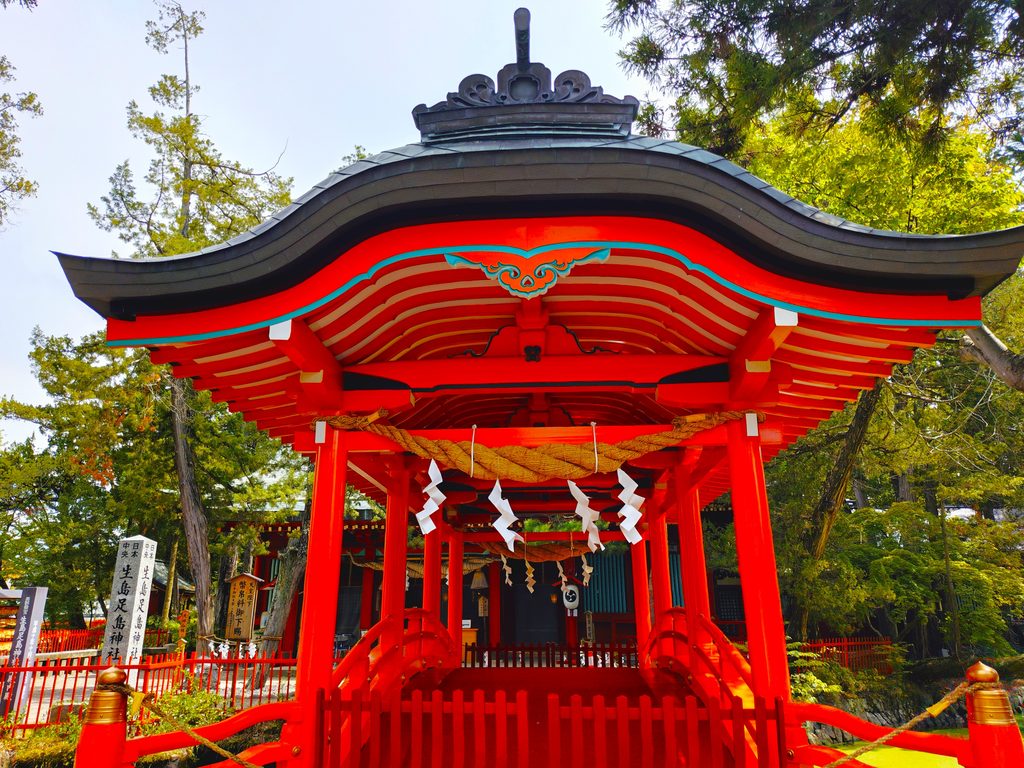
Spanning the center is a graceful vermilion-painted drum bridge (Taiko-bashi). While normally closed to pedestrian traffic, its doors are opened as a sacred pathway exclusively during the Okomori-sai festival every November, when Suwa Okami transitions from the subsidiary Suwa Shrine (Shimogusha) to the Main Shrine (Kamigusha).
To reach the Main Shrine, worshipers cross the stone bridge on the left-hand side.
【The Special “Main Shrine (Kamigusha)” Enshrining the Earth Itself as the Sacred Body 】
The primary highlight, the Main Shrine (Kamigusha), is a beautiful vermilion-painted three-roofed structure in the hirairi style. Its most prominent feature is that there are no floorboards inside the sanctuary; the exposed earthen floor (doma) inside the inner shrine serves as the goshintai itself. Visitors can experience an extremely rare form of primitive faith—joining hands directly in prayer toward the “earth” where the divine spirits and souls of the Japanese archipelago (Oyashima) reside.
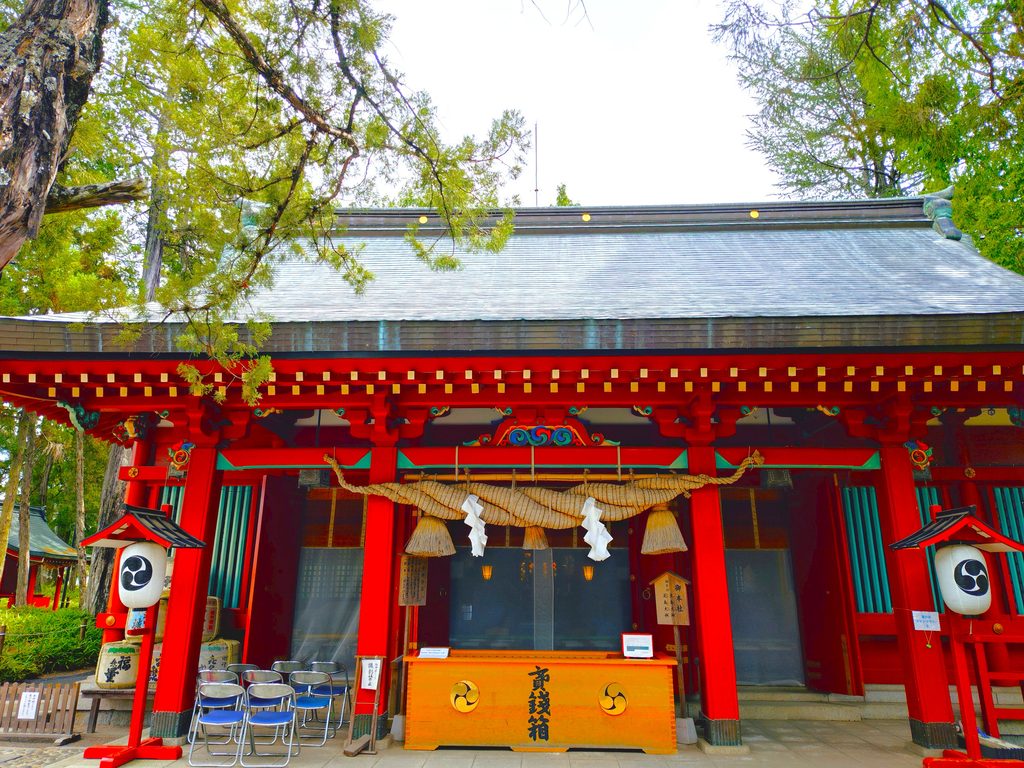
Because the shrine buildings stand upon an island (kamishima) surrounded by the sacred pond, the entire sanctuary exudes a uniquely holy atmosphere as if floating on water. This structure of a “sanctuary floating on water” itself is a precious historic relic handing down the architectural styles of Japan’s oldest palaces and shrines.
【Suwa Shrine (Shimogusha), Associated with Takeda Shingen and the Sanada Clan】
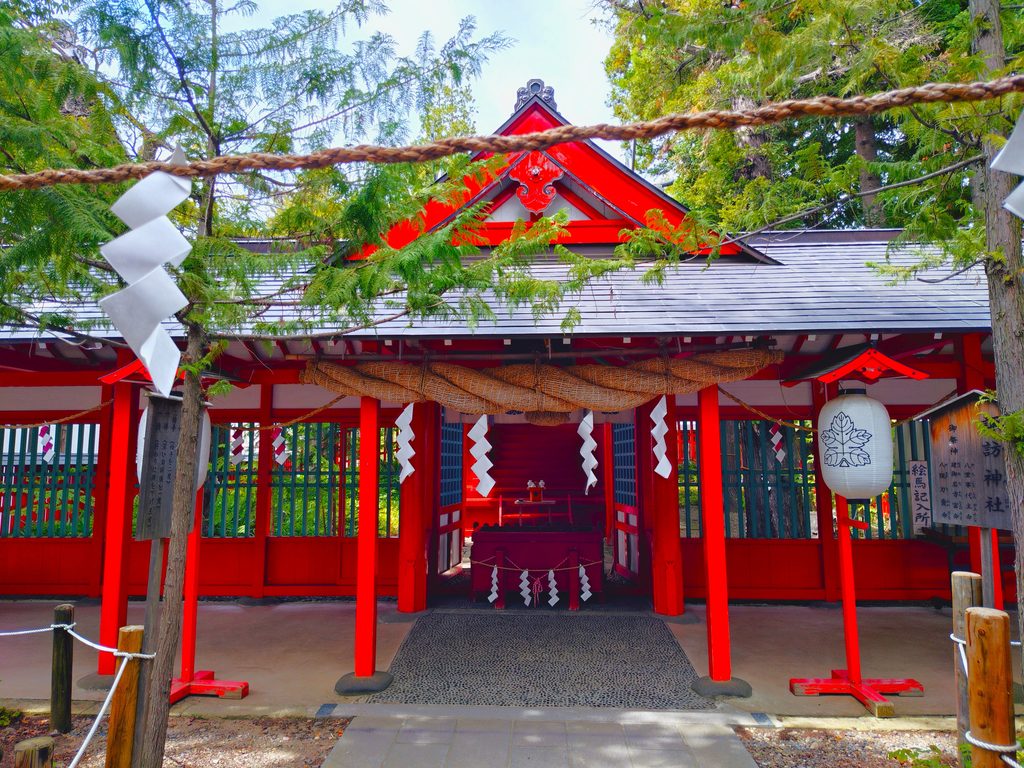
Standing across the sacred pond from the Main Shrine is Suwa Shrine (Shimogusha). Constructed in 1610 (Keicho 15) by Sanada Nobuyuki (older brother of Sanada Yukimura), it is designated as a National Important Cultural Property and a Nagano Prefectural Treasure. Enshrining Suwa Okami (Takeminakata-tomi-no-Mikoto), it carries the historic weight of being a place where famous warlords such as the Takeda clan and the Sanada clan came to pray for victory in battle.
【The “Meoto Keyaki” (Married Couple Zelkova), a Symbol of Vitality Over 800 Years Old】
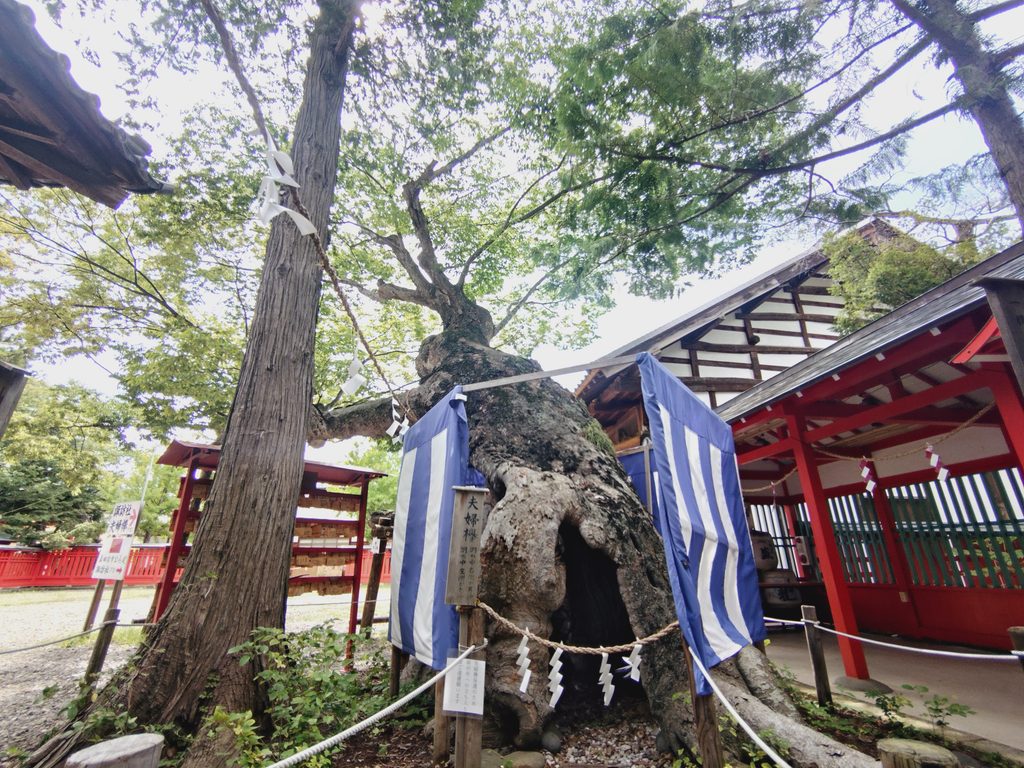
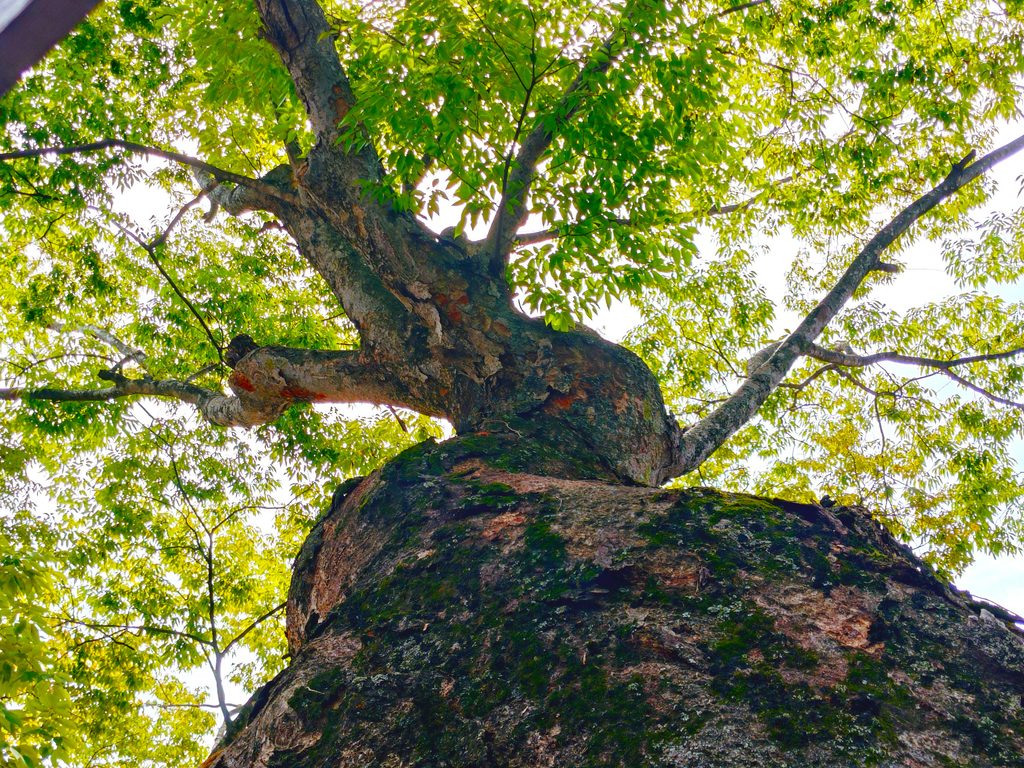
Two giant zelkova trees, over 800 years old, stand side by side as if cuddling together. The base of the trunk has a unique shape reminiscent of a male and female deity, housing a small shrine inside. It is visited by many worshipers as a power spot providing blessings for “matchmaking,” “marital harmony,” and “childbirth/safe delivery.”
【Must-See Subsidiary/Auxiliary Shrines and Nationally Designated Important Cultural Properties】
【Auxiliary Shrine for Childbirth “Koyasu-sha” and Purification Shrine “Jusan-sha”】
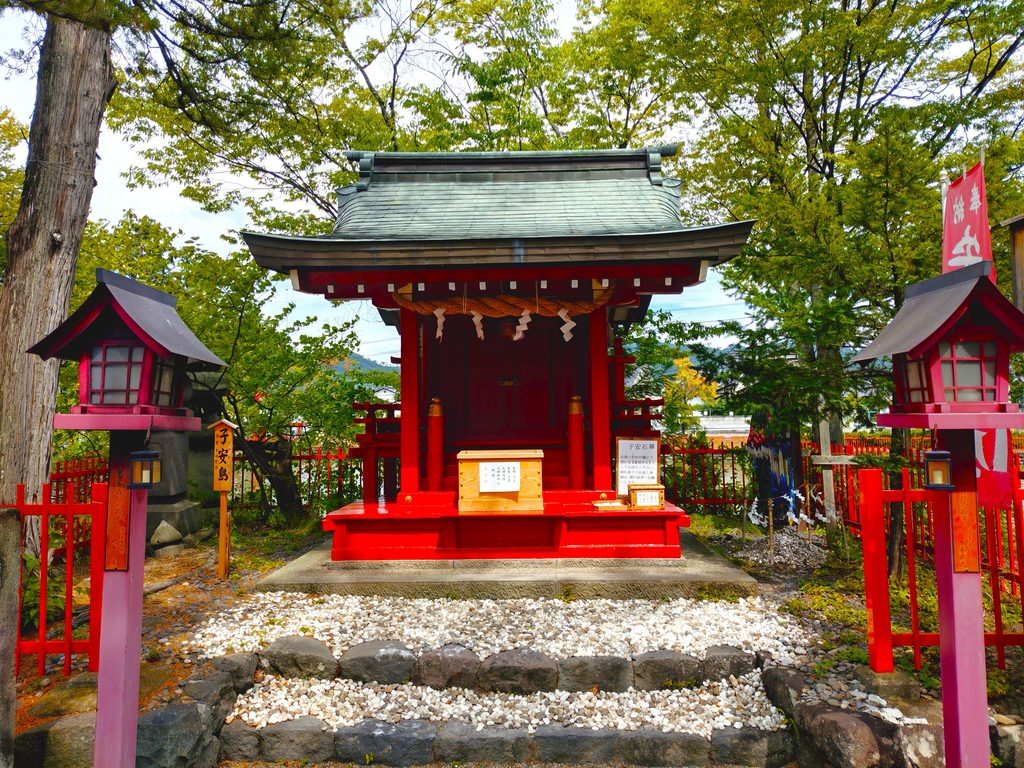
Enshrined to the left of the Main Shrine (Worship Hall), Koyasu-sha enshrines Konohanasakuya-hime-no-Mikoto, famous as the deity of safe childbirth and child-rearing. Located near the sacred “Meoto Keyaki” trees, it is an auxiliary shrine with a warm atmosphere visited by many praying for “childbearing,” “safe delivery,” and “childcare.”
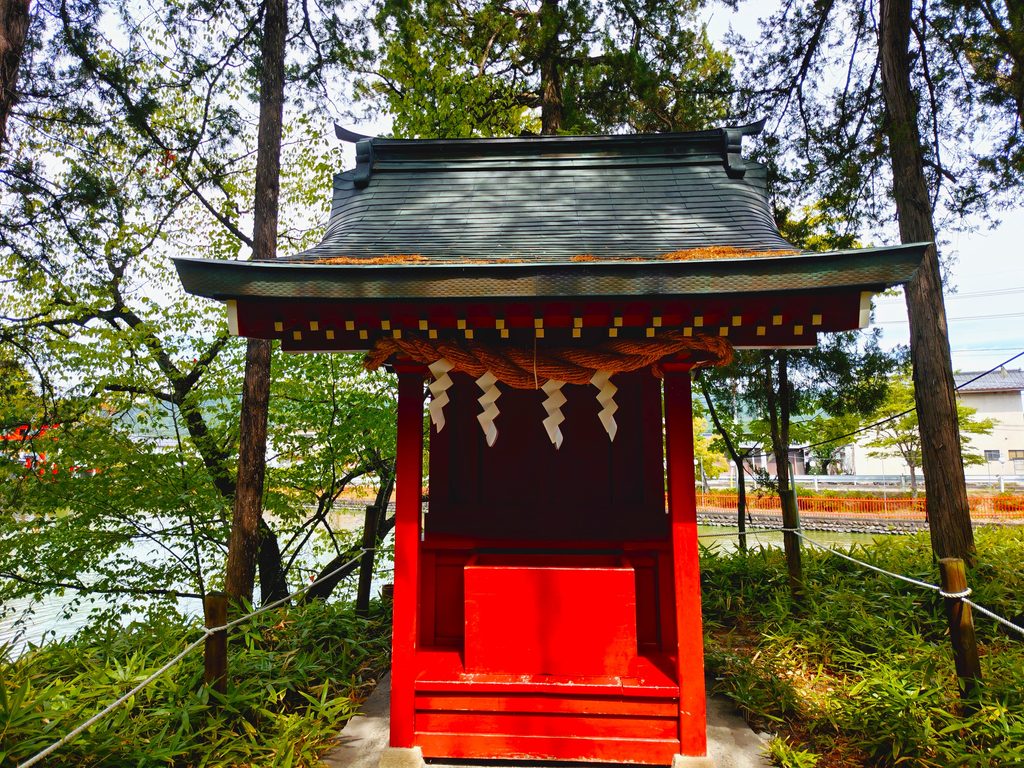
Jusan-sha (Thirteen Shrines) is located deep on the left side facing the Main Hall. Gathered here are deities specializing in purification (oharai), who wash away and cleanse all physical and mental impurities, misfortunes, and sins. It is the ideal spot to sever daily stress or bad fortune and pray for “warding off evil” and “improving good luck.”
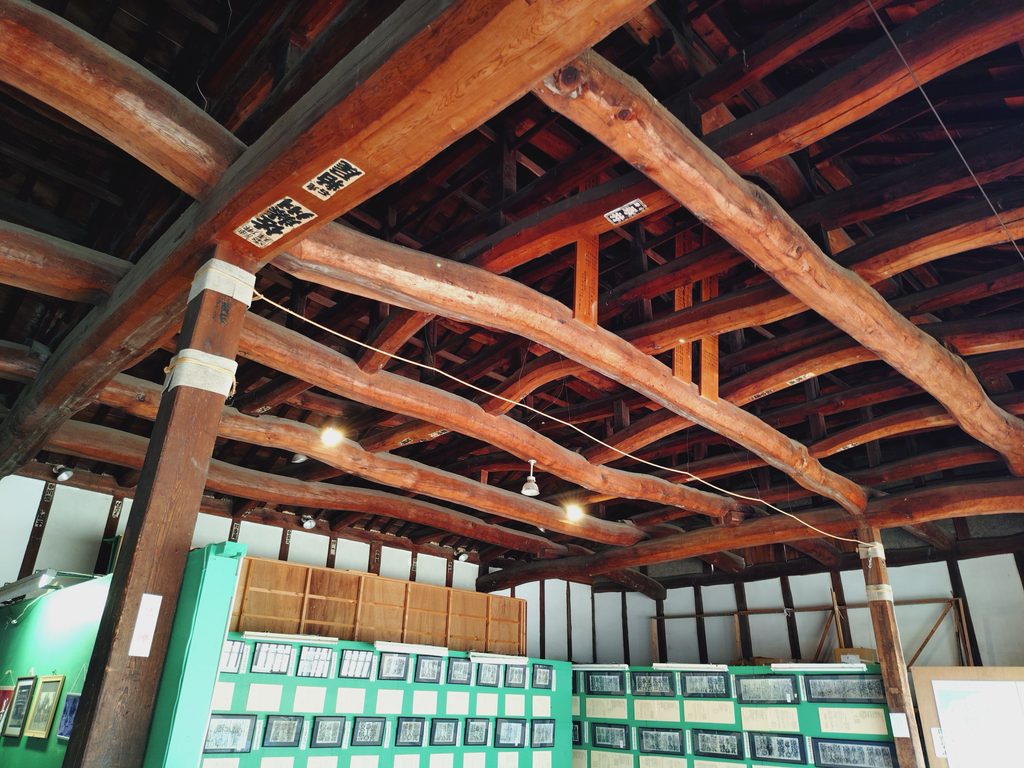
【The “Kabuki Stage” Storing Written Oaths of the Takeda Clan Retainers】
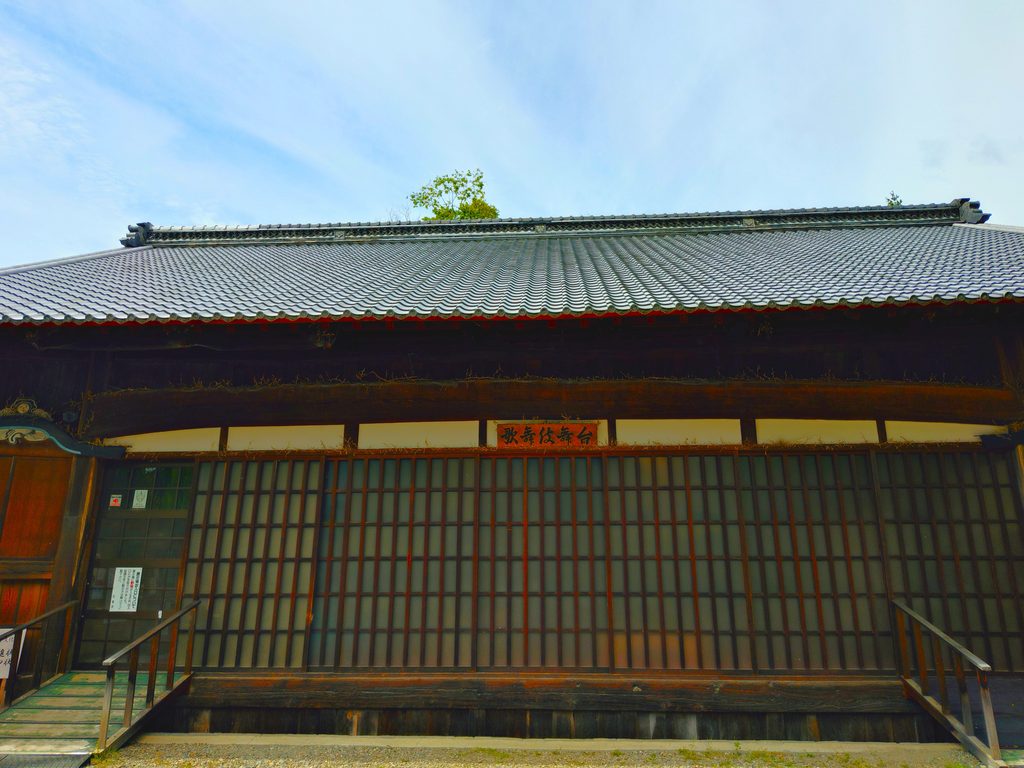
Stored here are a total of 94 ancient documents (all Nationally Designated Important Cultural Properties), including the Ganmon (written prayer) dedicated by Takeda Shingen before his decisive battle against Uesugi Kenshin during the Sengoku period, and the Takeda Kashindan Kishomon (Written Oath of Takeda Retainers)—a pledge stamped in blood by 237 retainers of Shingen promising not to betray him. Today, these can be viewed at the Kabuki Stage within the shrine grounds.
【Ikushimatarushima Shrine On-Site Visit Report & Original Evaluation】
Ikushimatarushima Shrine On-Site Visit Review & Evaluation Score
| Evaluation Category | Score | Key Features / Highlights |
|---|---|---|
| History & Heritage | (5.0) | An ancient shrine enshrining the center of Japan; famous for Takeda Shingen’s written oaths |
| Accessibility | (4.5) | A 2-minute walk from Shimonogo Station on the Ueda Electric Railway; large free parking lot available |
| Nature & Scenery | (4.5) | A stunning location created by the vermilion sacred island floating on the divine pond and the drum bridge |
| Goshuin Variety | (4.5) | A rich lineup including Goshuin for the Main Shrine, Subsidiary Shrine (Suwa Shrine), seasonal, and limited Takeda Shingen designs |
| Tranquility | (4.0) | Surrounded by a pond, the sacred realm maintains a dignified, pure atmosphere even when busy with visitors |
| Grounds Scale | (4.0) | Very impressive with its rare “island-in-a-pond” layout centered around the divine pond |
*Features a rare “island-in-a-pond” layout where the Main Hall is enshrined in the middle of a divine pond. Easily accessible by both train (Bessho Line) and car, it is a highly satisfying shrine across all aspects: highlights, historical value, and Goshuin stamps.
【On-Site Report | Personal Impressions and Atmosphere】
A visit to Ikushimatarushima Shrine in Ueda City, Nagano Prefecture. This is not merely an ancient shrine, but a mythic setting tracing back to the founding era of Japan (BC era). The greatest surprise is that the Main Shrine has no floorboards, and the bare “earth” itself is enshrined as the goshintai. Sitting upon a sacred island floating in the divine pond, its appearance is a precious historic relic preserving ancient forms of faith, possessing a dignity truly worthy of the title “Nihon Sochinju.” Markers reading “Center of Japan” (Nihon Chuo) stand throughout the grounds, strongly instilling the sense that this is indeed the geographical center of the Japanese archipelago. Thinking that the divine spirit of the earth has protected Japan from this spot for thousands of years, even the sensation of the soil underfoot felt sacred with every step.
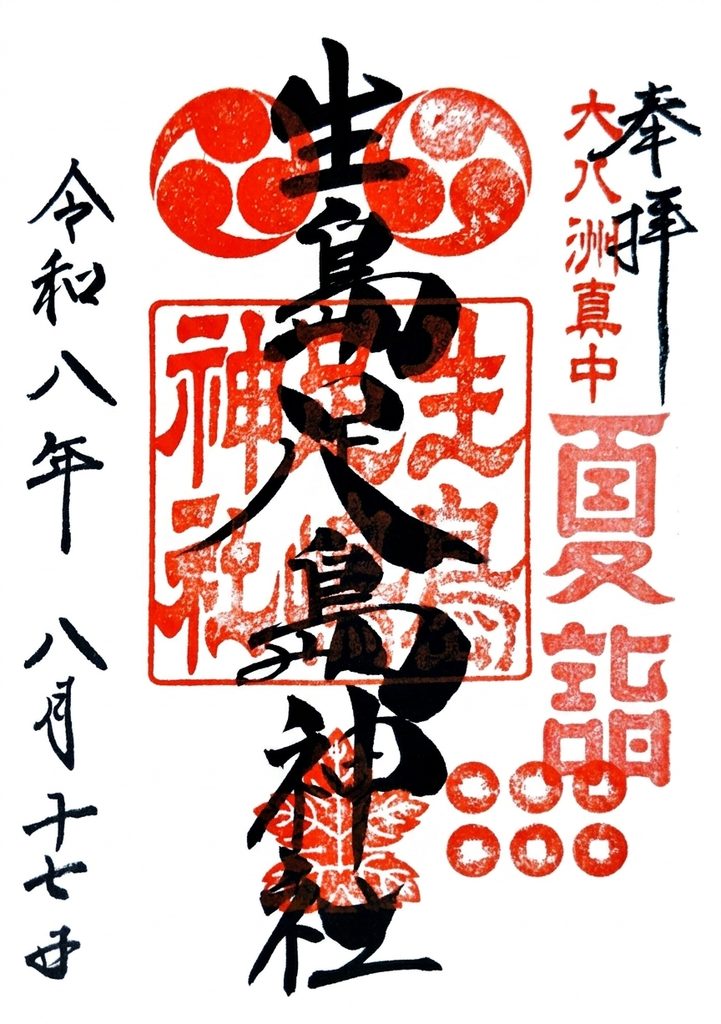
【Ikushimatarushima Shrine Goshuin】
【Nearby Sightseeing Spots to Visit Together】
Zenkoji Temple, Takei Shrine, Takemizuwake Shrine, Tokkosan Zensanji Temple, Utsukushigahara Highlands
![20260816 121543137 2 520x300 - Ikushimatarushima Shrine [Nagano]](https://japan-shrine.info/wp-content/uploads/20260816_121543137-2-520x300.jpg "Ikushimatarushima Shrine [Nagano]")
![20260816 115712522 2 520x300 - Ikushimatarushima Shrine [Nagano]](https://japan-shrine.info/wp-content/uploads/20260816_115712522-2-520x300.jpg "Ikushimatarushima Shrine [Nagano]")
![20260816 1535042052 520x300 - Ikushimatarushima Shrine [Nagano]](https://japan-shrine.info/wp-content/uploads/20260816_1535042052-520x300.jpg "Ikushimatarushima Shrine [Nagano]")
![20260817 1417366502 520x300 - Ikushimatarushima Shrine [Nagano]](https://japan-shrine.info/wp-content/uploads/20260817_1417366502-520x300.jpg "Ikushimatarushima Shrine [Nagano]")
![20260816 1804591013 520x300 - Ikushimatarushima Shrine [Nagano]](https://japan-shrine.info/wp-content/uploads/20260816_1804591013-520x300.jpg "Ikushimatarushima Shrine [Nagano]")
【Basic Information & Access】
【Access by Train / Car and Parking】
*Free parking available
701 Nakaike Nishi, Shimonogo, Ueda City, Nagano Prefecture 386-1211
![98ae08e5c70ff4d98eea95b02b45c152 - Ikushimatarushima Shrine [Nagano]](https://japan-shrine.info/wp-content/uploads/sng/98ae08e5c70ff4d98eea95b02b45c152.png "Ikushimatarushima Shrine [Nagano]")