 Kanata's Japan Shrine Guide

【Overview of Baigan-ji Temple (Higashimurayama City)】
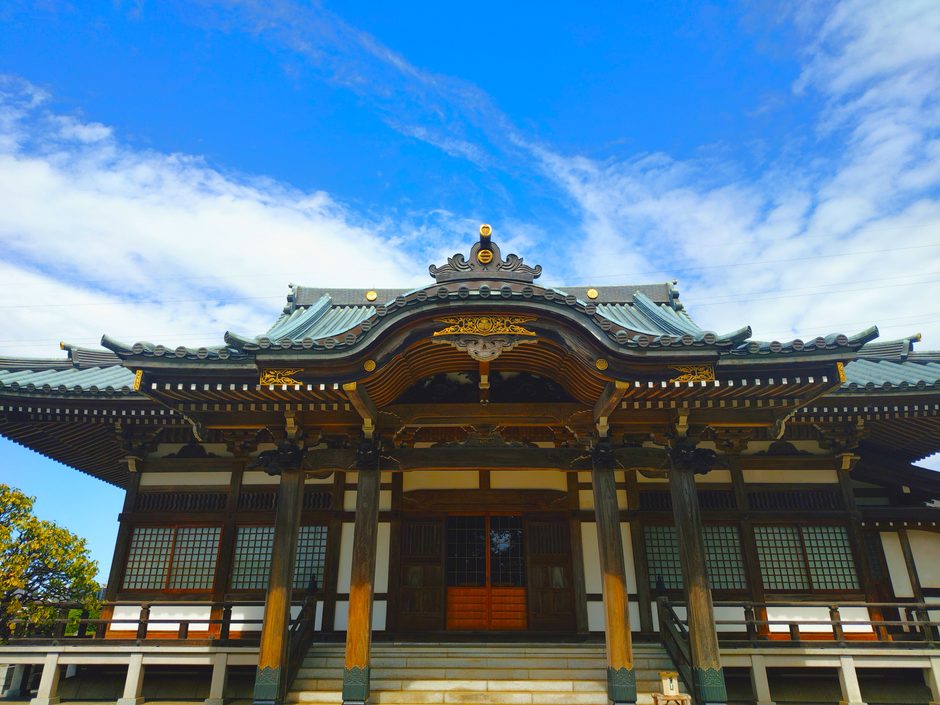
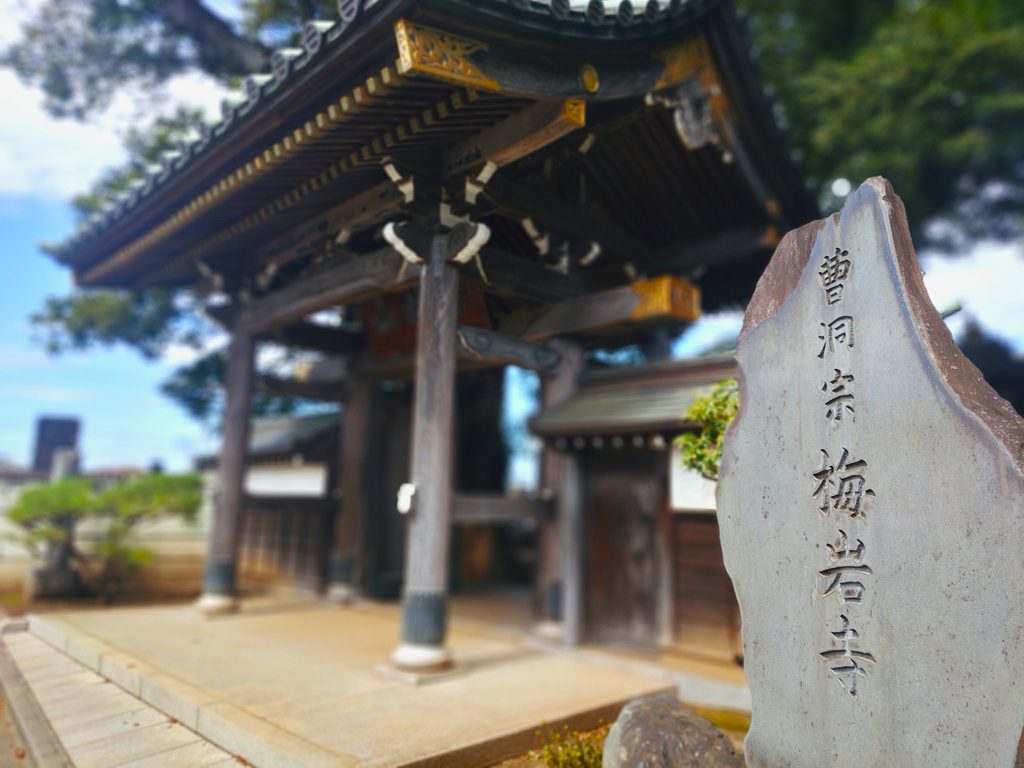
Located in Kumegawacho, Higashimurayama City, Tokyo, Horinzan Baigan-ji Temple (Baigan-ji) is a Soto Zen Temple rich in historic highlights. In recent years, it has also become widely known as the family temple (bodaiji) where Ken Shimura (real name: Yasunori Shimura), the star born in Higashimurayama City, rests in peace.
【History & Origins】An Ancient Temple Quietly Nestled in Higashimurayama
It is said to have been founded in 1398 (Oei 5) as the Shingon Sect temple “Byakkazan Kannon-ji.” After being destroyed by fire during the turmoil of the Sengoku period, it converted to the Soto Zen Sect and was restored in 1652 (Shoo 1). Due to legends that its former principal deity was a sacred image bringing good fortune to Ashikaga Takauji, alongside a history of receiving a red-seal letter (shuinjo) granting 10 koku of temple land from the Tokugawa family during the Edo period, the temple uses two family crests: the Ashikaga family’s “Maru-ni-Futatsu-Hikiro” (Two Bars in a Circle) crest and the Tokugawa family’s “Mitsuba-Aoi” (Three-Leaf Hollyhock) crest.
【Main Image & Divine Blessings】Divine Blessings of Good Health and Warding Off Evil Bestowed by Sho-Kanzeon Bosatsu
The principal image enshrined here is Sho-Kanzeon Bosatsu (Aryavalokitesvara). It is believed to grant divine virtues that relieve worldly desires and suffering, bringing peace of mind and body as well as opening up good fortune.
【Highlights & Key Spots】
【Tokyo Designated Natural Monument Giant Trees】Giant Zelkova and Japanese Nutmeg Trees Exuding an Overwhelming Presence
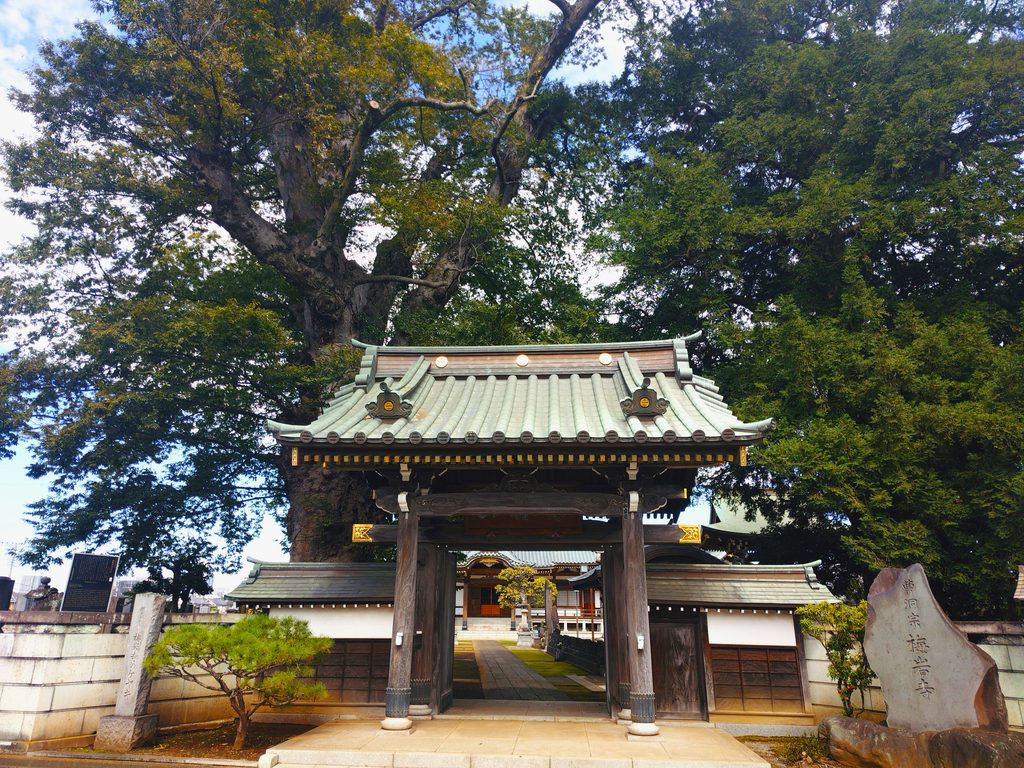
Towering on both sides of the Sanmon Gate are giant zelkova (keyaki) and Japanese nutmeg (kaya) trees—estimated to be around 700 and 600 years old, respectively.
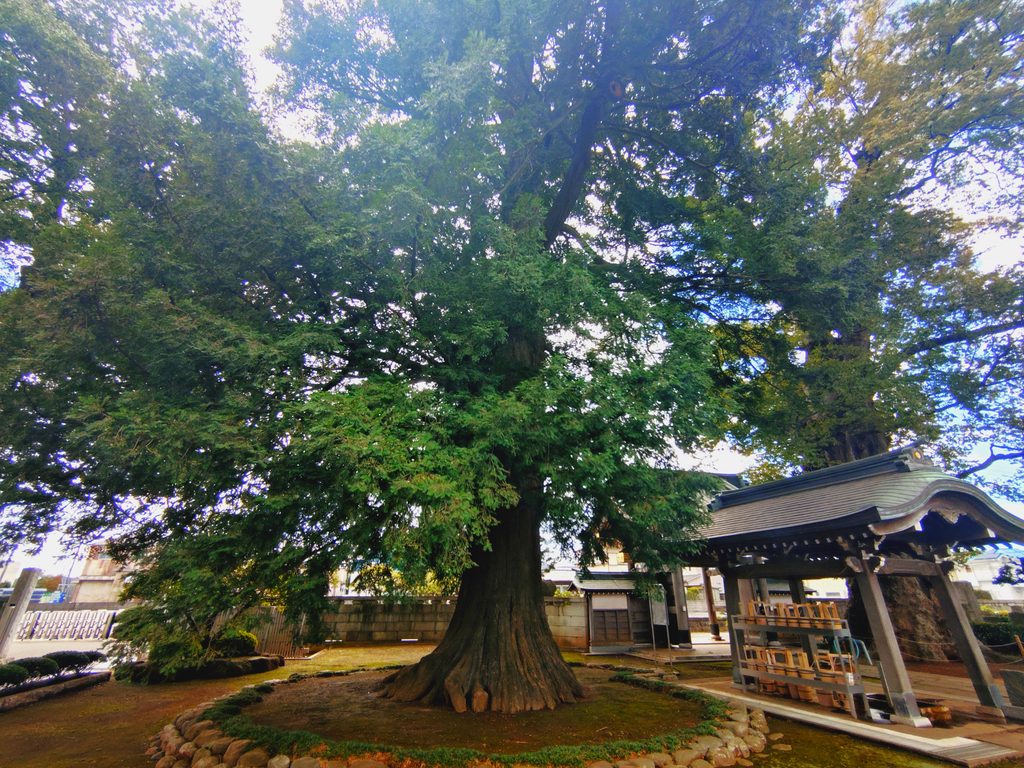
Because of their overwhelming presence, they are affectionately cherished by locals as a regional power spot.
【Bell Tower & Thirteen Buddhas Stone Statues】A Bell Tower and Stone Statues Along the Approach Delivering Pure Sounds and Serenity
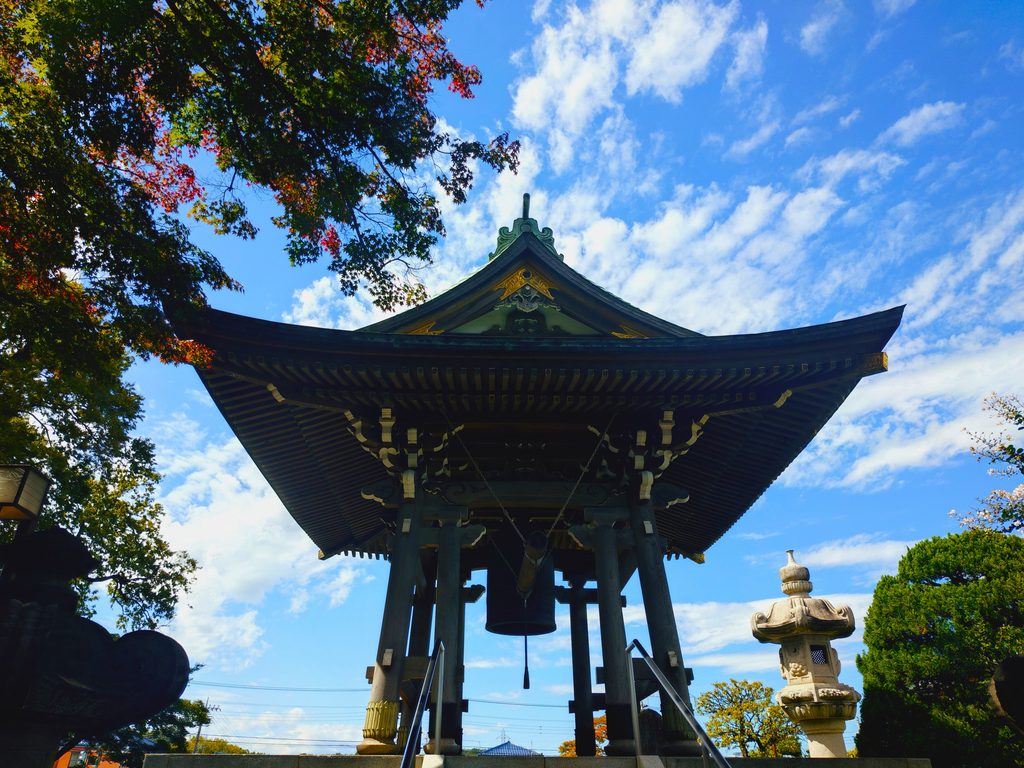
The Bell Tower (Shoro-do) of Baigan-ji Temple stands to the right after passing through the Sanmon Gate and proceeding into the grounds, right near the Thirteen Buddhas stone statues. The bell is said to have been cast in 1730 (Kyoho 15) during the mid-Edo period.
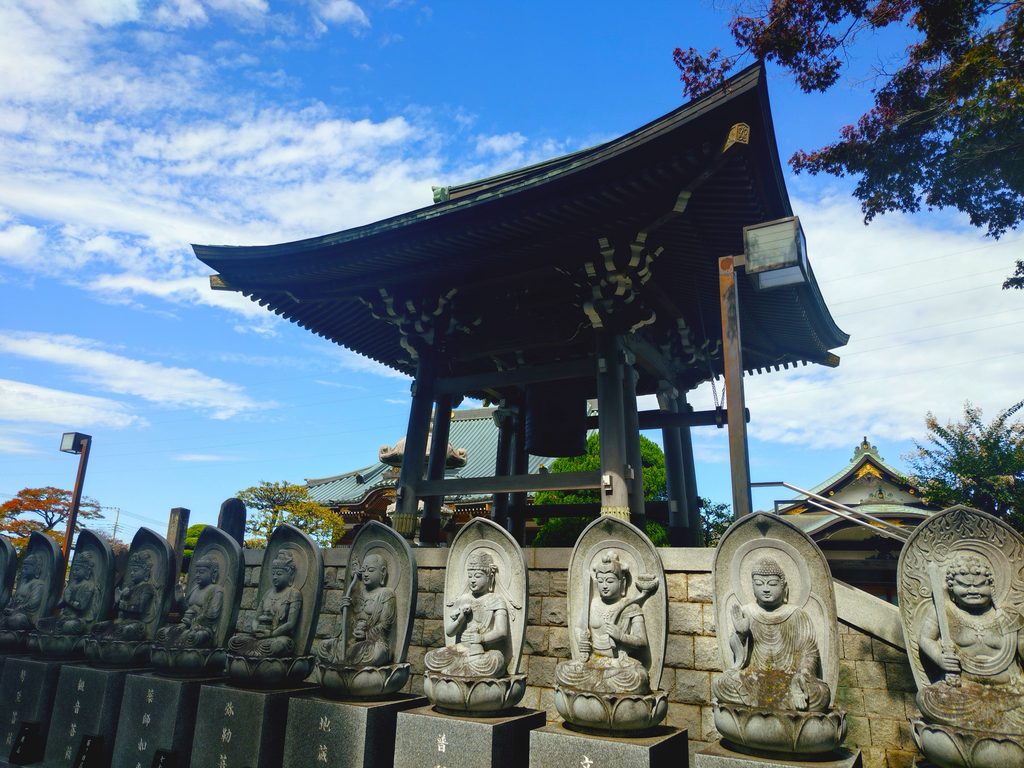
On the grounds of Baigan-ji Temple, just as at Shofuku-ji Temple, stone statues of the “Thirteen Buddhas” (Jusanbutsu)—which protect the deceased on their journey after death—are neatly arranged. Unlike Shofuku-ji, there is no official public record of their exact construction year (such as a founding anniversary marker), but they blend naturally into the solemn atmosphere of the lush green temple grounds.
【Main Hall】The Central Structure Welcoming Visitors in Solemn Splendor
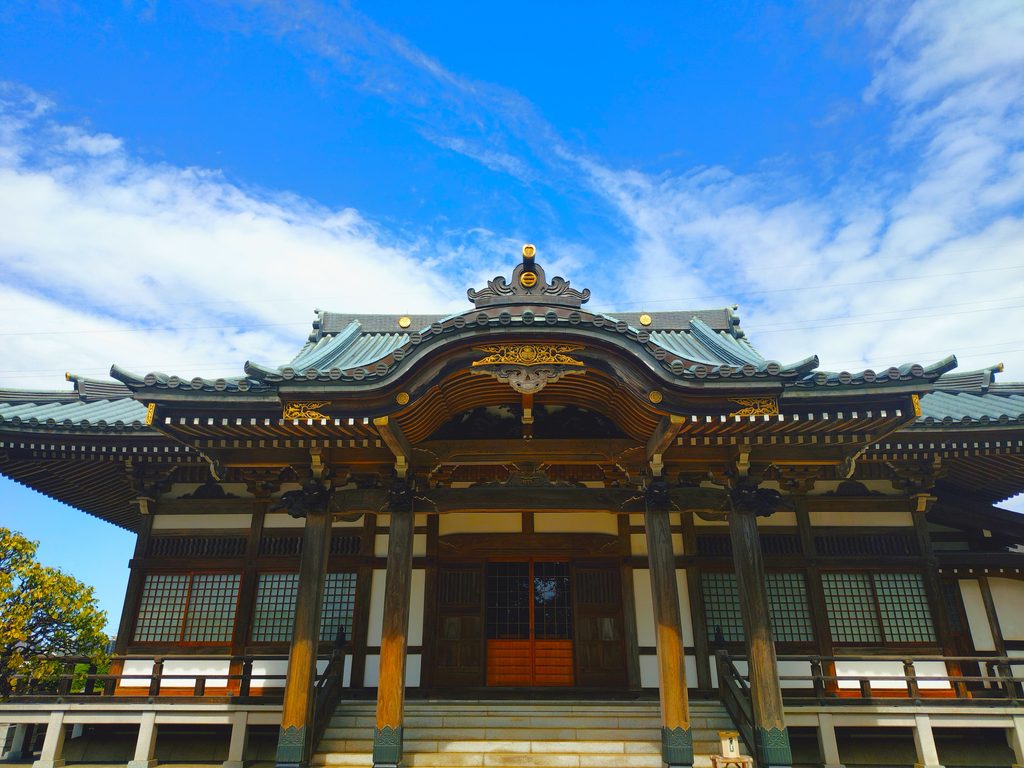
After being destroyed in the fires of war during the Sengoku period (such as Nitta Yoshisada’s attack on Kamakura), it was restored as a Soto Zen temple in 1652 (Shoo 1) and subsequently rebuilt. A highly prestigious legend remains here: a sacred Buddhist image, deeply revered by Ashikaga Takauji—the hero of the Nanboku-cho period—when unifying the nation, was once enshrined on this land. Furthermore, with a verified history of receiving a red-seal letter (shuinjo) granting 10 koku of temple land from Ieyasu during the Edo period and being officially protected by the Shogunate, it is rare for a normal temple to feature two top samurai family crests (Ashikaga and Tokugawa) simultaneously, showcasing the profound history of Baigan-ji.
【Amida-do Hall】A Hall Enshrining Amida Nyorai Exuding a Gentle Atmosphere
Kumegawa Amida-do Hall (Kumegawa Amida-do) is an off-site Buddhist hall (keigai Butsudo) of Baigan-ji Temple, located slightly away from the main grounds to the west of the “Kumegawa 5-chome” traffic light (behind the local community hall).
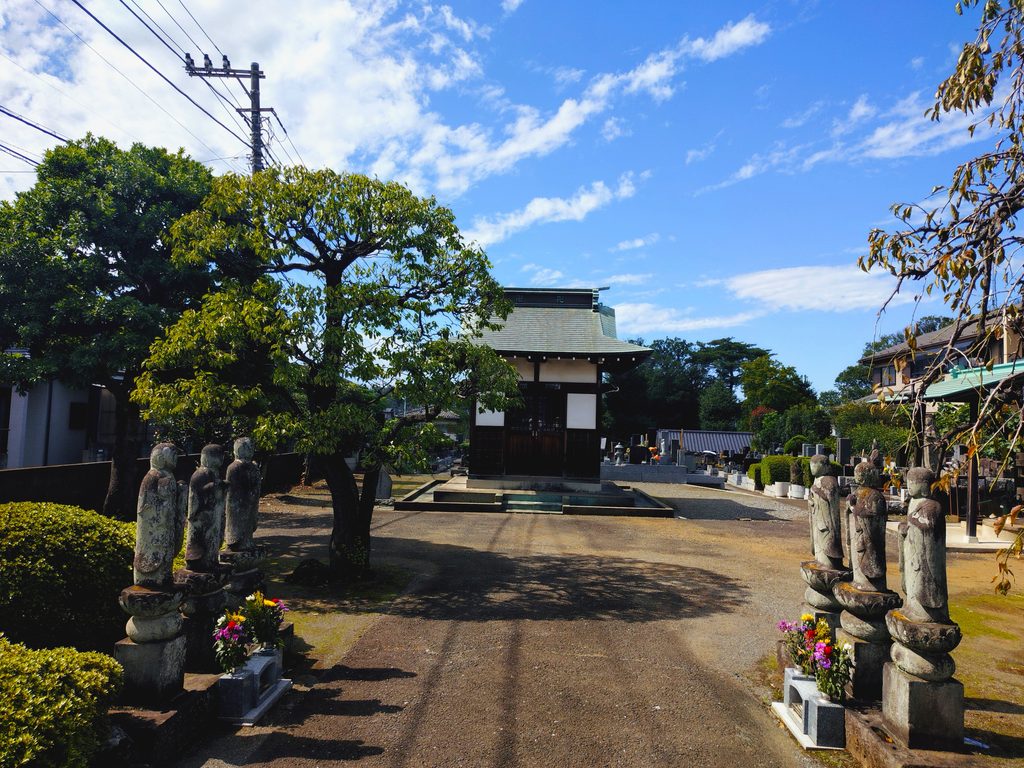
While the exact founding date is unknown, the inscription on the Amida Nyorai statue enshrined inside bears the date “1783 (Tenmei 3),” suggesting that the hall has been preserved and worshipped in this location since at least the mid-Edo period. It is said that another temple named “Ryukoku-ji” once existed in this vicinity, and this Amida-do hall site is believed to be its former location. The grave of Ken Shimura (the ancestral grave of the Shimura family) is located here.
【Baigan-ji Temple (Higashimurayama City) On-Site Visit Report & Evaluation】
Baigan-ji Temple On-Site Review & Evaluation Score
| Evaluation Category | Score | Key Features / Highlights |
|---|---|---|
| Tranquility | (4.0) | Situated deep within a residential neighborhood, offering a serene environment unique to a Zen temple where visitors can quietly calm their minds away from daily hustle. |
| History & Heritage | (3.5) | An ancient temple with a rich history, including legends of Nitta Yoshisada’s attack on Kamakura. Deeply rooted in the local community as a Soto Zen temple recording long-standing history. |
| Nature & Scenery | (3.5) | Home to two giant trees designated as Municipal Natural Monuments—a Japanese nutmeg and a weeping cherry—with the weeping cherry blossoms in spring offering a truly breathtaking atmosphere. |
| Scale & Grounds | (3.0) | Although a compact temple ground, key elements such as the Main Hall, Six Jizo Statues, and giant Natural Monument trees are neatly arranged, making it easy to explore. |
| Accessibility | (3.0) | About a 10–12 minute walk from the East Exit of “Higashi-Murayama Station” on the Seibu Shinjuku and Kokubunji Lines, accessible while walking through peaceful townscapes. |
| Goshuin Variety | (2.0) | Grants Goshuin for the principal deity (Shaka Nyorai) as well as pilgrimage seals for the Musashino 33 Kannon Pilgrimage and Sayama 33 Kannon Pilgrimage circuits. |
【On-Site Report | Personal Impressions and Atmosphere】
Carved into the Main Hall and Bell Tower are the family crests of the Ashikaga and Tokugawa families—the two top samurai lineages. The legend of Ashikaga Takauji praying here for national unification and the verified historical weight of being carefully protected by the Tokugawa Shogunate quietly convey the dignified elegance of this peaceful temple.
What continues to capture the hearts of visitors from all over Japan to this day is likely the fact that Japan’s iconic star, Ken Shimura, was nurtured by this serene land and now rests in peace, returned to this very soil.
【Nearby Sightseeing Spots to Visit Together】
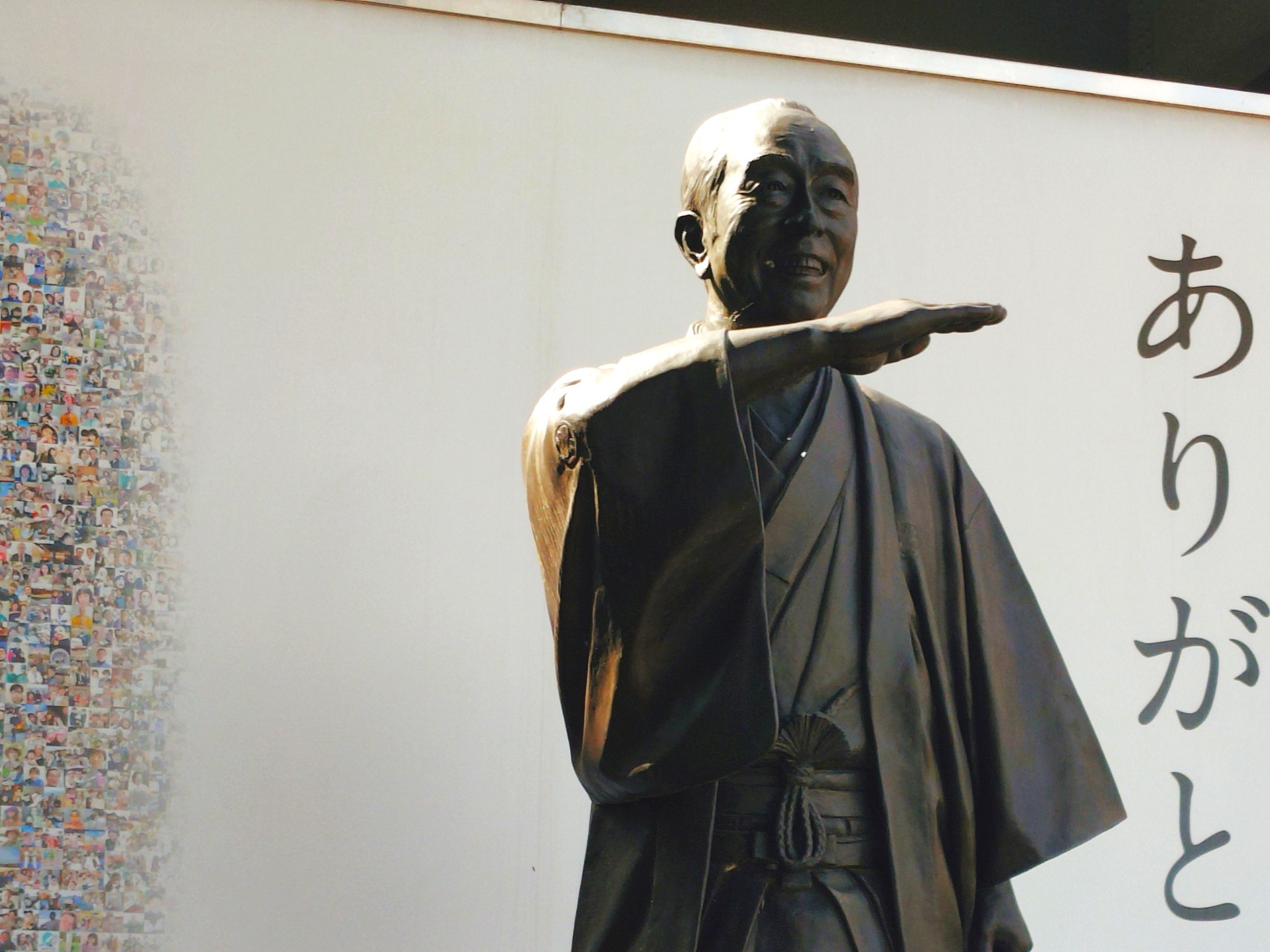
Statue of Ken Shimura, Kongosan Shofuku-ji Temple
【Basic Information & Access】
【Access by Train / Car and Parking】
*Free parking available
5-24-6 Kumegawacho, Higashimurayama City, Tokyo 189-0003