 Kanata's Japan Shrine Guide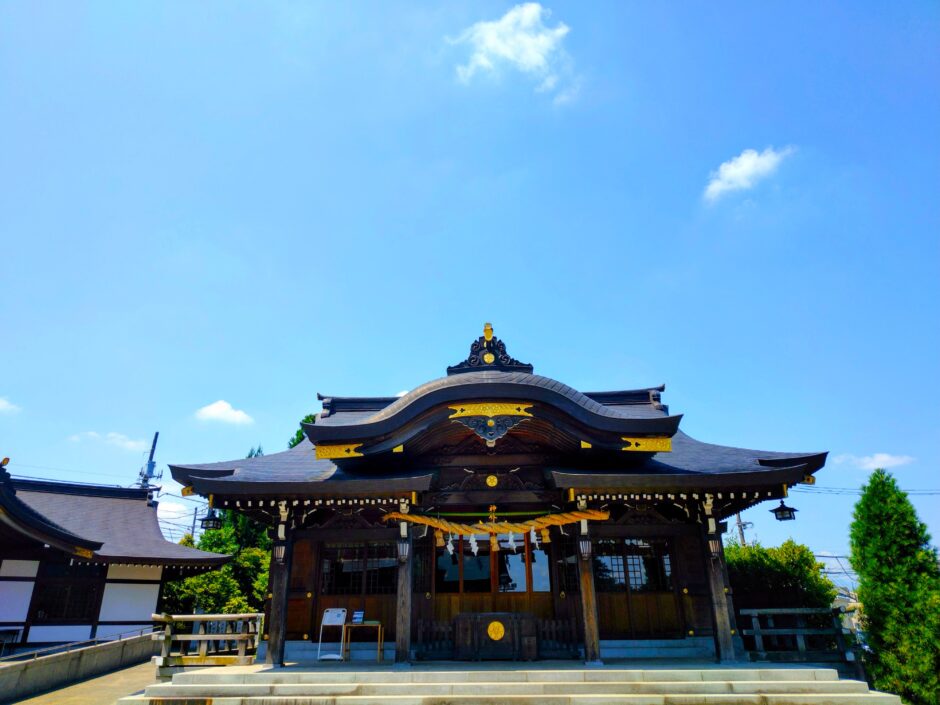

目次
- 【Overview of Sugawara Shrine】
- 【Reason for the Founding of Sugawara Shrine】
- 【Sugawara Shrine Approach】
- 【Sugawara Shrine Temizuya (Purification Pavilion】
- 【Sugawara Shrine Buildings】
- 【Sugawara Shrine Dedicated O-Ema (Grand Votive Plaque)】
- 【Sugawara Shrine Sub-Shrine: Atago Shrine】
- 【Sugawara Shrine Sub-Shrine: Fujiki Inari Shrine】
- 【Sugawara Shrine Sub-Shrine: Benten Shrine】
- 【Idenosawa Ancient Battlefield】
- 【Monument of Sacred Spring Water (Goshin-sui)】
- 【Nearby Tourist Spots】
- 【Sugawara Shrine Access】
- Admin’s Impressions
- Sugawara Shrine Address
- Sugawara Shrine Official Website
【Overview of Sugawara Shrine】
Sugawara Shrine was founded in 1630 (Kanei 7).
Located in Hon-Machida, Machida City, Tokyo, Sugawara Shrine is a historic shrine that enshrines Sugawara no Michizane-ko—the deity of learning—as its primary enshrined deity. Known as one of the “Three Tenjin Shrines of Machida” alongside Machida Tenmangu Shrine in Hara-Machida and Minami-Oya Tenjinsha Shrine, it is also famous for its location encompassing the “Idenosawa Ancient Battlefield Site.”
![20260720 1109277602 520x300 - Sugawara Shrine [Tokyo]](https://japan-shrine.info/wp-content/uploads/20260720_1109277602-520x300.jpg "Sugawara Shrine [Tokyo]")
![20260720 1018410002 520x300 - Sugawara Shrine [Tokyo]](https://japan-shrine.info/wp-content/uploads/20260720_1018410002-520x300.jpg "Sugawara Shrine [Tokyo]")
![20260720 1018410002 1 - Sugawara Shrine [Tokyo]](https://japan-shrine.info/wp-content/uploads/20260720_1018410002-1.jpg "Sugawara Shrine [Tokyo]")
【Reason for the Founding of Sugawara Shrine】
The shrine’s origins date back even earlier than 1630 to the Muromachi period (around the 1430s), when a village headman named Sakonmasatsugu Osawa migrated to this region. He brought and enshrined a “Tenjin Statue” (a likeness of Sugawara no Michizane-ko) that his ancestors had received from Kitano Tenmangu Shrine in Kyoto. Later, in the early Edo period (Kanei 7 / 1630), Genba Osawa, a descendant of the Osawa family, commissioned the creation of a new “Totou no Tenjin Statue” (a statue depicting Michizane-ko as he was believed to have traveled to China). Genba donated his own land, built a shrine hall, and formally enshrined the deity as the Chinju (guardian deity protecting the entire village from disasters) of Hon-Machida Village. This established the foundation for the Sugawara Shrine that exists today.
![20260720 102545129 2 1024x768 - Sugawara Shrine [Tokyo]](https://japan-shrine.info/wp-content/uploads/20260720_102545129-2-1024x768.jpg "Sugawara Shrine [Tokyo]")
Additionally, the land where the shrine stands is the site of the “Idenosawa Ancient Battlefield,” where Tadayoshi Ashikaga and Tokiyuki Hojo fought a fierce battle in 1335. Clear spring water flowed beneath the grounds, and it is believed that one of the founding purposes was to comfort the spirits of the many people who perished in the violent conflict and to appease the local spirits (a act of soul-soothing, or Chinkon).
【Sugawara Shrine Approach】
![20260720 101521255 1024x768 - Sugawara Shrine [Tokyo]](https://japan-shrine.info/wp-content/uploads/20260720_101521255-1024x768.jpg "Sugawara Shrine [Tokyo]")
Along the Kamakura Kaido road stands an impressive shrine marker stone engraved with “Sugawara Shrine” and a striking, large vermilion torii gate (O-torii).
![20260720 101601681 1024x768 - Sugawara Shrine [Tokyo]](https://japan-shrine.info/wp-content/uploads/20260720_101601681-1024x768.jpg "Sugawara Shrine [Tokyo]")
Upon passing through the grand torii gate, the approach path becomes a gentle downhill slope, forming a bowl-shaped terrain. While shrine approaches are usually uphill or flat, descending first to reach the sacred sanctuary is a rare feature.
![20260720 101652554 1024x768 - Sugawara Shrine [Tokyo]](https://japan-shrine.info/wp-content/uploads/20260720_101652554-1024x768.jpg "Sugawara Shrine [Tokyo]")
At the end of the approach, a steep and lengthy set of stone steps (Otokozaka) towers before you, seemingly drawing visitors into the lush green guardian forest (Chinju no Mori). These historic stone steps were constructed in 1933 (Showa 8) through the voluntary service of local parishioners (Ujiko) at the time.
【Sugawara Shrine Temizuya (Purification Pavilion】
![20260720 1017122392 1024x768 - Sugawara Shrine [Tokyo]](https://japan-shrine.info/wp-content/uploads/20260720_1017122392-1024x768.jpg "Sugawara Shrine [Tokyo]")
The temizuya (purification pavilion) is situated right beneath the steep stone steps of the main approach. In March 2023, it was rebuilt as a “Ume no Hana-Chozu” (Plum Blossom Chozu) pavilion, reborn with an extraordinarily elegant design deeply connected to the primary deity, Sugawara no Michizane-ko.
【Sugawara Shrine Buildings】
The previous shrine hall (Haiden, or worship hall) was originally built in 1785 (Tenmei 5) during the Edo period. However, due to aging, it was rebuilt in 2012 for the first time in 237 years.
![20260720 101852501 1024x768 - Sugawara Shrine [Tokyo]](https://japan-shrine.info/wp-content/uploads/20260720_101852501-1024x768.jpg "Sugawara Shrine [Tokyo]")
The project was carried out by an architectural firm specializing in shrine architecture alongside Kongo Gumi, the world’s oldest construction company, which inherits traditional craftsmanship dating back to the Asuka period. The current structure is based on the beautiful wooden Shinmei-zukuri style, possessing an open, dignified, and modern architectural beauty that highlights the natural warmth and pristine elegance of unpainted wood (Shiraki).
【Sugawara Shrine Dedicated O-Ema (Grand Votive Plaque)】
![20260720 102217574 1024x768 - Sugawara Shrine [Tokyo]](https://japan-shrine.info/wp-content/uploads/20260720_102217574-1024x768.jpg "Sugawara Shrine [Tokyo]")
A grand ema (votive plaque) was displayed next to the Kagura-den (Sacred Dance Stage).
【Sugawara Shrine Sub-Shrine: Atago Shrine】
Located in the far back-left area behind the worship hall is Atago Shrine.
![20260720 102343590 1024x768 - Sugawara Shrine [Tokyo]](https://japan-shrine.info/wp-content/uploads/20260720_102343590-1024x768.jpg "Sugawara Shrine [Tokyo]")
Although the exact year of its founding remains unknown, historical records document that it has been enshrined on this land since at least before the Meiji period. Over time, it underwent relocations within the grounds and rebuilds of its structure to reach its present appearance.
The primary enshrined deity is Kagutsuchi no Kami.
【Sugawara Shrine Sub-Shrine: Fujiki Inari Shrine】
Positioned even deeper behind the worship hall is Fujiki Inari Shrine.
![20260720 102645601 1024x768 - Sugawara Shrine [Tokyo]](https://japan-shrine.info/wp-content/uploads/20260720_102645601-1024x768.jpg "Sugawara Shrine [Tokyo]")
It was carefully preserved for generations by the members of the Inari-ko (Inari devotional association) in the Mukai district, before being transferred to the grounds of Sugawara Shrine in 2017 (Heisei 29). The name “Fujiki” originates from a magnificent wisteria tree (fuji) that once stood beside the old shrine.
The primary enshrined deity is Ukanomitama no Kami.
【Sugawara Shrine Sub-Shrine: Benten Shrine】
Along the main approach, located on the left just before ascending the stone steps, sits Benten Shrine.
![20260720 102948624 1024x768 - Sugawara Shrine [Tokyo]](https://japan-shrine.info/wp-content/uploads/20260720_102948624-1024x768.jpg "Sugawara Shrine [Tokyo]")
Located along the main approach on the left before ascending the stone steps, it was originally enshrined in the nearby Imai district. Following regional development and neighborhood reorganization, it was relocated (sensa) to the grounds of Sugawara Shrine in 2014 (Heisei 26).
The primary enshrined deity is Benzaiten (the goddess of water and one of the Seven Lucky Gods).
【Idenosawa Ancient Battlefield】
The “Idenosawa Ancient Battlefield,” which spans across the grounds of Sugawara Shrine and its surrounding area, was the site of a fierce clash during the Nakasendai Rebellion (1335)—a major historic event that erupted immediately following the fall of the Kamakura Shogunate.
![20260720 102449228 1024x768 - Sugawara Shrine [Tokyo]](https://japan-shrine.info/wp-content/uploads/20260720_102449228-1024x768.jpg "Sugawara Shrine [Tokyo]")
Idenosawa was a crucial strategic point along the Kamakura Kaido (Kamino-michi / Upper Route) that connected northern Kanto to Kamakura. Rolling hilly terrain (the Tama Hills) stretches from the Fuchu region up to this point, but once past Idenosawa, the geography opens up completely, allowing an army to charge straight into Kamakura without obstacles. For the Ashikaga forces, this was a critical defensive line where they believed: “If we do not stop them here at all costs, Kamakura will fall.”
![20260720 102352586 1024x768 - Sugawara Shrine [Tokyo]](https://japan-shrine.info/wp-content/uploads/20260720_102352586-1024x768.jpg "Sugawara Shrine [Tokyo]")
Based on the topography, it is speculated that a military facility resembling a fort with palisades was built atop this high ground at the time. Tadayoshi Ashikaga is believed to have used this stronghold as a defensive position to meet and fight the enemy. As noted in the founding section, a shrine that became the origin of Sugawara Shrine was likely built near the pure spring water flowing beneath the grounds to mourn the many soldiers who lost their lives in this battle.
【Monument of Sacred Spring Water (Goshin-sui)】
Located very close to Benten Shrine is the “Monument of Sacred Spring Water” (Goshin-sui no Sekihei).
![20260720 102958498 1024x768 - Sugawara Shrine [Tokyo]](https://japan-shrine.info/wp-content/uploads/20260720_102958498-1024x768.jpg "Sugawara Shrine [Tokyo]")
The grounds of Sugawara Shrine were once called “Idenosawa” and were rich in pure, abundant spring water that caused travelers to pause and refresh themselves. This stone monument was erected to mark the historic location of that sacred spring water (Goshin-sui). Benzaiten, the goddess of water, was specifically relocated to this exact spot within the grounds because of its historical connection to this sacred spring water.
![20260720 103009430 1024x768 - Sugawara Shrine [Tokyo]](https://japan-shrine.info/wp-content/uploads/20260720_103009430-1024x768.jpg "Sugawara Shrine [Tokyo]")
In the past, worshippers could draw sacred water (O-mizutori) here. However, for safety, hygiene management, and environmental preservation, the surrounding area is currently restricted, and general visitors are unable to draw water directly today.
【Nearby Tourist Spots】
Machida Tenmangu Shrine, Minami-Oya Tenjinsha Shrine, Buaiso
![20260720 1209563822 520x300 - Sugawara Shrine [Tokyo]](https://japan-shrine.info/wp-content/uploads/20260720_1209563822-520x300.jpg "Sugawara Shrine [Tokyo]")
【Sugawara Shrine Access】
Admin’s Impressions
While it is now a lush and beautiful shrine surrounded by greenery, this is the exact battlefield where the forces of Tokiyuki Hojo and Tadayoshi Ashikaga collided in the 2nd year of Kenmu (1335) during the Nakasendai Rebellion. Thinking about how a vital key point along the Kamakura Kaido—once an oasis of spring water (Idenosawa) where travelers rested their feet—turned into the stage for a fierce battle adds a profound weight to every step along the approach. Moving past the back-left of the worship hall and past Atago Shrine, the monument for the “Historical Site: Idenosawa” and an explanatory panel stand quietly. Mourning the fallen soldiers using this spring water long ago is said to be directly connected to the very origins of this shrine.
802 Hon-Machida, Machida, Tokyo 194-0032
*Free parking available.
![16ef97ae1b2f77927c240f75679348e3 - Sugawara Shrine [Tokyo]](https://japan-shrine.info/wp-content/uploads/sng/16ef97ae1b2f77927c240f75679348e3.jpg "Sugawara Shrine [Tokyo]")