 Kanata's Japan Shrine Guide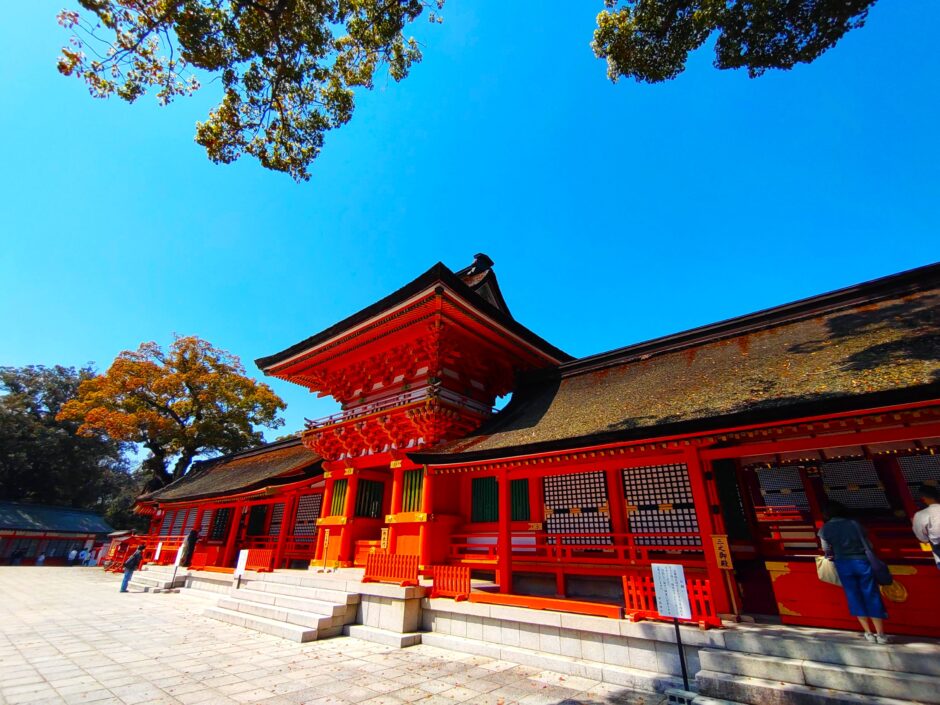

目次
- 【Overview of Usa Jingu Shrine】
- 【Usa Jingu Shrine Torii Gate】
- 【Usa Jingu Shrine Shinkyo (Sacred Bridge)】
- 【Usa Jingu Shrine Approach】
- 【Usa Jingu Shrine Ema-do (Former Daini-do Hall)】
- 【Usa Jingu Shrine Sub-Shrine: Toguu Shrine】
- 【Usa Jingu Shrine Haraedo (Place of Purification)】
- 【Usa Jingu Shrine Third Torii Gate】
- 【Usa Jingu Jogu Main Sanctuary】
- 【Usa Jingu Shrine Sacred Tree (Grand Camphor Tree)】
- 【Usa Jingu Shrine Sub-Shrine: Wakamiya Shrine】
- 【Usa Jingu Shrine Downward Approach】
- 【Usa Jingu Shrine Gegu (Lower Shrine)】
- 【Usa Jingu Shrine Nohgakuden (Noh Theater Stage)】
- 【Usa Jingu Shrine Hishigata Pond】
- 【Usa Jingu Shrine Goreisui (Sacred Spiritual Water Springs)】
- 【Nearby Tourist Spots】
- 【Usa Jingu Shrine Access】
- Admin’s Impressions
- Usa Jingu Shrine Address
- Usa Jingu Shrine Official Website
【Overview of Usa Jingu Shrine】
Usa Jingu Shrine was founded in the year 725 AD (Jinki 2) during the Nara period. Its origins and the worship here began earlier in 571 AD (during the reign of Emperor Kinmei), when Hachiman Okami (the divine spirit of Emperor Ojin) is said to have appeared in the form of a three-year-old child by the shores of the complex’s Hishigata Pond. It was in the year 725 AD (Jinki 2) that a shrine building was first erected at its current location on Mount Ogura.
The primary enshrined deities consist of three pillars (mihashira): Hachiman Okami, Hime no Okami, and Empress Jingu.
【Usa Jingu Shrine Torii Gate】
![DSC 3224 1024x768 - Usa Jingu Shrine [Oita]](https://japan-shrine.info/wp-content/uploads/DSC_3224-1024x768.jpg "Usa Jingu Shrine [Oita]")
The gate features the “Usa Torii” style, a structural form unique to Usa Jingu Shrine. This style is considered one of the oldest forms of wooden torii gates in Japan and serves as the definitive standard for torii gates at Hachiman shrines nationwide.
【Usa Jingu Shrine Shinkyo (Sacred Bridge)】
The Shinkyo (Sacred Bridge) is an important bridge crossing the Yorigamo River, which marks the entrance to the sacred sanctuary. Strictly speaking, all bridges leading into the grounds are considered “sacred bridges,” but the term generally refers to the vermilion arch bridge located on the main approach (Omote-sando).
![DSC 32272 1024x768 - Usa Jingu Shrine [Oita]](https://japan-shrine.info/wp-content/uploads/DSC_32272-1024x768.jpg "Usa Jingu Shrine [Oita]")
Repair and painting works were completed in 2018, keeping its vivid colors beautifully preserved.
【Usa Jingu Shrine Approach】
Crossing the Shinkyo bridge reveals a long and grand approach.
![DSC 3235 1024x768 - Usa Jingu Shrine [Oita]](https://japan-shrine.info/wp-content/uploads/DSC_3235-1024x768.jpg "Usa Jingu Shrine [Oita]")
As the total head shrine of all Hachiman shrines across Japan, this has been a special site since ancient times where Chokushi (imperial messengers sent by the Emperor) were dispatched (a Chokusaisha shrine). Because it required a dignified space to accommodate grand, large-scale processions, a wide and lengthy path was established. By deliberately placing a vast distance between the entry torii and the main sanctuary, the path serves as a “road of prayer,” allowing visitors to settle their minds as they transition from the secular world to the sacred realm.
![DSC 3233 2 1024x768 - Usa Jingu Shrine [Oita]](https://japan-shrine.info/wp-content/uploads/DSC_3233-2-1024x768.jpg "Usa Jingu Shrine [Oita]")
Proceeding further along the approach reveals an even grander, massive torii gate.
【Usa Jingu Shrine Ema-do (Former Daini-do Hall)】
Passing through the grand torii gate and moving further forward reveals the Ema-do (Votive Tablet Hall) on your left. On your right sits the Jingu-cho (Shrine Administrative Office), where you can receive goshuin temple seals.
![DSC 3236 1024x768 - Usa Jingu Shrine [Oita]](https://japan-shrine.info/wp-content/uploads/DSC_3236-1024x768.jpg "Usa Jingu Shrine [Oita]")
The Ema-do at Usa Jingu was once called “Daini-do” and stands as an exceptionally valuable structure that carries the historical legacy of Shinbutsu-shugo (the syncretism of Buddhism and Shinto) into the present day. It is currently designated as a Tangible Cultural Property of Oita Prefecture.
![DSC 3268 1024x768 - Usa Jingu Shrine [Oita]](https://japan-shrine.info/wp-content/uploads/DSC_3268-1024x768.jpg "Usa Jingu Shrine [Oita]")
Due to the Separation of Shinto and Buddhism orders during the Meiji period, its Buddhist statues were relocated, and the building now serves as an “Ema-do” where worshippers hang their dedicated ema (votive plaques).
【Usa Jingu Shrine Sub-Shrine: Toguu Shrine】
Moving further ahead, near the very end of the main approach and just before the right-hand side of the stone steps (the “One Hundred Steps”) leading up to the upper shrine complex, Toguu Shrine comes into view.
![DSC 3239 1024x768 - Usa Jingu Shrine [Oita]](https://japan-shrine.info/wp-content/uploads/DSC_3239-1024x768.jpg "Usa Jingu Shrine [Oita]")
The primary enshrined deity is Uji no Wakairatsuko no Mikoto.
However, an alternative legend suggests that while he was presumed dead by suicide, he actually survived, led his clan down to the eastern provinces, and established a palace in a land tied to his great-grandfather, Yamato Takeru no Mikoto. He is enshrined under this narrative as the primary deity at Sakitori Shrine in Kanagawa Prefecture.
![20260301 100456258 520x300 - Usa Jingu Shrine [Oita]](https://japan-shrine.info/wp-content/uploads/20260301_100456258-520x300.jpg "Usa Jingu Shrine [Oita]")
【Usa Jingu Shrine Haraedo (Place of Purification)】
Located straight ahead at the absolute end of the approach path past Toguu Shrine is the Haraedo. The Haraedo is a sacred space where Shinto priests cleanse themselves before rituals and perform sacred purification rites (Misogi) to wash away physical and spiritual impurities.
![DSC 3257 1024x768 - Usa Jingu Shrine [Oita]](https://japan-shrine.info/wp-content/uploads/DSC_3257-1024x768.jpg "Usa Jingu Shrine [Oita]")
This area possesses an exceptionally crisp, pristine atmosphere, cementing its status as a truly sacred ground.
【Usa Jingu Shrine Third Torii Gate】
Proceeding just past the Haraedo, two distinct torii gates come into view.
![DSC 32402 1024x768 - Usa Jingu Shrine [Oita]](https://japan-shrine.info/wp-content/uploads/DSC_32402-1024x768.jpg "Usa Jingu Shrine [Oita]")
This spot serves as the fork in the road between the path ascending to the Jogu (Upper Shrine) and the path heading toward the Gegu (Lower Shrine). To the left is the staircase leading to the Jogu main sanctuary, which continues up a series of stone steps known as the “One Hundred Steps.” Turning to the right guides you toward the Gegu area.
![DSC 3242 1024x768 - Usa Jingu Shrine [Oita]](https://japan-shrine.info/wp-content/uploads/DSC_3242-1024x768.jpg "Usa Jingu Shrine [Oita]")
Passing through the torii gate and walking a short distance brings the main buildings of the Jogu into view.
【Usa Jingu Jogu Main Sanctuary】
The greatest feature of the Jogu main sanctuary is its “Hachiman-zukuri” architectural style, a design completely unique to Usa Jingu Shrine. It features a two-building connected structure where the Zenden (outer hall) and the Koden (inner hall) are perfectly joined front-to-back. The current Jogu main sanctuary was rebuilt between the late Edo period years of 1855 (Ansei 2) and 1861 (Bunkyu 1) under orders from the Tokugawa Shogunate. It stands as one of the absolute masterpieces of Japanese shrine architecture and is currently designated as a National Treasure.
![DSC 3247 1024x768 - Usa Jingu Shrine [Oita]](https://japan-shrine.info/wp-content/uploads/DSC_3247-1024x768.jpg "Usa Jingu Shrine [Oita]")
Because the sanctuary is an exceptionally sacred space, general worshippers are not permitted to step inside. Instead, visitors offer their prayers and bow in front of the brilliantly vibrant vermilion gatehouse tower (the Minami-Churo-mon Gate) situated directly before the main hall.
At Usa Jingu, prayers are offered using the unique ritual protocol of “Two bows, four claps, and one bow.”
The following three halls stand lined up in order from left (west) to right:
【Usa Jingu Shrine Sacred Tree (Grand Camphor Tree)】
![DSC 3248 2 1024x768 - Usa Jingu Shrine [Oita]](https://japan-shrine.info/wp-content/uploads/DSC_3248-2-1024x768.jpg "Usa Jingu Shrine [Oita]")
The sacred tree (a grand camphor tree) stands immediately adjacent to the Jogu (Upper Shrine) sanctuary. Its age is estimated to be approximately 800 years.
【Usa Jingu Shrine Sub-Shrine: Wakamiya Shrine】
Right outside the gatehouse tower of the Jogu (Upper Shrine), positioned along the downward approach leading toward the Lower Shrine, sits Wakamiya Shrine.
![DSC 3249 1024x768 - Usa Jingu Shrine [Oita]](https://japan-shrine.info/wp-content/uploads/DSC_3249-1024x768.jpg "Usa Jingu Shrine [Oita]")
The primary enshrined deities are the Wakamiya Goshin (Five Wakamiya Deities), centered around the 16th Emperor, Emperor Nintoku (Oosazaki no Mikoto).
Enshrined right alongside the Jogu, he fulfills a protective role supporting his father (Emperor Ojin). Rather than being lined up together with his father (Ojin) and mother (Empress Jingu) inside the Jogu sanctuary, he is deliberately placed a step back in the “Wakamiya” (sub-shrine), a layout reflecting the historical reverence and familial respect within the Imperial lineage.
【Usa Jingu Shrine Downward Approach】
The path leading from Wakamiya Shrine toward the Gegu (Lower Shrine) is enveloped in an exceptionally tranquil, quiet, and sacred air, even within the vast grounds of Usa Jingu.
![DSC 3250 1024x768 - Usa Jingu Shrine [Oita]](https://japan-shrine.info/wp-content/uploads/DSC_3250-1024x768.jpg "Usa Jingu Shrine [Oita]")
This approach was a profoundly quiet space, where giant camphor trees and ancient cedars several centuries old completely blanket the sky above.
【Usa Jingu Shrine Gegu (Lower Shrine)】
The Gegu (Lower Shrine) was established during the early part of the Heian period (in the 810s, during the reign of Emperor Saga).
![DSC 3252 1024x768 - Usa Jingu Shrine [Oita]](https://japan-shrine.info/wp-content/uploads/DSC_3252-1024x768.jpg "Usa Jingu Shrine [Oita]")
Like the Upper Shrine, the Gegu is an important sanctuary that enshrines the same three pillars of deities: Hachiman Okami, Hime no Okami, and Empress Jingu. Usa Jingu has long held a famous local saying: “To skip the Lower Shrine is to perform only a half-hearted pilgrimage.” Visiting both the Upper and Lower Shrines is deemed the only correct, official protocol.
The enshrined deities are the exact same three pillars as the Jogu.
In its past history, Usa Jingu was a massive, unified temple-shrine complex where Buddhism and Shinto were deeply intertwined (including structures like Miroku-ji Temple). Within these expansive grounds, dividing the layout into upper and lower sections is believed to have been a structural choice designed to make it easier for a larger volume of people to worship and to ensure rituals could be executed smoothly.
【Usa Jingu Shrine Nohgakuden (Noh Theater Stage)】
The Nohgakuden is an exceptionally elegant structure built right along the edge of Hishigata Pond.
![DSC 3260 1024x768 - Usa Jingu Shrine [Oita]](https://japan-shrine.info/wp-content/uploads/DSC_3260-1024x768.jpg "Usa Jingu Shrine [Oita]")
It serves as the venue for executing Shinji-Noh (sacred Noh theater performed to entertain the deities) and various other devotional performance offerings.
【Usa Jingu Shrine Hishigata Pond】
![DSC 3262 1024x768 - Usa Jingu Shrine [Oita]](https://japan-shrine.info/wp-content/uploads/DSC_3262-1024x768.jpg "Usa Jingu Shrine [Oita]")
Hishigata Pond is the legendary body of water where Hachiman Okami is said to have first manifested. A deep, quiet, and holy atmosphere drifts all around its perimeter.
【Usa Jingu Shrine Goreisui (Sacred Spiritual Water Springs)】
![DSC 3264 1024x768 - Usa Jingu Shrine [Oita]](https://japan-shrine.info/wp-content/uploads/DSC_3264-1024x768.jpg "Usa Jingu Shrine [Oita]")
The Goreisui represents the legendary site where Hachiman Okami descended to the earth, serving as the absolute primordial point of origin for the birth of Usa Jingu Shrine.
![DSC 3266 1024x768 - Usa Jingu Shrine [Oita]](https://japan-shrine.info/wp-content/uploads/DSC_3266-1024x768.jpg "Usa Jingu Shrine [Oita]")
While directly drinking from the springs is no longer recommended today due to modern sanitation and hygiene standards, it remains a highly sacred site visited by a continuous stream of worshippers.
【Nearby Tourist Spots】
Beppu Jigoku Meguri,Hachiman Kamado Shrine
![DSC 3161 2 520x300 - Usa Jingu Shrine [Oita]](https://japan-shrine.info/wp-content/uploads/DSC_3161-2-520x300.jpg "Usa Jingu Shrine [Oita]")
![DSC 3148 520x300 - Usa Jingu Shrine [Oita]](https://japan-shrine.info/wp-content/uploads/DSC_3148-520x300.jpg "Usa Jingu Shrine [Oita]")
【Usa Jingu Shrine Access】
Admin’s Impressions
Serving as the total head shrine of over 40,000 Hachiman shrines across the nation, I was utterly blown away by its overwhelming, massive scale. Beyond the vivid, brilliant beauty of the Hachiman-zukuri architecture at the Jogu, executing the unique ritual protocol of “Two bows, four claps, and one bow” made me realize all over again that this is an incredibly special place. The journey walking through the deep, ancient forest connecting the Upper Shrine to the Lower Shrine was deeply memorable. Combined with the serene, unmoving silence surrounding the Goreisui springs, it felt like a deeply fulfilling pilgrimage that brought me into direct contact with the very roots of Japanese faith.
![1779af6829271d02ba339f81b83fe176 - Usa Jingu Shrine [Oita]](https://japan-shrine.info/wp-content/uploads/sng/1779af6829271d02ba339f81b83fe176.png "Usa Jingu Shrine [Oita]")