 Kanata's Japan Shrine Guide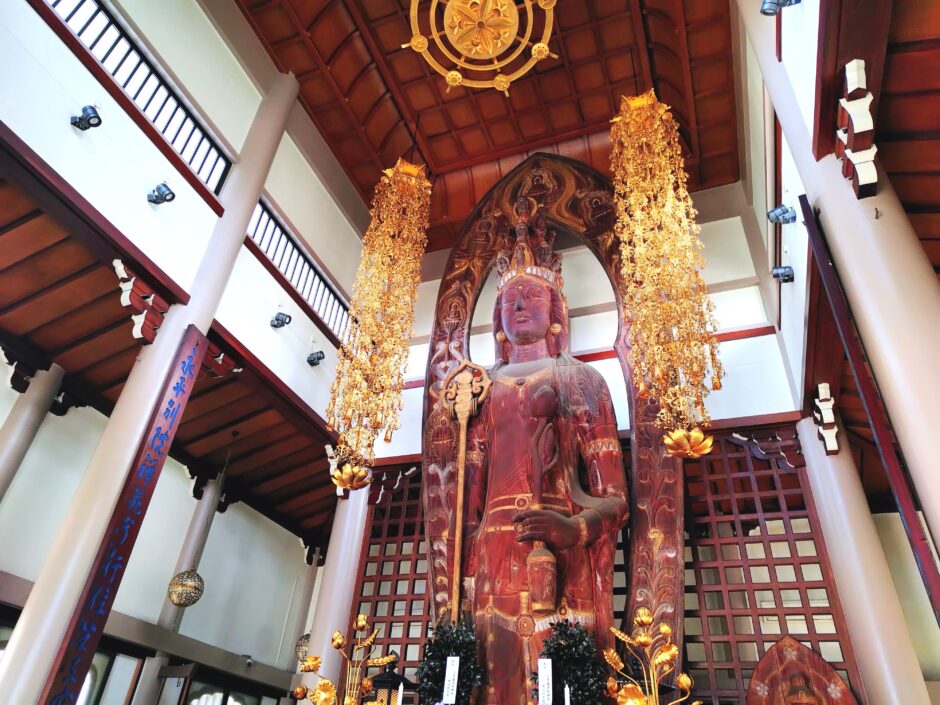

目次
- 【Overview of Hodasan Chokoku-ji】
- 【The Sammon Gate】
- 【The Raijin and Fujin Statues】
- 【The Hatto (Dharma Hall / Main Hall)】
- 【The Azabu Dai-Kannon】
- 【The Azabu Inari Daimyojin Shrine】
- 【Hodasan Chokoku-ji Temple Goshuin】
- 【Nearby Tourist Spots (Within a 30-Minute Walk)】
- 【Hodasan Chokoku-ji Temple Access】
- Admin’s Impressions
- Address of Hodasan Chokoku-ji Temple
- Official Website of Hodasan Chokoku-ji Temple
【Overview of Hodasan Chokoku-ji】
Hodasan Chokoku-ji Temple serves as the Tokyo Betsuin (regional branch template) of Eihei-ji in Fukui Prefecture, which is one of the two head temples of the Soto Zen Buddhism sect. It was founded in 1598 (Keicho 3) by order of the Shogun Tokugawa Ieyasu, who invited the high priest Monnan Sokan Dai-osho—a childhood friend of Ieyasu—to establish the temple. Long ago, this area was known as “Shibuyagahara.” Since ancient times, a Kannon-do (Kannon hall) had stood on this land, enshrining a small statue said to have been carved from the exact same sacred tree as the main deity of the famous Hase-dera Temple in Nara. This deep spiritual connection is why Chokoku-ji was built here as its stronghold.
![20260509 111711699 1024x768 - Hodasan Chokoku-ji Temple [Tokyo]](https://japan-shrine.info/wp-content/uploads/20260509_111711699-1024x768.jpg "Hodasan Chokoku-ji Temple [Tokyo]")
Additionally, the temple serves as the 22nd site along the sacred Edo 33 Kannon Pilgrimage route.
The primary object of worship (Gohonzon) is Shakamunibutsu (Gautama Buddha). Alongside the primary deity, the temple enshrines the Eleven-Headed Kannon Bodhisattva (Juichimen Kanzeon Bosatsu) as the central symbol of devotion for Hodasan Chokoku-ji. *As Chokoku-ji is a temple of the Soto Zen sect, its primary deity is historically Shakyamuni Buddha (Shakamunibutsu).
【The Sammon Gate】
Appearing suddenly just a short walk away from the bustling Nishi-Azabu intersection, the striking figure of the Sammon Gate stands out magnificently against the contrast of the surrounding modern office buildings and condominiums.
![20260509 1143009642 1024x768 - Hodasan Chokoku-ji Temple [Tokyo]](https://japan-shrine.info/wp-content/uploads/20260509_1143009642-1024x768.jpg "Hodasan Chokoku-ji Temple [Tokyo]")
Tragically, the original primary deity and many of the temple’s sacred halls (garan) were completely destroyed by fire during the Great Tokyo Air Raids of 1945. Consequently, most of the structures standing today (including the Sammon Gate) are relatively modern buildings meticulously reconstructed after the war. Immediately upon entering the grounds, you will see the Kannon-do Hall on your right, and looking straight ahead into the depths of the precinct, the massive Hatto (Dharma Hall) will come into view.
【The Raijin and Fujin Statues】
Flanking the staircase leading up toward the Hatto (Main Hall) are the iconic statues of the Thunder God, Raijin, positioned on your right, and the Wind God, Fujin, on your left.
![20260509 1122104722 1024x768 - Hodasan Chokoku-ji Temple [Tokyo]](https://japan-shrine.info/wp-content/uploads/20260509_1122104722-1024x768.jpg "Hodasan Chokoku-ji Temple [Tokyo]")
While Fujin and Raijin originally originated as ancient personifications of the fierce awe of nature, in Buddhism they have been integrated to fulfill the roles of Gohobenzin (protective deities of Buddhist law) meant to guard Shakyamuni Buddha (the primary deity) and the sacred teachings.
【The Hatto (Dharma Hall / Main Hall)】
In Soto Zen Buddhism, the building that corresponds to the “Main Hall” (Hondo) of a standard temple is traditionally referred to as the Hatto (Dharma Hall).
![20260509 112016000 1024x768 - Hodasan Chokoku-ji Temple [Tokyo]](https://japan-shrine.info/wp-content/uploads/20260509_112016000-1024x768.jpg "Hodasan Chokoku-ji Temple [Tokyo]")
The Great Tokyo Air Raids of 1945 reduced almost the entire historic temple complex (garan), which had stood since the Edo period, to ashes. Amid the postwar reconstruction efforts, this Hatto Hall was the very first structure to be successfully rebuilt, with its reconstruction taking place during the late 1950s (Showa 30s).
![20260509 1121356922 1024x768 - Hodasan Chokoku-ji Temple [Tokyo]](https://japan-shrine.info/wp-content/uploads/20260509_1121356922-1024x768.jpg "Hodasan Chokoku-ji Temple [Tokyo]")
Please note that the Hatto maintains a deeply solemn and rigorous atmosphere as a dedicated place of active Zen training; photography of the monks’ training practices is strictly prohibited.
【The Azabu Dai-Kannon】
![20260509 114222704 1024x768 - Hodasan Chokoku-ji Temple [Tokyo]](https://japan-shrine.info/wp-content/uploads/20260509_114222704-1024x768.jpg "Hodasan Chokoku-ji Temple [Tokyo]")
This statue was once counted as one of Japan’s Three Great Hase Kannon Statues, but it was completely lost to the flames of World War II. The current, colossal Eleven-Headed Kannon statue was beautifully recreated and reinstated in 1977 (Showa 52).
![20260509 114045568 1024x768 - Hodasan Chokoku-ji Temple [Tokyo]](https://japan-shrine.info/wp-content/uploads/20260509_114045568-1024x768.jpg "Hodasan Chokoku-ji Temple [Tokyo]")
The Kannon-do Hall has a beautifully welcoming, open atmosphere that allows anyone to casually step inside and offer a prayer.
【The Azabu Inari Daimyojin Shrine】
The Azabu Inari Daimyojin is enshrined right on the grounds as the protective deity (Chinju-gami) safeguarding the entire temple.
![20260509 111832959 1024x768 - Hodasan Chokoku-ji Temple [Tokyo]](https://japan-shrine.info/wp-content/uploads/20260509_111832959-1024x768.jpg "Hodasan Chokoku-ji Temple [Tokyo]")
In Japan, the syncretic blending of Shintoism and Buddhism (Shinbutsu-shugo) has been a deeply rooted cultural practice since ancient times, making it entirely common to see local Shinto deities enshrined within Buddhist temple grounds. In the Soto Zen sect in particular, there is a historically profound connection with Inari worship, famously exemplified by institutions like Toyokawa Inari in Aichi Prefecture.
【Hodasan Chokoku-ji Temple Goshuin】
![chokokuji 718x1024 - Hodasan Chokoku-ji Temple [Tokyo]](https://japan-shrine.info/wp-content/uploads/chokokuji-718x1024.jpg "Hodasan Chokoku-ji Temple [Tokyo]")
【Nearby Tourist Spots (Within a 30-Minute Walk)】
Nezu Museum, The National Art Center, Tokyo, Mori Art Museum, Izumo Taisha Tokyo Bunshi Shrine, Konno Hachimangu Shrine, Shibuya Hikawa Shrine, Nogi Shrine, Akasaka Hikawa Shrine, Togo Shrine.
![20260509 1108100472 520x300 - Hodasan Chokoku-ji Temple [Tokyo]](https://japan-shrine.info/wp-content/uploads/20260509_1108100472-520x300.jpg "Hodasan Chokoku-ji Temple [Tokyo]")
![DSC 1758 2 520x300 - Hodasan Chokoku-ji Temple [Tokyo]](https://japan-shrine.info/wp-content/uploads/DSC_1758-2-520x300.jpg "Hodasan Chokoku-ji Temple [Tokyo]")
![20260509 130041825 520x300 - Hodasan Chokoku-ji Temple [Tokyo]](https://japan-shrine.info/wp-content/uploads/20260509_130041825-520x300.jpg "Hodasan Chokoku-ji Temple [Tokyo]")
![DSC 3398 520x300 - Hodasan Chokoku-ji Temple [Tokyo]](https://japan-shrine.info/wp-content/uploads/DSC_3398-520x300.jpg "Hodasan Chokoku-ji Temple [Tokyo]")
![DSC 1373 520x300 - Hodasan Chokoku-ji Temple [Tokyo]](https://japan-shrine.info/wp-content/uploads/DSC_1373-520x300.jpg "Hodasan Chokoku-ji Temple [Tokyo]")
![DSC 0891 520x300 - Hodasan Chokoku-ji Temple [Tokyo]](https://japan-shrine.info/wp-content/uploads/DSC_0891-520x300.jpg "Hodasan Chokoku-ji Temple [Tokyo]")
![DSC 0851 2 520x300 - Hodasan Chokoku-ji Temple [Tokyo]](https://japan-shrine.info/wp-content/uploads/DSC_0851_2-520x300.jpg "Hodasan Chokoku-ji Temple [Tokyo]")
【Hodasan Chokoku-ji Temple Access】
Admin’s Impressions
This temple is located just a few minutes’ walk from the Nishi-Azabu intersection. The “Azabu Dai-Kannon” enshrined within the main hall (Kannon-do) is a colossal statue that forces you to crane your neck upward to look at it, possessing an absolutely overwhelming and breathtaking presence. The precinct is so profoundly quiet and serene that it is hard to believe you are standing right in the heart of the metropolis. It is a fantastic hidden gem that I highly recommend stopping by whenever you are exploring the Roppongi and Azabu neighborhoods.