 Kanata's Japan Shrine Guide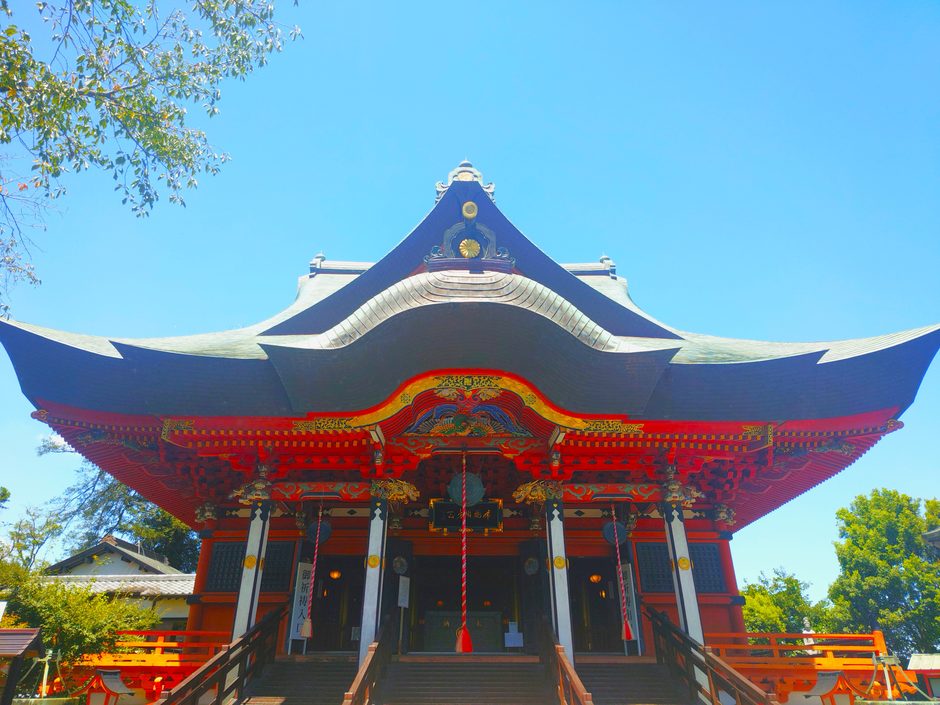

【Overview & History of Tokaiji Temple】
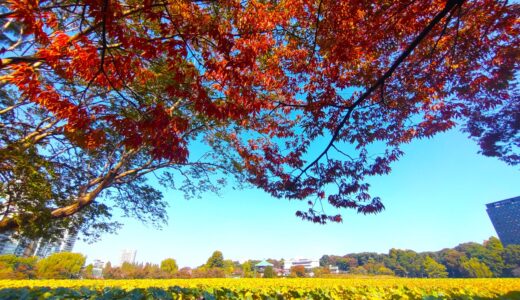
Located in Fuse, Kashiwa City, Chiba Prefecture, this temple belongs to the Buzan sect of Shingon Buddhism. It is counted as one of the Three Great Benten of Kanto, alongside Kaneiji Bentendo (Asakusa) and Enoshima Shrine (Kanagawa). Its official name is “Koryusan Fuse Benten Tokaiji,” and it is widely known affectionately by locals as “Fuse no Benten-sama.”
![24150496 m 520x300 - Fuse Benten Tokaiji Temple [Chiba]](https://japan-shrine.info/wp-content/uploads/24150496_m-520x300.jpg "Fuse Benten Tokaiji Temple [Chiba]")
【History & Origins】An Ancient Temple Founded by Kobo Daishi, Counted Among the Three Benten of Kanto
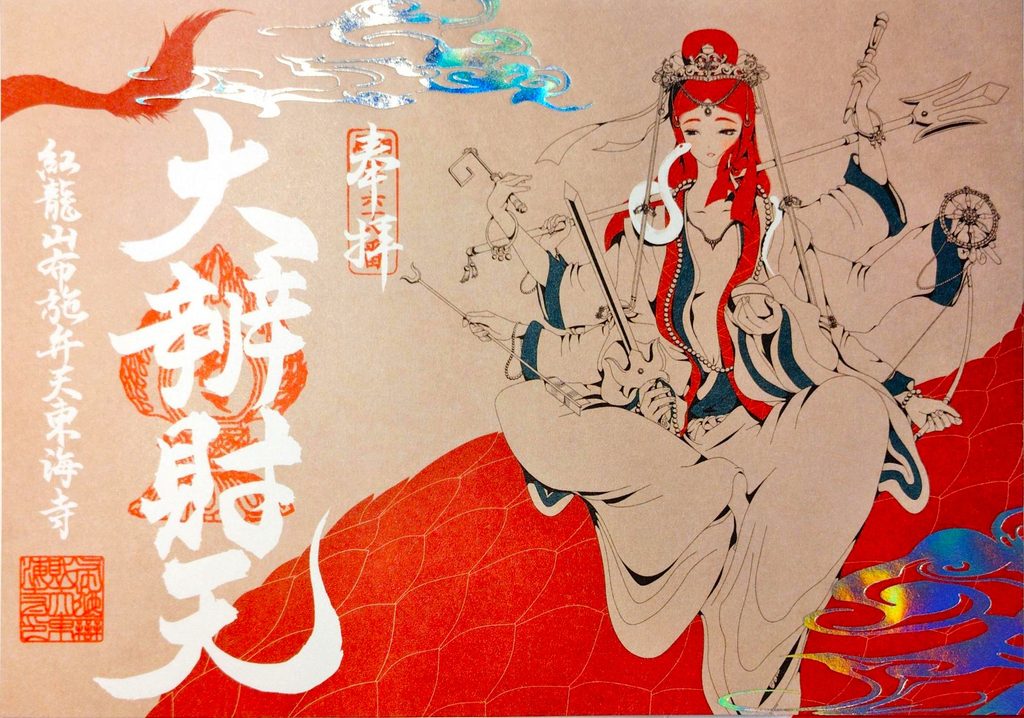
Founded in the early Heian period in 807 (Daido 2) by Kobo Daishi Kukai, who visited this region. According to legend, a red dragon suddenly appeared from the bottom of a lake that existed here at the time, building an island (present-day Mount Kamenoko) overnight, upon which a heavenly maiden (Benzaiten) descended from the sky. Deeply moved by this miracle, Kukai personally carved an eight-armed Benzaiten statue and enshrined it as the principal image (a secret image or hibutsu), marking the origin of the temple. This legend gave rise to the mountain name “Koryusan” (Red Dragon Mountain), and the village was named “Fuse” after the blessings (fuse, meaning giving/alms) of the heavenly maiden.
During the Johei-Tengyo Rebellion in the 930s, the temple halls were completely destroyed by the fires of war caused by Taira no Masakado. However, the principal image of Benzaiten narrowly escaped destruction and is said to have been later restored by Masakado himself.
【Main Image & Divine Blessings】Divine Blessings for Financial Good Fortune, Performing Arts, and Good Luck Brought by Benzaiten
The principal image enshrined here is Happi Benzaiten (Eight-Armed Benzaiten).
Benten-sama is a deity presiding over water, abundance, and wisdom. At Fuse Benten, she is devoutly worshipped for bringing blessings such as increased financial luck, wealth, improvement in performing arts, academic success, warding off evil, and bringing good fortune.
Normally, the statue is kept firmly closed inside a luxurious door-fitted box called a “zushi” located deep within the Main Hall, making it a “hibutsu” (secret Buddha) that no one is allowed to see.
【Highlights & Key Spots of Fuse Benten Tokaiji Temple】
【Torii Gate: A Historical Remnant of the Syncretism of Shinto and Buddhism】
In the past, the object of worship “Kamenoko-yama Benzaiten (Benten Shrine)” and the temple managing it, “Tokaiji,” existed separately in this area. In 1705 (Hoei 2) during the Edo period, Tokaiji relocated to this Benten Shrine site, unifying with it under Shinbutsu-shugo (the syncretism of Shinto and Buddhism). As a result, the grounds came to feature both a shrine symbol (the Torii gate) and temple symbols (the Ro-mon gate and Main Hall) coexisting side by side, despite being a Buddhist temple.
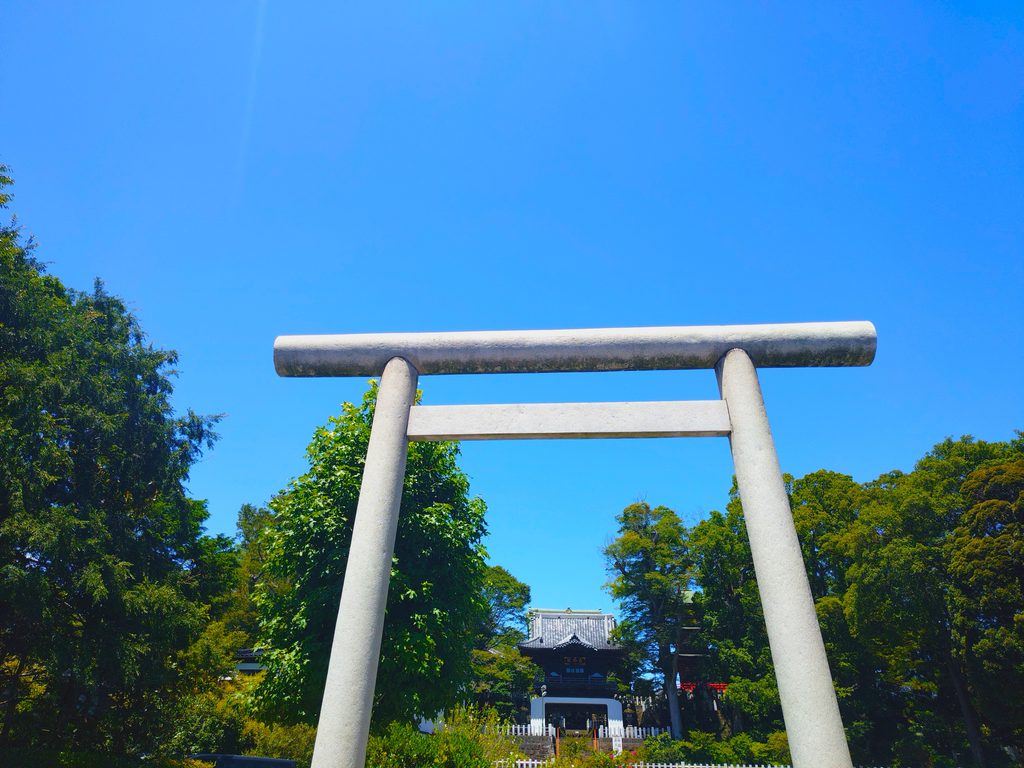
First, pass through this Torii gate to begin your visit. After passing through the Torii and climbing the stone steps, a magnificent “Ro-mon” (a two-story temple gate) comes into view.
【Ro-mon Gate Welcoming Visitors with the Four Heavenly Kings】
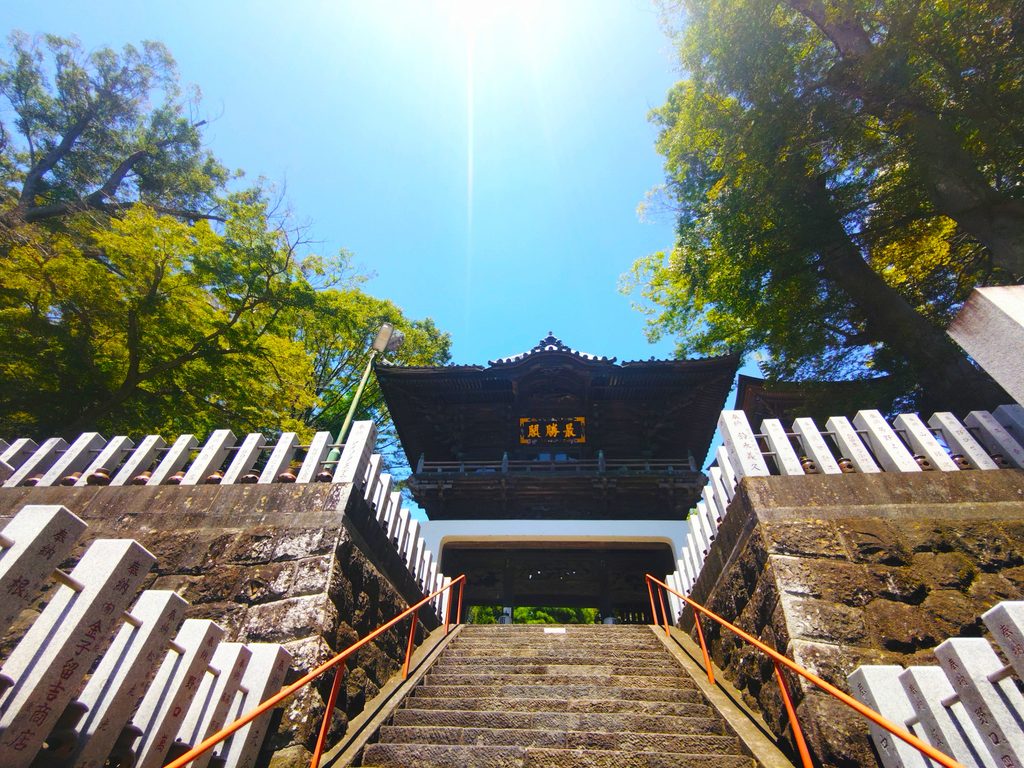
The Ro-mon Gate (Ro-mon) is a grand gate towering at the top of the stone steps after passing through the front Torii gate. It was constructed in 1810 (Bunka 7) during the late Edo period. Built entirely of zelkova wood (keyaki), it features a prestigious design with a two-story structure, an Irimoya-zukuri (hip-and-gable) roof, and Sangawara-buki (wave-shaped tile) roofing. Officially named “Saishokaku,” it was registered as a Tangible Cultural Property Designated by Chiba Prefecture in 2006 (Heisei 18).
The perimeter of the first floor is painted white with rounded plaster (currently reinforced with concrete), giving it a unique silhouette reminiscent of the gate of Ryugu-jo (the Dragon King’s Palace). This extremely rare design overlaps with the image of the “Legend of the Red Dragon” passed down at Fuse Benten (the legend that a red dragon built the island).
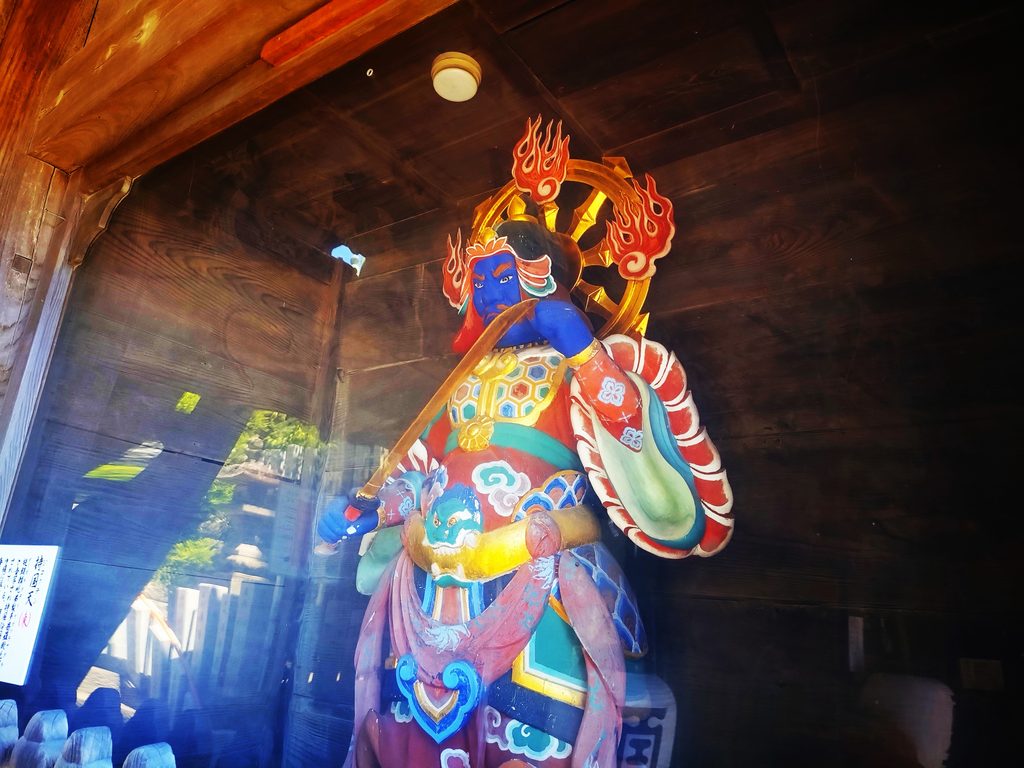
Enshrined on the left and right sides of the gate are statues of the Four Heavenly Kings (Shitenno: Jikokuten, Zochoten, Komokuten, and Tamonten), the guardian deities of Buddhism, who welcome worshipers with their sharp, piercing gazes.
【Dai-Hondo (Great Main Hall) in Gongen-zukuri Style: The Biggest Architectural Feature】
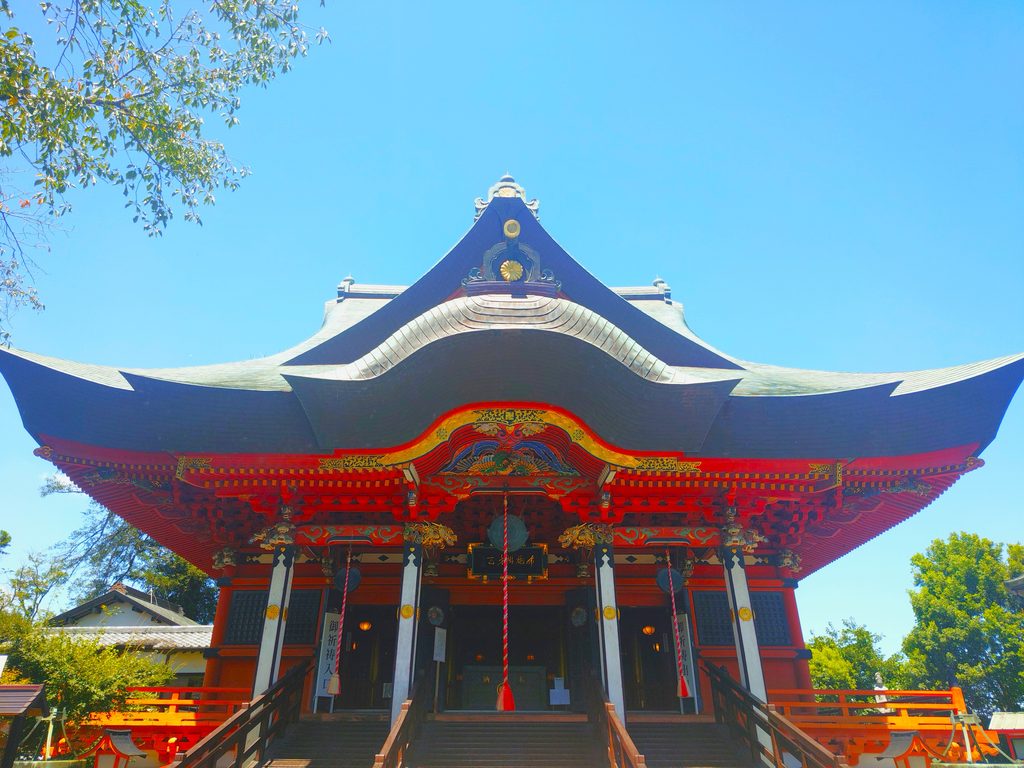
The Dai-Hondo (Great Main Hall) stands at the rearmost part of the temple grounds, exuding an extraordinarily gorgeous and overwhelming presence. Rebuilt in 1717 (Kyoho 2) during the mid-Edo period, it was registered as a Tangible Cultural Property Designated by Chiba Prefecture in 2006 (Heisei 18).
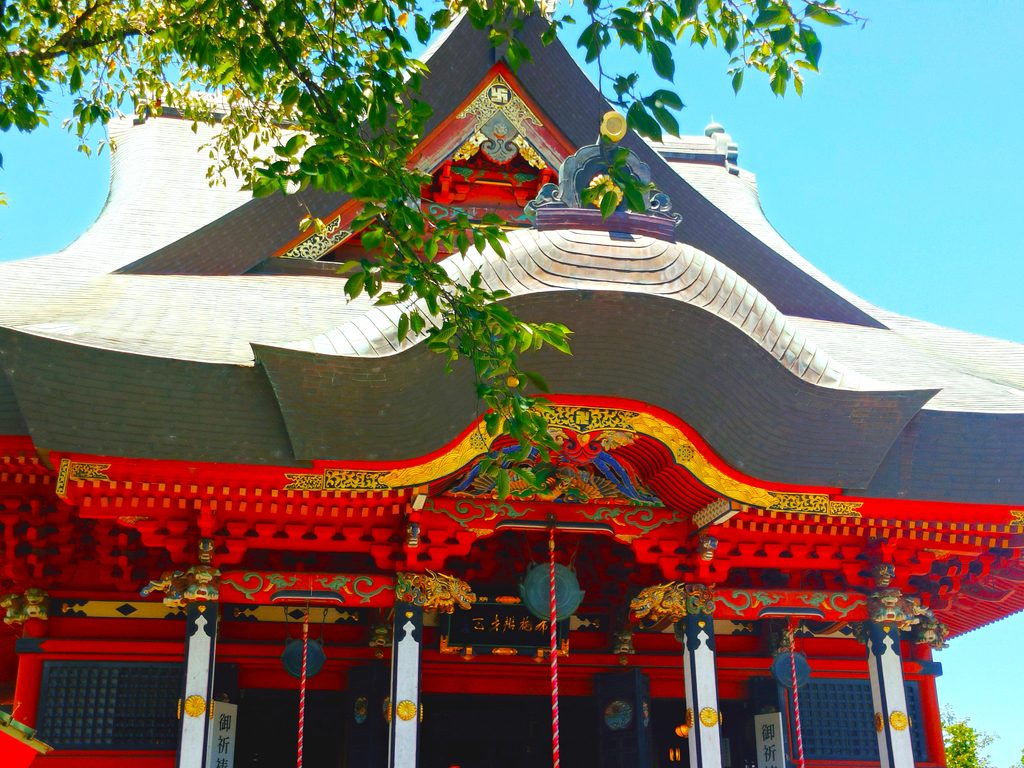
The Main Hall is constructed in the Gongen-zukuri style, where the “Haiden” (worship hall for praying) and the “Honden” (main sanctuary enshrining the principal deity) are connected into one continuous structure by a space called the “Ai-no-ma” (connecting chamber). While Gongen-zukuri is an architectural style more commonly found in Shinto shrines (such as Nikko Toshogu Shrine), its adoption for a Buddhist main hall clearly demonstrates the deep history of Shinbutsu-shugo (Shinto-Buddhist syncretism) walked by Fuse Benten.
【Tahoto-style Bell Tower: Extremely Rare Nationwide】
The Bell Tower (Shoro) is a highly distinctive and beautiful structure standing to the front-right of the Main Hall. Built in 1818 (Bunka 15) during the late Edo period, it was registered as a Tangible Cultural Property Designated by Chiba Prefecture in 2006 (Heisei 18).
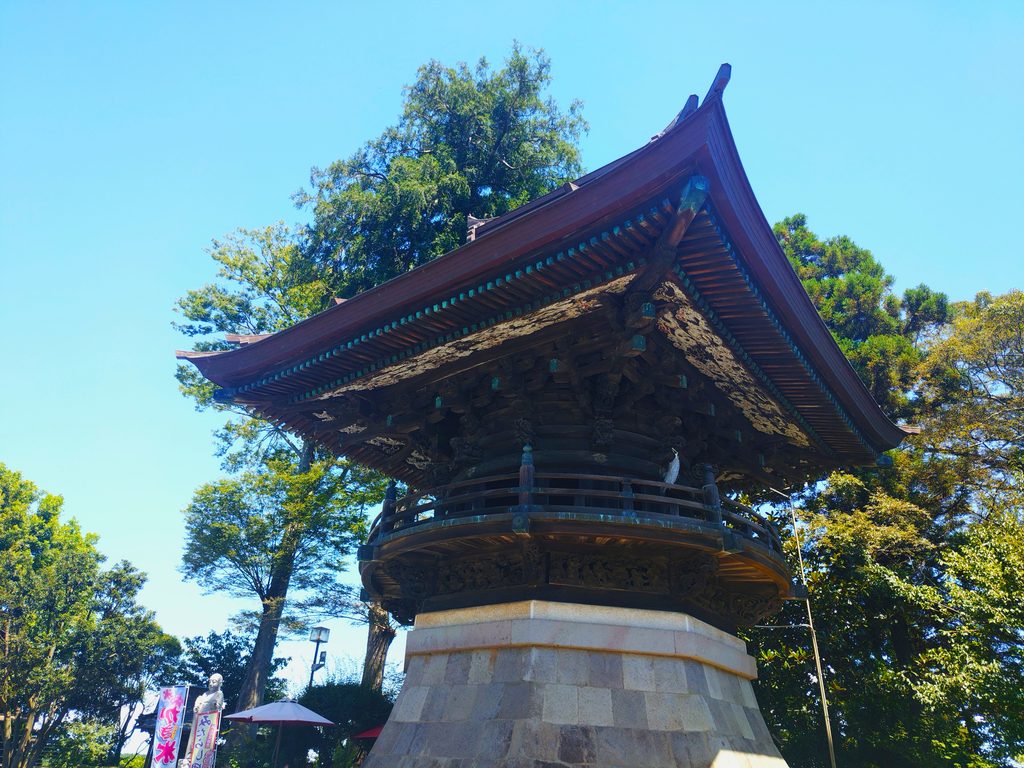
A typical temple bell tower is square-shaped with a roof supported by four pillars (or integrated with a square two-story temple gate). However, the bell tower at Fuse Benten features a unique two-tiered structure: the first floor is “square,” while the second floor is “circular.”
This style is called “Tahoto-style full zelkova (keyaki) construction,” which is extremely rare in architectural history, with only a few existing examples across Japan, making it a precious historical treasure.
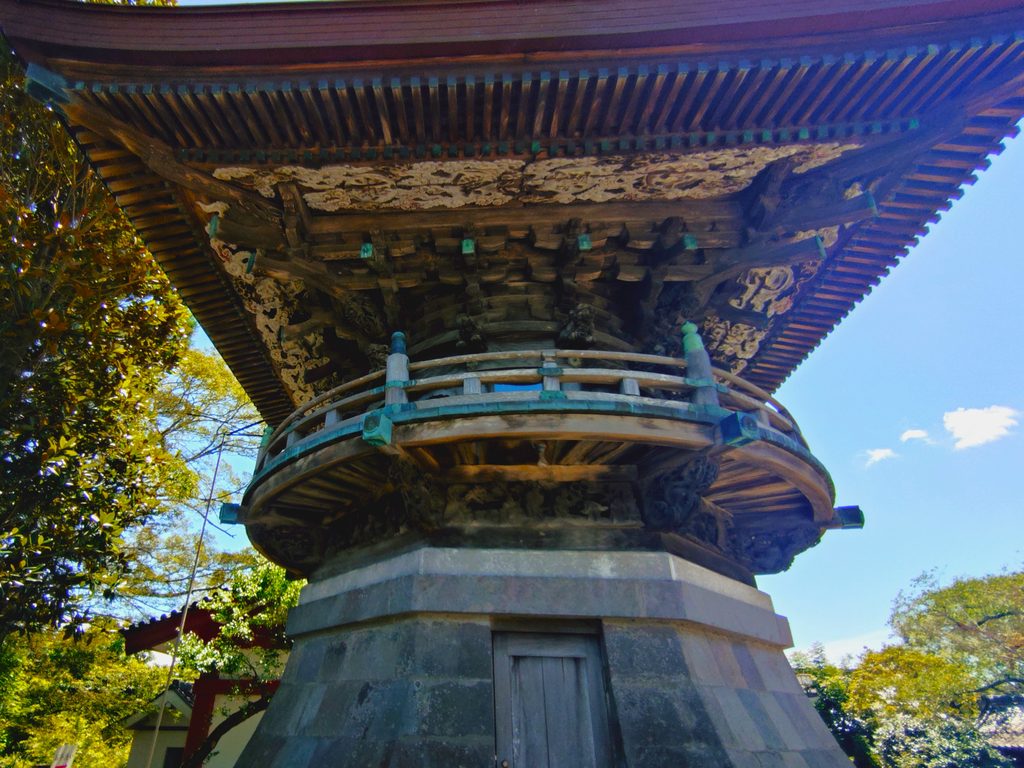
Like the Ro-mon Gate and Main Hall, this bell tower is adorned with splendid carvings in shiraki-zukuri (plain, unpainted wood). Particular attention should be paid to the carvings of the Twelve Zodiac Signs (Eto) sculpted around the structure. From the Rat (Ne) to the Boar (Inoshishi), lively animals are arranged in all directions, serving to protect this bell tower and the temple grounds from misfortunes coming from any direction.
【Kannon-do Hall & Three-Story Pagoda】Hall and Pagoda Conveying the History of Kannon Faith Today
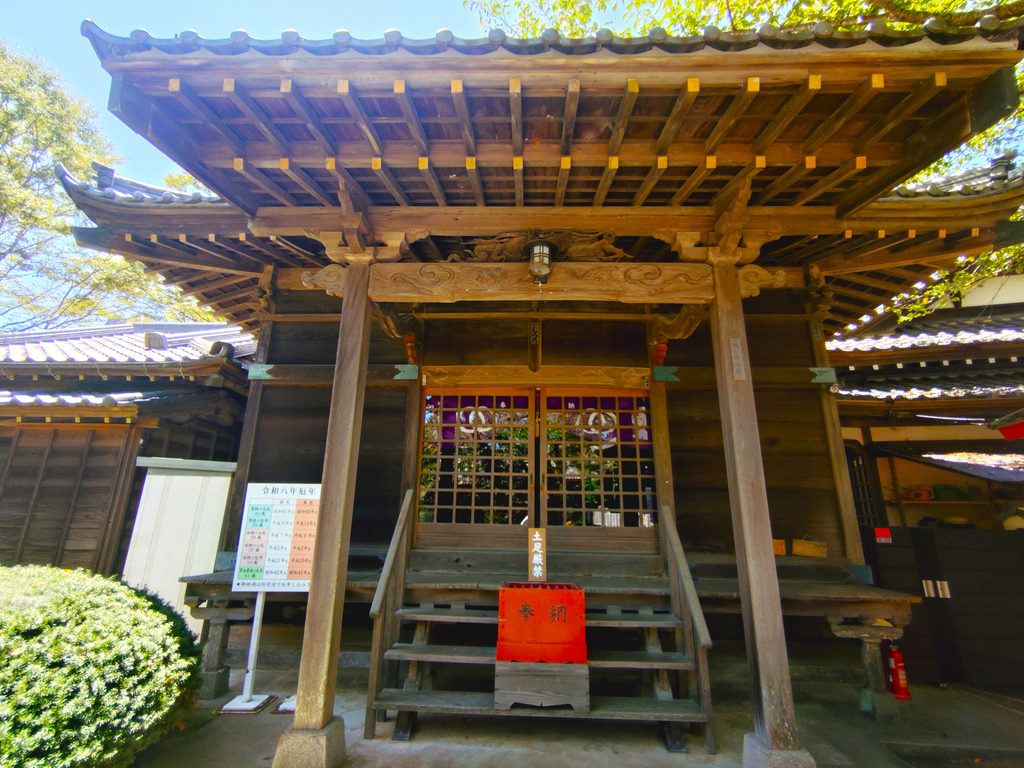
The Kannon-do Hall (Kannon-do) is a dedicated place to pray to Kannon Bosatsu (Avalokitesvara), who removes people’s daily troubles and suffering and brings peace to their hearts. Historical records of the temple (such as Edo-period official logs) clearly record the existence of Kannon-do as one of the halls managed by Tokaiji, and local residents have long folded their hands here in prayer, cherishing it as a place that saves them from worldly suffering.
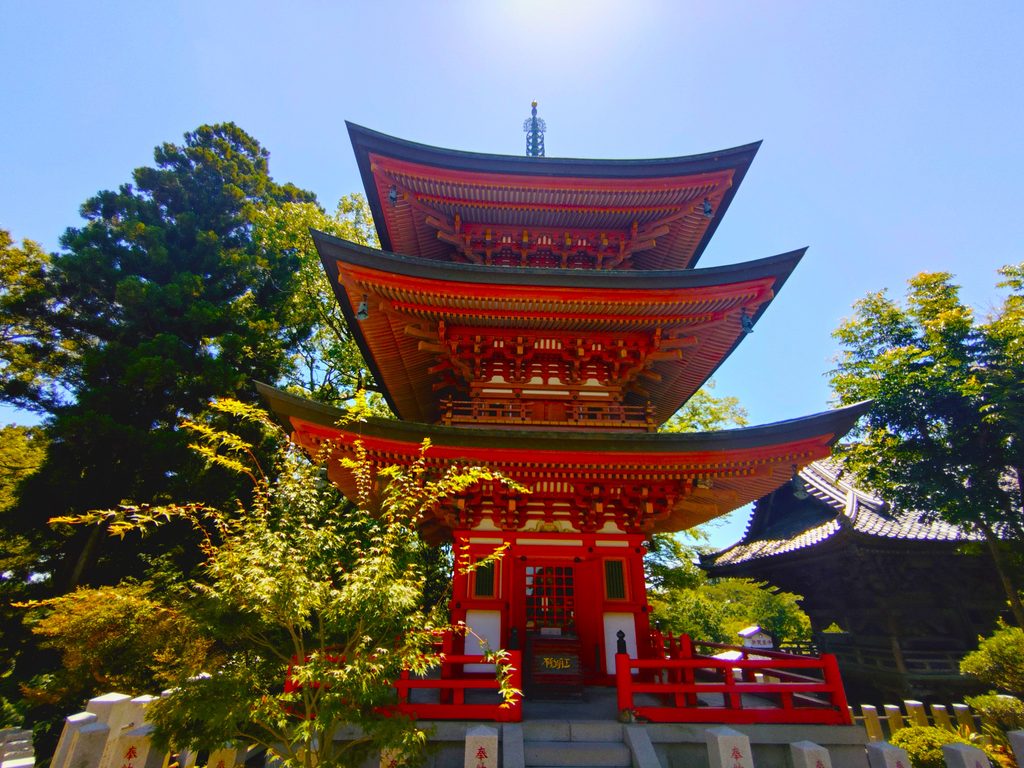
The vibrant Three-Story Pagoda (Sanju-no-to) towering on the right side of the approach leading to the Main Hall was erected in 1973 (Showa 48). Inside the first level of the Three-Story Pagoda, Fudo Myoo (Acala), possessing strong protective powers to dispel disasters, is enshrined.
【Fuse Kannon Statue & Pin-Korori Jizo】Statue of Compassionate Kannon and Jizo Statue for Praying for Health and Longevity
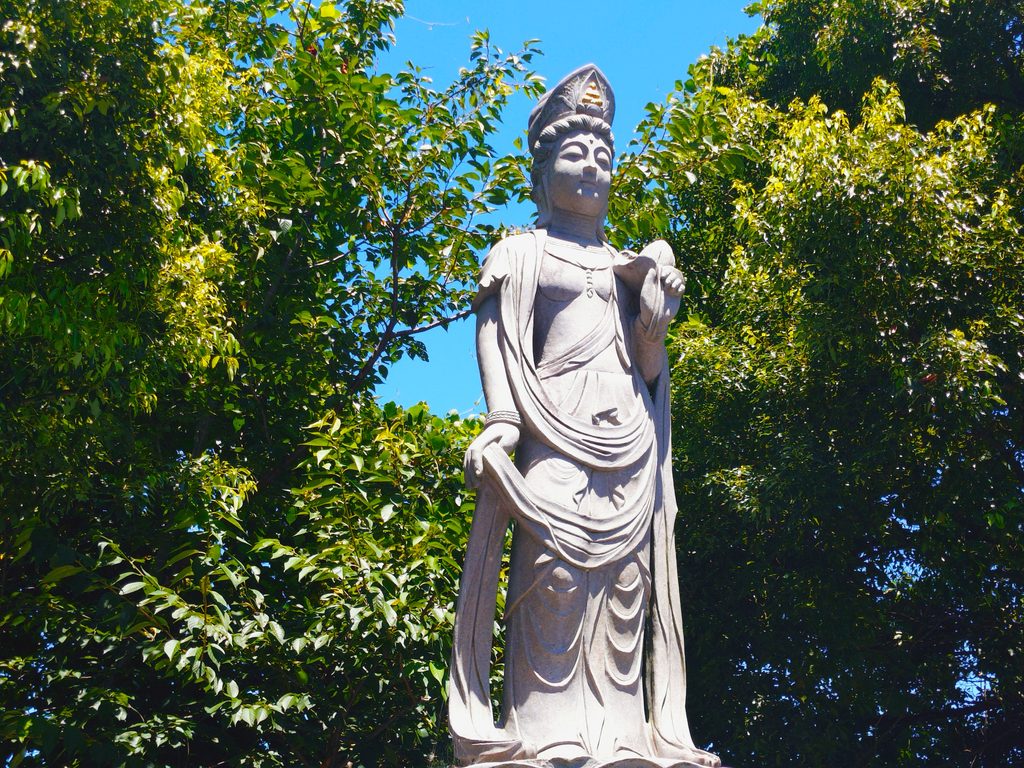
The Fuse Kannon Statue (Fuse Kannon-zo) is a beautiful standing stone statue depicting Sho-Kannon (Aryavalokitesvara), the fundamental form among many Kannon Bosatsu. It is said that when we are in pain or trouble, Kannon Bosatsu instantly hears (perceives) our “voices” seeking help, transforms into various forms, and extends a helping hand.
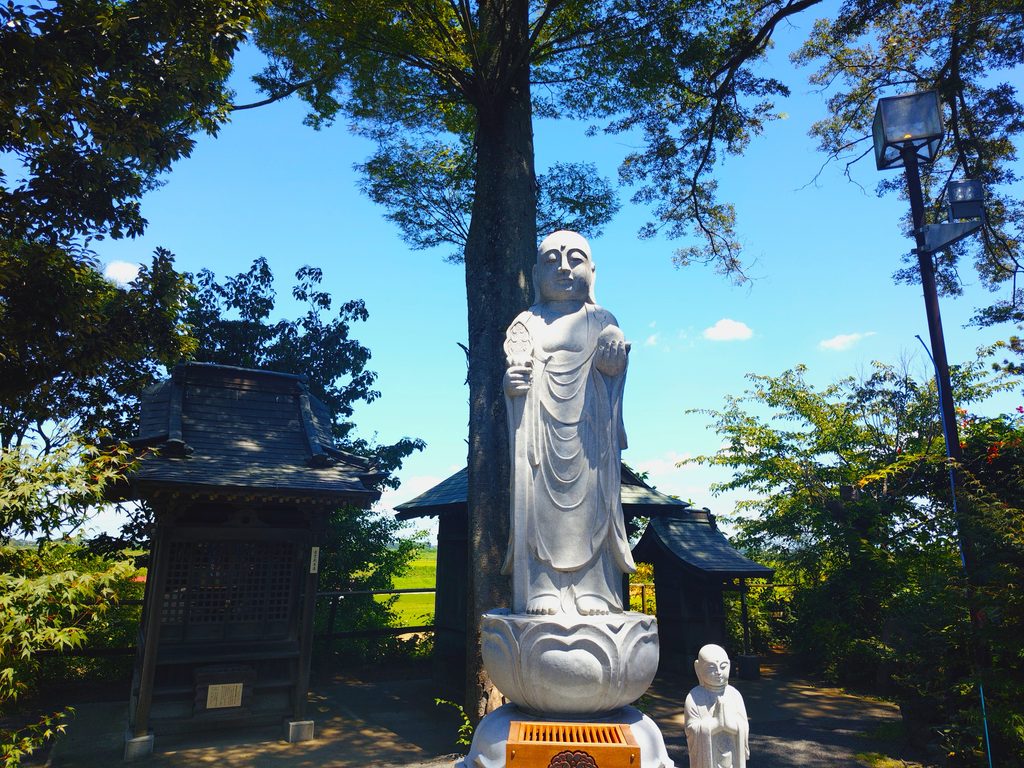
Located next to the Fuse Kannon Statue, Pin-Korori Jizo (officially written as Pin-Pin-Korori Jizo) is a gentle and warm power spot where many worshipers praying for health and longevity always drop by. Driven not only by its catchy name but also by the growing modern interest in end-of-life planning (shukatsu) and healthy life expectancy, it enjoys immense faith, especially among seniors and their families.
【Hokuto Myoken-do Hall】A Historic Hall Enshrining the Big Dipper & Myoken Daibosatsu
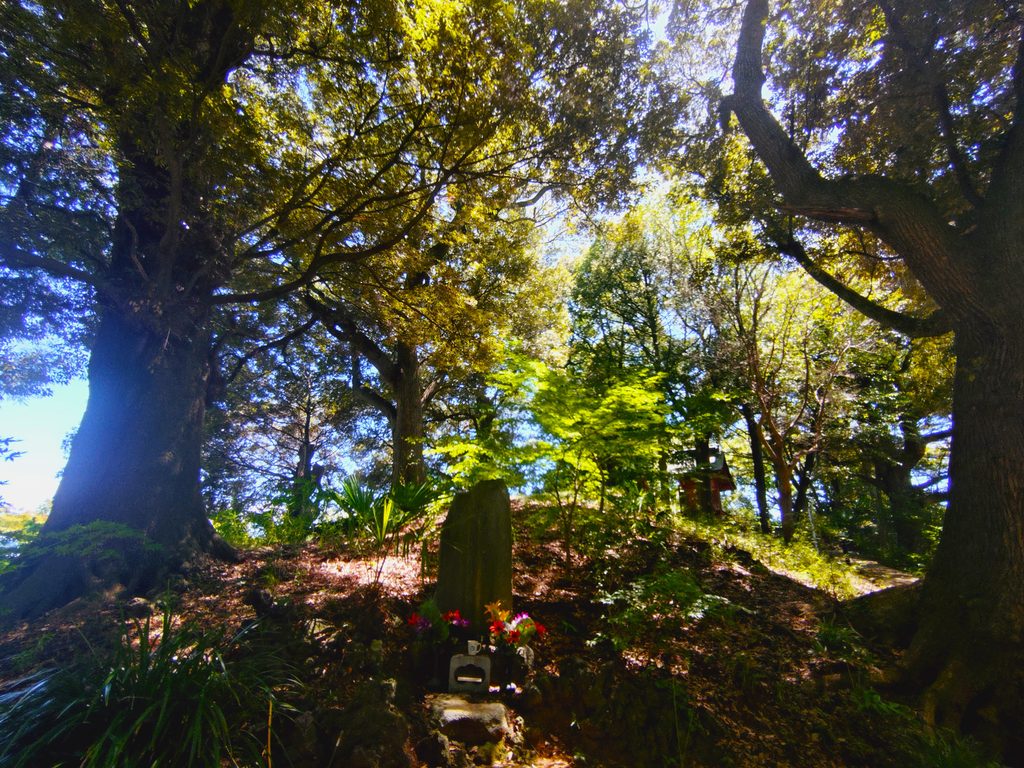
Located across the road from the main gate (Torii) of Fuse Benten, slightly up the stairs on a small hill (commonly known as Mount Kameyama), stands the “Hokuto Myoken-do Hall (Hokuto Myoken-do).”
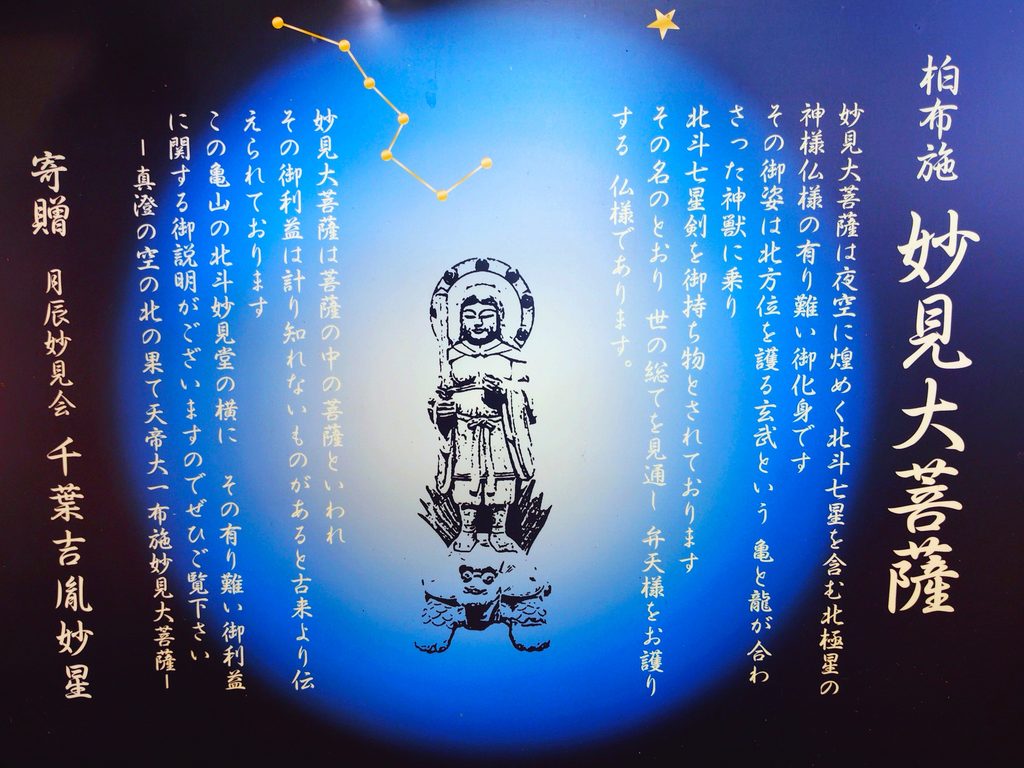
Enshrined here is Fuse Myoken Daibosatsu, a deity deifying the North Star (Polaris)—which stands motionless in the center of the night sky—and the Big Dipper (Hokuto Shichisei) that revolves around it.
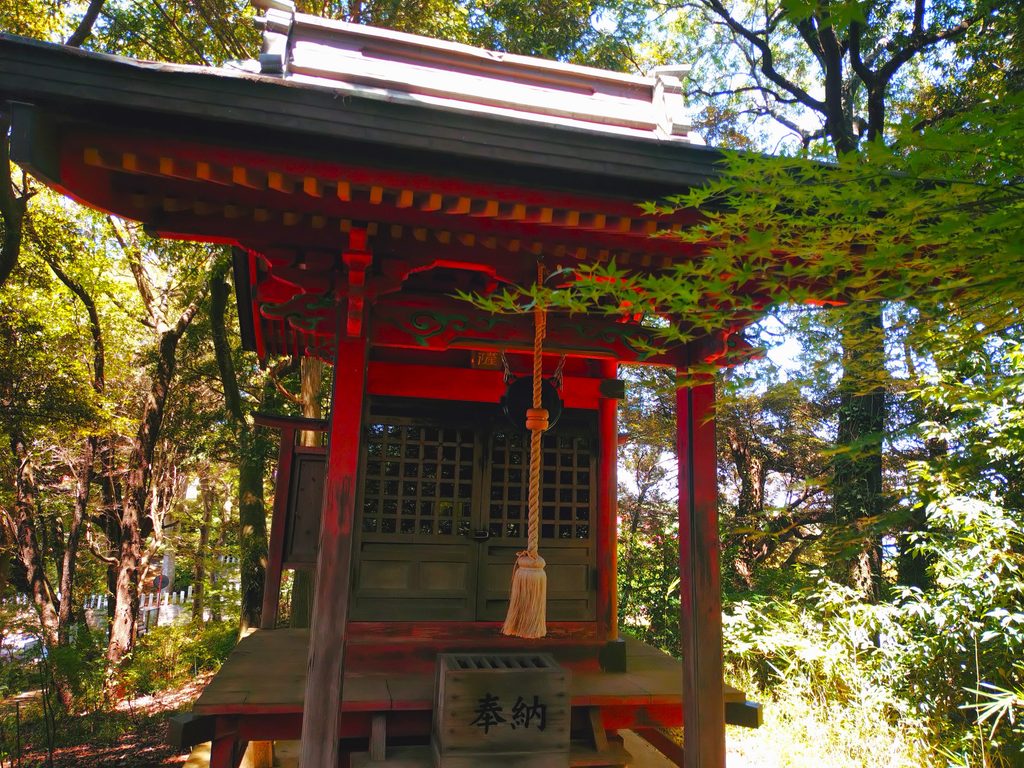
This Myoken deity was originally worshipped as a guardian deity in a different district of Fuse called “Koya,” inside Fuse Castle, the stronghold of a Sengoku warlord who once ruled this area. Later, after passing through the grounds of the local Yasaka Shrine and other locations, it was relocated and re-enshrined in the Heisei era (2000s) to its current site on the small hill in front of Fuse Benten’s gate. It is a deity with deep prestige and history, having protected the local area and warlords since the era of civil war.
【Fuse Benten Tokaiji Temple Regular Goshuin & Limited Goshuin】
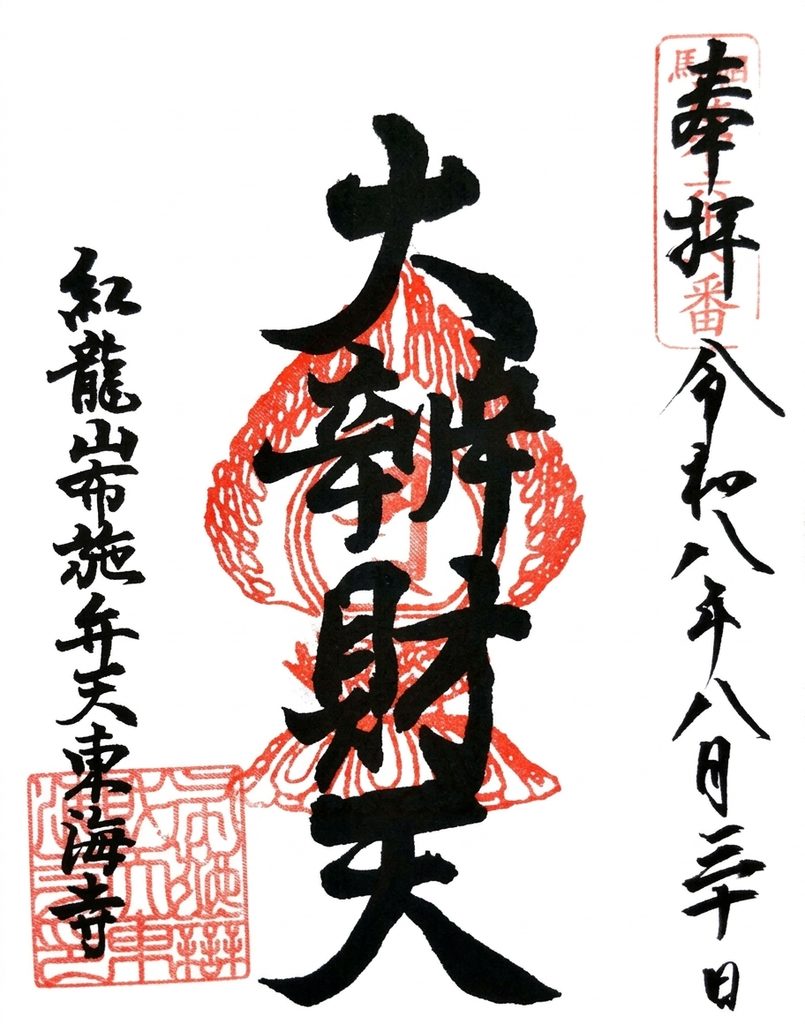
【Fuse Benten Tokaiji Temple On-Site Visit Report & Evaluation】
Fuse Benten Tokaiji Temple On-Site Visit Review & Evaluation Score
| Evaluation Category | Score | Key Features / Highlights |
|---|---|---|
| History & Heritage | (4.0) | An ancient Shingon temple said to have been founded in Daido 2 (807 AD) by Kobo Daishi Kukai. Famous as one of the “Three Great Benten of Kanto.” |
| Goshuin Variety | (4.0) | Offers a rich selection of sacred temple items, starting with Goshuin of the principal deity “Benzaiten,” seasonal limited editions, and original Goshuin books. |
| Nature & Scenery | (4.0) | Features beautiful scenery overlooking the Tone River from a high hill, along with the windmill and seasonal flower fields at the adjacent Akebonoyama Agricultural Park. |
| Tranquility | (3.0) | While lively during peak flower seasons at the park and during events, the temple grounds are usually quiet and enveloped in historic structures. |
| Scale & Grounds | (3.0) | A cohesive temple ground featuring impressive architecture designated as Prefectural Cultural Properties, including the Main Hall, Ro-mon Gate, and Tahoto-style Bell Tower. |
| Accessibility | (2.0) | Accessible via Tobu Bus from JR Kashiwa Station or Abiko Station. Visiting by car is recommended for a smoother trip (free parking available). |
*A historic temple counted as one of the “Three Great Benten of Kanto,” alongside Enoshima and Asakusa. It features many highlights, such as a Ro-mon gate reminiscent of Ryugu-jo (Dragon King’s Palace) and a rare Tahoto-style bell tower, and is beloved for divine blessings of financial luck, good fortune, and success in the performing arts.
On-Site Report | Personal Impressions and Atmosphere
First, a large, grand Torii gate standing proudly at the entrance of the temple welcomes visitors. Even though it is a temple, its shrine-like appearance conveys a deep history of prayer unchanged since the era of Shinbutsu-shugo (Shinto-Buddhist syncretism). The vibrant red color of the Dai-Hondo was built in the Edo period through the combined wishes of 98 feudal lords (daimyo) nationwide. Its outer walls, adorned with polychrome carvings reminiscent of Nikko Toshogu Shrine, reflect amazingly beautifully against the blue sky and green trees. After finishing your prayer and exiting through the Torii gate, it is highly recommended to visit Hokuto Myoken Daibosatsu at “Hokuto Myoken-do Hall,” standing on the small hill across the road. Simply walking up the stairs surrounded by greenery fills you with an even quieter and more mystical atmosphere.
【Nearby Sightseeing Spots to Visit Together】
Komaki Suwa Shrine, Chokoku-zan Hondoji Temple, Tozenji Temple, Kashiwa Shrine, Sakuragi Shrine
![20260808 094247721 2 520x300 - Fuse Benten Tokaiji Temple [Chiba]](https://japan-shrine.info/wp-content/uploads/20260808_094247721-2-520x300.jpg "Fuse Benten Tokaiji Temple [Chiba]")
![20260808 1051005753 520x300 - Fuse Benten Tokaiji Temple [Chiba]](https://japan-shrine.info/wp-content/uploads/20260808_1051005753-520x300.jpg "Fuse Benten Tokaiji Temple [Chiba]")
![20260830 142523498 520x300 - Fuse Benten Tokaiji Temple [Chiba]](https://japan-shrine.info/wp-content/uploads/20260830_142523498-520x300.jpg "Fuse Benten Tokaiji Temple [Chiba]")
【Basic Information & Access】
【Access by Train / Car and Parking】
*Free parking available
1738 Fuse, Kashiwa City, Chiba Prefecture 277-0825
![20260808 115733876 2 - Fuse Benten Tokaiji Temple [Chiba]](https://japan-shrine.info/wp-content/uploads/20260808_115733876-2.jpg "Fuse Benten Tokaiji Temple [Chiba]")