 Kanata's Japan Shrine Guide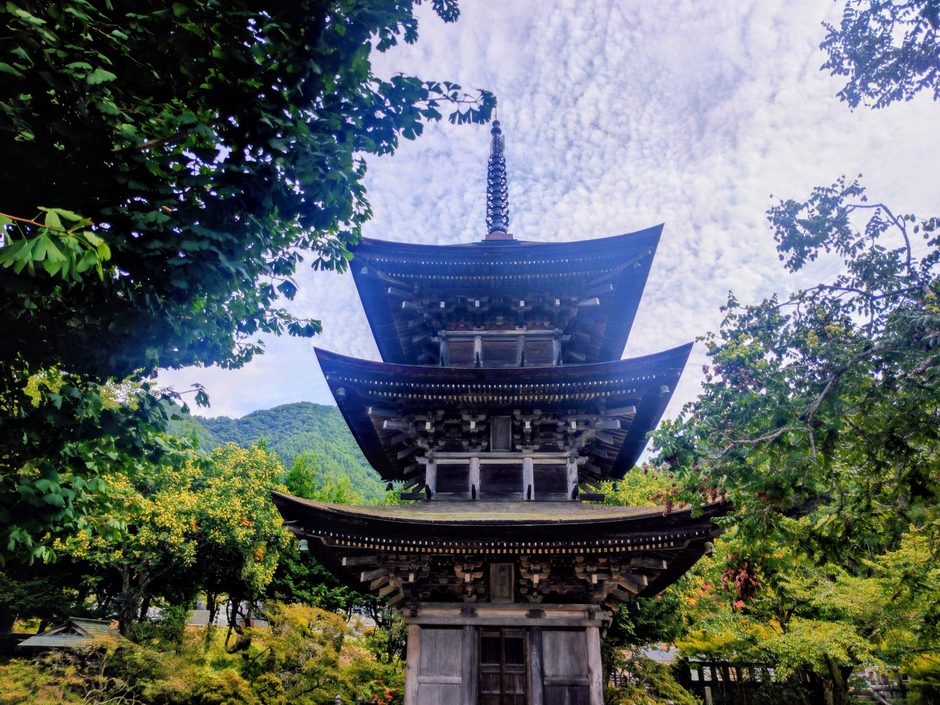

【Overview and History of Tokkosan Zensanji Temple】
Tokkosan Zensanji Temple (Tokkosan Zensanji) is an ancient temple of the Shingon Chisan sect located in Maeyama, Ueda City, Nagano Prefecture. It is famous for its three-story pagoda, a Nationally Designated Important Cultural Property praised as “The Completed Tower of Incompletion.”
【History and Origins】
Legend has it that in 812 (Konin 3), Kobo Daishi Kukai recognized Mt. Tokko as a sacred site and founded it as a venue for Goma fire rituals. When Kukai practiced here, he buried a Buddhist ritual object called a tokko (vajra) in the mountain, giving rise to the mountain’s honorary name (sango) “Tokkosan.” Initially, the temple is said to have served both the Hosso and Sanron sects, which flourished around Heijo-kyo (the ancient capital in Nara). Around 1331 (Gentoku 3), the monk Choshu Shonin came to this land from Zentsuji in Sanuki Province (Kagawa Prefecture), the birthplace of Kukai. He relocated the original “Shoho-in” temple from a different site to its present location, expanded its scale, and formally established it as “Zensanji.” This revival turned the temple into a major stronghold of Shingon Buddhism, where many monks were trained as the head institution among the “Shinano Yon-Danrin” (the four highest academies of Shingon learning in Shinano Province).
Subsequently, during the Jokyo era (1684–1687) of the Edo period, it became a branch temple of Chishaku-in in Kyoto and converted to the present Shingon Chisan sect, continuing to play a central regional role to this day.
【Principal Deities and Divine Blessings】
The principal object of worship is a statue of Dainichi Nyorai (Mahavairocana), which is believed to bestow divine blessings such as spiritual enlightenment, divine protection for all living things, warding off evil, and bringing good fortune.
【Highlights of Zensanji Temple】
【Approach and Kuromon (Kabukimon): An Atmospheric Entrance】
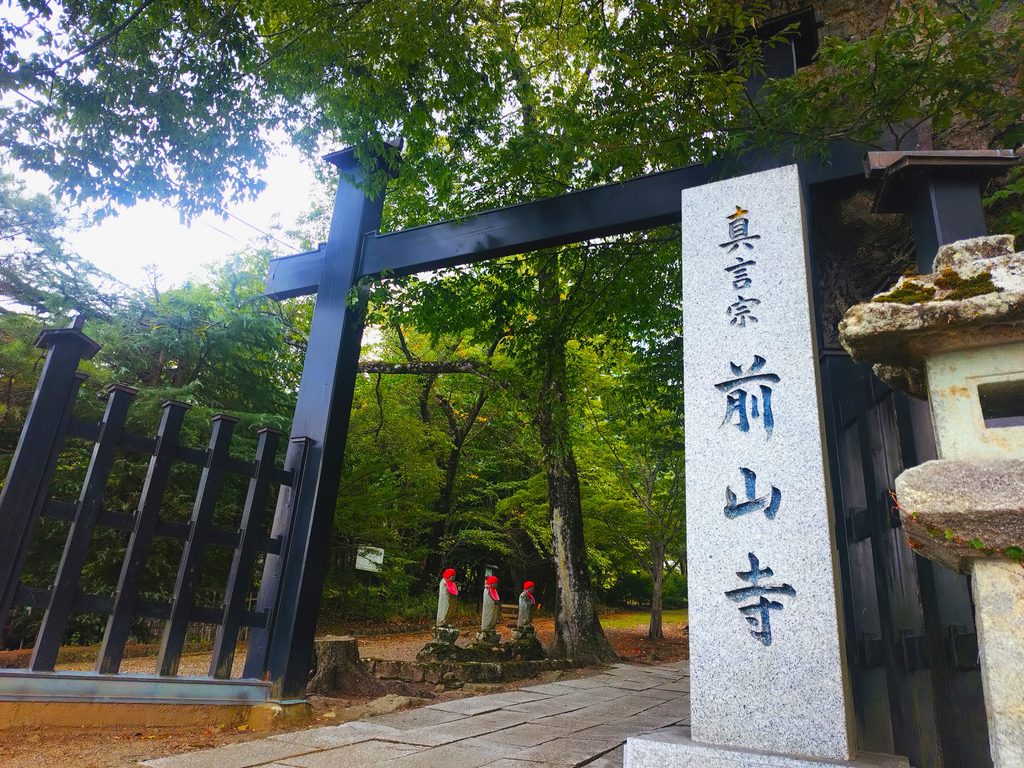
Standing at the entrance of Tokkosan Zensanji Temple, the “Kuromon” (Black Gate) is an ancient gate officially called “Kabukimon,” registered as a Nationally Registered Tangible Cultural Property.
Estimated to have been built in the late Edo period, this gate was originally located elsewhere before being relocated to the current approach entrance in 1933 (Showa 8). Since its relocation, it has served for nearly a century as an important symbol shaping the historic landscape of Shiodadaira, often called the “Kamakura of Shinshu.”
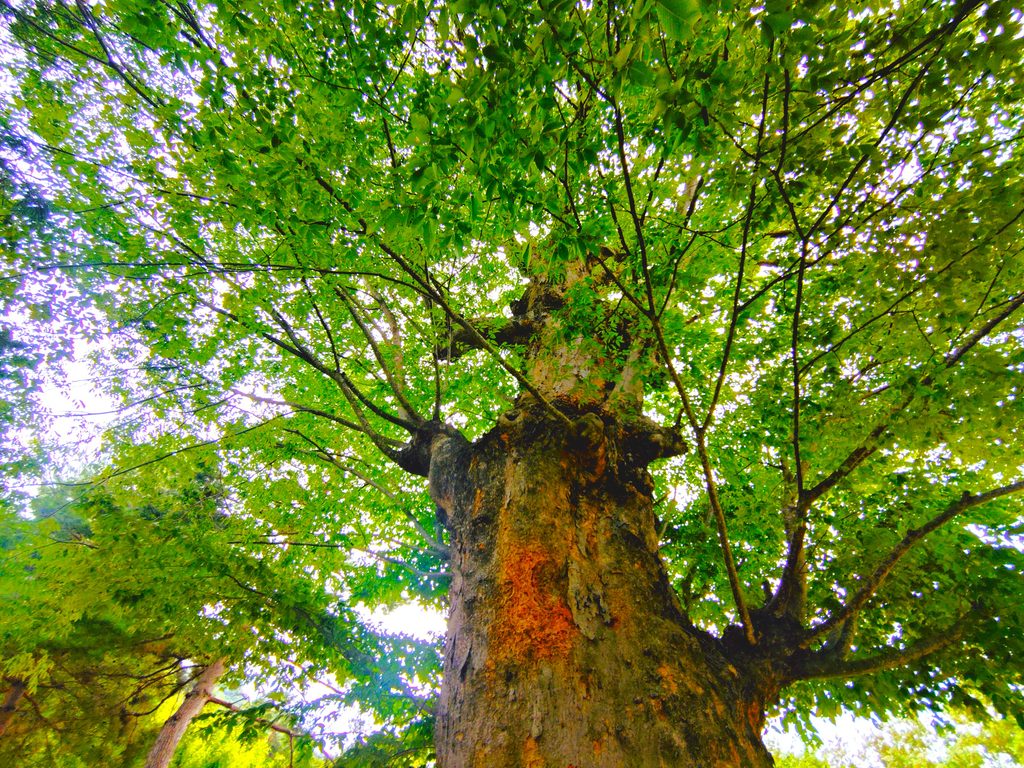
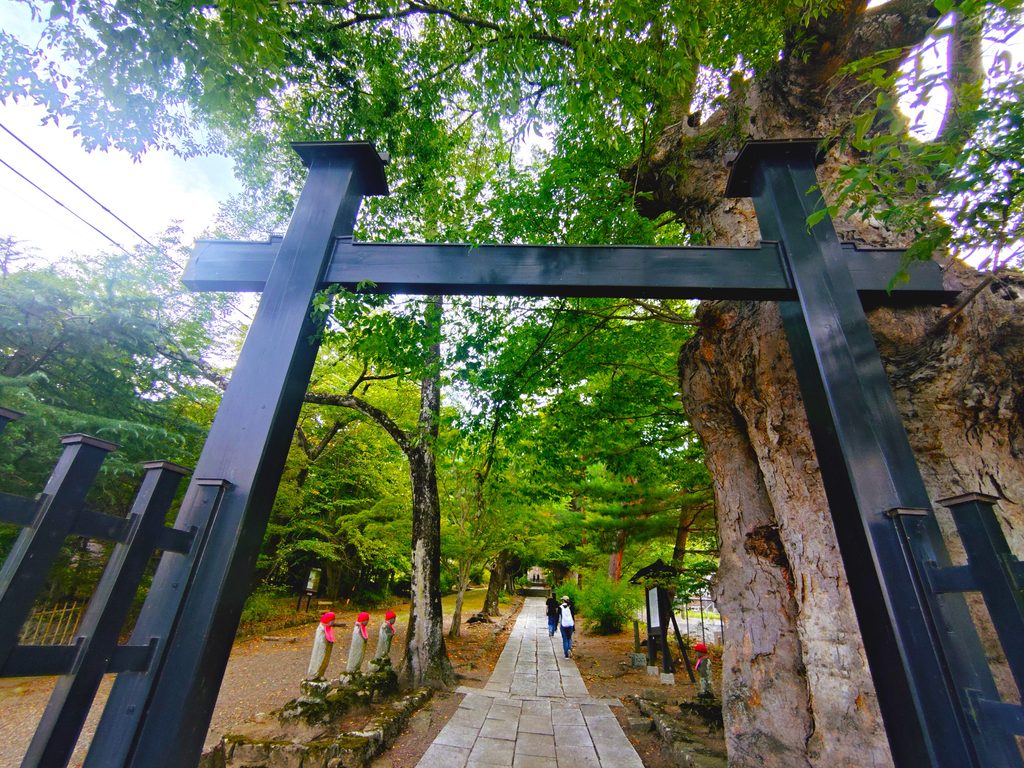
From the Kuromon at the entrance to the Yakuimon within the grounds, a gently sloping path extends straight northward for about 150 meters. Both sides of the approach are lined with massive trees over 15 to 20 meters tall—including Japanese red pines, zelkovas, and cherry trees—forming the “Zensanji Approach Tree Avenue,” registered as a Designated Cultural Property (Monument) of Ueda City. Standing at the entrance of the approach is a giant tree with a trunk circumference at eye level of about 6.7 to 7.6 meters and an estimated age of over 300 years. Its solid, towering rise from the roots is truly breathtaking.
【Yakuimon: The Prestigious Inner Gate】
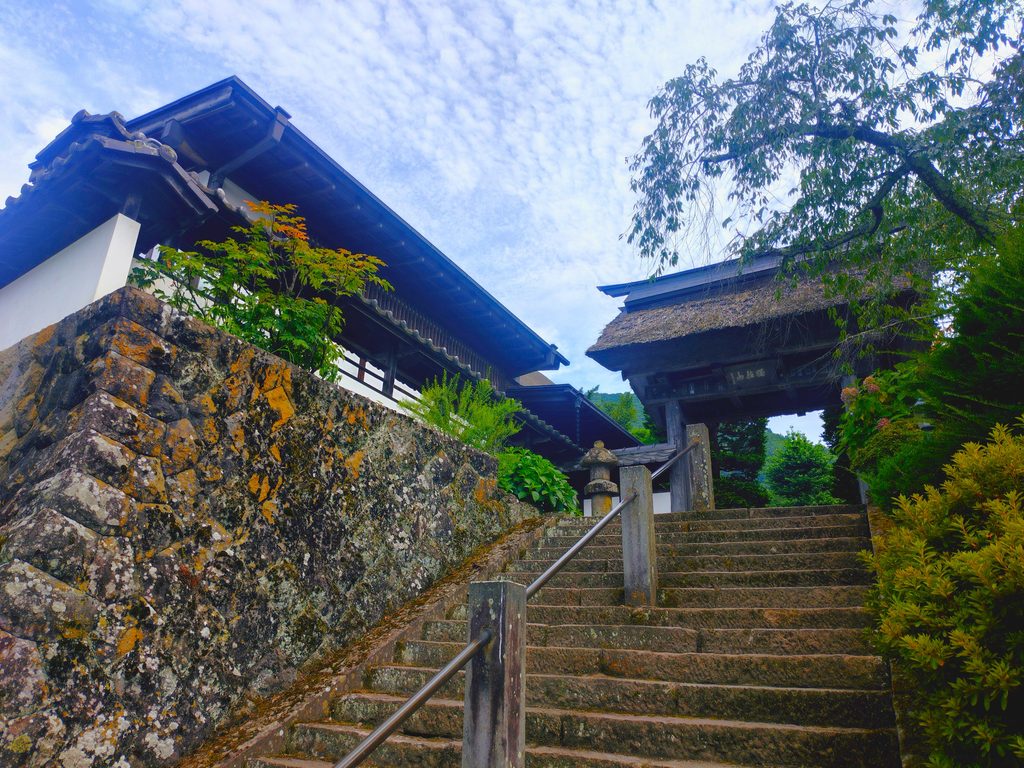
Reaching the top of the tree-lined path and ascending a final short flight of stone steps, the quaint “Yakuimon” appears.
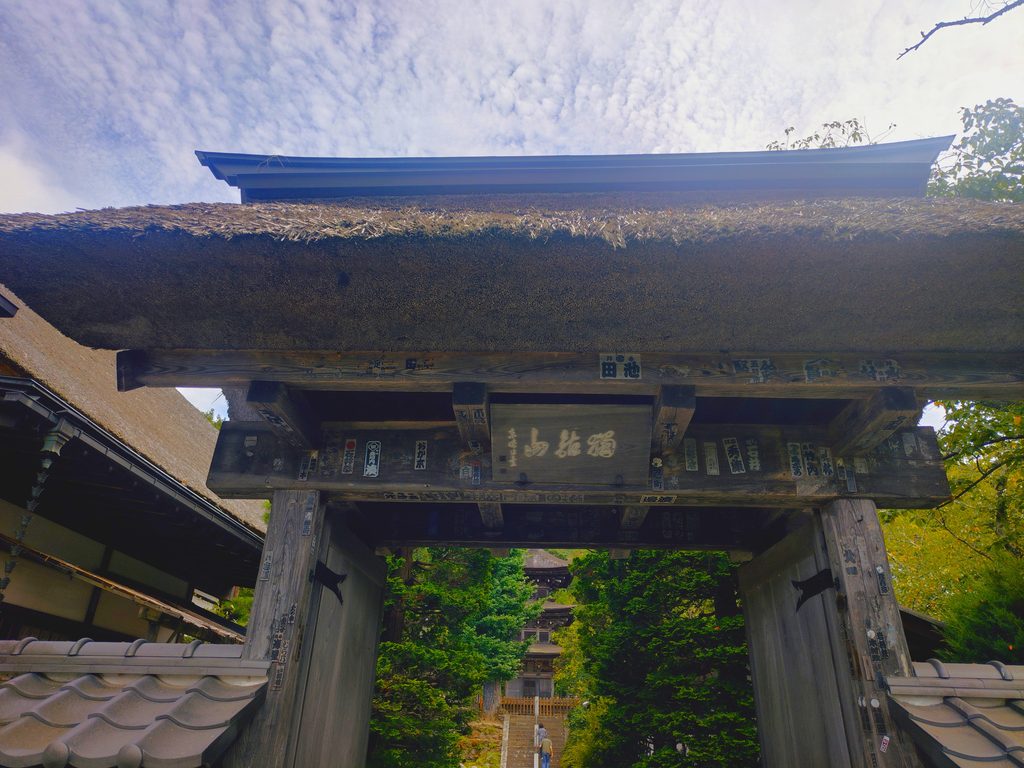
It is said that Zensanji’s Yakuimon was not originally in this location, but was relocated and reconstructed from elsewhere. Its wooden texture, weathered by years of wind and rain, harmonizes beautifully with the surrounding giant trees and stone walls. Looking through the front of the Yakuimon, the three-story pagoda comes into view.
【Nationally Designated Important Cultural Property “Three-Story Pagoda (The Completed Tower of Incompletion)”】
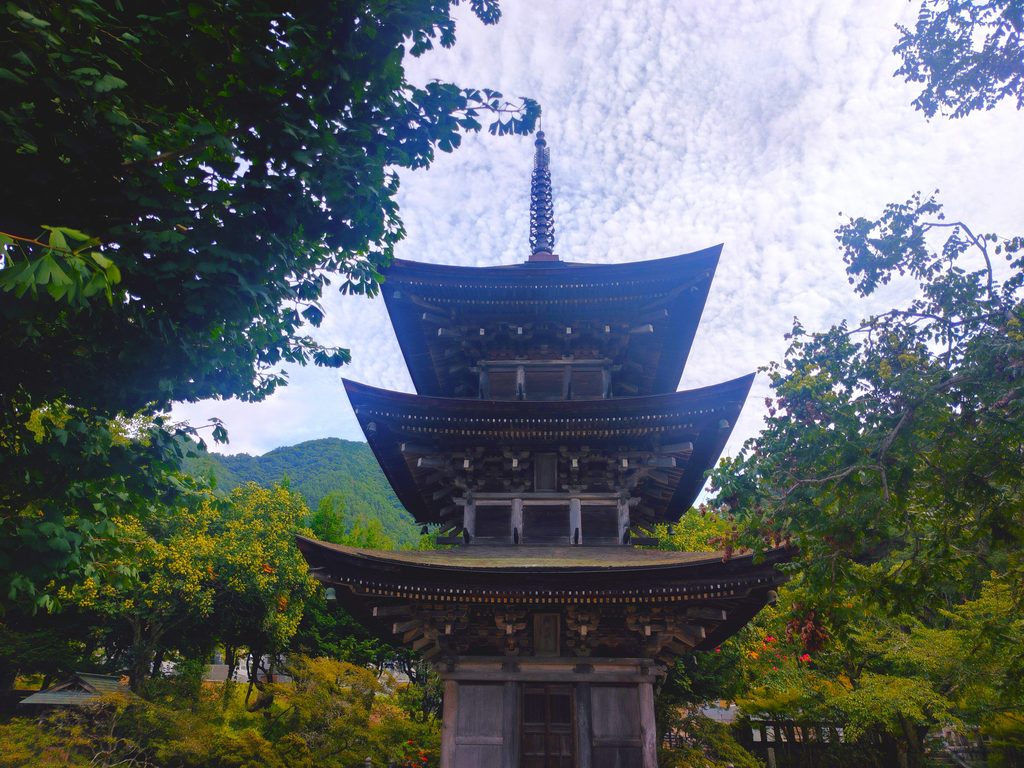
Estimated to have been built in the early Muromachi period, this 19.5-meter-tall pagoda features a kokerabuki (shingle) roof. It has an unusual structure with no windows, doors, verandas, or railings on the second and third stories, featuring long horizontal beams (dobunuki) projecting out from all four sides of the wooden wall panels.
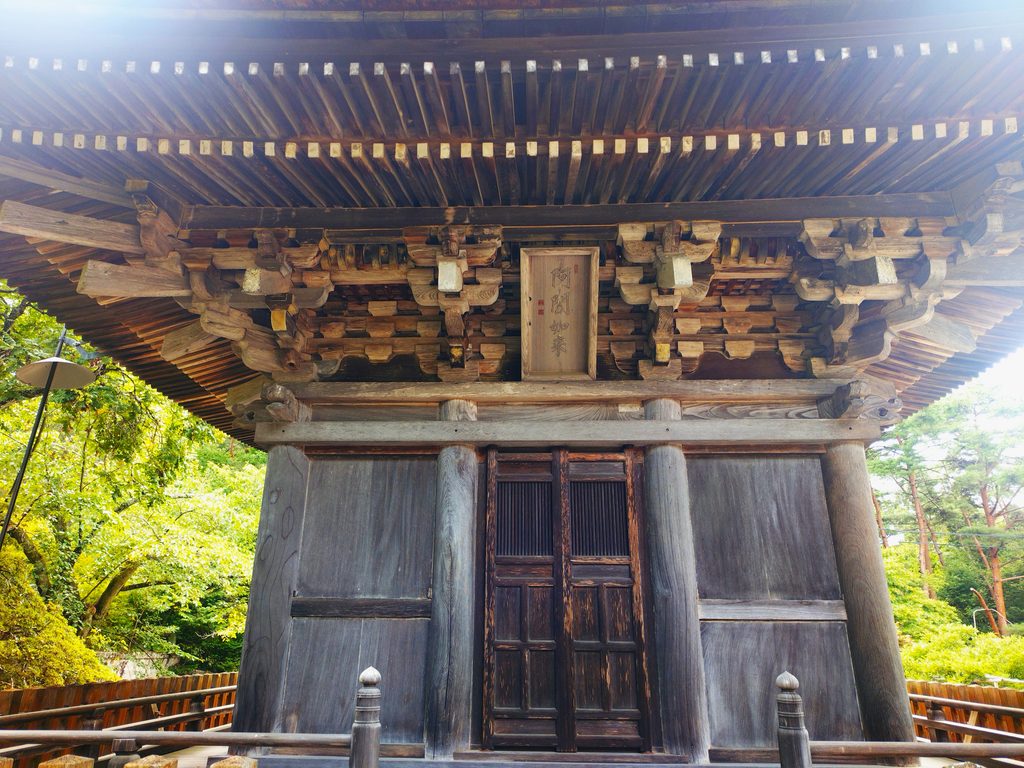
Legend says it was intentionally left unfinished. However, because of its linear beauty without unnecessary ornamentation and its flawless overall balance, it is praised as “The Completed Tower of Incompletion.”
【Main Hall and Kobo Daishi Training Statue】
The Main Hall is the central structure of the temple, featuring an eye-catching, impressive thatched roof that resembles a massive inverted bamboo hat. It is registered as a Nationally Registered Tangible Cultural Property and an Ueda City Designated Cultural Property.
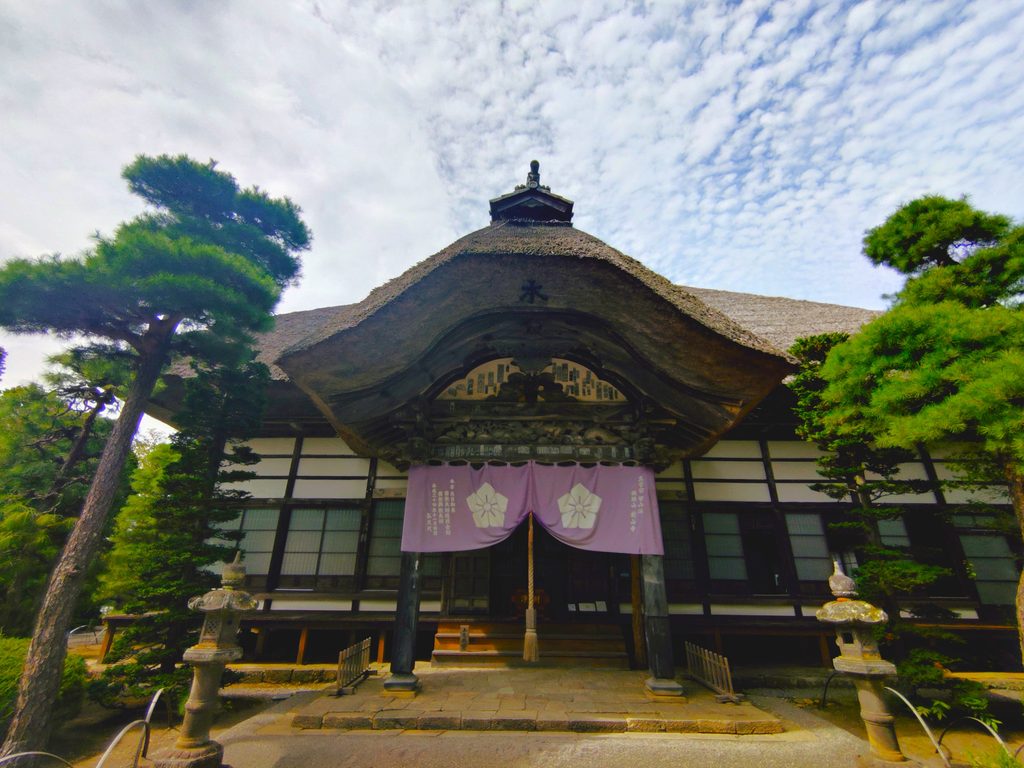
Following a predecessor building constructed during the Eiroku era (1558–1570), the present Main Hall is estimated to have been rebuilt and established between Genroku 11 (1698) and Kyoho 12 (1727).
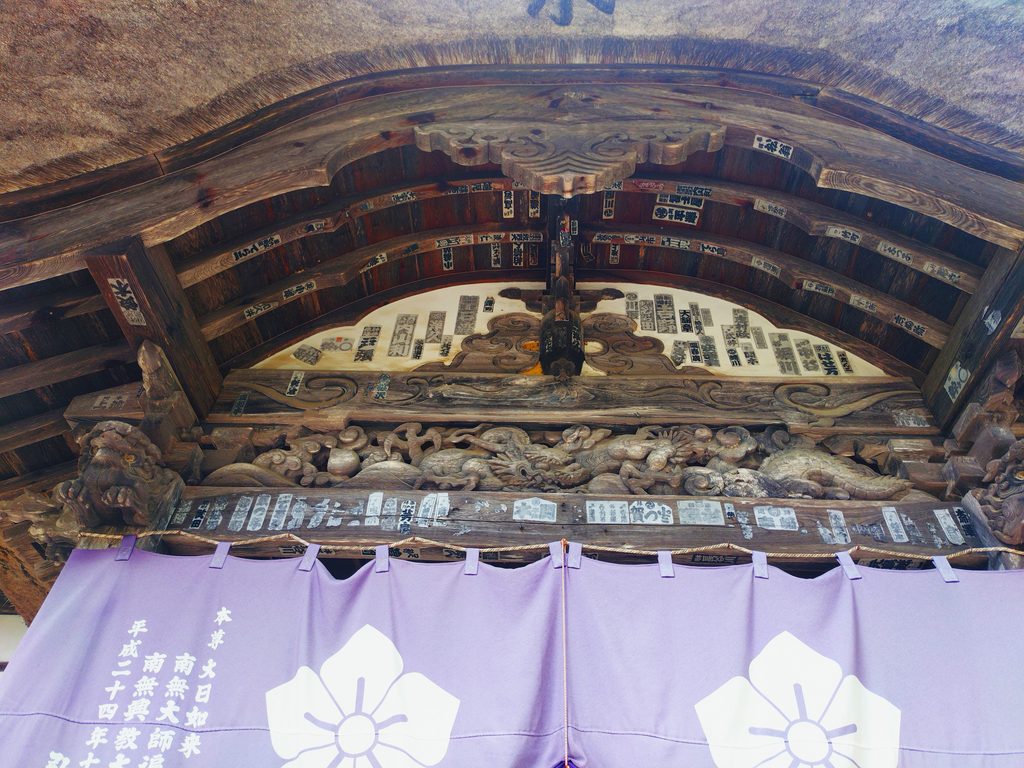
The kohai (sheltered worship porch projecting forward) built in the karahafu (undulating gable) style on the front features a magnificent wood carving of a “Cloud Dragon” characteristic of the mid-Edo period, adding elegance to the rustic thatched-roof design.
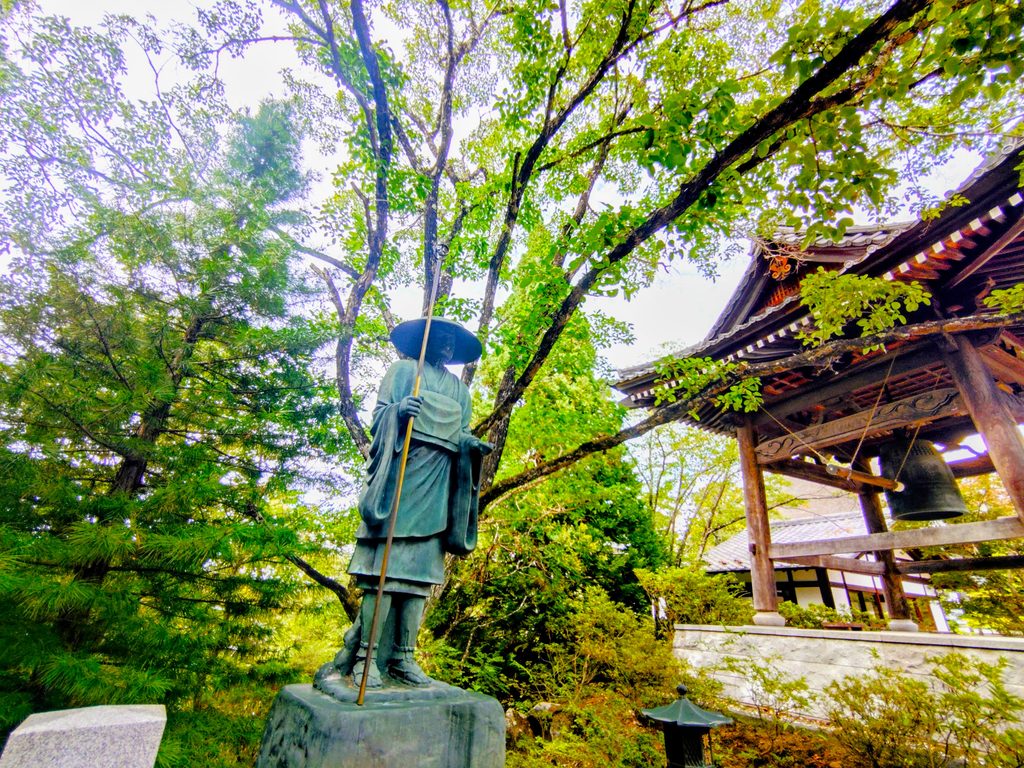
The Kobo Daishi Training Statue stands dignified near a large ginkgo tree in front of the “Three-Story Pagoda,” a Nationally Designated Important Cultural Property. It was erected on the temple grounds as a symbol preserving the living presence of Kobo Daishi Kukai, who visited and founded this sanctuary in the early Heian period (812).
【Tokkosan Zensanji Temple On-Site Visit Report & Original Evaluation】
Zensanji Temple On-Site Visit Review & Evaluation Score
| Evaluation Category | Score | Key Features / Highlights |
|---|---|---|
| History & Heritage | (4.5) | An ancient temple founded by Kobo Daishi; features a magnificent three-story pagoda, an Important Cultural Property praised as “The Completed Tower of Incompletion” |
| Nature & Scenery | (4.5) | Affectionately known as the “Temple of Flowers,” where wisteria, peonies, and autumn foliage harmonize beautifully with the three-story pagoda |
| Tranquility | (4.5) | Serenity and a tranquil atmosphere unique to “the Kamakura of Shinshu” at the foot of Mt. Tokko |
| Goshuin & Specialty | (4.0) | In addition to Goshuin for the principal deity, the famous “Kurumi Ohagi” (walnut rice cake) enjoyed at the teahouse on the grounds is highly popular |
| Grounds Scale | (3.5) | Compact yet packed with highlights, including the three-story pagoda, Main Hall, and Japanese nutmeg tree |
| Accessibility | (3.0) | Recommended to travel by bus or car from Shiodamachi Station (free parking available) |
*Features the beauty of the Important Cultural Property three-story pagoda and the temple grounds across the four seasons. Combining your visit with a taste of the famous “Kurumi Ohagi” (walnut rice cake; advance reservation recommended) is highly recommended.
On-Site Report | Personal Impressions and Atmosphere
![20260817 133355127 160x160 - Tokkosan Zensanji Temple [Nagano]](https://japan-shrine.info/wp-content/uploads/20260817_133355127-160x160.jpg "Tokkosan Zensanji Temple [Nagano]") Ikushimatarushima Shrine [Nagano]
Ikushimatarushima Shrine [Nagano] “Ikushimatarushima Shrine,” located in the center of Japan, enshrines the god of the land. Driving just a few minutes from there brings you to “Zensanji Temple,” an ancient sanctuary of the Chisan sect said to be founded by Kobo Daishi. It is surprising that two sacred sites with such distinctly different atmospheres stand so close to each other.
Stepping into Zensanji Temple, the lively atmosphere of Ikushimatarushima Shrine gives way to a serene, solemn air enveloped in quietude. The absolute highlight is the Important Cultural Property, “The Completed Tower of Incompletion (Three-Story Pagoda).” While there is a parking lot right beside the Yakuimon, it is highly recommended to park your car at the “Kuromon (Kabukimon)” at the base of the hill and walk up the 150-meter tree-lined approach.
【Nearby Sightseeing Spots to Visit Together】
Ikushimatarushima Shrine, Takemizuwake Shrine, Zenkoji Temple, Tsumashina Shrine, Yufuku Shrine, Takei Shrine, Utsukushigahara Highlands
![20260817 133355127 520x300 - Tokkosan Zensanji Temple [Nagano]](https://japan-shrine.info/wp-content/uploads/20260817_133355127-520x300.jpg "Tokkosan Zensanji Temple [Nagano]")
![20260816 1535042052 520x300 - Tokkosan Zensanji Temple [Nagano]](https://japan-shrine.info/wp-content/uploads/20260816_1535042052-520x300.jpg "Tokkosan Zensanji Temple [Nagano]")
![20260816 121543137 2 520x300 - Tokkosan Zensanji Temple [Nagano]](https://japan-shrine.info/wp-content/uploads/20260816_121543137-2-520x300.jpg "Tokkosan Zensanji Temple [Nagano]")
![20260816 115712522 2 520x300 - Tokkosan Zensanji Temple [Nagano]](https://japan-shrine.info/wp-content/uploads/20260816_115712522-2-520x300.jpg "Tokkosan Zensanji Temple [Nagano]")
![20260816 1804591013 520x300 - Tokkosan Zensanji Temple [Nagano]](https://japan-shrine.info/wp-content/uploads/20260816_1804591013-520x300.jpg "Tokkosan Zensanji Temple [Nagano]")
【Basic Information & Access】
【Access by Train / Car and Parking】
*Free parking available
300 Maeyama, Ueda City, Nagano Prefecture 386-1436
![bbc082e7c9cd044533be07f74b76f436 - Tokkosan Zensanji Temple [Nagano]](https://japan-shrine.info/wp-content/uploads/sng/bbc082e7c9cd044533be07f74b76f436.jpg "Tokkosan Zensanji Temple [Nagano]")