 Kanata's Japan Shrine Guide

【Overview & History of Toeizan Kanei-ji Temple】
Located in Ueno-Sakuragi, Taito Ward, Tokyo, Kanei-ji Temple (Kanei-ji) is an Exalted Head Temple (Bekkaku Dai-Honzan) of the Tendai Sect. During the Edo period, its sacred grounds encompassed nearly the entire area of present-day Ueno Park (approx. 990,000 square meters), making it one of the largest temple complexes of its era. As the prayer temple and family temple (bodaiji) of the Shogunal house, it maintained exceptionally deep ties with the Tokugawa clan, carrying the history and culture of Edo vibrantly into the present day.
【History & Origins】A Prestigious Temple Founded to Pray for the Prosperity of the Edo Shogunate and Tokugawa Family
Kanei-ji Temple was founded in 1625 (Kanei 2). Tokugawa Iemitsu, the 3rd Shogun of the Edo Shogunate, established the temple by inviting the high priest Tenkai (Jigan Daishi). The objective of Tokugawa Iemitsu and Tenkai was to build a nation-scale religious stronghold to pray for the “peace and stability of the Edo Shogunate” and the “tranquility of all people.” The two sought to replicate the role that Mount Hiei’s Enryaku-ji Temple played for Heian-kyo (Kyoto) directly in Edo.
- Tokugawa Iemitsu’s Objective (Political & Authoritative Stability):To ensure long-term stability for the Shogunate established by his grandfather, Ieyasu, Iemitsu required a powerful prayer temple to spiritually safeguard Edo Castle. Furthermore, to solidify his authority as Shogun, he aimed to establish an independent sacred center in the East (Edo) capable of rivaling the Imperial Court and Kyoto (the Western region). By later inviting a member of the Imperial Family to serve as the head priest (Rinnoji-no-miya), he laid the foundation to further elevate the Shogunate’s authority.
- Tenkai’s Objective (Urban Planning & Protection Through Buddhist Law):To seal the Kimon (Demon Gate)—the northeastern direction through which negative energy is believed to enter according to Onmyodo—Tenkai positioned the temple on the hills of Ueno, creating a spiritual barrier to protect the entire city of Edo from disaster. Moreover, just as Enryaku-ji Temple on Mount Hiei served as a nation-protecting training hall for Kyoto, he sought to build the Kanto head site of the Tendai Sect in Edo, aiming for peace across the realm (Tenka Taihei) through the power of Buddhism. In this way, Tenkai’s vision to “transform Edo into a spiritually perfect city” completely aligned with Iemitsu’s intention to “make Tokugawa rule absolute,” giving birth to Kanei-ji Temple. To achieve this objective, Tenkai is believed to have designed grand spatial arrangements across Ueno’s hills that mimicked the entire city layout of Kyoto.
【Tragedy at the End of the Edo Period: Destruction in the Battle of Ueno】
In 1868 (Keio 4), amid the turmoil of the Meiji Restoration, the flames of the “Battle of Ueno” destroyed most of the grand main hall complex, including the Kompon Chudo (Main Hall). Subsequently, the new government confiscated the vast temple grounds, transforming the area into Japan’s first urban public park, “Ueno Onshi Park” (Ueno Park). Restoration was finally permitted in 1879 (Meiji 12), and the current “Kompon Chudo” was reconstructed by relocating a building from Kitain Temple in Kawagoe.
【Principal Image & Divine Blessings】Divine Virtues of Healing, Physical Health, and Warding Off Evil Granted by Yakushi Nyorai
The principal deity enshrined is Yakushi Rurikyo Nyorai, along with the following revered Buddhist statues:
- Yakushi Rurikyo Nyorai [Principal Deity / Secret Buddha]:A critically important statue for the Tendai Sect, said to have been hand-carved by Saicho (Dengyo Daishi) himself. Originally enshrined in the Kompon Chudo of Enryaku-ji Temple on Mount Hiei, it was welcomed to Edo upon the founding of Kanei-ji Temple. Designated as a National Important Cultural Property, it is strictly protected today as a Hibutsu (secret Buddha) that is not normally open to public view.
- Nikko Bosatsu (Surya-prabha) & Gakko Bosatsu (Candra-prabha):Flanking the principal deity Yakushi Nyorai, this pair of Bodhisattvas illuminates and saves people day and night, just like the light of the sun and moon.
- Twelve Heavenly Generals (Juni Shinsho):Twelve dependable warrior deities who protect those who worship Yakushi Nyorai from all directions—north, south, east, and west.
Kanei-ji Temple was created to guard the city of Edo and the Tokugawa family from disaster. Consequently, it is believed to hold immense power not only for personal wishes, but also for warding off major life misfortunes.
- Recovery from Illness & Physical Health: The principal deity Yakushi Nyorai is known as the “Physician Buddha.” With the divine medicine contained in the medicine pot (yakko) held in his left hand, he heals all physical and mental suffering and pain, bringing good health.
- Warding Off Evil, Good Fortune & National Tranquility: Built by Abbot Tenkai as the ultimate defensive barrier to protect Edo Castle’s Kimon (Demon Gate), the shrine grants powerful blessings for purifying bad luck, misfortune, and negative energy (Yaku-yoke).
- Academic Achievement & Wisdom Clarity: Because it was founded by Abbot Tenkai—a brilliant strategist and chief advisor to the Tokugawa family—and flourished as a pinnacle of Tendai scholarship (such as the Toeizan Kangakudo), many visitors come to pray for academic improvement and passing entrance exams.
【Highlights & Recommended Worship Route of Toeizan Kanei-ji Temple】
【Approach Path】A Tranquil Approach Wrapped in Ueno’s History and Serenity
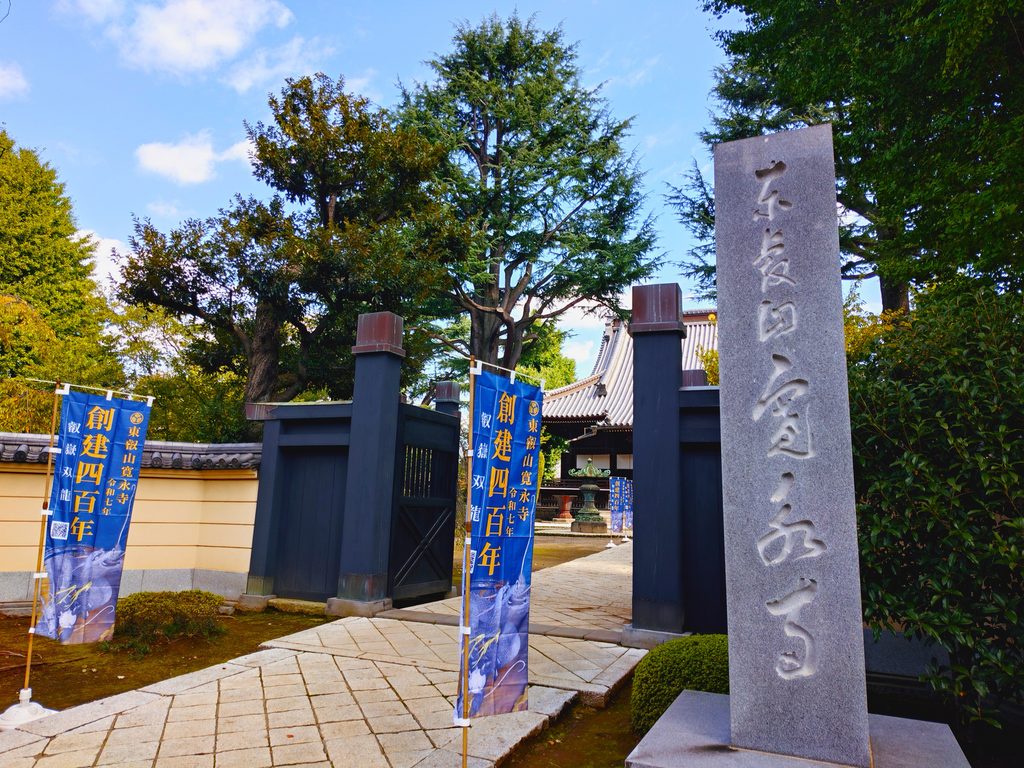
Extending straight toward the Main Hall (Kompon Chudo), the approach path features a pair of heavy “Bronze Lanterns” (Do-toro) that convey the dignity of its past as a Shogunal family temple, welcoming visitors into a majestic atmosphere.
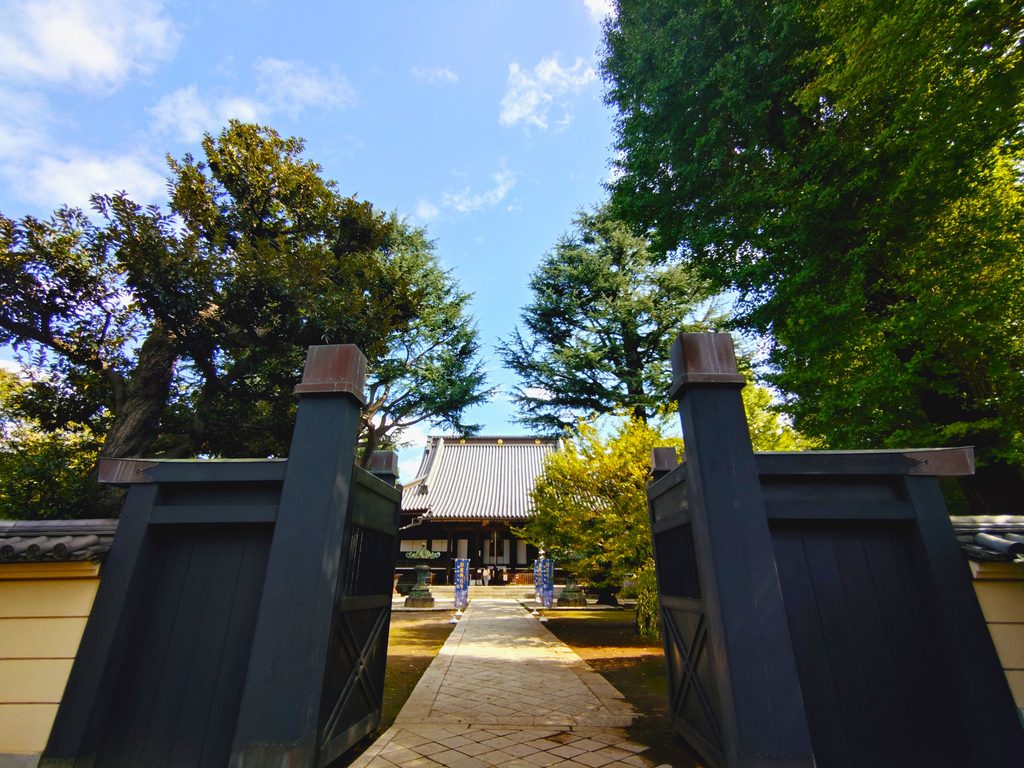
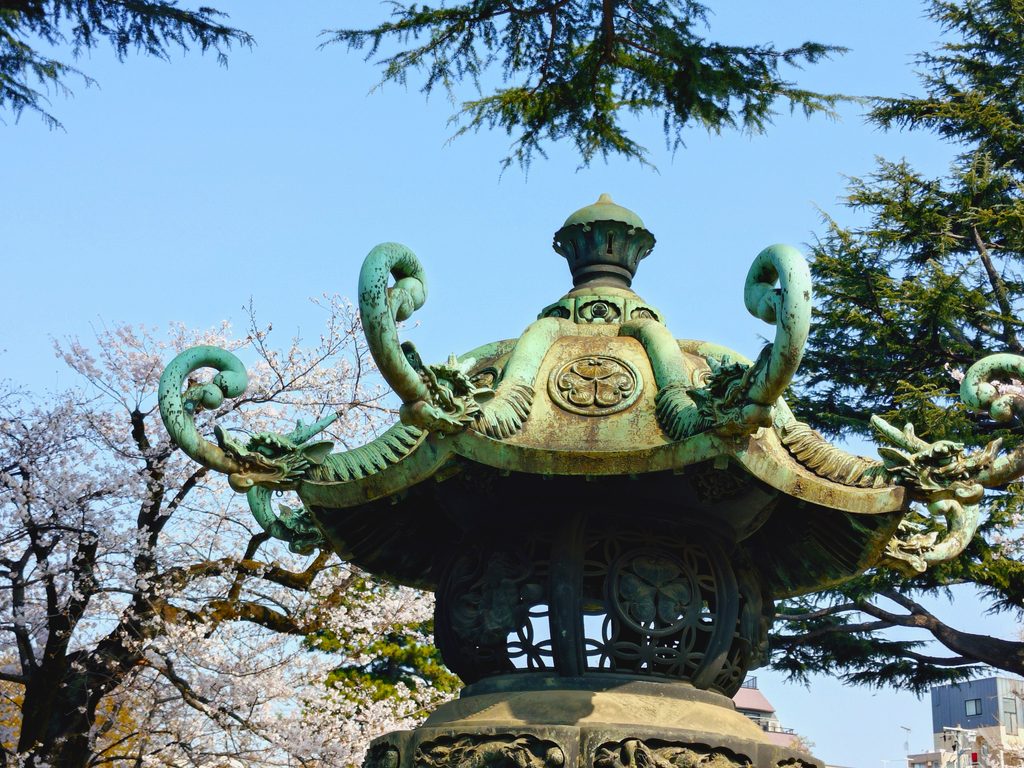
Standing proudly on both sides of the approach, these bronze lanterns feature massive, solid craftsmanship. The umbrella tops and various sections of the lanterns are clearly engraved with the Tokugawa family crest—the “Three-Leaf Hollyhock” (Mitsuba-aoi)—silently telling the heavy history of the deep protection received from the Tokugawa family during the Edo period.
【Kompon Chudo & Eigaku Soryu】Kanei-ji’s Main Hall and the Grand Twin Dragon Ceiling Painting
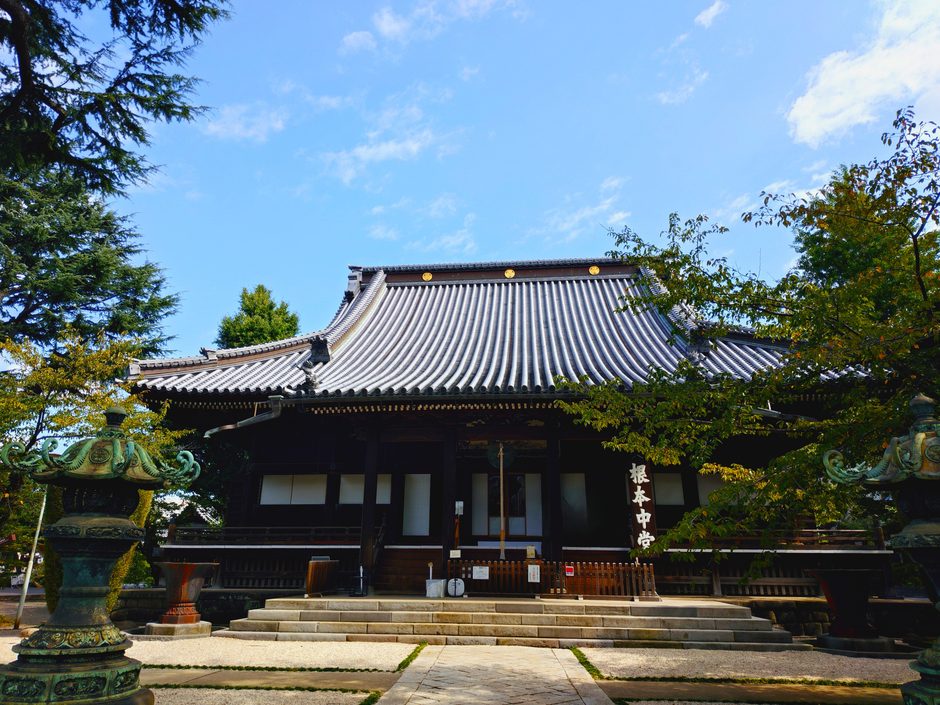
Kompon Chudo is the Head Main Hall of Kanei-ji Temple. Relocated from Kitain Temple in Kawagoe during the Meiji period, this historic structure enshrines golden-shining Tokugawa crests alongside the secret principal deity, Yakushi Rurikyo Nyorai. The unpainted natural wood (shiraki) construction has aged into a deep, rich hue; looking up close at the massive tiled roof and complex wooden framework leaves visitors breathless.
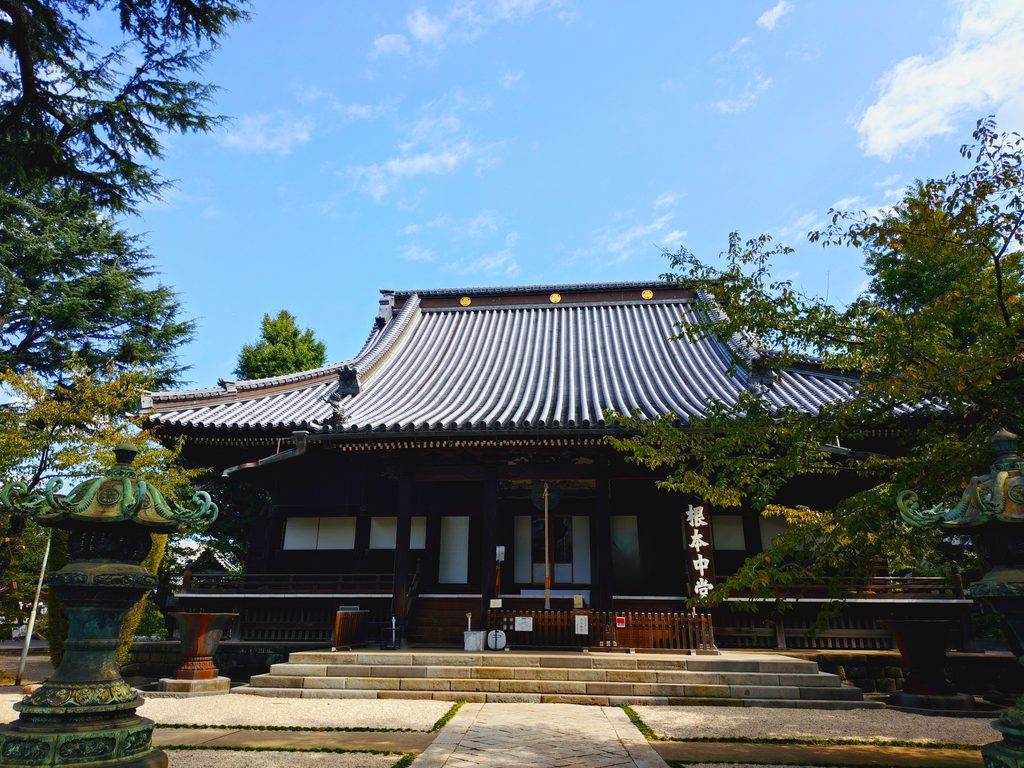
Looking up at the Kohai (overhanging roof section) in front of the hall, a magnificent imperial tablet (Chokugaku) reading “Ruri-den” is displayed. This is an autograph (goshinbitsu) written personally by Emperor Higashiyama when the Kompon Chudo was completed during the Genroku era. “Ruri-den” refers to a structure enshrining Yakushi Nyorai (the principal deity), who resides in the Pure Lapis Lazuli World of the East.
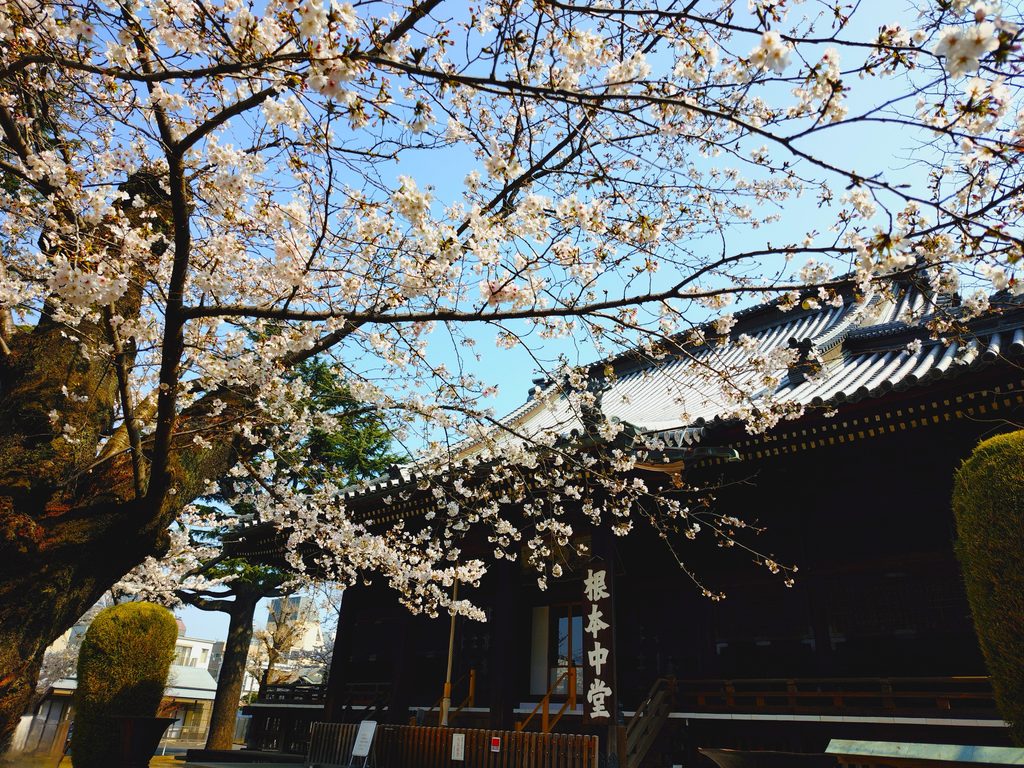
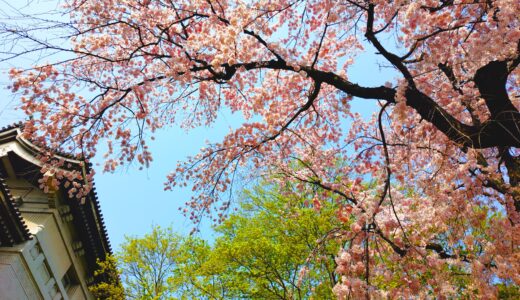
In spring, cherry blossoms bloom across the grounds, adding a vibrant touch.
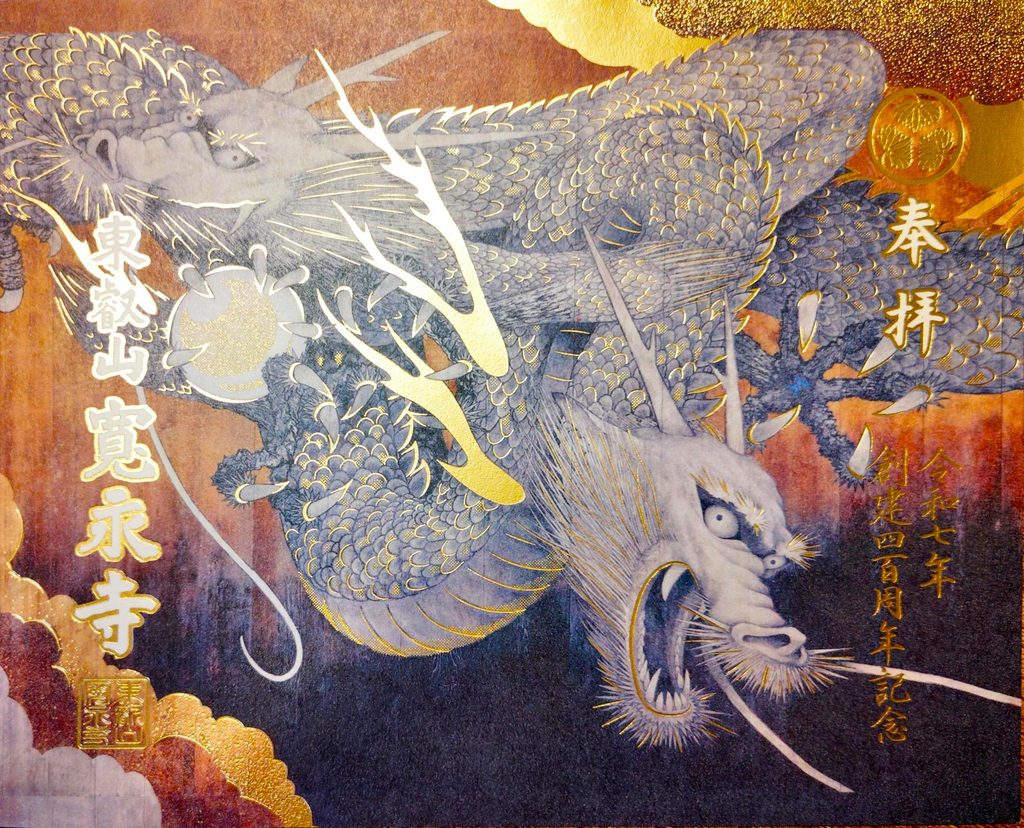
Eigaku Soryu (Twin Dragons of Mount Hiei/Toei):
Commissioned as the most important project commemorating the 400th anniversary of Kanei-ji’s founding (2025), this is one of Japan’s largest modern masterpiece ceiling paintings. Created over nearly four years by Japanese painter Yuji Tezuka (Professor Emeritus at Tokyo University of the Arts), it was dedicated in September 2025 following the Garyu Tensei (Dotting the Dragon’s Eyes) consecration ceremony. The interior area of the Kompon Chudo, previously closed to the public, is now open for viewing.
The two dragons form an “A-Un” pair—one with an open mouth (“A”) and one with a closed mouth (“Un”)—expressing the “creation and convergence” or “beginning and end” of all things in the universe. This creates an intense spatial atmosphere, as if the entire ceiling itself were breathing as one.
【Bronze Bell & Former Ogawara】A Historic Bell Telling the Hour and Powerful Giant Ridge Tiles
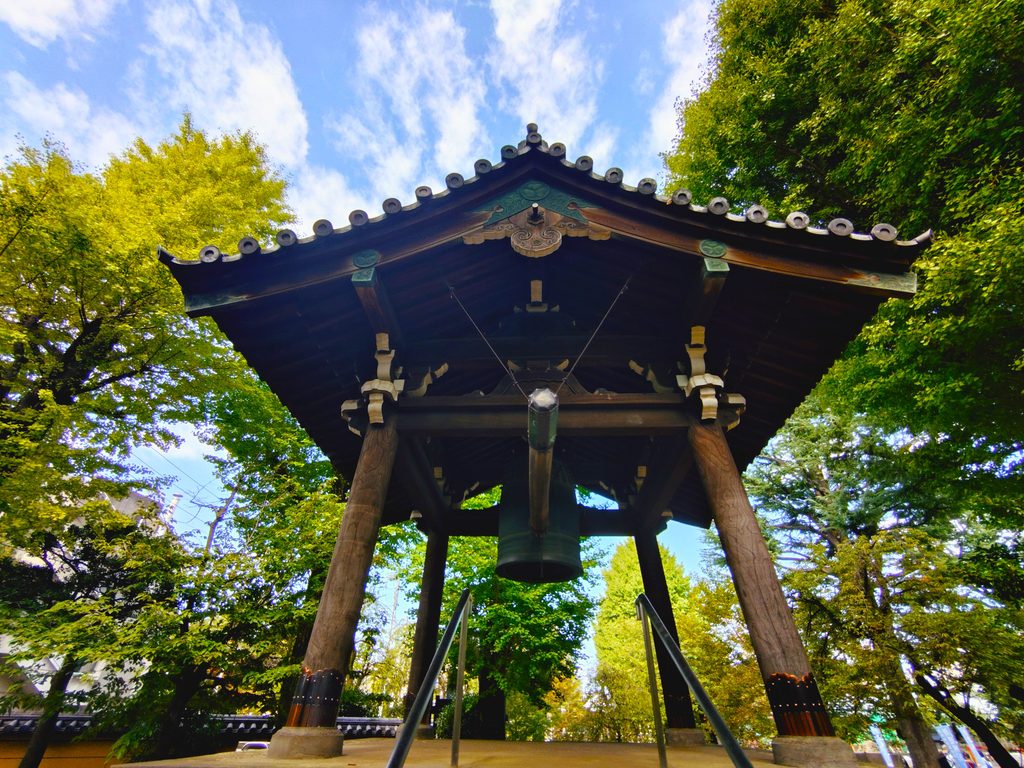
Located within the Kompon Chudo grounds, the “Bronze Bell” (Dosho) is a valuable cultural property packed with the finest craftsmanship employed by the Shogunate to honor the Edo Shoguns. Words praying for the repose of Shogun Ietsuna (Gen’yuin-dono Gobozen) are deeply carved into the surface of the bell, showing its immense importance to the Shogunal house.
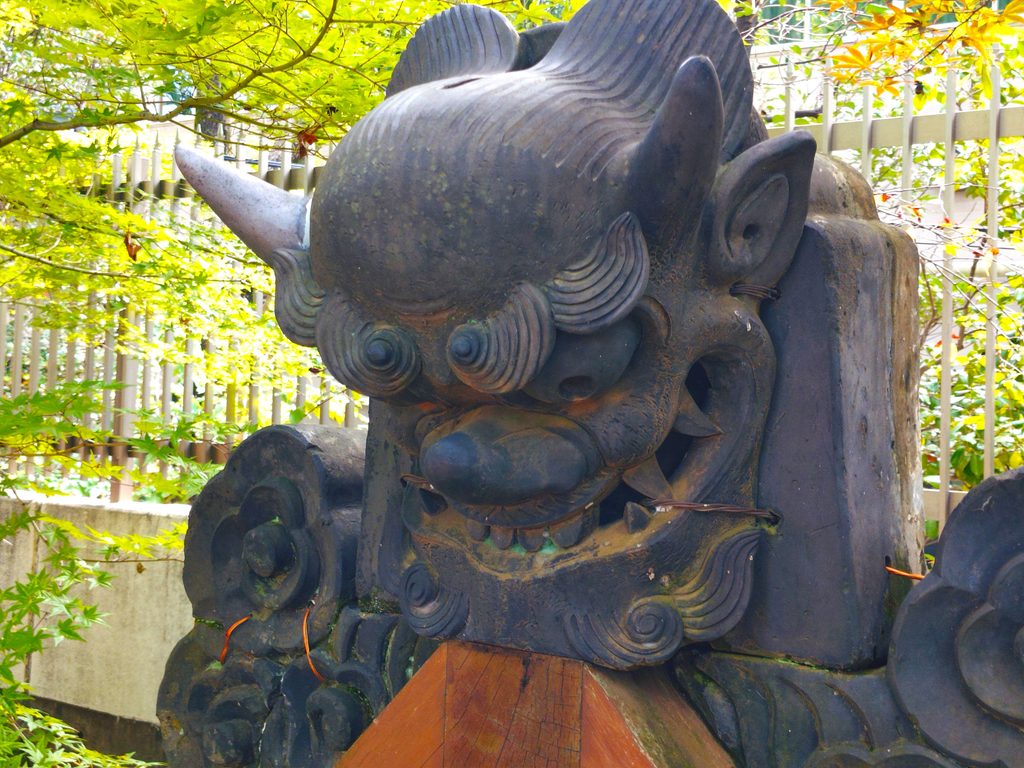
To the right side facing the Kompon Chudo, two real, giant ridge-end tiles (Ogawara) taken down from the roof during past restorations are displayed near ground level. This is an exceptionally rare spot where you can observe up close what is normally positioned high on the roof.
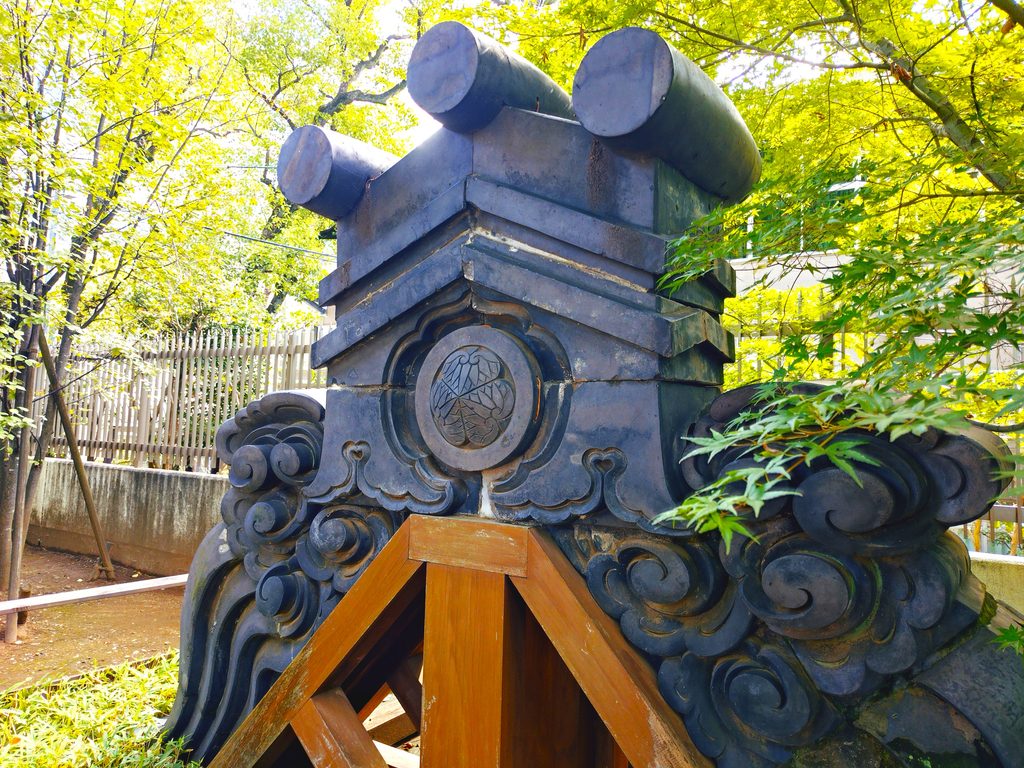
One is the Former Ogawara of Kompon Chudo, clearly engraved in the center with the Tokugawa emblem, the “Hollyhock Crest.”
The other is the Former Ogawara of the Honbo Front Gate (A-gyo), which miraculously survived the flames of the Shogitai battle (Battle of Ueno). It originally adorned the gate that has since been relocated as the Inshu Ikeda House Front Gate (Black Gate) at the Tokyo National Museum. Visitors can observe its powerful “A-gyo” (open-mouthed) expression at close range.
【Ryoo Zenji-do Hall】A Hall Honoring the Achievements of the Great Scholar Ryoo Zenji
Ryoo Zenji-do Hall enshrines a seated statue of Ryoo Zenji created in 1692 (Genroku 5) to honor his achievements. It is a highly prestigious hall honoring a hidden hero of Edo who devoted private funds earned from selling medicine toward the development of Kanei-ji Temple and the education of Edo’s populace.
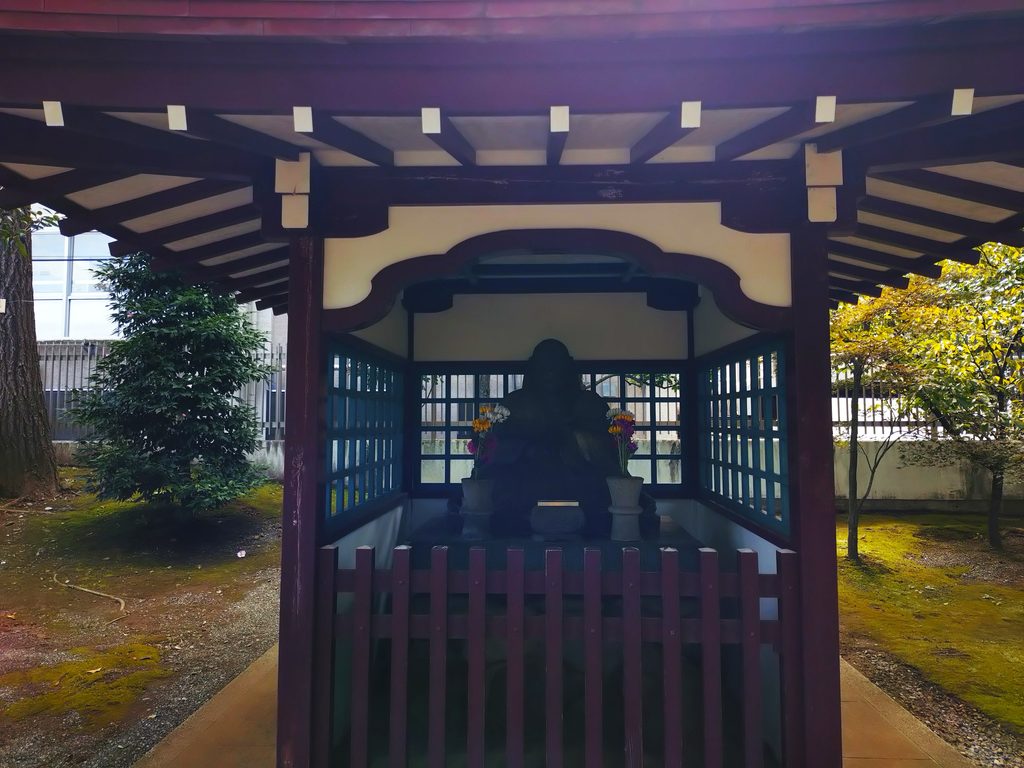
Born into a poor farming family in Akita Prefecture, he developed his own medicinal pill called “Kintaien” during his ascetic training. During major fires in Edo, he generously donated all private wealth earned from his medicine to aid disaster victims. Furthermore, to house countless collected books and Buddhist scriptures, he established a “Kyozo” (Inokashira/Shinobazu Pond Library) and an academy (Kangakuryo) on the grounds of Shinobazu Pond and Kanei-ji Temple. This is remembered as “Japan’s first public library open to the general public.”
【Choken-in Shrine Chokugakumon Gate】Format Gate of the Grand Mausoleum Honoring Shogun Tsunayoshi
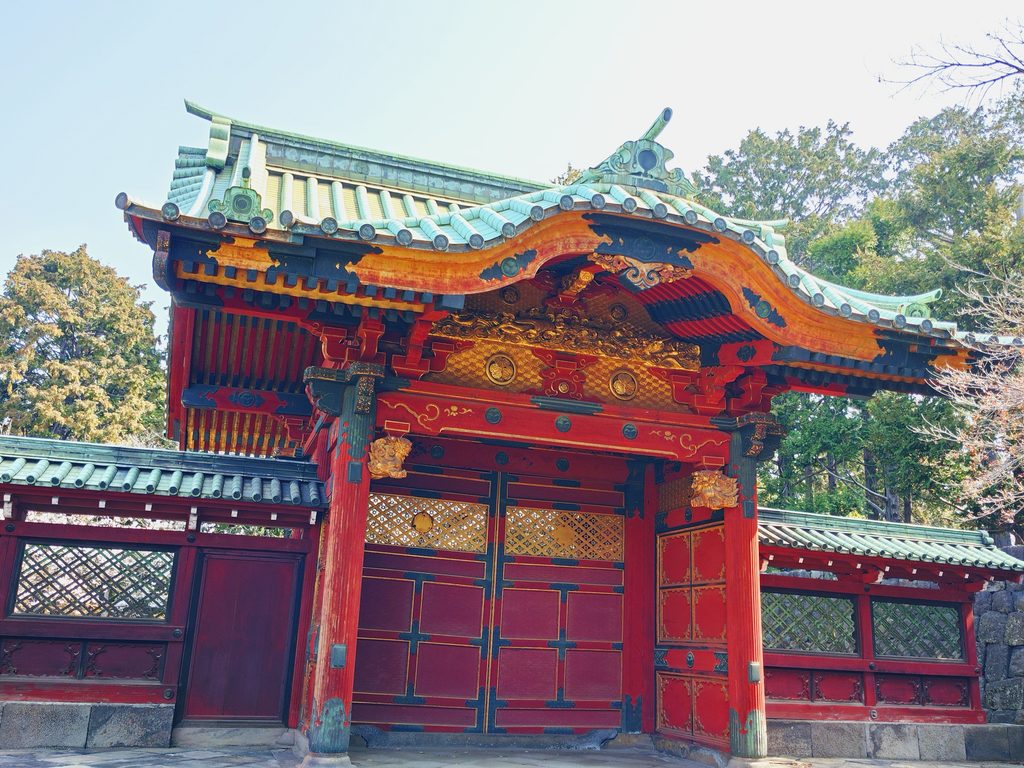
Located past the main hall toward the cemetery area, this is the burial ground resting six Tokugawa Shoguns—the 4th Ietsuna, 5th Tsunayoshi, 8th Yoshimune, 10th Ieharu, 11th Ienari, and 13th Iesada—alongside Tensho-in Atsuhime. While the interior is closed to the public, visitors can admire the magnificent Imperial Tablet Gate (Chokugakumon—an Important Cultural Property) from the outside, which conveys the majestic authority of the Tokugawa clan.
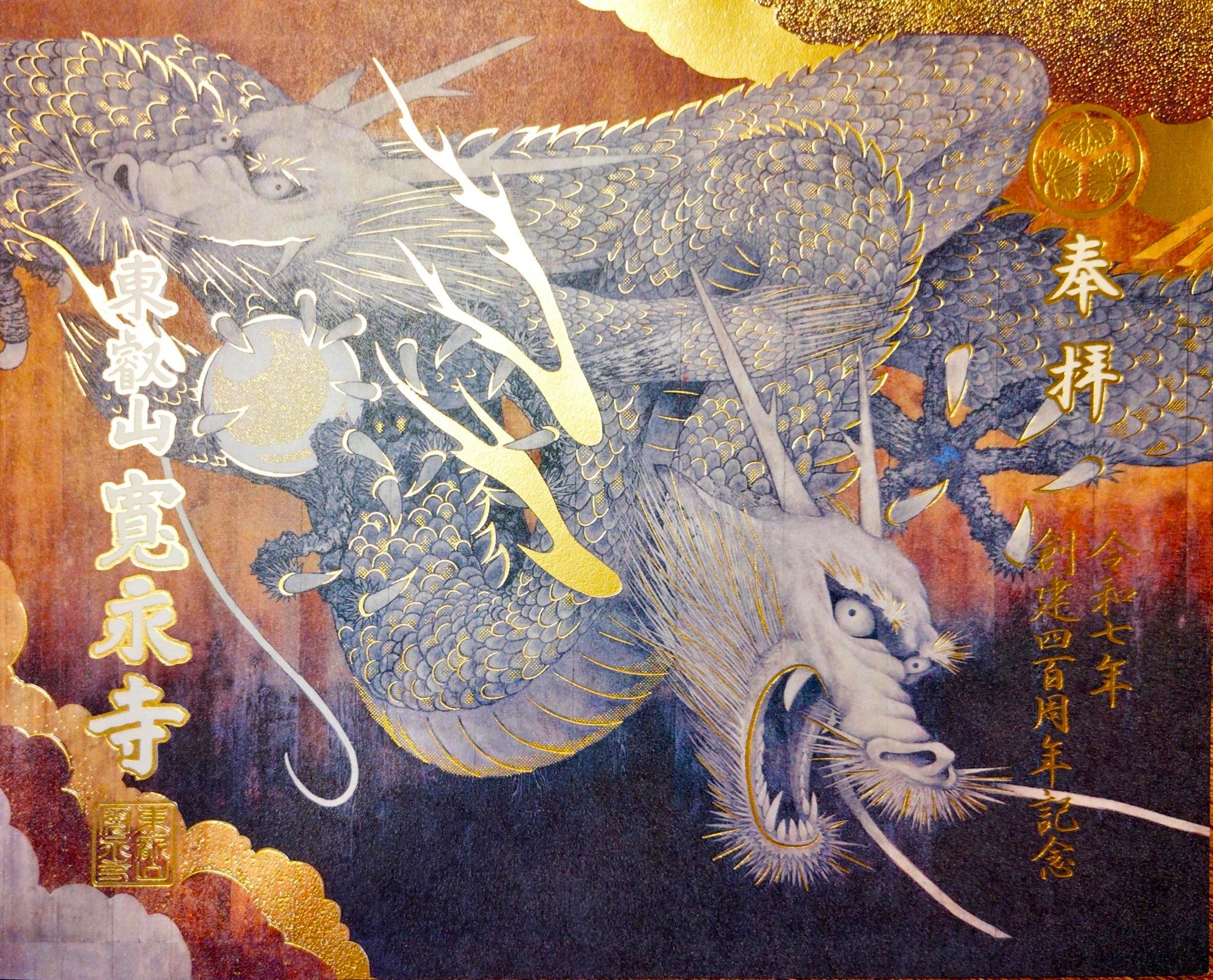
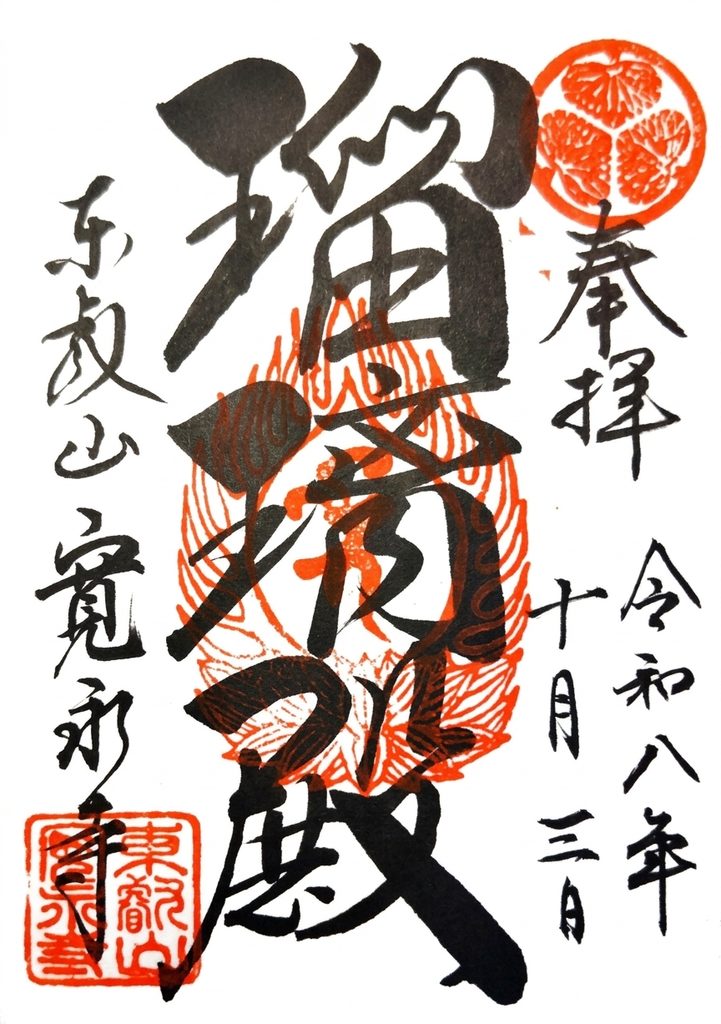
【Toeizan Kanei-ji Temple Goshuin】
【Toeizan Kanei-ji Temple On-Site Visit Report & Original Evaluation】
Toeizan Kanei-ji Temple On-Site Review & Evaluation Score
| Evaluation Category | Score | Key Features / Highlights |
|---|---|---|
| Accessibility | (5.0) | Extremely good access environment, located about a 7-minute walk from the South Exit of “Uguisudani Station” (JR Yamanote/Keihin-Tohoku Line) and about a 10-minute walk from the Park Exit of JR “Ueno Station.” |
| Goshuin Variety | (5.0) | A wide variety of seals are issued across its various halls and sub-temples, including the Yakushi Nyorai Goshuin at Kompon Chudo, as well as Shinobazu Pond Bentendo, Kiyomizu Kannon-do, Kaisan-do, and Ueno Daibutsu. |
| Tranquility | (4.0) | Located in a quiet temple town (Ueno-Sakuragi) away from the bustling areas of Ueno Park, the temple grounds exude a calm, dignified, and prestigious atmosphere. |
| History & Heritage | (4.0) | Founded in 1625 (Kanei 2) by Abbot Tenkai. As the family temple of the Tokugawa Shogunal house where six Tokugawa Shoguns rest, it is one of the highest-ranking grand historic temples of the Edo Shogunate. |
| Nature & Scenery | (4.0) | A landscape brimming with historic charm, featuring the grand Main Hall (Kompon Chudo) and former Aoi-no-ma surrounded by the greenery of the Ueno Plateau, along with seasonal flowers. |
| Scale & Grounds | (3.5) | Boasts a vast history when its grounds once spanned the entire area inside the current Yamanote Line and present-day Ueno Park; today, its various halls are scattered throughout the Ueno area centered around Kompon Chudo. |
【On-Site Report | Personal Impressions and Atmosphere】
This is a place I especially recommend to those who say, “I go to Ueno Park often, but I’ve never been to Kanei-ji’s main hall.”
The weight of Tokugawa history, the crisp atmosphere of a spiritual barrier that protected the city of Edo, and top-tier contemporary ceiling art are tightly condensed within these serene grounds. Tucking your smartphone into your pocket and quietly feeling the breath of Edo makes this the ultimate sophisticated stroll route.
【Nearby Sightseeing Spots to Visit Together】
Kaisan-do Hall, Moto-Mishima Shrine, Ono Terusaki Shrine, Tokyo National Museum, Ueno Toshogu Shrine, Hanazono Inari & Gojo Tenjin Shrine, Shinobazu Pond Bentendo



【Basic Information & Access】
【Access by Train / Car and Parking】
*No dedicated parking available for worshippers. Please use nearby public parking or coin-operated parking lots.
【Address & Official Website】
1-14-11 Ueno-Sakuragi, Taito Ward, Tokyo 110-0002